
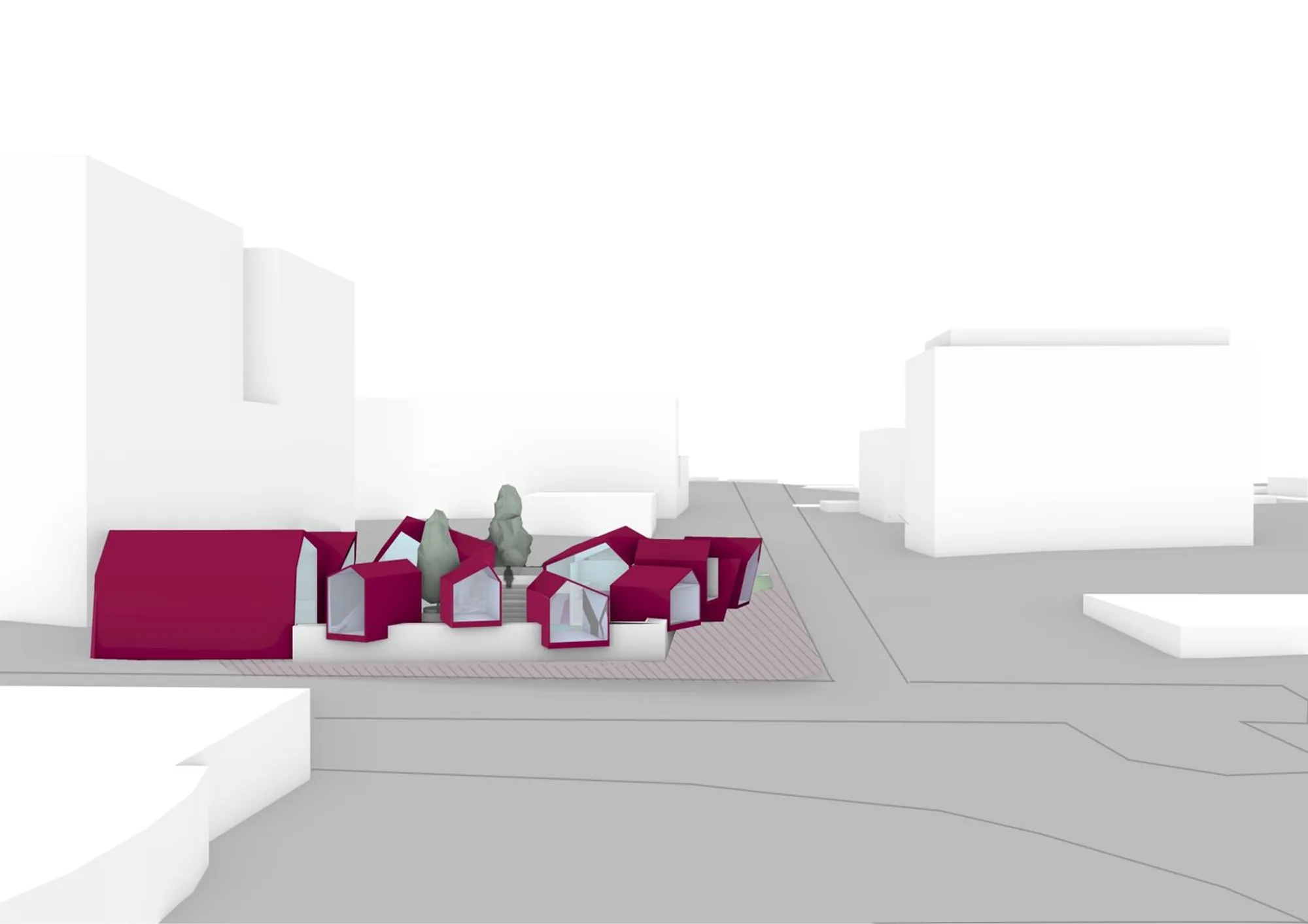
DreamVision: A School Design Fostering Experiential Learning and Community Integration
A shortlisted Play ON School design blends the vibrancy of urban life with a safe and engaging learning environment.


DreamVision, a groundbreaking school design by Aysu Kavak, challenges traditional educational paradigms by seamlessly integrating the vibrancy of urban life with the safety and focus of a learning environment. Shortlisted for the prestigious Play ON School competition, the design prioritizes a four-stage learning cycle—active experiencing, concrete experience, abstract conceptualization, and observation—to cultivate a holistic and engaging educational experience. By blurring the lines between the school and the surrounding community, DreamVision offers students a unique opportunity to learn from real-world scenarios, fostering a deeper understanding of their chosen fields and preparing them for future success.

Experiential Learning at its Core
DreamVision's foundation rests on the principle that true learning transcends the confines of textbooks and lectures. Instead, it embraces a dynamic cycle of experiences that solidify knowledge and inspire passion. The design meticulously incorporates spaces that facilitate each stage of this cycle:
Active Experiencing: Hands-on workshops, interactive labs, and creative studios provide students with opportunities to actively engage with their subjects, fostering a deeper understanding through direct involvement.
Concrete Experience: Real-world projects, internships, and community engagement initiatives allow students to apply theoretical knowledge in practical settings, bridging the gap between classroom learning and real-world applications.
Abstract Conceptualization: Dedicated spaces for reflection, discussion, and collaborative learning encourage students to analyze their experiences, extract key concepts, and develop a broader understanding of the subject matter.
Observation: By strategically positioning learning spaces within the school, students can observe professionals and community members engaged in relevant fields, inspiring them and providing valuable insights into potential career paths.
This cyclical approach ensures that learning becomes a continuous and interconnected process, fostering a deeper understanding and a lifelong love for learning.
Bridging the Gap Between School and Community
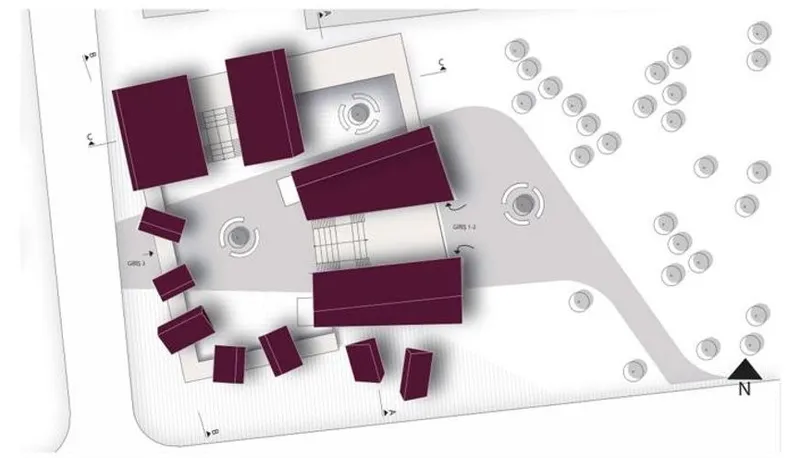
Masterfully integrates the school with its surrounding community, creating a vibrant ecosystem where learning extends beyond the classroom walls. The school's public spaces, such as workshops, studios, and exhibition areas, are intentionally placed closer to the street, inviting community members to engage with the school's activities. This permeability allows students to interact with professionals, observe real-world applications of their studies, and gain valuable insights into potential career paths.
For instance, if students are exploring fashion design, the school's public spaces might host workshops led by local designers, exhibitions showcasing student work, and even pop-up shops featuring student-created garments. This direct interaction with the industry fosters a sense of purpose and relevance, motivating students to excel in their chosen fields.

Safety and Security within an Open Environment
While embracing community integration, DreamVision prioritizes the safety and security of its students. The design thoughtfully delineates public and private spaces, ensuring that students have access to secure learning environments while still benefiting from the dynamism of the surrounding community.
The school's layout incorporates clear boundaries between public and private zones, with controlled access points and designated areas for student activities. This careful zoning allows students to freely explore and engage with the community while maintaining a safe and secure learning environment.

A Future-Oriented Educational Model
Innovative approach aligns seamlessly with the principles of future-oriented education systems, such as the Philippine education system, which emphasizes adaptability, critical thinking, and real-world problem-solving. By providing students with opportunities to actively experience, conceptualize, and observe real-world scenarios, the design prepares them for the challenges and opportunities of the 21st century.

Architectural Design and Functionality
Architectural design reflects its commitment to experiential learning and community integration. The building's layout is meticulously planned to facilitate the four-stage learning cycle, with spaces designed to encourage collaboration, creativity, and critical thinking.
The design incorporates flexible learning spaces that can be easily adapted to accommodate various teaching methodologies and student needs. Open-plan classrooms, collaborative workspaces, and specialized studios cater to a diverse range of learning styles and activities.
Furthermore, the building's sustainable design features, such as natural lighting, green spaces, and energy-efficient systems, create a healthy and inspiring learning environment while minimizing the school's environmental impact.
DreamVision stands as a testament to the transformative power of innovative school design. By embracing experiential learning, fostering community integration, and prioritizing student safety, the design reimagines the educational landscape and prepares students for success in a rapidly evolving world. Aysu Kavak's visionary approach has the potential to revolutionize the way we think about schools, creating learning environments that are not only engaging and inspiring but also deeply connected to the communities they serve.



Popular Articles
Popular articles from the community


AL-JANNAH: Sustainable Architecture and Permaculture for Afghan Widows
AL-JANNAH uses sustainable architecture and permaculture to create resilient oasis of housing, learning, work and renewal for Afghan widows.

The Ocean Hive: Sustainable Architecture for a Self-Sufficient Civilization at Sea
The Ocean Hive imagines sustainable architecture at sea, where modular habitats, algae, wave power and ocean waste sustain a growing colony.

Co-life: Sustainable Architecture for Age-Friendly Community Living
Co-life reimagines sustainable architecture for seniors through courtyards, rammed earth, shared gardens, and spaces designed for belonging.

The Earth Pod: 3D Printed Homes for Resilient Refugee Communities
The Earth Pod reimagines refugee housing through 3D printed homes made from clay, combining resilience, self-sufficiency, and rapid shelter.

Similar Reads
You might also enjoy these articles

Day and Night Park: A Time-Based Urban Newsstand in Beijing
A temporary urban newsstand in Beijing blending travel, light, and reading through poetic colors, compact form, and community-focused design.

Modernist Patio Renovation in El Masnou, Barcelona by Oliver Segura Arquitectura + Cebrià Arquitectura
Modernist patio renovation blending tradition and innovation with a movable pool, leveled floors, and Catalan materials in El Masnou.

Alto Residencial Coop: Cooperative Housing Development in Santiago de Compostela by Carbajo Barrios Arquitectos
A linear cooperative housing complex blending white volumes and perforated metal façades, enhancing community living, natural light, privacy, and urban integration.

Vil Genis School by BPA ARCHITECTURE – Massy, France
Vil Genis School in Massy, France, features sustainable design, south-facing classrooms, community integration, accessible spaces, and modern educational architecture.

Explore Educational Play Competitions
Discover active competitions in this discipline


Challenge to visualize a collision of the future and past

Challenge to visualize future spaces of waste

Challenge to visualize slums of 2080

Challenge to illustrate the change you wish in architecture
Comments (0)
Please login or sign up to add comments
No comments yet. Be the first to comment!