
DSDHA Wraps a Henry Moore Barn in Reclaimed Timber to Create a Learning Center in Hertfordshire
At Perry Green, a steel-frame farm building gets a second life through elegant frugality, sheep's wool insulation, and design for disassembly.


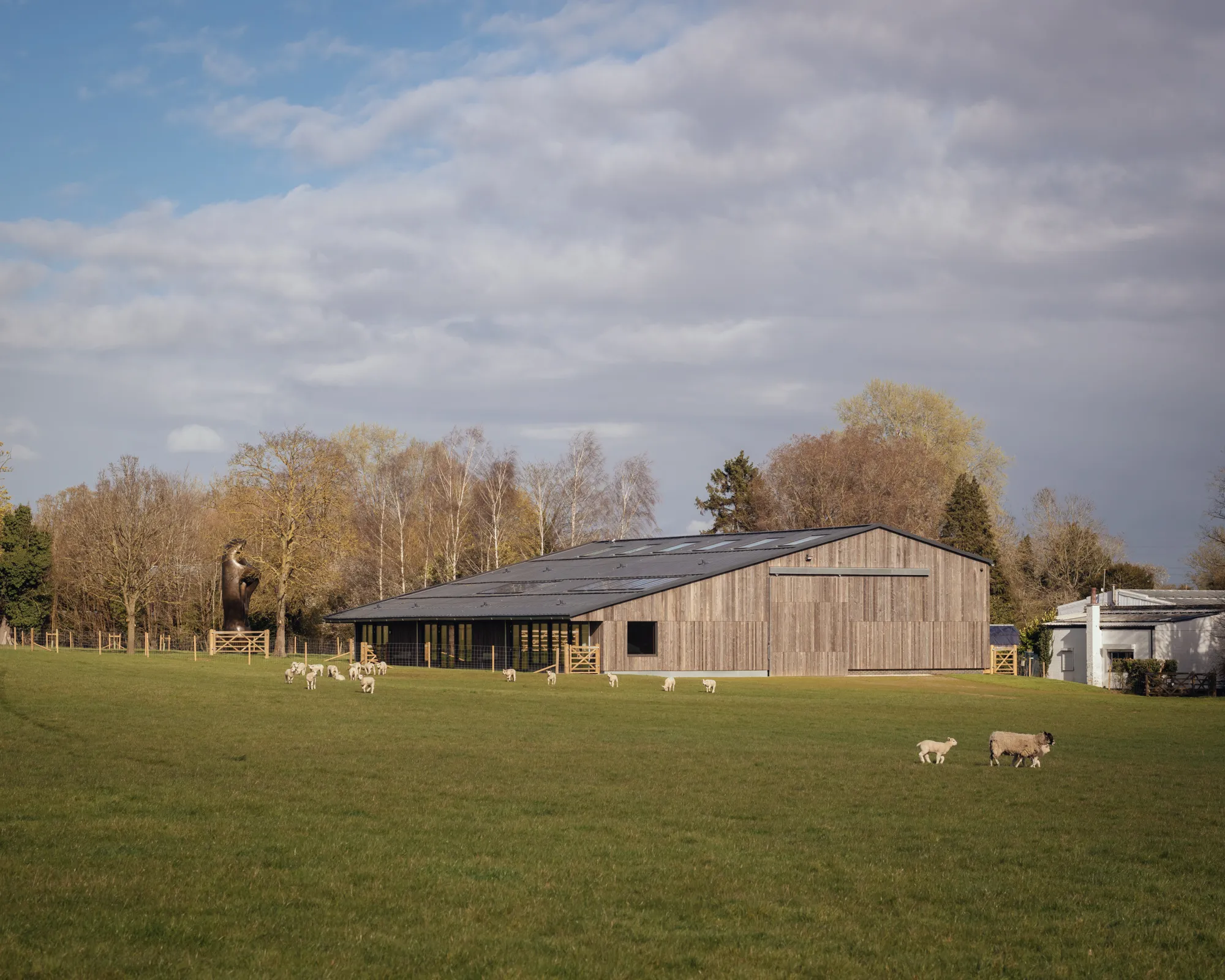
Henry Moore used to store things in this steel-frame barn on his 70-acre estate in Perry Green, Hertfordshire. Hawkins\Brown converted it into a gallery in 1999. Now DSDHA has doubled the building's footprint and turned it into something more ambitious: a 600-square-meter learning and engagement facility for the Henry Moore Foundation, complete with making studios, galleries, a lunchroom, and spaces designed to pull schoolchildren and visitors into direct contact with Moore's landscape and legacy.
What makes Sheep Field Barn worth paying attention to is not the program itself but the rigor of the material logic. DSDHA describes the approach as "elegant frugality," a phrase borrowed from Moore's own post-war sensibility. Every original element has been redeployed: the external Douglas fir cladding becomes internal wall linings and joinery, demolished blockwork reappears as surrounds for new openings, and the old steel delivery door now serves as structural lintels. The extension, raised on reusable steel screw piles to avoid concrete foundations entirely, is clad in reclaimed silver spruce salvaged from Yorkshire barns. The result is a building designed not just to be sustainable but to be taken apart again one day and fed back into a circular economy.
A Shell Within a Shell
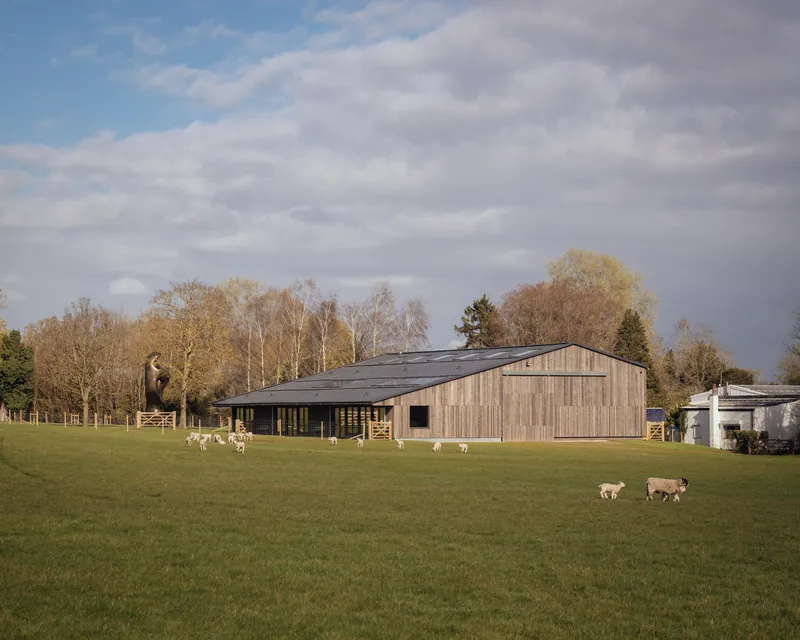
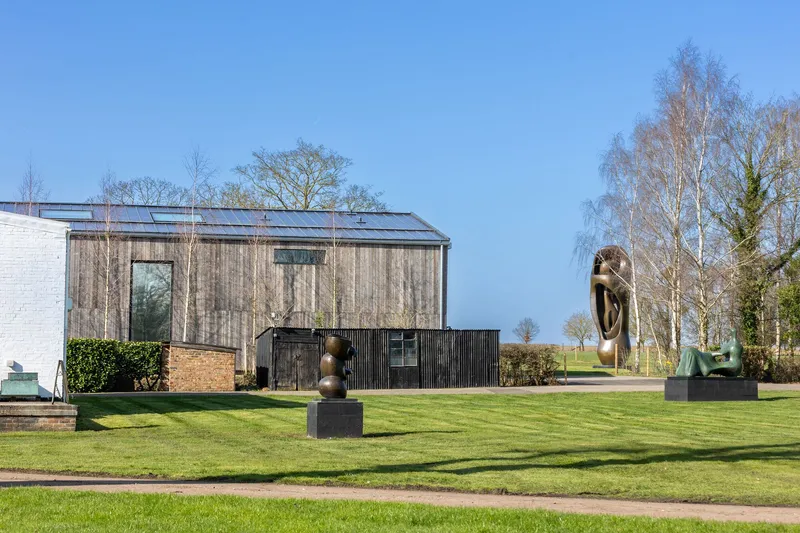
DSDHA's central conceit is borrowed from one of Moore's own sculptures: Large Upright Internal/External Form, in which one form cradles another. The new Douglas fir timber frame attaches directly to the original steel structure, creating an oversized protective shell that wraps the old barn. From the outside, the building reads as a single gabled volume in weathered silver spruce, sitting comfortably in sheep fields between bronze sculptures and birch trees. There is nothing aggressive about the intervention. The agricultural language of vertical cladding, large openings, and a corrugated roof speaks to the rural vernacular of Hertfordshire without resorting to pastiche.
The extension itself is described as a "simple lean-to cart shed," and that modesty is the point. By keeping the formal ambition low, the architects let the material choices and environmental performance carry the project's intellectual weight.
Making Rooms That Face the Landscape
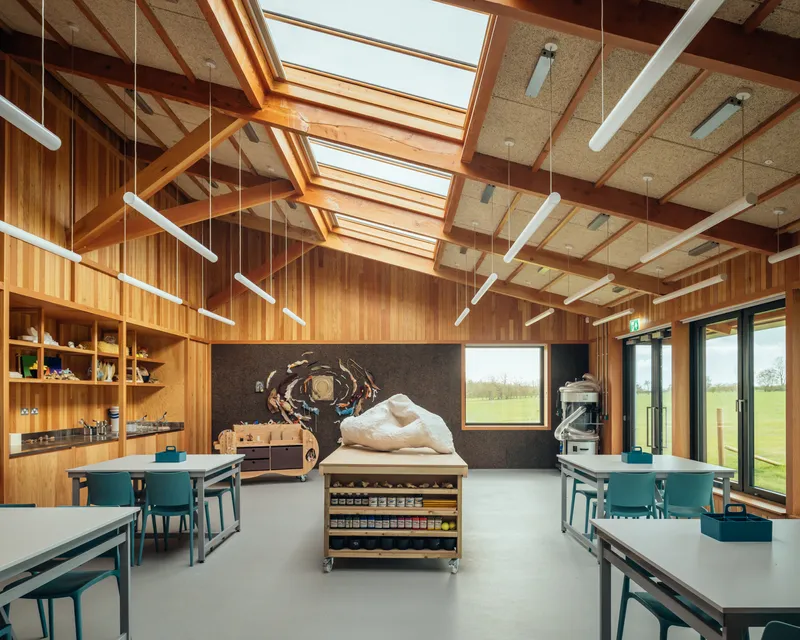
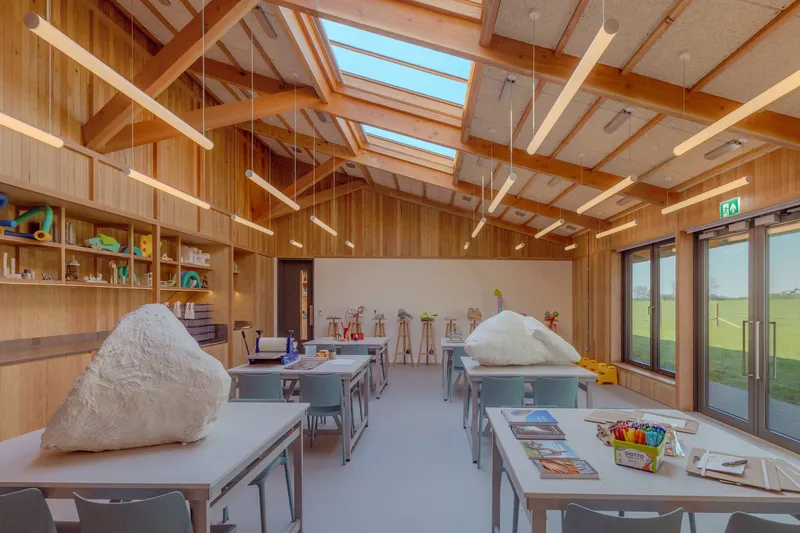
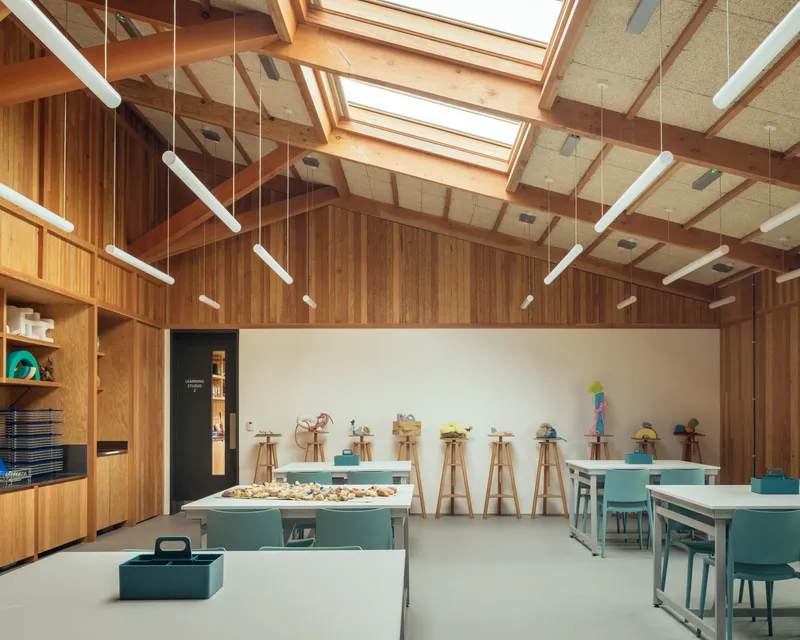
The wet and dry studios occupy the heart of the new program. Lit from above by openable triple-glazed skylights, these rooms are honest working spaces: exposed timber beams, wood wool acoustic panels at the ceiling, wooden easels lined up along whiteboard walls. Natural ventilation comes through the rooflights, and large windows along the perimeter frame constant views of the surrounding fields. The design insists that making happens in the presence of nature, not sealed off from it.
Both studios open directly to the outdoors, where sheep troughs have been repurposed as sinks for outdoor making. It is a small detail, but it encapsulates the project's ethos: nothing is wasted, everything connects back to the site.
Gallery Sequence and Vertical Circulation
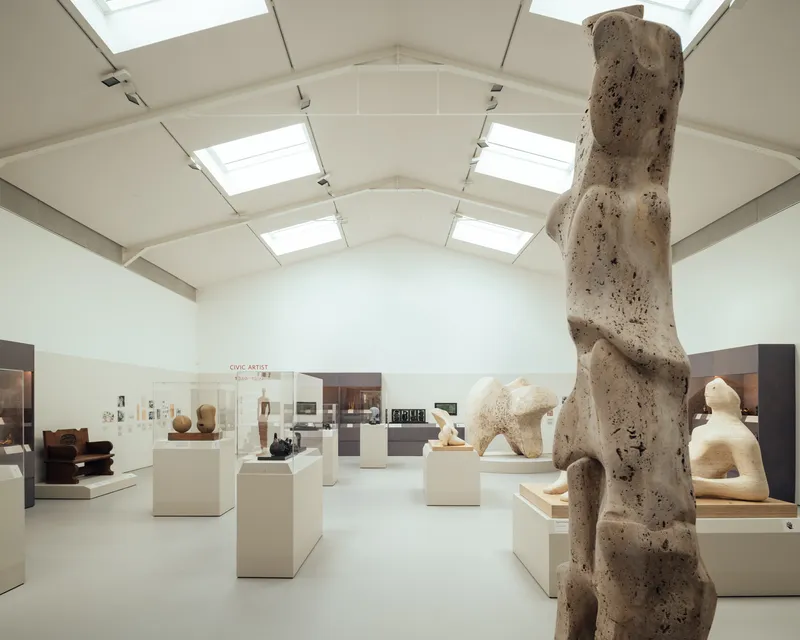
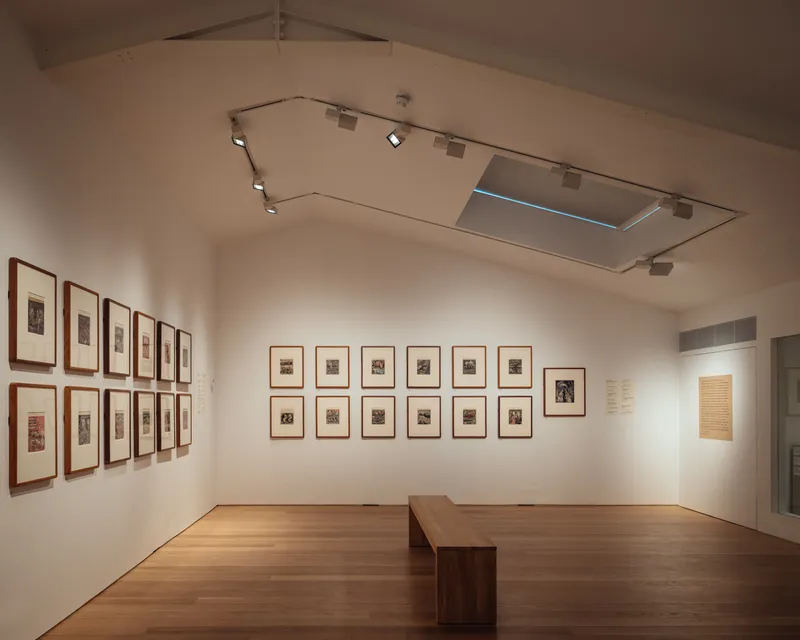
The gallery spaces occupy both floors of the original barn volume. On the ground floor, a top-lit room with a vaulted ceiling displays sculptures on white plinths, the scale of the space generous enough for Moore's larger works. Upstairs, three gallery rooms accommodate changing exhibitions, with framed artworks hung against white walls and track lighting recessed into the timber ceiling. The sequence from double-height entrance to mezzanine to upper galleries creates a spatial rhythm that keeps the building from feeling like a single undifferentiated volume.
The contrast between the raw, workshop-like studios and the more refined gallery interiors is handled deftly. Both share the same material palette of timber and natural light, but the galleries pull back on visual noise, letting the art dominate.
Communal Life and the View Out
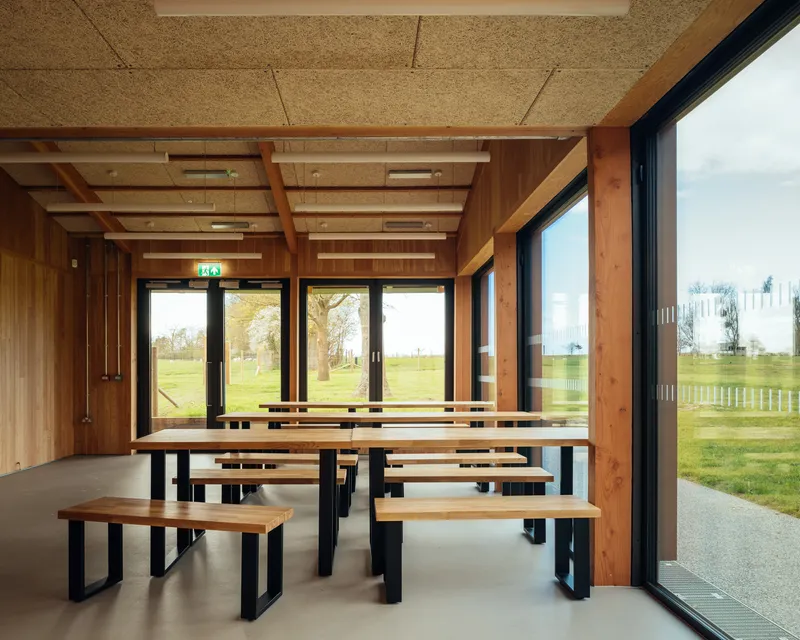
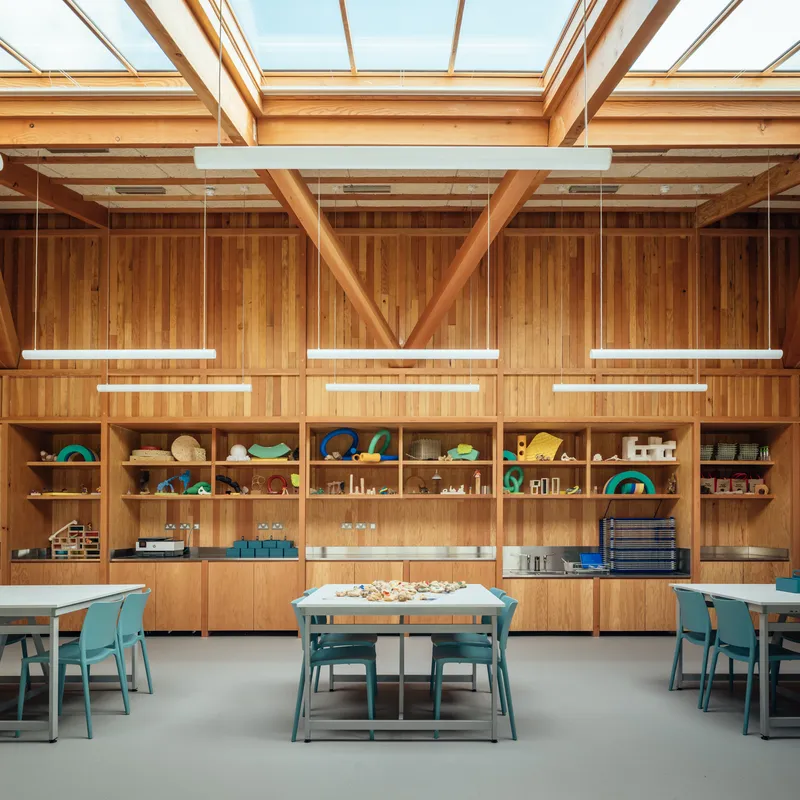
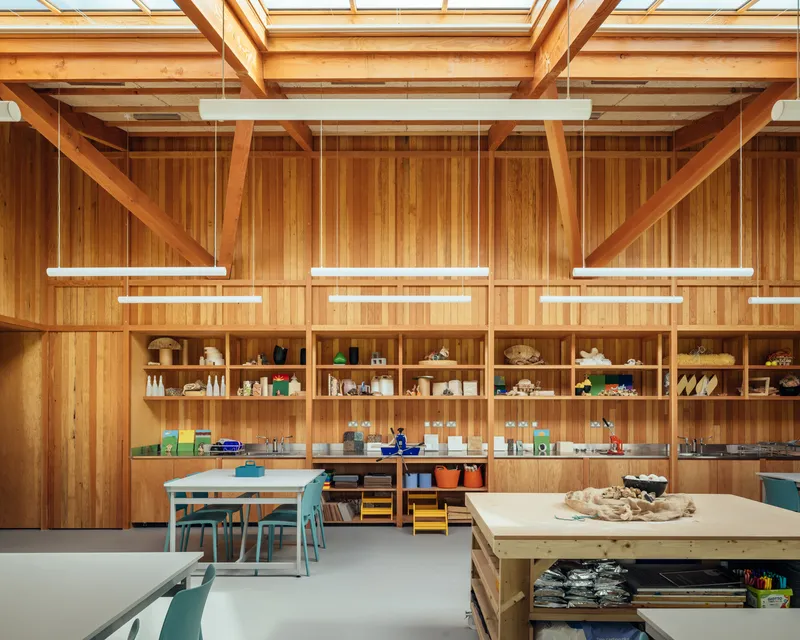
The lunchroom, designed to serve visiting school groups, is one of the most generous spaces in the building. Timber benches and tables sit in front of full-height glazed doors that open directly onto the sheep fields. It is a room where the boundary between inside and outside nearly dissolves. Elsewhere, storage walls with timber shelving beneath exposed beams and continuous roof glazing create a working library atmosphere, while built-in display niches let student work become part of the architecture itself.
These supporting spaces matter because they signal what the building is really for. Sheep Field Barn is not primarily a gallery or a studio. It is a place where people, especially young people, are meant to spend time making and eating and looking at art in close proximity. The architecture accommodates that without over-designing any single moment.
A Material Ethic, Not a Material Fetish
The sustainability strategy here is comprehensive without being performative. Sheep's wool insulation fills the walls. Photovoltaic tiles cover the entire roof. A ground source heat pump replaces the estate's old oil-fired boiler. The triple-glazed skylights balance daylighting with thermal performance. Running costs are projected to halve. But what distinguishes the project is the circularity of the material decisions: the reuse of every original cladding board, the screw piles that can be unscrewed rather than demolished, the reclaimed spruce that links the building to an agricultural past beyond its own site.
Designing for disassembly is a phrase that gets thrown around often. Here it actually structures the construction logic. The Douglas fir frame bolts to the existing steel rather than being welded or cast in place. Components are legible and separable. When this building reaches the end of its useful life, it is meant to come apart cleanly, not with a wrecking ball.
Plans and Drawings
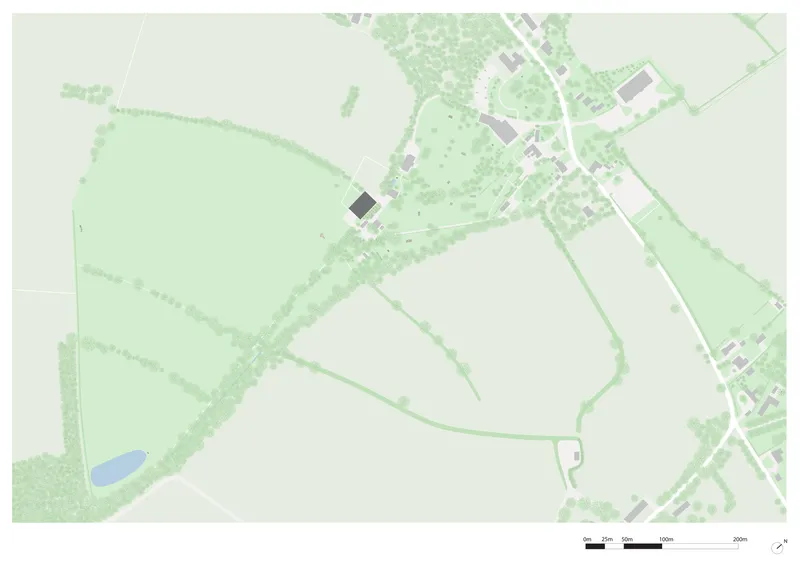
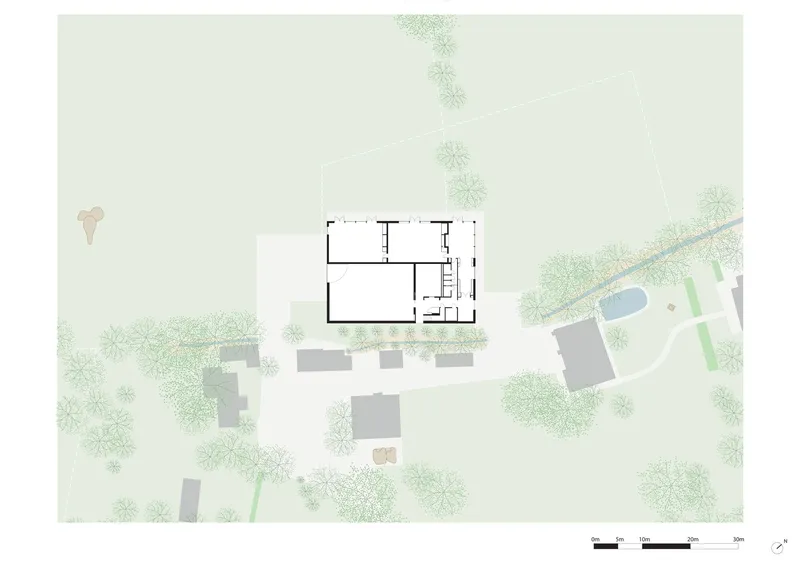
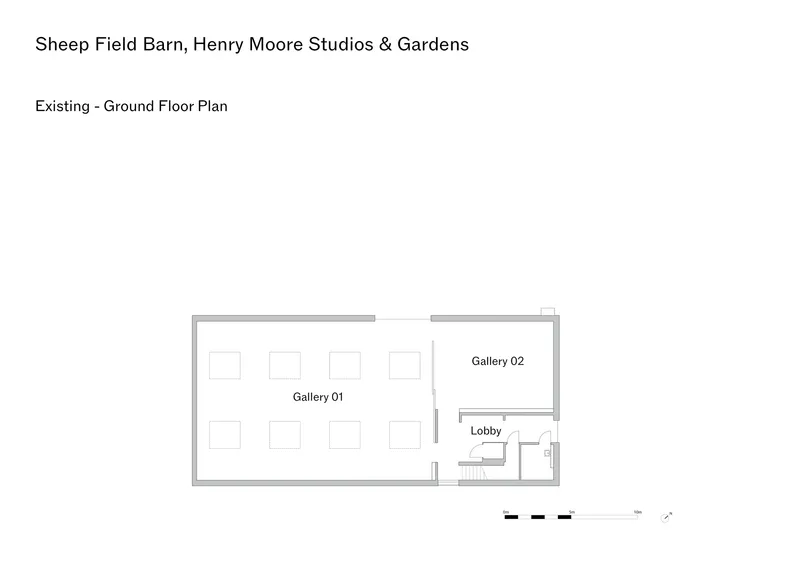
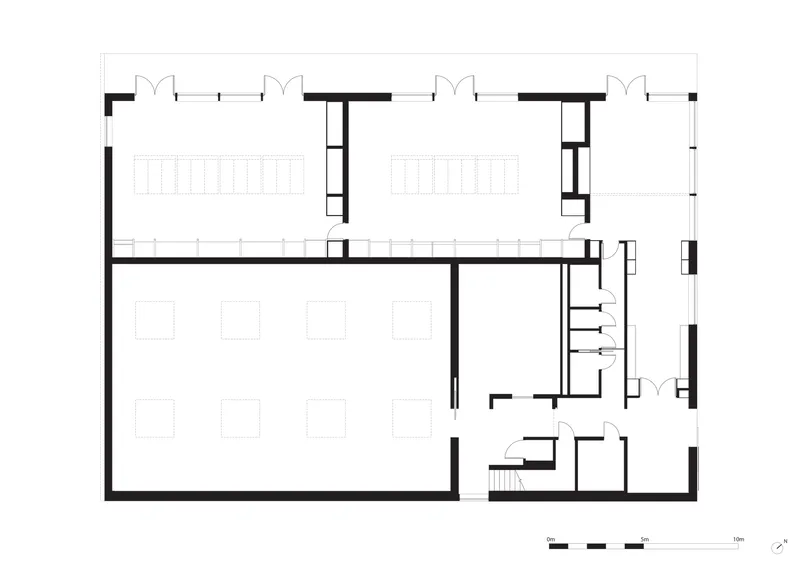
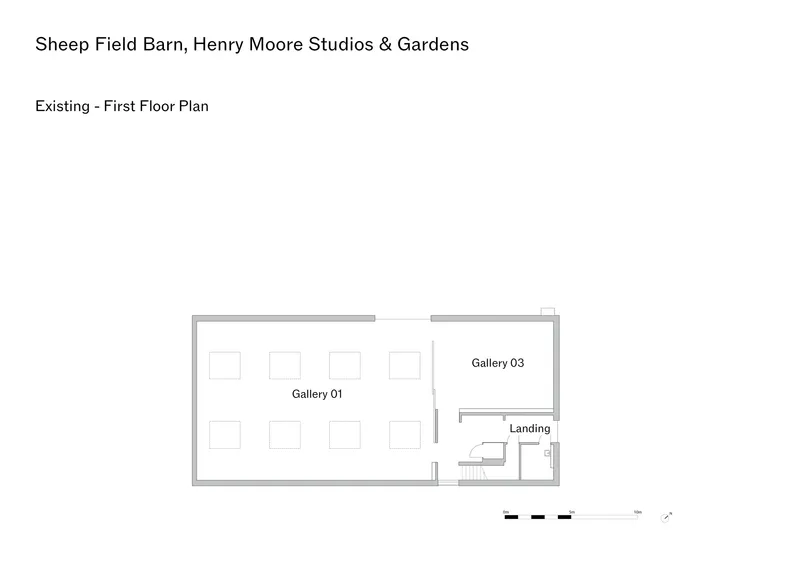
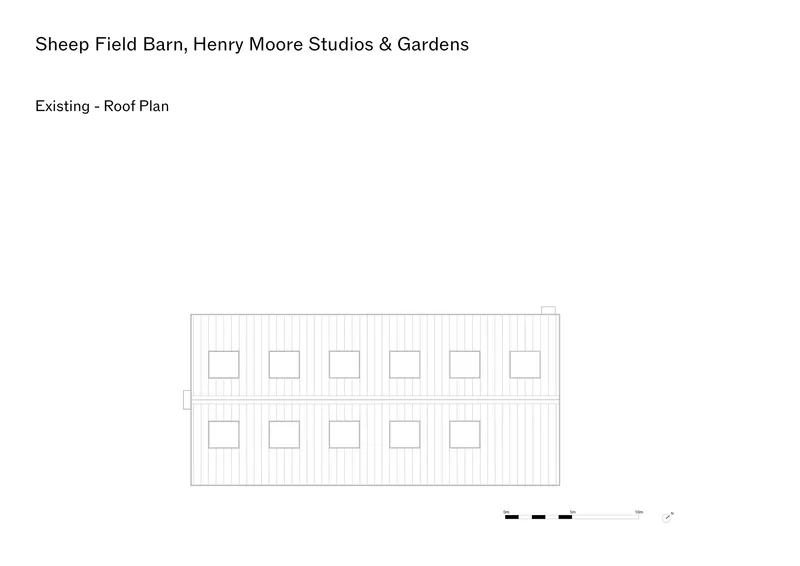
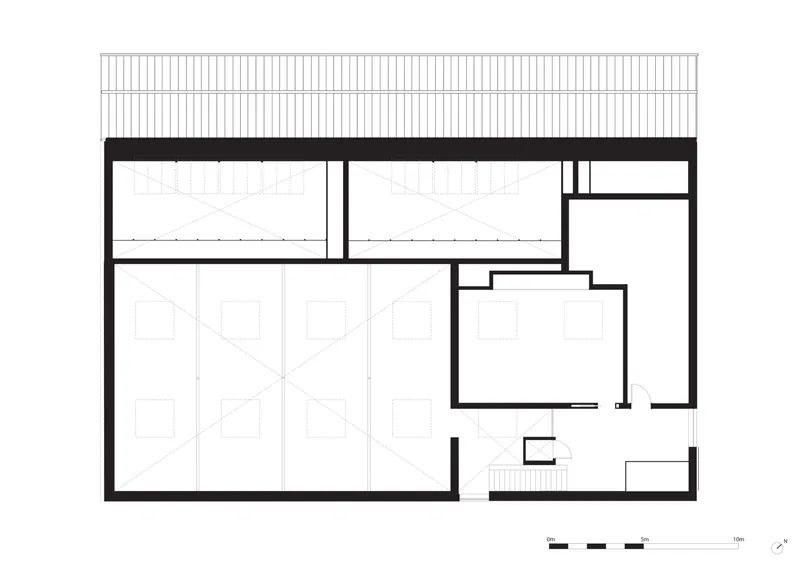
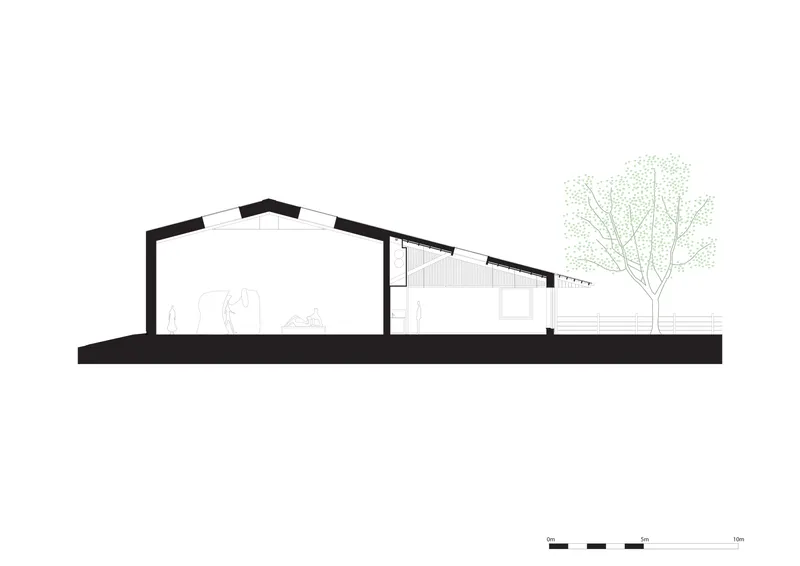
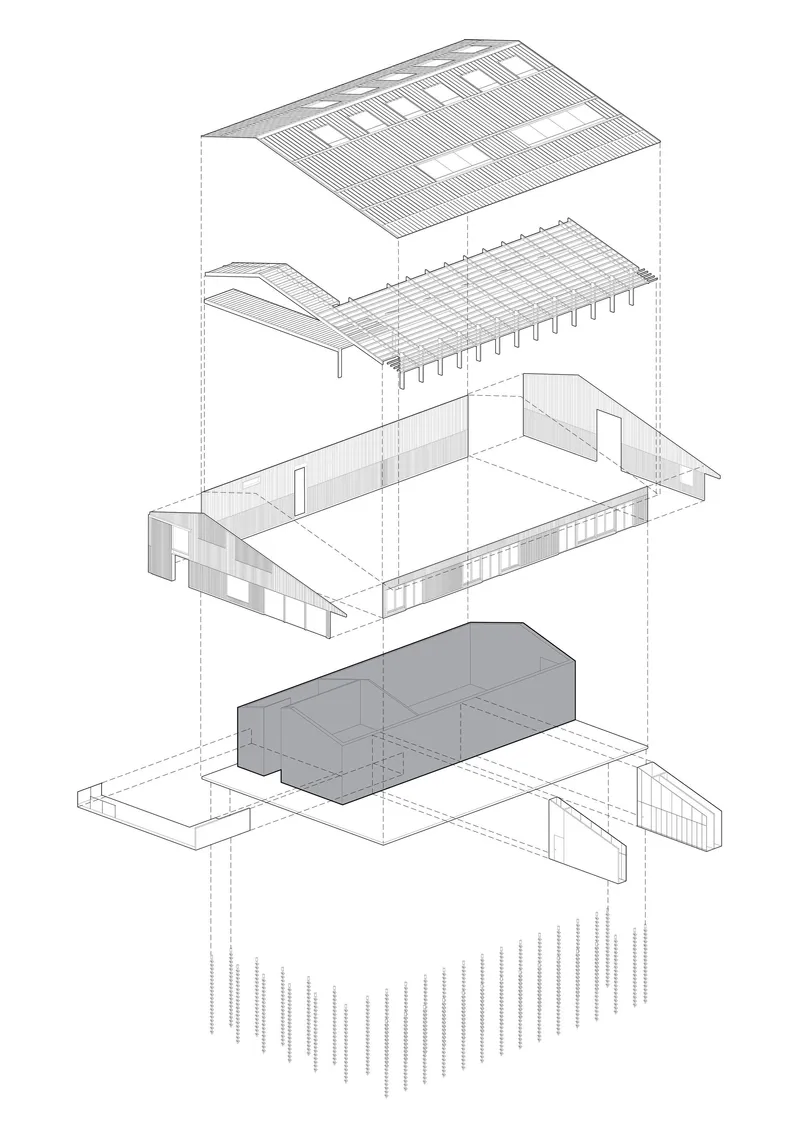
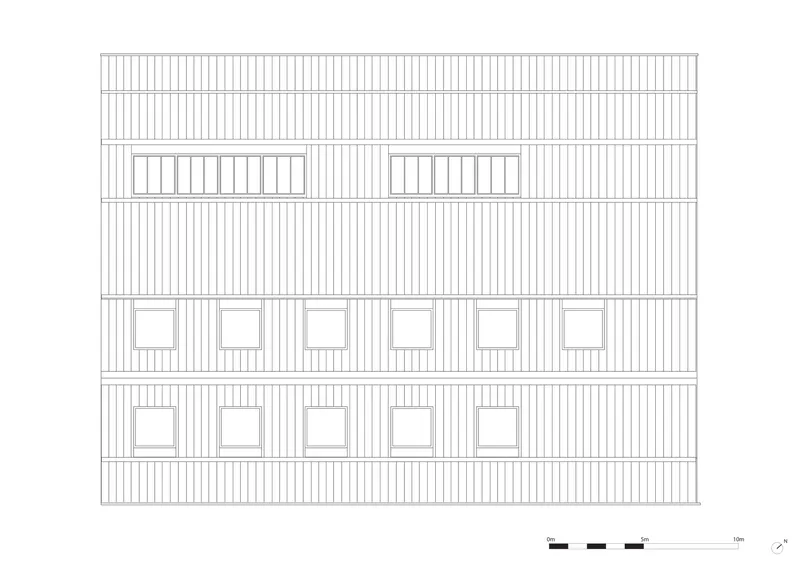
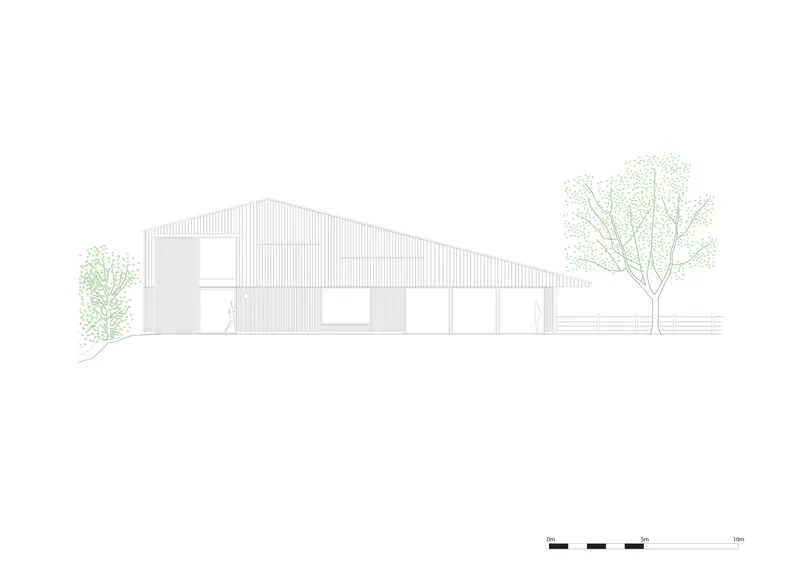
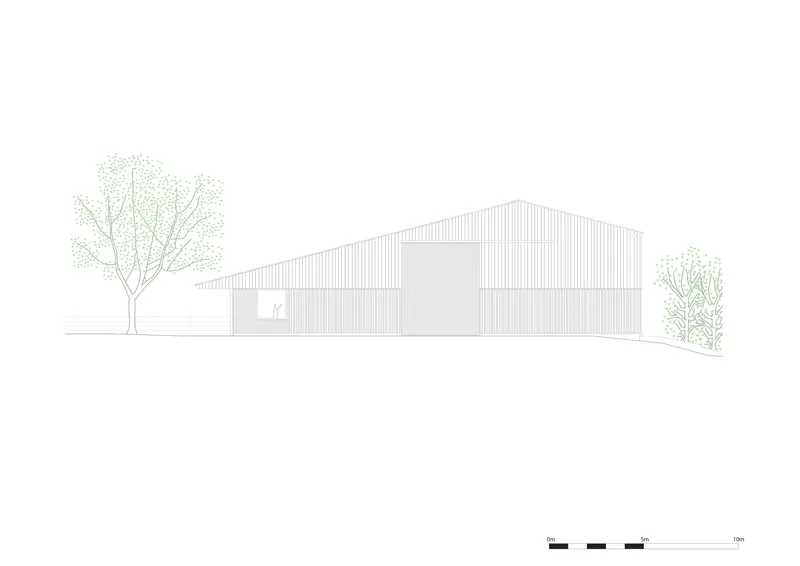
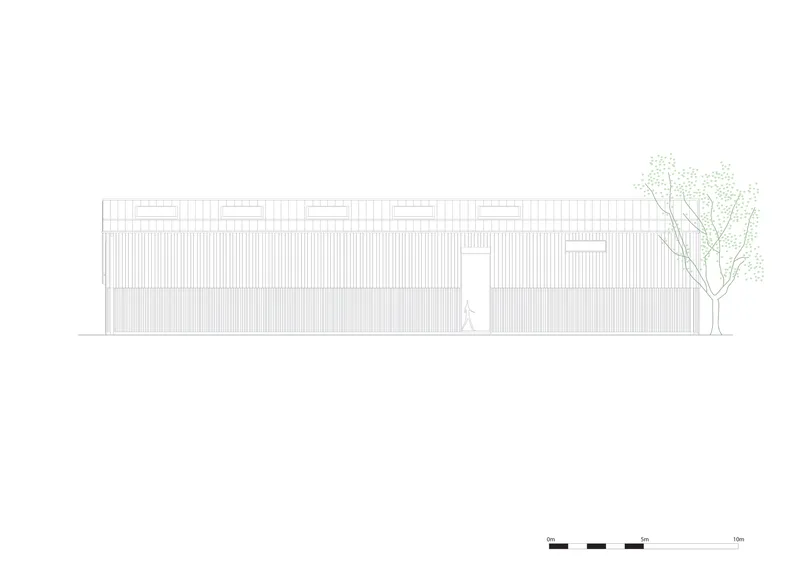
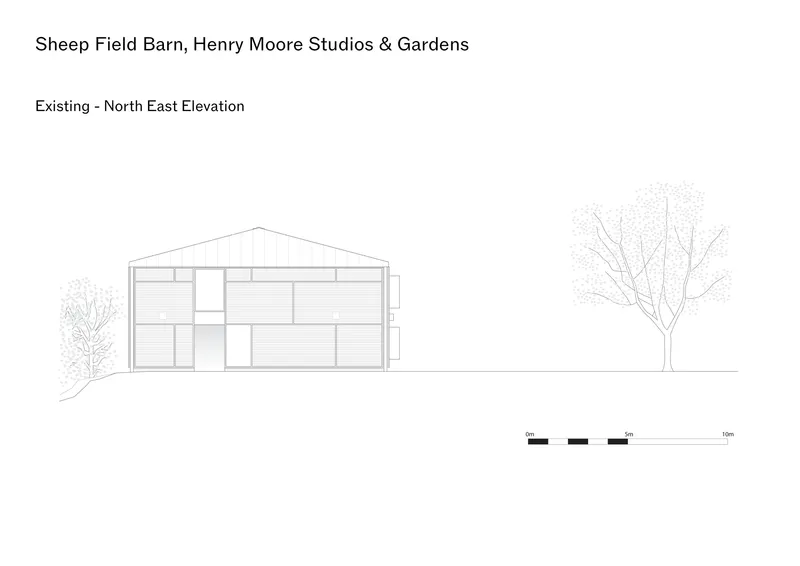
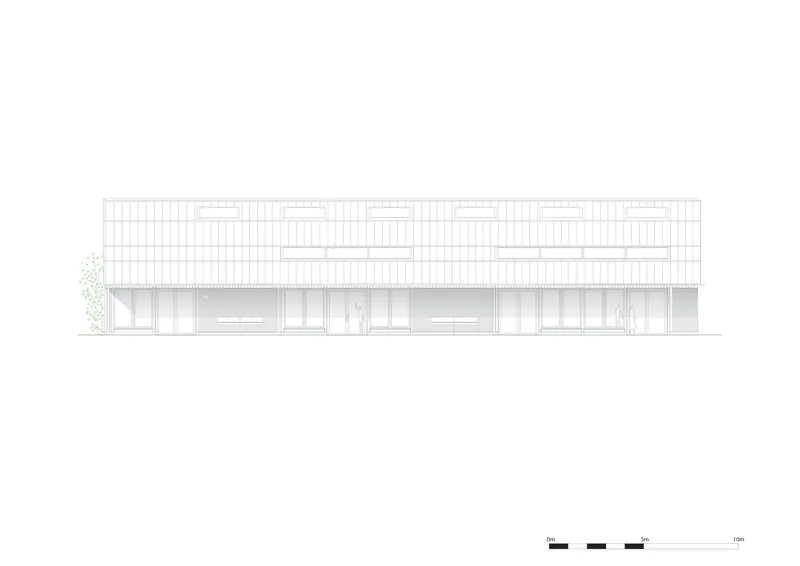
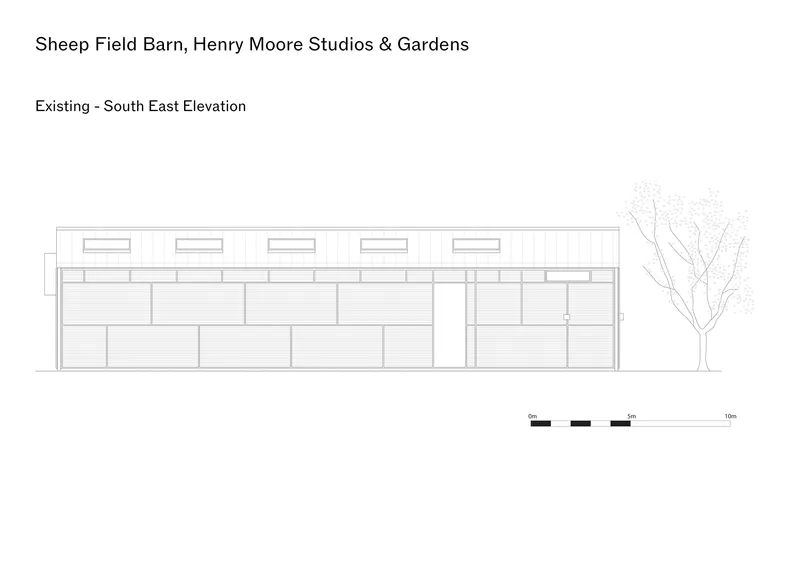
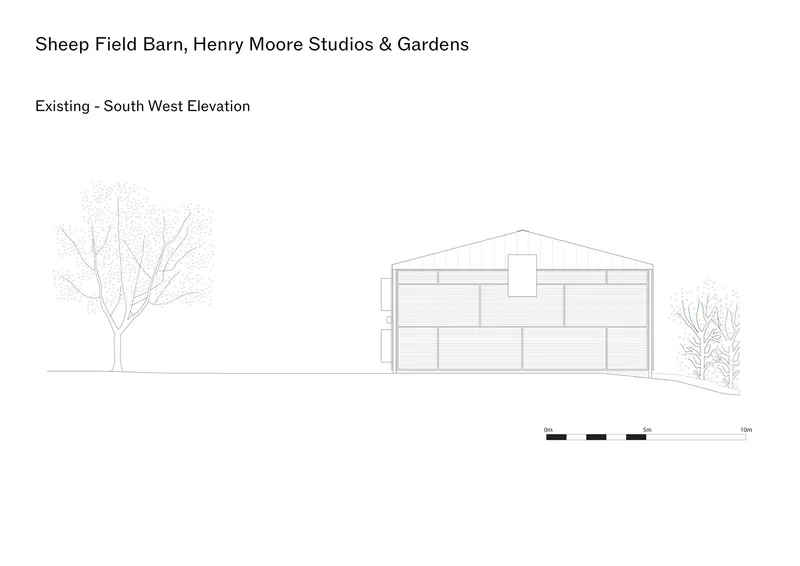
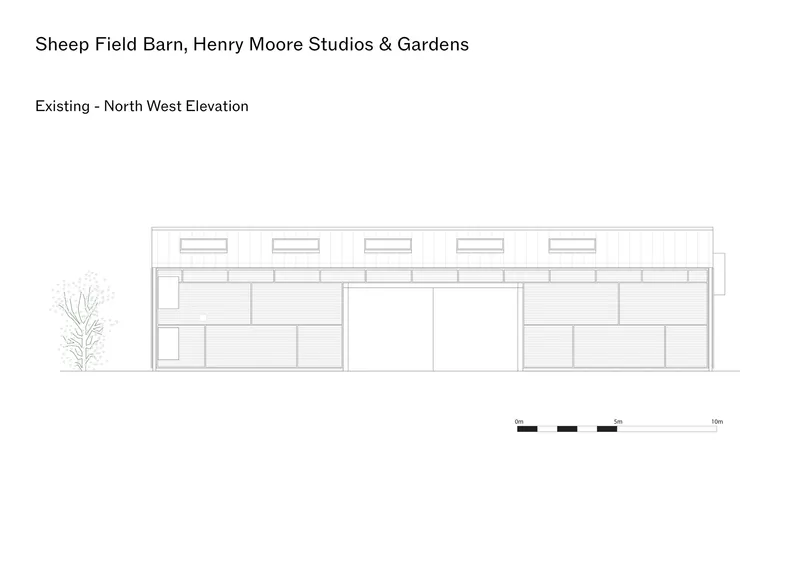
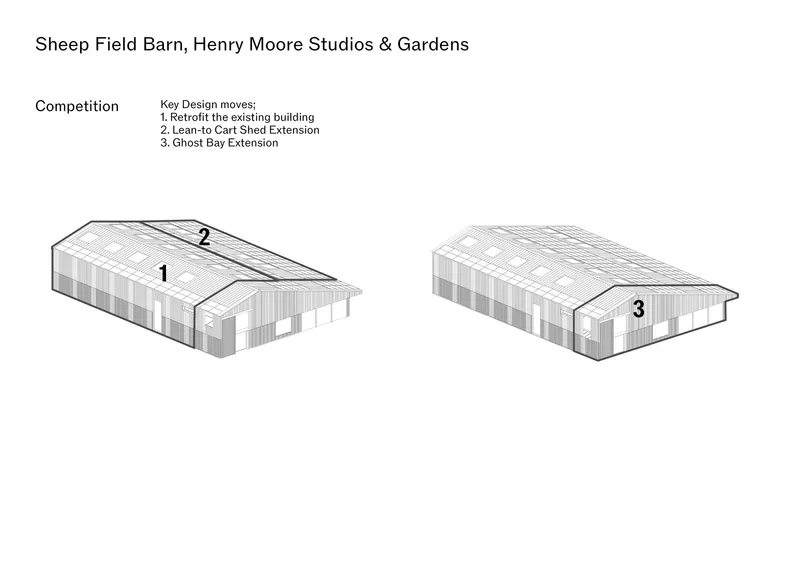
The site plan reveals how the barn sits within the broader landscape of Moore's estate, surrounded by mature trees and open fields. The ground and first floor plans show a clear organizational logic: galleries occupy the original barn footprint while the extension houses the studios, lunchroom, and entrance. The section drawings are particularly telling, illustrating how the new timber frame wraps around the existing steel structure and how clerestory windows and skylights distribute daylight deep into the plan. The exploded axonometric makes the layered construction legible, from screw pile foundations through timber frame to corrugated roof, reinforcing the design-for-disassembly strategy.
Why This Project Matters
Sheep Field Barn is a quiet rebuke to the idea that sustainability and architectural ambition are in tension. DSDHA has produced a building that is spatially rich, materially inventive, and environmentally responsible without ever advertising any of those qualities on its facade. The barn looks like a barn. It sits in its landscape with the same unpretentious solidity as the agricultural buildings it references. The ambition is all in the details: the salvaged spruce, the repurposed lintels, the wool in the walls.
More broadly, the project offers a model for how cultural institutions can expand their physical footprint without expanding their environmental one. By reusing an existing structure, avoiding concrete foundations, and planning for eventual disassembly, DSDHA has made a building that takes the long view. In the context of Henry Moore's estate, where landscape and sculpture have coexisted for decades, that temporal patience feels exactly right. The barn does not compete with Moore's work. It provides the conditions for new work to happen alongside it.
Sheep Field Barn, Perry Green, Hertfordshire, by DSDHA. 600 square meters. Completed 2026. Photography by ©Jim Stephenson and ©Rob Hill.
About the Studio
Share Your Own Work on uni.xyz
If projects like this are the kind of work you want to make, uni.xyz is a place to publish your own, find collaborators, and enter design competitions.




Popular Articles
Popular articles from the community


Conexión: Biophilic Design Reimagines High-Rise Living in Hong Kong
Conexión reimagines high-rise living in Hong Kong through biophilic design, green facades, shared spaces, daylight, water and nature within.

The Musturak Paradise: Senior Living Architecture for a Connected Future in Temara, Morocco
The Musturak Paradise reimagines senior living architecture in Temara via private homes, social spaces, culture, community, and shared care.

Play: Fragments of Their World
Familiar architecture becomes modular playground design, creating safe spaces where displaced children can learn, connect, imagine and play.

Lunar Spiral: Space Architecture Shaped by the Mathematics of the Universe
Lunar Spiral reimagines space architecture through Fibonacci geometry, lunar regolith, levitating habitats, and self-sustaining Moon living.


Similar Reads
You might also enjoy these articles

Bao Huynh Watercolor Atelier: A Serene Art Retreat in Hội An
Bao Huynh Watercolor Atelier in Hội An blends multifunctional art spaces, sustainable design, local materials, and family-friendly living in a serene environment.

Atelier Macri Concept Store Interior Design by CASE-REAL
Atelier Macri store features a "ko" counter, walnut wood details, cork displays, blending retail, gallery, and seamless customer experiences.

Manuel Vargas Izquierdo Stadium and High-Performance Sports Center: Architectural Excellence in Jalpa de Méndez
The Manuel Vargas Izquierdo Stadium blends sustainable design, inclusive sports facilities, and cultural-inspired architecture, revitalizing Jalpa de Méndez’s public spaces.
KAKR Buluh Awar Hall: Revitalizing Community and Ecology Through Bamboo Architecture
Community built bamboo hall revitalizes Buluh Awar village, empowering youth, restoring ecology, celebrating vernacular craftsmanship through sustainable architecture and culture.





Comments (0)
Please login or sign up to add comments
No comments yet. Be the first to comment!