

DualSpace Studio Designs a Kuala Lumpur Office That Feels Like a Village
The ELIT Office in Kuala Lumpur layers wood, pattern, and split-level programming into a workplace that rewards wandering.


Most corporate offices are organized around efficiency: the shortest path from elevator to desk, the most seats per square meter, the cleanest sightlines for management. The ELIT Office by DualSpace Studio in Kuala Lumpur operates on a different premise. Spread across two floors and a mezzanine, the project by lead architects YongWei Lew and Eliz Wong treats the workplace less like a machine and more like a small settlement, one where pantries, libraries, meditation rooms, photo studios, and open work zones each claim their own identity while remaining tethered by a consistent material language.
What makes the project genuinely interesting is the way it manages variety without chaos. The program list reads like a campus brief rather than a tenant fit-out: dual pantries, a training hall, meeting suites, a meditation room, lounges, shared hubs, and conventional desks all coexist within a single address. DualSpace Studio holds this sprawling program together not through uniformity but through recurring wood details, rhythmic ceiling patterns, and a circulation spine that treats transitions between zones as design opportunities rather than leftover corridors.
Arrival and Reception
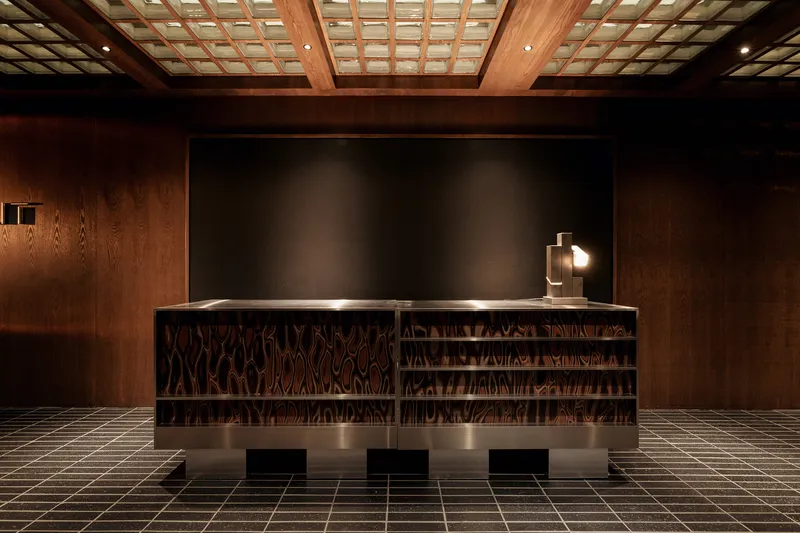
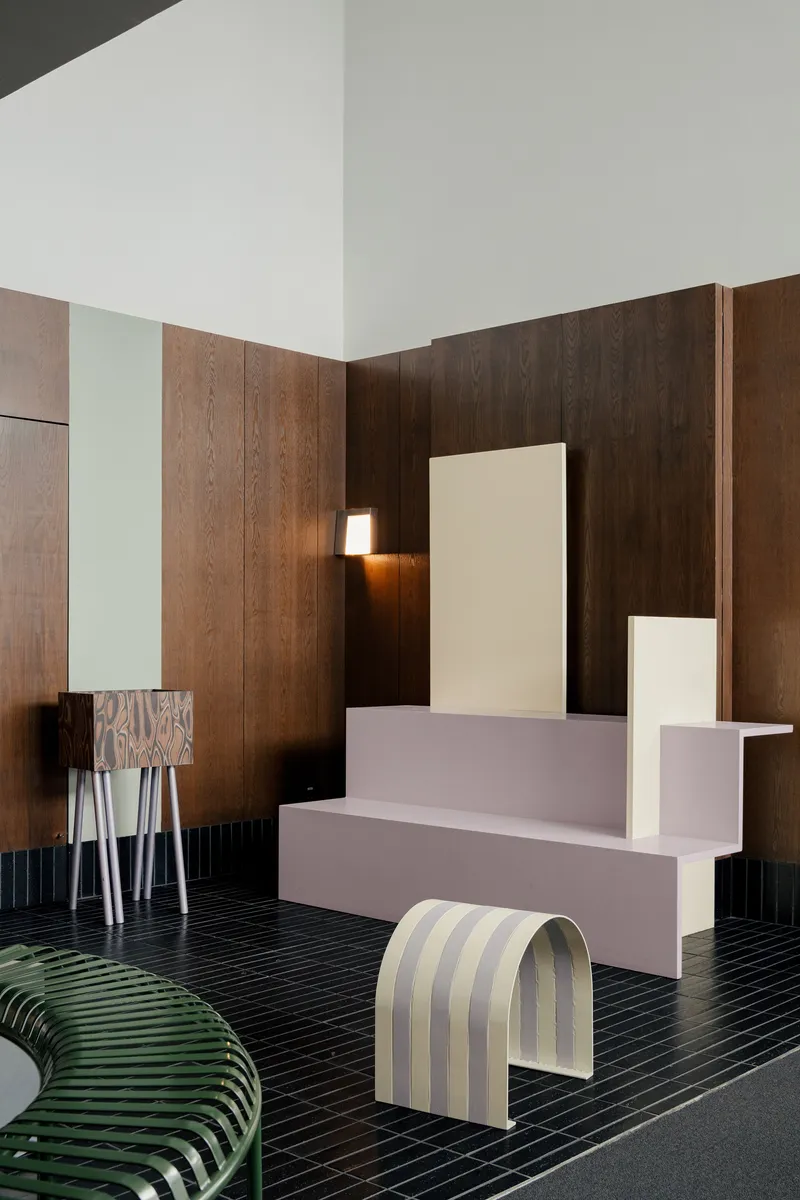
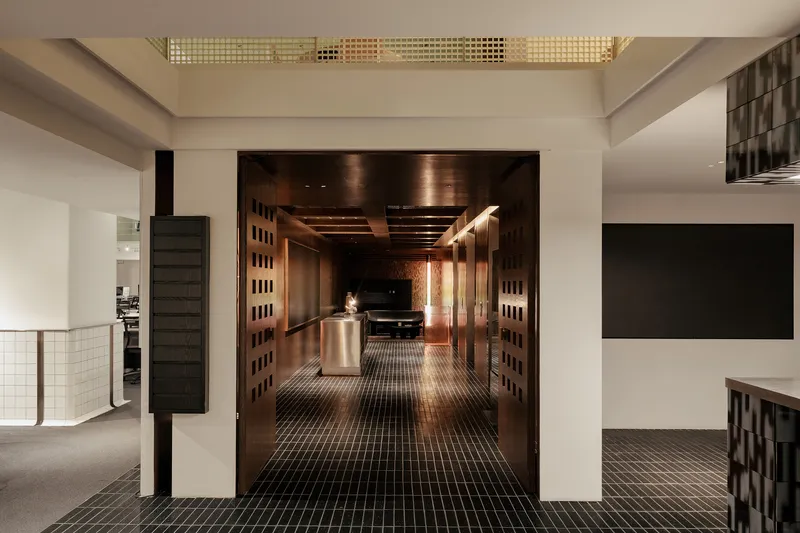
The entry sequence sets up the project's tonal range immediately. A reception desk wrapped in a geometric patterned panel sits beneath a timber coffered skylight, establishing the material palette that will carry through every room. A second reception area, dressed in pale pink paneling and striped upholstery against dark tile, signals that this is not a space afraid of color or personality. The transition from the white reception zone into a timber-lined corridor, framed by gridded skylights overhead, is choreographed as a threshold: the moment you leave the civic face of the office and enter its more intimate interior.
These openings are worth studying. Rather than a single lobby funneling everyone past a security badge reader, DualSpace Studio creates layered arrivals that slow you down and orient you spatially before you reach the working zones. It is a generous approach for an office interior, and it pays dividends in legibility throughout the rest of the plan.
Corridors as Connective Tissue
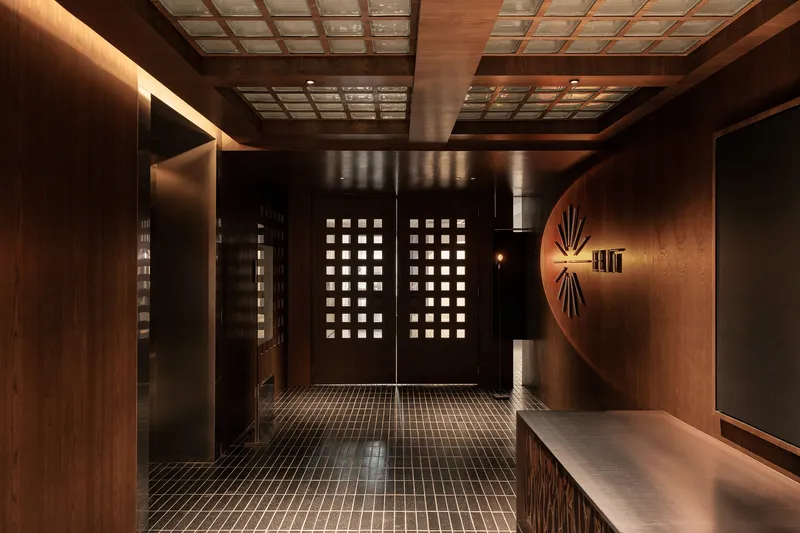
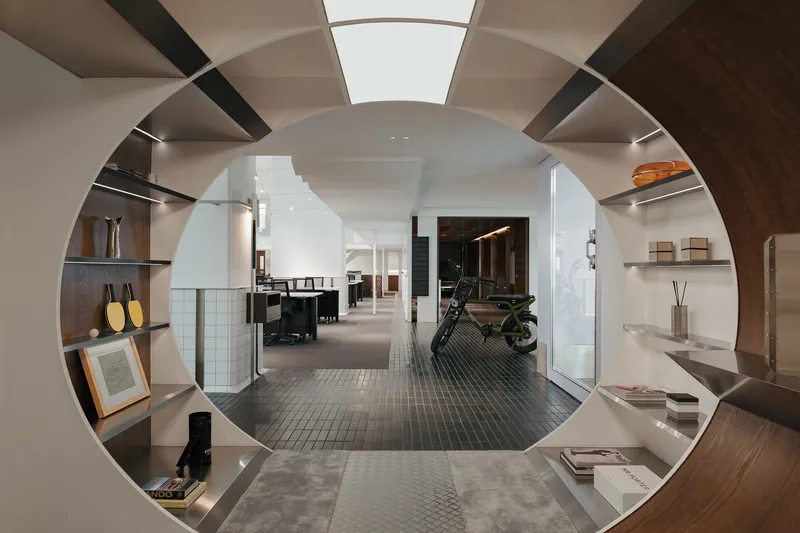
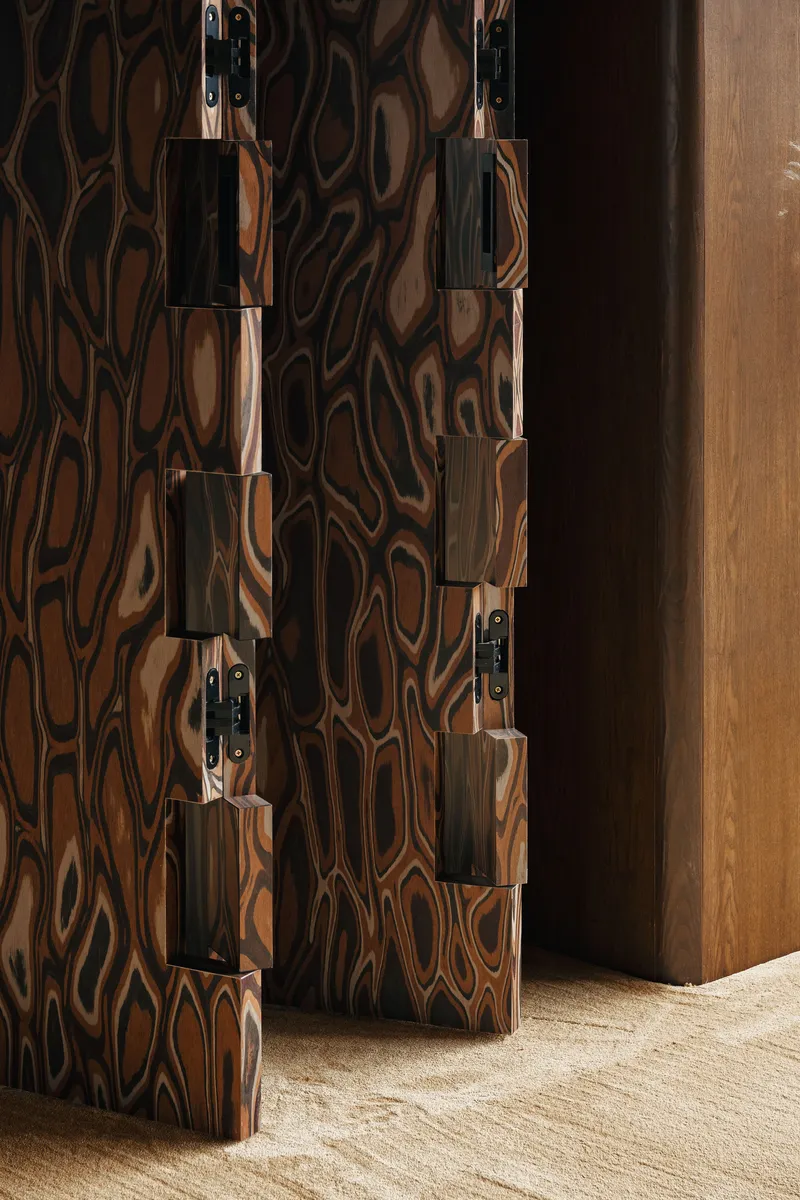
The hallways in this project are among its strongest moves. A corridor lined with perforated timber doors and gridded ceiling panels, set above dark mosaic floor tiles, feels more like a passage through a well-detailed house than a corporate back-of-house route. Elsewhere, a circular portal framed by timber shelving turns a simple doorway into a moment of spatial compression and release. Custom hardware on figured wood doors, black metal hinges meeting natural grain panels, reinforces the sense that every surface was considered as part of a whole.
Circulation here operates as a connective spine. Transitional zones like lounges and shared hubs sit along the path of movement, encouraging unplanned encounters. The approach borrows from campus planning but compresses it into an interior fit-out, which is not easy to pull off without the result feeling cramped. The generous ceiling heights and consistent material rhythm prevent that.
Kitchens, Pantries, and Shared Tables
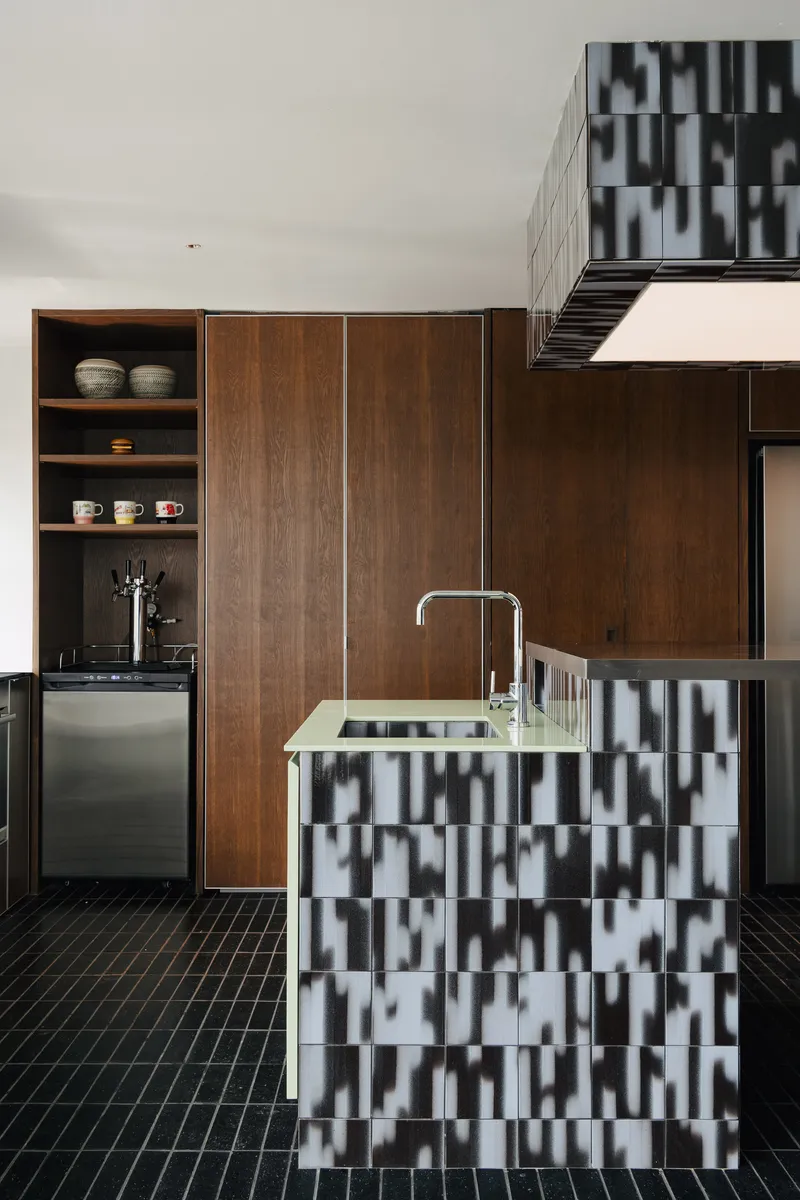
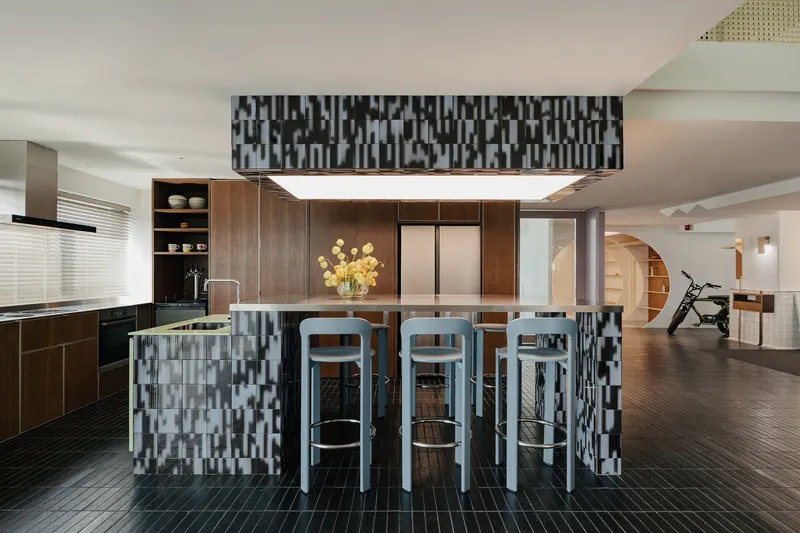
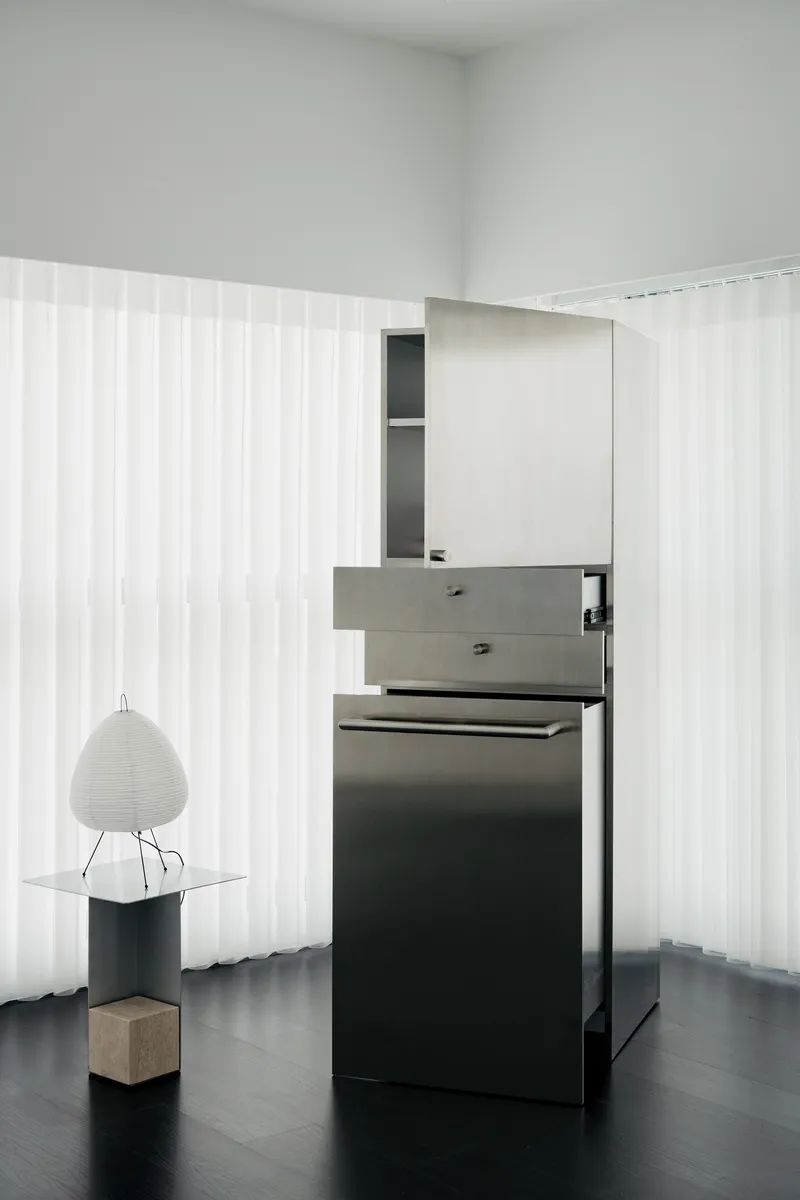
The dual pantry strategy is telling. Rather than a single break room tucked away from the action, the ELIT Office places kitchen islands and shared counters at multiple points throughout the plan. One island is clad in black and white chequered tiles with walnut cabinetry and open shelving, its material richness elevating a utilitarian function. Another is a more restrained affair: grey drawers and black cabinetry set against translucent corrugated wall panels that filter daylight softly into the service zone.
These kitchens are not afterthoughts. They anchor social life within the office, providing the kind of informal gathering spots that no amount of collaboration software can replicate. The chequered pendant light hanging above one of the islands is a playful touch that reinforces the project's willingness to let each zone develop its own character.
Dining and Double Heights
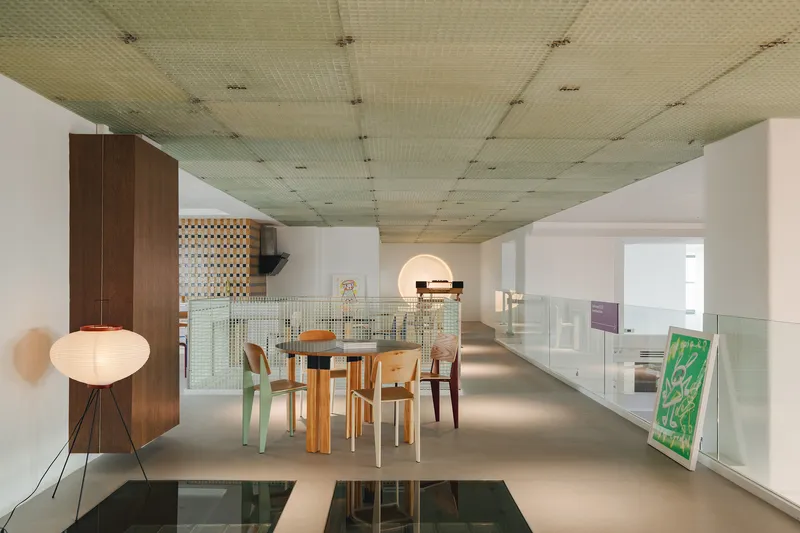
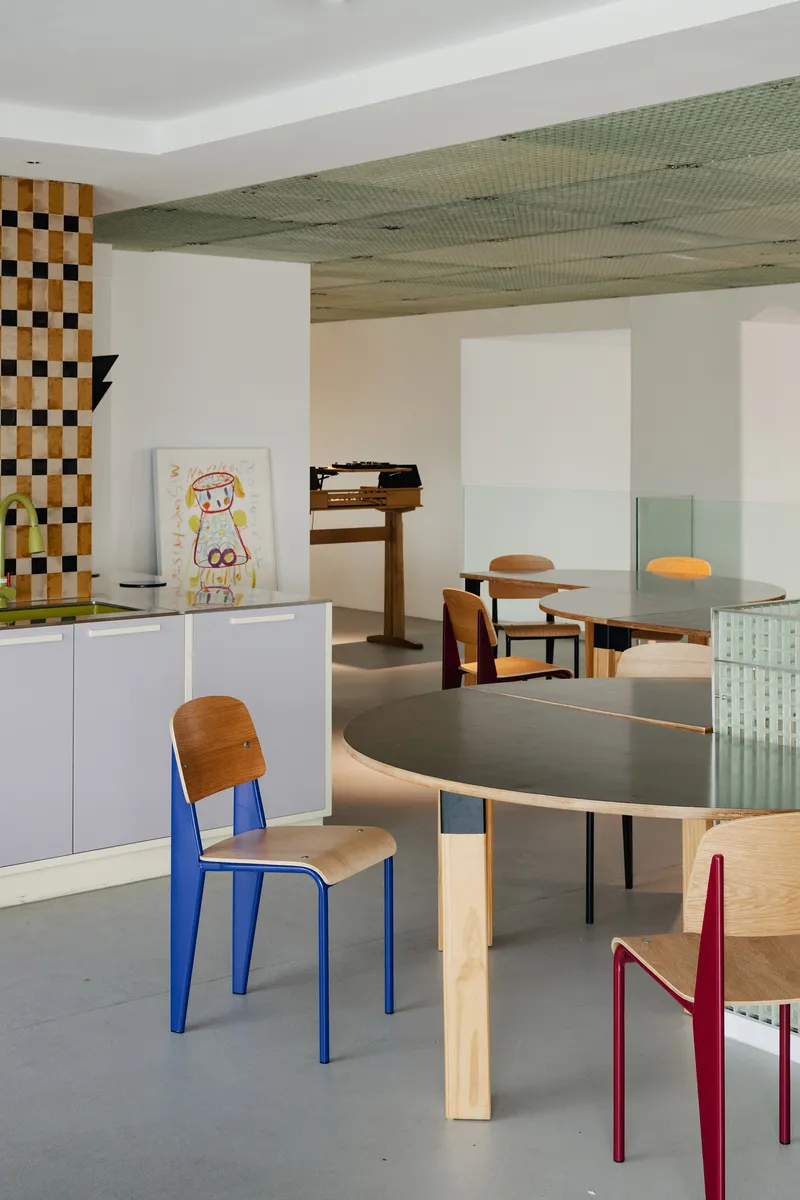
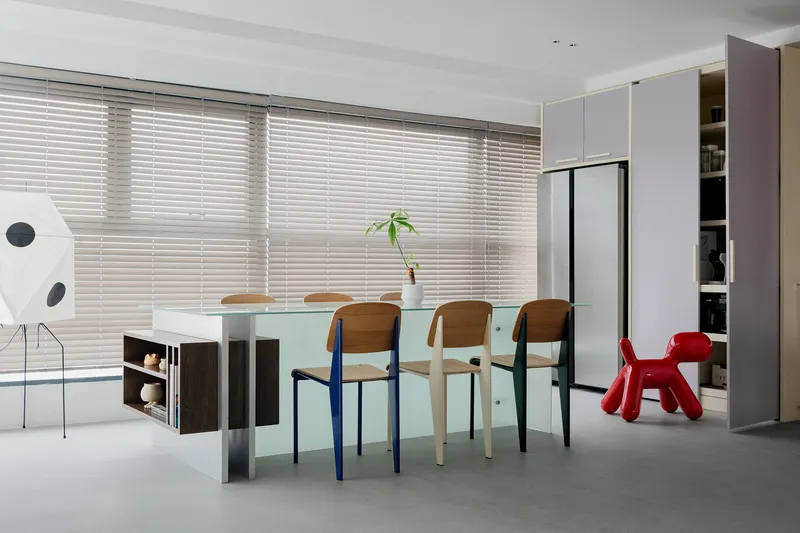
The double-height dining area is the project's most photogenic space, and for good reason. Perforated acoustic ceiling panels soften noise without killing the volume, while a glass-railed mezzanine provides visual connection across levels. The sectional quality of the space, where you can see people working above while you eat below, collapses the hierarchy between production and rest.
Elsewhere in the dining zones, a checkered tile column punctuates an open area beneath perforated green metal ceiling panels, introducing color in a way that feels deliberate rather than decorative. A frosted glass table surrounded by mismatched chairs, horizontal blinds filtering afternoon light, creates an almost domestic atmosphere. The variety across dining spaces means staff are not condemned to the same lunchtime scenery every day.
Meeting and Focus Rooms
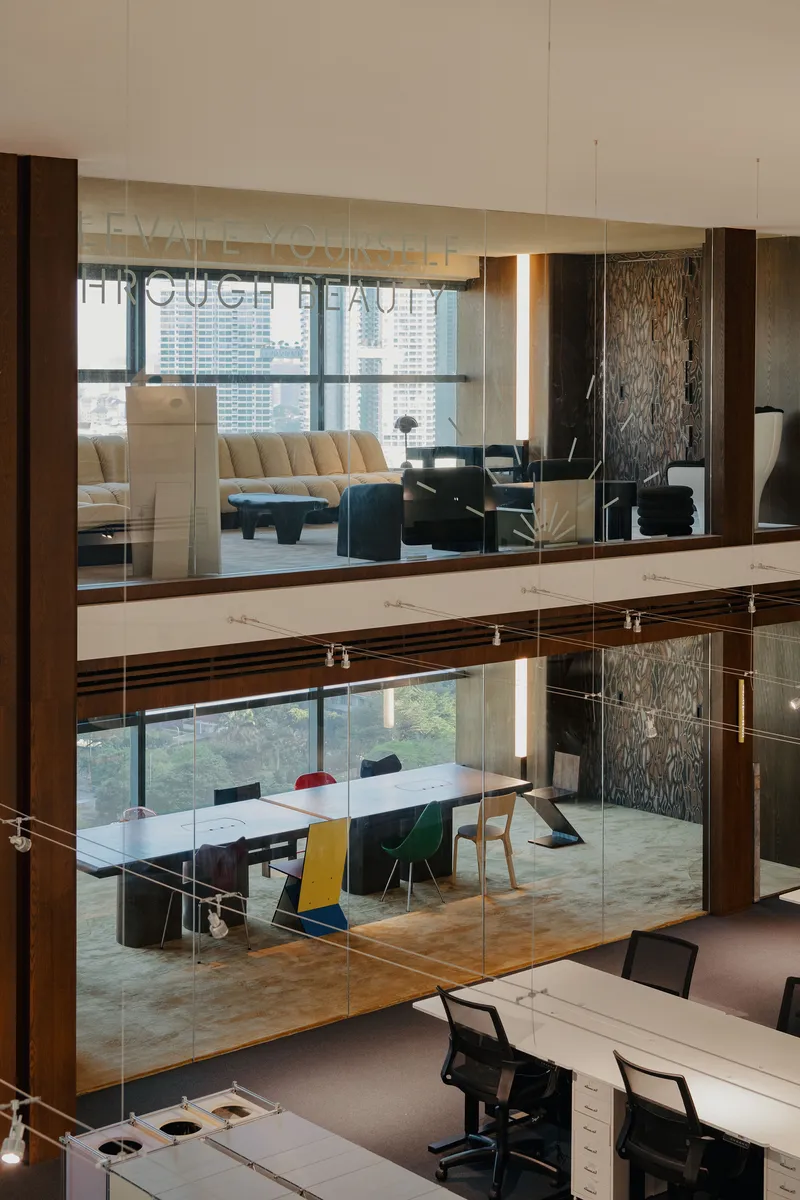
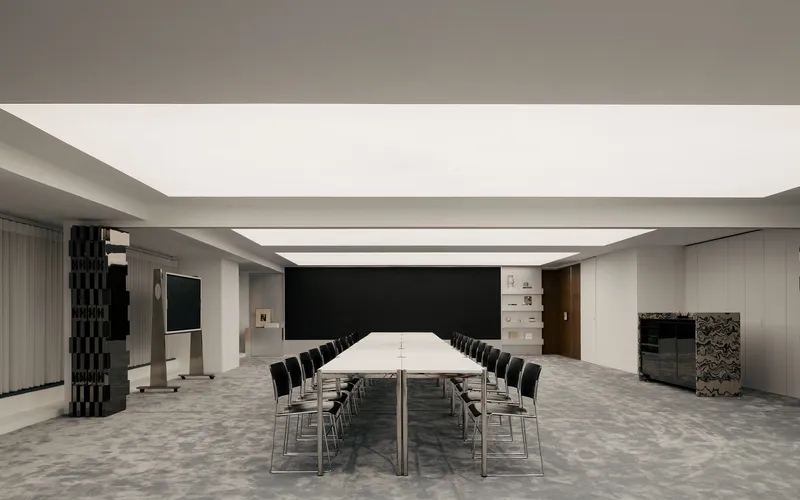
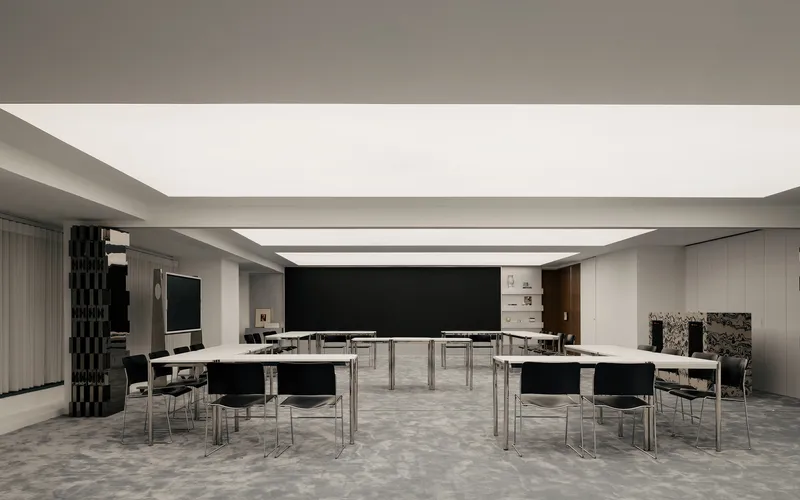
The stacked glass-enclosed meeting rooms, visible through all three levels with timber framing and textured wall panels, represent the project's most assertive structural gesture. You can read the office vertically through these transparent boxes, understanding the organization of the building in a single glance. It is an effective wayfinding device disguised as a design flourish.
A conference room with a continuous skylight and a dark-tiled column demonstrates how natural light is used to distinguish meeting spaces from the ambient glow of open work areas. Another meeting space clusters white tables beneath linear skylights on patterned grey carpet, calibrated for the kind of workshop-style layout that rigid boardrooms cannot accommodate. The adaptability here is structural, not just a matter of rolling chairs around.
Retreat Spaces and Atmosphere
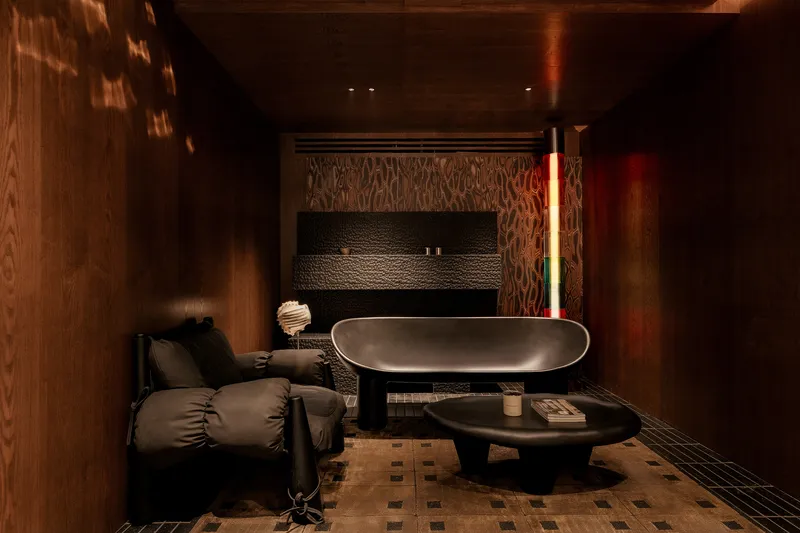
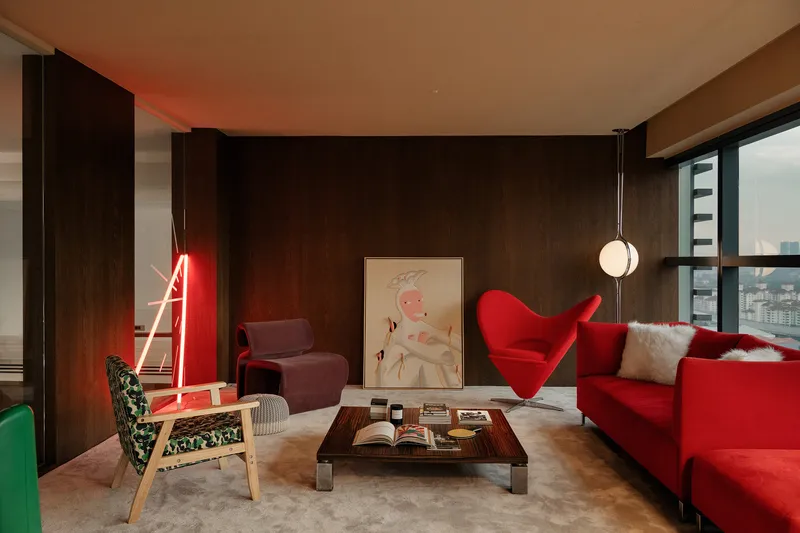
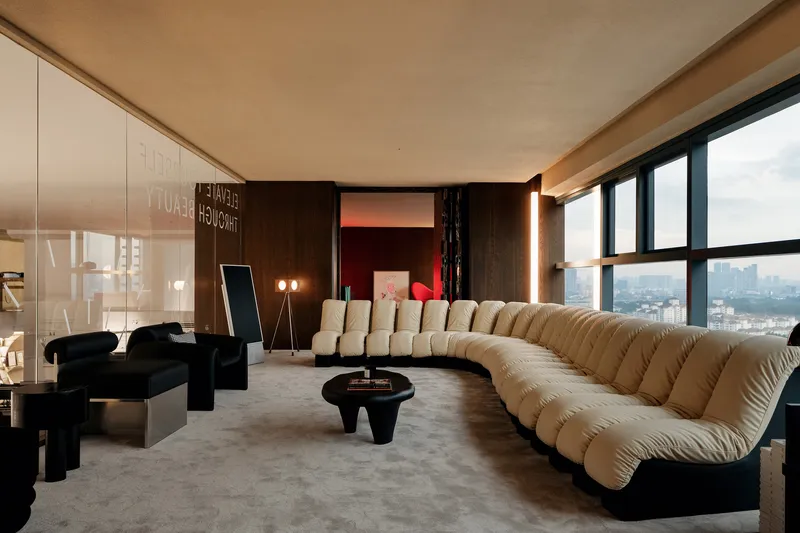
A meditation room is standard issue in wellness-oriented offices now, but the spa room here, dark timber-clad with an oval soaking tub and chequered floor tiles under ambient lighting, goes further than most employers would dare. It is a genuine retreat space, not a token quiet room with a yoga mat. Paired with a living area that features dark timber-paneled walls, a red neon light sculpture, and upholstered seating, these rooms offer sensory contrast to the bright, efficient zones elsewhere.
A corner lounge with a curved sectional sofa and panoramic city views through full-height glazing functions as the project's release valve: a place where Kuala Lumpur itself becomes the backdrop and the tight material world of the interior gives way to sky. The range from introspective darkness to open daylight within a single office is ambitious, and DualSpace Studio manages the transitions without the spaces feeling like they belong to different projects.
Workstations and Detail Moments
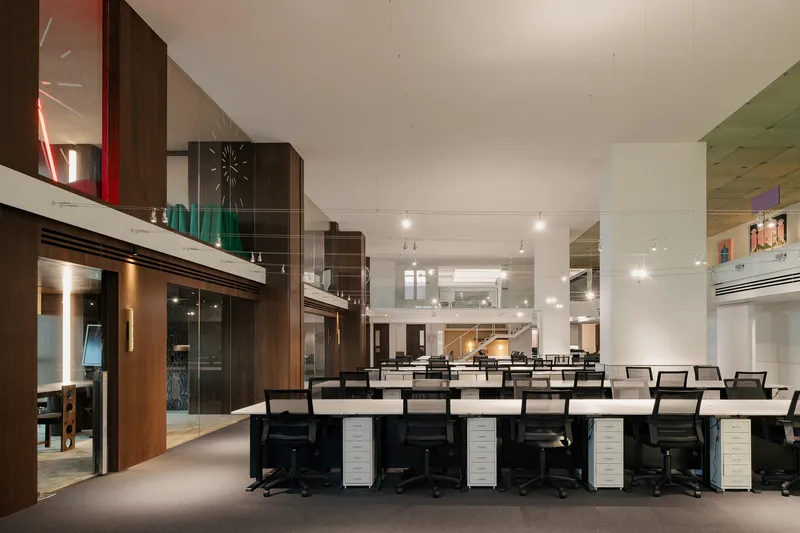
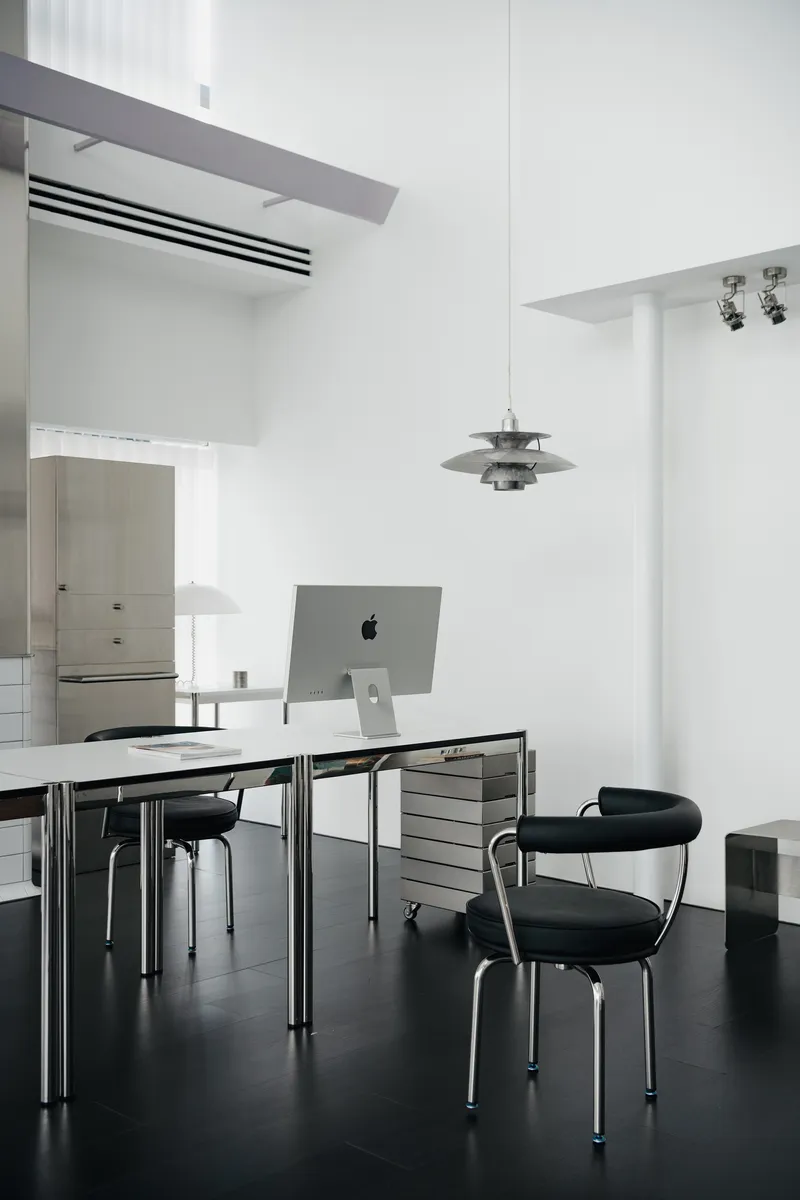
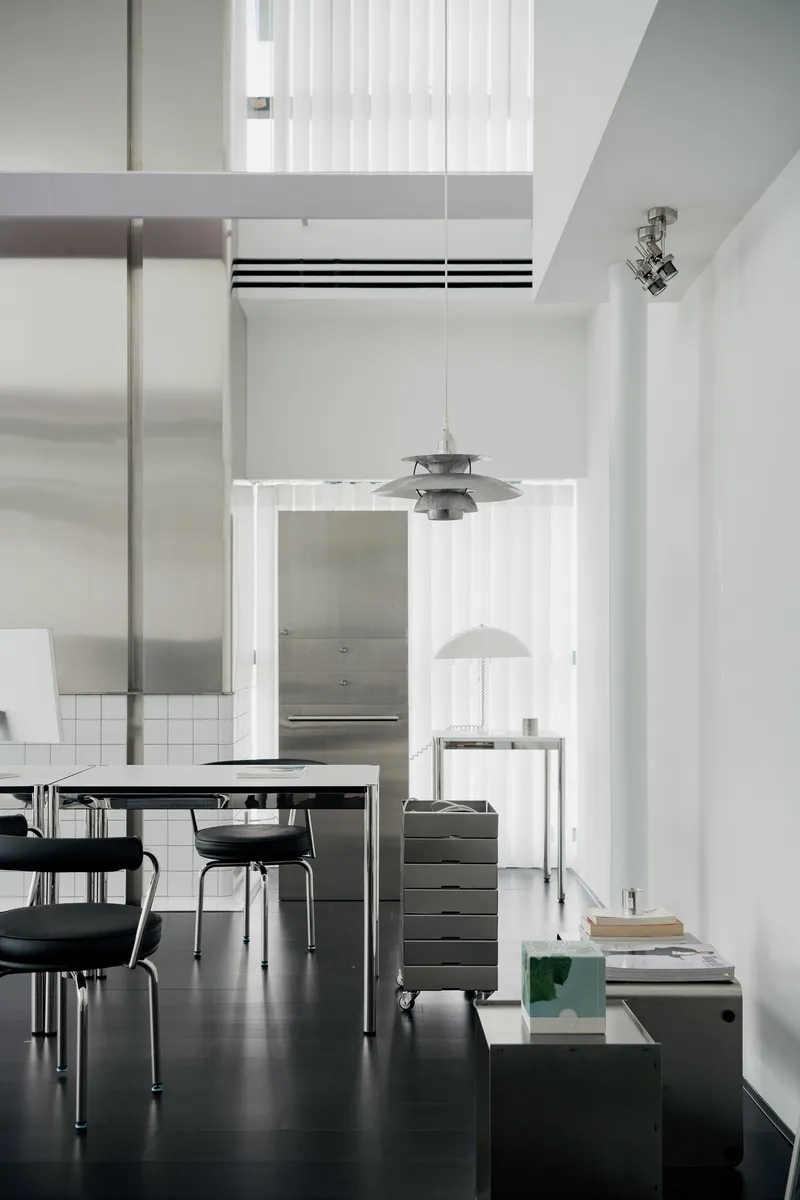
The open-plan office area, rows of workstations beneath a mezzanine with track lighting overhead, is deliberately understated compared to the more expressive zones. This restraint is the right call. The desks need to be calm so the kitchens, lounges, and meeting rooms can be characterful. A tiered metal pendant above a single workstation and the white vertical panel partitions in the double-height interior show how custom elements are deployed even in the most functional areas, maintaining the design language without overwhelming the people who have to stare at these surfaces eight hours a day.
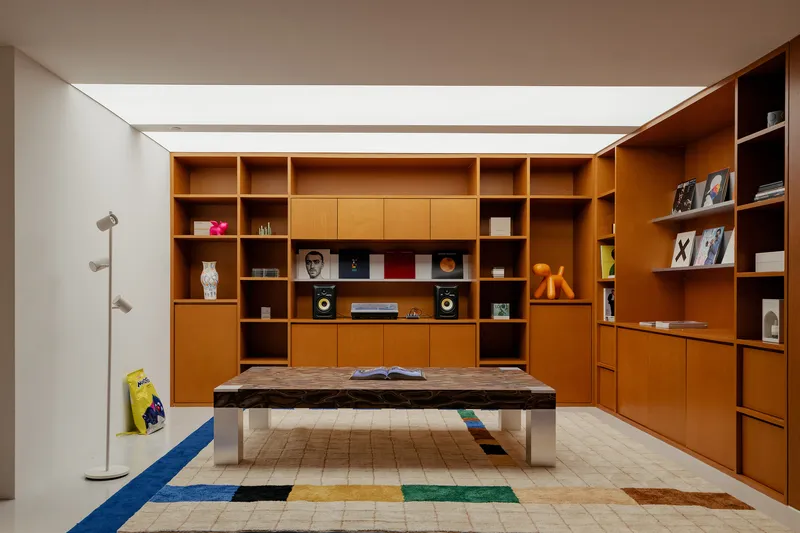
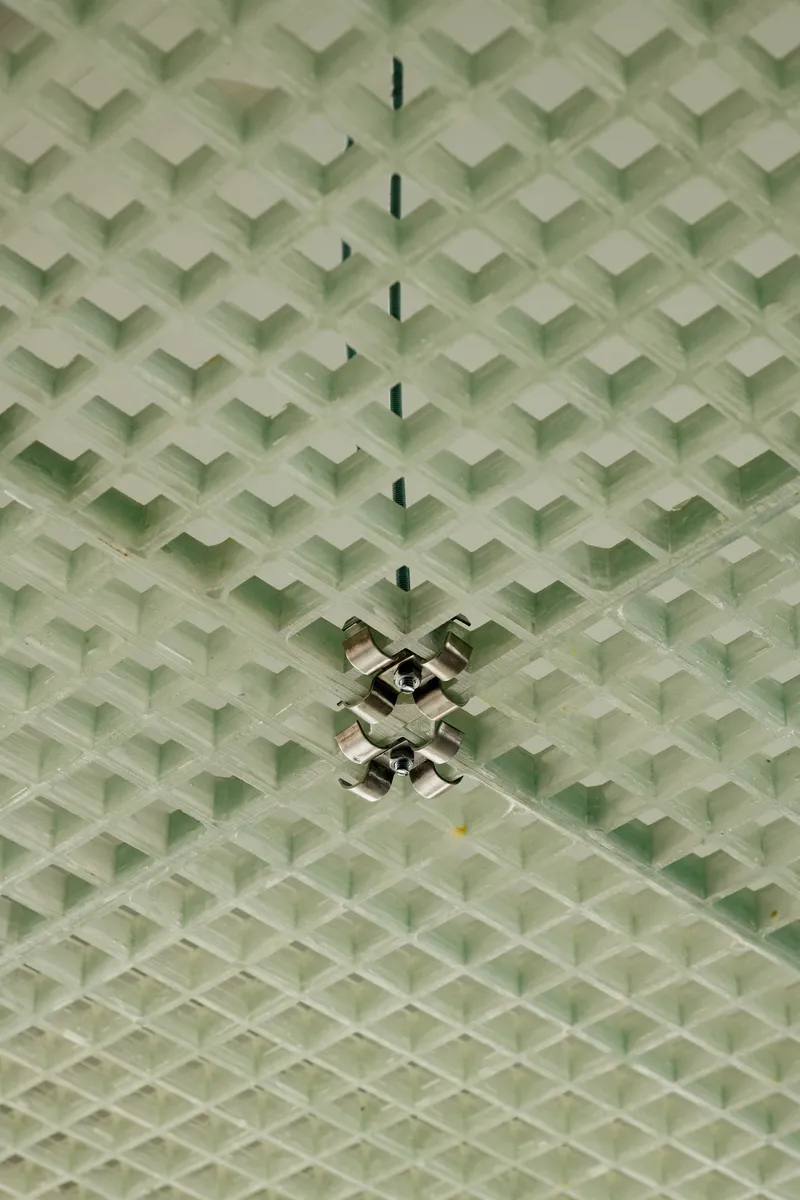
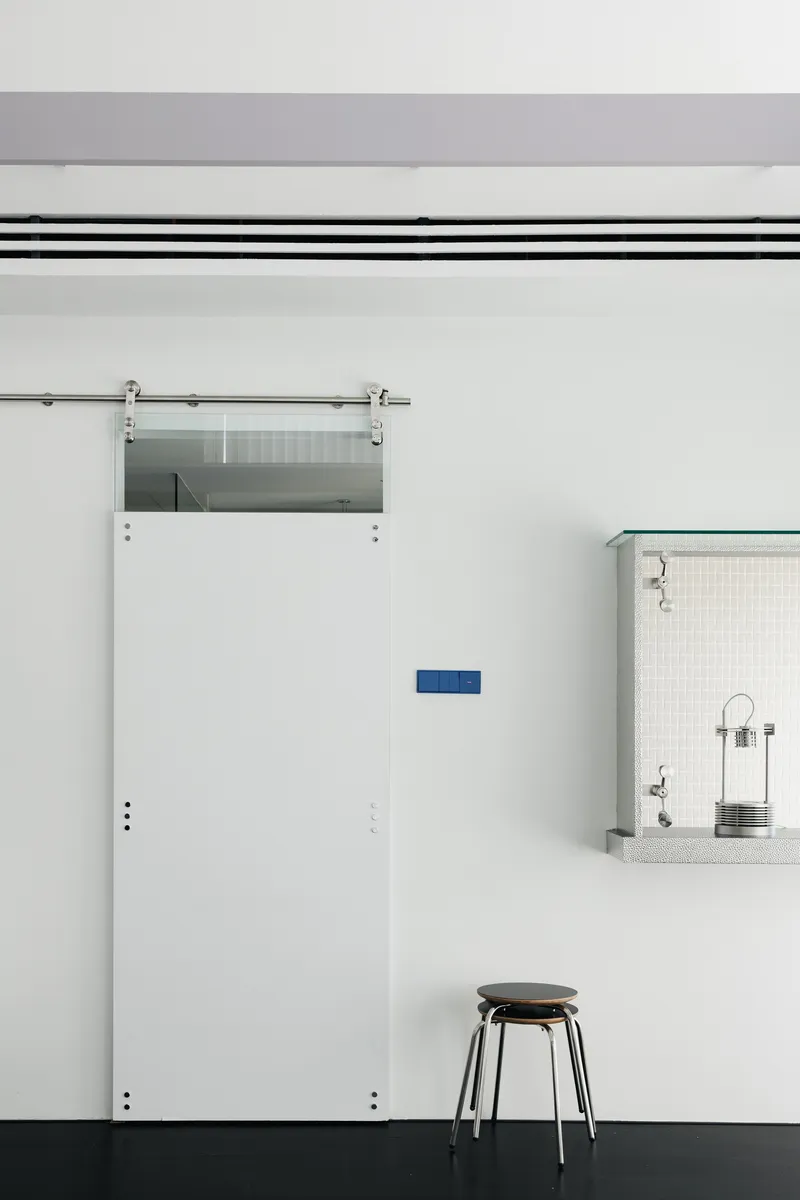
Storage and shelving are treated as architecture, not furniture procurement. A floor-to-ceiling timber shelving unit with integrated display niches and cabinets under recessed cove lighting could anchor a residential library. A sliding barn door on an exposed track beside a small kitchen pass-through with tile backsplash is a craft moment that most office projects would never invest in. The green chevron-patterned textile ceiling with chrome pendant fittings is the kind of overhead detail that rewards looking up, something too many interiors forget about entirely.
Plans and Drawings
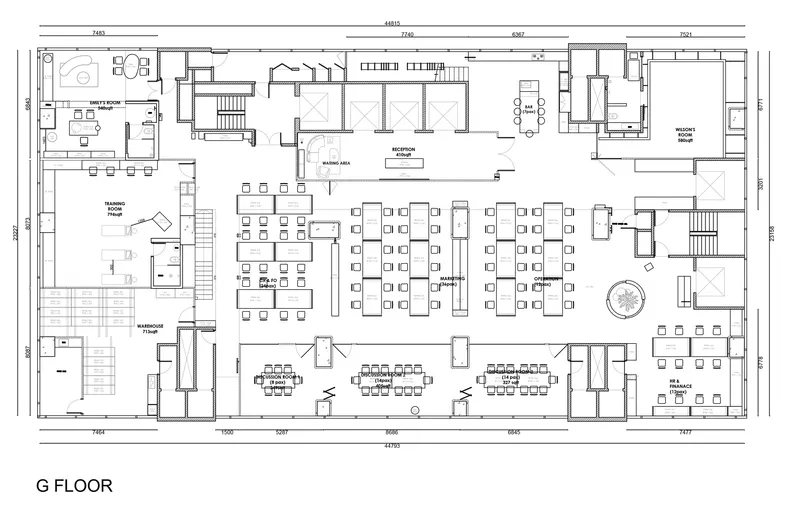
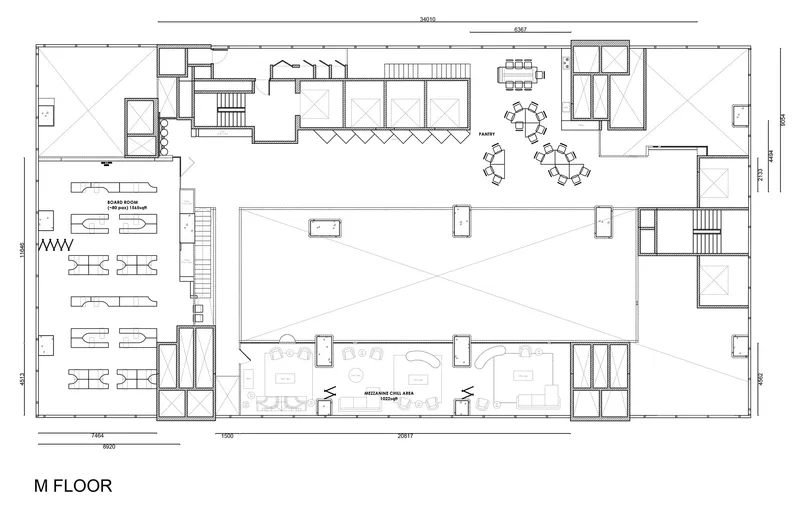
The floor plan confirms what the photographs suggest: this is not a single open loft subdivided by partitions but a genuinely complex layout where rooms of different sizes and proportions cluster around a legible circulation route. The mezzanine plan, with its double-height void, balconies, and smaller meeting areas, reveals how the vertical section creates visual connections that the plan alone cannot describe. The interplay between the two levels is what gives the office its sense of discovery.
Why This Project Matters
The ELIT Office is a reminder that workplace interiors can be a serious design problem, not just a procurement exercise. DualSpace Studio resists the temptation to default to a single aesthetic register and instead builds a workplace with genuine spatial diversity: quiet rooms and loud ones, dark corners and bright volumes, finished surfaces and raw ones. The consistency comes from material discipline, recurring wood details and rhythmic patterns, rather than from stylistic monotony.
In a market where coworking aesthetics have flattened office design into a predictable formula of exposed ducts and millennial pink, this project in Kuala Lumpur argues for something richer. It suggests that an office can have the programmatic complexity of a small building and the material ambition of a good house. That combination is rarer than it should be.
ELIT Office by DualSpace Studio, led by YongWei Lew and Eliz Wong. Kuala Lumpur, Malaysia. Completed 2024. Photography by TWJPTO.
About the Studio
Share Your Own Work on uni.xyz
If projects like this are the kind of work you want to make, uni.xyz is a place to publish your own, find collaborators, and enter design competitions.


Popular Articles
Popular articles from the community


Singing Woman: Contemporary Architecture Inspired by Estonia’s Voice and the Sea
Singing Woman turns Estonia’s song culture into flowing opera house architecture, blending public life, landscape, sea, and national memory.
Opera by the Sea Estonia: Three Shells Dissolving Architecture into Tallinn's Coastline
A winning opera house proposal replaces monumental form with interconnected shells that blur the boundary between building, park and Baltic Sea.

Faces of the Soviet Avant-Garde: Turning Moscow's Street Names into an Open-Air Museum
A network of sculptural installations across a Moscow residential district transforms forgotten architect names into spatial encounters with cultural memor

Manzana Morphosis: Stretching Barcelona's Grid into a Living Landscape for 2050
A radical reworking of the Eixample manzana turns density into a tool for generous public space, vertical ecology, and environmental performance.

Similar Reads
You might also enjoy these articles

Bao Huynh Watercolor Atelier: A Serene Art Retreat in Hội An
Bao Huynh Watercolor Atelier in Hội An blends multifunctional art spaces, sustainable design, local materials, and family-friendly living in a serene environment.

Atelier Macri Concept Store Interior Design by CASE-REAL
Atelier Macri store features a "ko" counter, walnut wood details, cork displays, blending retail, gallery, and seamless customer experiences.

Manuel Vargas Izquierdo Stadium and High-Performance Sports Center: Architectural Excellence in Jalpa de Méndez
The Manuel Vargas Izquierdo Stadium blends sustainable design, inclusive sports facilities, and cultural-inspired architecture, revitalizing Jalpa de Méndez’s public spaces.

KAKR Buluh Awar Hall: Revitalizing Community and Ecology Through Bamboo Architecture
Community built bamboo hall revitalizes Buluh Awar village, empowering youth, restoring ecology, celebrating vernacular craftsmanship through sustainable architecture and culture.


Comments (0)
Please login or sign up to add comments
No comments yet. Be the first to comment!