
Eco-Friendly Forest Temple Design: A Harmonious Blend of Nature and Architecture
The article explores AYURU, an eco-friendly forest temple in Brazil, merging innovative architecture with sustainable practices in a natural setting.


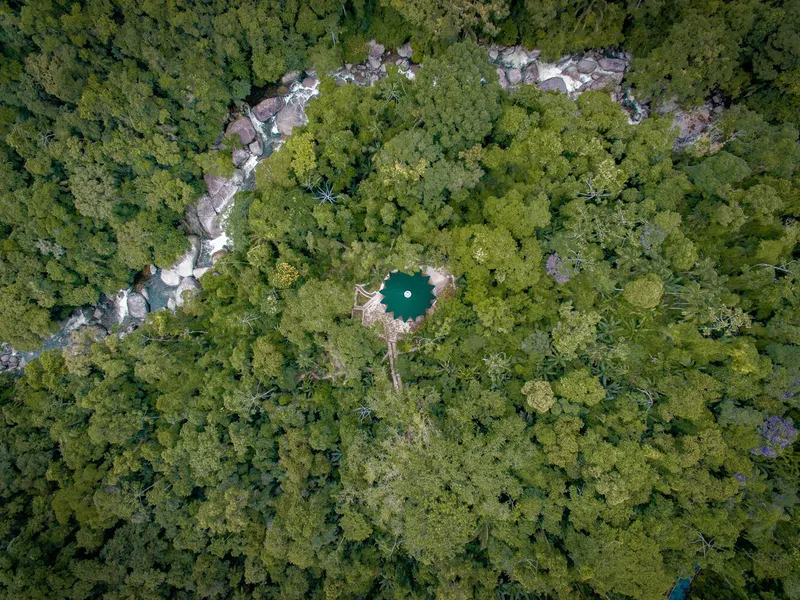
Nestled in the heart of Brazil's lush landscape, the AYURU Forest Temple emerges as a paragon of eco-friendly architecture. Conceived by Atelier Marko Brajovic, this architectural masterpiece not only respects its natural surroundings but also merges seamlessly with the ecosystem, setting a new standard for sustainable design.
The Inspiration Behind AYURU
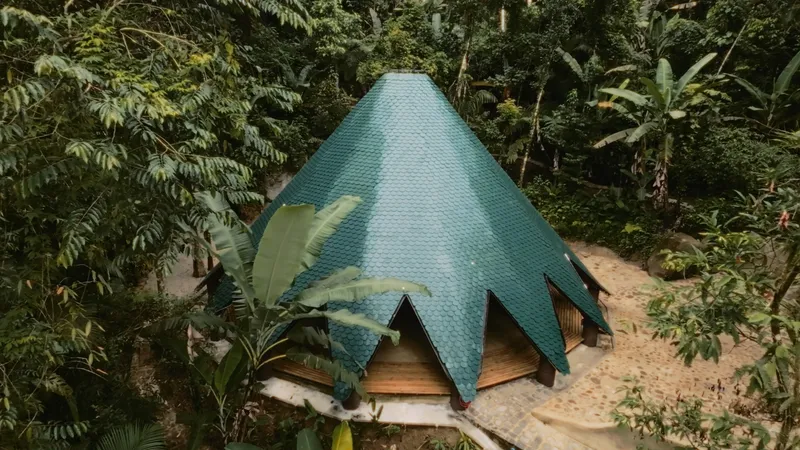
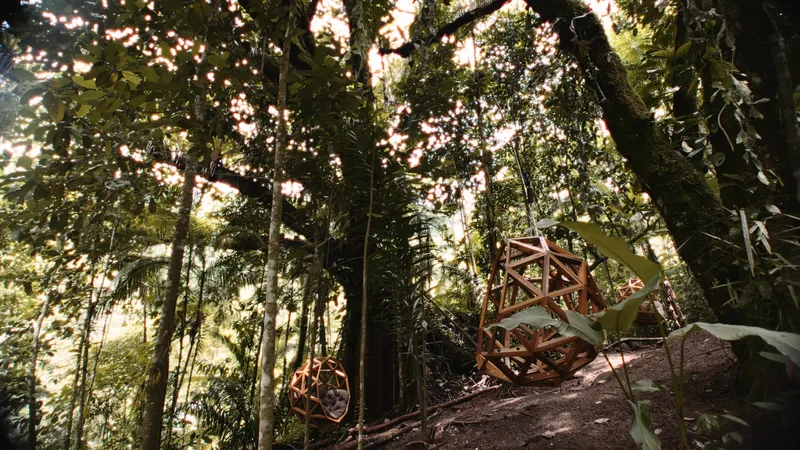
AYURU, named after a bird in Tupi-Guarani language, embodies the essence of lightness and harmony with nature. The design draws inspiration from the bird's fluid movement, aiming to land and integrate into the ecological network with minimal disruption. This approach reflects a profound respect for the environment, emphasizing the importance of sustainable interaction between human creations and nature.
Architectural Design and Structure
A Unique Structural System
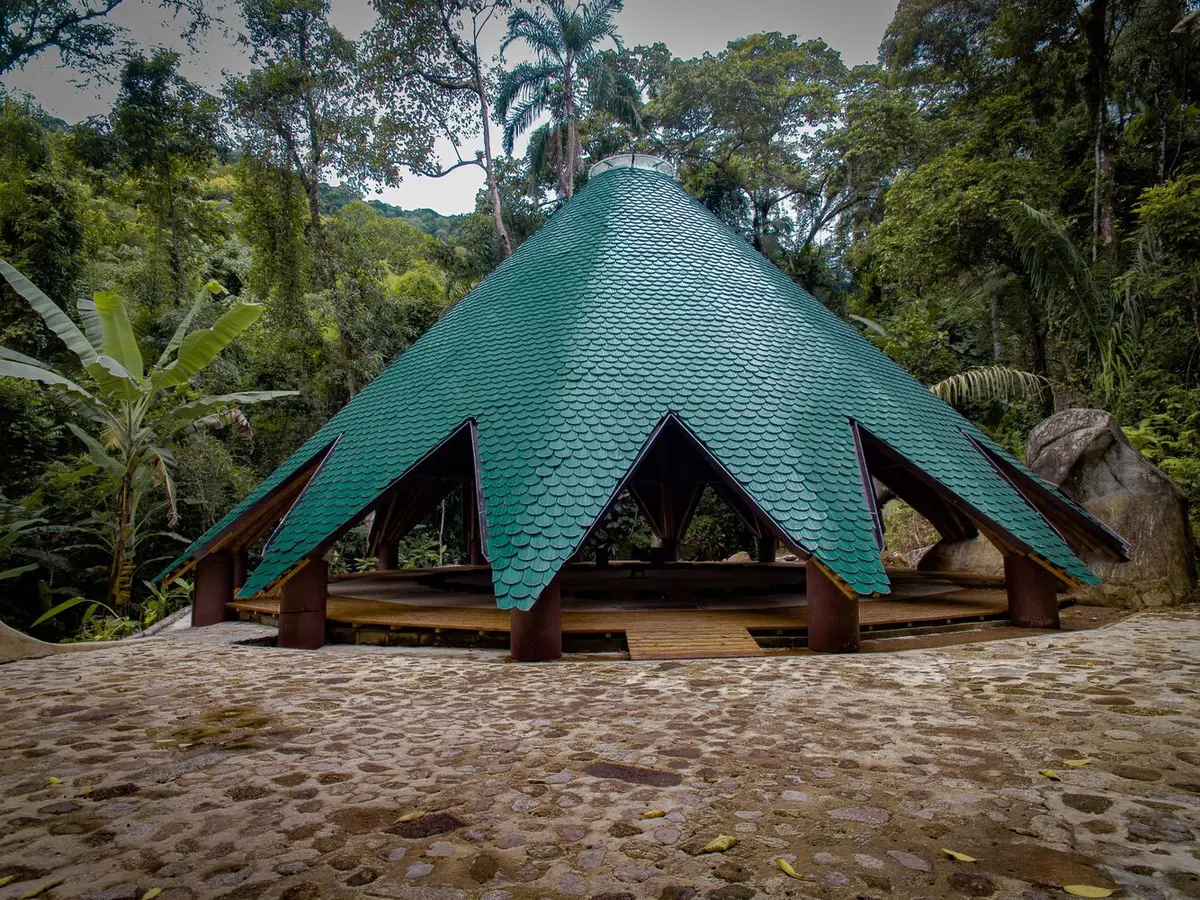
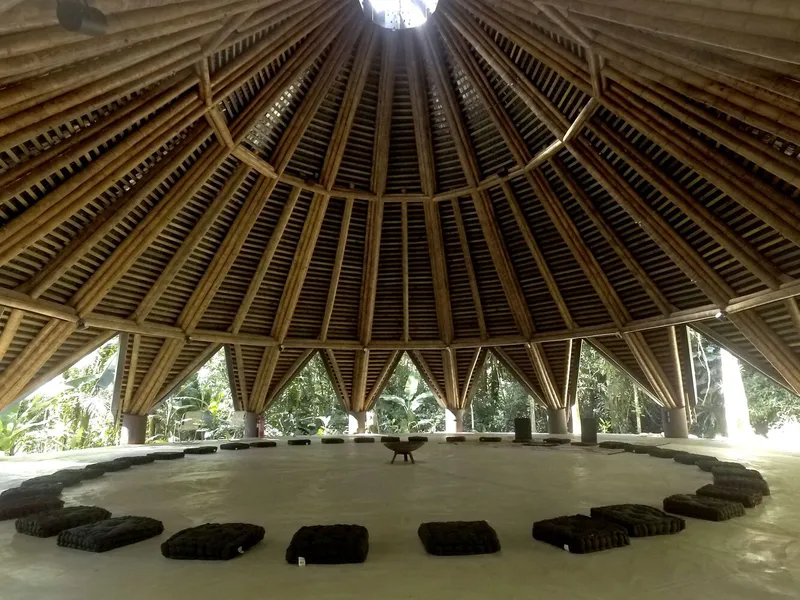
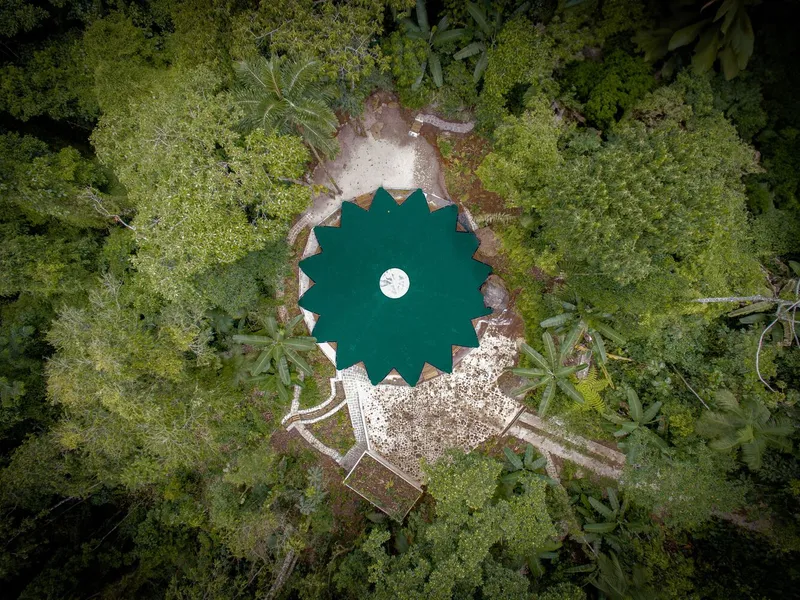
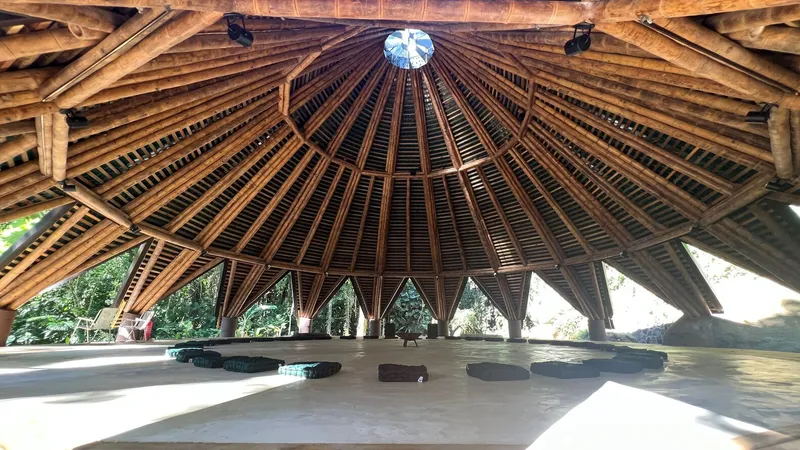
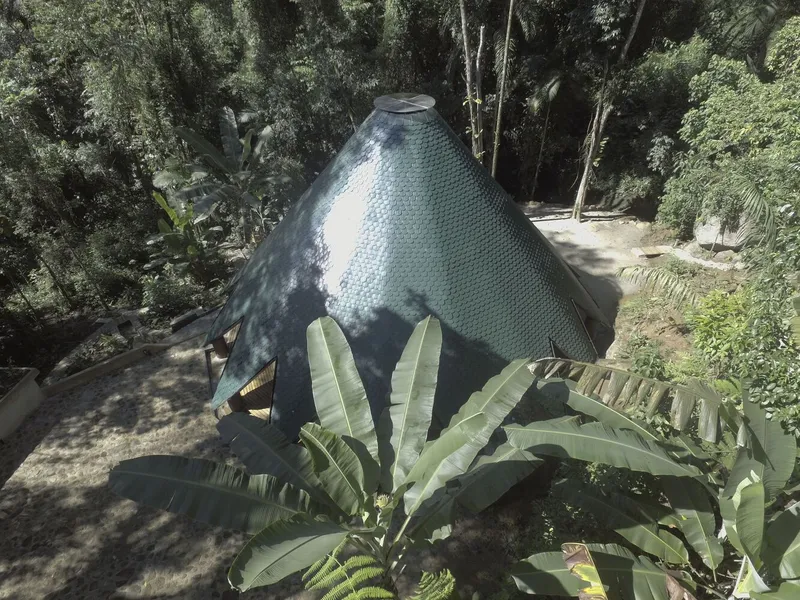
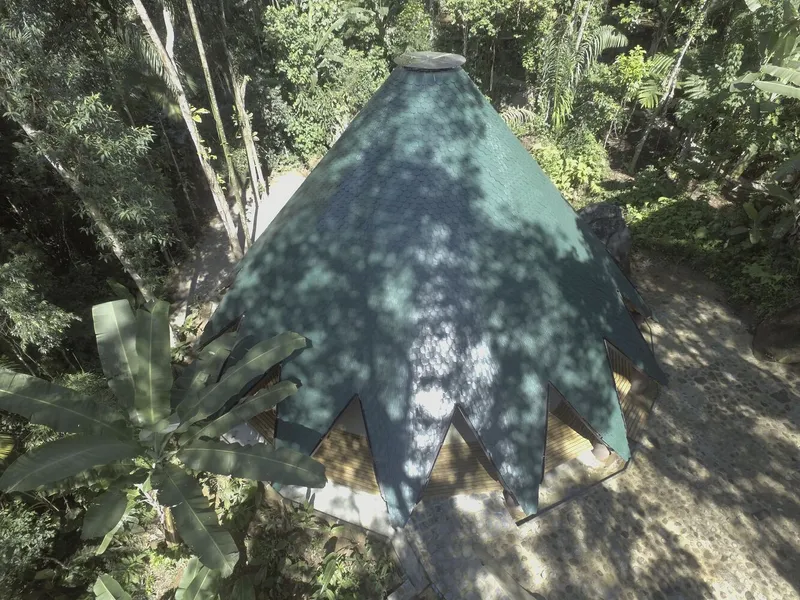
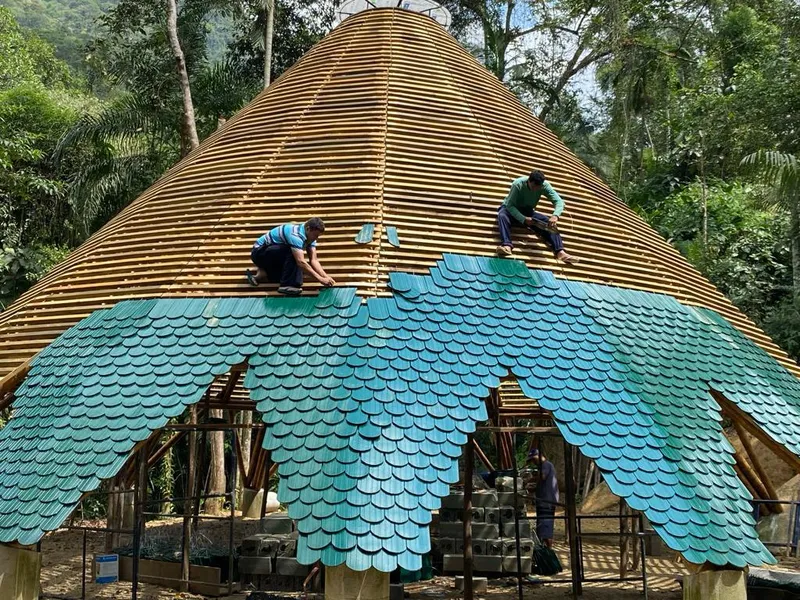
The temple's structure, inspired by indigenous architecture, stands out for its innovative use of bamboo, specifically the Guadua Angustifolia species. This choice not only showcases the versatility and strength of bamboo but also highlights the project's commitment to utilizing local materials. The temple's architecture, with 16 bamboo pillars supporting a network of transverse beams, culminates in a central iron ring that disperses forces across the structure, allowing for natural light and ventilation.
A Roof Inspired by Nature
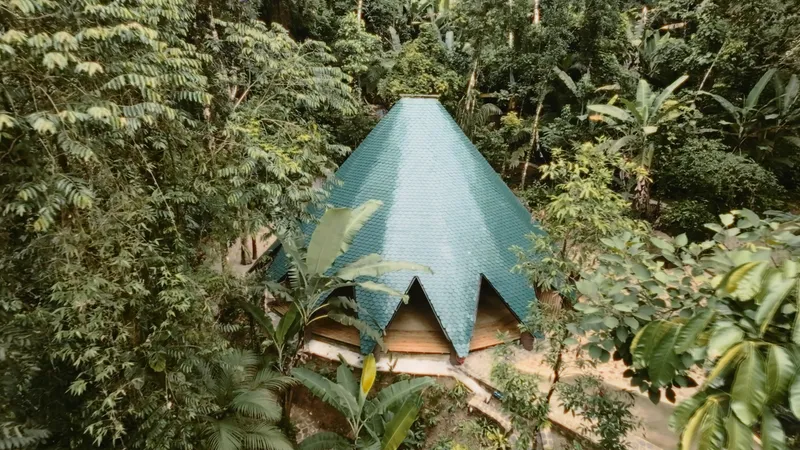
The roof, a testament to meticulous craftsmanship and artistic vision, features ceramic tiles whose blue-green hue mimics the bird's wing. This color palette, achieved through extensive experimentation, changes with the natural light, adding a dynamic element to the temple's appearance.
Sustainable Materials and Local Sourcing
Emphasizing sustainability, nearly all structural materials, from the soil-cement floor made with local clay to the eucalyptus decking, are sourced locally. This not only reduces the project's carbon footprint but also supports local communities and economies.
The Role of AYURU in the Community
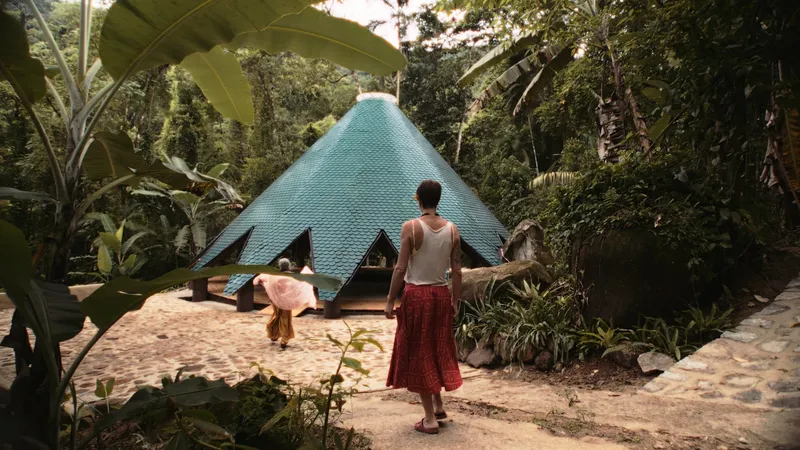
Located in Paraty, AYURU is part of Aldeia Rizoma, a project dedicated to ecological accommodations and well-being experiences. The temple offers a versatile space for events and practices, surrounded by nature, promoting health, and community engagement.
The AYURU Forest Temple stands as a beacon of eco-friendly forest temple design, marrying innovative architecture with a deep commitment to sustainability. By prioritizing local materials and integrating seamlessly into its natural setting, AYURU sets a precedent for future projects, proving that architectural beauty and ecological responsibility can coexist harmoniously.
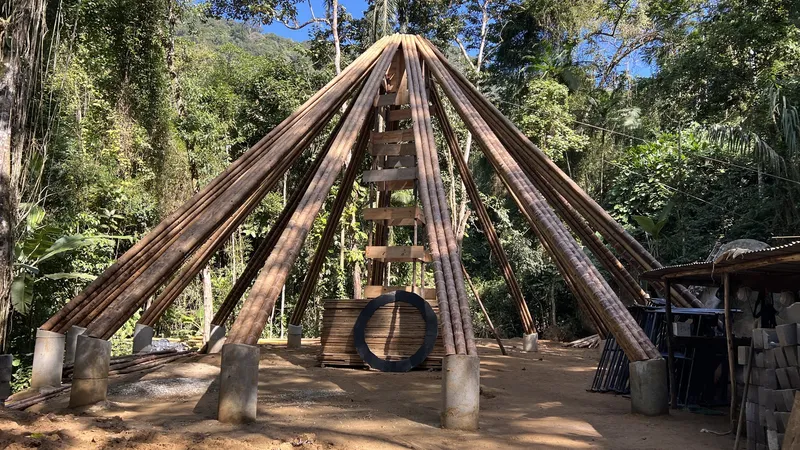
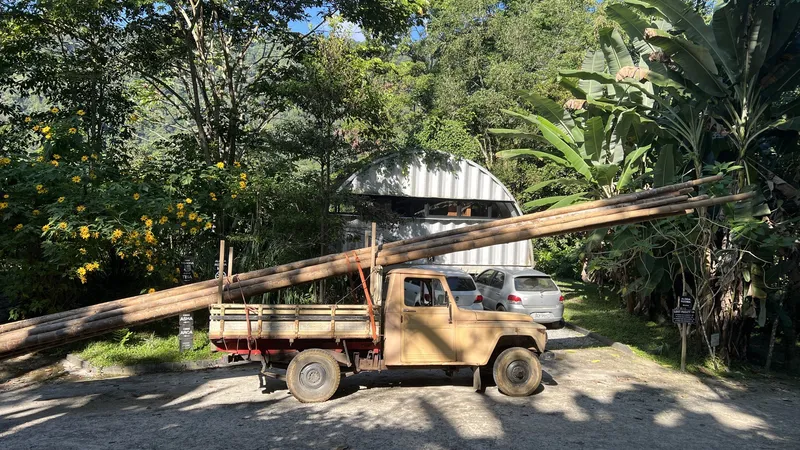
All photographs are work of Eduardo Ohara Junior


Popular Articles
Popular articles from the community


David Ortega Stacks a Two-Story Mexico City Penthouse Around a Steel Stair and a Pergola-Shaded Roof Terrace
In Colonia Roma, a 300 m² penthouse uses oak joinery, a planted steel stair and a slatted roof pergola to make a new-build apartment feel like a house.

U.GA Architects Wraps an Oval Rooftop Pool in Curved Board-Formed Concrete on Busan's Jeollidan-gil
In Busan's Jeonpo-dong, a 454 m² mixed-use block stacks a neighborhood facility, guest rooms and an oval rooftop pool inside spiraling concrete walls.

LT2A and OPEN Architectes Thread a Brick and Glass High School Through a Wooded Belgian Campus
In Braine-l'Alleud, a 3,000 m² wing for Collège Cardinal Mercier pairs pale brick with a glazed colonnade, deferring to a small chapel and a dense wood.

David Macias Steps a Doorless Stone and Plaster House Down a Tropical Colombian Hillside
In the humid hills of Colombia, Threshold House replaces the front door with an open void and terraces its 850 m² down the slope instead of fighting it.

Similar Reads
You might also enjoy these articles

Maya Harvest: A Cacao Resort Village Rooted in Mayan Tradition and Local Craft
Situated within a Tabasco cacao plantation, this shortlisted resort proposal merges vernacular materials with hands-on cultural immersion.
Harmonia: A River-Shaped Community That Grows Over Decades in Boa Vista
Curved pathways and modular grid structures along the Branco River create a phased settlement designed to evolve from 2030 to 2050.
The Architecture of Bathing: A Mughal Hammam Reimagined Across the Yamuna
Charlotte May's honorable mention entry for The Black Taj reinterprets Agra's bathing rituals through red sandstone, water, and framed views of the Taj Mah
Om-1: A Wall-Hung System That Moves Your Workspace Off the Desk
Modular plywood boards, magnetic pegs, and utility elements migrate clutter from the horizontal surface to the vertical plane.

Explore Cultural Architecture Competitions
Discover active competitions in this discipline

Challenge to reimagine the Iron Throne

Photograph architecture without architects

Illustrate the lost glory of Angkor Wat - Render Challenge

Bring back Drive In's
Comments (0)
Please login or sign up to add comments
No comments yet. Be the first to comment!