

El Limonar House by Termopolio Arquitectura: A Harmonious Blend of Nature and Modernity
El Limonar House blends privacy, nature, and modern design, using fragmented zones and sustainable materials to harmonize with Ecuador’s landscape.


El Limonar House, designed by Termopolio Arquitectura, is located in the peri-urban area of Portoviejo, Ecuador. This project emerged in response to the rising costs of urban land and the post-pandemic shift in housing preferences. The house blends privacy, nature, and social coexistence, offering a contemporary living space that respects its natural surroundings and adapts to modern lifestyle needs.
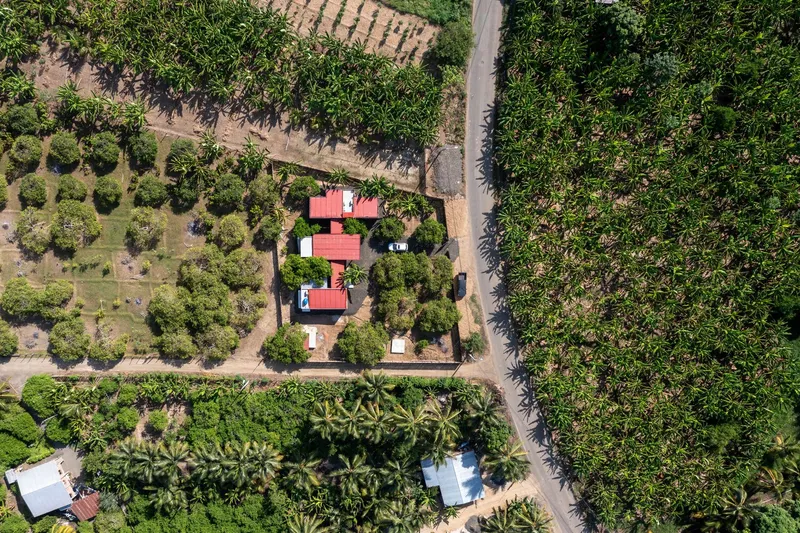
Context and Site
Situated in an area historically known for its flourishing lemon plantations, the project pays homage to its environment by incorporating the natural landscape into the architectural narrative. The house sits on one of the macro lots, ensuring that the design seamlessly integrates with the existing ecosystem while offering stunning views and a sense of serenity to its residents.
Design Concept and Philosophy
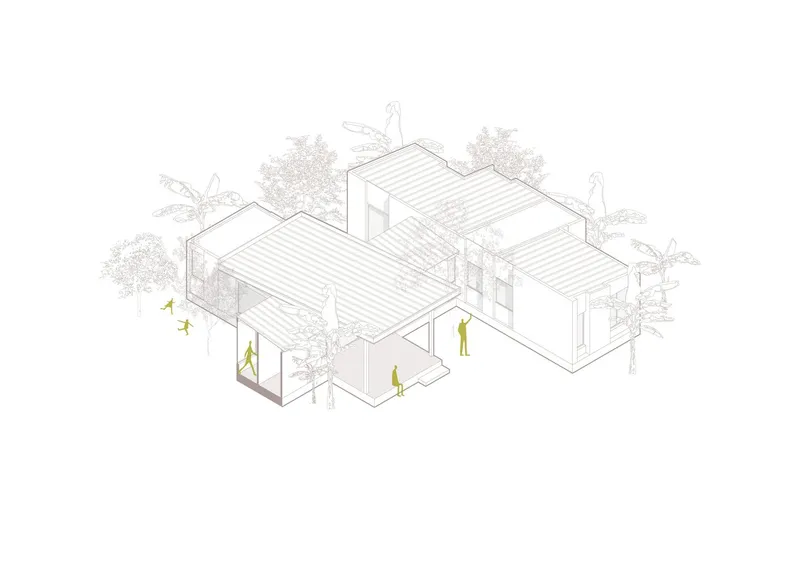
The design of El Limonar House is rooted in two key principles: privacy and connection with nature. The architects aimed to create a space that balances social interaction with solitude, ensuring that the house caters to the needs of a young couple who value both family gatherings and privacy. The concept embraces defragmentation as a design strategy, where the original cube form is split into three distinct zones—service, social, and rest—each connected by corridors that facilitate movement and interaction while maintaining a sense of autonomy.
Spatial Organization and Circulation
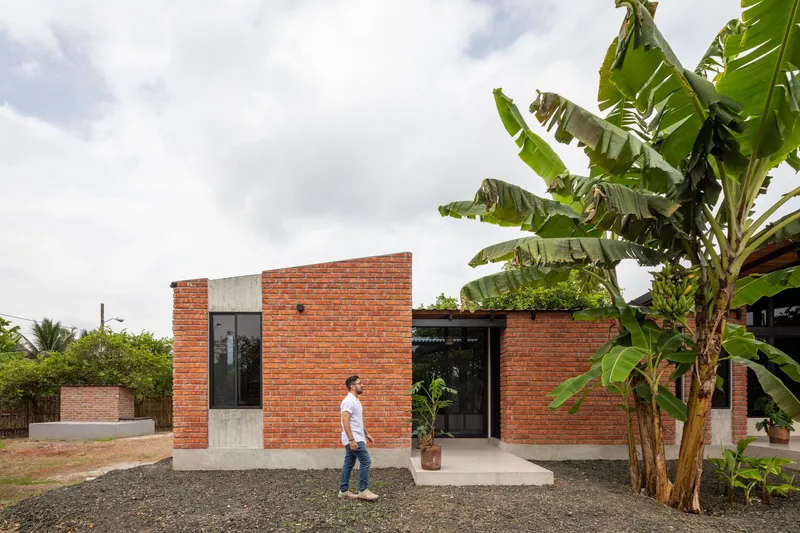
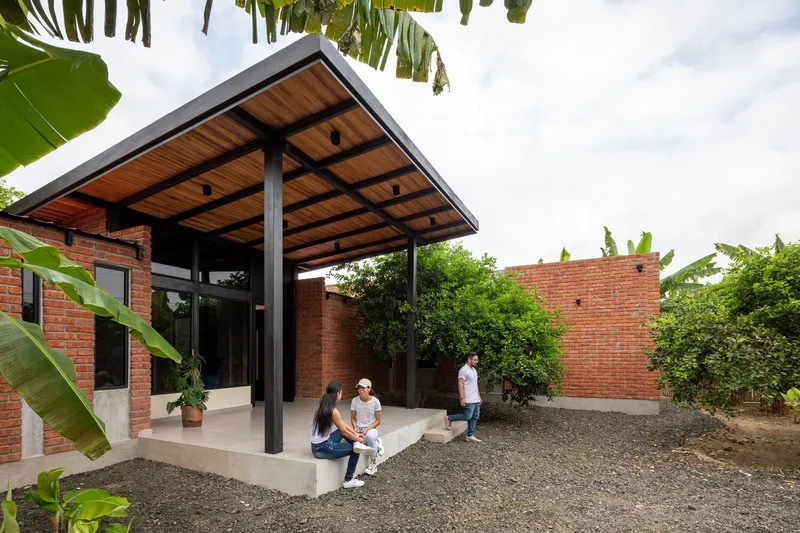
The house consists of three interconnected blocks distributed on a single level. The main block, extending along the north-south axis, serves as a welcoming social area with an open and transparent design. Flanking this block are two lateral structures that provide privacy for resting and service areas. The longitudinal axis running from east to west acts as a connecting spine, ensuring seamless movement between the zones while enhancing the relationship between the built environment and the natural surroundings.
Harmonious Balance Through Architecture
El Limonar House achieves a balance between exposure and concealment by showcasing social areas and subtly integrating service and rest areas. This thoughtful arrangement not only enhances the aesthetic appeal but also creates a dynamic flow that transitions progressively between different spaces. The use of inclined roofs adds to the visual depth while also serving a practical purpose by facilitating crop irrigation and maintaining ecological balance.
Materiality and Aesthetics
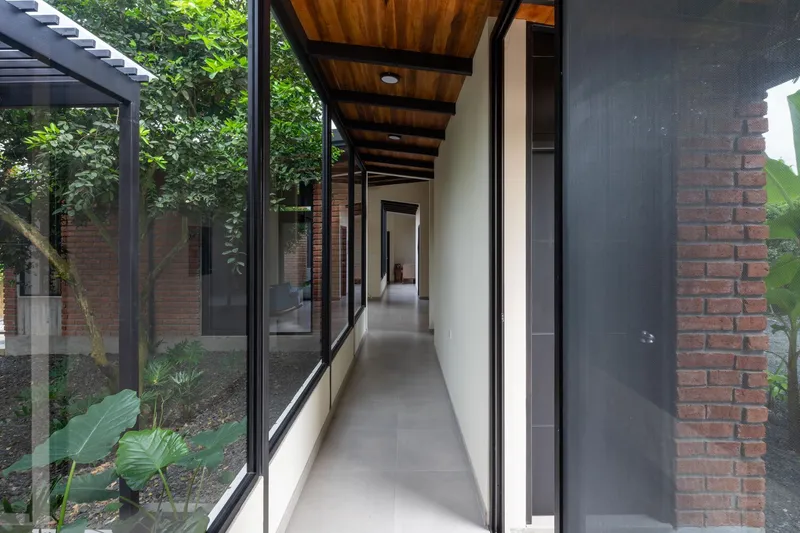
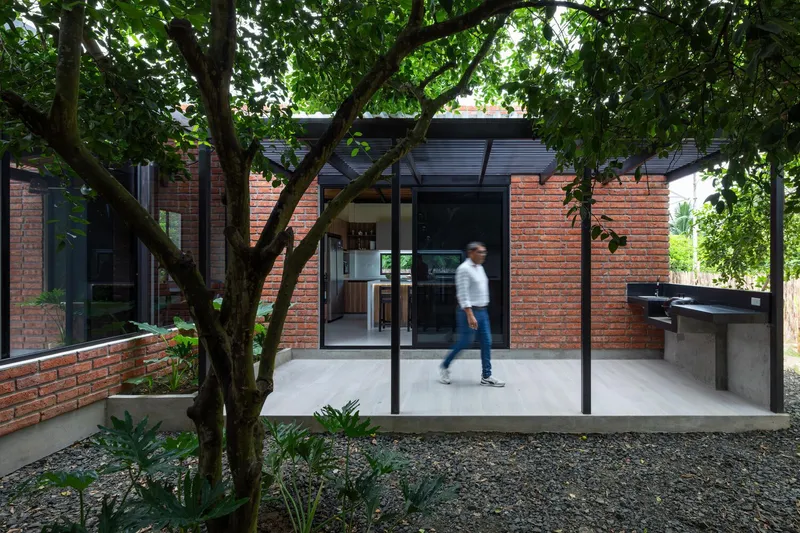
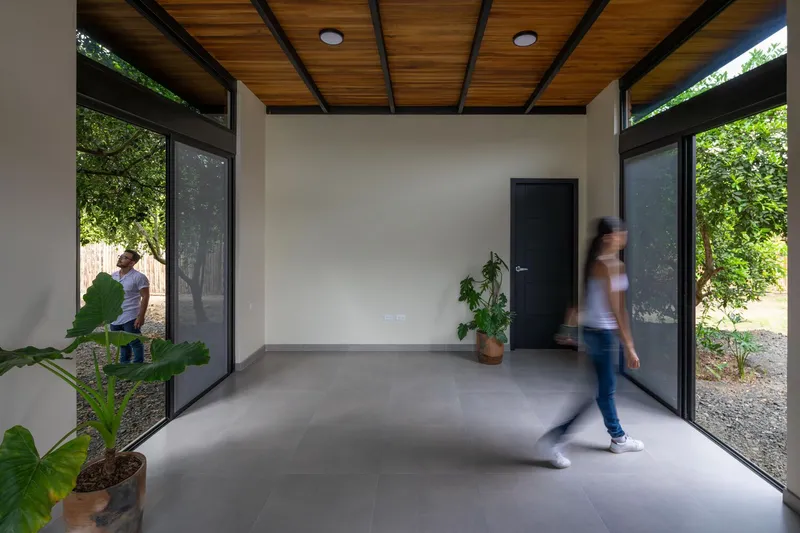
The project blends modern materials such as structural steel with traditional elements like handmade bricks and concrete, creating a dialogue between contemporary design and historical context. This juxtaposition extends to the interior, where the play of textures and materials offers a sensory experience that transitions seamlessly from the built structure to the surrounding landscape. The roof design further enhances the interaction between interior and exterior spaces, offering expansive views of the natural surroundings.
Sustainability and Environmental Integration
El Limonar House reflects the client’s commitment to environmental preservation by incorporating design features that support sustainable living. The inclined roof design aids in the irrigation of surrounding crops, preserving the natural growth cycle. The use of local materials minimizes the environmental footprint while maintaining harmony with the existing landscape. Semi-transparent spaces allow natural light to filter through, reducing energy consumption and creating an ever-changing play of light and shadow.
Social and Environmental Impact
More than just a residence, El Limonar House serves as a model for redefining habitat by fostering a deeper connection with nature. The project highlights the importance of spatial transparency and virtual boundaries that filter natural elements such as vegetation and sunlight. This design philosophy transforms the living experience into one where space, form, and natural elements merge seamlessly, offering a tranquil yet vibrant environment.
All photographs are works of Andrés Villota Pelusa


Popular Articles
Popular articles from the community


Singing Woman: An Opera House That Performs Before the Curtain Rises
Ovidiu Cristian Pavel's conceptual opera house translates Estonia's choral identity into a sculpted waterfront landmark facing the Baltic Sea.


David Ortega Stacks a Two-Story Mexico City Penthouse Around a Steel Stair and a Pergola-Shaded Roof Terrace
In Colonia Roma, a 300 m² penthouse uses oak joinery, a planted steel stair and a slatted roof pergola to make a new-build apartment feel like a house.

ETEH Reworks the Shared Spaces of São Domingos School in Brazil Around Timber, Color and Hanging Plants
At São Domingos School in Brazil, 436 m² of hall, refectory and library are recast with timber joinery, a yellow and blue code and trailing greenery.

Cube Design Draws an Ecological Corridor Between Two Shenzhen Hills with the Nankai Building
Beside Shenzhen's container docks, the Nankai Building pairs stacked balconies with a climbing green screen to connect two hillsides across its height.

Similar Reads
You might also enjoy these articles


Hodi-Mandai Geram
Project Function: Preservation and revitalization of the Intangible heritage and socio-spatial identity of the Hodi by Housing, Cultural Memory Center, Sacred Grove, landscape, local tourism economy


Olio Towers: A Mid-Rise for Performers That Fuses Housing, Rehearsal, and Stage
Located blocks from Houston's Theater District, this modular tower stacks living units around a central performance atrium.

Oasis: Modular Green Housing Carved into Dhaka's Urban Fabric
A shortlisted Plugin Housing entry reclaims unauthorized settlements in Dhaka with stepped concrete volumes, green roofs, and ventilation-driven design.

Black Hole: A Floating Megastructure for the Post-Physical Era
Emiliano Mazzarotto envisions a spherical, self-scaling arena where e-sports, digital hotels, and holographic stadiums replace traditional public space.

Explore Housing Competitions
Discover active competitions in this discipline

Challenge to reimagine the Iron Throne

Photograph architecture without architects

Illustrate the lost glory of Angkor Wat - Render Challenge

Design challenge to reuse E-waste
Comments (0)
Please login or sign up to add comments
No comments yet. Be the first to comment!