
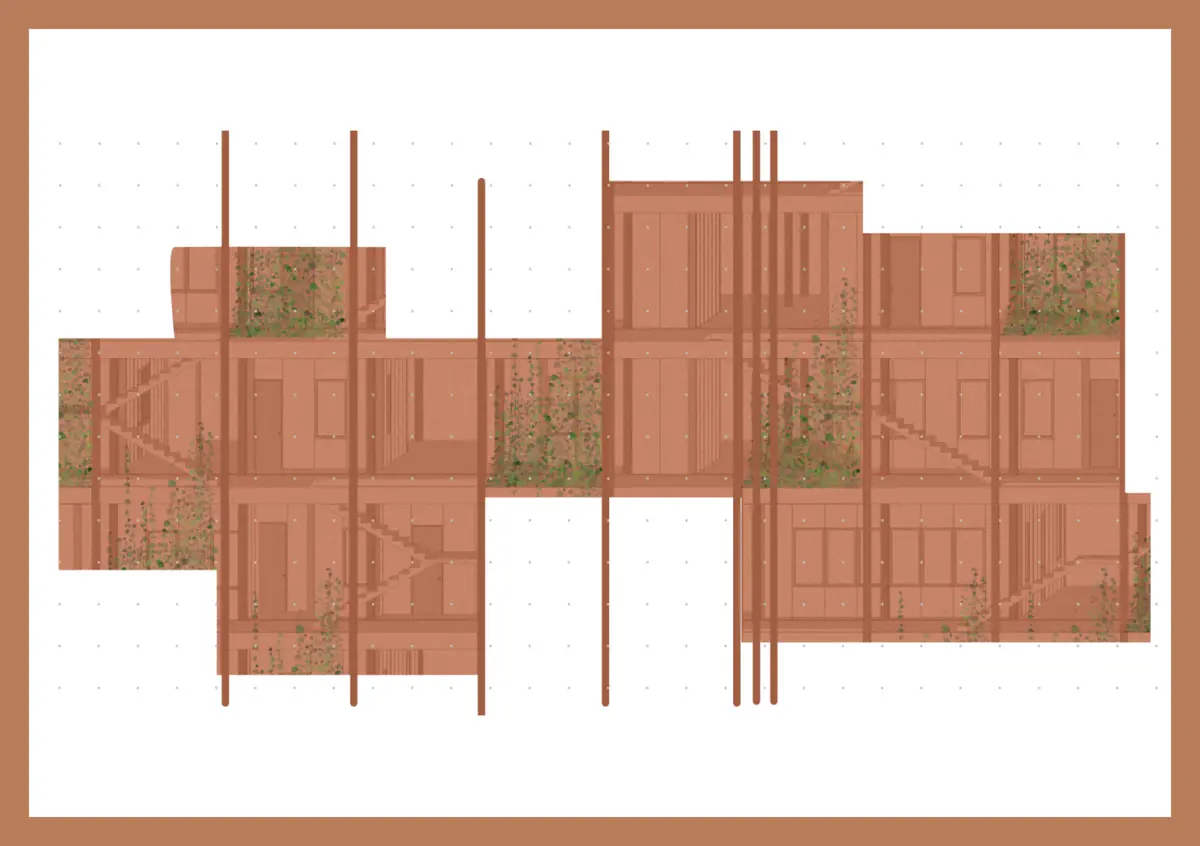
Evolution of "Change”
How we developed the design for the affordable, adaptable and flexible housing “Change title”

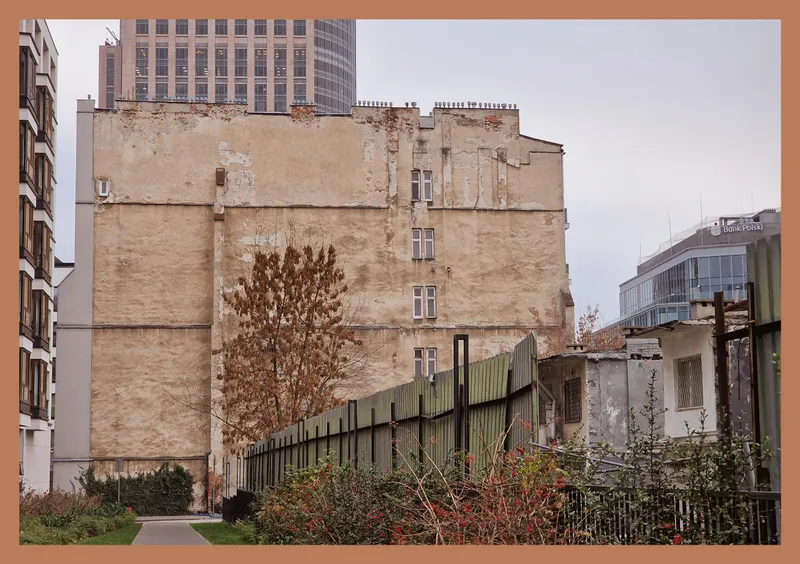 The backstage of our site
Introduction
The concept of affordable and accessible housing has been a long-term priority and there is a growing recognition that this is a pressing issue in many different countries, including Poland, the home of our team. As the cost of living rises and housing becomes increasingly out of reach for many people, creative solutions are desperately needed to provide low-cost housing options that are both adaptable and sustainable. Fortunately, innovative ideas are beginning to emerge, and there is a growing awareness of the need to find solutions to this issue.
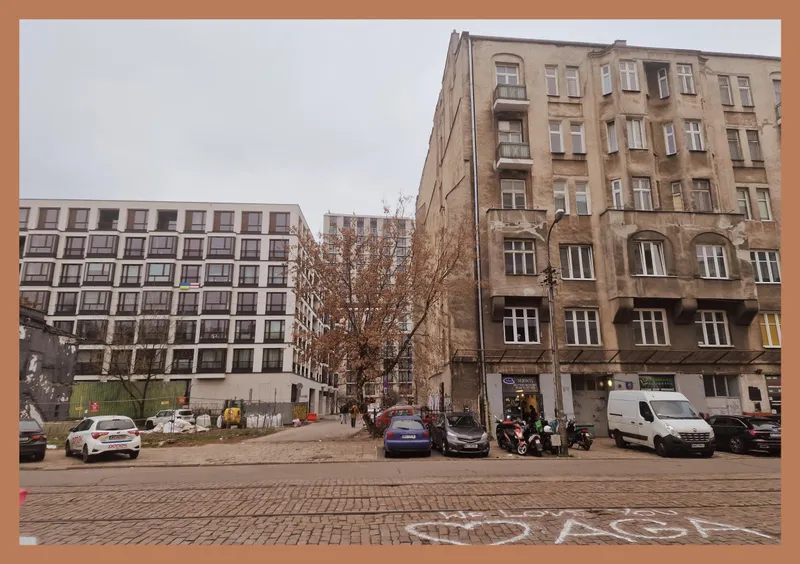 The surrounding buildings
Idea
We wanted to create a project that would meet the needs of a modern and dynamic society. We began the project with great enthusiasm, meeting regularly on the campus of our university to discuss the topic. We brainstormed potential solutions, explored different ideas, and worked together to develop an overall plan of action. It was a collaborative effort, with each member of our team bringing something unique to the table. After much deliberation, we finally agreed on a few key concepts that we wanted to further explore. We took into account the various opinions and ideas that were brought to the table and considered how we could effectively incorporate them into our plan. We discussed the potential implications of these ideas and weighed their pros and cons to make an informed decision. After much discussion, we concluded that these key ideas—affordability, community, and flexibility—were the best ones to pursue to achieve our desired outcome. We settled on a few various solutions, each reflecting one of these concepts. We wanted to ensure that we had not only a plan for affordable housing, but also one that was sustainable, adaptable, and would create a sense of community. To this end, we incorporated several creative solutions into the design.
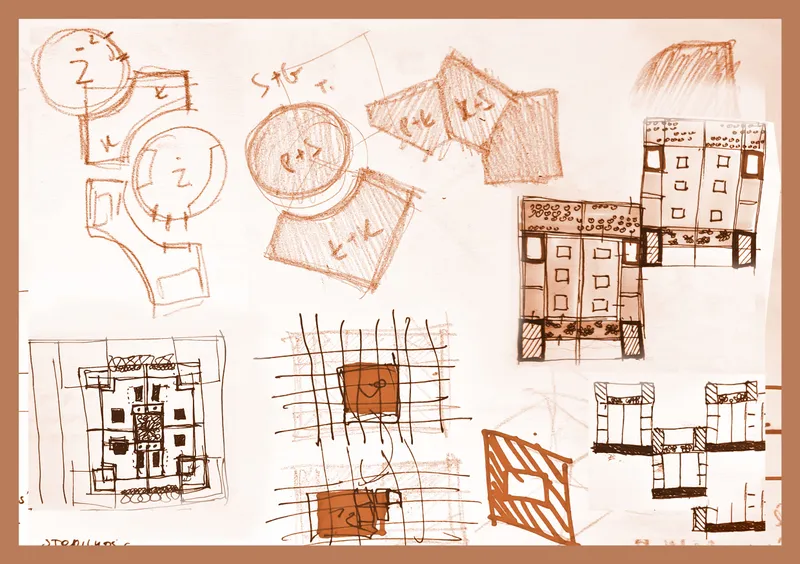 The first sketches during brainstorming
First, we wanted to utilize modular construction elements that could be easily assembled and moved. This would allow for rapid construction and easy reconfiguration of the flats, giving the municipality the possibility to move them in the case of a greater need. In Poland, where the design team is situated, the ongoing Ukraine-Russia war has created an urgent requirement for additional housing to accommodate the influx of immigrants. This pressing need has unfortunately been met with the shortages of available easy-to-assemble or reconfigurable buildings, making the situation increasingly dire. In response to this, the design was developed to address the pressing need observed, providing a safe and secure home for these people and helping to alleviate the strain on the Polish housing market. In times of peace, this trait of fast assembly and reconfiguration still holds its value, even as our society rapidly advances and develops, typically at a much quicker rate than the lifespan of a building. This ensures that the structures created by the design team remain a viable option for those in need of housing, no matter the current social context.
 First (unused) concept of the construction elements
Second, we wanted to incorporate vertical gardens and communal spaces, allowing for the creation of a vibrant and dynamic community. The first ideas included plug-in modules with functions that were not typical of this type of building. These modules would be integrated into its structure to provide multiple services. Additionally, various multifunctional gardens were included in the plans, which would remain on the site after disassembling the building and serve as a public park for the local community. This was seen as a way of providing a long-term benefit to the area, one that would continue to be felt even after the building itself had faded into memory. It was also a way of creating a legacy; of leaving something tangible and meaningful behind that would continue to have a positive impact on the local community for many years to come.
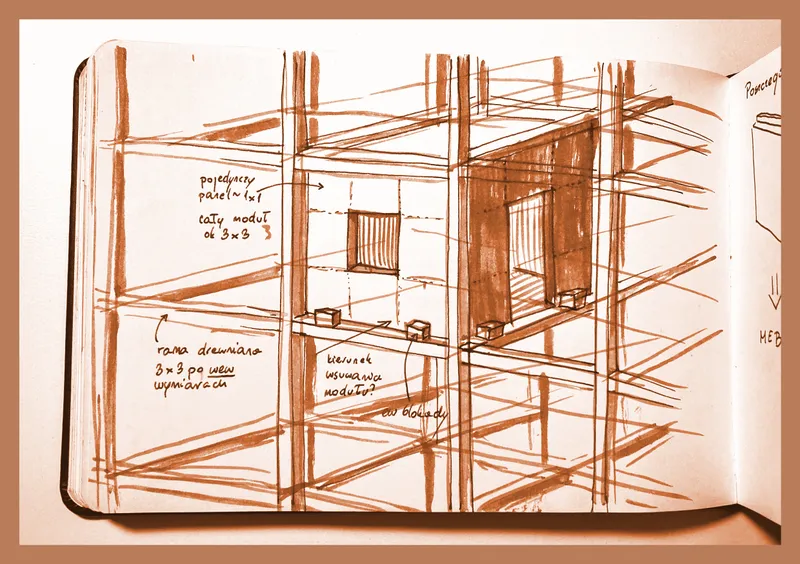
In addition to providing a sense of community, we also wanted to ensure that the building would be able to adapt to the fluctuating needs of its inhabitants. As the target users of the building were meant to change constantly, with students and young workers coming and going, we knew that the apartments needed to be able to accommodate these changes. To do this, we designed the building to be flexible and able to adjust to the ever-changing dynamics of the people living there. We implemented features such as movable walls, long-term storage for those who are away for extended periods of time, and a variety of apartment sizes to fit the changing needs of its occupants. The first idea was to incorporate only moving, multifunctional furniture, but we decided that it was not enough. The next step included interior walls, and through it, we rolled into the concept of the modular grid with which everyone could recreate their ideal apartment. The following discussion focused on the importance of locating vertical shafts and communication systems in such a manner that would not impede the ability of the users to access them easily and efficiently. To this end, the research sought to identify the potential challenges that could arise when attempting to locate these items and how they can be addressed and mitigated. Furthermore, the discussion attempted to determine the most effective ways to ensure that they would be installed in a way that would be beneficial to all parties involved, as well as provide the greatest amount of user convenience.
 The sketch of a facade
Realisation
Once we had arrived at a consensus, we began to delve deeper into the possible variations of the design. We experimented with a wide range of materials and construction methods, exploring the possibilities of each to determine the most suitable options. Our research extended to the layout of the communal spaces, and we carefully assessed which designs would work best and be most conducive to the function of the space. In our efforts to create an optimal design, we took into consideration the physical constraints of the area, as well as the aesthetic preferences of the potential inhabitants. With every iteration, we made sure to keep our priorities in mind. We wanted to ensure that the inhabitants could tailor their space to meet their specific needs and that the communal spaces would foster a vibrant and dynamic community. To this end, we also sought to create a design that would make the most efficient use of the available resources, both in terms of space and materials. We wanted to ensure that the building would be able to stand the test of time, withstanding the wear and tear of everyday use and performing reliably for years to come.
The end
After many weeks of research and experimentation, we finally settled on a design that we were happy with. We are proud of the work that we have done, and we are optimistic about the potential of our project. We hope that it will serve as an inspiration for other architects and designers. We believe that by creating a sustainable, flexible, and affordable housing solution, we are helping to ensure that everyone has access to a comfortable, secure, and affordable place to call home.


Popular Articles
Popular articles from the community


Jaramillo Van Sluys Arquitectura and Urbanismo Turn a Demolished Registry Lot in Quito into an Orchard Plaza
In Quito's Centro Histórico, a 2,800 m² plaza exposes the San Agustín convent wall and redraws its lost Augustinian orchard in volcanic stone.

David Ortega Stacks a Two-Story Mexico City Penthouse Around a Steel Stair and a Pergola-Shaded Roof Terrace
In Colonia Roma, a 300 m² penthouse uses oak joinery, a planted steel stair and a slatted roof pergola to make a new-build apartment feel like a house.

Juan García Correa, John González and Claudia Rueda Sink a Circular Amphitheater into a Manizales Engineering Building
On the La Nubia campus in Manizales, Colombia, the S1 Building folds labs and offices into a hillside of ramped lawns that double as a campus route.

LT2A and OPEN Architectes Thread a Brick and Glass High School Through a Wooded Belgian Campus
In Braine-l'Alleud, a 3,000 m² wing for Collège Cardinal Mercier pairs pale brick with a glazed colonnade, deferring to a small chapel and a dense wood.

Similar Reads
You might also enjoy these articles


Vereda Arquitetos Renovates a 40-Square-Meter Apartment Inside Niemeyer's Copan Building
A compact unit in São Paulo's most iconic residential tower gets a material overhaul that pairs exposed concrete with bold blue Formica.

Shakur's House: Exposed Brick as an Interior Organiser in a 168 m² Mashhad Residence
Brick moves indoors in this Mashhad residence, where masonry walls, glass partitions and teal planes sequence a compact home without closing it off.

Day and Night Park: A Time-Based Urban Newsstand in Beijing
A temporary urban newsstand in Beijing blending travel, light, and reading through poetic colors, compact form, and community-focused design.

Modernist Patio Renovation in El Masnou, Barcelona by Oliver Segura Arquitectura + Cebrià Arquitectura
Modernist patio renovation blending tradition and innovation with a movable pool, leveled floors, and Catalan materials in El Masnou.

Explore Affordable Housing Competitions
Discover active competitions in this discipline


Challenge to reimagine the Iron Throne

Photograph architecture without architects

Illustrate the lost glory of Angkor Wat - Render Challenge

Design challenge to reuse E-waste
Comments (0)
Please login or sign up to add comments
No comments yet. Be the first to comment!