

OMA Wraps 500 Artifacts in Fabric Architecture for the 2025 Islamic Arts Biennale in Jeddah
Inside the Western Hajj Terminal, translucent textiles and restrained lighting turn a pilgrimage hub into an immersive cultural landscape.


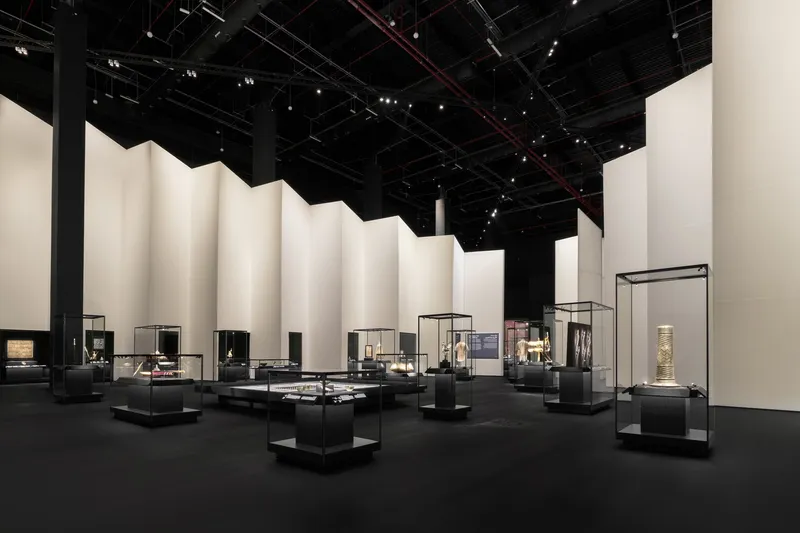
Exhibition design rarely gets to operate at this scale. OMA's scenography for the 2025 Islamic Arts Biennale occupies 120,000 square meters of Skidmore, Owings & Merrill's Western Hajj Terminal at King Abdulaziz International Airport, a building originally conceived to shelter millions of pilgrims beneath 210 semi-conical Teflon-coated fiberglass canopies. The terminal was inaugurated in 1981, purpose-built for the annual Hajj. Now it hosts over 500 historical artifacts and 30 contemporary art commissions organized across five indoor galleries, two pavilions, and a structured outdoor landscape. The premise is ambitious: make a single material language, white fabric in varying textures and translucencies, do the work of walls, columns, vitrines, and atmosphere all at once.
What makes this project worth studying is the deliberate refusal to treat scenography as decoration laid over architecture. OMA uses abstract textile elements to construct an entirely new spatial logic inside the existing terminal, one that competes with SOM's monumental canopy structure rather than deferring to it. Seven named components, from AlBidayah (The Beginning) to AlMusalla (a prayer and gathering space), create distinct environments that shift in density, light, and mood. The result is closer to a temporary city than a conventional exhibition, and it raises a pointed question: when scenography operates at architectural scale, where does one discipline end and the other begin?
A Forest of Light Columns in AlMadar
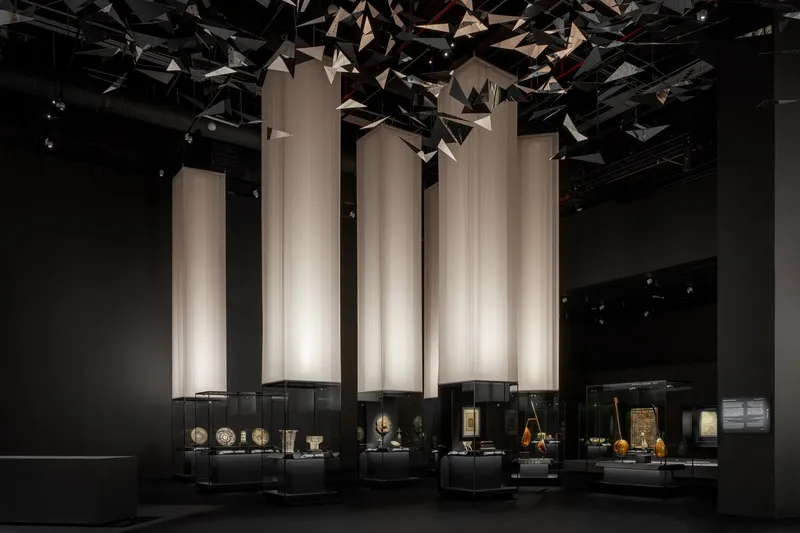
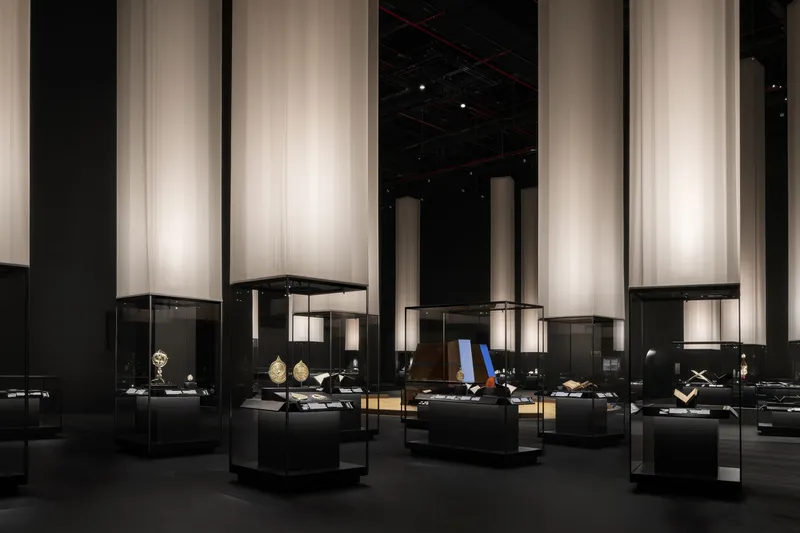
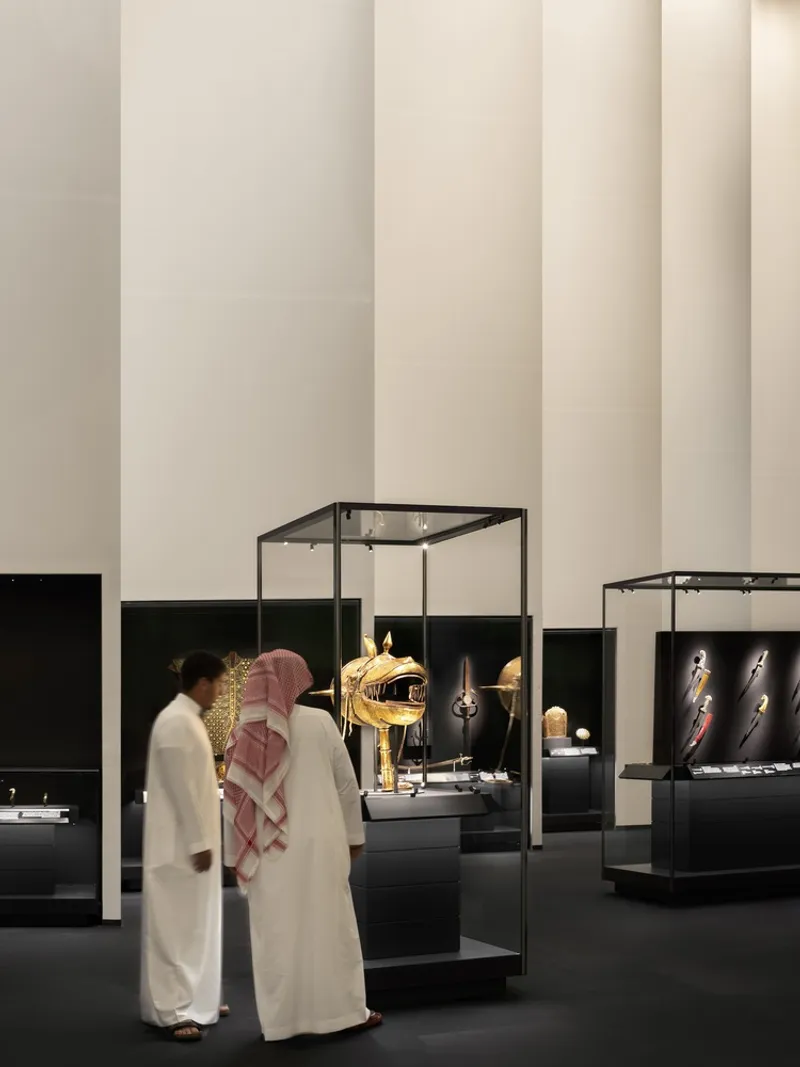
AlMadar, which translates roughly as "The Orbit," contains what may be the most spatially inventive move in the entire biennale. Thirty-seven abstract rectangular columns made of concentric translucent textiles rise from the vitrines below toward the ceiling, each internally illuminated to produce an ethereal, forest-like glow. The columns do not simply frame the objects on display. They dissolve into darkness overhead, creating a vertical gradient that pulls the eye upward even as the artifacts hold it at waist height. Contributions from 34 institutions across 21 countries are organized into thematic clusters, and the density and placement of the columns function as intuitive wayfinding, guiding visitors through material without signage or rigid corridors.
The lighting design, handled by les éclaireurs, plays a critical role here. Subtle color shifts across the white fabric create perceived material differences that do not actually exist. What reads as warm ivory in one bay becomes cool silver in the next, entirely through the manipulation of light temperature and angle. It is a sophisticated trick, and it works because the base material is so consistently neutral that any chromatic variation registers immediately.
Sacred Textiles on Full Display in AlBidayah

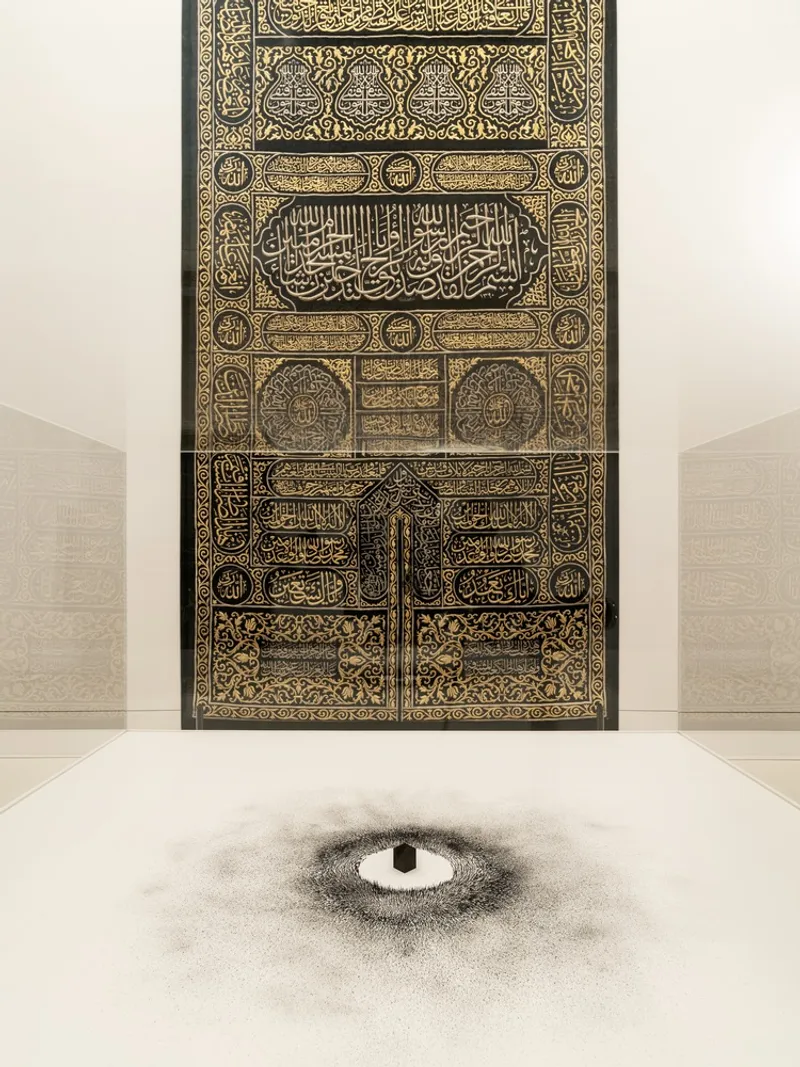
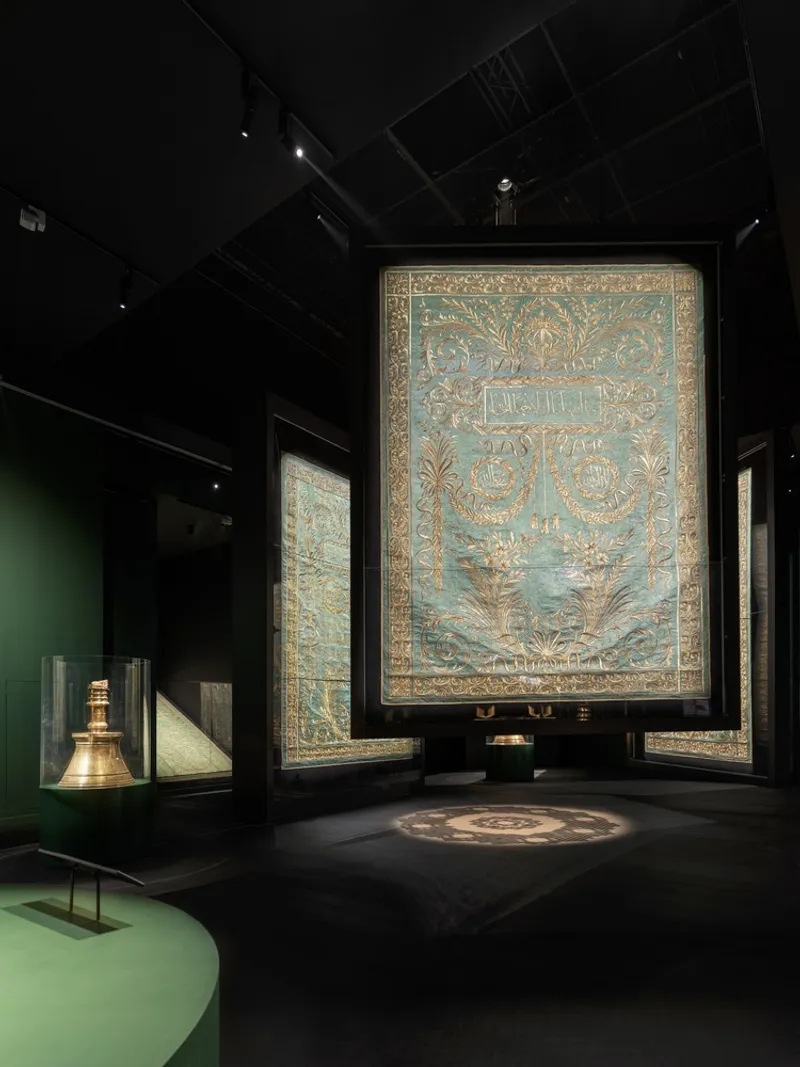
AlBidayah, the opening section of the biennale, houses sacred artifacts including the unprecedented full exhibition of four Kiswahs of the Holy Kaaba, presented in their entirety for the first time. The gold-embroidered textiles, suspended in tall white galleries, demand a spatial envelope that can match their physical and symbolic weight. OMA's response is restraint: towering translucent walls amplify the monumental presence of the objects without competing for visual attention. The fabric partitions are deliberately plain, so the elaborate embroidery of the Kiswahs becomes the only ornamental register in the room.
The contrast between the dark galleries containing projected floor patterns and the pale stone alcoves displaying ornate door panels creates a liturgical rhythm. Visitors move from contemplation to revelation and back again, a spatial sequence that mirrors the spiritual cadence of pilgrimage itself. The 144 display cases, manufactured by Goppion and designed in collaboration with Colin Morris Associates, range from freestanding to wall-mounted configurations, each calibrated to the specific scale and fragility of its contents.
The Bowtie Logic of AlMuqtani

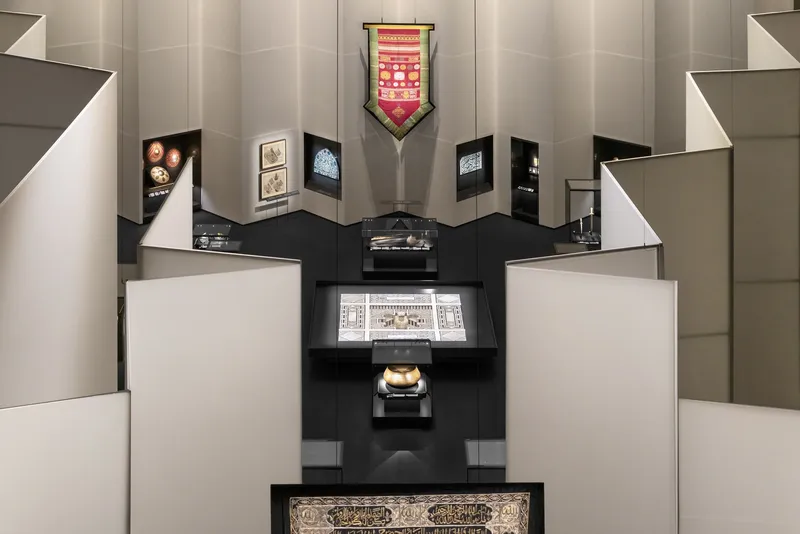
AlMuqtani, meaning "Homage," uses a bowtie-shaped plan to divide a single gallery into two symmetrical triangles, each housing a distinct collection. The geometry is not arbitrary. By pinching the plan at its center, OMA forces every visitor through a single threshold between the two halves, creating a moment of reorientation that reinforces the curatorial argument about distinct yet connected traditions. Pleated walls extend from eye level to the full room height, and vitrines are integrated directly within the folds, so the act of viewing an artifact and the act of reading the architecture become indistinguishable.
The stepped display platforms visible in the overhead views reveal how carefully the vertical hierarchy of objects has been choreographed. Smaller pieces sit low, drawing visitors into close physical proximity, while the central textile anchors the composition from a distance. The black flooring acts as a void that sharpens every edge, making the white fabric walls read almost as luminous surfaces rather than solid partitions.
Symmetry and Procession
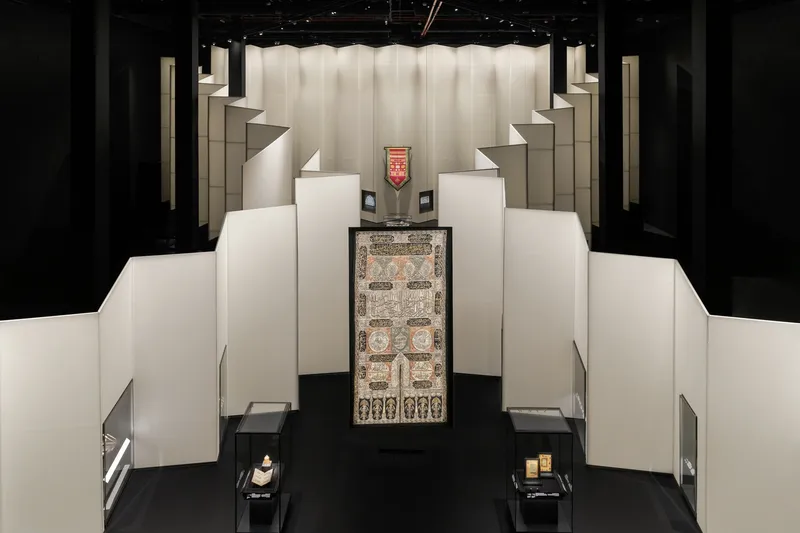
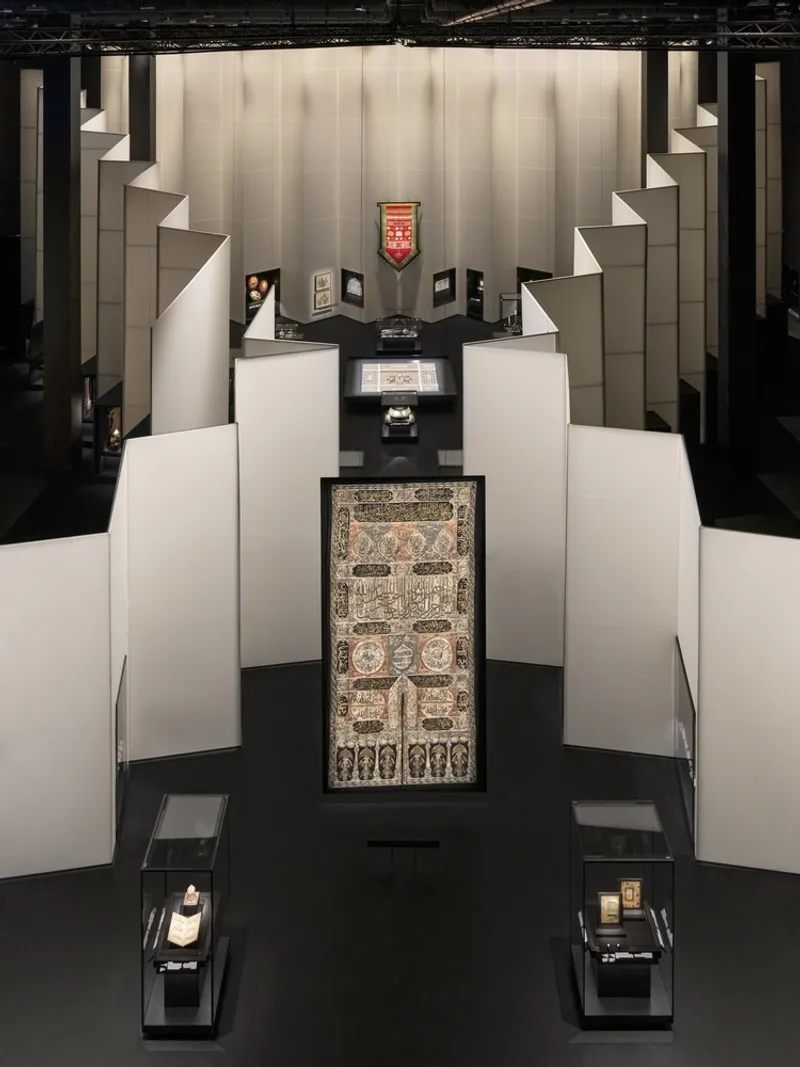
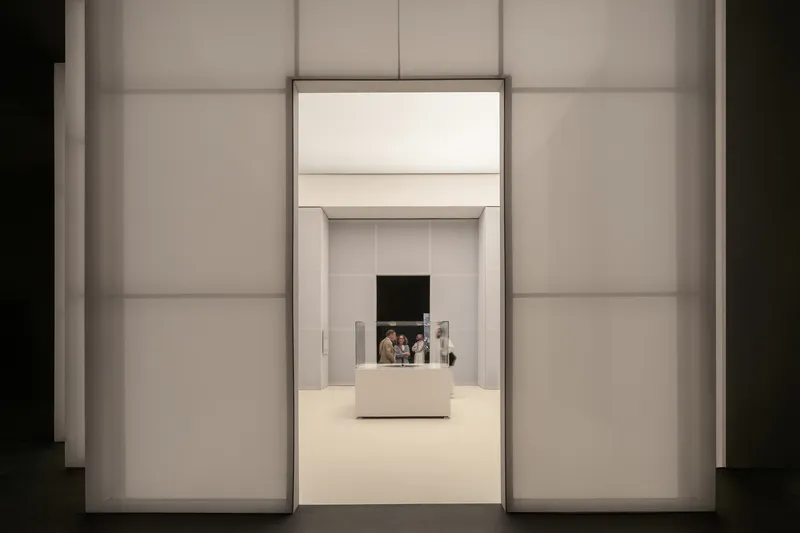
Seen from above, the exhibition's symmetrical geometries become legible as a planning strategy rather than a stylistic choice. The stepped white platforms converge toward central textile displays with an almost gravitational pull, and the axial views through illuminated doorways stack perspective in a way that recalls the enfilade sequences of classical architecture. OMA uses bilateral symmetry not for grandeur but for orientation: in a 120,000-square-meter venue, bilateral axes help visitors construct a mental map without ever consulting one.
The procession through sequential white portals, each framing a deeper gallery beyond, compresses what could be an overwhelming spatial experience into a series of legible thresholds. Scale is managed through framing. The visitor never confronts the full volume of the terminal at once; instead, each opening reveals only the next room, building anticipation incrementally.
Two Pavilions Under the Canopy: AlMukarramah and AlMunawwarah
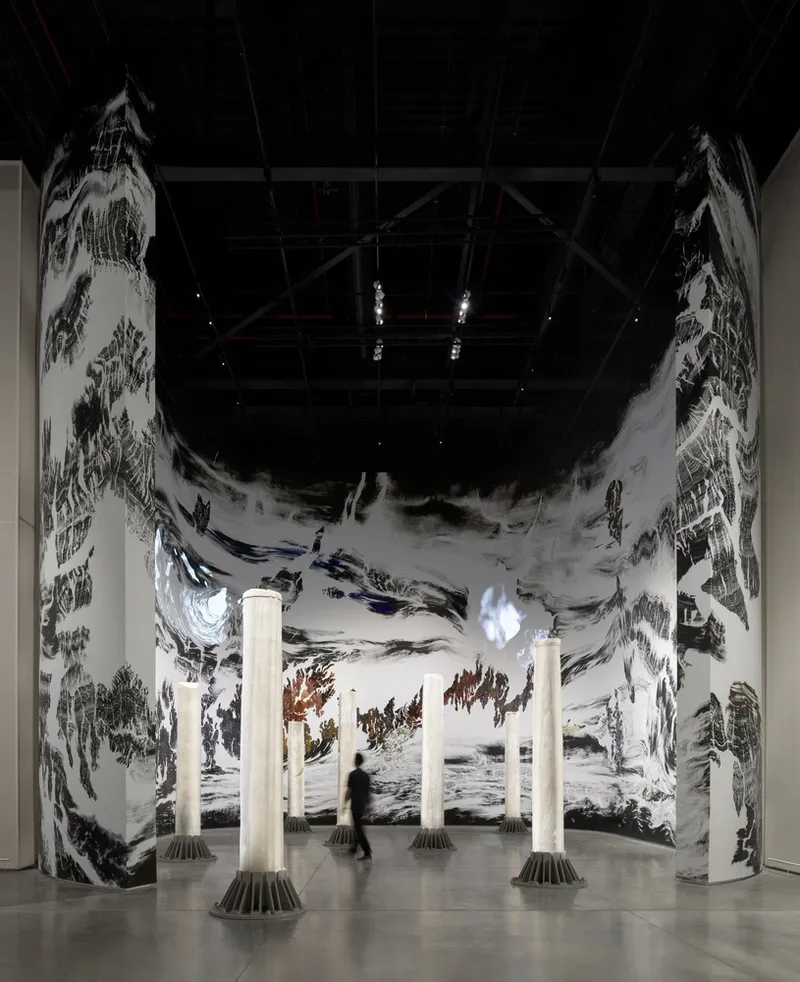
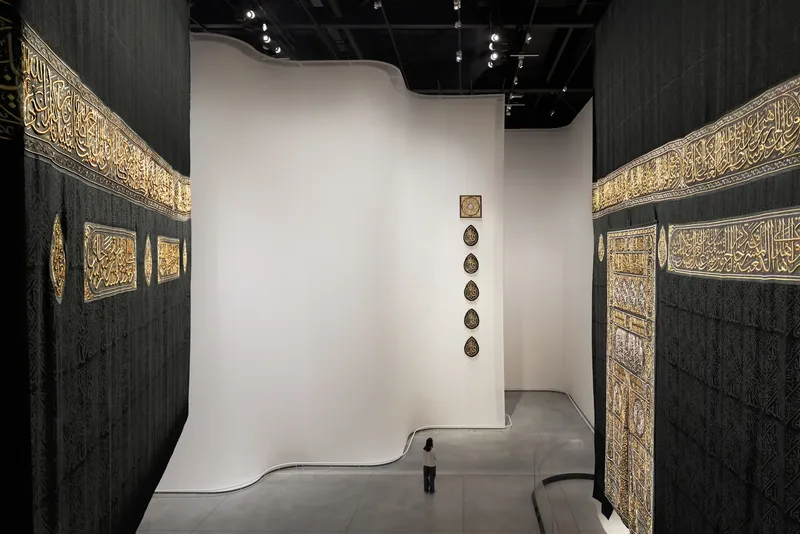
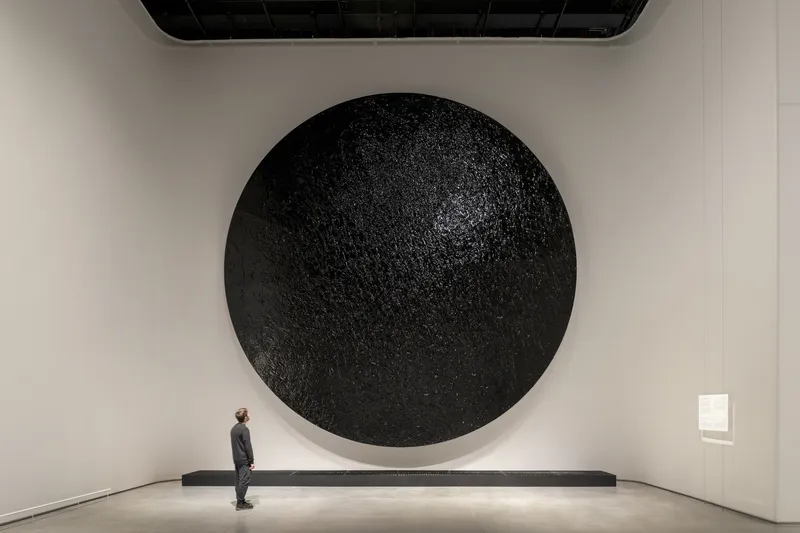
The two pavilions dedicated to Makkah and Madinah, AlMukarramah (The Honored) and AlMunawwarah (The Illuminated), adopt opposing spatial strategies. AlMukarramah is conceived as a darkened space with a glowing white chamber at its core, a spatial inversion that positions the visitor in shadow before drawing them toward light. AlMunawwarah takes a fluid, non-linear arrangement that encourages wandering. Together they form a dialectic: focused pilgrimage versus open exploration, compression versus expansion.
The cylindrical illuminated columns and curved panoramic printed wall panels in these spaces create environments that feel closer to installation art than conventional exhibition architecture. A large circular black textured wall installation in one pavilion, confronted by a single visitor, registers as both artifact and architecture simultaneously. These moments of ambiguity are where OMA's scenography is most effective, collapsing the distinction between the thing displayed and the thing that displays it.
Landscape as Exhibition: AlMidhallah
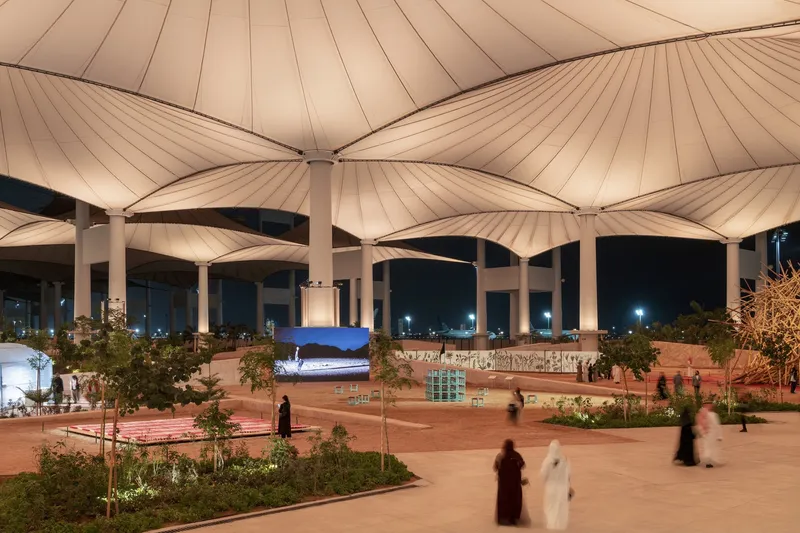
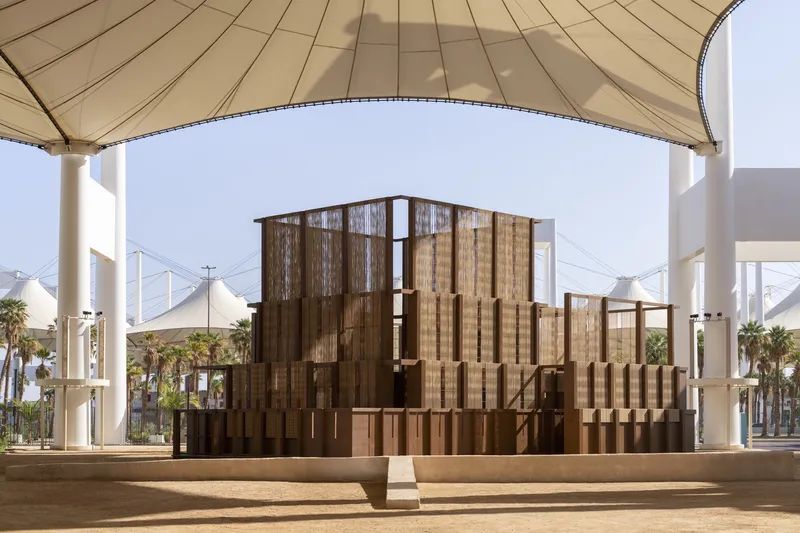
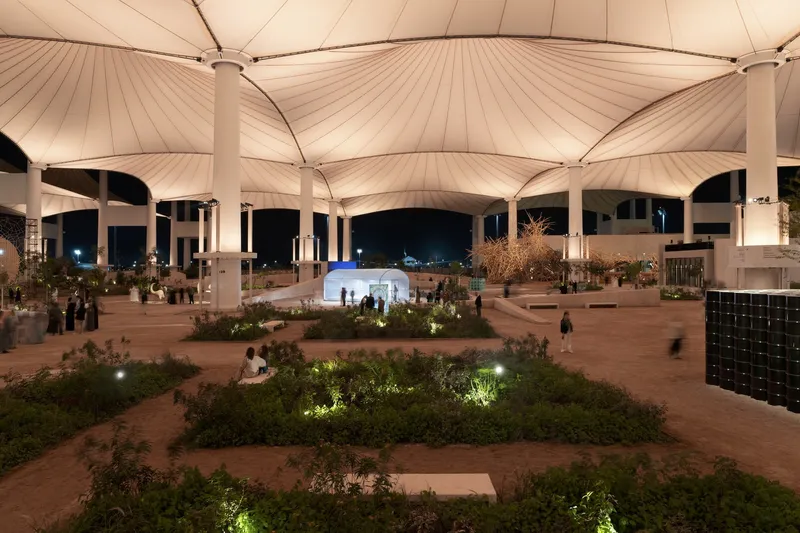
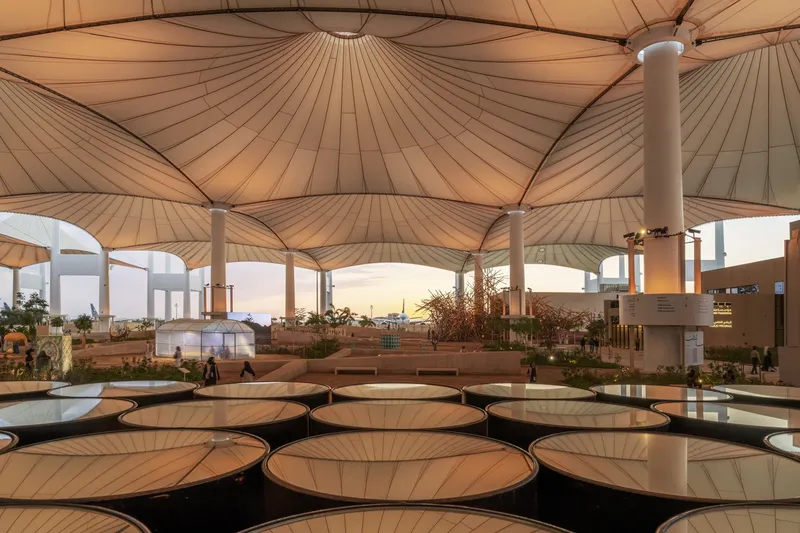
The outdoor component, AlMidhallah (The Canopy), reframes the terminal's existing tensile structures as exhibition infrastructure. Site-specific artworks on garden themes are integrated with existing plantings, and nine canopy bays define a central square that creates an intimate outdoor room within the vastness of the terminal grounds. Timber pavilions with vertical screen walls sit beneath the radiating fabric canopies, and landscaped beds with red clay paving bring material warmth to counterbalance the clinical whiteness of the interior galleries.
At dusk and into the evening, the tensile canopy becomes a luminous ceiling, its pleated fabric catching uplighting from the planted areas below. Circular reflecting pools multiply the effect. The move is smart: rather than fighting the terminal's overwhelming structural presence, OMA treats the canopy as a found condition and concentrates design energy on the ground plane, where visitors actually circulate and pause.
Artifacts and Vitrines in Dialogue
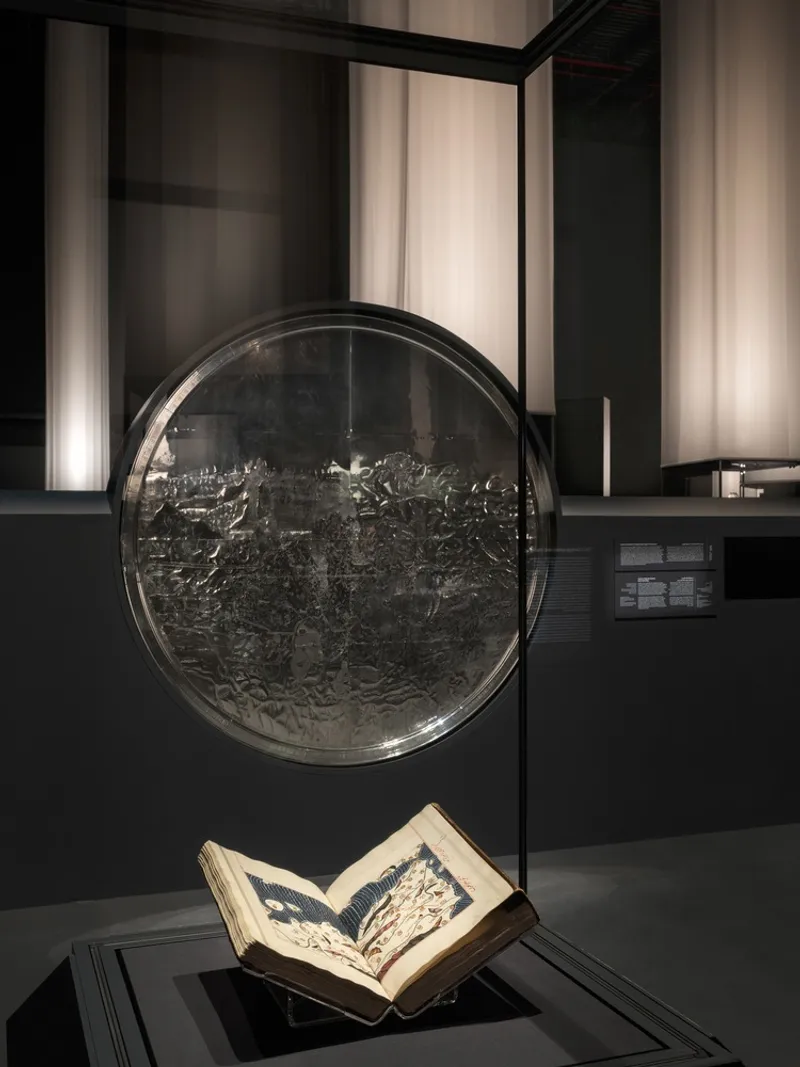

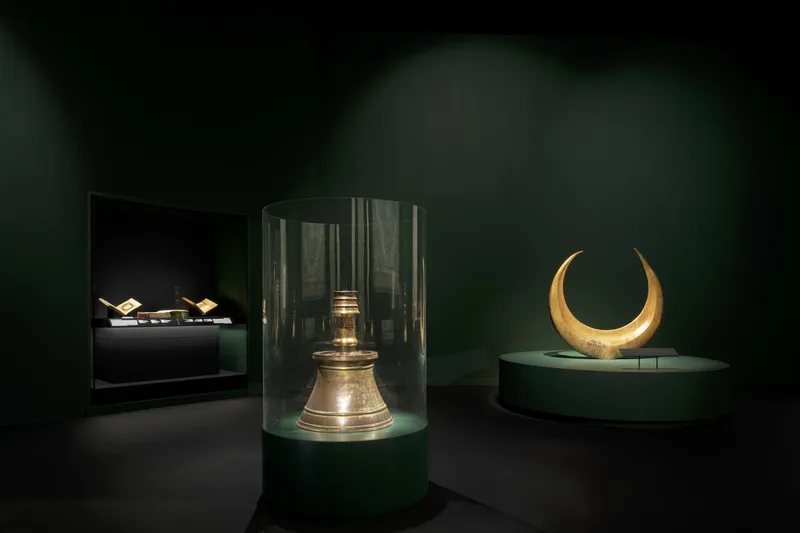
The object-level display design deserves attention on its own terms. Goppion's 144 cases, developed with Colin Morris Associates, include freestanding, wall-mounted, and table configurations, each tuned to the specific artifact: engraved metal plates and open manuscripts lie flat under minimal glass, while brass and marble hexagonal lanterns stand upright in cylindrical cases on green plinths. The dark gallery backdrops with backlit translucent panels give historical objects a contemporary stage, avoiding the dusty vitrine effect that plagues many heritage exhibitions.
The graphic design by Morcos Key and the art production by Black Engineering contribute to a seamless integration where labeling, lighting, and containment all feel subordinate to the artifacts. Nothing competes. The restraint is the point.
Undulating Ceilings and Interior Topography
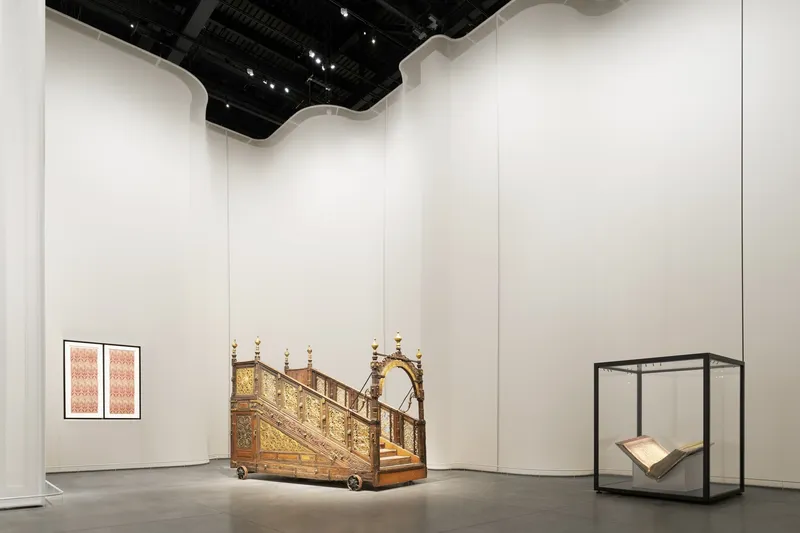
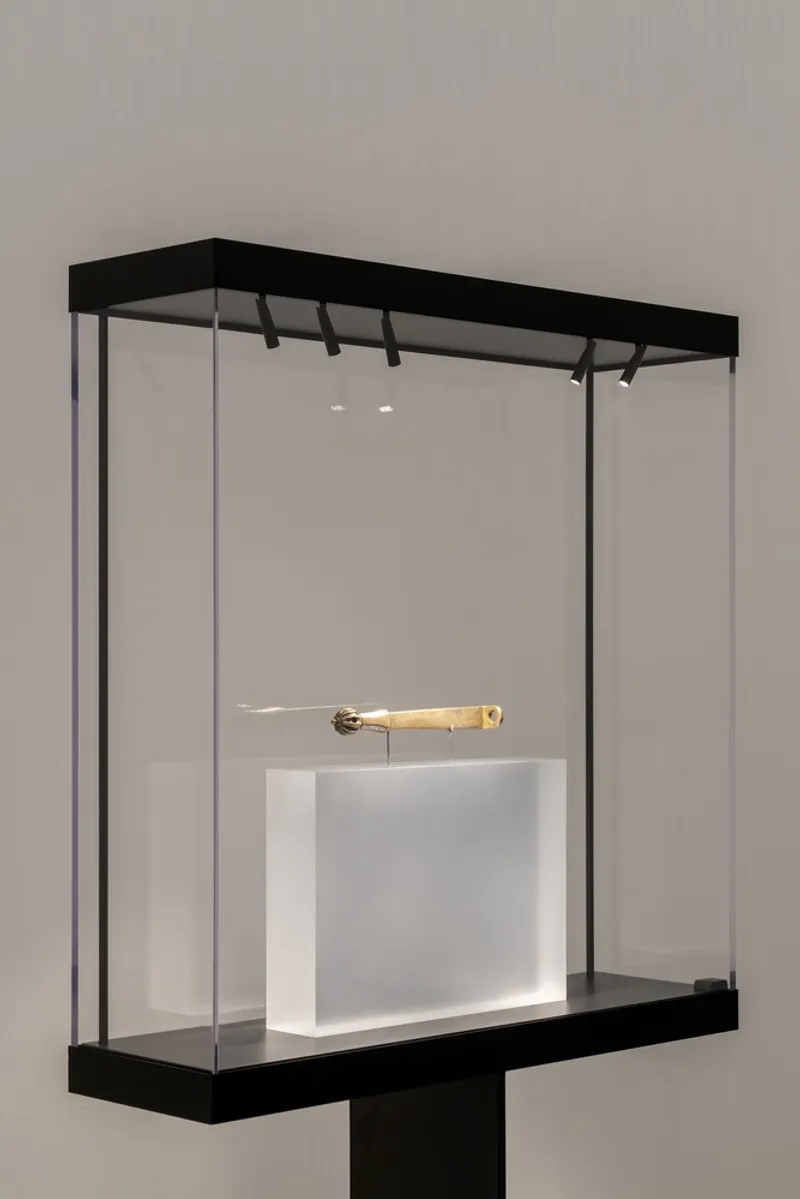
Several gallery zones feature undulating ceiling soffits that modulate the perceived height of the space without altering the actual structural envelope. Exposed black mechanical systems above the white soffit create a layered depth, with the clean exhibition plane floating beneath a visible infrastructure zone. Freestanding glass display cases with black metal frames punctuate the white galleries as architectural objects in their own right, their slender profiles and transparent skins continuing the translucency theme down to the furniture scale.
The umbrella-like fabric canopies over the terrace plaza, shown at dusk with circular reflecting pools, demonstrate how OMA exports the interior language to the threshold zones. There is no hard boundary between inside and outside, only a gradual shift in material density and light quality.
Plans and Drawings
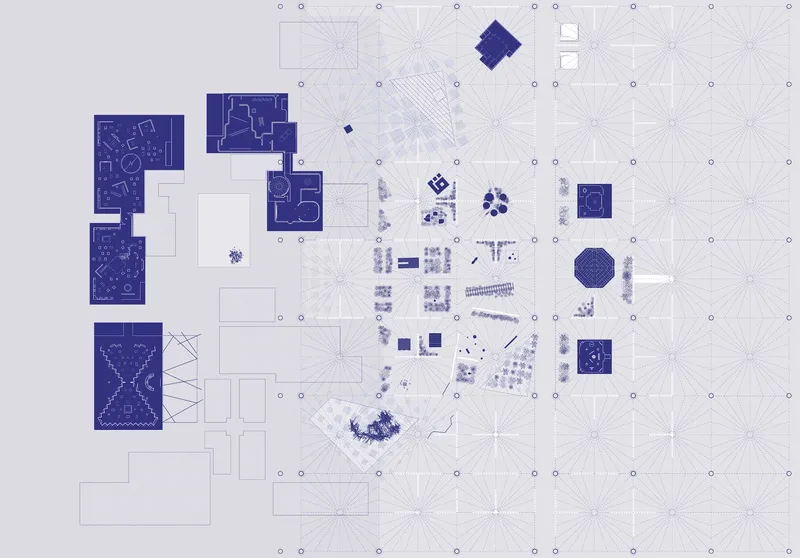
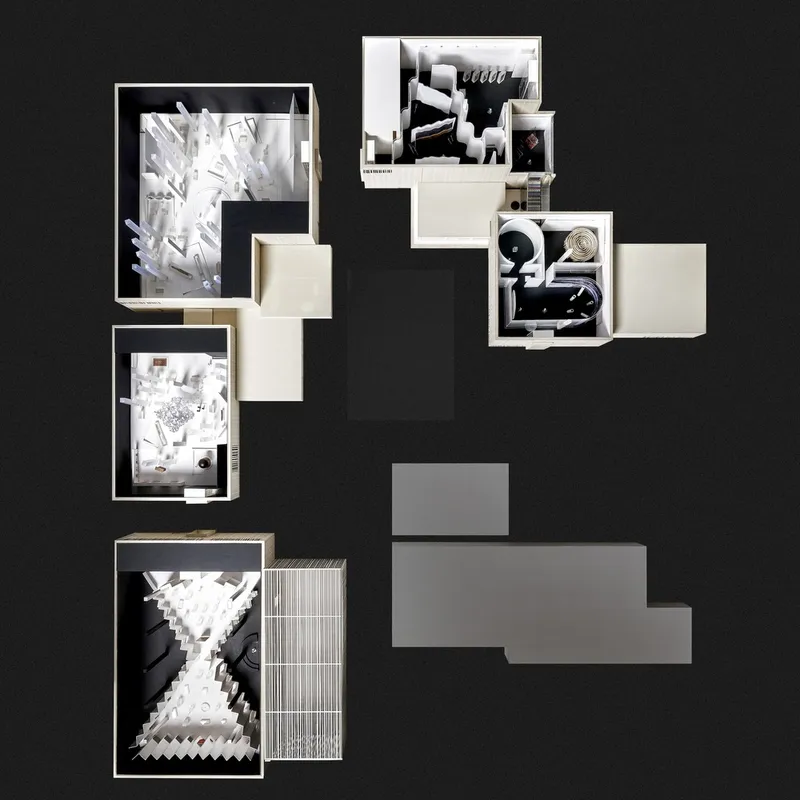
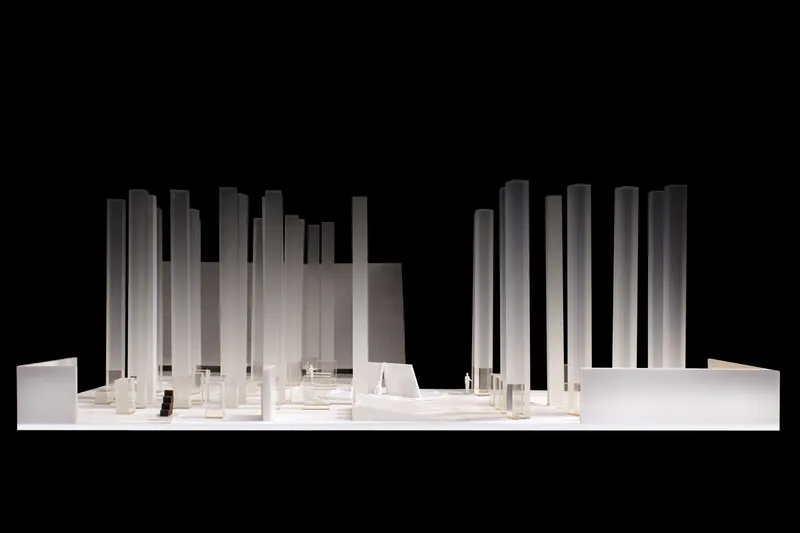
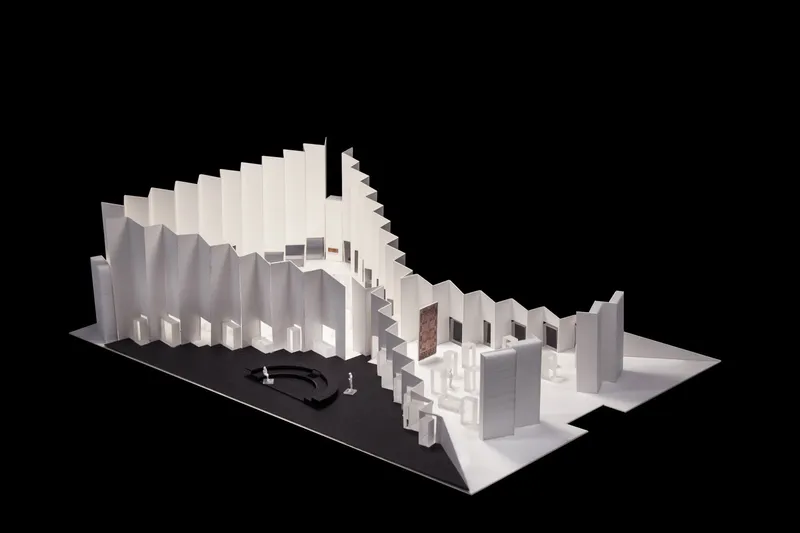
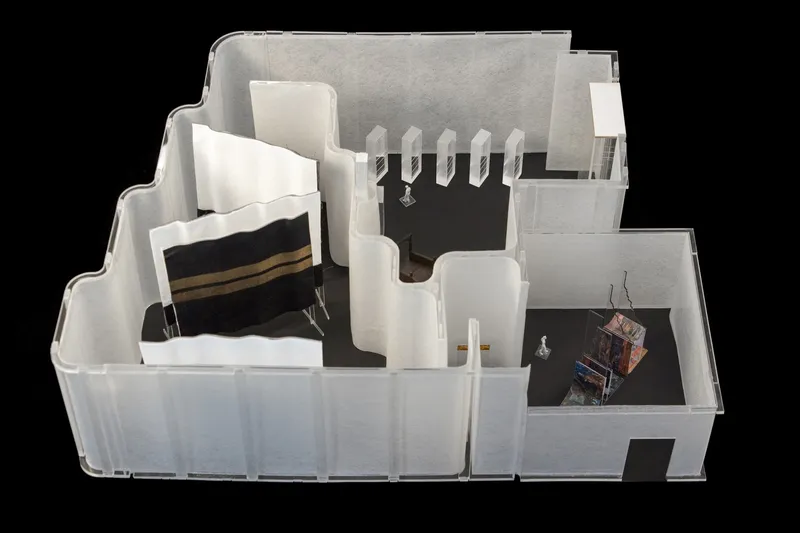
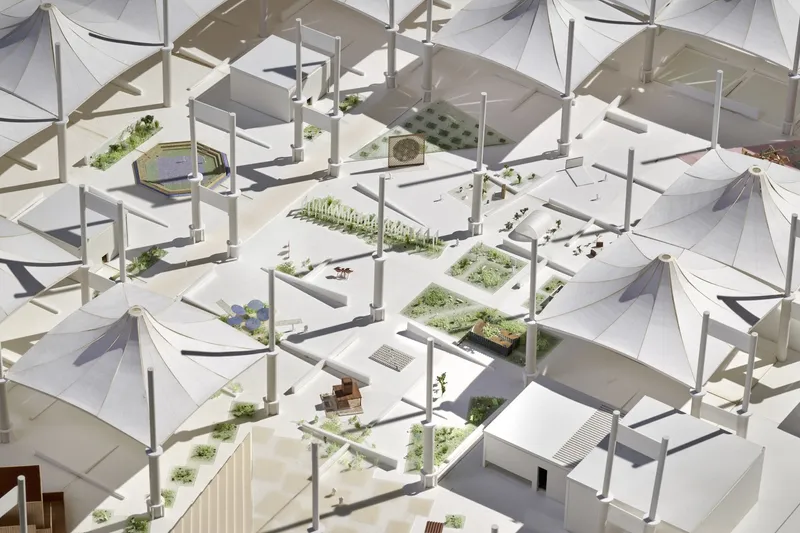
The site plan reveals the radial grid of SOM's original terminal and how OMA's clustered pavilions and sculptural elements are positioned within it, occupying key intersections while leaving circulation paths between canopy bays largely clear. Physical study models, shown here at multiple scales, illustrate the iterative process behind the fabric column forms and the folded partition walls. Vertical tower volumes rising from horizontal bases, visible in the sectional models, confirm that the scenography was designed with the same rigor applied to permanent buildings: suspended ceiling elements, material samples, and spatial sequences were all resolved in model form before being translated to full scale.
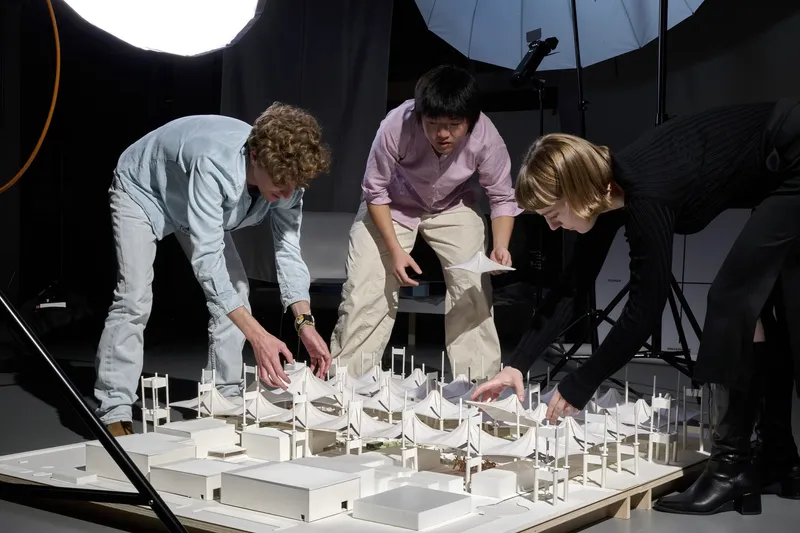
The studio process image of three people arranging white model elements on a table underscores the hands-on, spatial nature of OMA's design method. These are not digital renders adjusted on screen; they are physical compositions tested in real light, at a scale where proportions can be judged by eye. For a project whose primary material is fabric, this tactile approach to design development makes particular sense.
Why This Project Matters
Exhibition scenography occupies an awkward disciplinary position: too temporary to earn the label of architecture, too spatial to be reduced to interior design. OMA's work for the 2025 Islamic Arts Biennale pushes back against that ambiguity by operating at genuine architectural scale, constructing an entirely new spatial order inside one of the late twentieth century's most iconic structural achievements. The decision to build with fabric, a material that shares DNA with SOM's Teflon-coated fiberglass canopy, creates a generational dialogue between two architectural logics separated by four decades.
More importantly, the project demonstrates that restraint and spectacle are not opposites. A single material, white textile, modulated through folding, layering, illumination, and density, produces environments that range from intimate alcoves to cathedral-scale halls. The curatorial ambition of presenting sacred objects alongside contemporary commissions demands an architecture that neither overwhelms nor retreats, and OMA delivers exactly that. For anyone designing exhibitions, cultural pavilions, or temporary structures, this biennale is essential reference: proof that scenography, when taken seriously as a spatial discipline, can hold its own against any permanent building.
2025 Islamic Arts Biennale, scenography by OMA. Located at the Western Hajj Terminal, King Abdulaziz International Airport, Jeddah, Saudi Arabia. Total exhibition area: 120,000 m². Year: 2025. Lighting design: les éclaireurs. Scenography and art production: Black Engineering. Display case design: Colin Morris Associates. Display case manufacturing: Goppion. Graphic design: Morcos Key. Photography by Marco Cappelletti.
About the Studio
Share Your Own Work on uni.xyz
If projects like this are the kind of work you want to make, uni.xyz is a place to publish your own, find collaborators, and enter design competitions.


Popular Articles
Popular articles from the community


Opera on the Sea: Driftwood Logic Shapes a Timber Opera House on Estonia's Coast
Trevor Orgill's opera house translates the entangled drift of floating timber into a civic building where wood, water, and music converge.

The Amber Palace Opera: A Geological Fiction Surfaces on Tallinn's Baltic Waterfront
Pierre Brillard reimagines a Baltic legend as a public landscape, opera house, and waterfront promenade rooted in Tallinn's coastal identity.
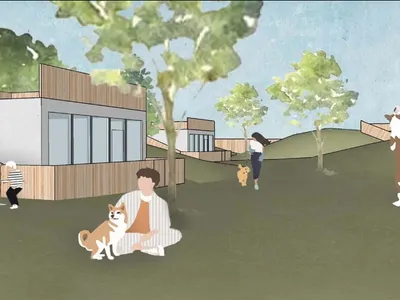
Temporary Home for Dogs: A Reversed Zoo Rethinks Animal Shelter Architecture
In Bucharest, a sinuous corridor and freed landscape flip the logic of containment, designing a shelter that works to make itself unnecessary.

Cloaked Colonization: A Mobile Underwater Habitat That Moves Like a Fish
Micah Abaya's shortlisted EHC Pacific entry reimagines ocean settlement as a dispersed network of self-sustaining architectural organisms.

Similar Reads
You might also enjoy these articles


Bamboo Housing Challenge 2026: Design Affordable, Sustainable Homes Using Bamboo
An international design competition by Bamboo U and IBUKU inviting architects and designers to reimagine affordable housing using bamboo — with the winning design built full-scale in Bali.

Computational Design & Education: Beegraphy Design Awards Introduces 7th Category (Featuring Jiyun's Innovative Approach)
Dive into Beegraphy’s 7th Design Awards category, where computational design meets education to create immersive, interactive learning tools, inspired by Jiyun’s work.
From Parametric Lighting to Urban Furniture: Join the 2nd Workshop in Beegraphy’s Computational Design Series
Dive into Cutting-Edge Design Techniques and Practical Applications with Industry Experts

Last Call: Unleash Your Architectural Genius in SHAK's Kindergarten Design Competition
Urgent call for architects to join SHAK's kindergarten design competition before the looming deadline

Explore Scenography Competitions
Discover active competitions in this discipline

Challenge to reimagine the Iron Throne

Photograph architecture without architects

Illustrate the lost glory of Angkor Wat - Render Challenge

Design challenge to reuse E-waste
Comments (0)
Please login or sign up to add comments
No comments yet. Be the first to comment!