
Farsh Film Studio by ZAV Architects: Adaptive Reuse in the Heart of Tehran
Farsh Film Studio by ZAV Architects reuses a Tehran residence into a raw, sustainable cultural hub blending film, education, and community.


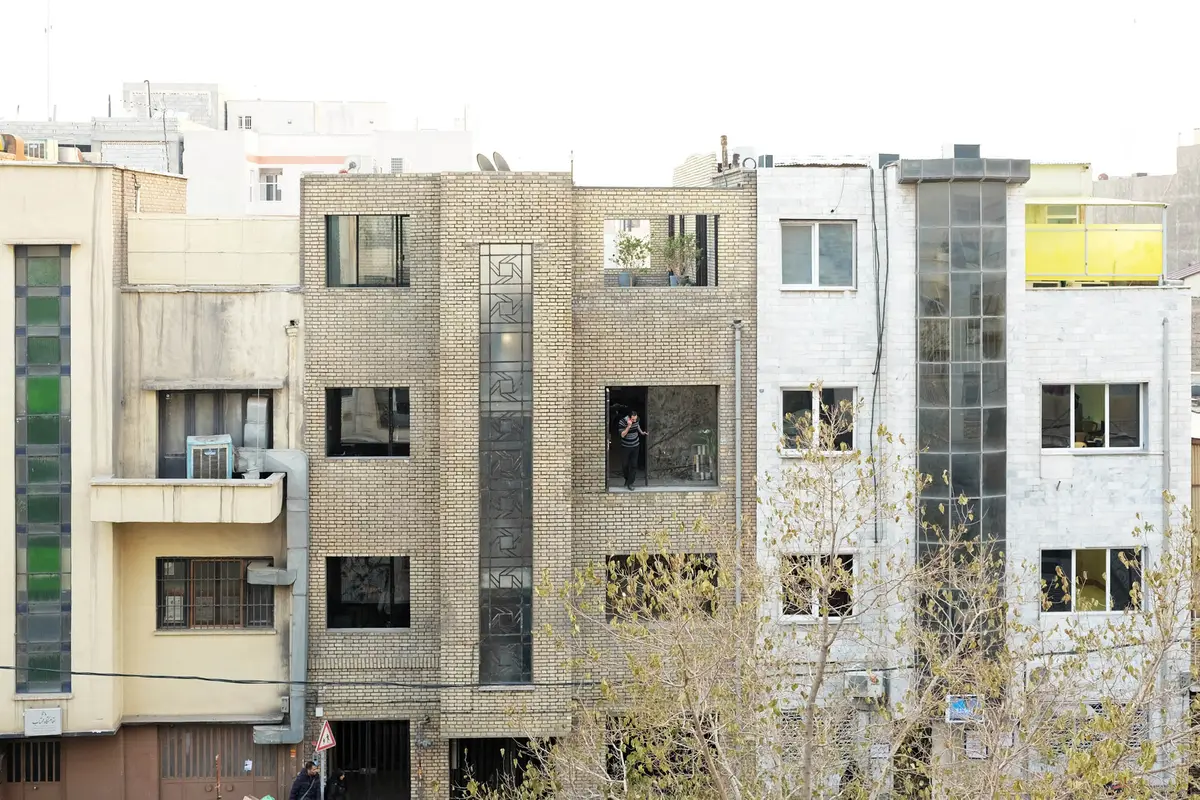
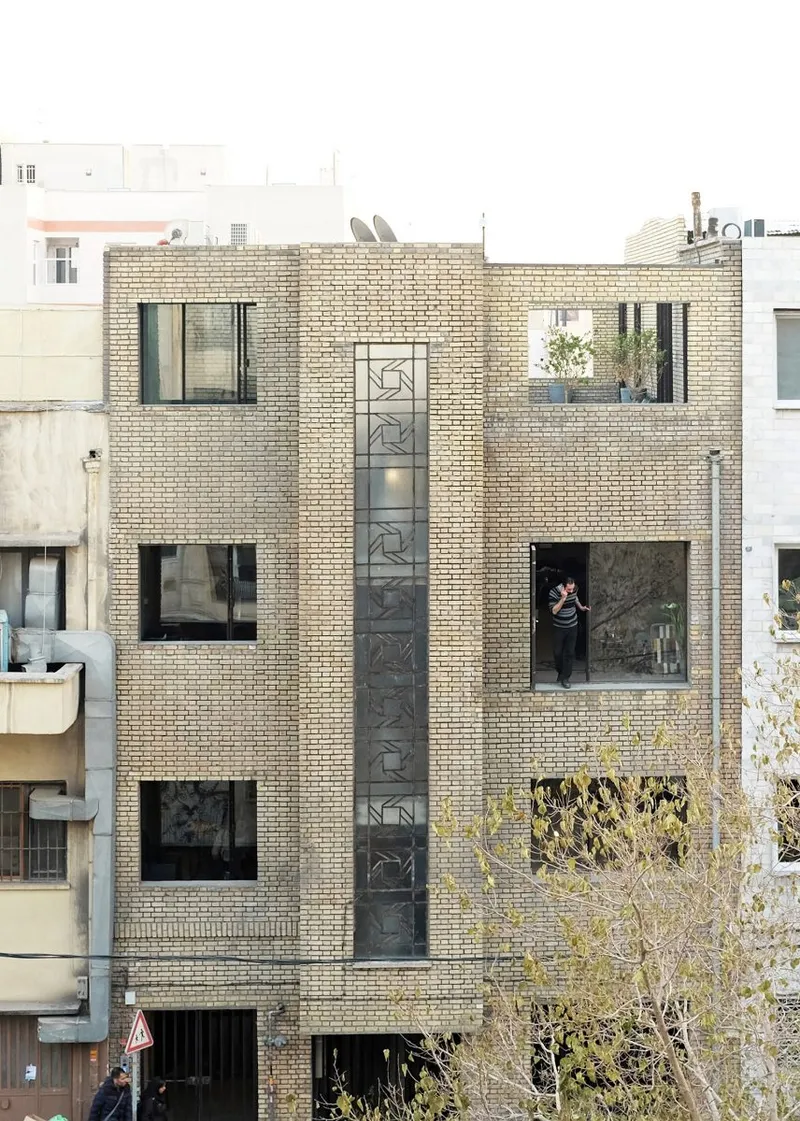
Farsh Film Studio, designed by ZAV Architects, is a striking example of adaptive reuse architecture in Tehran, Iran. Completed in 2016, the 356 m² project transforms a private multi-story residence into a vibrant cultural hub for filmmakers, cinephiles, and the local creative community. The project redefines the way buildings in dense urban settings can be reimagined to serve both public and artistic needs.
A House Transformed Into a Cultural Landmark
Originally owned by Gholamali Beski, a dedicated environmentalist known for his lifelong work in preserving Iran’s natural resources, the residence carried a strong legacy. ZAV Architects chose to honor this legacy by designing the project with a sustainable, resource-conscious approach.
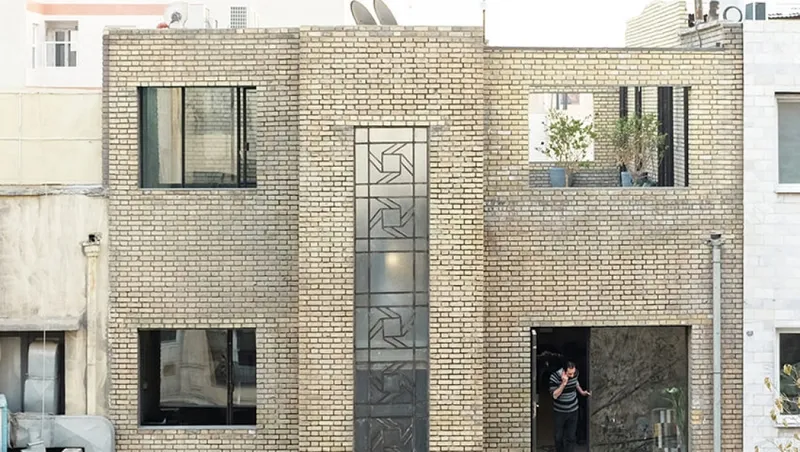
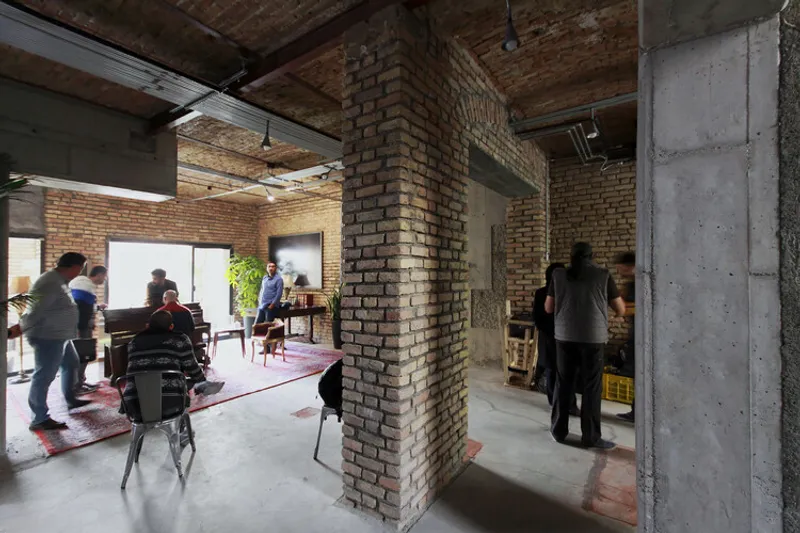
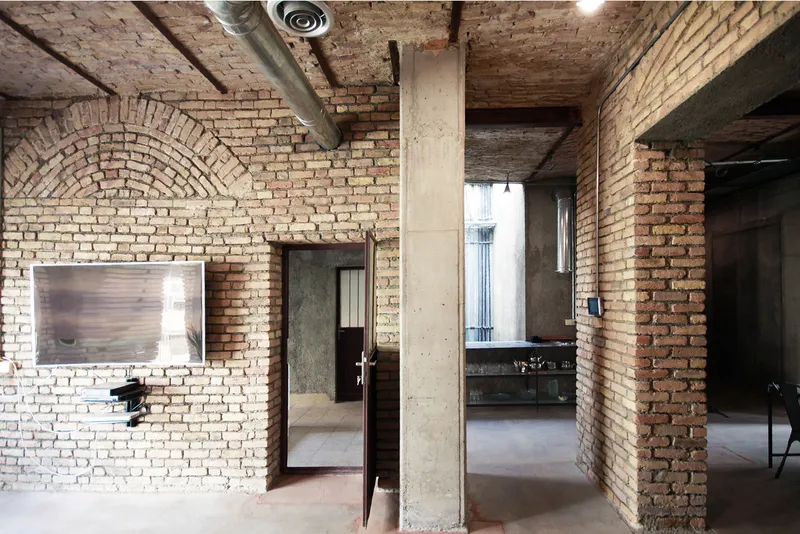
Instead of concealing the old structure with cosmetic finishes, the architects adopted a “subtraction strategy”—removing unnecessary elements to return the building closer to its raw, original state. This adaptive reuse philosophy embraces imperfection, celebrates exposed structures, and highlights material honesty.
Design Philosophy: Offset and Regimes
Two guiding principles shaped the transformation:
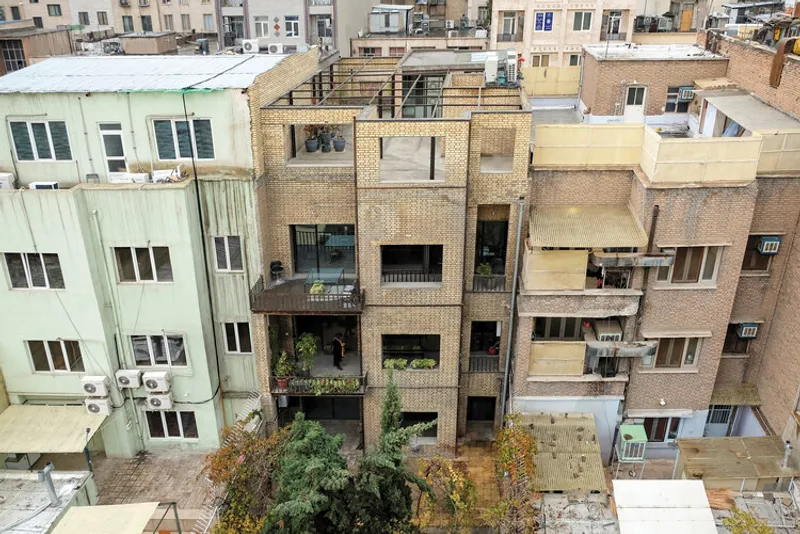
- Offset – By preserving the urban boundary and creating an inward offset, the studio forms a buffer zone that cocoons the building, enhancing resilience while keeping the neighborhood fabric intact.
- Regimes – A systematic approach toward resource consumption ensures that design interventions follow strict rules. This includes reusing available materials, preserving the building’s structure, and avoiding unnecessary embellishments.
The result is a structure that balances brutalist restraint with urban resilience, where aesthetics emerge as a by-product of necessity.
Raw Materials and Recycling in Architecture
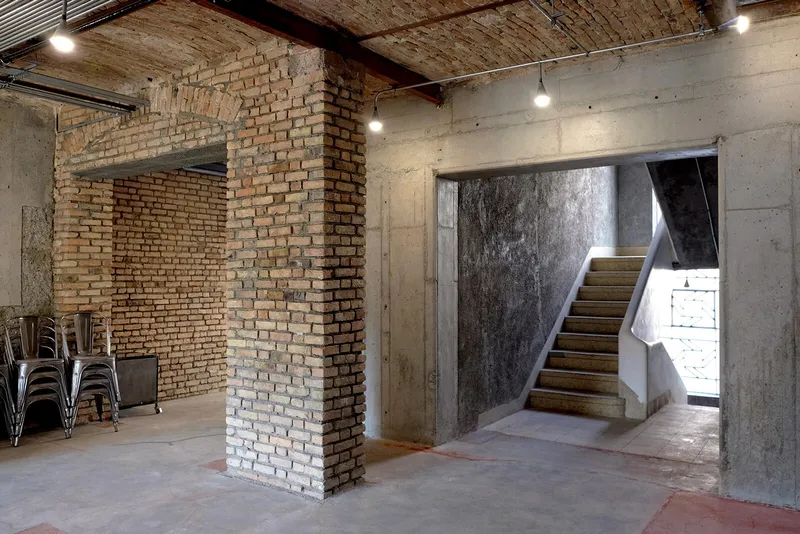
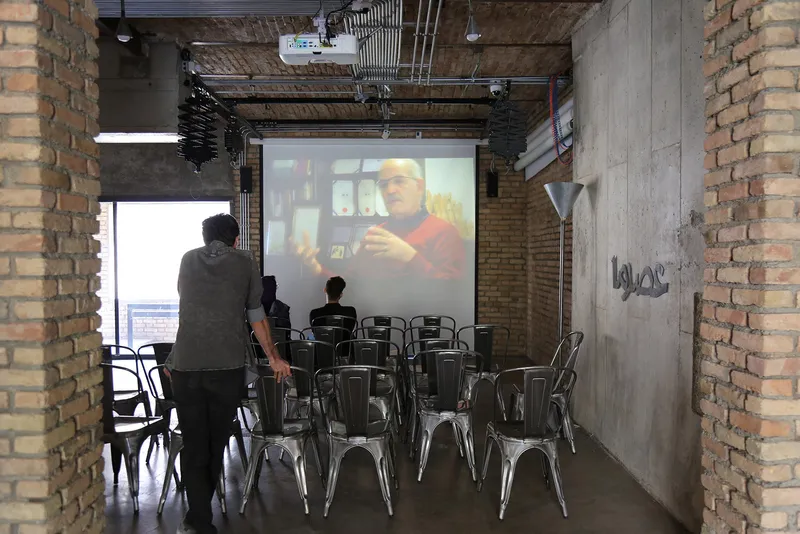
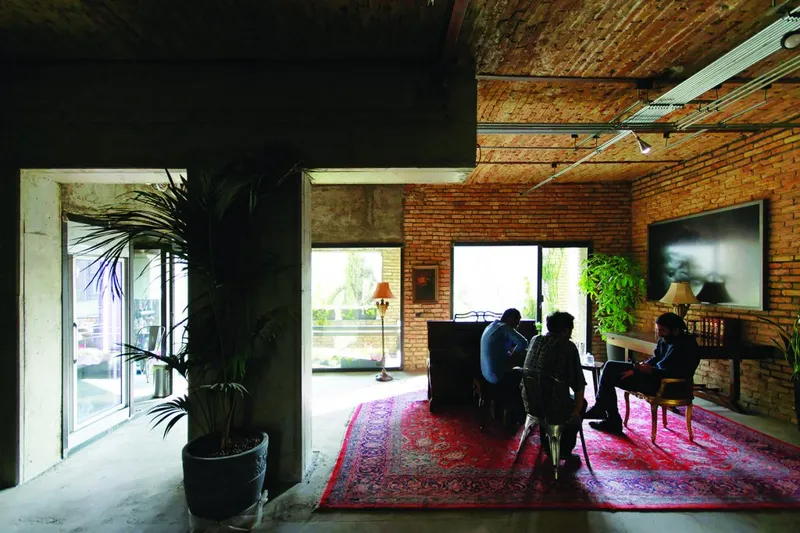
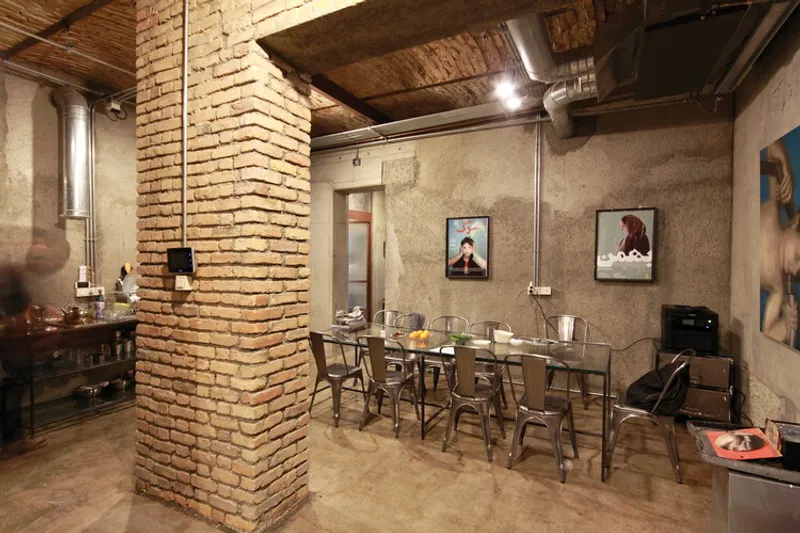
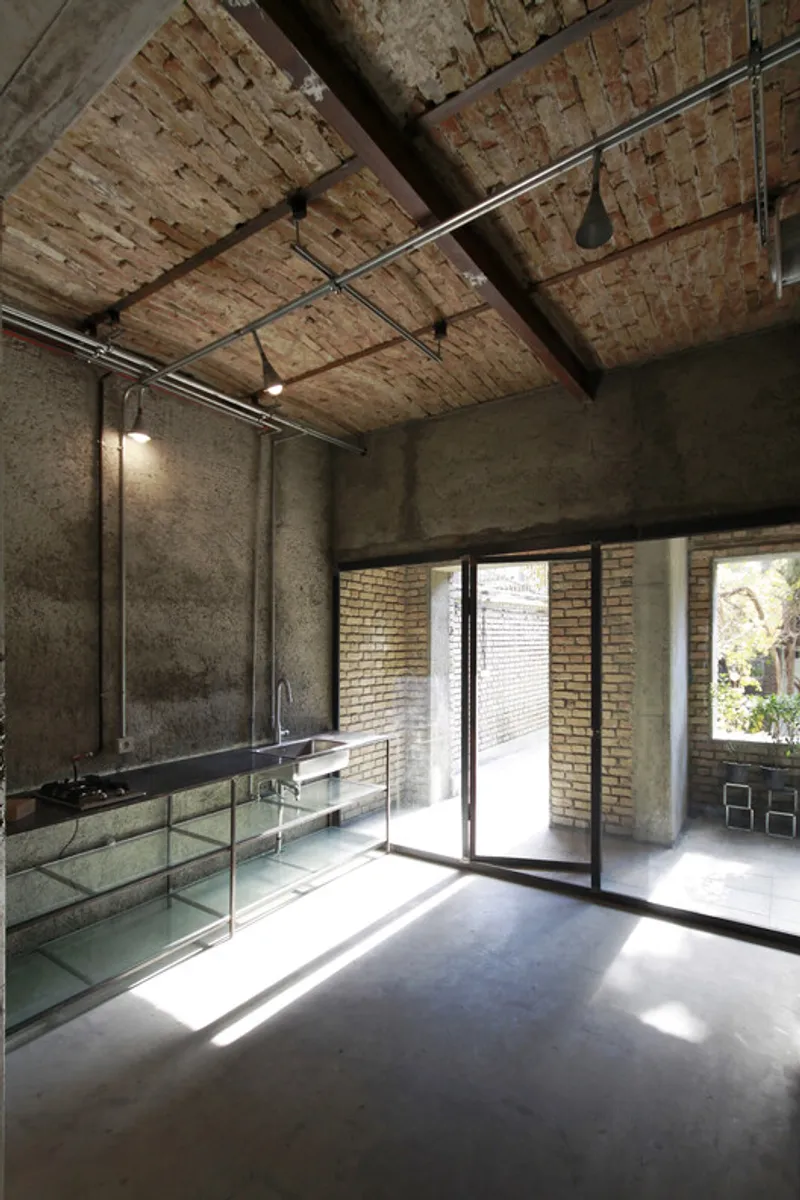
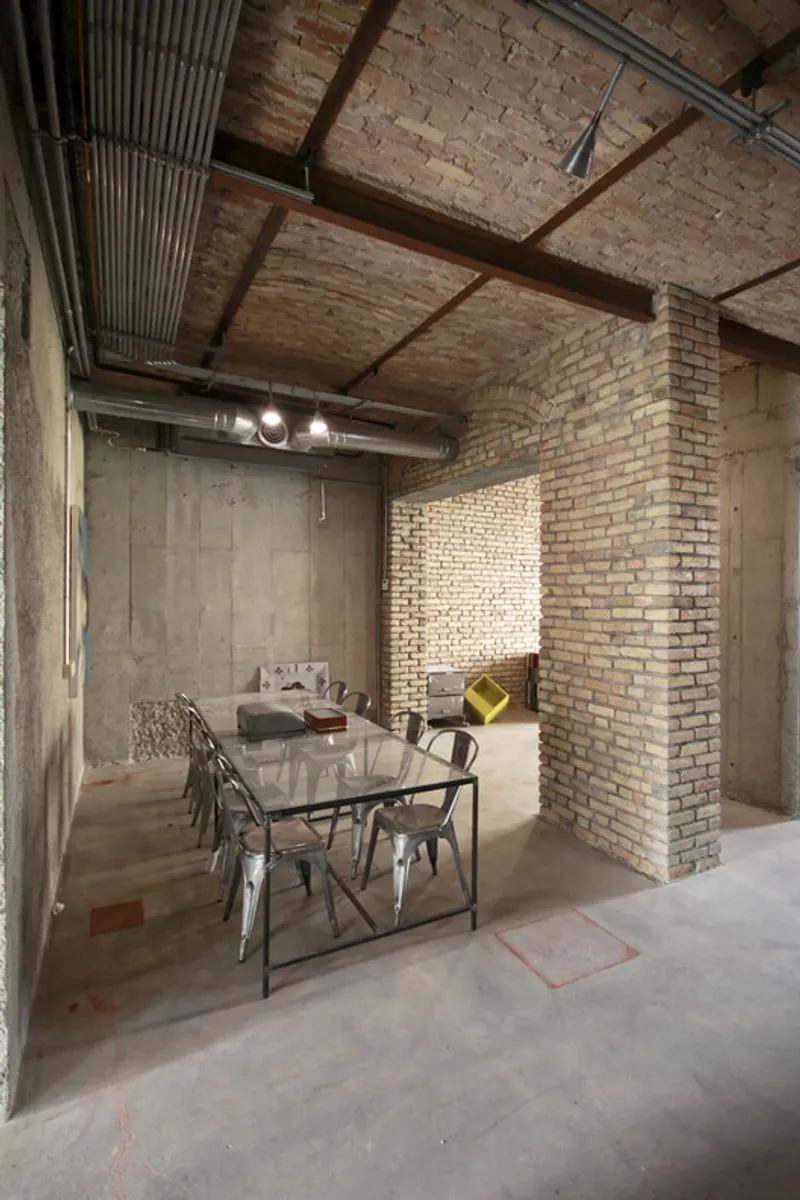
The material palette is intentionally minimal—brick, cement, raw metal, and glass. Rather than sourcing new elements, the design team studied Tehran’s recycling sites to supply building materials. This resourceful construction approach not only reduces waste but also reflects the environmental ethos of the building’s original owner.
No flaws were hidden under decorative layers—exposed beams, unpolished surfaces, and visible reinforcements contribute to the building’s authentic, industrial atmosphere.
Layered Functions: A Creative Ecosystem
Farsh Film Studio operates across three levels, each serving a distinct function while maintaining independent access to the shared courtyard:
- Ground Floor – A public café-gallery with direct access to the street, encouraging community engagement and cultural exchange.
- First Floor – An educational film institute (Nimkat) that fosters learning, workshops, and collaboration for aspiring filmmakers.
- Top Floor – The Farsh Film Studio itself, a dedicated space for production, creativity, and cinematic experimentation.
This layered functionality transforms the building into a multi-purpose cultural center, seamlessly integrating education, art, and public life within Tehran’s urban fabric.
A Brutalist Yet Warm Cultural Haven
Farsh Film Studio stands as a bold reinterpretation of adaptive reuse. By refusing to erase history or conceal imperfections, ZAV Architects created a building that feels both raw and alive, echoing the creative spirit of filmmaking. The space is not only a working studio but also a gathering place for artists, students, and the public, reinforcing Tehran’s cultural vitality.
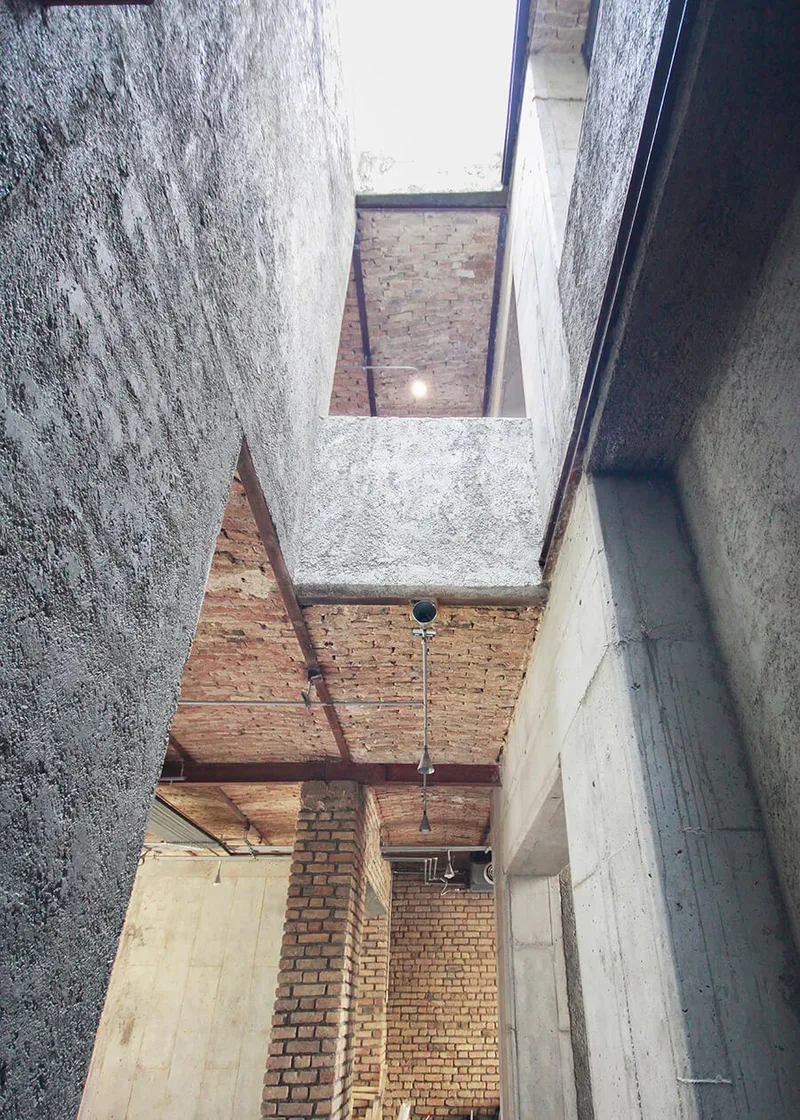
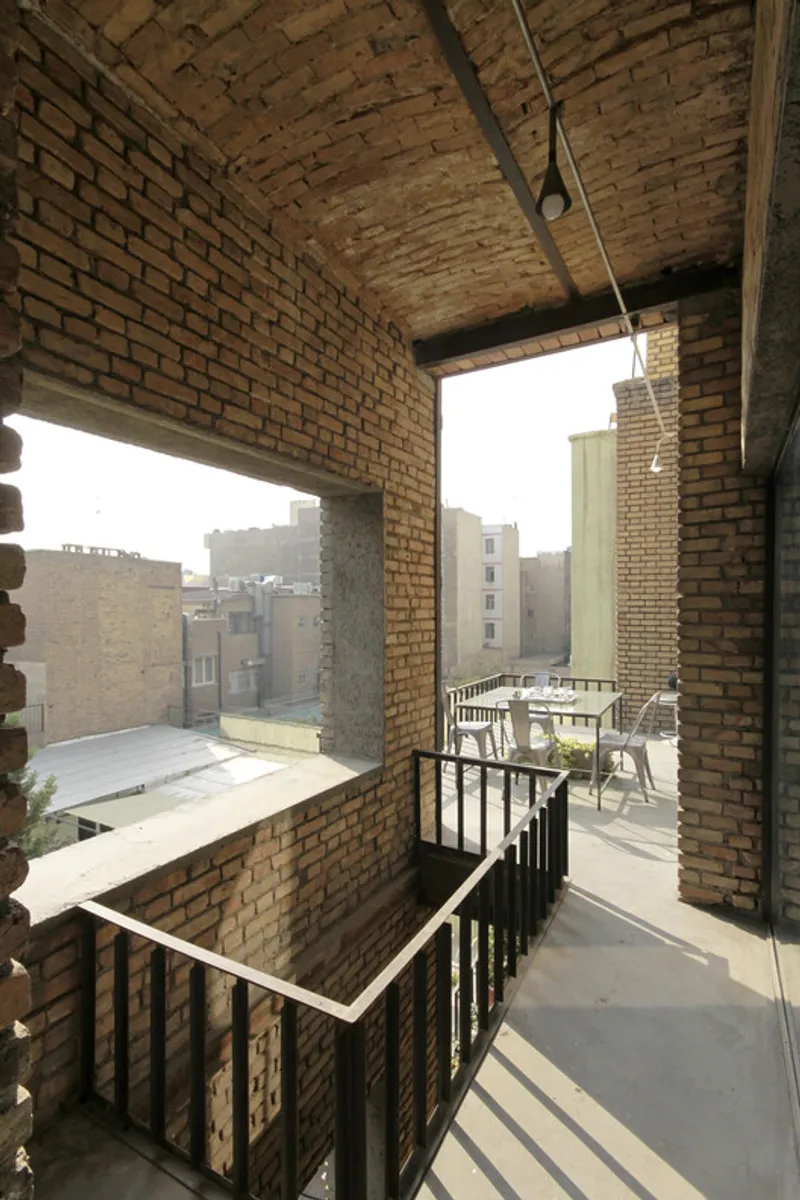
All the photographs are works of Behnam Sadighi, Soroush Majidi


Popular Articles
Popular articles from the community


Hill & Cross Opera: Sculptural Opera House Architecture Shaped by Tallinn’s Landscape and Identity
Hill & Cross Opera reimagines opera house architecture in Tallinn through its sculptural hill, civic plaza, glass wave and a luminous cross.

Co-Life: Senior Housing Design That Reconnects Older Adults With the City
Co-Life reimagines senior housing design through healing gardens, shared streets, workshops, and a sustainable community across generations.
ALGAL REALM: A Bio-Integrated Lunar Habitat Design for Life Beyond Earth
ALGAL REALM reimagines lunar habitat design with algae-powered life support, 3D-printed regolith, and vertical living for a lunar future.

Conexión: Biophilic Design Reimagines High-Rise Living in Hong Kong
Conexión reimagines high-rise living in Hong Kong through biophilic design, green facades, shared spaces, daylight, water and nature within.

Similar Reads
You might also enjoy these articles


Hodi-Mandai Geram
Project Function: Preservation and revitalization of the Intangible heritage and socio-spatial identity of the Hodi by Housing, Cultural Memory Center, Sacred Grove, landscape, local tourism economy


Olio Towers: A Mid-Rise for Performers That Fuses Housing, Rehearsal, and Stage
Located blocks from Houston's Theater District, this modular tower stacks living units around a central performance atrium.

Oasis: Modular Green Housing Carved into Dhaka's Urban Fabric
A shortlisted Plugin Housing entry reclaims unauthorized settlements in Dhaka with stepped concrete volumes, green roofs, and ventilation-driven design.

Black Hole: A Floating Megastructure for the Post-Physical Era
Emiliano Mazzarotto envisions a spherical, self-scaling arena where e-sports, digital hotels, and holographic stadiums replace traditional public space.

Explore Architecture Competitions
Discover active competitions in this discipline

Challenge to reimagine the Iron Throne

Photograph architecture without architects

Illustrate the lost glory of Angkor Wat - Render Challenge

Design challenge to reuse E-waste
Comments (0)
Please login or sign up to add comments
No comments yet. Be the first to comment!