
Hybrid Bionics Tower: Bone-Grown Architecture
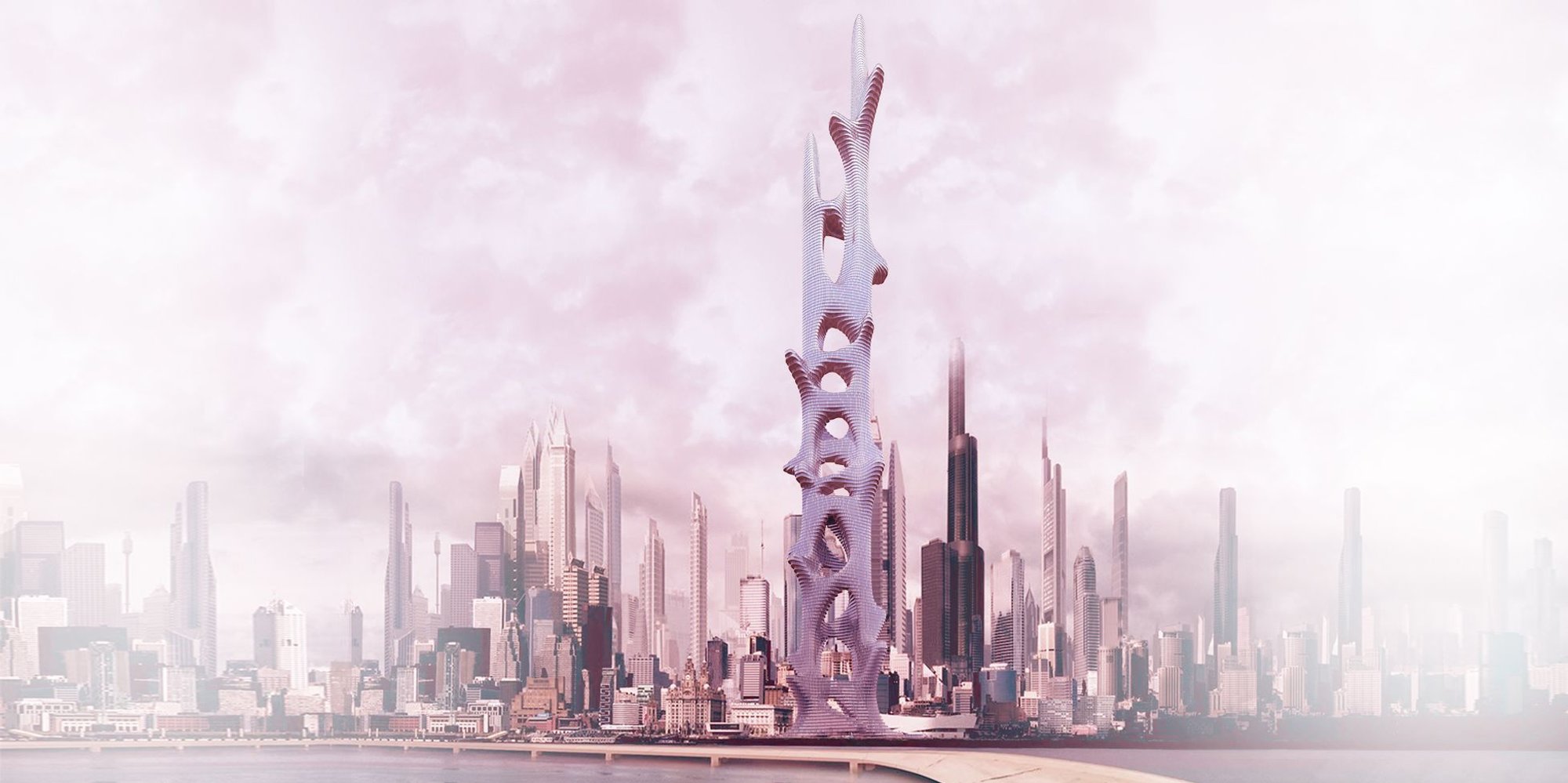
A 217-storey supertall generated through bone-growth computation, with sky parks, flying car pods, and an organic structure that branches like biology.

Bones grow by laying down material where stress demands it and removing it where it does not. The result is a structure that is simultaneously strong, light, and visually complex. Hybrid Future + Bionic Tower, a 217-storey, 1,200-metre supertall by Bipradip Biswas, applies this biological principle to architecture. The tower's form is not drawn. It is grown, through a computational process that mimics bone formation.
The project won the Hybrid Futures '19: Work x Fly competition on uni.xyz. In a field of entries proposing hybrid buildings for flight and work, this one stood out for the specificity of its structural logic and the ambition of its programme: sky parks, hotels, restaurants, shopping, offices, housing, and sky pods for flying vehicles, all within a single organic megastructure.
Bone Logic: How the Form Is Generated
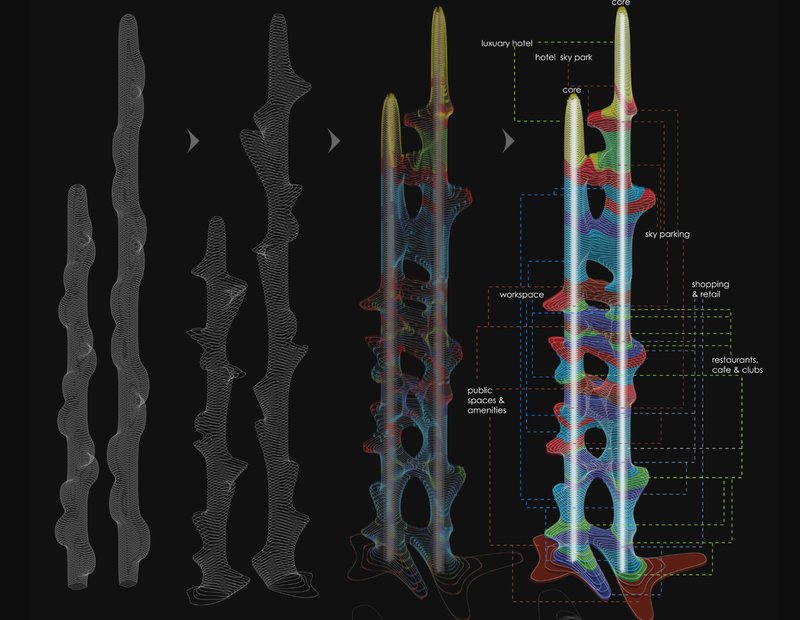
The design evolves through four computational stages. Stage 1 analyses autonomous spatial cells, the smallest inhabitable units. Stage 2 extends structural arms outward for stability. Stage 3 resolves the connections between cells into a continuous surface. Stage 4 assigns programme: the colour-coded diagram shows sky parks at the crown, housing and hospitality in the mid-sections, shopping and public amenities at the base, and restaurants and cafes woven throughout.
The process is modelled on spongiosa, the foam-like internal structure of bone. Spongiosa is not random. It is optimised by load: dense where forces concentrate, porous where they do not. The tower inherits this logic. Its walls are thick where wind loads and gravity demand it. Its voids are large where programme needs open floor plates. Structure and space are generated by the same algorithm.
Sky Pods: Architecture for Flight
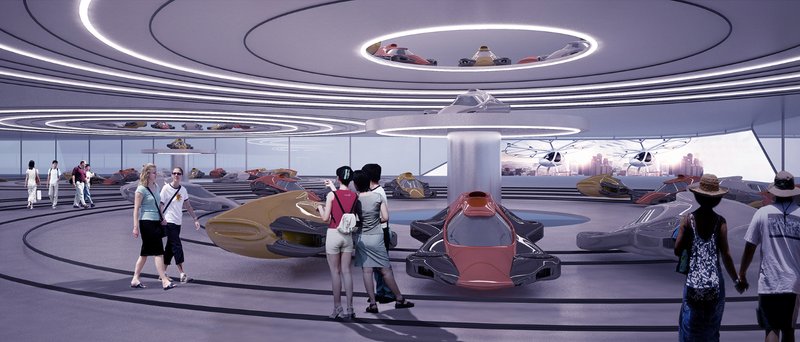
The sky pod interiors are the project's most tangible contribution to the competition brief. A circular platform accommodates flying cars, personal drones, and passenger vehicles at an upper-level mobility hub. People walk among parked aircraft the way they would walk through a car park, except the car park is 800 metres above the ground.
This is the detail that makes the Hybrid Futures brief real. Many competition entries drew landing pads. This one designed a room: with sightlines, circulation, lighting, and a spatial quality that makes vertical air mobility feel normal rather than exotic. That normalisation is the hardest design problem in urban air mobility, and this project solves it through architecture.
The Tower: Organic Form at Megascale
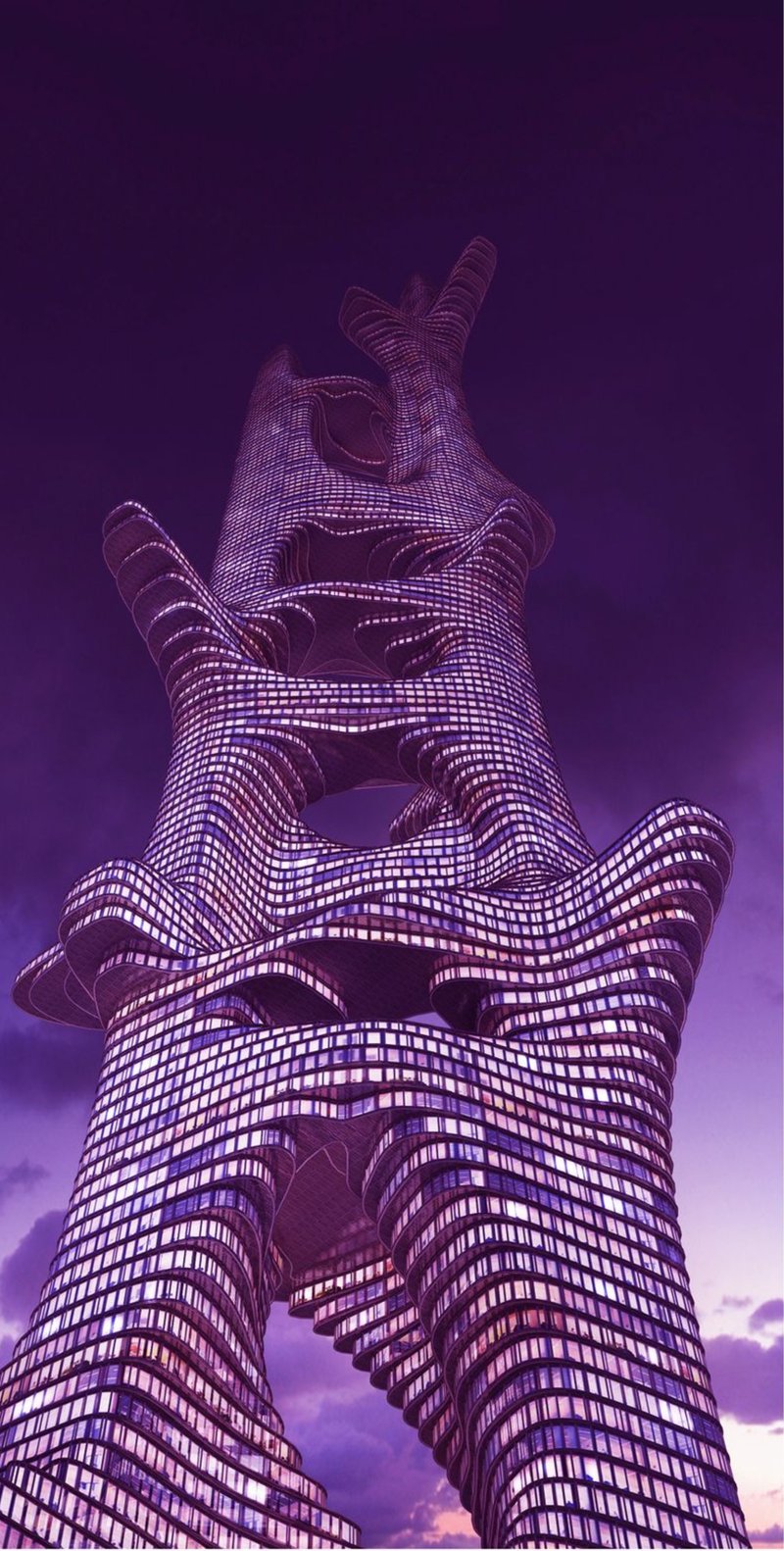
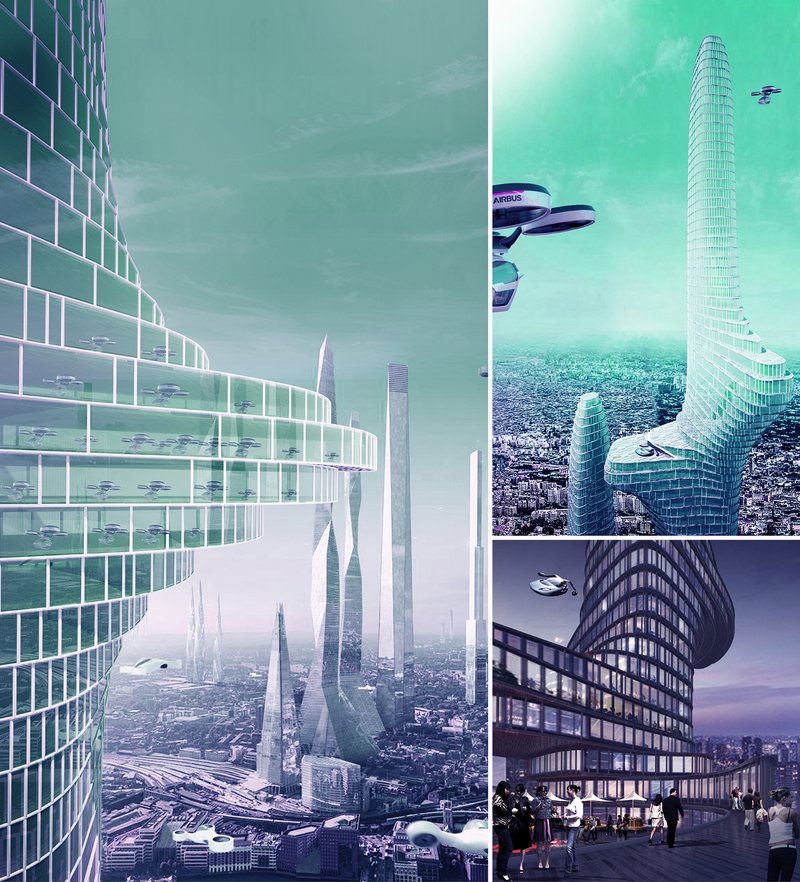
The full tower render is extraordinary. A branching, organic form rises 1,200 metres, its surface undulating between solid facade and open void. Sky parks are carved into the body like wounds in a tree trunk, creating outdoor spaces hundreds of metres above the ground. The lit facades glow at dusk, revealing the density of inhabitation behind the organic skin.
The three-view composite shows the tower in context: as part of a skyline of similar bionic structures, with VTOL vehicles circling; as a close-up of the bulging mid-section where drone docking platforms extend; and at street level, where the tower base meets a public terrace. The project works at every zoom level because the form is self-similar. The branching logic that organises the tower also organises the detail.
Street Life: The Base as Urban Space
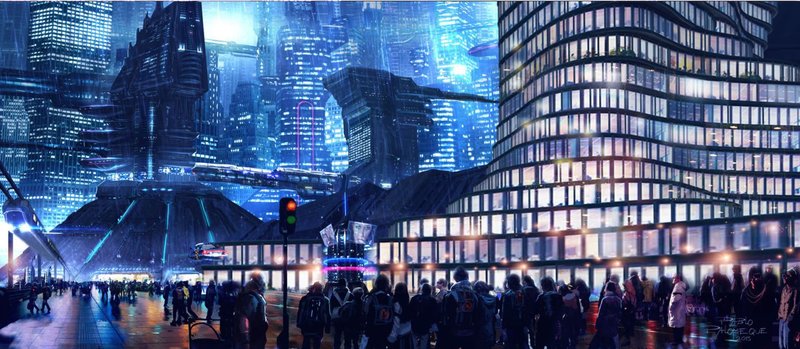
The street-level night render is the project's most atmospheric image. Crowds gather beneath glowing organic facades in a rain-soaked cityscape. The building's base is not a lobby. It is a public space: open, lit, populated, and continuous with the street. The cyberpunk atmosphere is deliberate. This is architecture for a future that is dense, wet, and alive.
This image matters because it answers the question that megastructure proposals always face: what happens at the ground? If the tower is 1,200 metres tall but the street is dead, the project fails. Here the street is not dead. It is the most energetic space in the composition.
Why This Project Won
The Hybrid Futures competition asked for buildings that merge work and flight. The Bionic Tower merges everything: biology and engineering, computation and inhabitation, vertical transport and urban ground. It won because it operated at the highest level of ambition while maintaining a specific structural logic that the jury could evaluate. The bone-growth process is not decoration. It is the method. Every formal decision follows from it.
For anyone interested in computational design, biomimetic structure, or supertall architecture, this project is a benchmark. It demonstrates that speculative form can be structurally rigorous, and that the most fantastical-looking buildings can have the most disciplined generative processes behind them.
View the Full Project
About the Designer
Designer: Bipradip Biswas
Enter a Design Competition on uni.xyz
If computational design, biomimetic architecture, or speculative supertall projects are the kind of work you want to pursue, uni.xyz runs competitions year-round that reward structural ambition and generative thinking.
Project credits: Hybrid Future + Bionic Tower by Bipradip Biswas. Winner, Hybrid Futures '19: Work x Fly (uni.xyz).



Popular Articles
Popular articles from the community

20 Most Popular Commercial Architecture Projects of 2025
From sustainable market concepts to heritage factories, the commercial buildings and proposals that drew the most attention on uni.xyz this year.

Filtering Space: A Gradual Spatial Experience
From urban intensity to spatial calm.

Art 1 Office Strips Athens Back to Its Bones
Neiheiser Argyros transforms a 40-year-old Athens office building into a vivid, materially rich workplace anchored by red steel, exposed concrete, and roof
MAKER architecten Rewire a 1972 Brutalist Dormitory on the VUB Campus as a Living Lab
A modular renovation strategy in Belgium breathes new life into Willy Van Der Meeren's modernist student housing without erasing its concrete bones.
Similar Reads
You might also enjoy these articles
Filtering Space: A Gradual Spatial Experience
From urban intensity to spatial calm.

Longbranch Residence: A Forest-Integrated Contemporary Home in Key Center, Washington
Forest-integrated Washington residence blending concrete, cedar, and meadow roof to restore landscape continuity and celebrate sustainable contemporary living.
CIFI Sales Center Park Mansion: Harmonizing Architecture with Nature
CIFI Sales Center Park Mansion in Hefei blends water-inspired design, fluid interiors, and immersive experiences, creating vibrant, calming, and sustainable residential showcase architecture.
“Ottoni House Renovation: Preserving 1970s Architecture with Contemporary Design in São Paulo”
Ottoni House in São Paulo blends 1970s architectural heritage with contemporary design, integrating sustainable, functional, and visually striking renovated living spaces.





Comments (0)
Please login or sign up to add comments
No comments yet. Be the first to comment!