

Futuristic Architecture Solutions: Mechanical Cloud - A Blueprint for Post-Apocalyptic Resilience
This article delves into the Mechanical Cloud, an architectural design for sustainable living in a changing climate.


Introduction
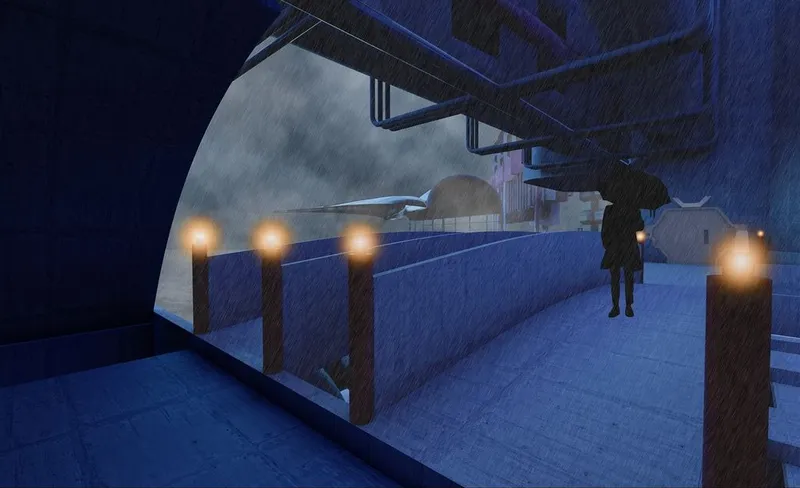
As the specter of climate change looms over our urban landscapes, architects and city planners are propelled to design innovative solutions that not only mitigate environmental impact but also offer sustainable refuge in the event of catastrophic climate events. The project 'Mechanical Cloud,' conceptualized by Cole Griffith and Christian Cortes, stands as a paragon of such futuristic architecture solutions, intertwining necessity and innovation above the High Line in New York.
The Genesis of Mechanical Cloud
A Haven Above the High Waters
'Mechanical Cloud' emerges as a winner entry in the 'Architecture of the Apocalypse' initiative, reflecting a profound understanding of the climate challenges posed to Manhattan. It represents a fortress of survival and sustainability, constructed upon the historic High Line to serve as an ark against the relentless rise of sea levels.
A Tapestry of Survival
Water Purification and Storage
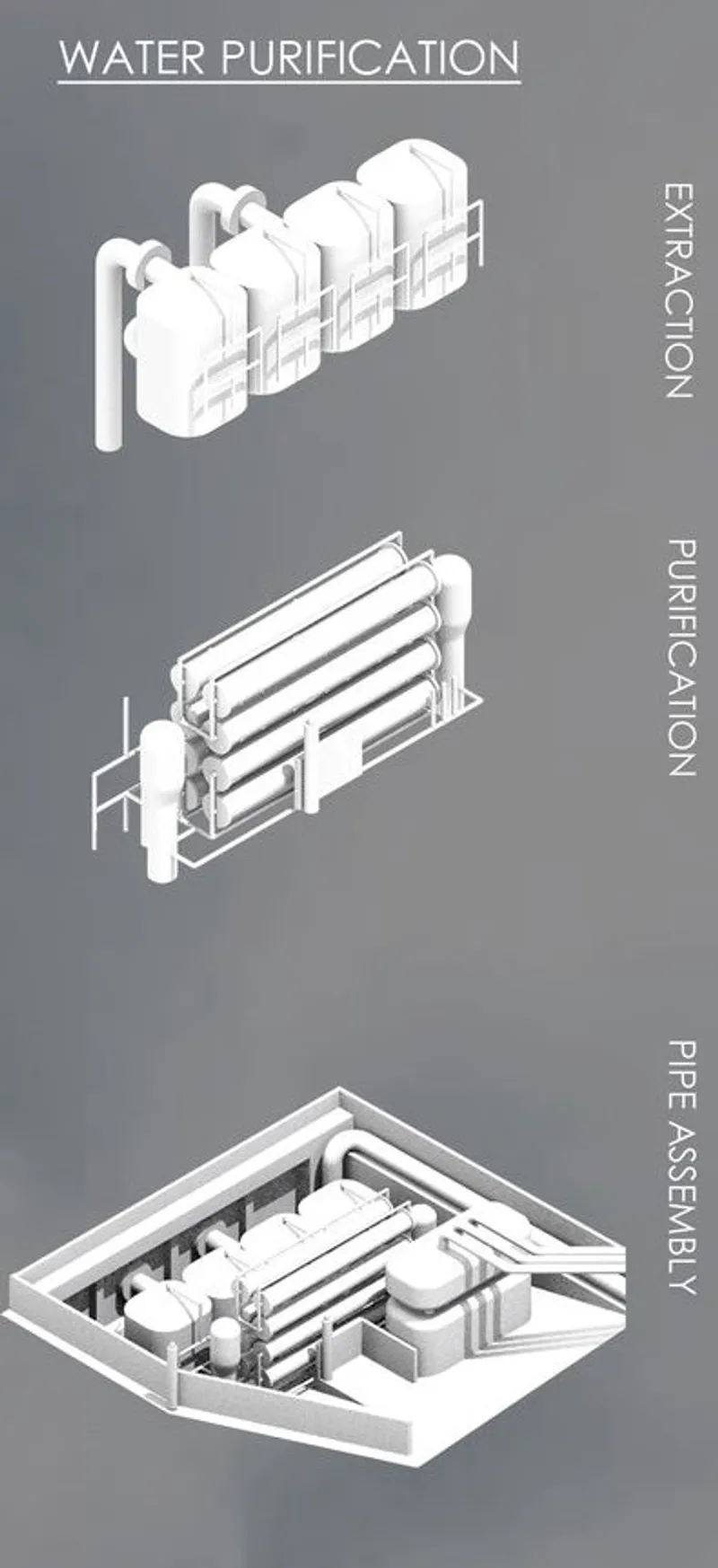
With water being the lifeblood of survival, the project introduces cutting-edge desalination processes and water storage solutions, ensuring an abundant supply of fresh water. These systems are designed to operate autonomously, securing the community against the scarcity that may prevail in a post-apocalyptic world.

Air Quality Management
In an environment where clean air could become scarce, the 'Mechanical Cloud' incorporates state-of-the-art air purifiers and humidity control systems. These are critical in preventing respiratory diseases, a concern exacerbated by the increased humidity due to rising sea levels.

Energy Harvesting through Hydroelectric Power
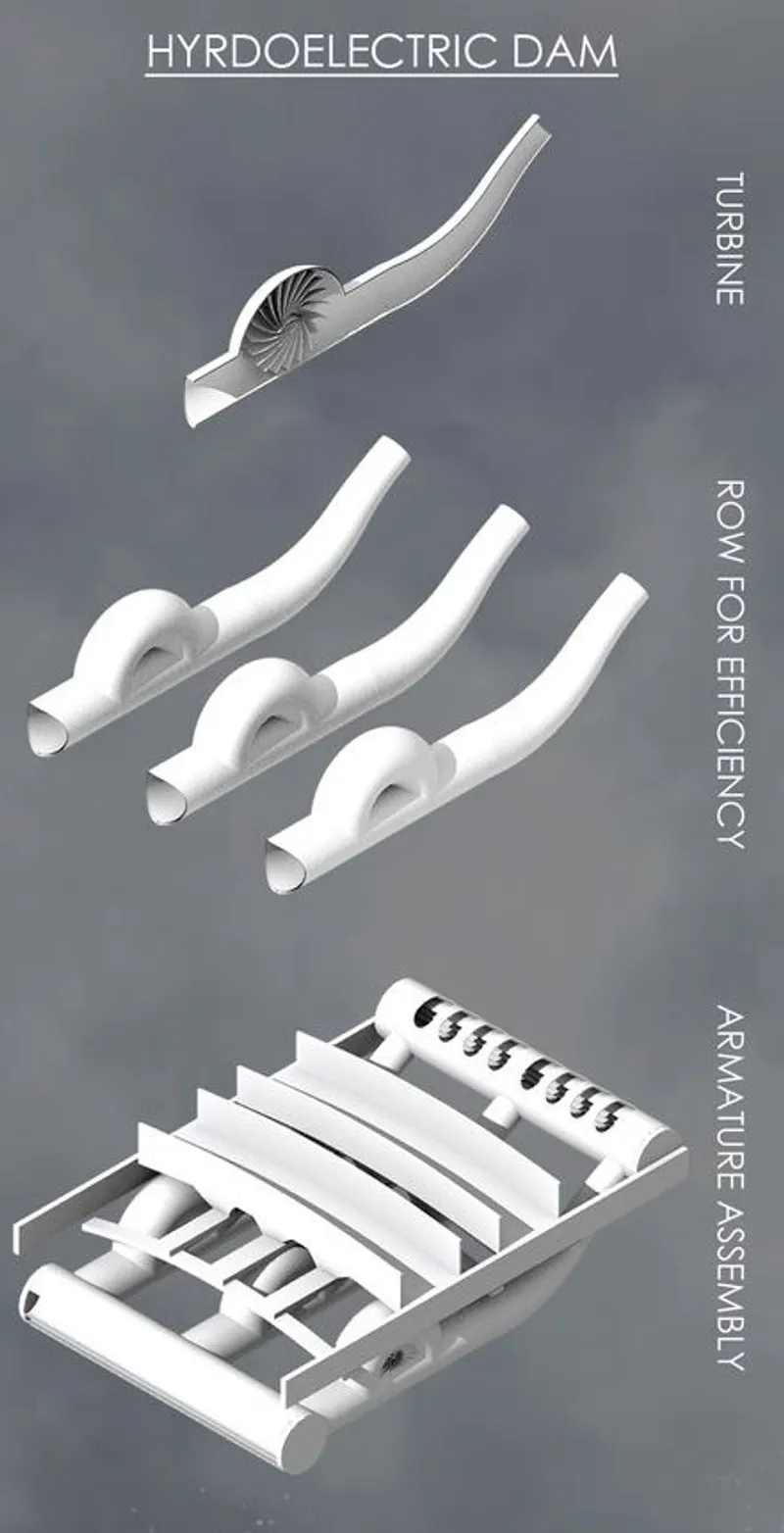
The heart of the Mechanical Cloud's energy solution is a hydroelectric dam. By harnessing the kinetic energy of rushing water between the architectural structures, it provides a renewable source of electricity, essential for the community's survival.
Architectural Design for a New Era
Self-Sustaining Infrastructure
Life Support Systems
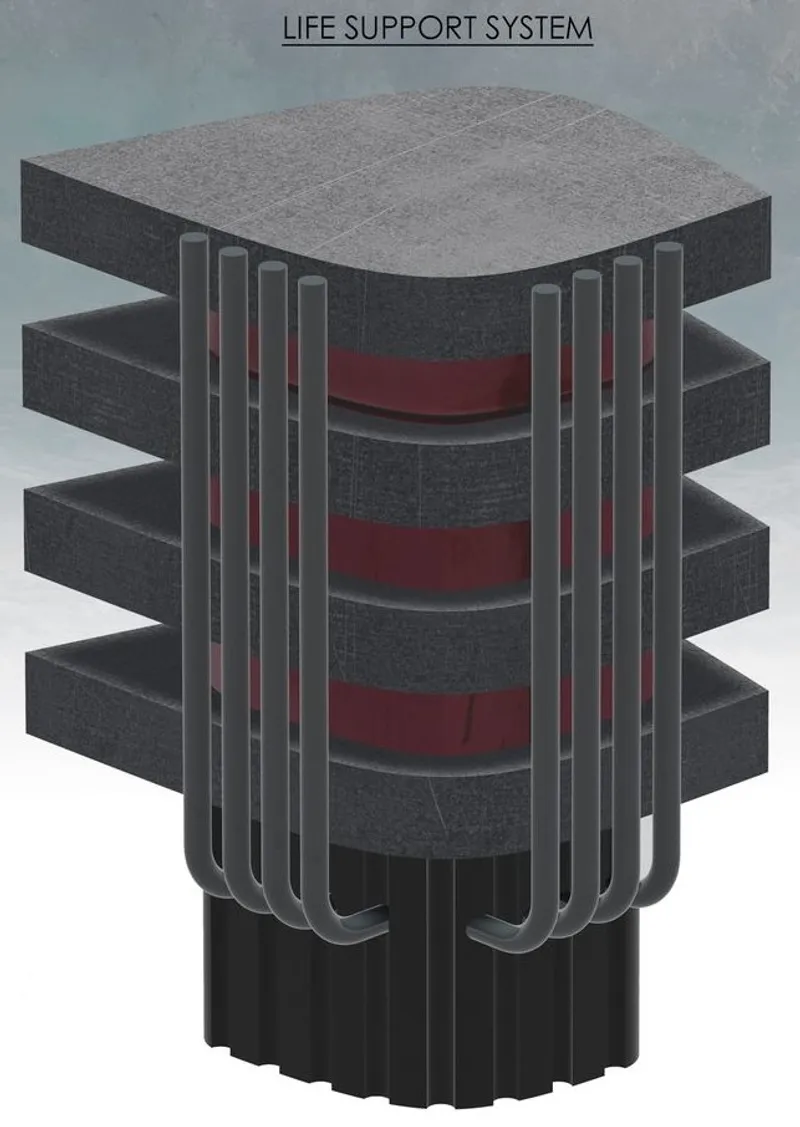
The life support systems encapsulated within the design stand as a testament to the resilience of 'Mechanical Cloud.' These systems not only provide clean air and water but also include backup generators with lifeline batteries to ensure continuity during power failures.
Community Engagement
Nurturing Agriculture and Aquaculture
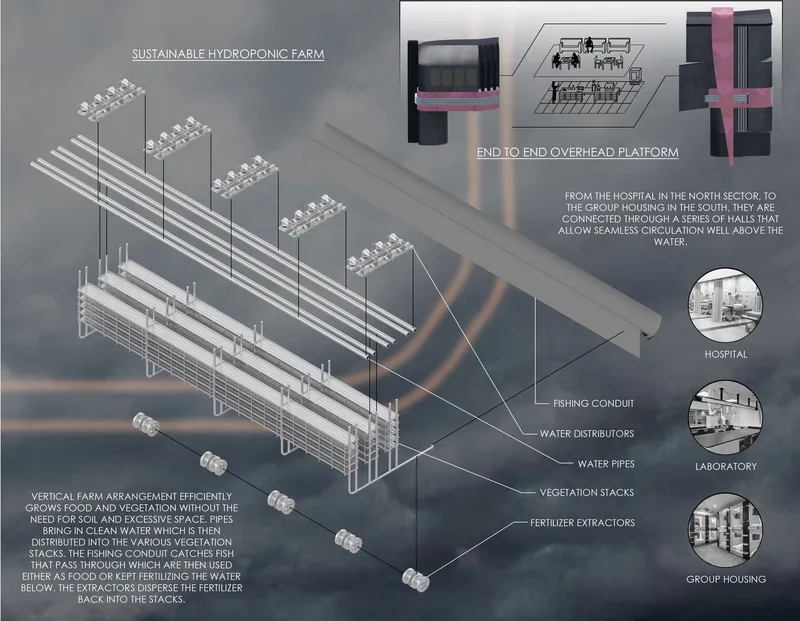
The design fosters community engagement with vertical farming arrangements and fishing conduits, negating the need for soil and excessive space while providing food security.
Dynamic Constructions
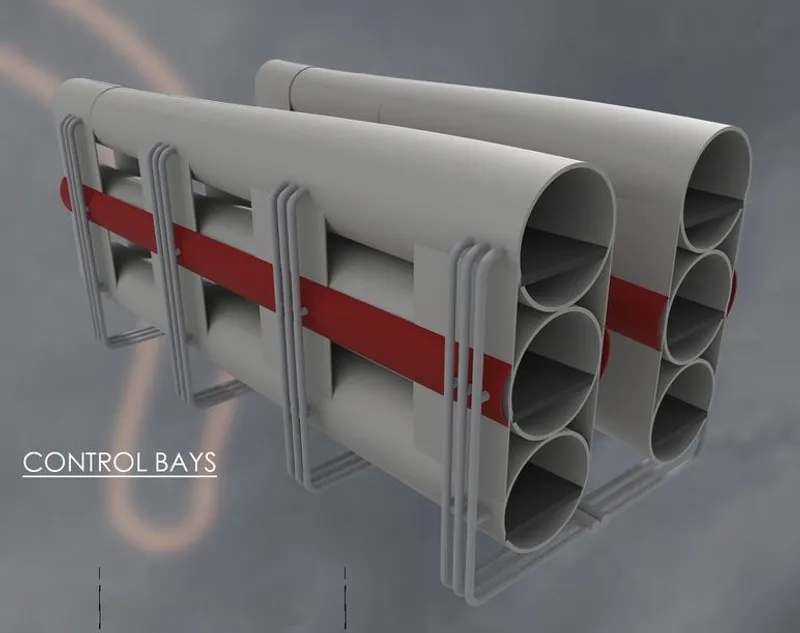
The dynamic constructions within the Mechanical Cloud are multifunctional, housing oxygen, power, and agriculture bays alongside research units and emergency life support systems.
Material Composition
A meticulous choice of materials, such as 98% silica glass and impermeable vapor barriers, ensures the durability and efficiency of the structures within this new architectural frontier.
The Future of Urban Architecture
Beyond Survival
The Mechanical Cloud is not merely a survival mechanism; it's a blueprint for future urban architecture. It embodies a vision where architecture does more than provide shelter—it creates a self-sufficient ecosystem that could enable communities to thrive in a post-apocalyptic scenario.
Scaling Horizons
Looking beyond immediate survival, the design also contemplates expansion, exploring viable lands and supporting the community's growth and exploration.
The 'Mechanical Cloud' is a visionary project that pushes the boundaries of architecture, providing a roadmap for how cities can adapt and evolve in the face of climate change. It stands as a beacon of hope, a testament to human ingenuity, and a pivotal example of futuristic architecture solutions.
Reaching the Pinnacle of Sustainable Design
Projects like the Mechanical Cloud redefine the role of architecture in society, elevating it from a passive participant to an active protector and nurturer of human life. As we step into an uncertain future, such innovative solutions light the way, showing us that with creativity and commitment, architecture can not only withstand the test of time but also the trials of nature.


Popular Articles
Popular articles from the community


Extended Shell: Retrofitting Kolkata's Balconies as Living Urban Thresholds
A modular retrofit system recovers the social and environmental intelligence of Kolkata's historic verandas for contemporary Park Street residents.

Singing Woman: An Opera House That Performs Before the Curtain Rises
Ovidiu Cristian Pavel's conceptual opera house translates Estonia's choral identity into a sculpted waterfront landmark facing the Baltic Sea.

Tsunami Convergenics: Turning Catastrophic Ocean Forces into Underwater Housing Infrastructure
A speculative underwater settlement off the coast of Onagawa, Japan, treats tsunamis and typhoons as energy sources rather than threats.

The Amber Palace Opera: A Geological Fiction Surfaces on Tallinn's Baltic Waterfront
Pierre Brillard reimagines a Baltic legend as a public landscape, opera house, and waterfront promenade rooted in Tallinn's coastal identity.

Similar Reads
You might also enjoy these articles

Shakur's House: Exposed Brick as an Interior Organiser in a 168 m² Mashhad Residence
Brick moves indoors in this Mashhad residence, where masonry walls, glass partitions and teal planes sequence a compact home without closing it off.

Day and Night Park: A Time-Based Urban Newsstand in Beijing
A temporary urban newsstand in Beijing blending travel, light, and reading through poetic colors, compact form, and community-focused design.

Modernist Patio Renovation in El Masnou, Barcelona by Oliver Segura Arquitectura + Cebrià Arquitectura
Modernist patio renovation blending tradition and innovation with a movable pool, leveled floors, and Catalan materials in El Masnou.

Alto Residencial Coop: Cooperative Housing Development in Santiago de Compostela by Carbajo Barrios Arquitectos
A linear cooperative housing complex blending white volumes and perforated metal façades, enhancing community living, natural light, privacy, and urban integration.


Comments (0)
Please login or sign up to add comments
No comments yet. Be the first to comment!