
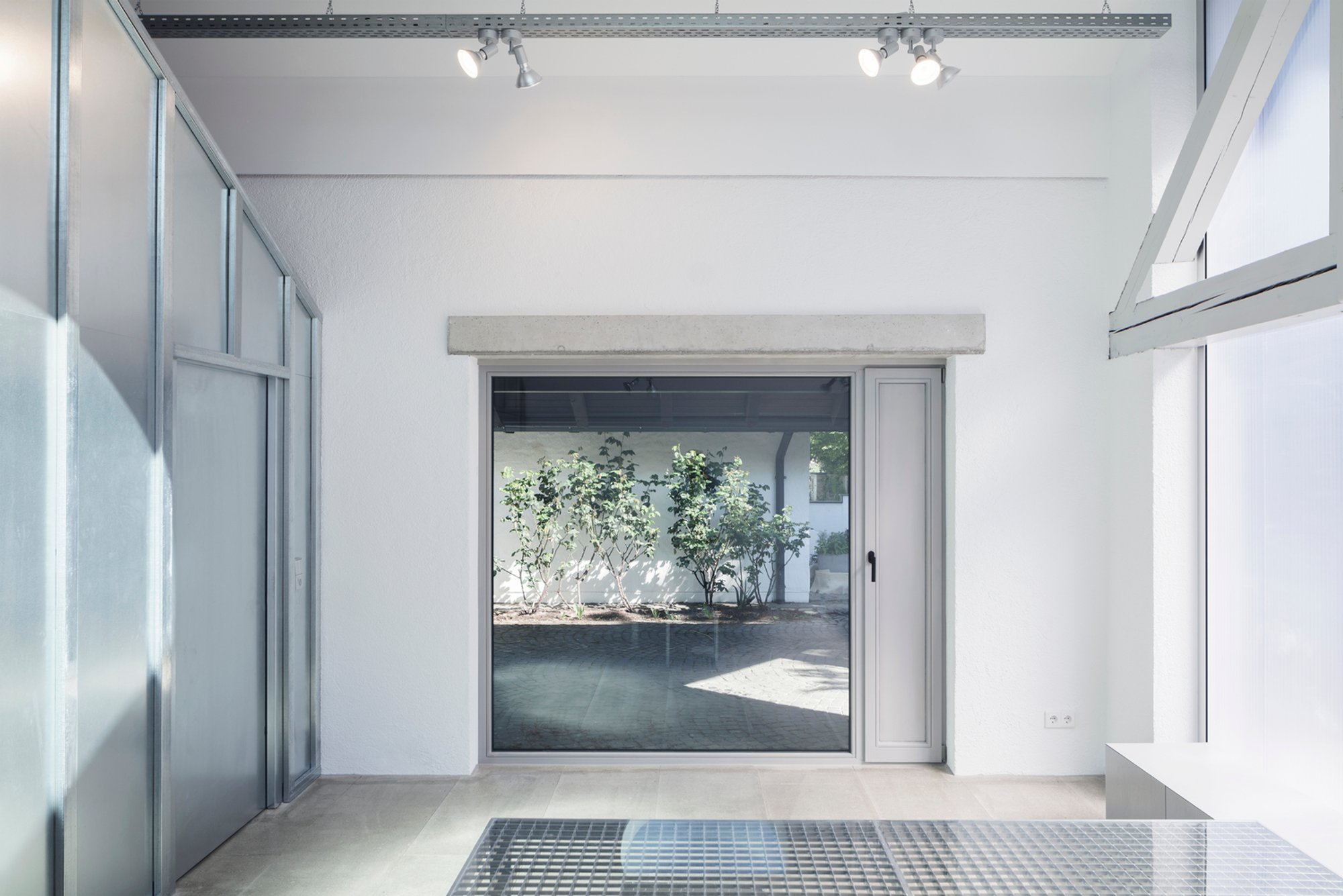
Garage Conversion into Office Space by Buero Wagner | Herrsching, Germany
Buero Wagner transformed a double garage in Herrsching into a bright, functional home office, using sustainable, industrial materials and adaptive reuse.

In 2023, Buero Wagner reimagined a traditional double garage in Breitbrunn am Ammersee, Germany, transforming it into a modern, functional office space. This project reflects the evolving post-pandemic work culture and the growing integration of living and working environments. Through adaptive reuse, the design demonstrates how existing structures can be repurposed efficiently, sustainably, and aesthetically.
Concept: Adaptive Reuse and Post-Pandemic Workspaces
During the COVID-19 pandemic, work shifted heavily to home environments. This project anticipates the post-pandemic office, where living and working coexist seamlessly. The existing garage was repurposed to serve as a dedicated office space, eliminating the need for new construction and preserving the surrounding landscape.
Parking spaces were relocated to the driveway, freeing the garage structure to accommodate flexible workspaces. This approach reflects contemporary priorities in sustainable urban living—minimizing land use while maximizing functionality.
Design Strategy
Spatial Organization
The garage was divided into two main zones:
- Rear Small House: Contains an entrance, toilet, and private telephone booth.
- Front Workspace: Open plan office area designed for productivity and collaboration.
The spatial layout ensures privacy while allowing natural light and visual connection to the exterior courtyard.
Natural Light and Ventilation
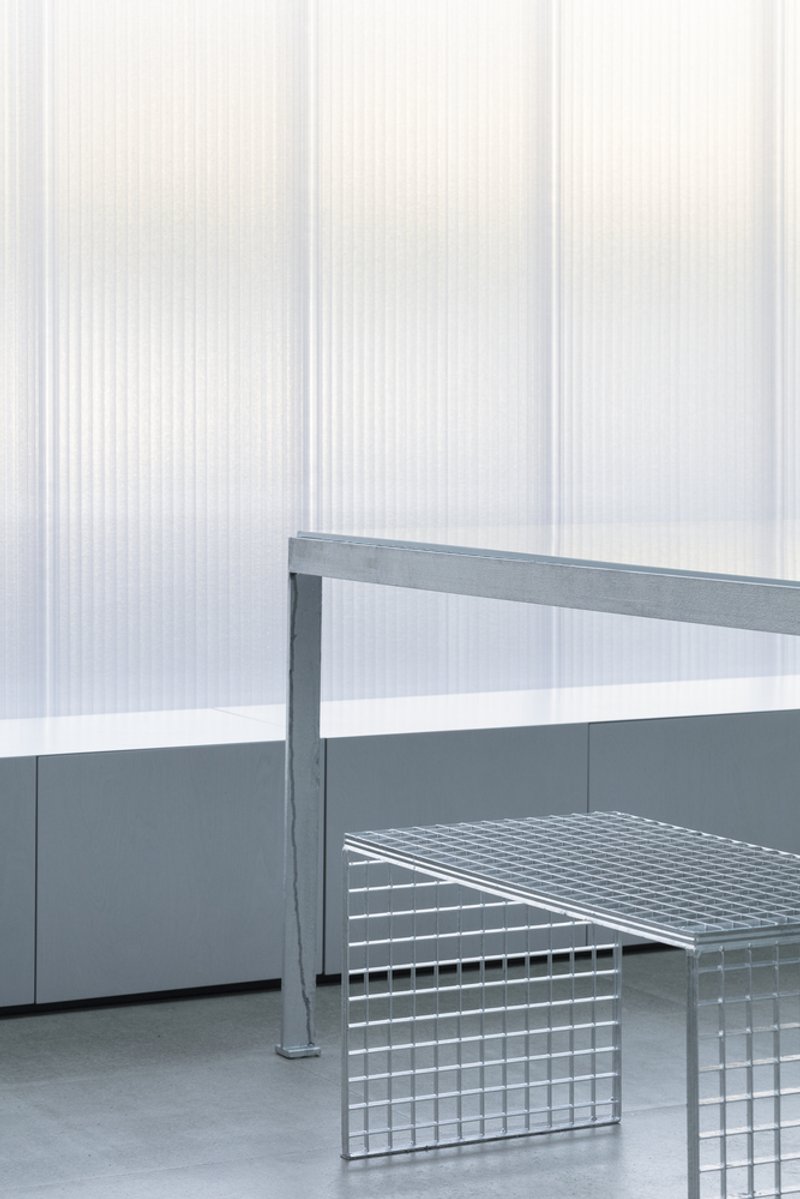
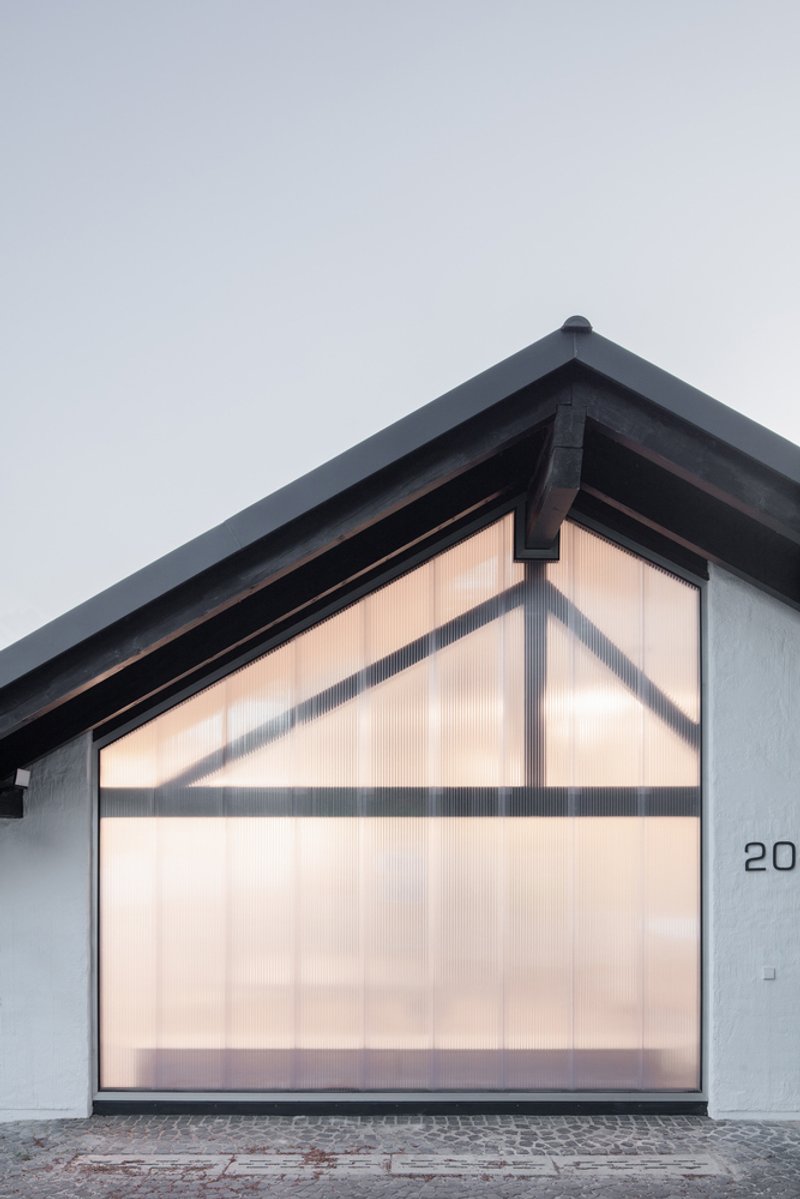
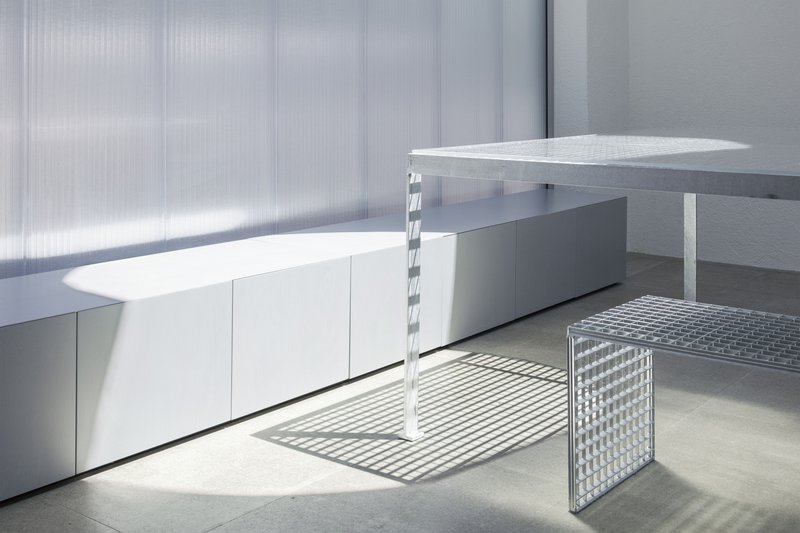
- The original garage door was replaced with a polycarbonate facade, providing ample daylight while maintaining privacy from the street.
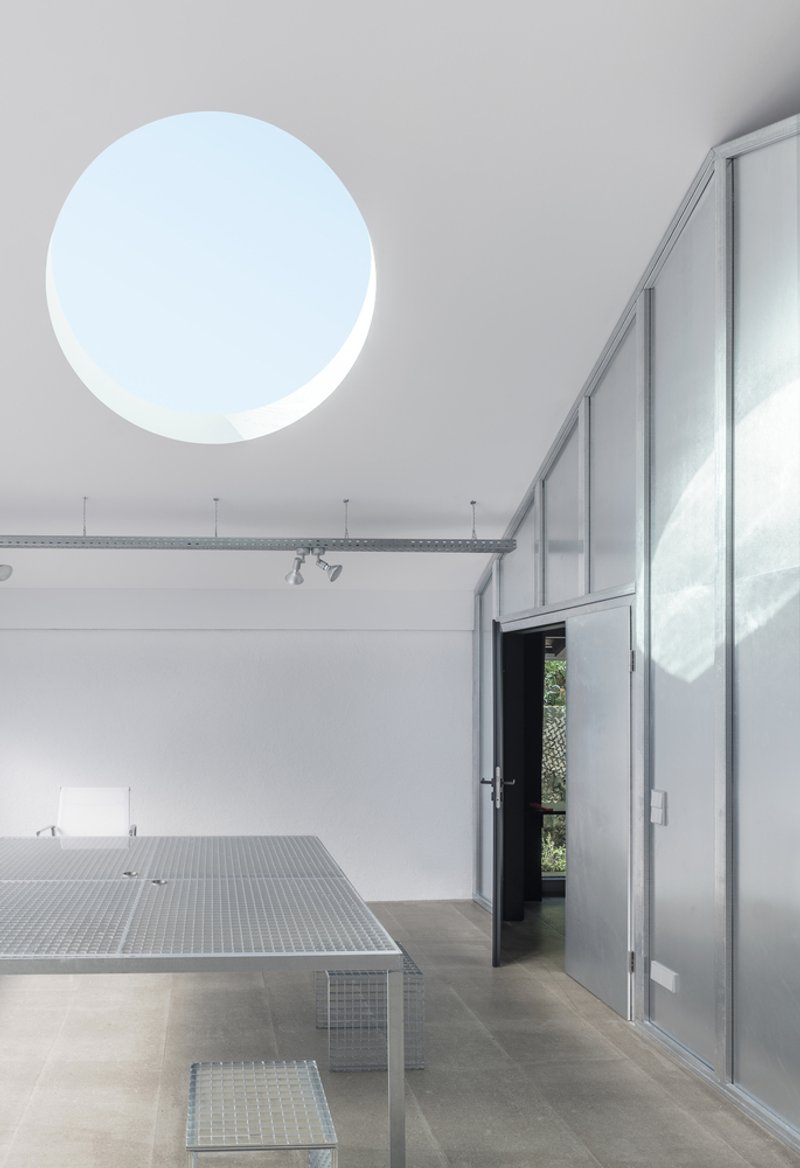
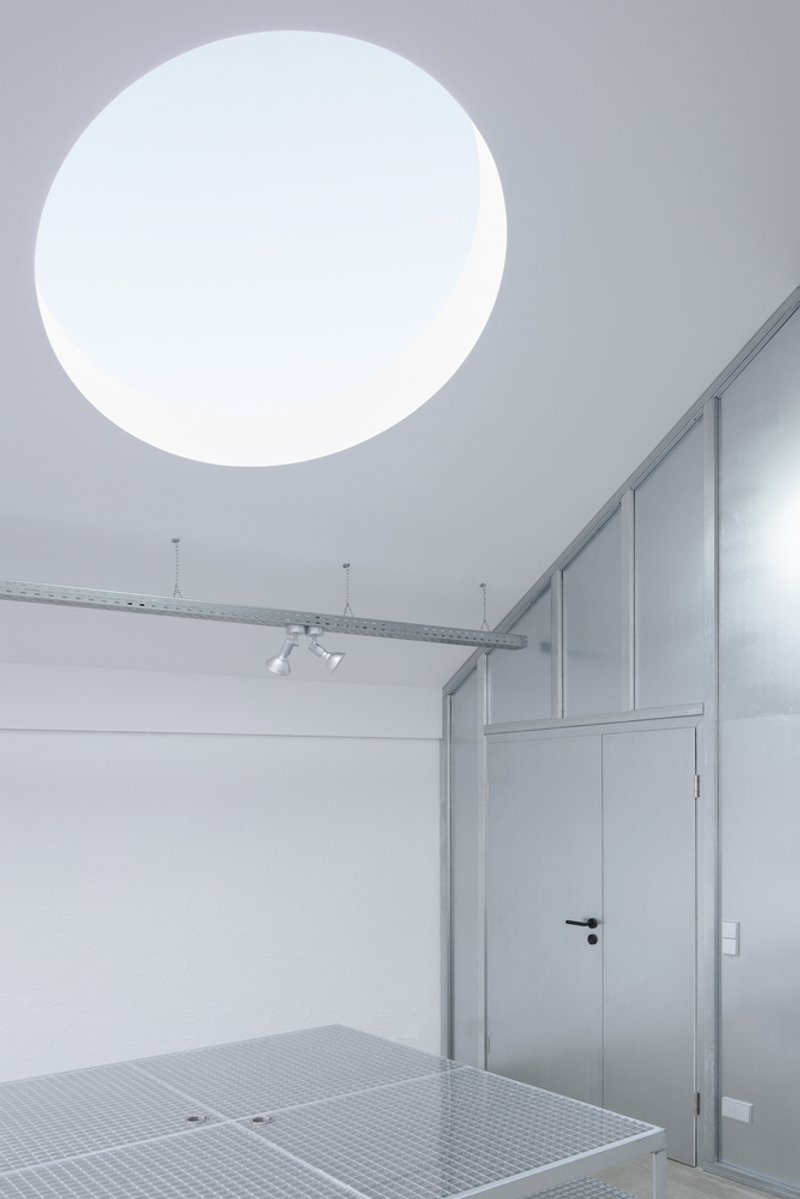
- A skylight introduces dynamic sunlight throughout the day, allowing occupants to experience the natural rhythm of light.
- Courtyard-facing openings offer quiet views and reinforce the indoor-outdoor connection.
Materials and Construction
Exterior and Energy Efficiency
- Existing masonry walls were preserved without additional insulation.
- The roof and windows were upgraded for energy efficiency.
Interior Design
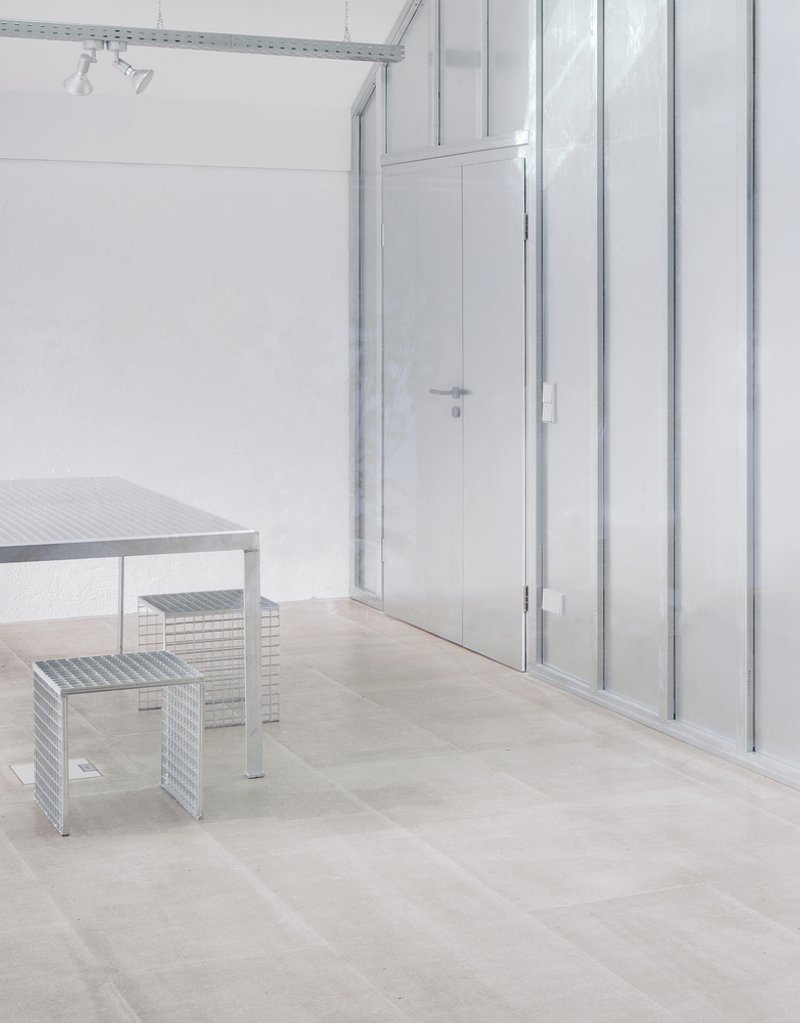
- Interior surfaces use a conventional drywall system with exposed dry screed, creating a raw, industrial feel.
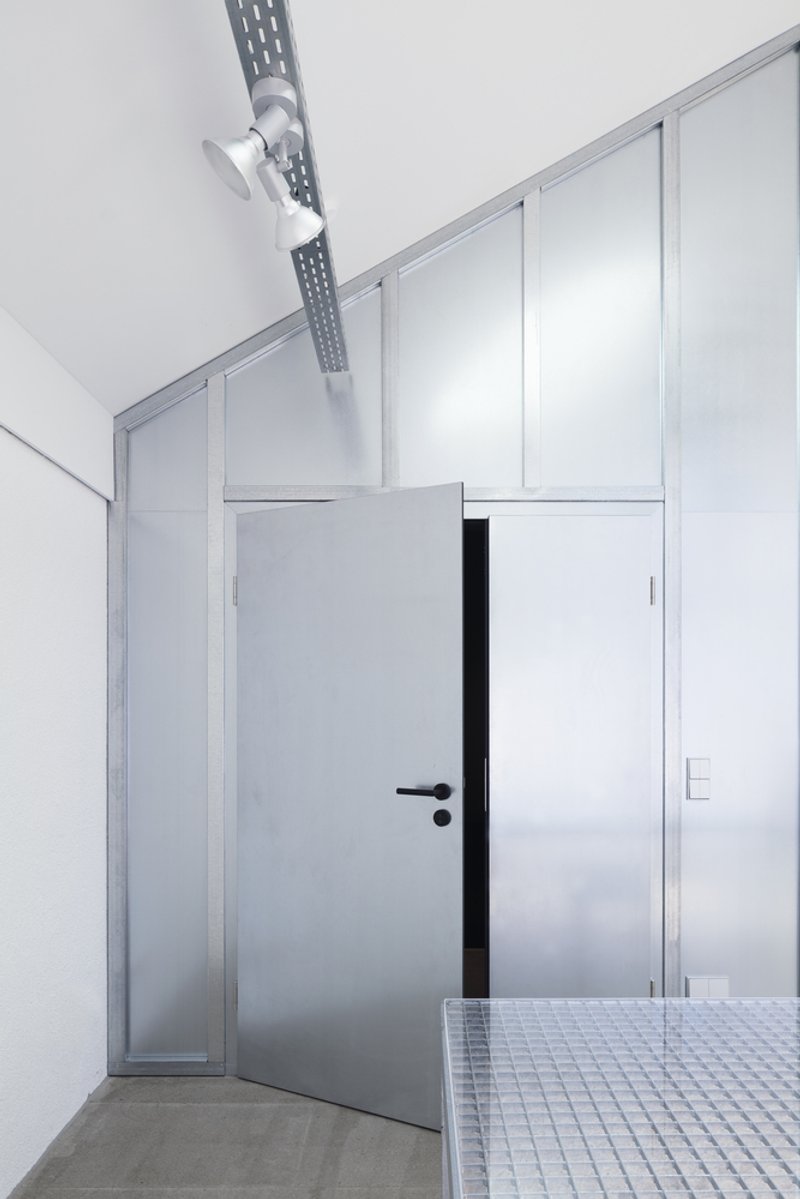
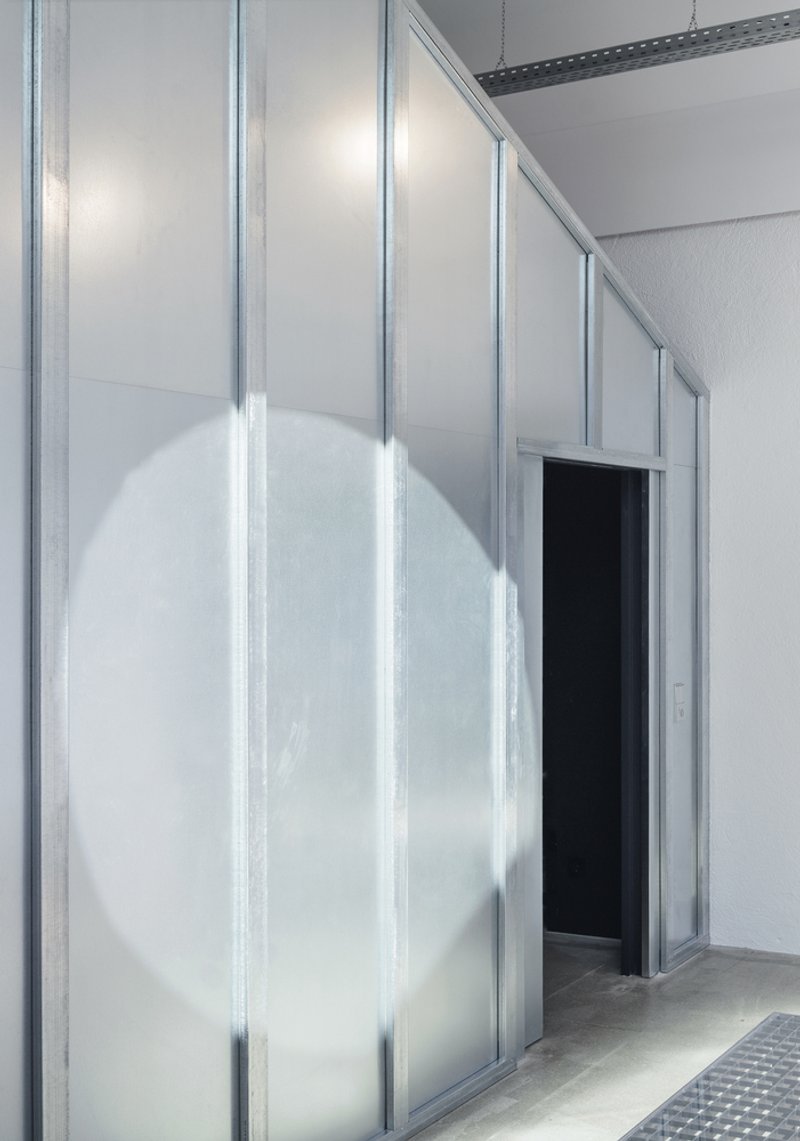
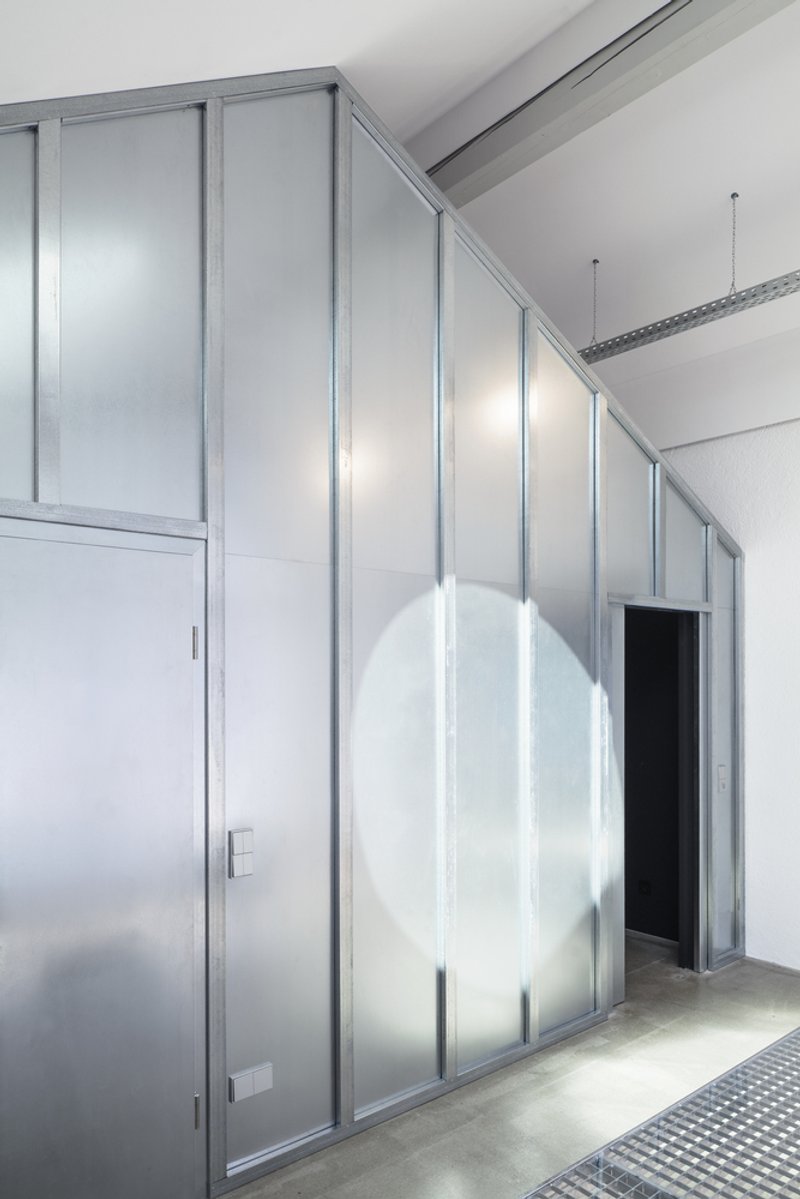
- The rear small house is clad with galvanized metal panels, normally used for drywall firewalls, attached with drywall profiles.
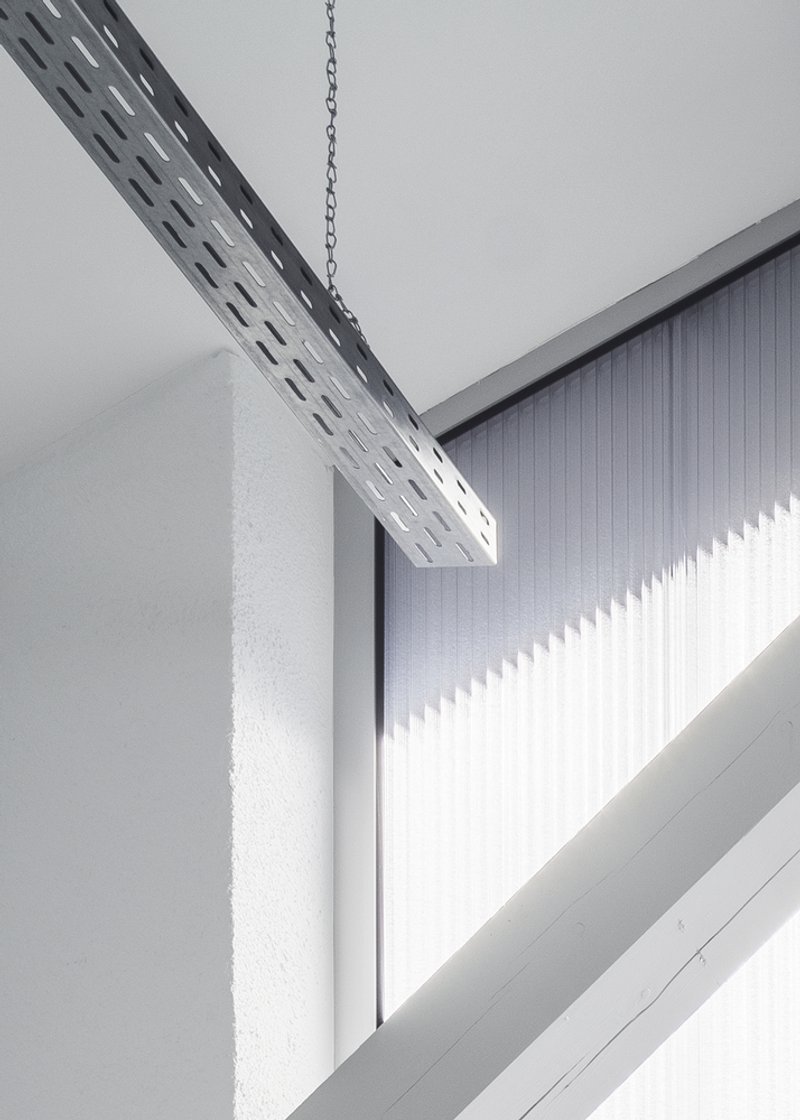
- Lighting is mounted on cable trays and suspended from the ceiling, complementing the industrial aesthetic.
Furniture and Fixtures
- Tables and stools are made of galvanized pressed grates, harmonizing with the metallic and industrial finishes.
- The interior of the small house is entirely black, contrasting the bright metallic surfaces of the main office, drawing attention to functional areas.
Sustainability and Material Philosophy
The project emphasizes simplicity, durability, and economy:
- Everyday industrial materials were reused innovatively to create new aesthetic value.
- The material palette combines affordability with long-lasting performance, raising questions about sufficiency, material use, and contemporary design sensibilities.
- By reinterpreting conventional building supplies, the project demonstrates how thoughtful design transforms ordinary structures into efficient and inspiring work environments.
All Photographs are works of Florian Holzherr, Kim Fohman



Popular Articles
Popular articles from the community

DIM Architecture Studio Revives the Iranian Courtyard Inside a Mashhad Apartment Building
A 2,500-square-meter mid-rise infill project reinterprets the traditional hashti and central courtyard within the dense urban fabric of Mashhad, Iran.
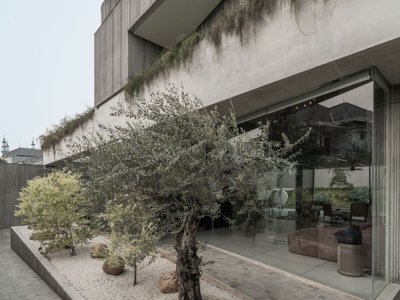
Wiyoga Nurdiansyah Composes Three Volumes into a Quiet Family Compound in South Jakarta
RJH House splits domestic life across a cube, a cylinder, and a service block, laced together by courtyards and raw concrete.

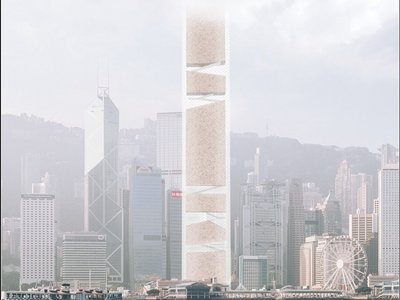
The Memory of World: Skyscraper Architecture as a Vertical Exhibition of Human Civilization
A vertical museum in Hong Kong transforms skyscraper architecture into a journey through six eras of humanity, nature, memory, and progress.

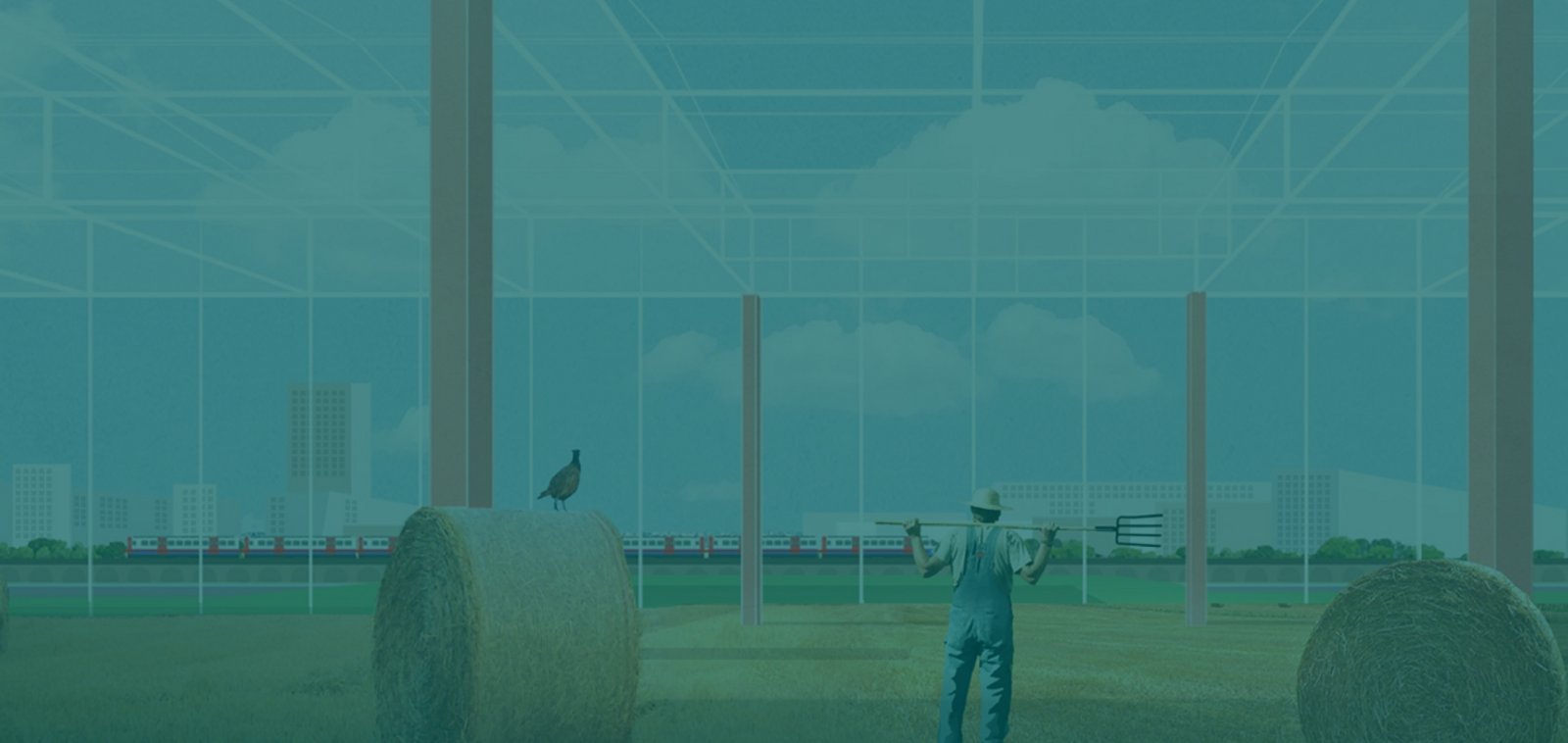
Vagaries of Life: Sustainable Urban Architecture for a Self-Sufficient Community in Singapore
Vagaries of Life reimagines Singapore housing as a tropical urban sanctuary for farming, resource cycles and collective community living now

Similar Reads
You might also enjoy these articles

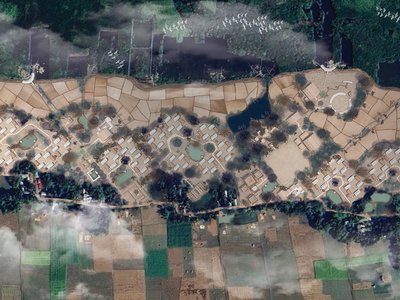
Hodi-Mandai Geram
Project Function: Preservation and revitalization of the Intangible heritage and socio-spatial identity of the Hodi by Housing, Cultural Memory Center, Sacred Grove, landscape, local tourism economy

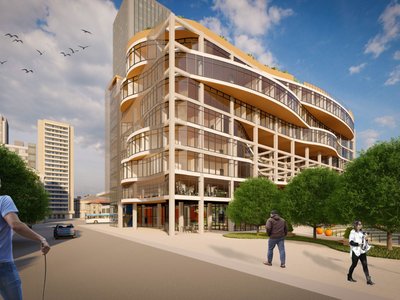
Olio Towers: A Mid-Rise for Performers That Fuses Housing, Rehearsal, and Stage
Located blocks from Houston's Theater District, this modular tower stacks living units around a central performance atrium.
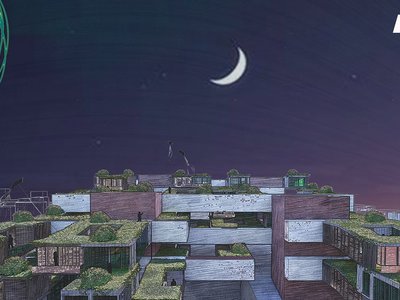
Oasis: Modular Green Housing Carved into Dhaka's Urban Fabric
A shortlisted Plugin Housing entry reclaims unauthorized settlements in Dhaka with stepped concrete volumes, green roofs, and ventilation-driven design.

Black Hole: A Floating Megastructure for the Post-Physical Era
Emiliano Mazzarotto envisions a spherical, self-scaling arena where e-sports, digital hotels, and holographic stadiums replace traditional public space.


Explore Office Building Competitions
Discover active competitions in this discipline




The International Standard for Design Portfolios


The Global Benchmark for Architecture Dissertation Awards

The Global Benchmark for Graduation Excellence


Challenge to reimagine the Iron Throne
Comments (0)
Please login or sign up to add comments
No comments yet. Be the first to comment!