

Gilardi House by Luis Barragán: A Masterpiece of Color, Light, and Mexican Modernist Architecture
Iconic Mexican modernist house by Luis Barragán combining vibrant colors, natural light, water reflections, and emotional spatial design around a jacaranda tree.


The Gilardi House, designed by renowned Mexican architect Luis Barragán, stands as one of the most celebrated examples of modern Mexican residential architecture. Completed in 1976 in Mexico City, the project marked Barragán’s final architectural work. At the age of 80 and after nearly a decade away from architectural practice, Barragán returned to design this extraordinary residence on a narrow urban plot measuring 10 by 36 meters.
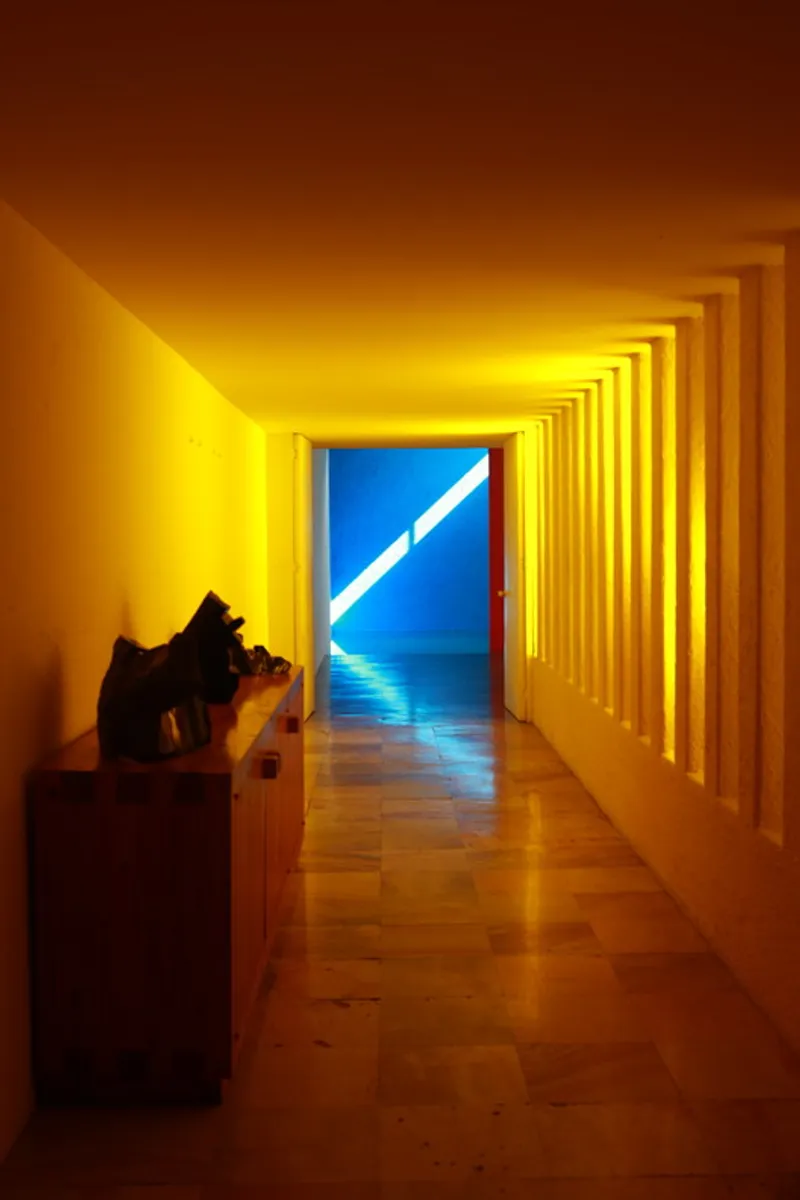
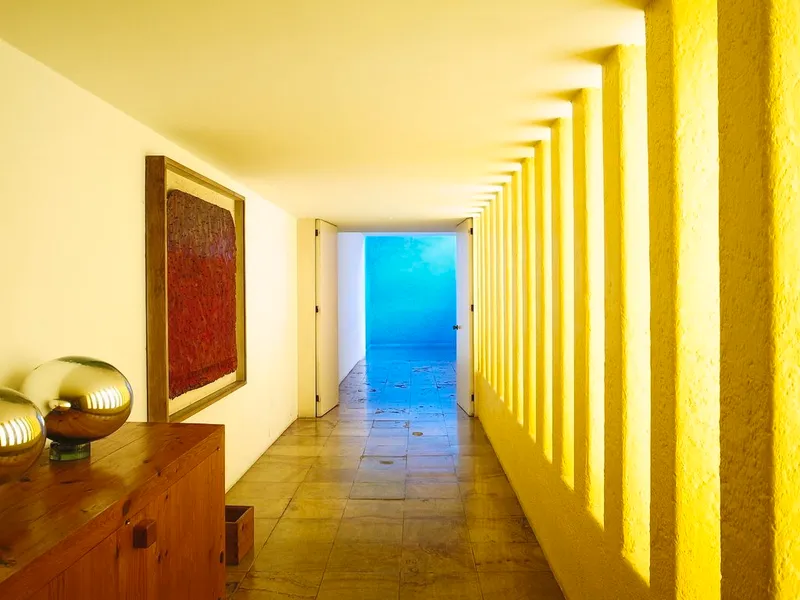
The house is widely regarded as a masterpiece that embodies minimalist spatial design, emotional architecture, and the poetic use of color and light. Inspired by Mexican culture and the artistic legacy of figures like Diego Rivera and Frida Kahlo, the Gilardi House combines architecture, art, and landscape into a powerful sensory experience.
One of the most challenging aspects of the project was the requirement to preserve a large jacaranda tree on the site, as well as incorporate a swimming pool requested by the owner. Barragán transformed these constraints into defining features that shaped the spatial composition of the house.
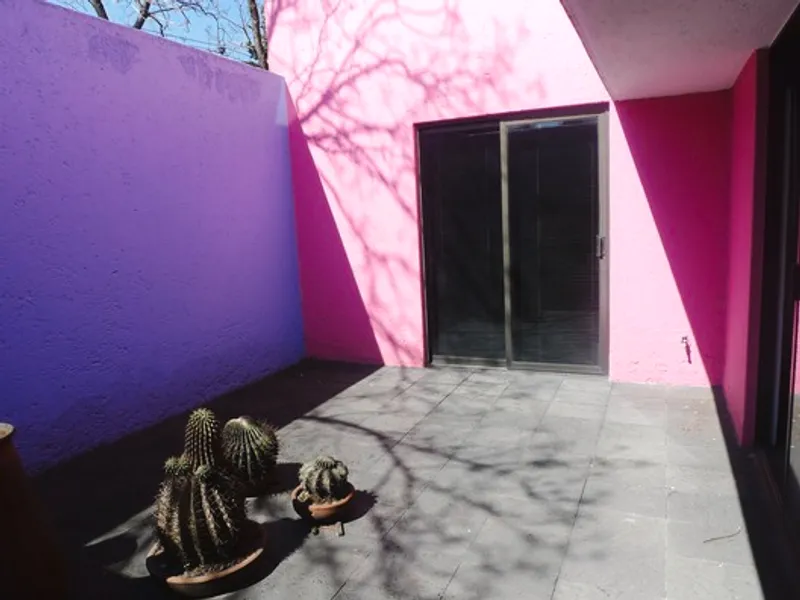
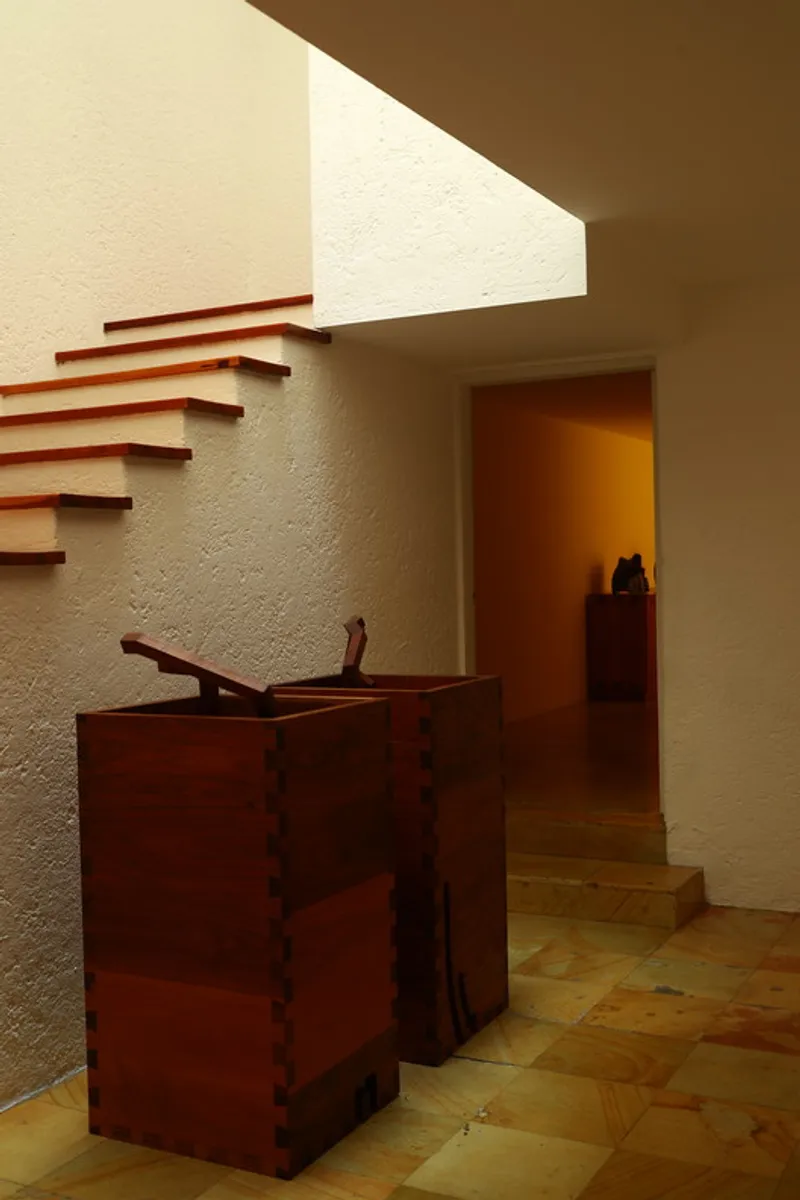
Urban Context and Architectural Layout
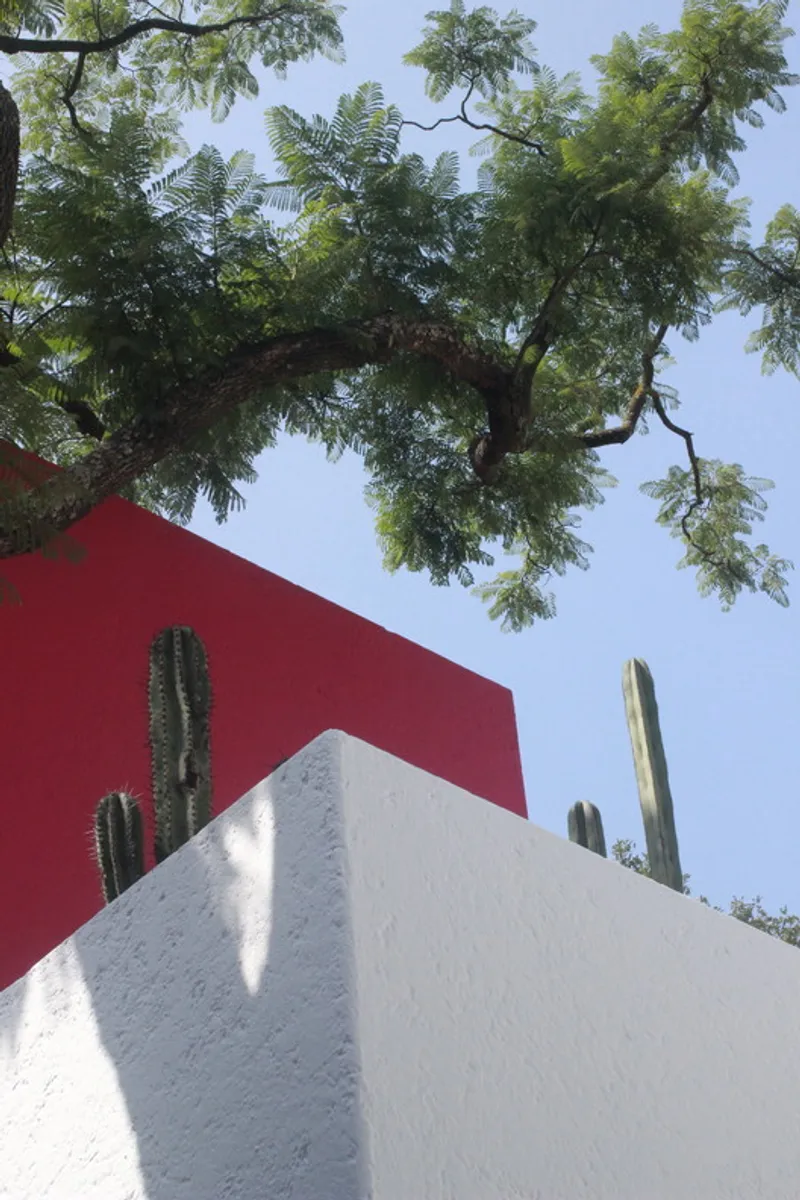
Located within a dense urban fabric, the Gilardi House sits between party walls, which influenced Barragán’s approach to spatial organization. The house appears relatively closed and discreet from the street, presenting a minimal pink façade that protects the privacy of the interior spaces.
The architectural plan is organized along the longitudinal axis of the plot, dividing the house into two main volumes toward the rear.
The front section of the residence accommodates the more private and functional areas of the house, including the bedrooms and service spaces. In contrast, the rear volume contains the social areas, including the living room, dining room, and the iconic indoor swimming pool.
These two volumes are connected through a corridor that wraps around the preserved jacaranda tree, forming an internal courtyard. This strategy allows nature to become an integral part of the architectural experience while also creating a transition between the private and communal areas of the house.
Barragán’s ability to transform a tight urban plot into a serene and contemplative living environment demonstrates his mastery of spatial composition and emotional architecture.
The Role of Light in Barragán’s Architecture
Light plays a crucial role throughout the Gilardi House, shaping the atmosphere of each space and intensifying the experience of color and form.
Barragán carefully designed controlled openings and skylights that introduce natural light in unexpected ways. A notable example is the floating staircase, which appears to levitate without a railing beneath a dramatic zenithal light. This architectural gesture transforms a simple circulation element into a sculptural centerpiece.
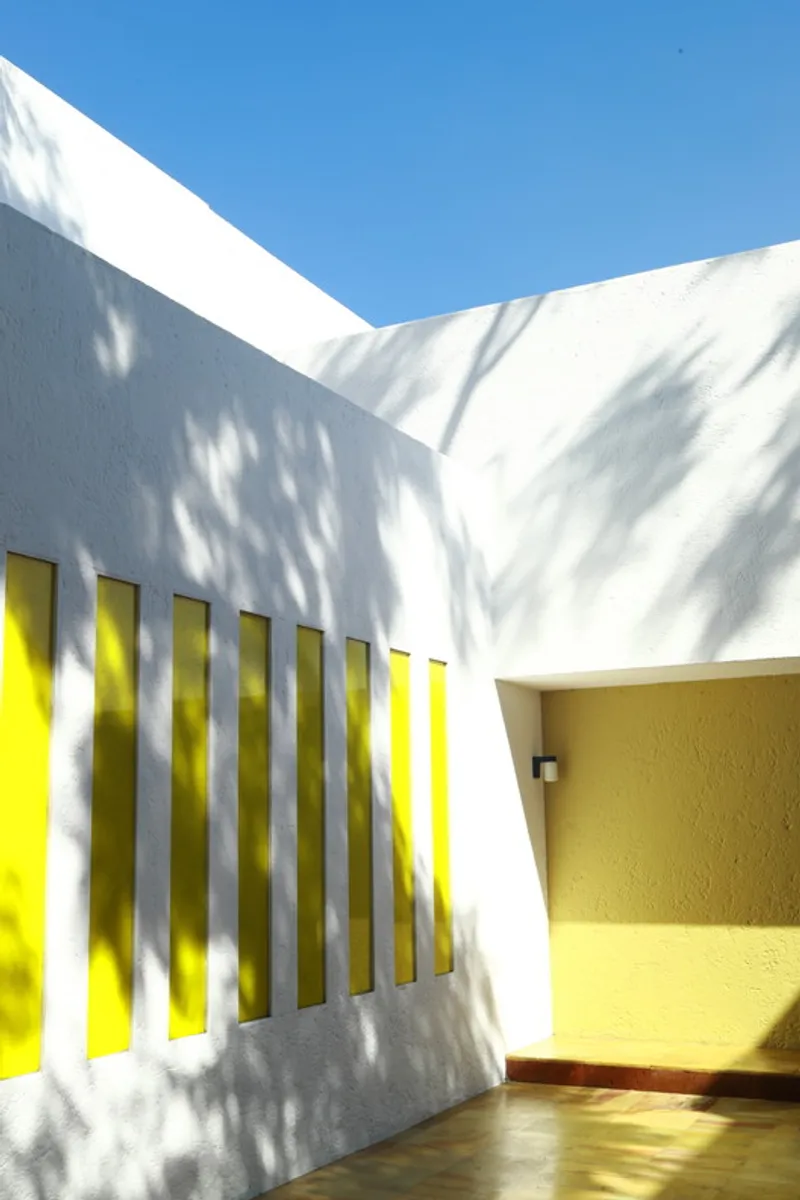
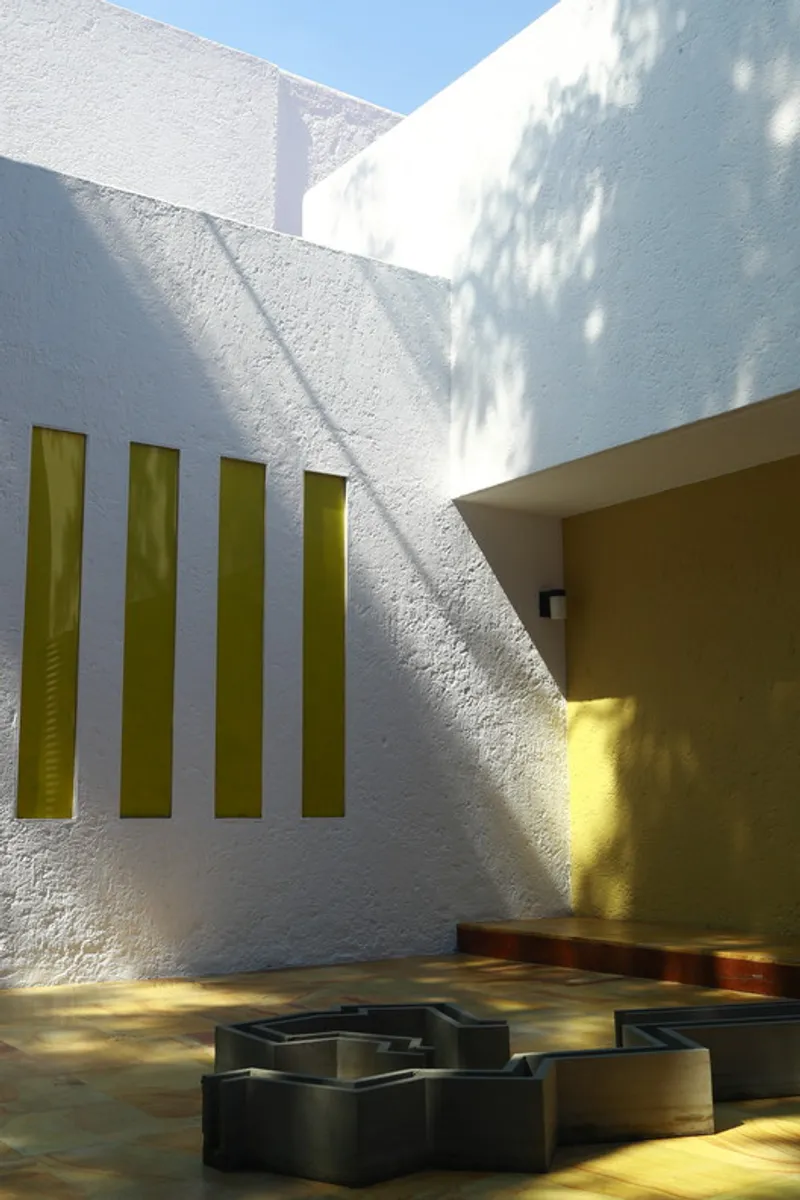
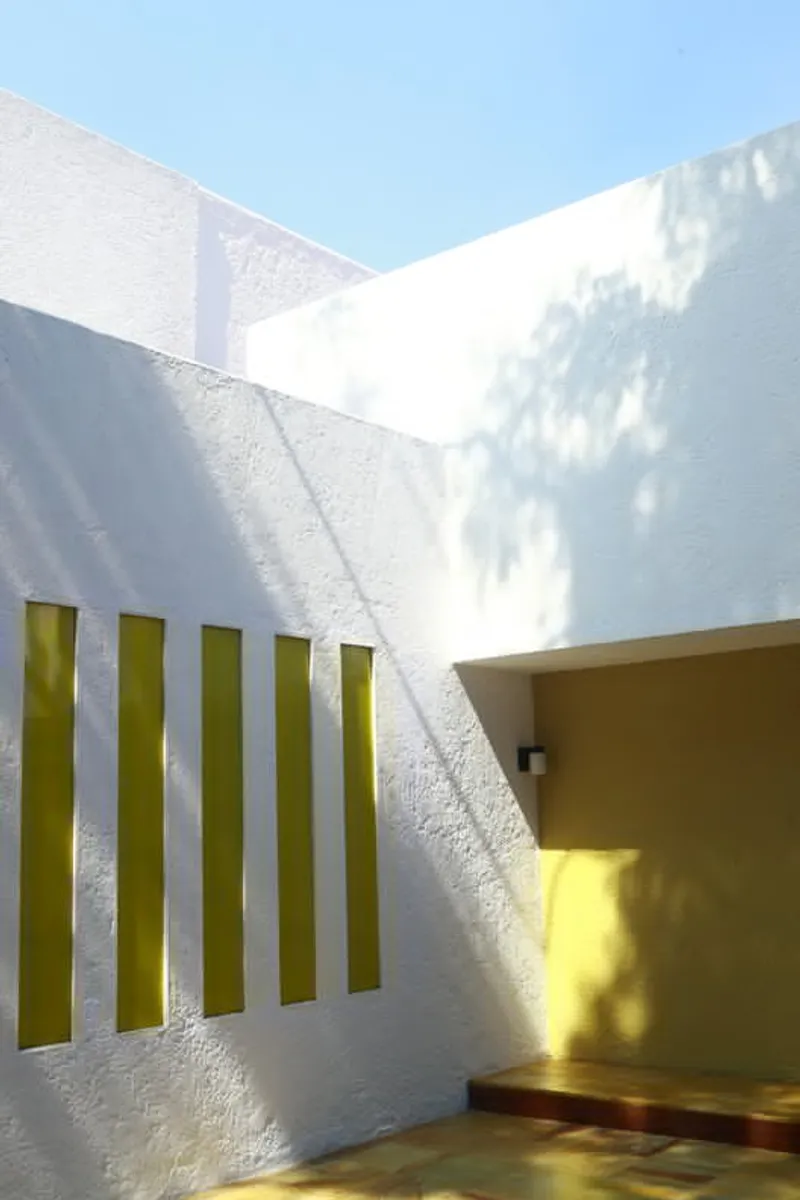
In the corridor leading to the dining room, narrow vertical openings filter yellow light, creating a dramatic visual effect that guides visitors toward the interior of the house. The light interacts with the smooth plaster surfaces, emphasizing texture and spatial depth.
Barragán intentionally used smooth interior walls and minimal ornamentation so that light could move freely across surfaces, producing constantly shifting atmospheres throughout the day.
The Iconic Dining Room and Pool Space
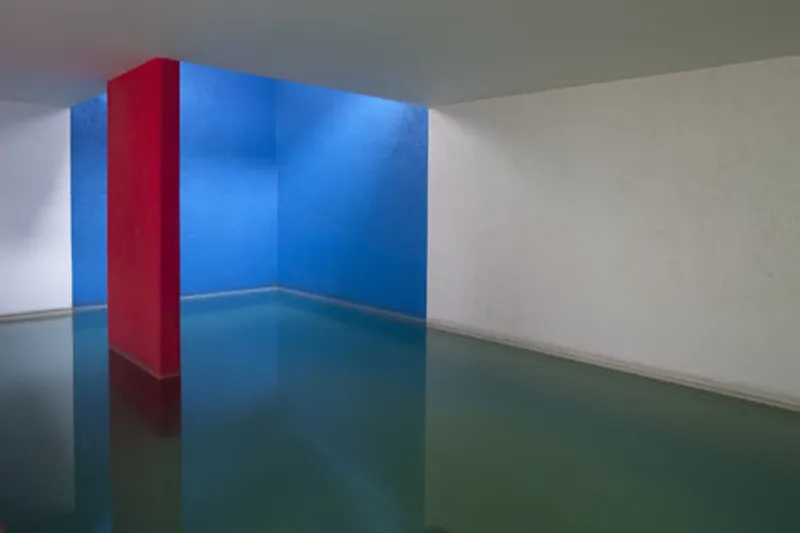
One of the most memorable spaces in the Gilardi House is the dining room and pool area, which represents the pinnacle of Barragán’s exploration of color, water, and light.
The floor level subtly changes, placing the dining area directly beside a reflective water surface. This spatial arrangement creates a tranquil environment where the water mirror amplifies natural light and reflections.
A dramatic red wall extends into the water, acting as both a visual anchor and an artistic element. Above this space, a skylight introduces dynamic daylight, creating an ever-changing play of shadows and reflections across the water and surrounding walls.
The result is a space that feels almost meditative, where architecture, light, and water work together to produce an immersive sensory experience.
Color as an Architectural Element
Color is perhaps the most defining feature of Barragán’s architectural language, and the Gilardi House is a perfect demonstration of this philosophy.
Barragán collaborated with Mexican artist Chucho Reyes to develop the house’s vibrant palette. Inspired by the colors of Mexican markets, traditional sweets, and everyday cultural elements, the architect experimented extensively before finalizing the compositions.
Large sheets of colored cardboard were placed against walls to test different combinations until the perfect balance was achieved.
The house features bold red, blue, yellow, and pink surfaces, which interact dramatically with natural light. One particularly striking architectural gesture is a pink column placed within the swimming pool. This column does not serve any structural function: it exists purely as an aesthetic element designed to enhance proportion, reflect light, and intensify the spatial composition.
This use of color reflects Barragán’s belief that architecture should evoke emotion, contemplation, and beauty.
Structural Strategy and Material Simplicity
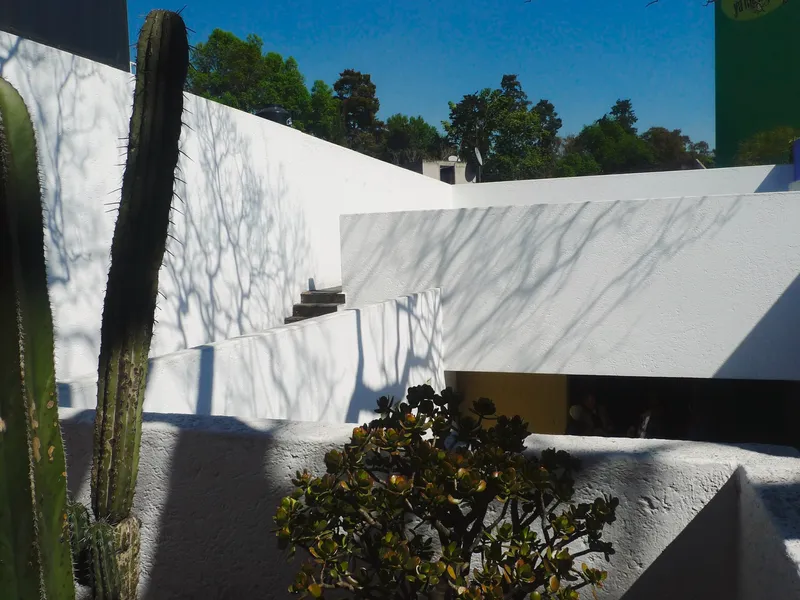
Given the constraints of the narrow site, Barragán employed a load-bearing wall structural system. These walls define a subdivided grid that organizes the different spaces of the house while maintaining structural clarity.
The materials used throughout the project are intentionally simple. Smooth plaster finishes cover the interior surfaces, allowing light and color to remain the primary architectural elements.
This simplicity ensures that the architecture remains timeless and contemplative, emphasizing spatial experience over decorative complexity.
The Legacy of the Gilardi House
The Gilardi House represents the culmination of Luis Barragán’s architectural philosophy. It synthesizes many of the principles that defined his career: emotional architecture, minimal forms, dramatic color palettes, and the integration of nature within urban spaces.
Today, the house is widely studied by architects and designers around the world as an example of modernist residential architecture that transcends functional design to create deeply poetic spaces.
Through its careful orchestration of light, water, color, and landscape, the Gilardi House continues to inspire contemporary architecture and remains one of the most iconic houses of the twentieth century.


Popular Articles
Popular articles from the community

Tsunami Convergenics: Turning Catastrophic Ocean Forces into Underwater Housing Infrastructure
A speculative underwater settlement off the coast of Onagawa, Japan, treats tsunamis and typhoons as energy sources rather than threats.

Manzana Morphosis: Stretching Barcelona's Grid into a Living Landscape for 2050
A radical reworking of the Eixample manzana turns density into a tool for generous public space, vertical ecology, and environmental performance.

Opera on the Sea: Driftwood Logic Shapes a Timber Opera House on Estonia's Coast
Trevor Orgill's opera house translates the entangled drift of floating timber into a civic building where wood, water, and music converge.

Singing Woman: An Opera House That Performs Before the Curtain Rises
Ovidiu Cristian Pavel's conceptual opera house translates Estonia's choral identity into a sculpted waterfront landmark facing the Baltic Sea.

Similar Reads
You might also enjoy these articles

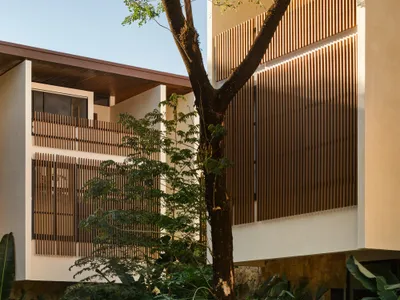
FAMM Arquitectura Organizes Ten Villas Around Courtyards and Jungle in Nosara, Costa Rica
El Molino pairs two elongated volumes with deep overhangs and timber louvers to build a compact coastal community five minutes from the beach.
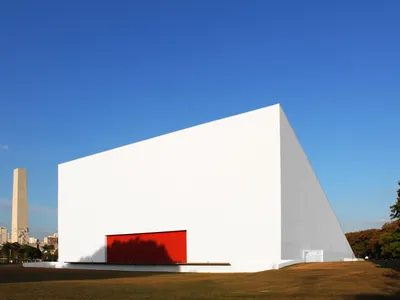
Oscar Niemeyer's Ibirapuera Park Pavilions Define São Paulo's Cultural Identity in Concrete and Curve
A constellation of modernist volumes set within São Paulo's most important urban park, conceived for the city's 400th anniversary in 1954.
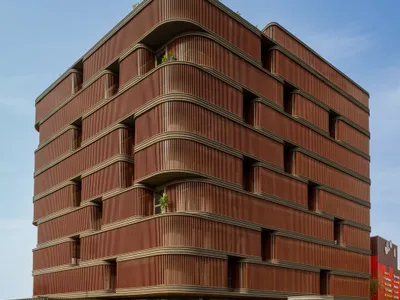
Sanjay Puri Architects Wraps a Jaipur Office Tower in Capsule-Shaped Green Buffers
A nine-level climate-responsive workplace near Jaipur Airport uses stacked planter terraces and aluminium screens to fight 40°C heat.
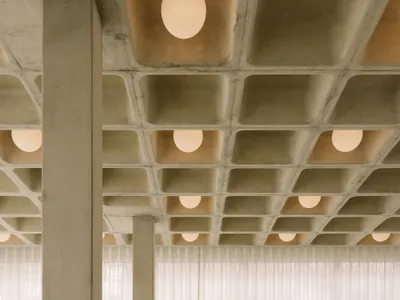
RHO Converts a Berlin Spree-Side Industrial Courtyard into Enkime's 1,000 m² Agency Headquarters
A social media agency's new home in Charlottenburg trades glossy branding for concrete waffle ceilings, glazed tile, and sheer curtains.

Explore Latin American Houses Competitions
Discover active competitions in this discipline

Challenge to design mud housing for contemporary communities

Challenge to reimagine the Iron Throne

Photograph architecture without architects

Illustrate the lost glory of Angkor Wat - Render Challenge
Comments (0)
Please login or sign up to add comments
No comments yet. Be the first to comment!