

Glass Ridge House by OWIU Design: A Contemporary Sanctuary Shaped by Multicultural Design Philosophy
A serene modernist home blending Japanese craftsmanship, Californian landscape, water features, and multicultural design to create a peaceful, nature-connected architectural sanctuary.


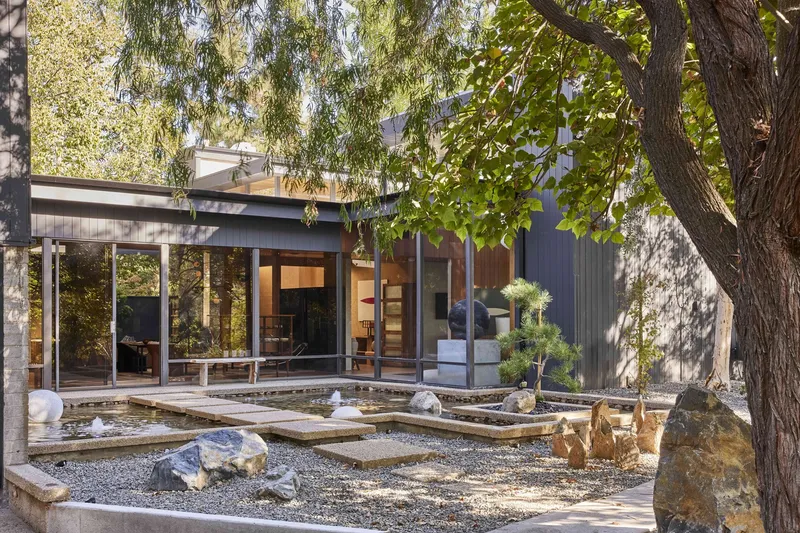
The Glass Ridge House in La Cañada Flintridge, California, is a serene architectural retreat that reflects the multicultural influences, design sensibilities, and personal journeys of OWIU Design’s co-founders, Amanda Gunawan and Joel Wong. Set within a quiet suburban cul-de-sac and originally designed by Ray Kappe in 1973, the residence is a respectful contemporary reinterpretation of modernist architecture infused with Japanese craftsmanship, Californian landscape principles, and the couple’s deep-rooted Asian heritage.
With a total area of 3,728 ft², the home serves as a living archive of the architects’ memories, travels, and design philosophies—an intimate sanctuary shaped by nature, material authenticity, and cross-cultural dialogue.
A Home That Bridges Eastern and Western Design Traditions
OWIU Design has long been celebrated in Los Angeles for crafting thoughtful, culturally resonant interiors and architectural spaces for Asian-American tastemakers. Their architectural language naturally balances Eastern restraint with Western openness, merging natural materials, minimalist expression, and sculpted spatial experiences.
Raised in Singapore, extensively traveling through Asia, and trained at SCI-Arc, both founders draw from a wide spectrum of influences. The Glass Ridge House embodies this blend: the clarity and lightness of Californian modernism paired with the warmth, ritual, and craftsmanship of Japanese architecture.
Honoring Ray Kappe’s Modernist Legacy
The original structure—neglected for decades—captured Gunawan and Wong’s imagination for its bold geometry and deep connection with the hillside landscape. Rather than erasing the home’s past, they approached the renovation as a collaboration with its history. Nature and architecture had grown intertwined over 30 years; OWIU sought to preserve this relationship, restoring the house while enhancing its sensory and spatial qualities.
Large glazed openings maintain strong indoor–outdoor continuity, while carefully framed views pull the landscape into every room. Water, greenery, and hillside contours become as integral to the architecture as wood, stone, and glass.
A Sanctuary of Water, Light, and Landscape
Water is a recurring, meditative element throughout the Glass Ridge House. OWIU transformed the former sunroom into a glass-enclosed interior stream, creating a calming visual experience and a symbolic connection to natural flow.
The koi pond at the entrance is paired with a minimalist Japanese rock garden, grounding visitors in ritual and stillness. The redesigned pool forms a seamless edge with the landscape, visually merging the water’s surface with the distant tree-lined hills.
From nearly every window, residents can see water, sky, trees, or hillside terrain—a deliberate design strategy that blurs the boundary between shelter and nature.

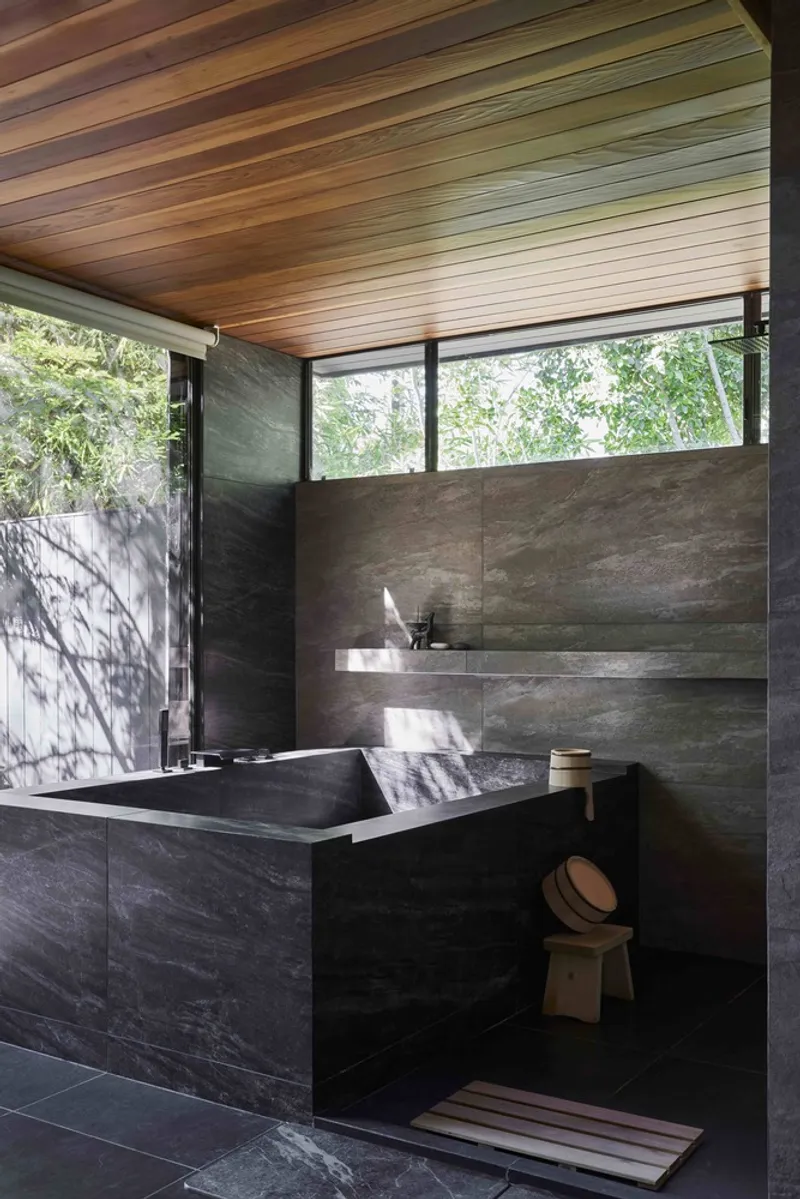
Tatami Craft and Japanese Materiality
To honor the couple’s close ties to Japan and its design traditions, OWIU collaborated with Kuboki Tatami, a historic tatami craftsman from Fukushima Prefecture operating since 1740. Rather than using tatami in conventional forms, they integrated it in unexpected architectural details.
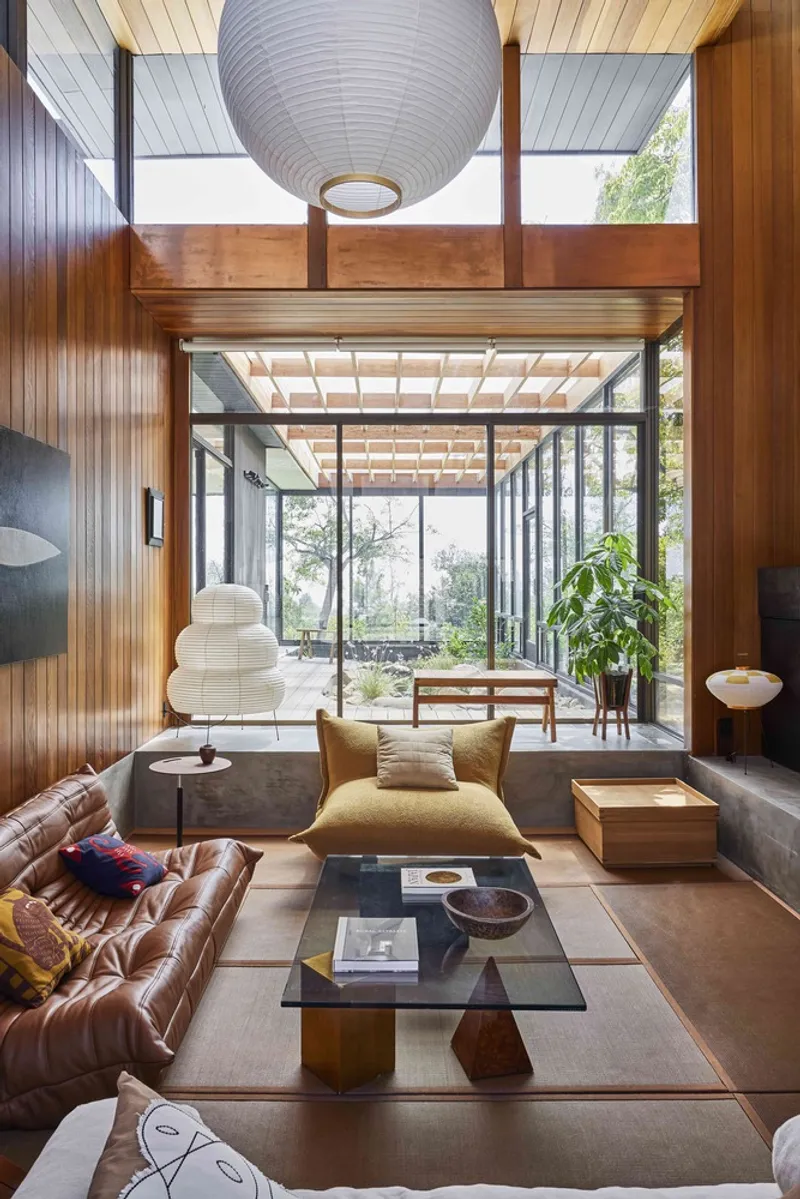
- The sunken living room is lined with tatami, offering warmth and flexible seating aligned with Asian social habits.
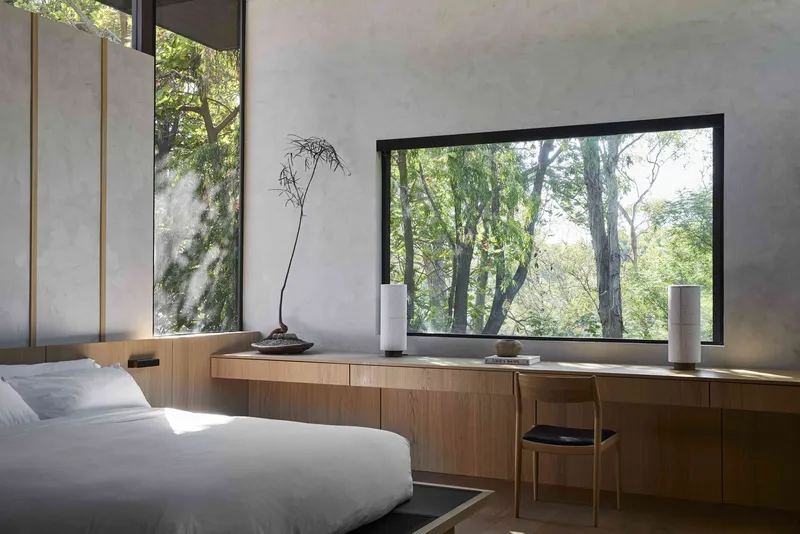
- The primary bedroom features a custom black tatami-lined bed frame, adding texture, sophistication, and cultural reference within a minimalist context.
This interplay between Japanese craftsmanship and modern Californian architecture defines the character of the home.
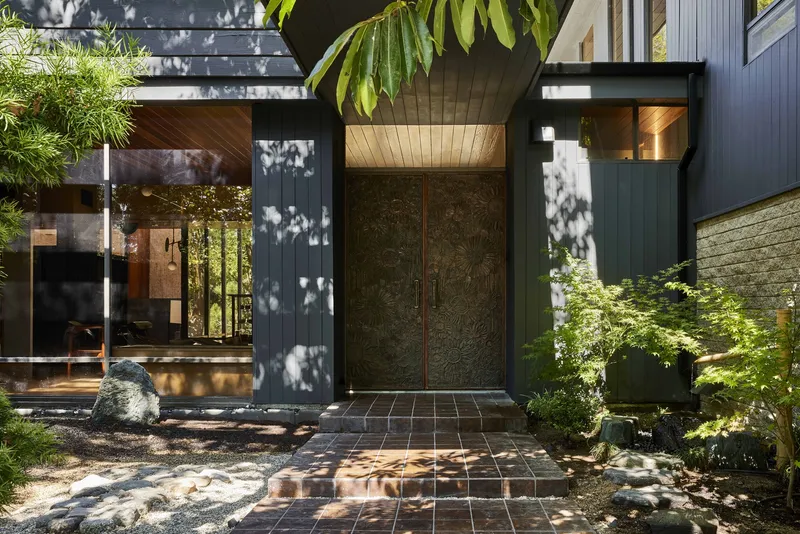
Tea Rituals and Custom Craftsmanship
A separate tea bar—crafted in textured marble—creates a contemplative space distinct from the kitchen. Its centerpiece is a collection of ceramic tiles by Hashimoto Tomonari, a Japanese ceramic artist known for glazes made with natural materials such as rice and millet. Their iridescent finish adds depth and a handcrafted presence to the space.
The home is filled with curated pieces: art from local creators, travel mementos, gifts from friends, and handmade objects that carry personal meaning. A prominent abstract painting in the living room, created by a Koreatown frame shop owner, becomes a testament to the relationships that shape the couple’s life in Los Angeles.
Warm, Crafted Interiors and Material Transition
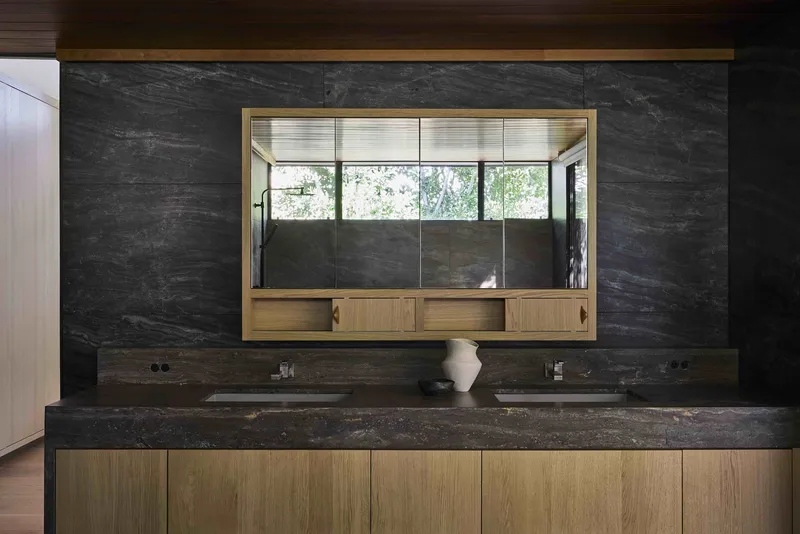
Most millwork and fixtures were custom-built by Inflexion Builds, OWIU’s construction arm. Organic forms, softened edges, and material continuity define the home’s interior landscape.
Key design strategies include:
- A light-filled kitchen with high ceilings and full-height glazing, featuring pale wood cabinetry that amplifies natural light.
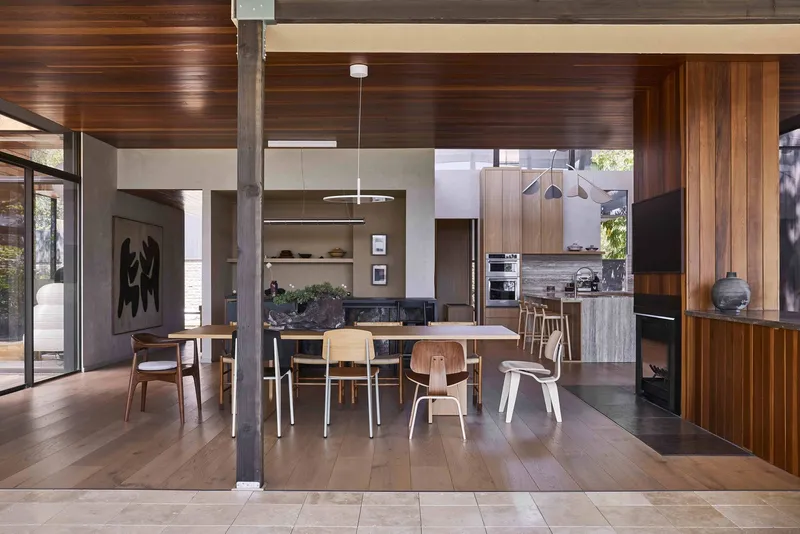
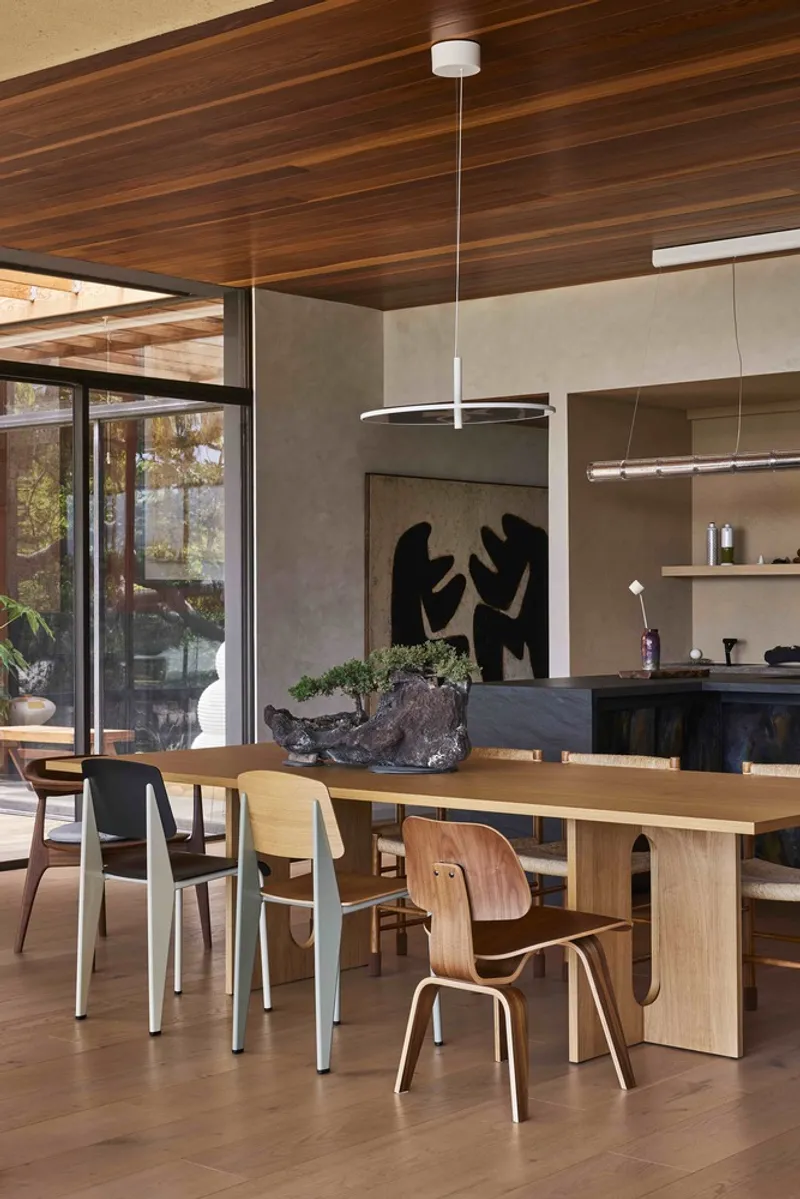
- A dining room with a lowered dark redwood ceiling and blackened wood bar, establishing a richer, more intimate atmosphere.
- Kitchen and dining countertops crafted for communal dining, reflecting the couple’s emphasis on social rituals and everyday living.
Spatial transitions rely on subtle compressions, tonal shifts, and textural contrasts rather than rigid partitions.
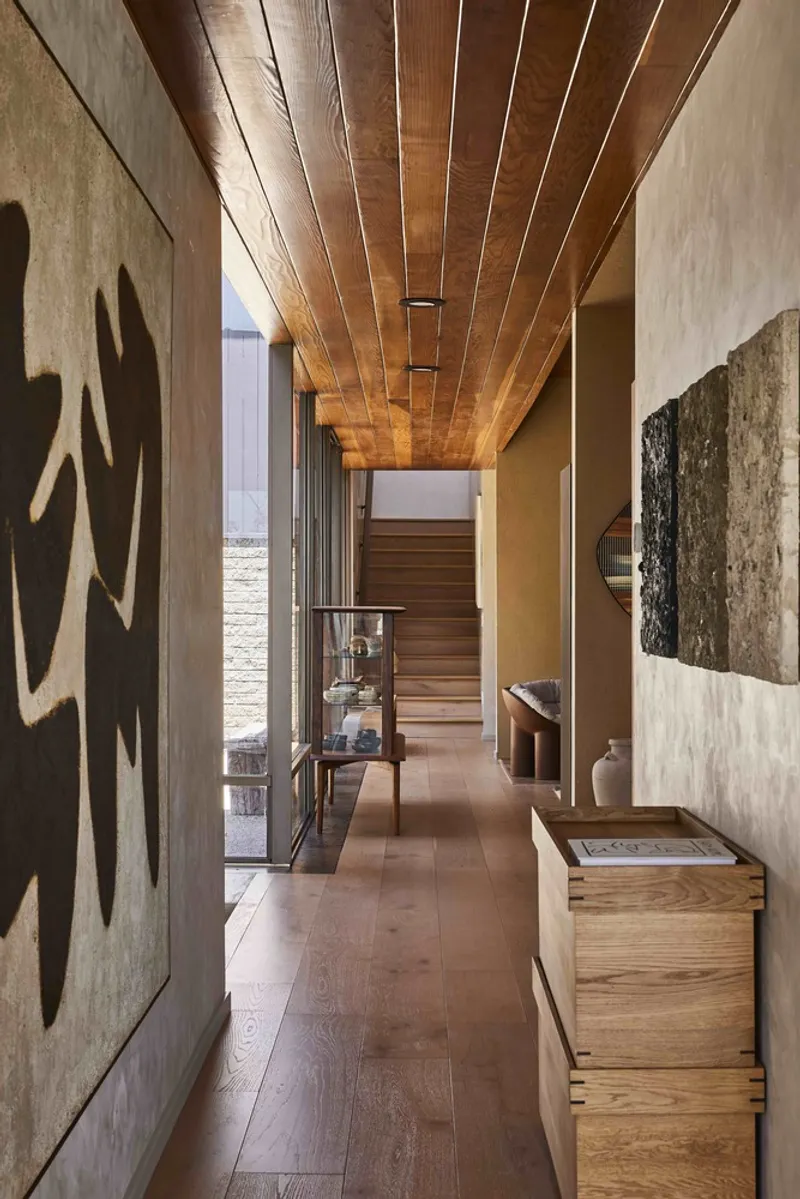

Inspired by Ryokans: Home as Sanctuary
Much of OWIU’s design philosophy draws inspiration from Japanese ryokans—not for their formal structure, but for their emotional intention. A ryokan emphasizes retreat, quiet, ritual, and separation from everyday chaos. The Glass Ridge House adopts this ethos, creating a cocoon-like refuge that still sits minutes from downtown Los Angeles.
The home becomes a meditative escape, a personal retreat shaped by memory, legacy, and the natural world.


A Dialogue Between Legacy and Intervention
OWIU’s transformation of the Glass Ridge House represents a balance between preservation and evolution. Their sensitive reimagining honors the architectural DNA of Ray Kappe while embedding their own multicultural influences, personal narratives, and design principles.


All photographs are works of Pablo Veiga Photography


Popular Articles
Popular articles from the community


Architekt Andreas Gruber Scatters 23 Dark Timber Chalets Across a South Tyrolean Forest Edge
In Molini di Tures, Amonti Chalets breaks a resort into a hamlet of gabled timber houses, with parking, storage and services pushed into the slope.

Juan García Correa, John González and Claudia Rueda Sink a Circular Amphitheater into a Manizales Engineering Building
On the La Nubia campus in Manizales, Colombia, the S1 Building folds labs and offices into a hillside of ramped lawns that double as a campus route.

Jaramillo Van Sluys Arquitectura and Urbanismo Turn a Demolished Registry Lot in Quito into an Orchard Plaza
In Quito's Centro Histórico, a 2,800 m² plaza exposes the San Agustín convent wall and redraws its lost Augustinian orchard in volcanic stone.

U.GA Architects Wraps an Oval Rooftop Pool in Curved Board-Formed Concrete on Busan's Jeollidan-gil
In Busan's Jeonpo-dong, a 454 m² mixed-use block stacks a neighborhood facility, guest rooms and an oval rooftop pool inside spiraling concrete walls.

Similar Reads
You might also enjoy these articles


Hodi-Mandai Geram
Project Function: Preservation and revitalization of the Intangible heritage and socio-spatial identity of the Hodi by Housing, Cultural Memory Center, Sacred Grove, landscape, local tourism economy


Olio Towers: A Mid-Rise for Performers That Fuses Housing, Rehearsal, and Stage
Located blocks from Houston's Theater District, this modular tower stacks living units around a central performance atrium.

Oasis: Modular Green Housing Carved into Dhaka's Urban Fabric
A shortlisted Plugin Housing entry reclaims unauthorized settlements in Dhaka with stepped concrete volumes, green roofs, and ventilation-driven design.

Black Hole: A Floating Megastructure for the Post-Physical Era
Emiliano Mazzarotto envisions a spherical, self-scaling arena where e-sports, digital hotels, and holographic stadiums replace traditional public space.

Explore Architecture Competitions
Discover active competitions in this discipline

Challenge to design mud housing for contemporary communities

Challenge to reimagine the Iron Throne

Photograph architecture without architects

Illustrate the lost glory of Angkor Wat - Render Challenge
Comments (0)
Please login or sign up to add comments
No comments yet. Be the first to comment!