
Green Field of Karupannya Rangpur Factory by Nakshabid Architects: A Sustainable Industrial Design in Bangladesh
Green Field Factory in Rangpur blends sustainability, climate-responsive design, greenery, and community spirit, creating an eco-friendly, worker-centered architectural landmark.


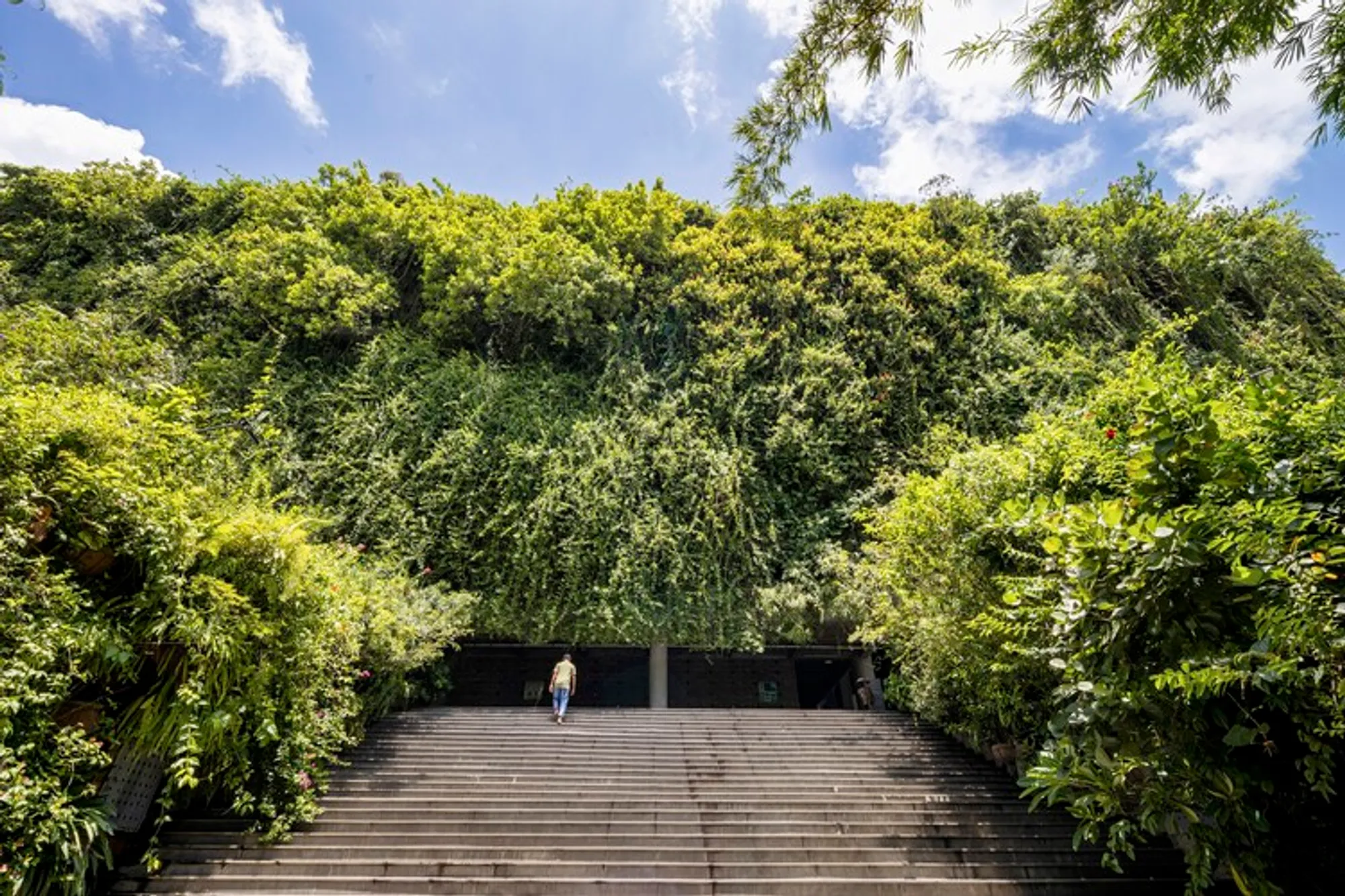
The Green Field of Karupannya Rangpur Factory, designed by Nakshabid Architects, redefines the concept of industrial architecture in Bangladesh. Completed in 2016, this 14,450 m² eco-friendly factory is located in Robertsongonj, Rangpur, and sets a benchmark for sustainable, climate-responsive industrial design in South Asia. Unlike conventional factory spaces that focus solely on productivity, Karupannya Rangpur Factory integrates sustainability, biophilia, and worker well-being, making it not just a workplace but a second home for its employees.
Redefining the Industrial Landscape of Bangladesh
Karupannya Rangpur Limited, established in 1991, is a globally recognized manufacturer of handwoven carpets and floor coverings. Most of its products are exported to the European Union, United States, and Asian markets. The new Green Field Factory was conceived as more than just a production hub—it is an architectural statement on sustainability, community, and inclusivity.
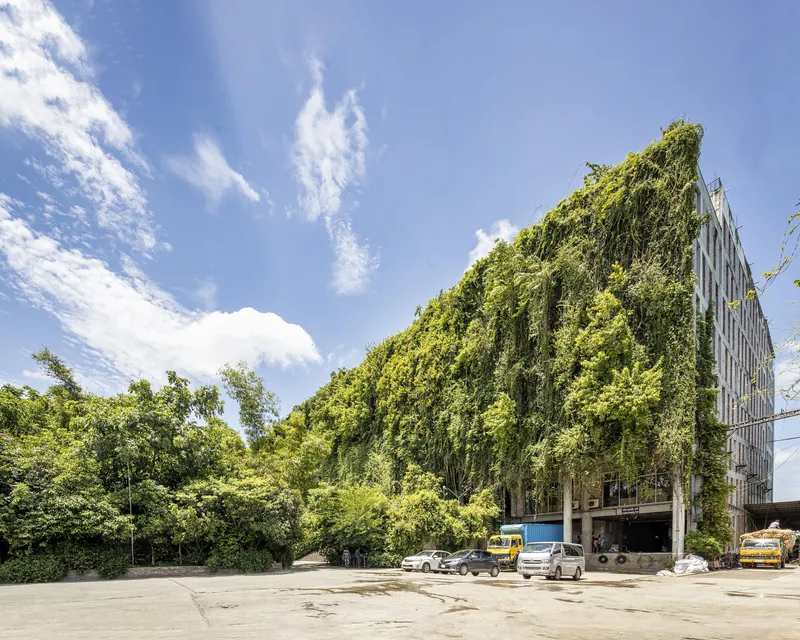
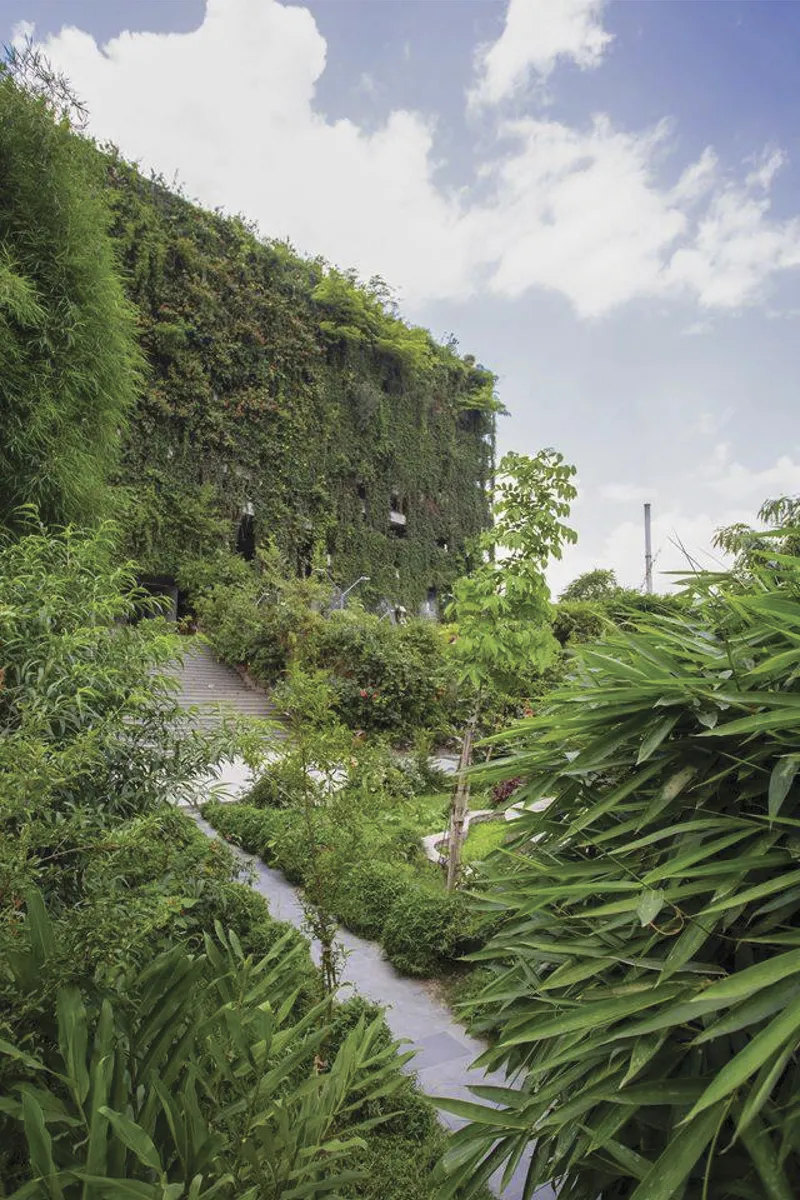
The seven-story building, with a 3,820 m² footprint, stands as a climate-responsive structure that reduces energy consumption by nearly 40% compared to conventional factories. By using natural ventilation, vertical gardens, and integrated water management systems, the project showcases how industrial design can harmonize with nature while supporting productivity and social empowerment.
Climate-Responsive and Energy-Efficient Design
Located in the tropical monsoon climate zone of Rangpur, the factory’s architecture responds directly to its environment. Key sustainable design strategies include:
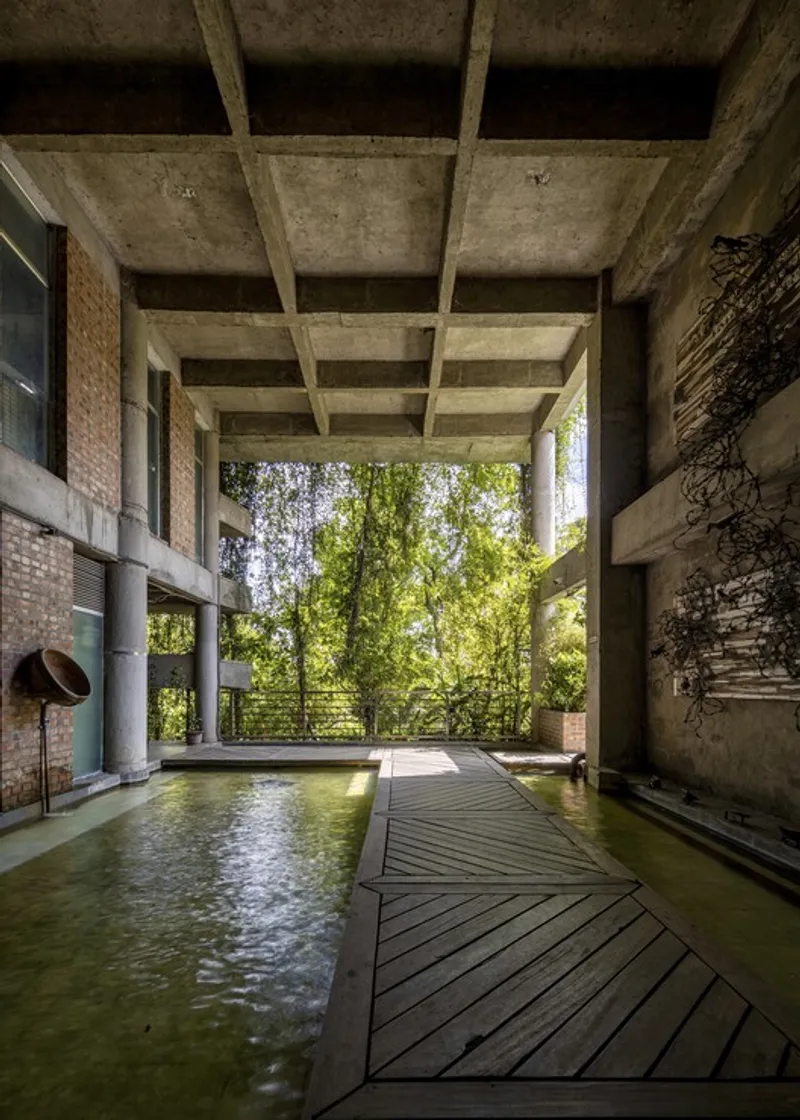
- Natural Ventilation & Cooling: The factory features open south, north, and east facades, allowing cross-ventilation. Circular voids and planted verandas reduce internal temperatures by up to 5°C without air conditioning.
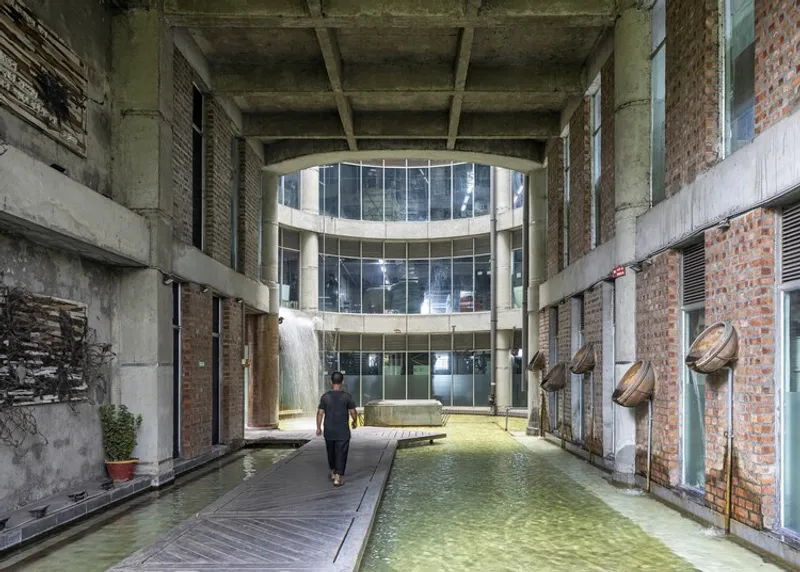
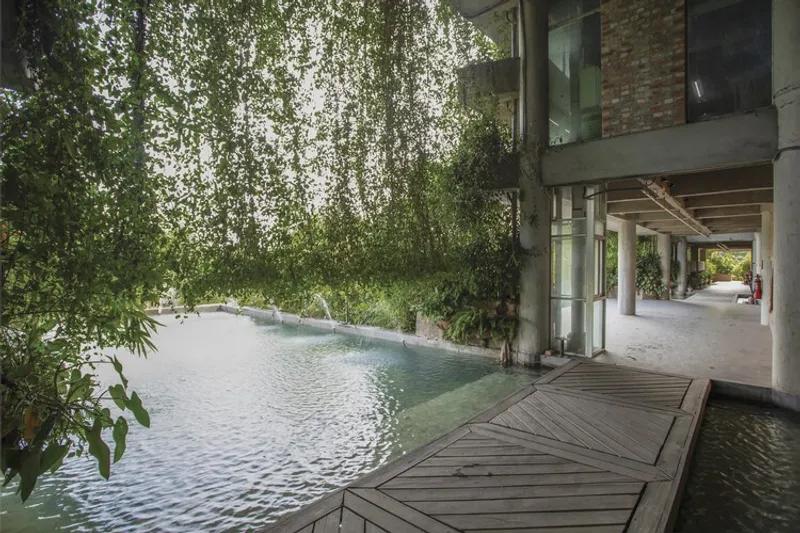
- Water Bodies & Evaporative Cooling: Four large ponds at the southern entrance cool the airflow naturally, while also serving as rainwater harvesting systems during monsoons.
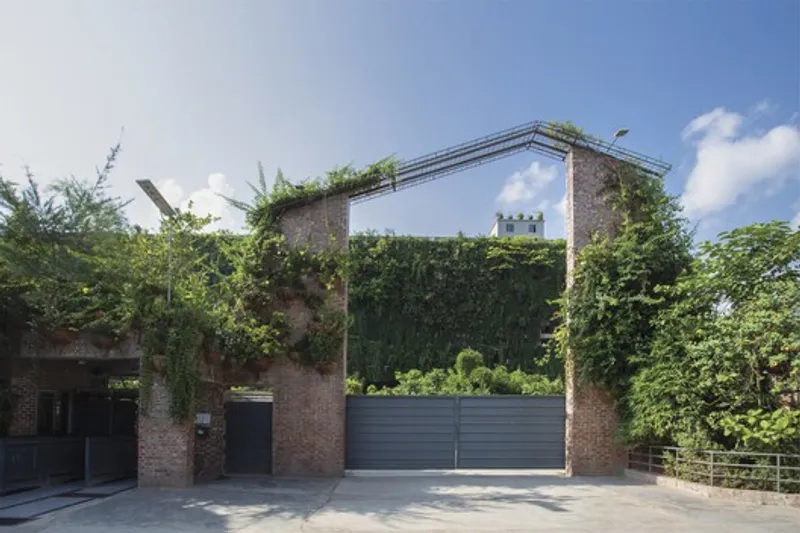
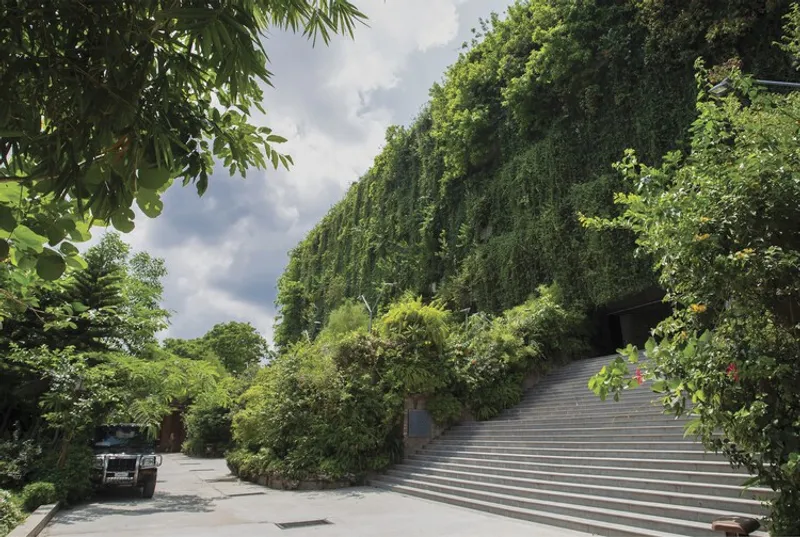
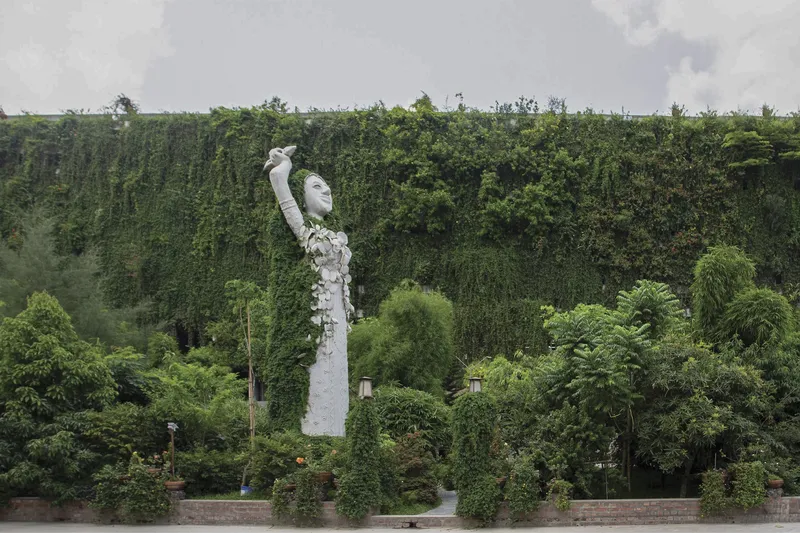
- Vertical Gardens & Plant Layers: Vegetation across facades reduces solar heat gain, improves air quality, and blends the building with its natural surroundings.
- Daylighting & Energy Efficiency: Central atriums and plant-covered openings bring in abundant natural light, minimizing the need for artificial lighting.
These design choices not only lower operational costs but also create a healthier, more comfortable environment for workers.
A Workplace That Feels Like Home
The design philosophy of Nakshabid Architects goes beyond sustainability—it prioritizes human comfort, mental well-being, and cultural context. Workers at Karupannya Rangpur Factory describe the space as a home away from home.
Key community-focused features include:
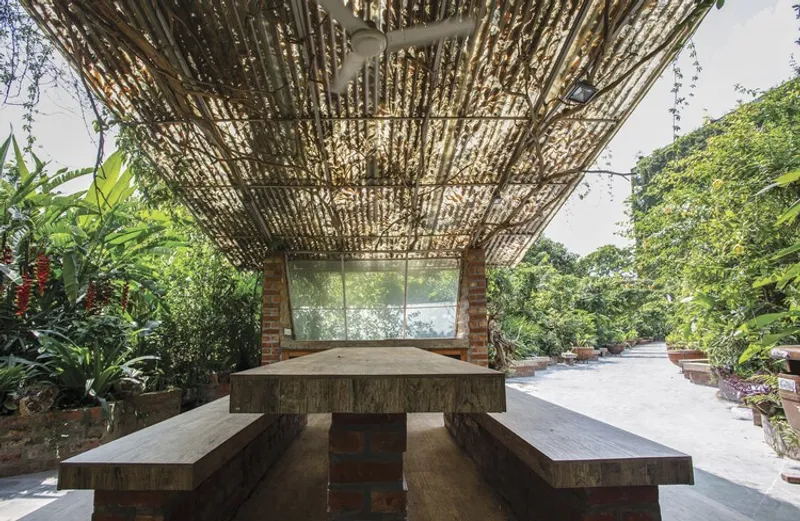
- Nandini Rooftop Park: A vibrant garden on the daycare rooftop where employees relax, eat lunch, and connect with nature.
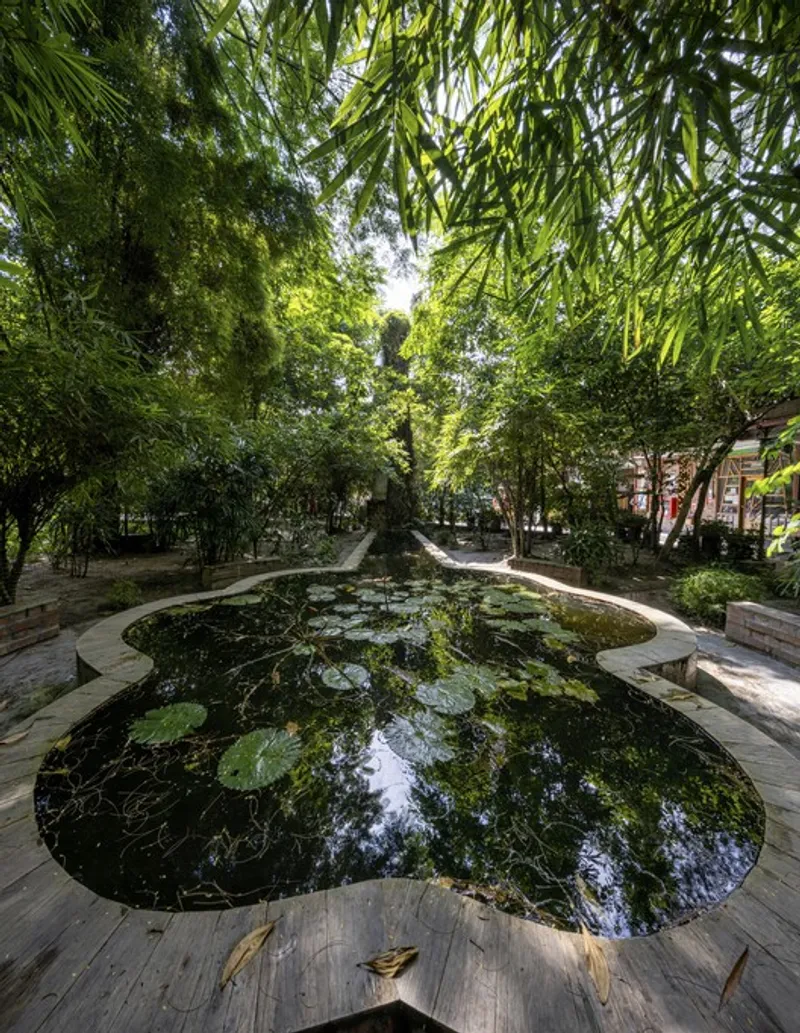
- Recreational Spaces: Lily ponds, linear parks, and podiums offer gathering spots for workers to socialize and unwind.
- Cultural Art Integration: Thousands of clay sculptures, including “Bonolota,” celebrate women’s empowerment—a powerful symbol given that 80% of the 5,000 employees are women.
- On-Site Facilities: A medical center, prayer rooms, grocery store, ATM, and canteen provide convenience and foster a sense of community.
This holistic approach strengthens employee morale, increases productivity, and positions the factory as a model for worker-centric industrial architecture.
Eco-System Integration and Rural Inspiration
Inspired by rural Bangladeshi archetypes, the design integrates courtyards, water bodies, and vernacular cooling techniques. The green stalks bending over water bodies mimic the imagery of village ponds, reconnecting workers with their cultural roots while maintaining ecological balance.
The architecture blends modern industrial needs with traditional, sustainable practices, showing how factories can serve as cultural and ecological assets rather than environmental burdens.
The Green Field of Karupannya Rangpur Factory is not just a manufacturing unit; it is a paradigm shift in industrial design. By merging sustainability, climate-responsive strategies, cultural identity, and worker well-being, Nakshabid Architects have crafted a space that redefines what factories can be.
This project stands as a global example of sustainable factory architecture, showing how industries in tropical regions can achieve energy efficiency, environmental harmony, and social impact without compromising productivity.
All the photographs are works of Bayejid Mahbub Khondker, Prantography, City Syntax




Popular Articles
Popular articles from the community


EW PARK: Sustainable Architecture Reimagines the Future of Urban Parking
EW PARK reimagines city parking as a modular wooden tower combining automation, solar energy, electric mobility, and adaptable urban design.

AL-JANNAH: Sustainable Architecture and Permaculture for Afghan Widows
AL-JANNAH uses sustainable architecture and permaculture to create resilient oasis of housing, learning, work and renewal for Afghan widows.

Co-Life: Senior Housing Design That Reconnects Older Adults With the City
Co-Life reimagines senior housing design through healing gardens, shared streets, workshops, and a sustainable community across generations.

The Musturak Paradise: Senior Living Architecture for a Connected Future in Temara, Morocco
The Musturak Paradise reimagines senior living architecture in Temara via private homes, social spaces, culture, community, and shared care.

Similar Reads
You might also enjoy these articles


Hodi-Mandai Geram
Project Function: Preservation and revitalization of the Intangible heritage and socio-spatial identity of the Hodi by Housing, Cultural Memory Center, Sacred Grove, landscape, local tourism economy


Olio Towers: A Mid-Rise for Performers That Fuses Housing, Rehearsal, and Stage
Located blocks from Houston's Theater District, this modular tower stacks living units around a central performance atrium.

Oasis: Modular Green Housing Carved into Dhaka's Urban Fabric
A shortlisted Plugin Housing entry reclaims unauthorized settlements in Dhaka with stepped concrete volumes, green roofs, and ventilation-driven design.

Black Hole: A Floating Megastructure for the Post-Physical Era
Emiliano Mazzarotto envisions a spherical, self-scaling arena where e-sports, digital hotels, and holographic stadiums replace traditional public space.


Explore Industrial Building Competitions
Discover active competitions in this discipline



Challenge to reimagine the Iron Throne


Photograph architecture without architects


Illustrate the lost glory of Angkor Wat - Render Challenge


Design challenge to reuse E-waste
Comments (0)
Please login or sign up to add comments
No comments yet. Be the first to comment!