
Guest House No. 16 by NORM Architects – A Timeless Coastal Retreat Reimagined
A serene Danish guest house blending Italian, Scandinavian, and Japanese design, offering timeless interiors, natural materials, and a tranquil coastal retreat.


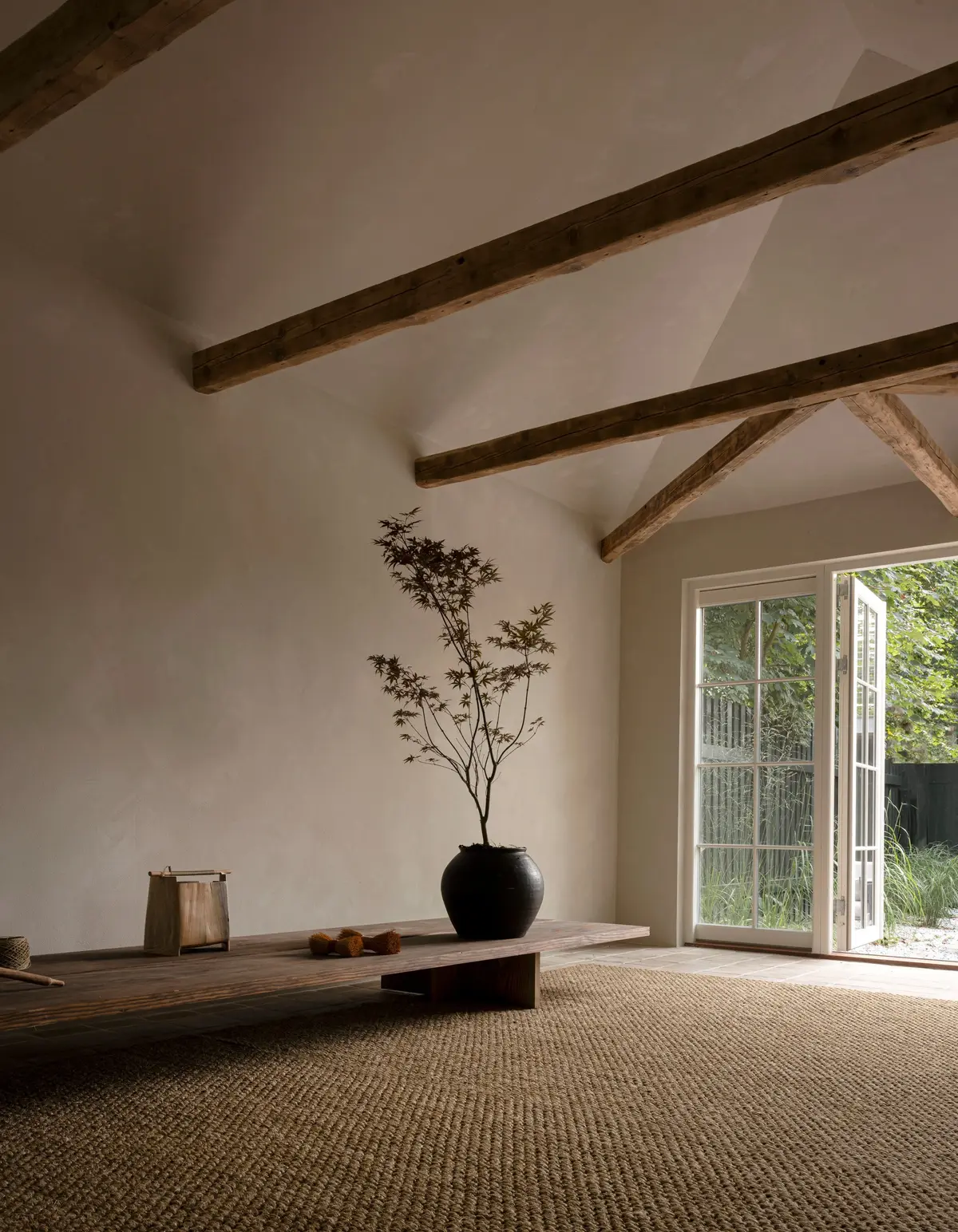
Nestled among the whispering pines of Northern Zealand, Denmark, Guest House No. 16 by NORM Architects stands as a serene, meticulously restored sanctuary where architecture, history, and nature merge into one atmospheric whole. Originally built in the 1930s as an Italian-inspired villa, the residence has been thoughtfully reimagined into a boutique coastal guest house rooted in Scandinavian simplicity, Italian Neoclassical elegance, and Japanese wabi-sabi philosophy.
The architects’ mission was to honor the layered past of the villa while infusing it with a renewed identity—one defined by craftsmanship, calmness, natural materials, and the quiet poetry of imperfect beauty.
A Dialogue Between Eras and Cultures
Guest House No. 16 blends architectural languages with graceful subtlety.
- Italian Neoclassicism lends the home proportion, harmony, and a romantic historical aura.
- Scandinavian clarity introduces function, lightness, and minimal restraint.
- Japanese aesthetics bring warm imperfections, transience, and tactile beauty.
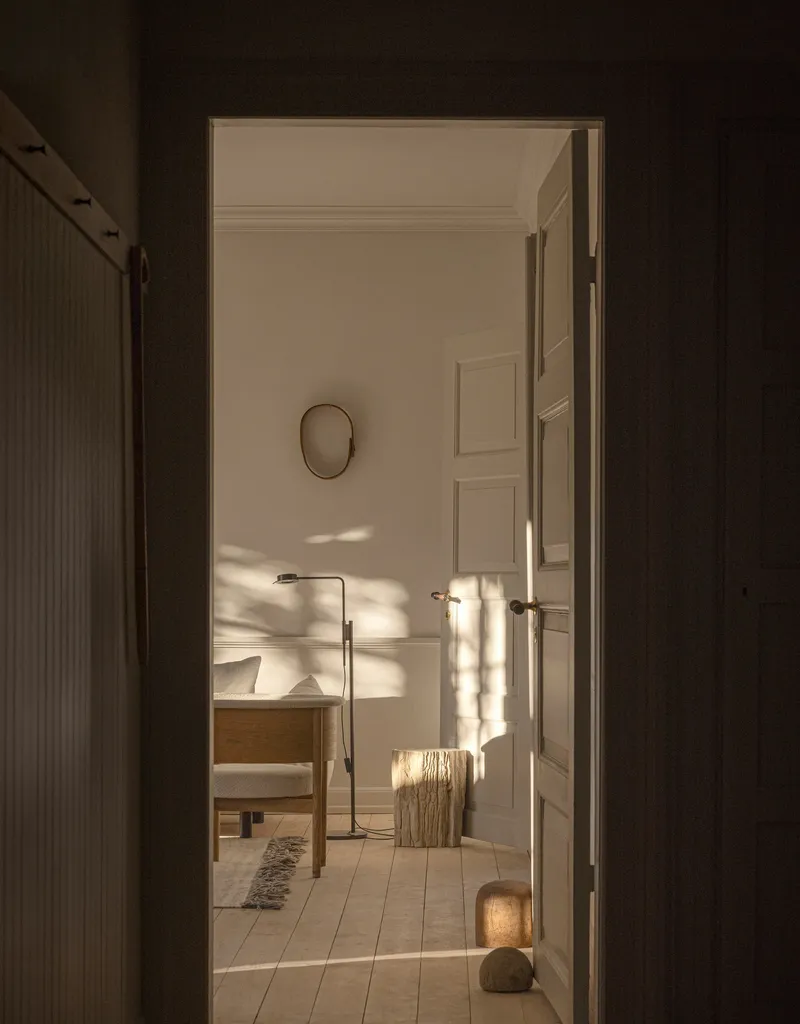
The result is a timeless sanctuary where classic proportions meet modern serenity, and every room becomes a living painting reminiscent of Vilhelm Hammershøi’s interiors, filled with soft, diffused coastal light.
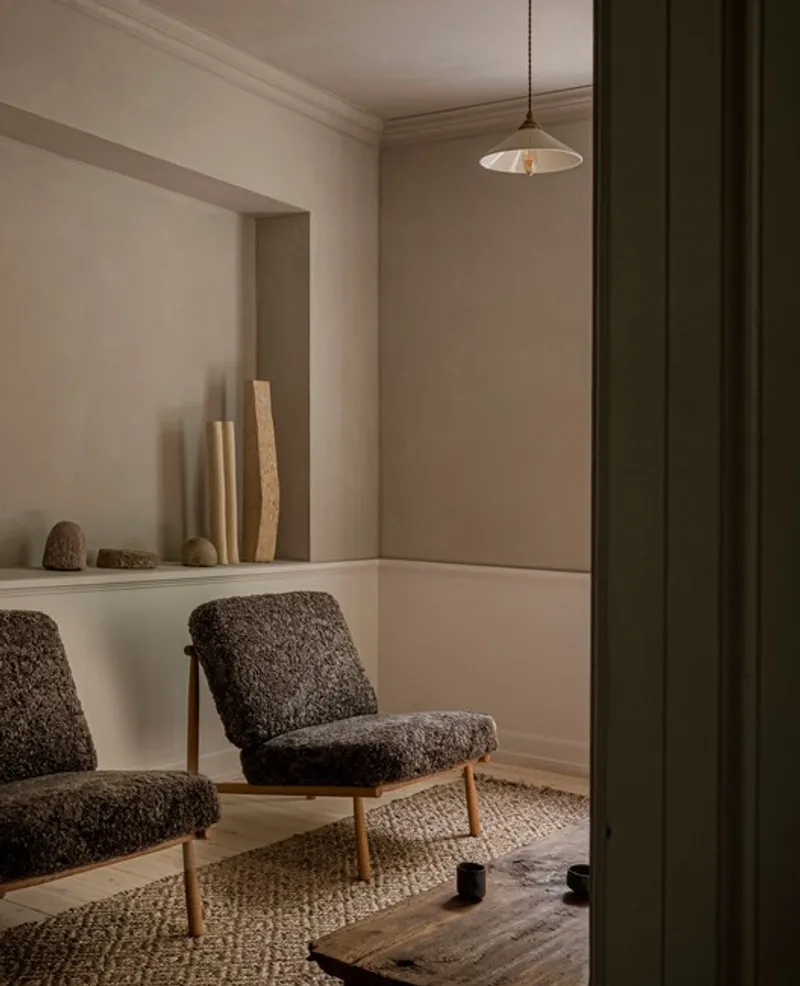
Restoration Rooted in Craftsmanship
No element was overlooked in the holistic restoration:
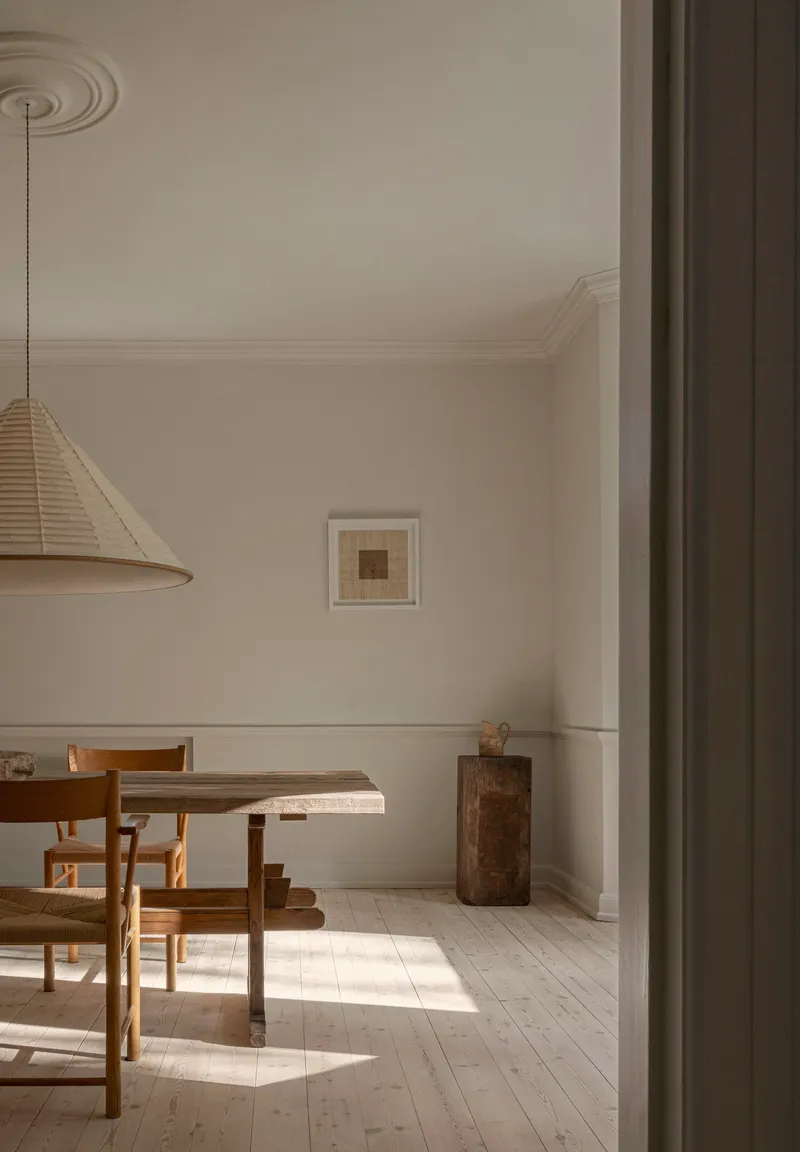
- Original pine floors were sanded, treated, and revived into a rustic yet elegant foundation.
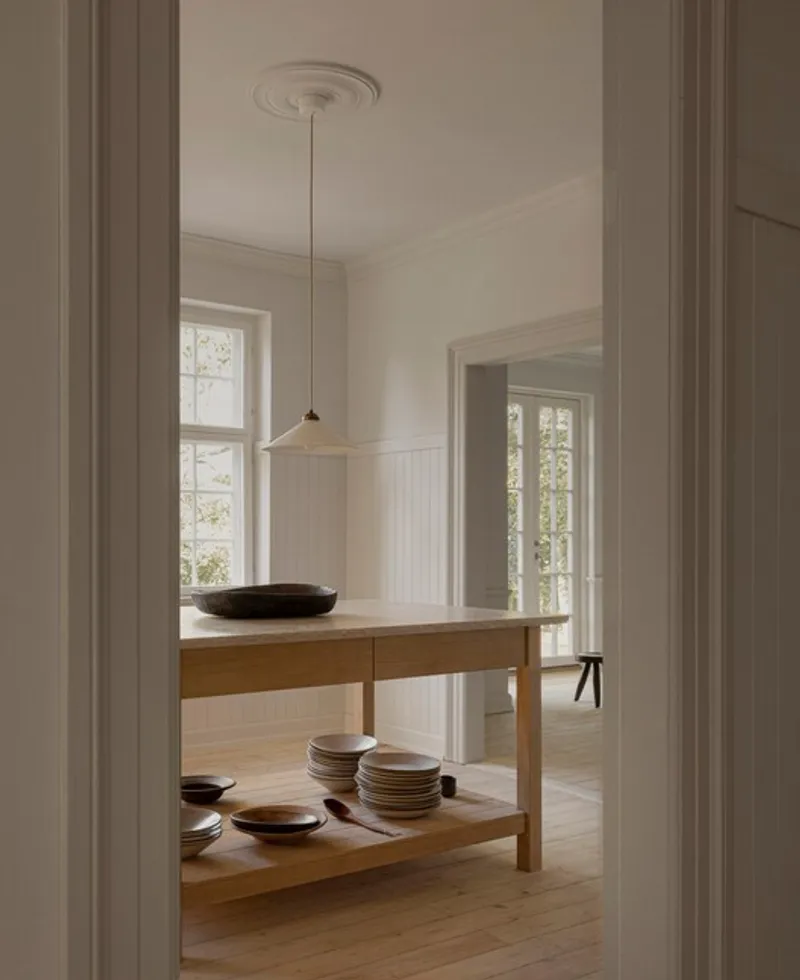
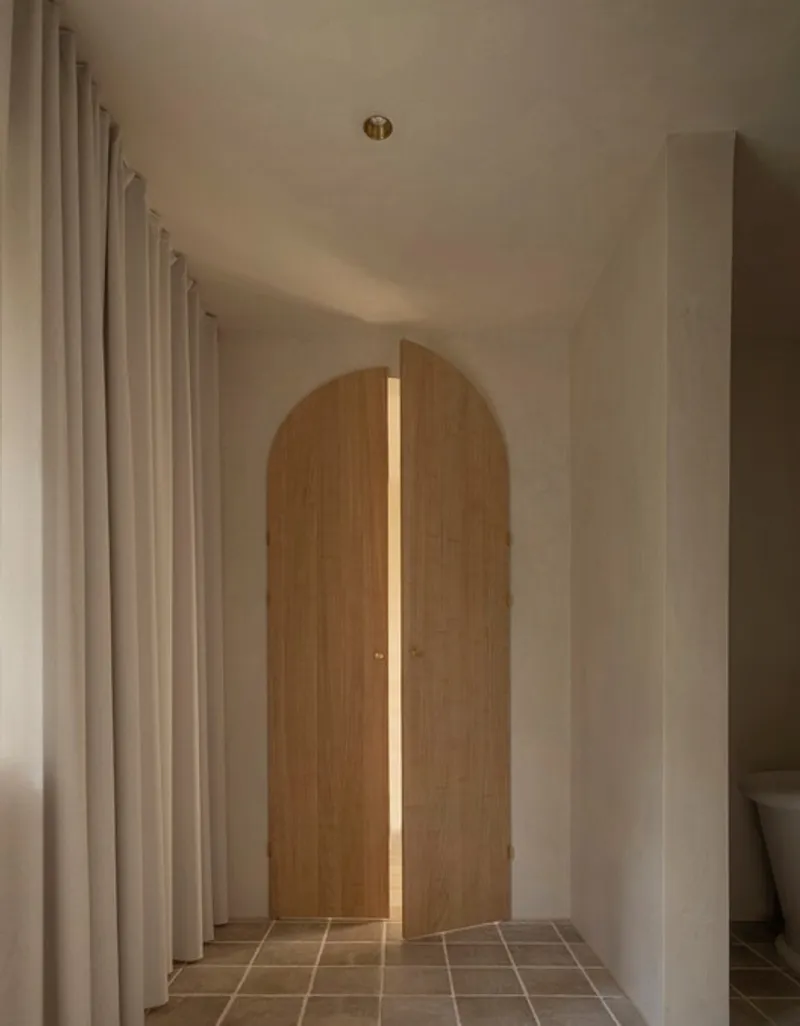
- Bespoke stucco walls, shaker panels, restored doors, brass handles, and handcrafted shutters create cohesion across all floors.
- Furniture throughout the house is custom-designed, considered, and crafted to feel native to the villa’s spirit.
This dedication to detail ensures that every corner feels both historic and refreshingly contemporary—nothing feels imposed; everything feels meant to be.
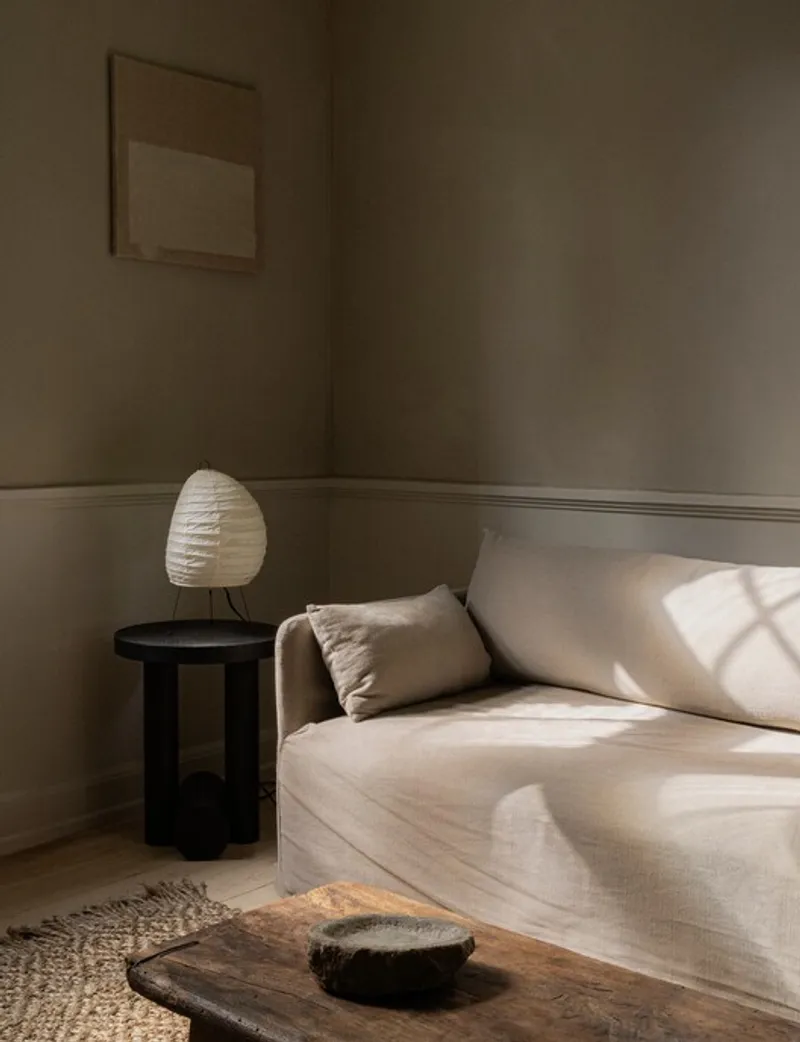
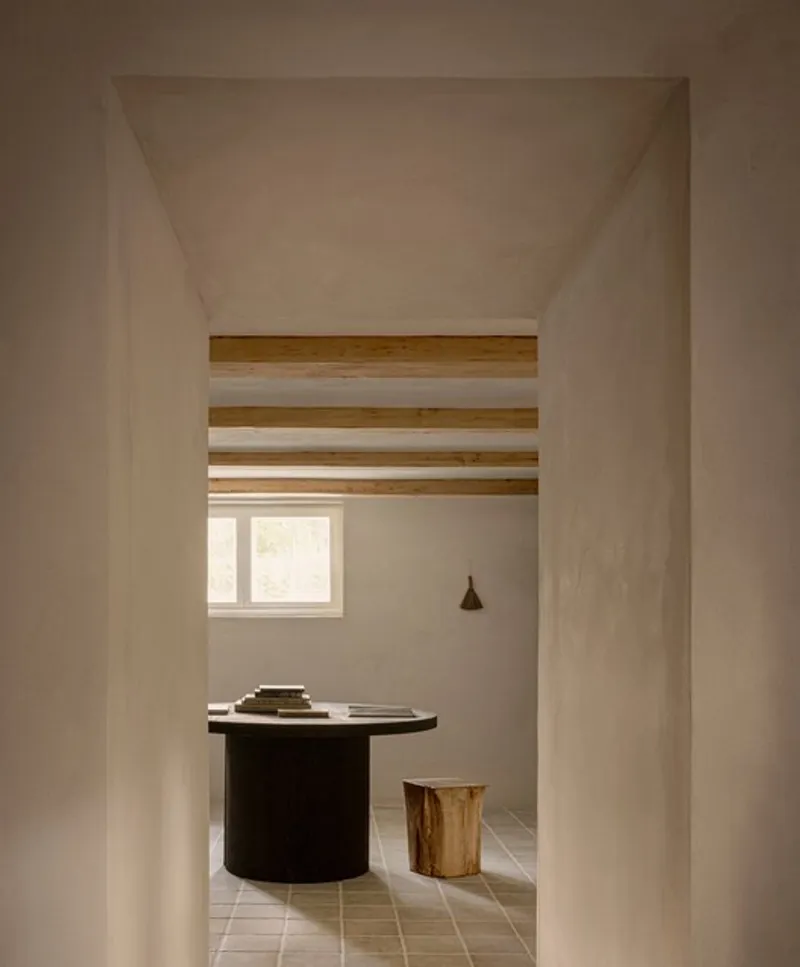
Inviting Social Spaces and Thoughtful Interiors
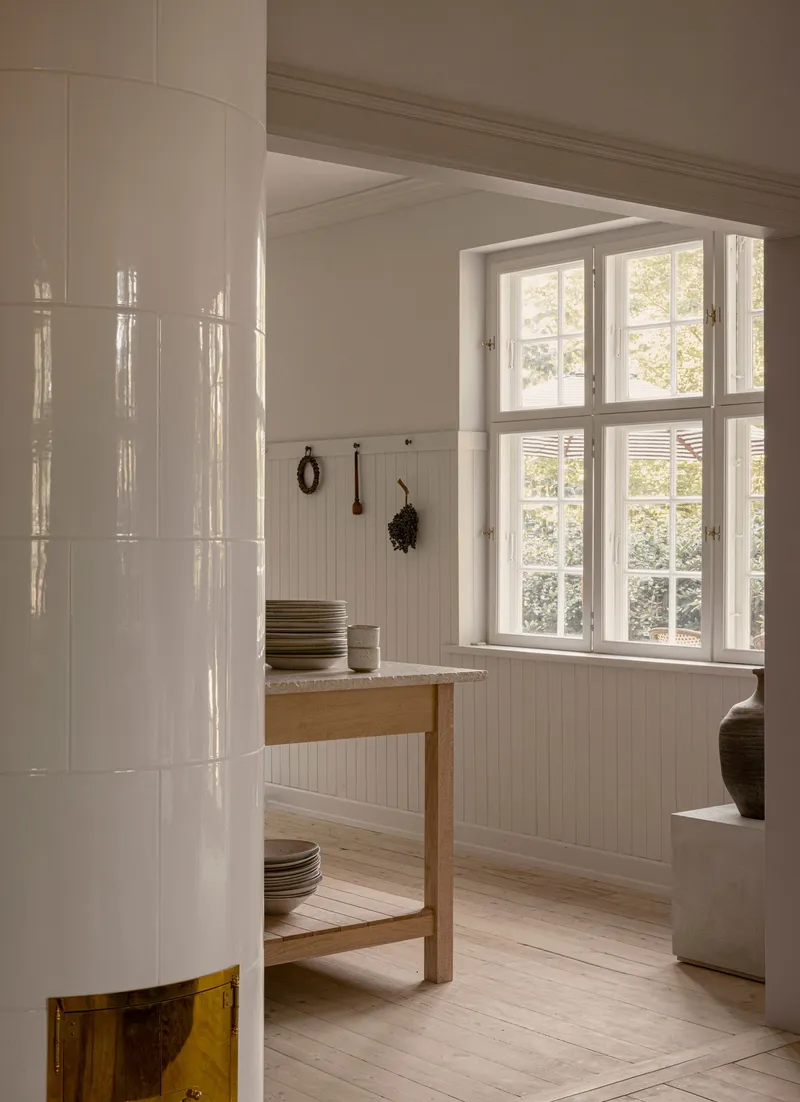
The ground floor is shaped as the welcoming heart of the home. A Swedish tiled stove with brass details anchors the living room, while wood paneling, natural textures, and muted tones create a quiet, comforting environment. Large doors open onto an elevated wooden terrace, inviting nature to flow into daily life.
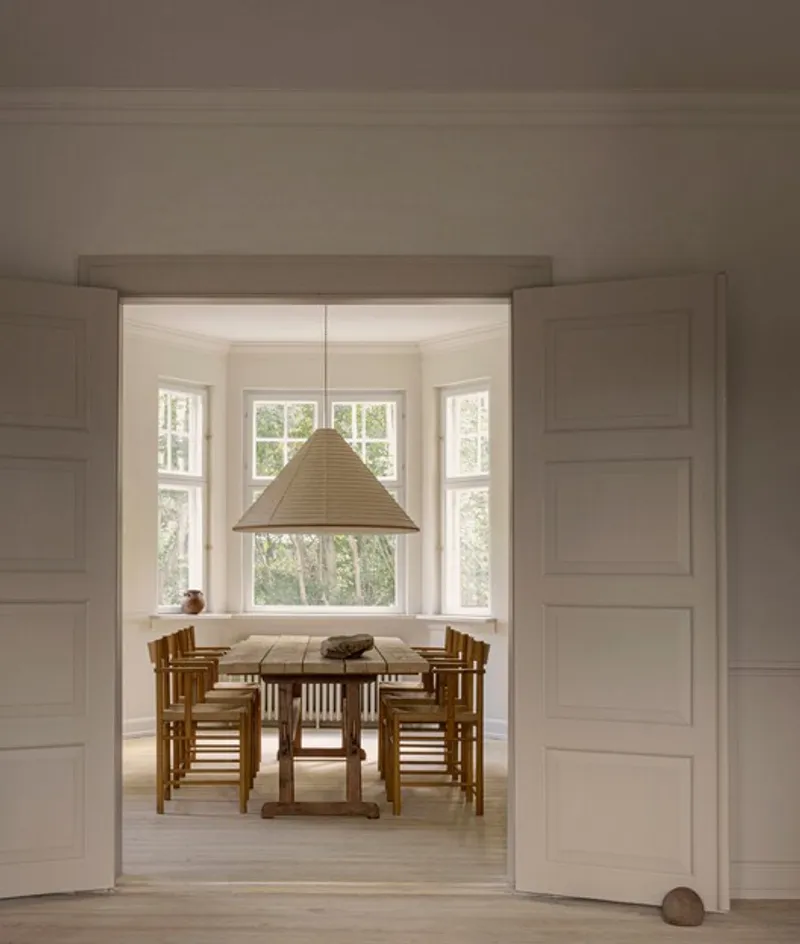
The dining room, set beside a bay window, continues this dialogue with a curated blend of classic and contemporary furniture. It is crafted as a gathering place for meaningful conversations and slow meals—an example of warm minimalism done with precision.
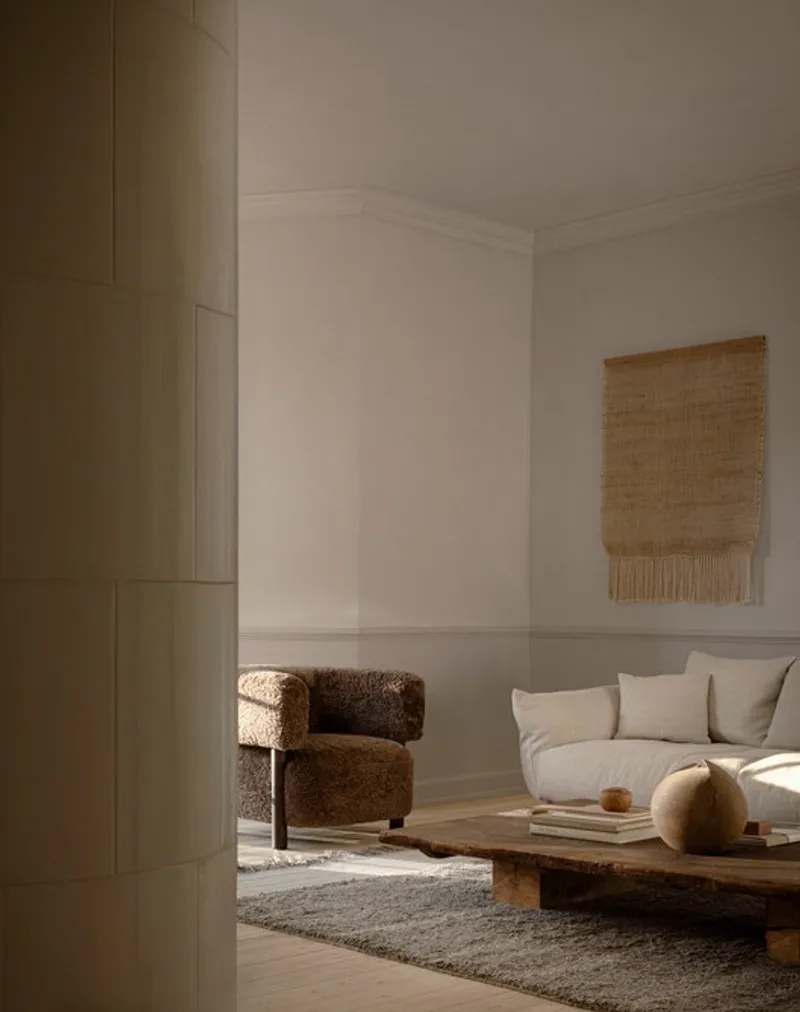
Six Calming Guest Rooms Inspired by Coastal Light
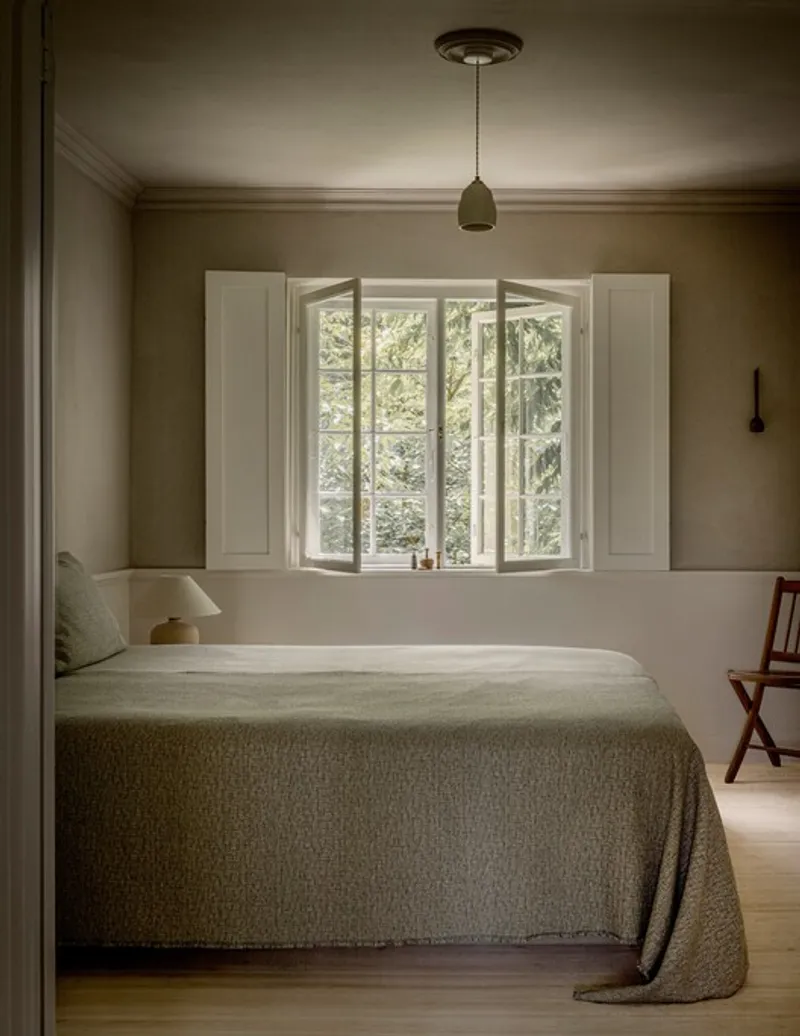
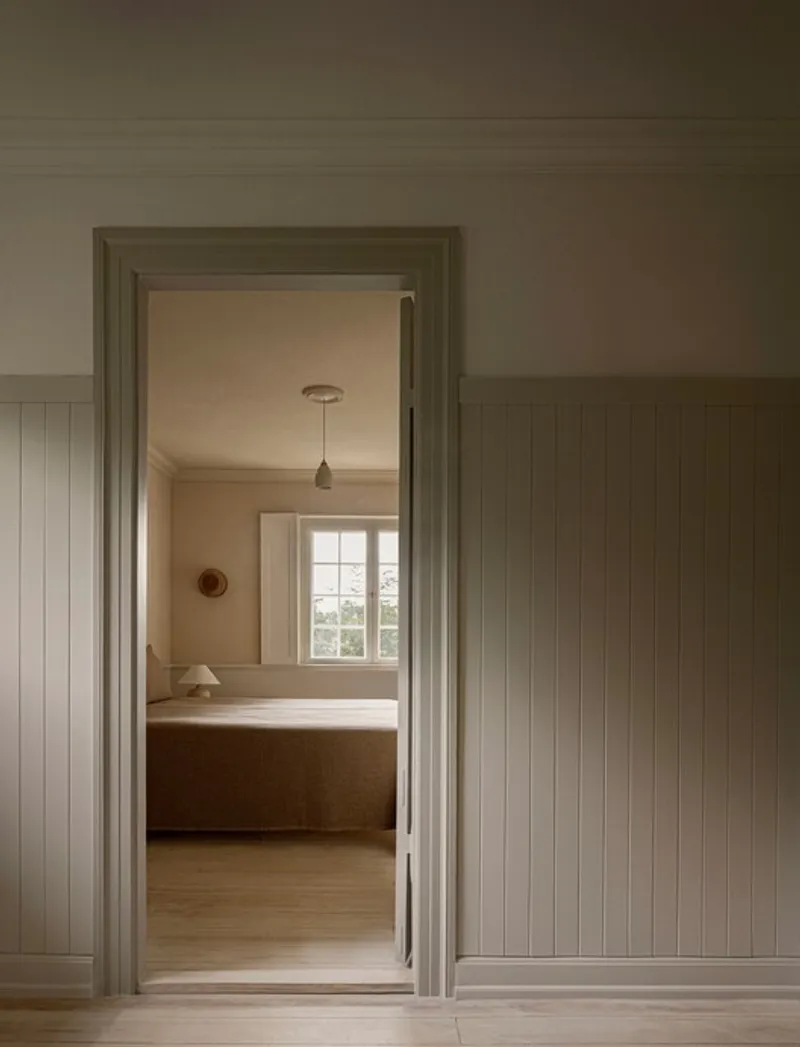
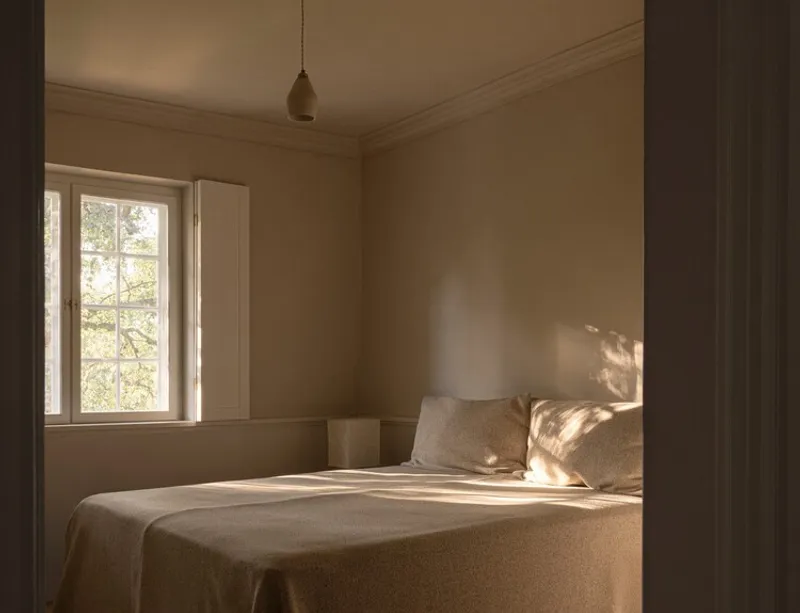
Upstairs, six serene guest rooms reflect the gentle simplicity of boutique hotel living. Each space is intentionally neutral, allowing natural light and architectural character to take center stage.
Features include:
- Handcrafted Italian-inspired shutters
- Bespoke ceramic lighting fixtures
- Muted wall colors made exclusively for the house by St. Leo
- Tailored textiles by Norm Architects
These rooms adapt for families, couples, or groups, blending privacy with gentle openness.
A Spa-Like Basement Rooted in Wabi-Sabi Calm
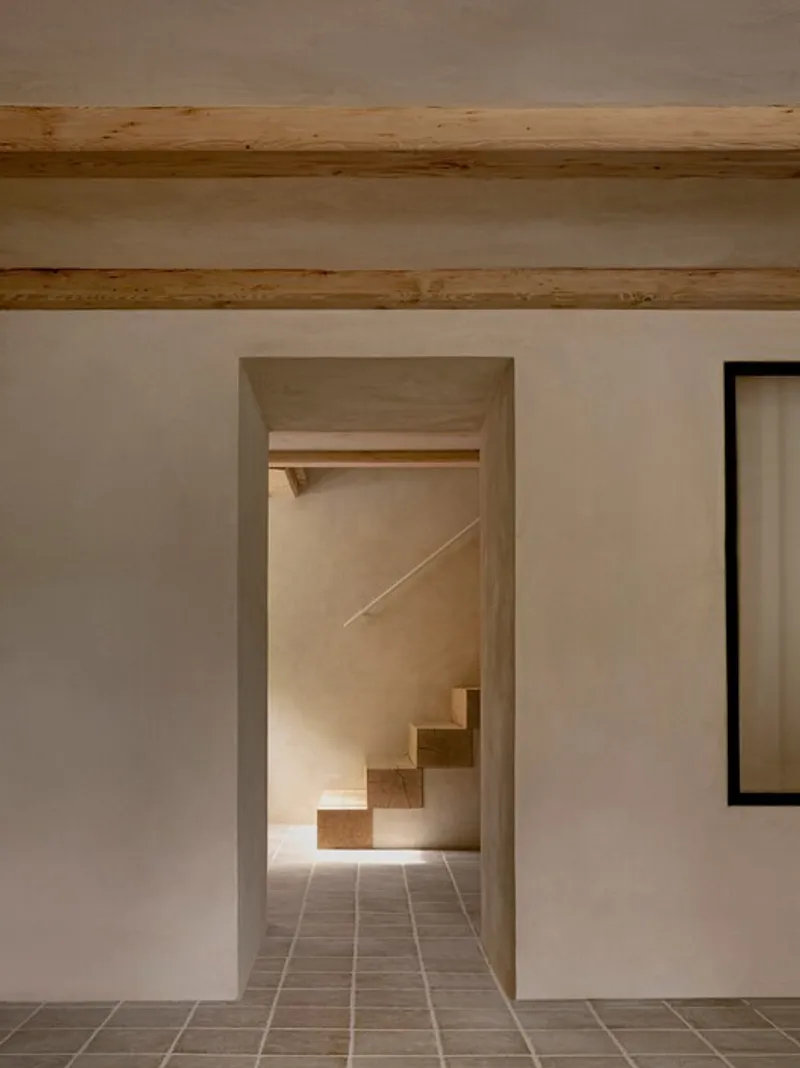
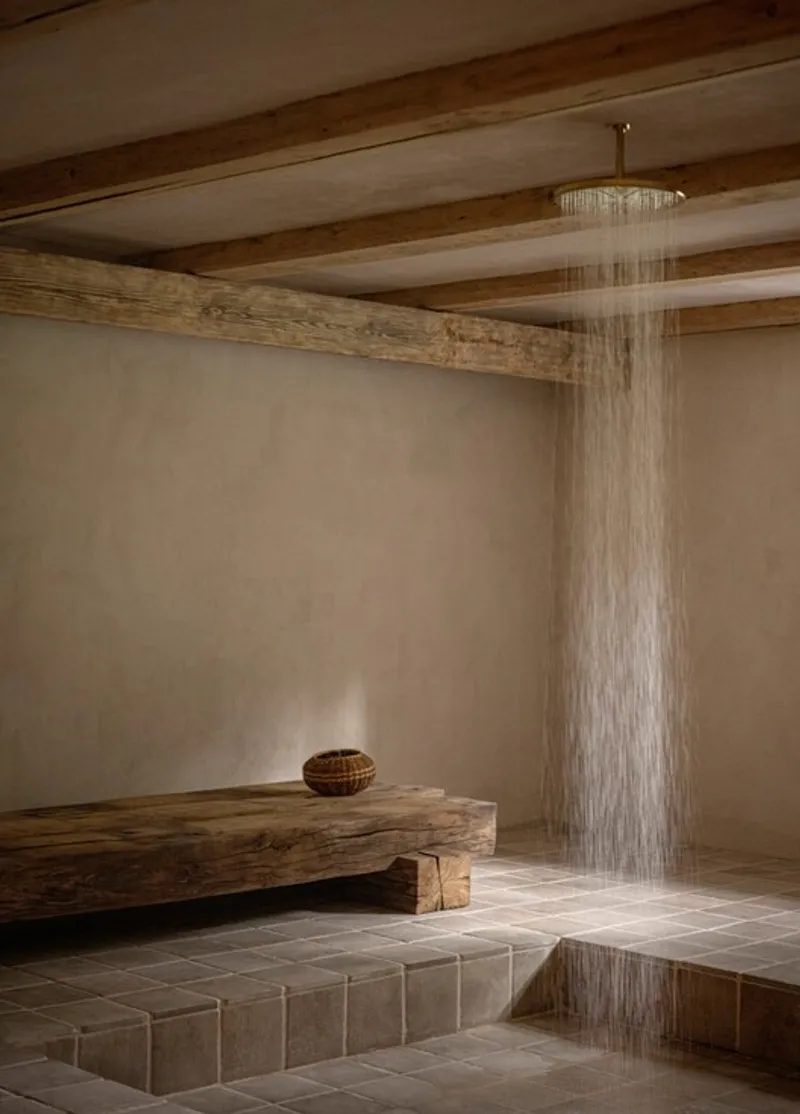
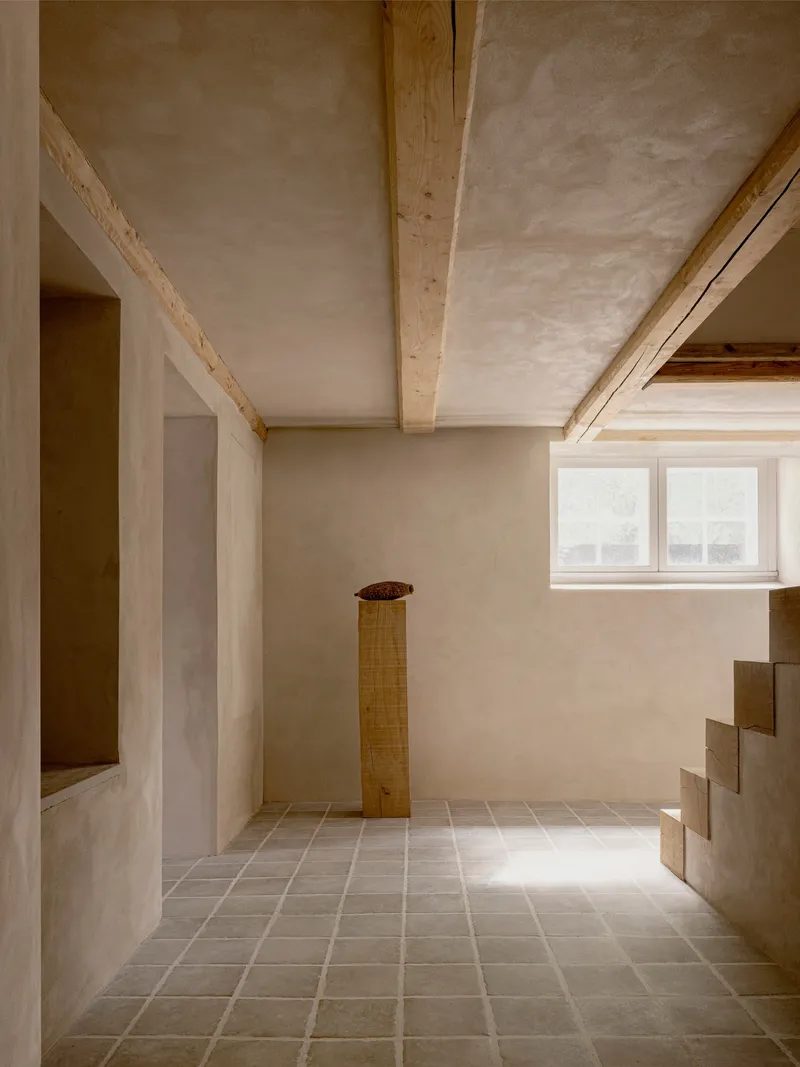
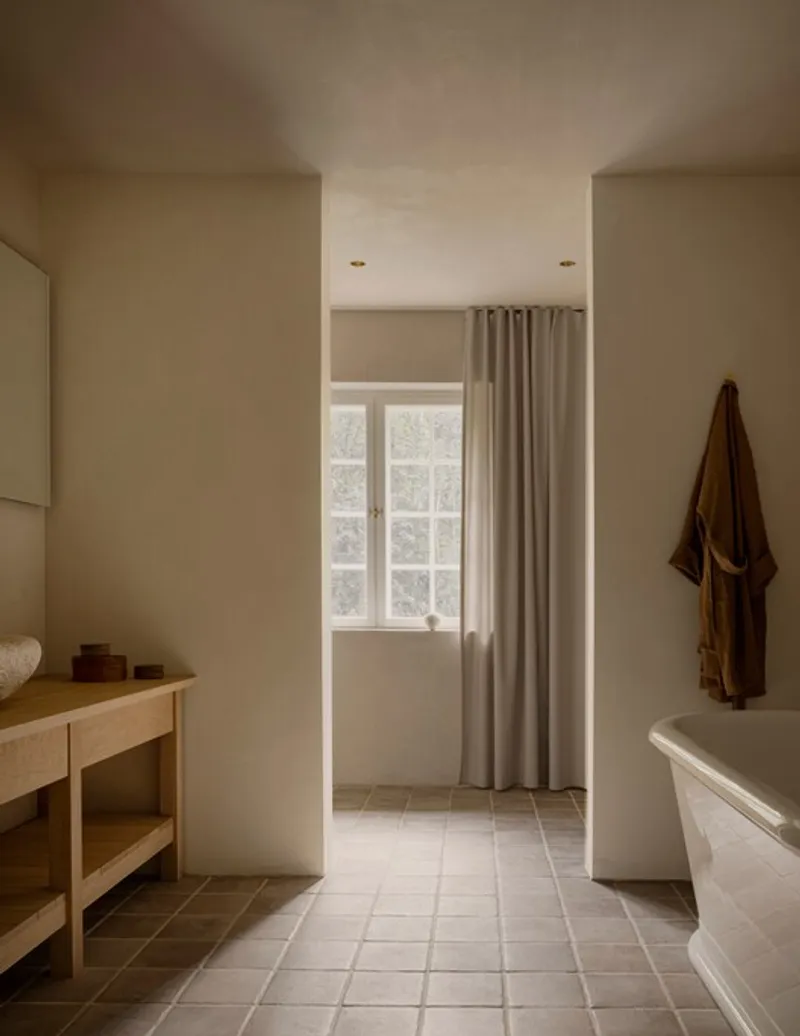
The basement has been transformed into a minimalist spa retreat shaped by natural aging and material honesty. Bare Jurassic lime glue walls, reclaimed pine beams, stone plinths, and solid oak steps create a grounding experience where light and imperfection coexist. Even small functional objects become sculptural elements, enriching the meditative atmosphere.
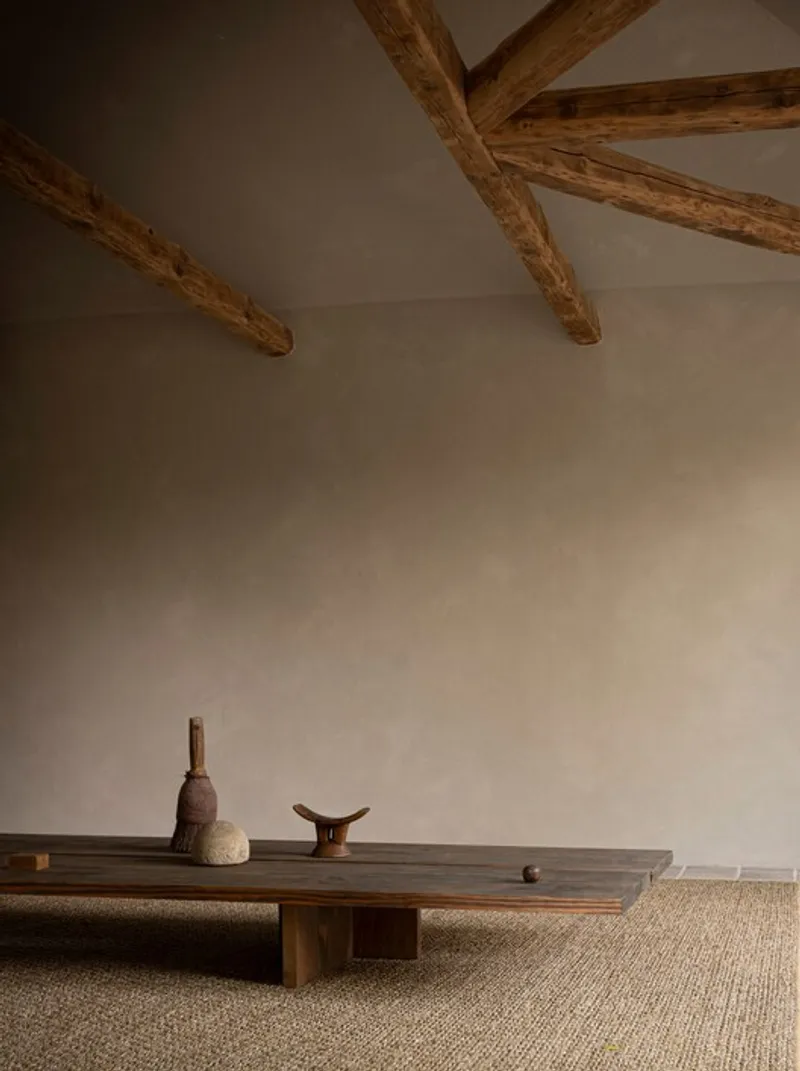
The Studio: From Horse Stable to Design Haven
Once horse stables, the standalone annex now serves as a flexible studio for exhibitions, photography, workshops, and communal dinners. Rebuilt using reclaimed pine beams and lime-finished walls, the studio blends rustic character with refined modernity. A six-meter Douglas fir table anchors the room, offering both practicality and sculptural presence.
This studio also showcases the handcrafted No. 16 ceramic collection, developed in collaboration with Ancher Studio—pieces inspired by sand, stone, and coastal textures.
A Holistic Identity Beyond Architecture
Every detail of Guest House No. 16 extends into a unified brand identity. Engraved stone plaques, stationery, keychains, and signage were designed to reflect the home’s nuanced personality—refined, grounded, and effortlessly timeless.
Conclusion: A Timeless Retreat of Simplicity, Nature, and Craft
Guest House No. 16 is more than architecture; it is an experience shaped by atmosphere and emotion. It embodies the quiet luxury of natural restraint, the warmth of tactility, and the serenity of coastal light. A sculpted balance between intimacy and grandeur, rustic authenticity and refined craftsmanship, past and future.
All the photographs are works of Jonas Bjerre-Poulsen


Popular Articles
Popular articles from the community


Juan García Correa, John González and Claudia Rueda Sink a Circular Amphitheater into a Manizales Engineering Building
On the La Nubia campus in Manizales, Colombia, the S1 Building folds labs and offices into a hillside of ramped lawns that double as a campus route.

U.GA Architects Wraps an Oval Rooftop Pool in Curved Board-Formed Concrete on Busan's Jeollidan-gil
In Busan's Jeonpo-dong, a 454 m² mixed-use block stacks a neighborhood facility, guest rooms and an oval rooftop pool inside spiraling concrete walls.

longwave studio Reorganizes a 112 m² Tainan Apartment Around the Daily Routines of a Family and Two Cats
In Tainan, Taiwan, birch plywood, rust-red furniture and a freestanding plaster wall link arrival, storage, work and family life in one apartment.

Cube Design Draws an Ecological Corridor Between Two Shenzhen Hills with the Nankai Building
Beside Shenzhen's container docks, the Nankai Building pairs stacked balconies with a climbing green screen to connect two hillsides across its height.

Similar Reads
You might also enjoy these articles


Hodi-Mandai Geram
Project Function: Preservation and revitalization of the Intangible heritage and socio-spatial identity of the Hodi by Housing, Cultural Memory Center, Sacred Grove, landscape, local tourism economy


Olio Towers: A Mid-Rise for Performers That Fuses Housing, Rehearsal, and Stage
Located blocks from Houston's Theater District, this modular tower stacks living units around a central performance atrium.

Oasis: Modular Green Housing Carved into Dhaka's Urban Fabric
A shortlisted Plugin Housing entry reclaims unauthorized settlements in Dhaka with stepped concrete volumes, green roofs, and ventilation-driven design.

Black Hole: A Floating Megastructure for the Post-Physical Era
Emiliano Mazzarotto envisions a spherical, self-scaling arena where e-sports, digital hotels, and holographic stadiums replace traditional public space.

Explore Architecture Competitions
Discover active competitions in this discipline

Challenge to reimagine the Iron Throne

Photograph architecture without architects

Illustrate the lost glory of Angkor Wat - Render Challenge

Design challenge to reuse E-waste
Comments (0)
Please login or sign up to add comments
No comments yet. Be the first to comment!