

Gwadar Protest
Corridor to nowhere

Gwadar is a coastal city that lies in the Balochistan province of Pakistan. It is a semi-deserted hammerhead-shaped landmass on the western side of Makran. Having two perfectly shaped, natural semicircle bays on both sides namely Deymi Zirr (East Bay) and Paddi Zirr (West Bay), this city is significant due to the sea route. The city is situated about 120 km southwest of Turbat, and 320 Km northeast of Cape al-Hadd in Oman while the port city of Chabahar in Iran, which is also known as Gwadar’s sister port city, is situated about 170 km to the west of Gwadar. The geographical strategic location of Gwadar is of great importance as it is situated at the place of inter junction between three economically powerful locales which include South Asia, Central Asia, and the Middle East.
In 2015 the declaration of China-Pakistan Economic Corridor (CPEC) led Gwadar to be displayed as the doorway to Chinese attempt to change the destiny of both Pakistan as well as the entire region. Thus, Gwadar, has come colossal into the spotlight from that point forward. Since then China has invested in the development of the port town with a great deal ranging from a $230 million Airport to a 300-megawatt coal-terminated power plant, along with many more different sorts of undertakings that go under the CPEC umbrella.
Gwadar was a laid-back city that was in the process of development. The people of Gwadar lacked basic necessities like water, electricity, and many more. However, after the initiative of CPEC, instead of betterment of the local populace, the situation worsens. In spite of the inundation of billions of dollars from Chinese interest into the investment of CPEC in Gwadar town, the locals are facing poverty like never before.[1] Their livelihood is affected as they are not allowed to fish or find other job prospects within the town due to security purposes. The authorities justify this act by stating that it is necessary for the security of the foreign delegates and worker[2] s.
The people initiated protesting when the economic crisis befallen on them In November 2021, a large-scale protest started on the coast of Gwadar, Balochistan by the local populace, demanding their rights and better privileges. The movement began as “Gwadar Ko Haq Do” (Give Gwadar its rights) and soon became a large-scale protest including men, women, and children of all ages, marching on the main streets of Gwadar towards the CPEC Gwadar port, chanting slogans against the government and demanding clean water, electricity, better education facilities, removal of all unnecessary barriers and riddance from the “trawler mafia” which was affecting the income of the local fishermen community. Fortunately, after a struggle of nearly a month, the local government of Balochistan agreed on taking positive action on the demands of the protestors as the Prime Minister of Pakistan Imran Khan declared the demands of the protestors as “legitimate”, thus a month-long protest by the local populace of Gwadar came to an end for the time being. But the dispute between the locals of Gwadar and the government over CPEC still continues as the fencing project that comes under Gwadar Smart Port City Master Plan 2017-2050, in which security fences, are to be laid down around 15000-acre land of Gwadar city is still posing a threat to the basic rights of the local community of the city of Gwadar.
By analyzing the history of the land and the past protests. It was concluded that longer duration protests are the most optimal for this situation. Resist is selected as the protest typology. A program is generated to create awareness regarding the rights of people and how they can be demanded effectively. The program mainly focuses on gathering spaces where people can interact and attend conferences in masses and an activity planting mangrove trees to express their resistance to the imbalance of development of Gwadar as a coastal city. Space for the accommodation of the protestors and auxiliary spaces like washrooms, store rooms are not to be treated as main programs.
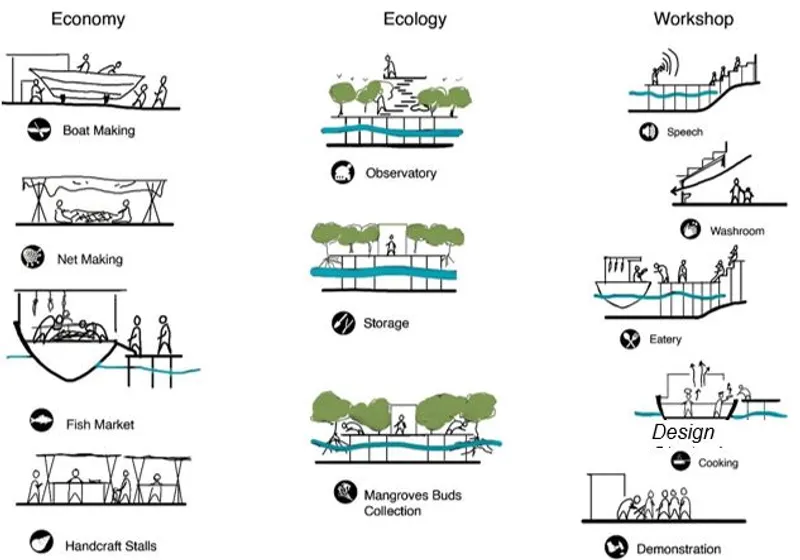
The initiative of the design is to give the local community a platform from where they can protest freely without interruption in their daily life activity, furthermore, the program is derived from the basic demands of the protestors, focusing on the betterment of the community. The design consists of a floating platform that is made from a boat by reassembling its form. The structure of the floating platform is such that it can combine with other similar platforms from both sides and form a long chain of connected space if needed. The floating structure is designed for a public gathering where they can socialize, protest and attend conferences without affecting the streets or any city activity. Furthermore, during the day the fishermen can also fetch fish and serve it freshly on the platform which results in the community uplifting and at night the platform can be used as sleeping pods for the protestors. The platforms will act as rides for the masses to the specific site where the mangrove plantation will take place. The structure will be made from local materials by the locals and after the protest, it can be used as a tourist ride, it is a matter of a couple of hours to assemble or disassemble the modules.

The program emphasizes three major factors that unite and gives awareness to the community.
The idea revolves around the upliftment of the locals.
The program mainly comprises:
Workshops that include boat-making and fishing workshops help the locals understand their rights.
Mangrove plantation encourages the growth and resistance of the locals.
Floating structures help them in their protest and also serve as a means for fishing.

The program is derived from a micro-study of the local environment, their issues, and the economy that is being damaged.
Local materials are encouraged as boat making is one of the major occupations of the locals of Gwadar.
This helps in increasing the employment rate of the locals.
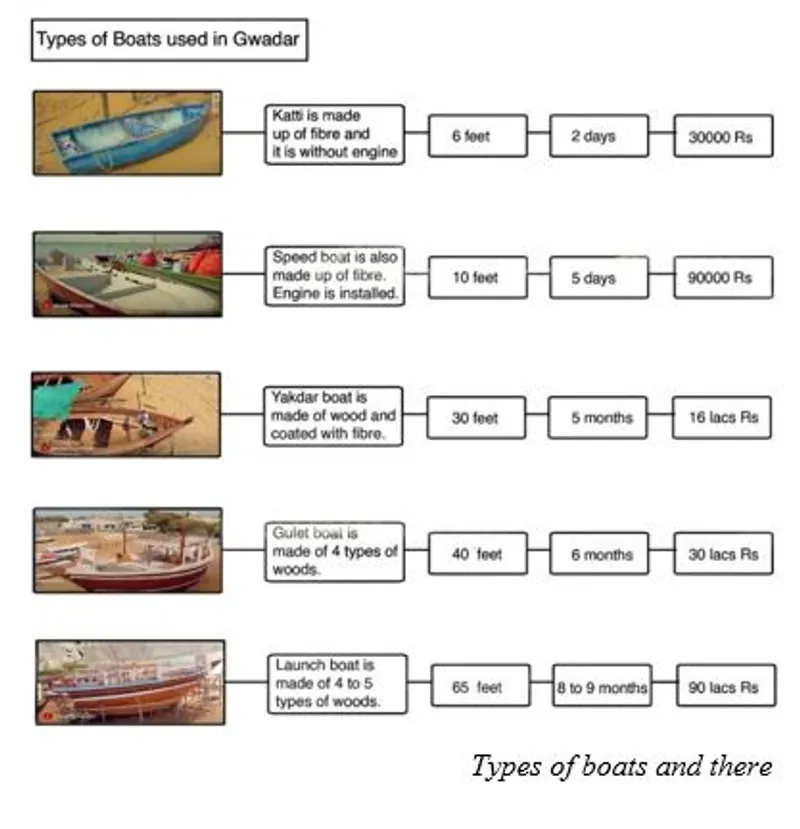
Different types of woods are used in boat making in Gwadar. The main skeleton, which is considered the core of the ship is made with premium quality woods, which are more expensive than the woods that were used in the rest of the making of the boats.
Different types of boats are made by the locals of Gwadar ranging from 6 feet to 65 feet.

Development:
Observatory, floating spaces in the mangrove forest and nursery are few of the many possibilities that were contemplated upon.
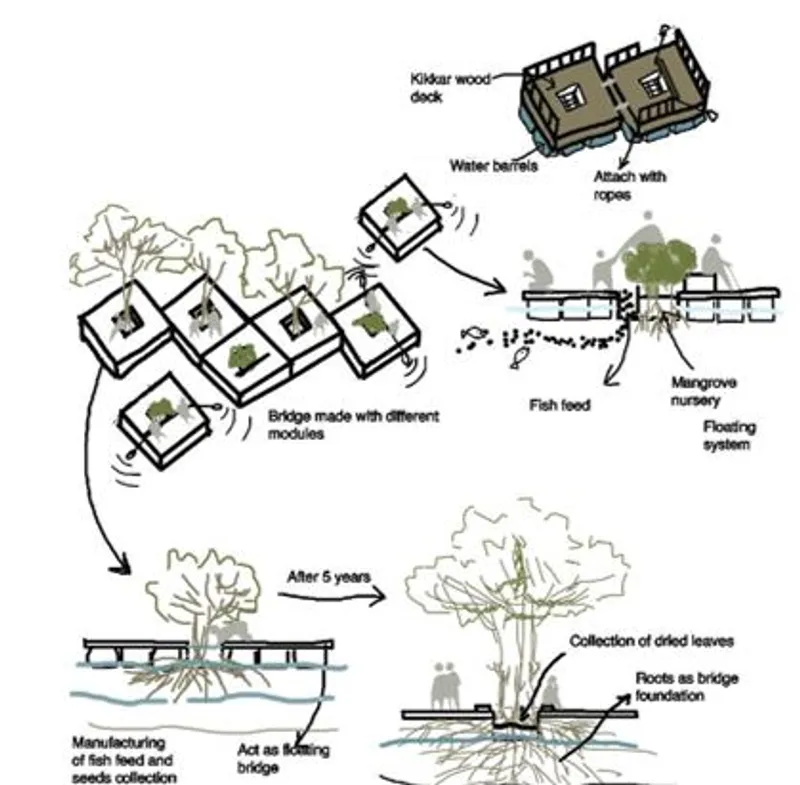
The idea of a floating structure was considered in the final as it can alter the route for the protest as well as generate economy for the locals.

The idea of re-programmed existing boats into the required program with some interventions was also considered.

Towards the final design:
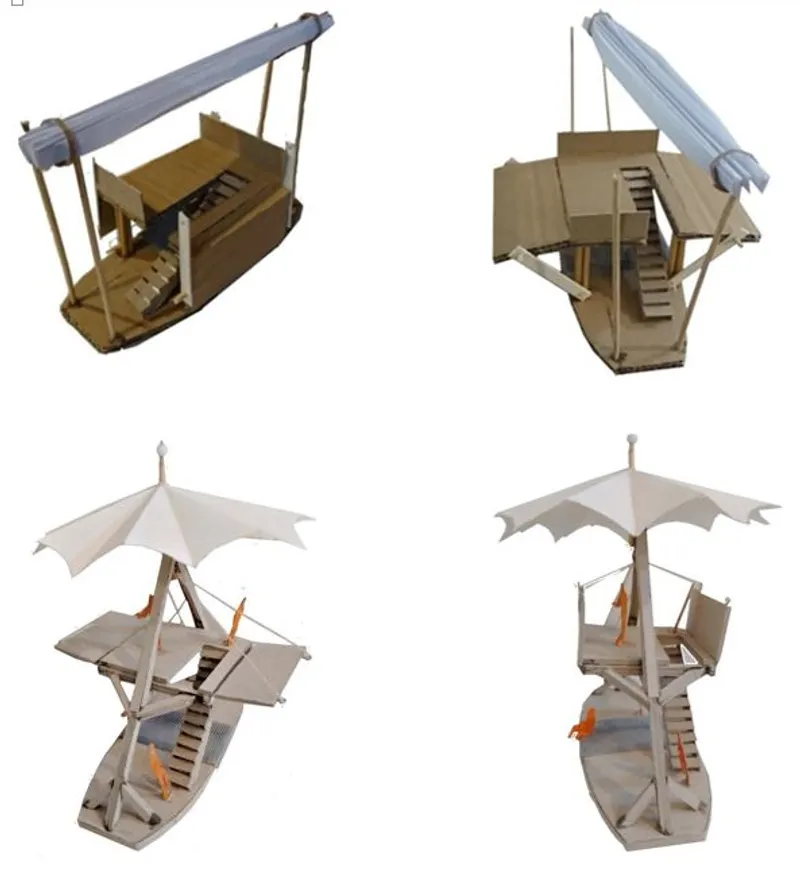
A floating structure with recycled wood is considered which can be made by the locals and can also be used after the protest. Structures can be combined with one another with the help of hinges and supports to form a large space that can be needed for a large audience. It will consist of a base along with an additional floor and a retractable textile roof for shade. The entire structure will be designed around a central core and will be floated on recycled barrels.
 Mockup Study Models:
 Bibliography:
https://thediplomat.com/2021/12/gwadar-protests-highlight-cpecs-achilles-heel/
https://ecfr.eu/article/corridor-to-nowhere-the-gwadar-protests-and-the-pakistan-china-relationship/
https://theprint.in/opinion/in-gwadar-protest-you-are-missing-out-war-within-pakistani-establishment/789574/
https://www.orfonline.org/expert-speak/the-gwadar-protests-balochistan-stands-up-for-its-rights/
https://www.thenews.com.pk/latest/917269-gwadar-protest-comes-to-an-end-after-32-days
https://www.lowyinstitute.org/the-interpreter/pakistan-and-china-unhappy-union-gwadar
https://www.hellenicshippingnews.com/significance-of-gwadar-port/


Popular Articles
Popular articles from the community


Cube Design Draws an Ecological Corridor Between Two Shenzhen Hills with the Nankai Building
Beside Shenzhen's container docks, the Nankai Building pairs stacked balconies with a climbing green screen to connect two hillsides across its height.


Aquadapt: An Underwater Habitat That Rewrites Its Rooms by the Hour
Curved modules ring the seabed while one shell shifts from breakfast room to cinema, farm and football pitch as residents' needs change.

Singing Woman: An Opera House That Performs Before the Curtain Rises
Ovidiu Cristian Pavel's conceptual opera house translates Estonia's choral identity into a sculpted waterfront landmark facing the Baltic Sea.

graciastudio Turns a Viewless Tijuana Lot Inward Around a Courtyard of Concrete, Timber and Trees
In Tijuana, Jorge Gracia's GA2 House stacks a timber-clad private floor over exposed concrete and replaces a missing view with a planted interior patio.

Similar Reads
You might also enjoy these articles
The Rhythm of Seasons
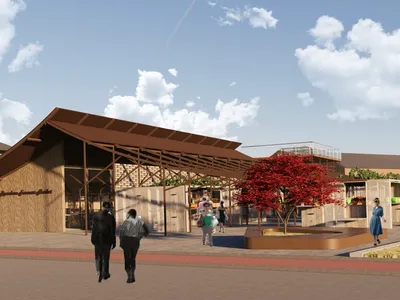
A Farmers' Market Connecting Nature and the City
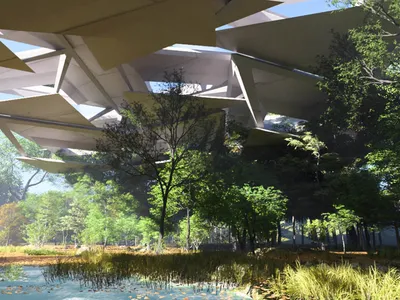

More Than a Building-Designing a Living System
More Than a Building-Designing a Living System
Base Beyond
DESERT COMPOUND ARID: TOURISM OF ABSENCE AND ABUNDANCE

Explore Green Corridor Competitions
Discover active competitions in this discipline


Challenge to reimagine the Iron Throne

Photograph architecture without architects

Illustrate the lost glory of Angkor Wat - Render Challenge

Design challenge to reuse E-waste
Comments (0)
Please login or sign up to add comments
No comments yet. Be the first to comment!