
Hamilton Road Renovation and Extension by Magri Williams Architects
Magri Williams Architects renovate and extend a London home, creating a minimalist, light-filled family space with sustainable, exposed blockwork design.


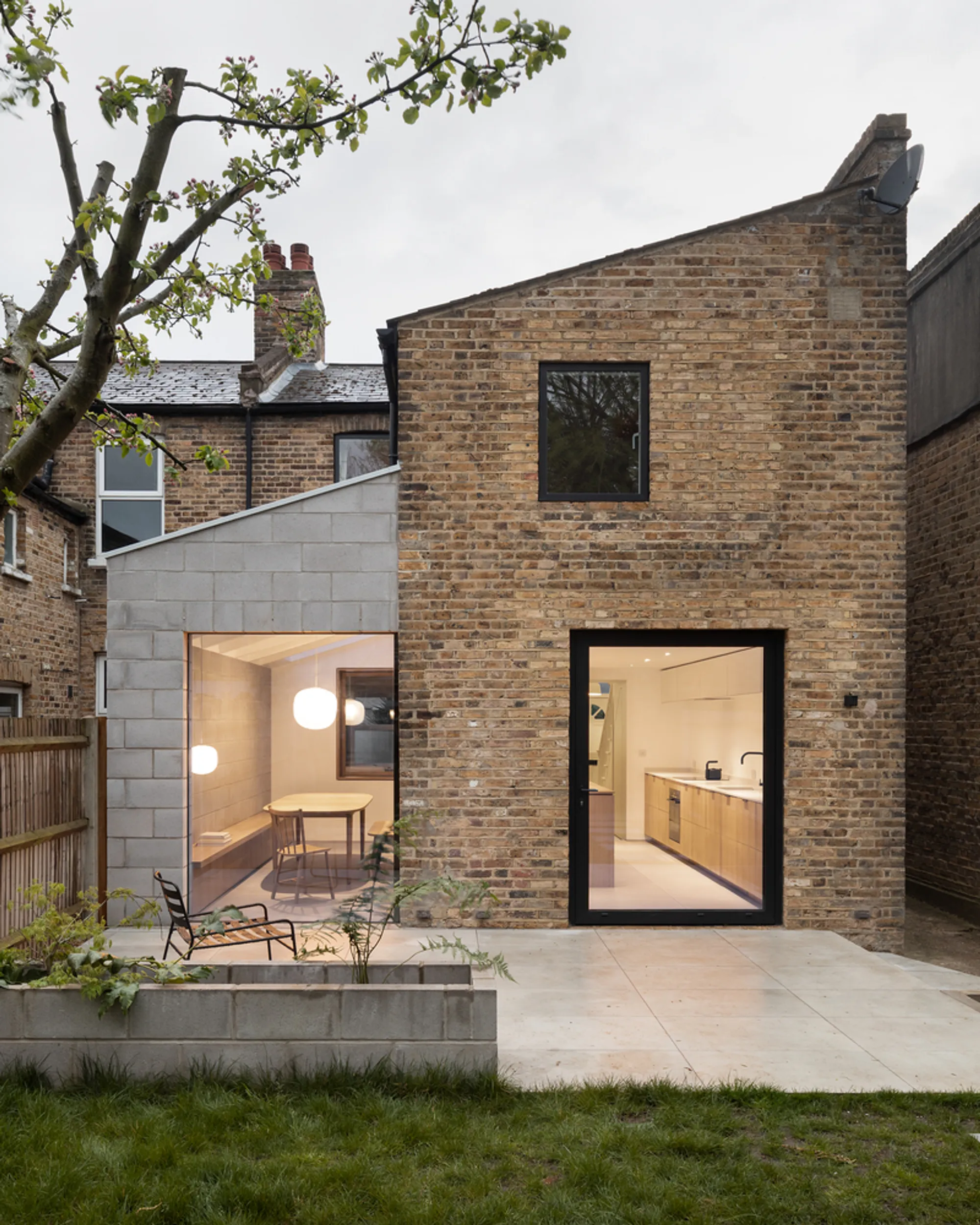
Magri Williams Architects has completed the thoughtful renovation and extension of a family home on Hamilton Road in South London, United Kingdom. Designed to accommodate the evolving needs of a growing family, the project was approached in two distinct phases: a full house renovation followed by a side extension, ensuring minimal disruption and maximum sustainability.
Phased Construction for a Growing Family
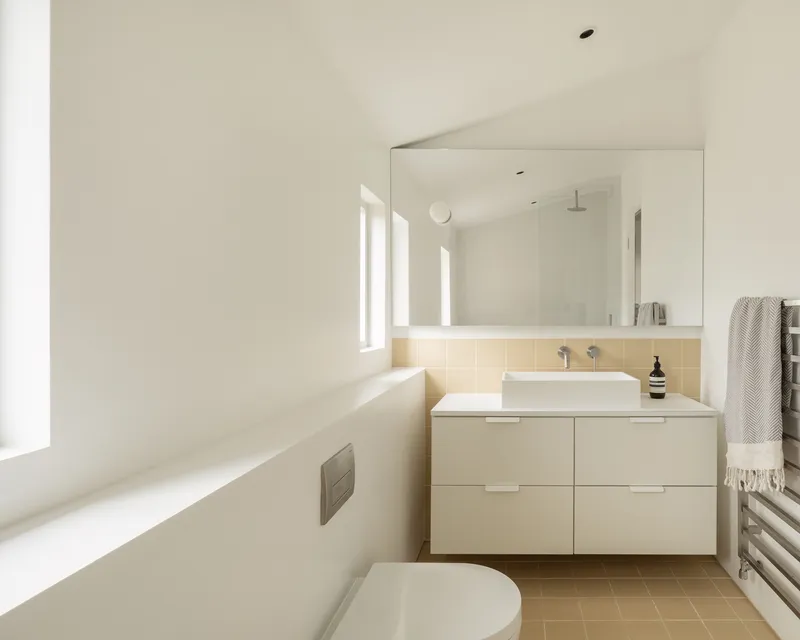
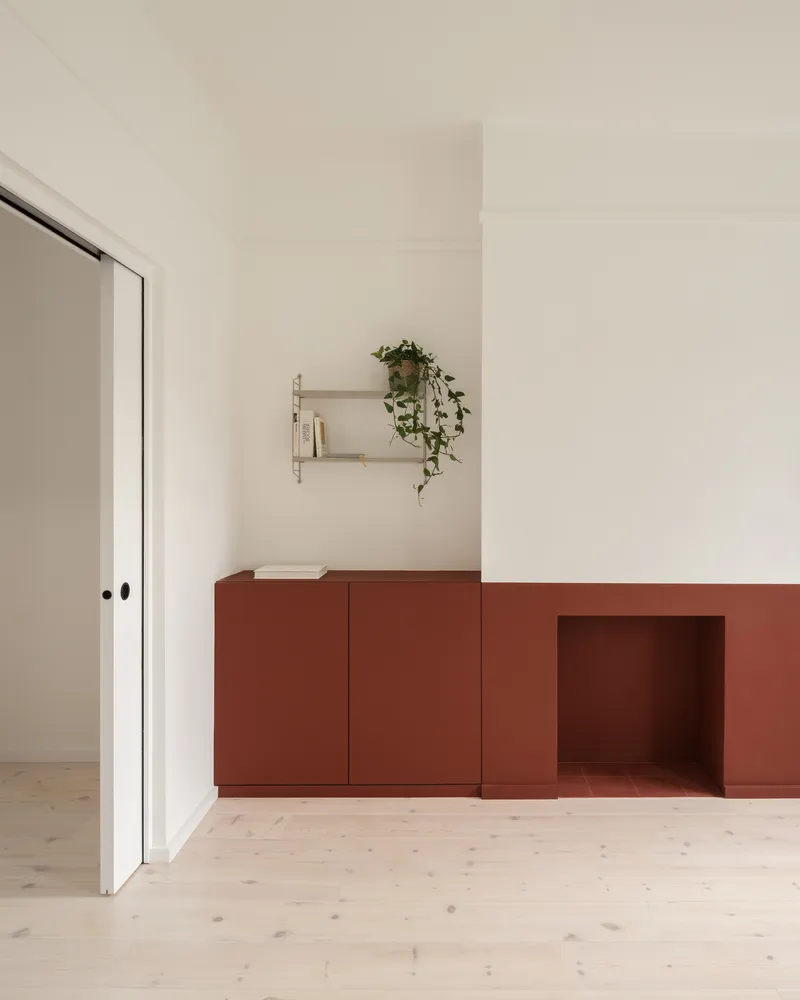
The homeowners needed a more spacious layout that could adapt to modern life, including dedicated areas for remote working in response to post-Covid realities. The original ground floor layout — featuring a front and rear reception room with a small kitchen — was reimagined. The architects cleverly divided the rear reception room to create a ground floor study, shower room, and hallway storage, optimizing space without losing functionality.
Seamless Integration of Extension and Existing Structure
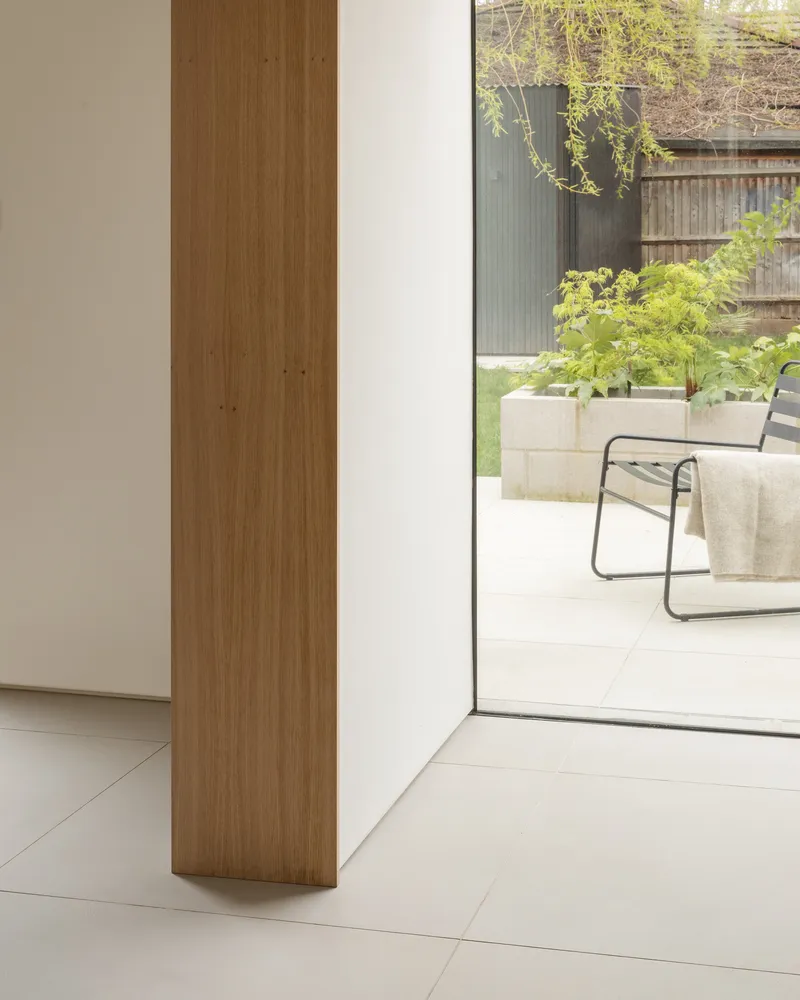
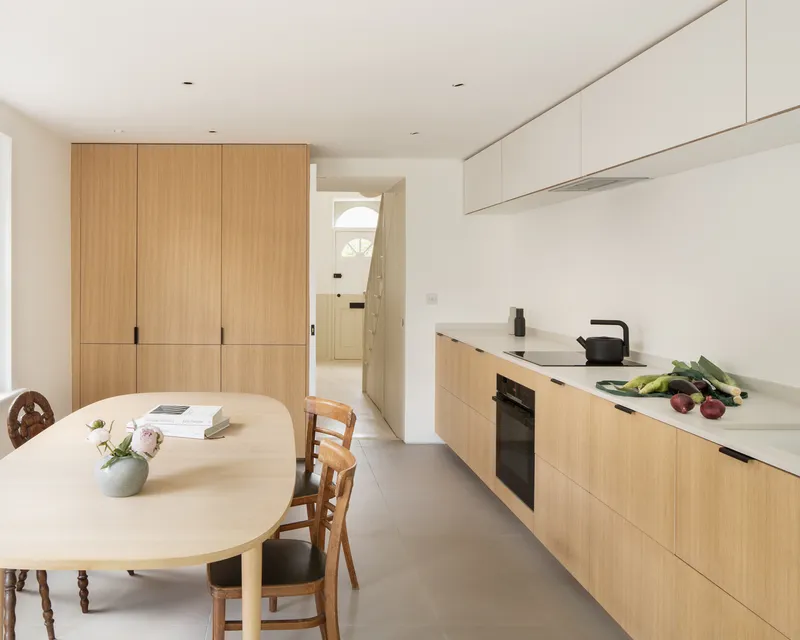
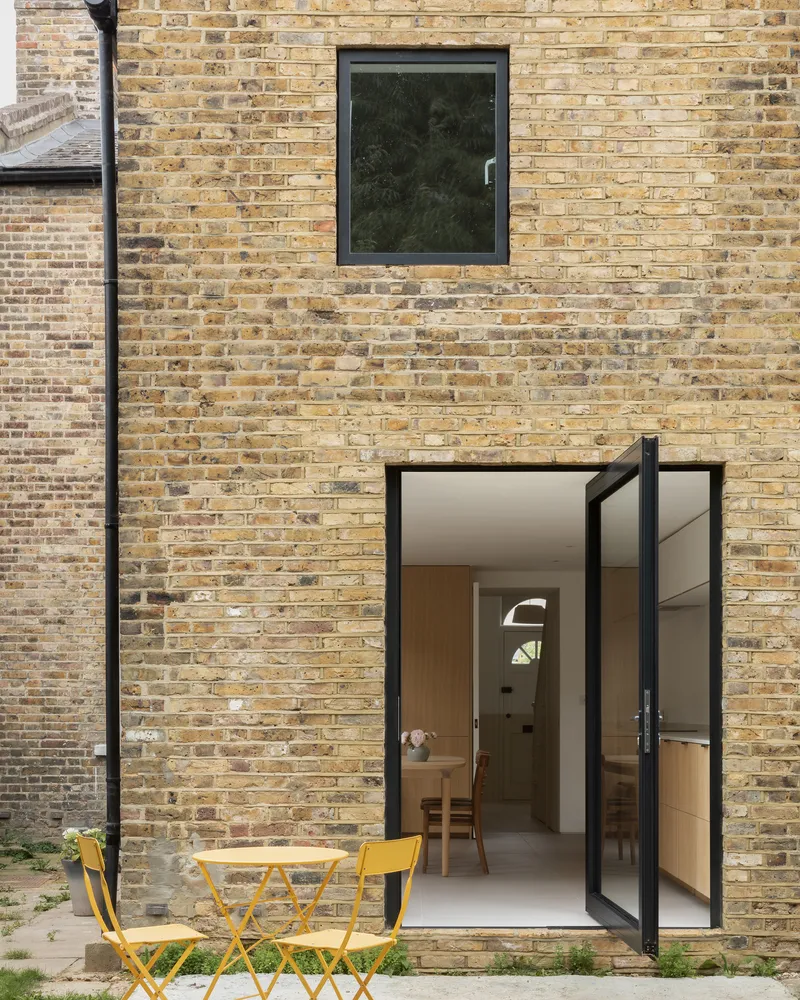
The new extension opens the rear of the home, introducing a bright kitchen and dining area that seamlessly connects to the garden. Key features include a large fixed window and a mirrored pivot door, maximizing natural light and blurring the boundary between indoor and outdoor living. Exposed timber rafters and a prominent roof light enhance the sense of openness and introduce dynamic natural illumination throughout the day.
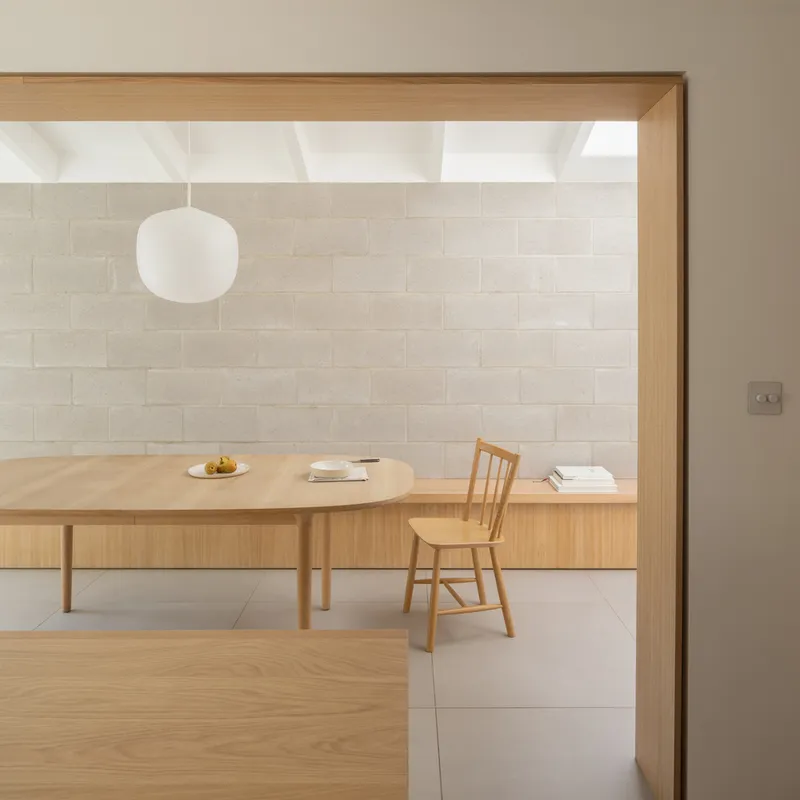
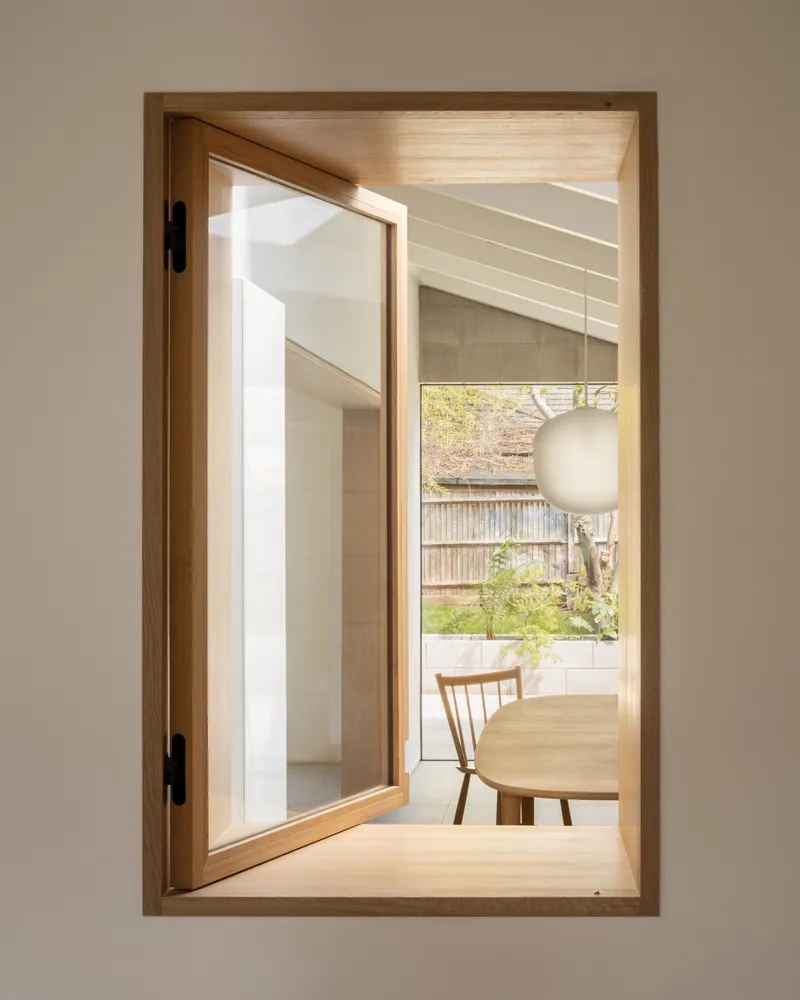
An internal window was incorporated into the design to visually link the extension back to the original house, framing views across the dining space to the lush garden beyond.
Practical and Sustainable Construction Strategies
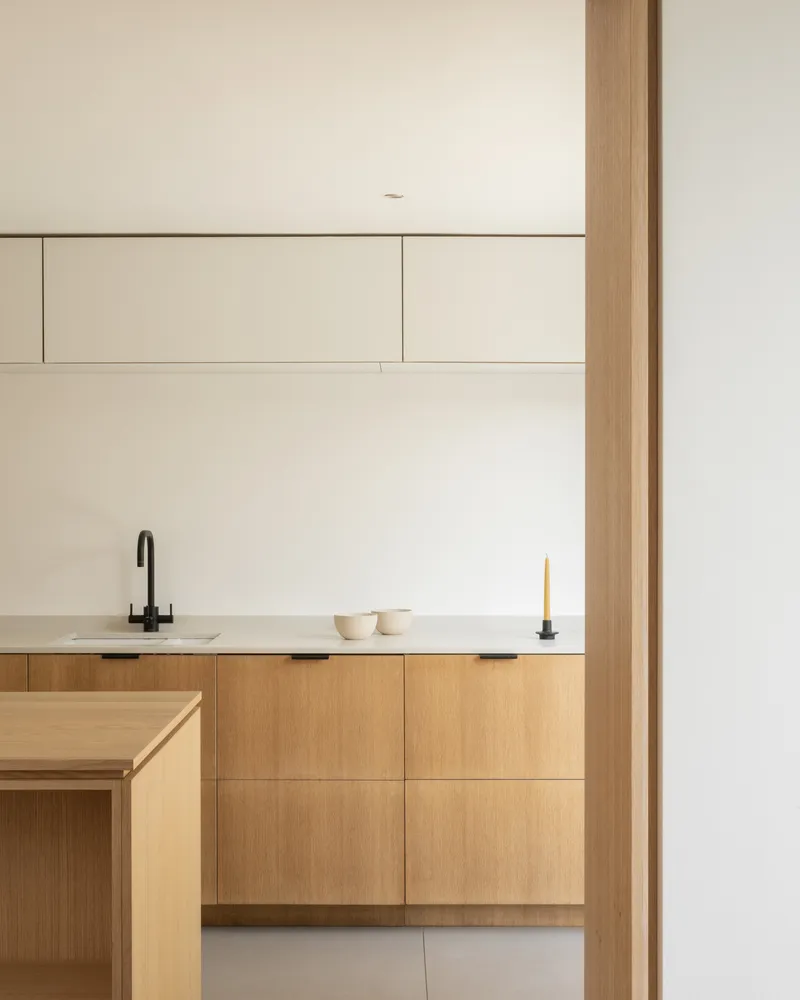
Building in two stages posed unique challenges, especially with the clients living on-site during the second phase. To avoid repetitive work and unnecessary costs, the architects meticulously planned each phase. In the first phase, half of the kitchen was completed, with finishes and materials carefully chosen to allow for seamless expansion during phase two.
Large format tiles were selected for their continuity and durability, while oak timber — purchased during the first phase — was later used to craft a matching kitchen island and bespoke joinery bench, ensuring material consistency.
Minimalist Aesthetic with Industrial Elegance
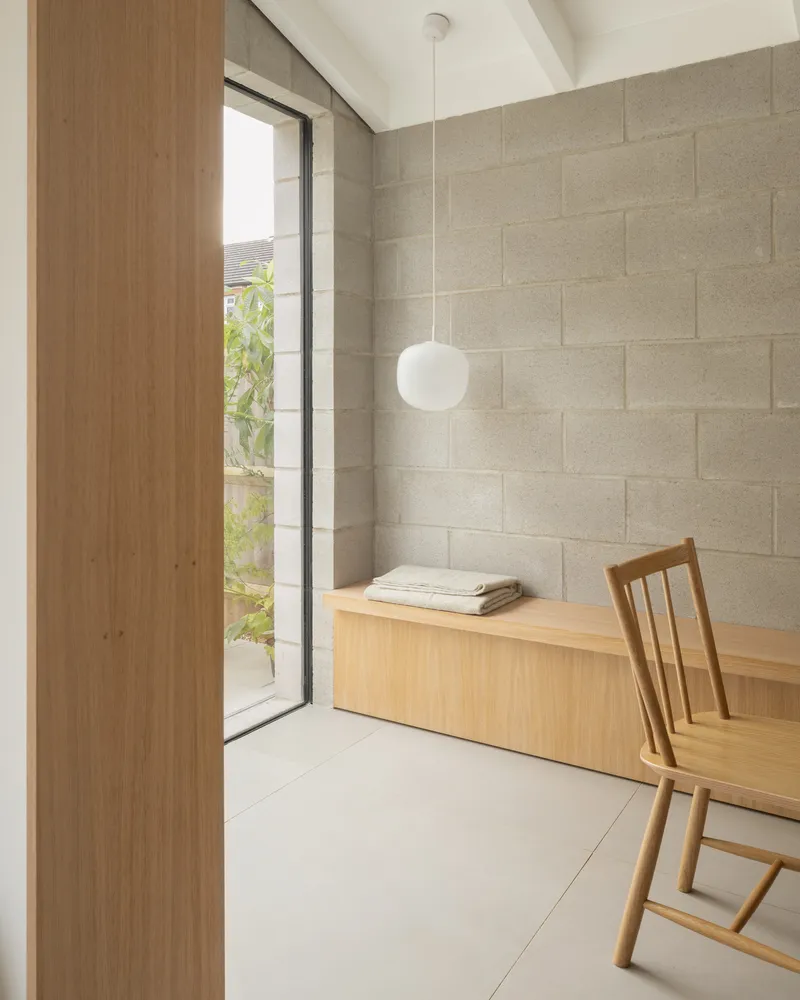
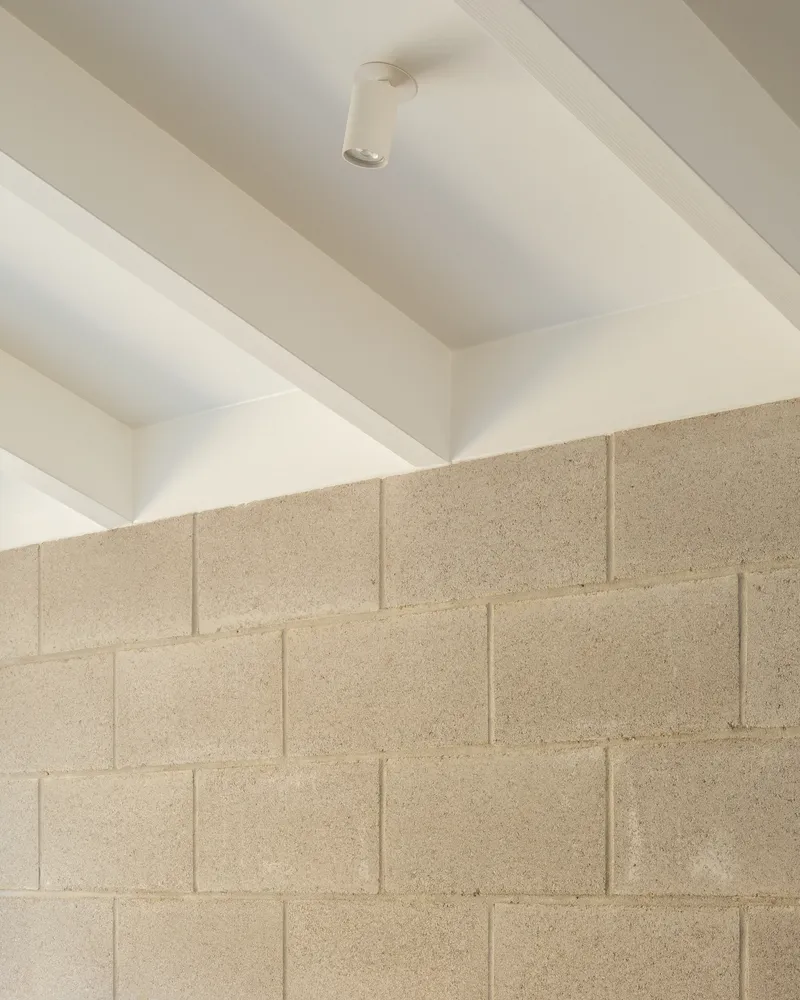
The design follows a “less is more” philosophy. The extension’s fair-faced concrete block walls, both internally and externally, were left exposed. This required precise detailing to hide rafters and lintels, but eliminated the need for internal finishes such as plaster, skirting, or cornices — ultimately reducing construction waste and environmental impact.
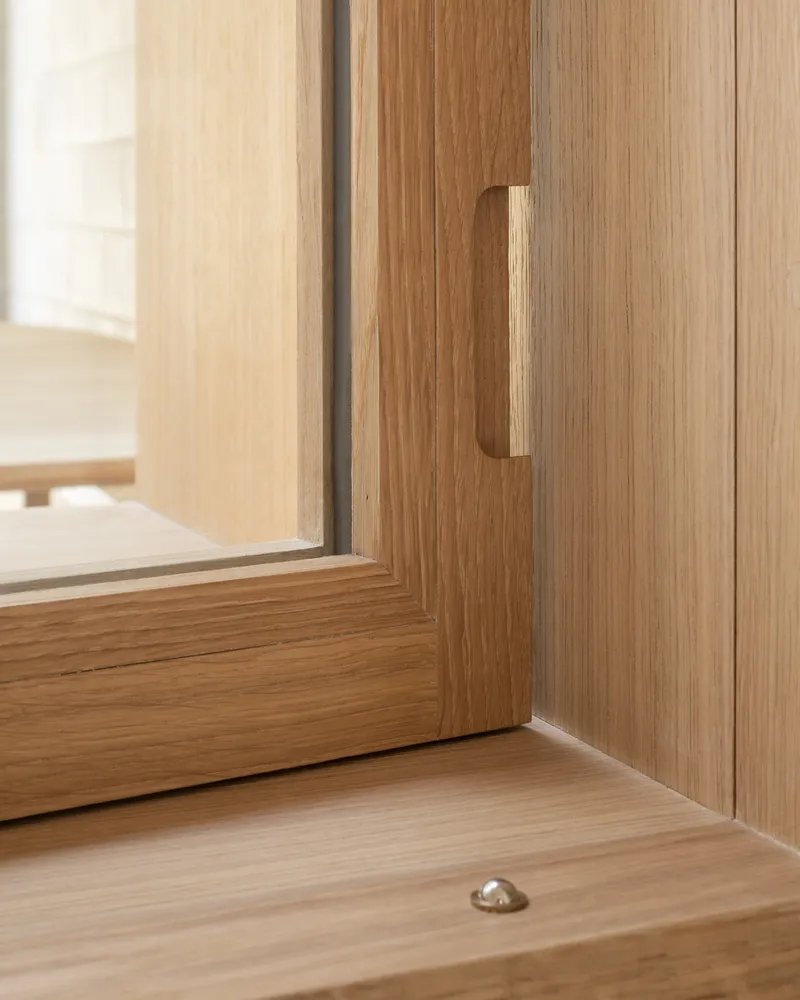
Despite the industrial rawness of the blocks, the interiors feel warm and welcoming, thanks to the careful use of oak joinery. The natural wood softens the blockwork, creating a calm, serene atmosphere perfect for family life.
Materials and Sustainability
Prioritizing sustainability and simplicity, Magri Williams Architects selected locally sourced, durable materials. The material palette — including oak, fair-faced blocks, and large tiles — was not only aesthetically cohesive but also mindful of longevity and low maintenance.
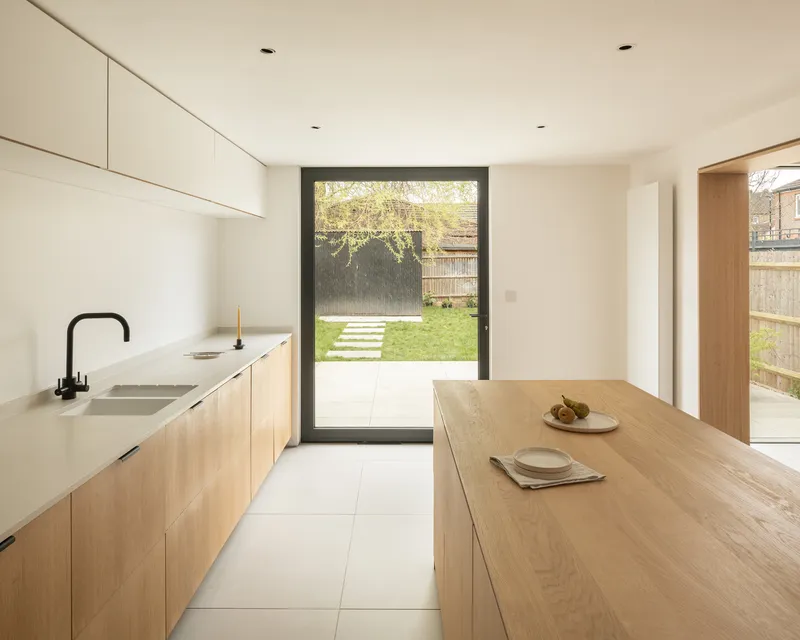
All the photographs are works of Stale Eriksen




Popular Articles
Popular articles from the community


Play: Fragments of Their World
Familiar architecture becomes modular playground design, creating safe spaces where displaced children can learn, connect, imagine and play.

Conexión: Biophilic Design Reimagines High-Rise Living in Hong Kong
Conexión reimagines high-rise living in Hong Kong through biophilic design, green facades, shared spaces, daylight, water and nature within.

The Musturak Paradise: Senior Living Architecture for a Connected Future in Temara, Morocco
The Musturak Paradise reimagines senior living architecture in Temara via private homes, social spaces, culture, community, and shared care.

The Earth Pod: 3D Printed Homes for Resilient Refugee Communities
The Earth Pod reimagines refugee housing through 3D printed homes made from clay, combining resilience, self-sufficiency, and rapid shelter.


Similar Reads
You might also enjoy these articles


Hodi-Mandai Geram
Project Function: Preservation and revitalization of the Intangible heritage and socio-spatial identity of the Hodi by Housing, Cultural Memory Center, Sacred Grove, landscape, local tourism economy


Olio Towers: A Mid-Rise for Performers That Fuses Housing, Rehearsal, and Stage
Located blocks from Houston's Theater District, this modular tower stacks living units around a central performance atrium.

Oasis: Modular Green Housing Carved into Dhaka's Urban Fabric
A shortlisted Plugin Housing entry reclaims unauthorized settlements in Dhaka with stepped concrete volumes, green roofs, and ventilation-driven design.

Black Hole: A Floating Megastructure for the Post-Physical Era
Emiliano Mazzarotto envisions a spherical, self-scaling arena where e-sports, digital hotels, and holographic stadiums replace traditional public space.

Explore Building Extension Competitions
Discover active competitions in this discipline



Challenge to reimagine the Iron Throne


Photograph architecture without architects


Illustrate the lost glory of Angkor Wat - Render Challenge


Design challenge to reuse E-waste
Comments (0)
Please login or sign up to add comments
No comments yet. Be the first to comment!