
Hermit Resort by Domain Architects: A Contemporary Retreat Reimagining Ancient Kiln Ruins in China
Hermit Resort reimagines ancient kiln ruins through raw, village-like architecture, private courtyard rooms, and a timeless, immersive retreat rooted in history and nature.

A Resort Inspired by Archaeological Memory and Timeless Craft
Hermit Resort by Domain Architects is a striking architectural interpretation of ancient cultural heritage, located near the renowned Xing Kiln Ruins in China. Covering 1,300 square meters, the 2025 project redefines what hospitality architecture can be by merging archaeological inspiration, raw material expression, and immersive landscape design.
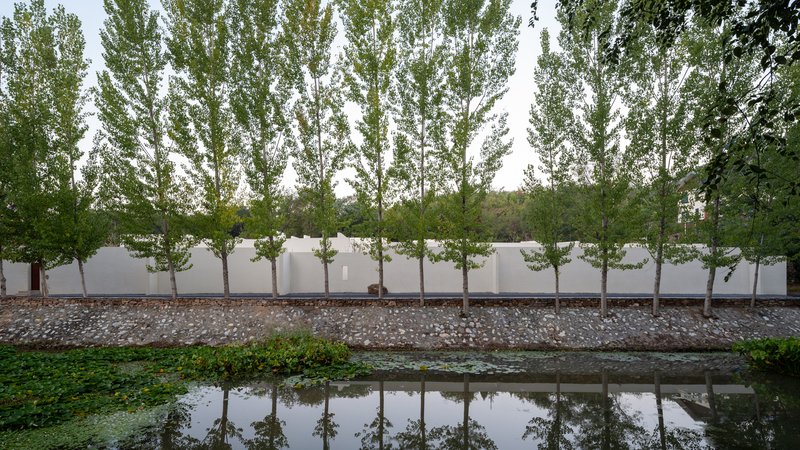
Rather than adopting sleek modern lines, the architects honor a 1,500-year-old ceramic tradition, drawing spatial cues from the historic kilns and the abandoned village remains scattered across the site. The result is a contemporary sanctuary that feels sculpted by time, blurring the boundaries between past and present, architecture and nature.
Site Context: Between Ancient Kilns and Forgotten Village Remains
The resort sits beside the Xing Kiln archaeological site, one of China’s most important ceramic production centers from the Tang Dynasty. Although much of the ancient structure has eroded, the horseshoe-shaped kiln layout—semi-enclosing intimate courtyards—remains legible.
Equally compelling are the site’s contemporary remnants: fragments of a relocated rural settlement scattered across a gentle slope by a stream. Instead of erasing these traces, Domain Architects transforms the space into a “new relic”—a place that accepts the passage of time as a form of beauty.
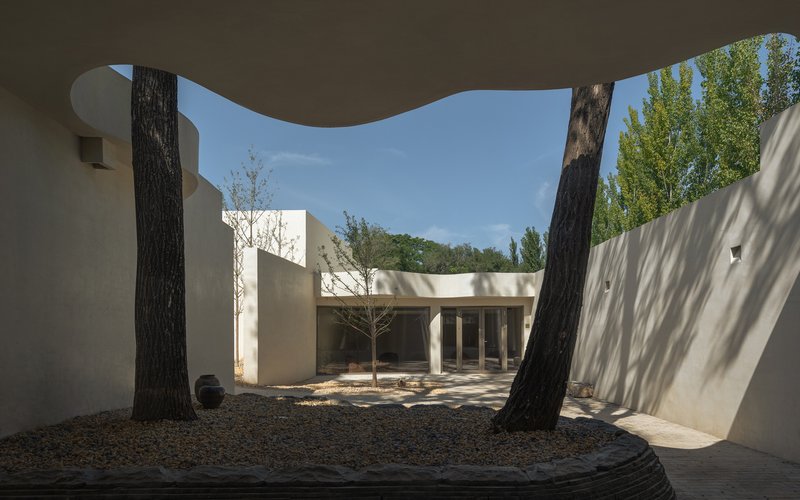
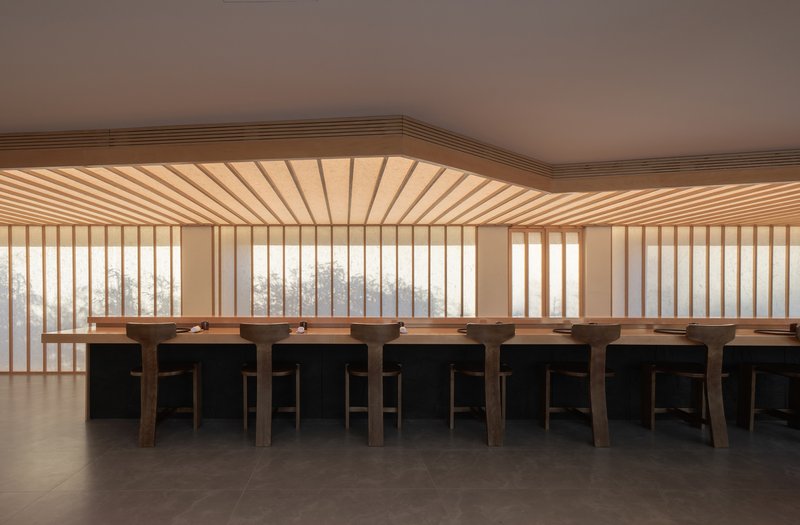
Architectural Concept: Recreating a Primitive Village Settlement
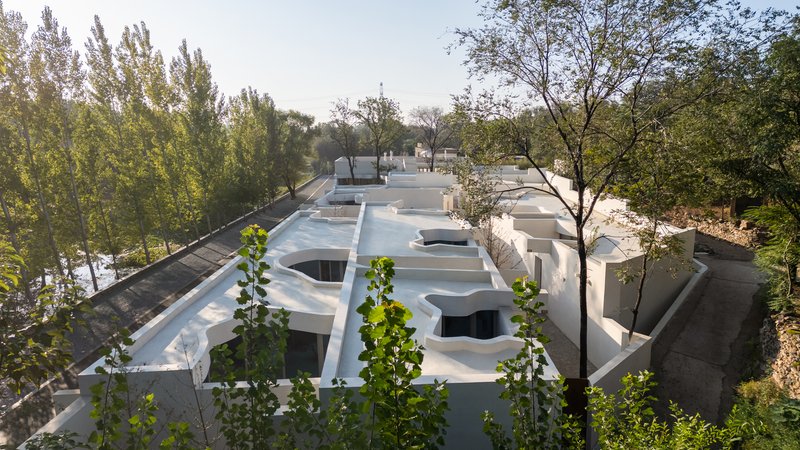
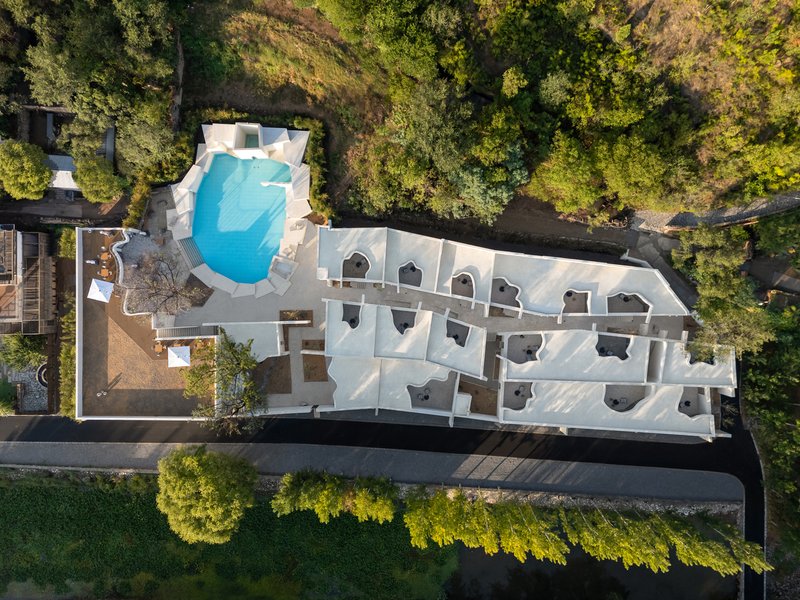
Hermit Resort is envisioned as a cluster of small, single-story structures, resembling a mountain village nestled in wilderness. The design draws directly from archaeological patterns and organic settlement forms.
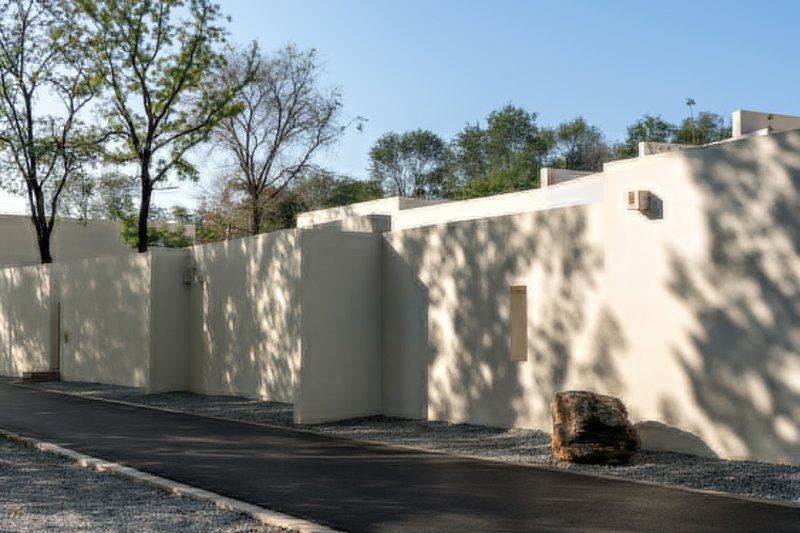
Elements typically perceived as separate—walls, beams, courtyards, alleys—are intentionally interwoven, creating a layered, porous spatial fabric. This deliberate ambiguity produces a poetic balance between order and randomness, encouraging exploration and fostering a sense of discovery throughout the landscape.
Whether under bright sun or soft mist, at dawn or dusk, the settlement shifts in perception, evoking the quiet drama of ruins shaped by nature.
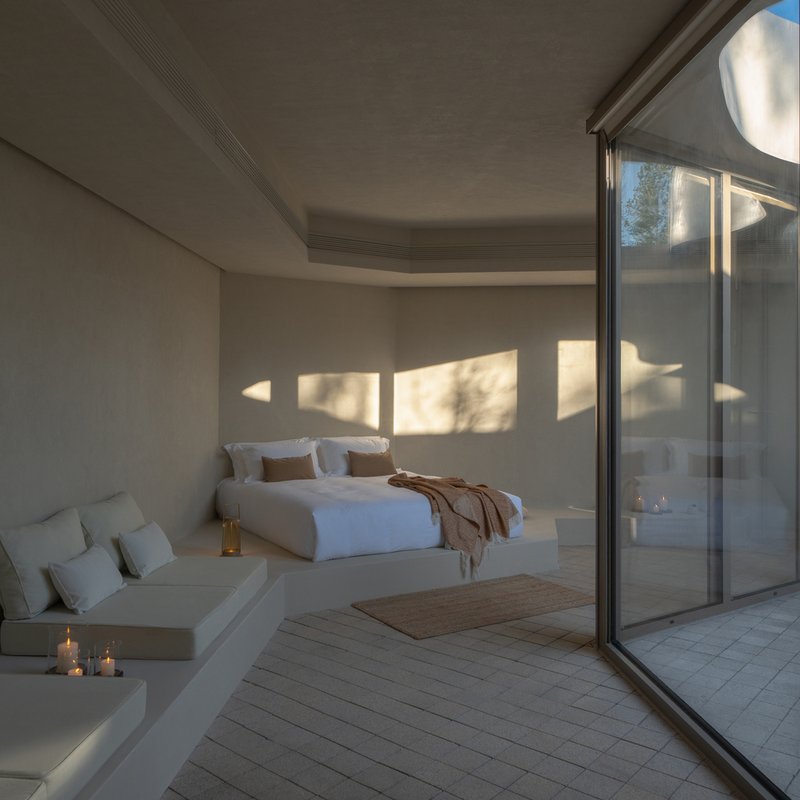
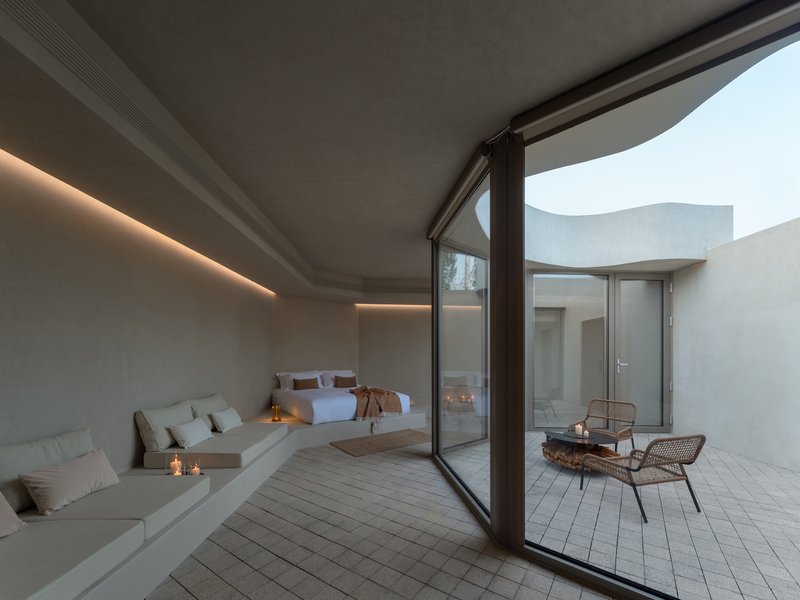
Interior Experience: Immersive Courtyards and Kiln-Inspired Spaces
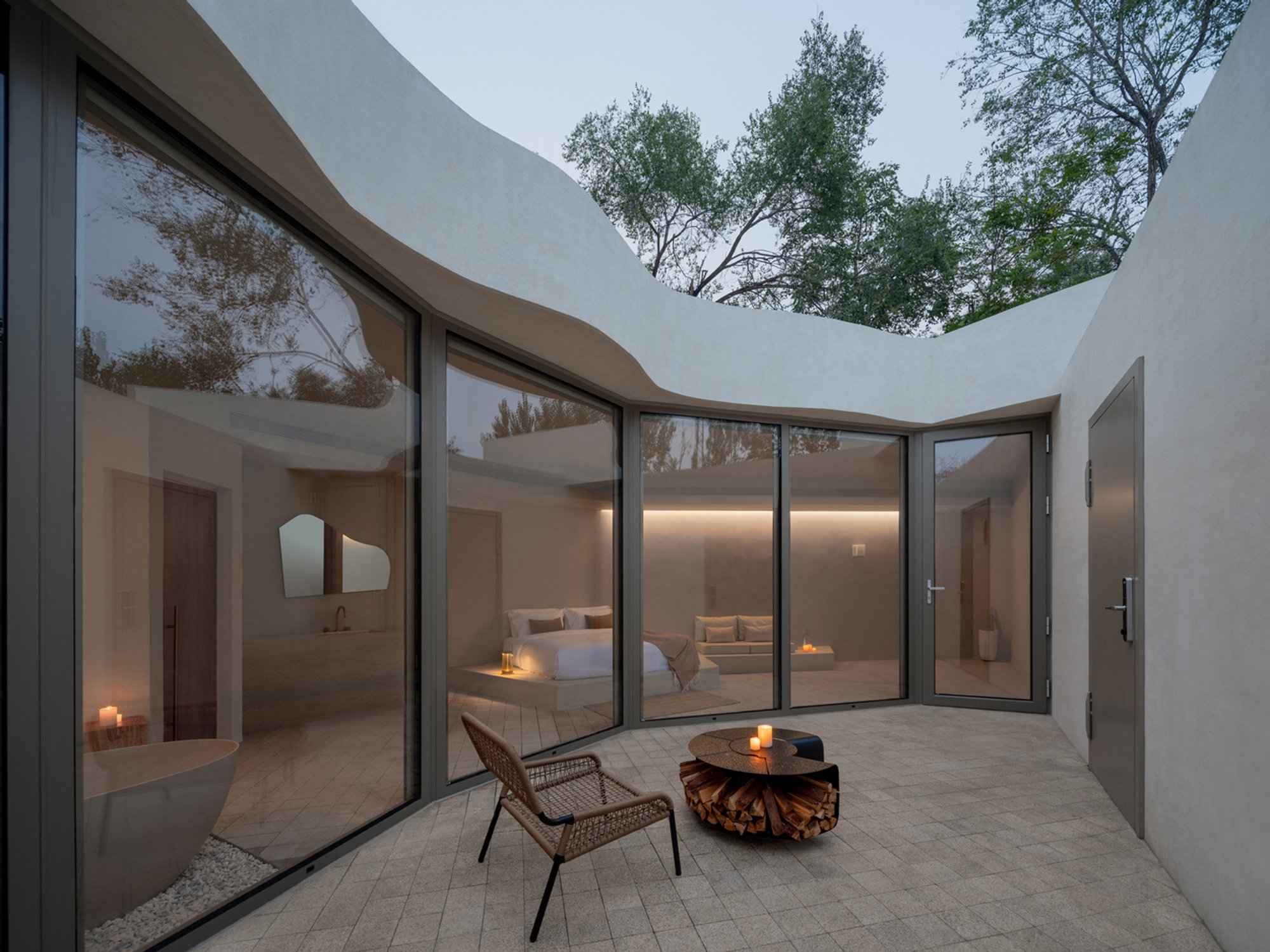
Each of the resort’s 50 guest rooms features a private courtyard, echoing the semi-enclosed geometry of the historic kilns.
Rather than simply dividing inside and outside, the architecture wraps interior spaces around courtyards, creating a horseshoe configuration that blurs boundaries and enhances privacy.
Guests move through spaces that feel intimate, elemental, and deeply connected to earth and sky, experiencing a sensation akin to stepping inside a kiln chamber—warm, sheltered, and contemplative.
Materials and textures evoke rawness and craft: natural stone, earthy finishes, and warm timber details contribute to a serene, monastic atmosphere.
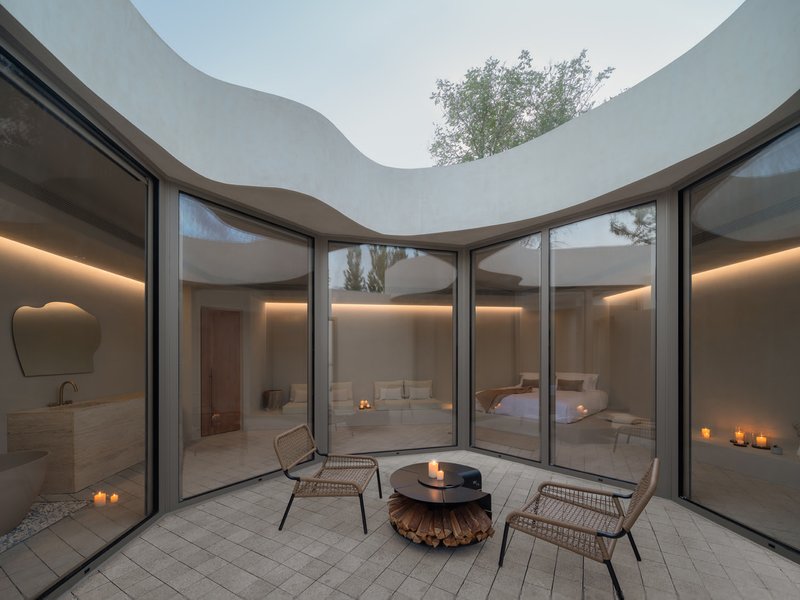
A Living Relic for Future Generations
The first phase of Hermit Resort is now open, offering a primeval yet luxurious retreat where visitors can disconnect from time and reconnect with history, landscape, and self.
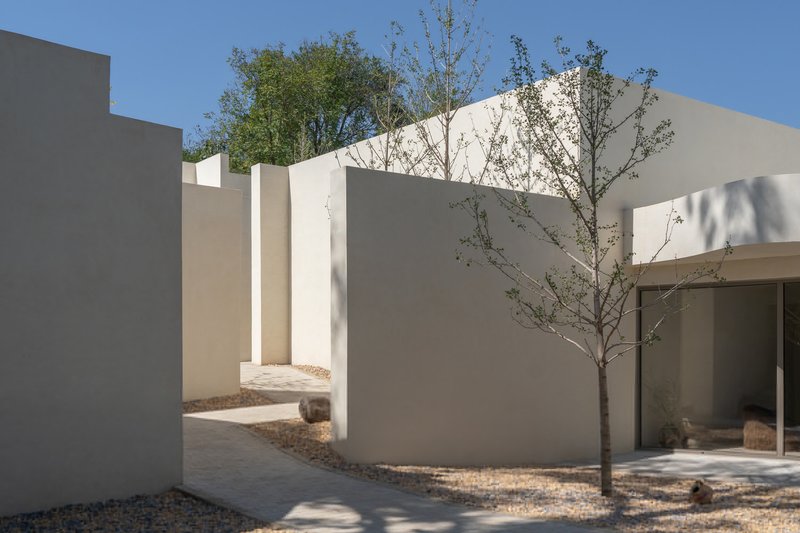
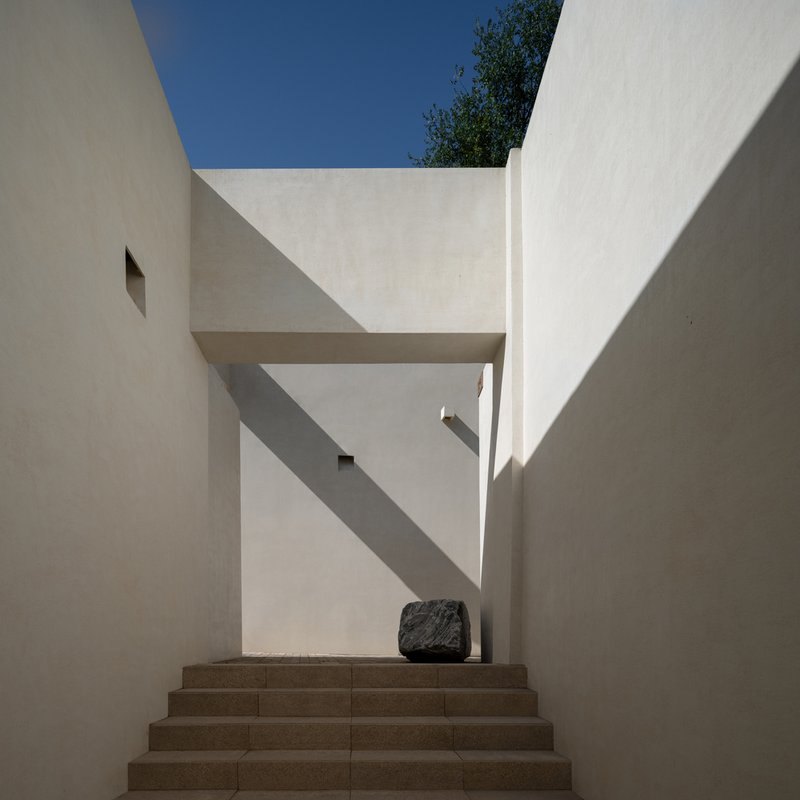
All photographs are works of Chao Zhang




Popular Articles
Popular articles from the community

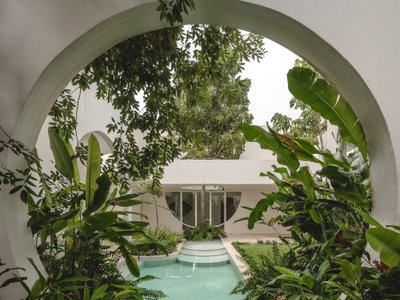
Etea and Ghostframe Carve a Surreal Domestic World from Arches and Circles in Mérida
Casa Eclipse wraps 385 square meters of sculptural living space around a lush courtyard pool in Mexico's Yucatán Peninsula.
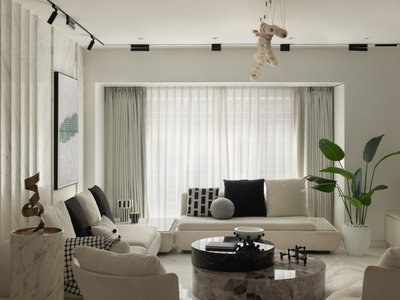
Inside a Timeless Mumbai Residence by Aether Studio
Aether Studio's 2,250 sq ft apartment in Malad, Mumbai uses marble, brass, boucle, and disciplined restraint to build a quiet retreat from the city.
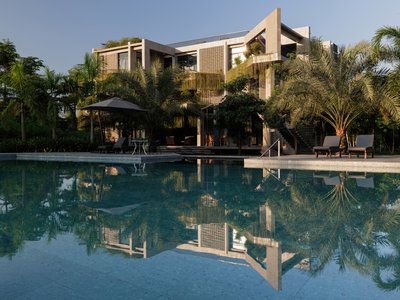
Reincarnation Weaves a Three-Story Retreat into the Green Landscape of Rural Bangladesh
Ara Manor in Narsingdi dissolves the line between domestic architecture and its lush surroundings through screens, courtyards, and planted rooftops.
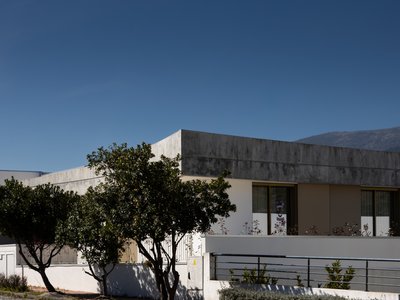
PLATAFORMArq Folds a Concrete Roof Over the Portuguese Mountains in House #474
A 220-square-meter residence in Teixoso, Portugal, wraps board-formed concrete into an angular canopy that frames the Serra da Estrela foothills.

Similar Reads
You might also enjoy these articles

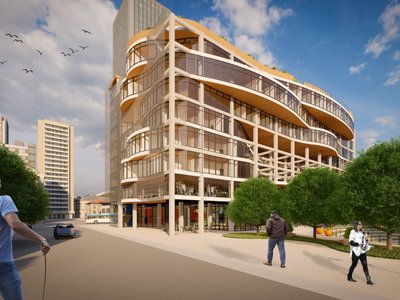
Olio Towers: A Mid-Rise for Performers That Fuses Housing, Rehearsal, and Stage
Located blocks from Houston's Theater District, this modular tower stacks living units around a central performance atrium.
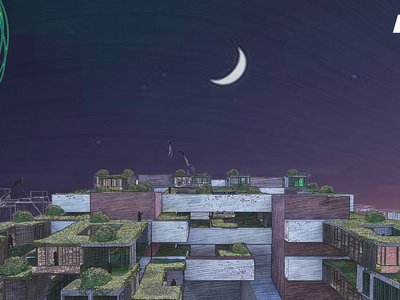
Oasis: Modular Green Housing Carved into Dhaka's Urban Fabric
A shortlisted Plugin Housing entry reclaims unauthorized settlements in Dhaka with stepped concrete volumes, green roofs, and ventilation-driven design.

Black Hole: A Floating Megastructure for the Post-Physical Era
Emiliano Mazzarotto envisions a spherical, self-scaling arena where e-sports, digital hotels, and holographic stadiums replace traditional public space.
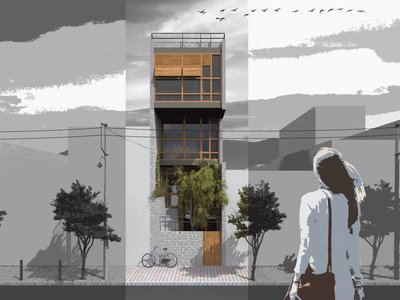
Compact & Sustainable Living in Piraeus: A Four-Level Family Home Built Around Light and Air
A narrow townhouse in one of Greece's densest port cities uses a central atrium and passive strategies to house three generations under one roof.

Explore Hospitality Building Competitions
Discover active competitions in this discipline




The International Standard for Design Portfolios


The Global Benchmark for Architecture Dissertation Awards


The Global Benchmark for Graduation Excellence


Challenge to reimagine the Iron Throne
Comments (0)
Please login or sign up to add comments
No comments yet. Be the first to comment!