

DPAA Design Turns a Guangzhou Garment Factory Into Office
A garment warehouse in Guangzhou becomes a layered workplace defined by blue mosaic tile, raw steel stairs, and an open atrium at its core.


Industrial parks in Guangzhou's garment district are not the places you expect to find careful architectural thinking. They are typically utilitarian, anonymous, and purpose-built for logistics rather than experience. Heyi Office, designed by DPAA Design, takes one such warehouse and carves it open, threading light, air, and movement through a building that was never designed to accommodate any of them. The result is a 2,000 square meter workplace that feels both rigorous and generous.
What makes the project worth studying is the specificity of its moves. Rather than gutting the existing structure and starting over, DPAA Design intervened surgically: a central atrium punched through the floors, a network of open steel stairs stitching the levels together, and a consistent palette of blue diamond-pattern mosaic tile that gives the whole building a visual anchor. These are not decorative gestures. They are organizational ones. The blue tile, the steel, the timber, and the white walls do distinct jobs, and the building reads clearly because of it.
Before and After: Reading the Existing Fabric
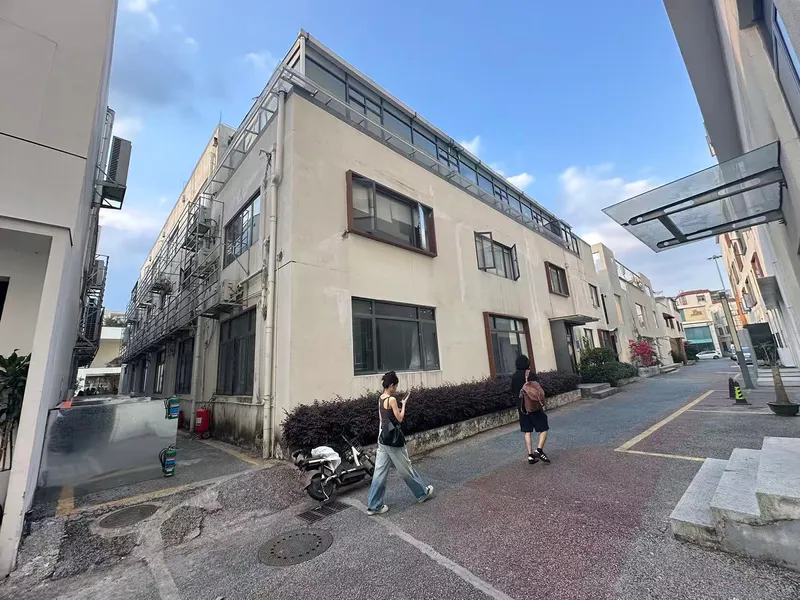
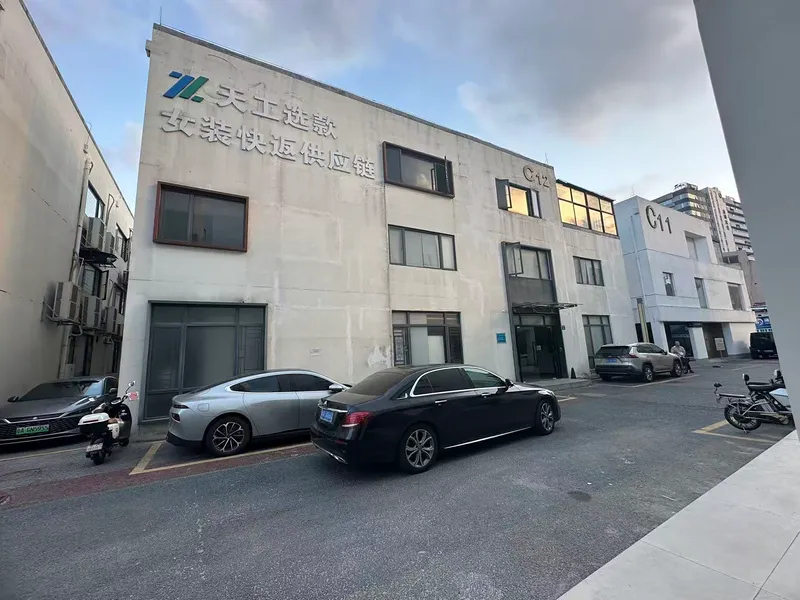
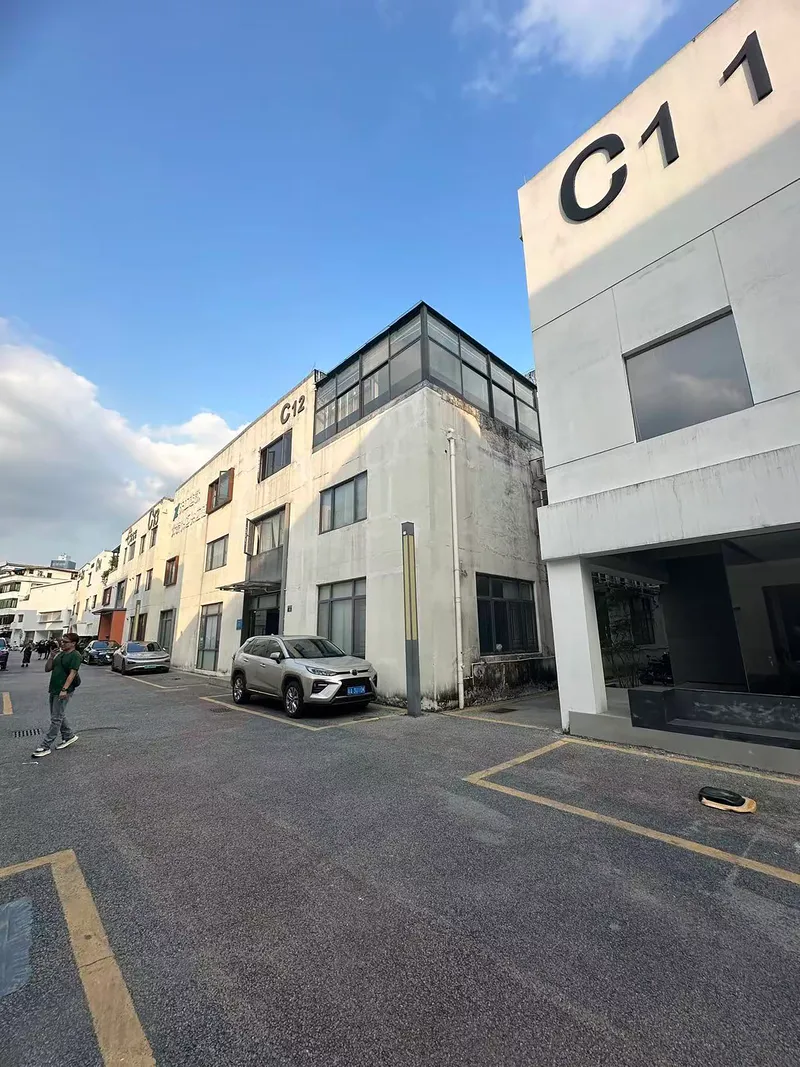
The original building is visible in the pre-renovation shots: a concrete warehouse with inconsistent window openings, painted signage, and the general patina of a structure that has been modified many times without much thought. It sits on a sloped road in a cluster of similar buildings. DPAA Design's rooftop addition, framed in steel and glass, reads as a deliberate counterpoint to the heavy, opaque base. The existing concrete facade is largely preserved, which is smart. It keeps the building grounded in its context rather than pretending to be something transplanted from a design district.
The Street Facade at Dusk
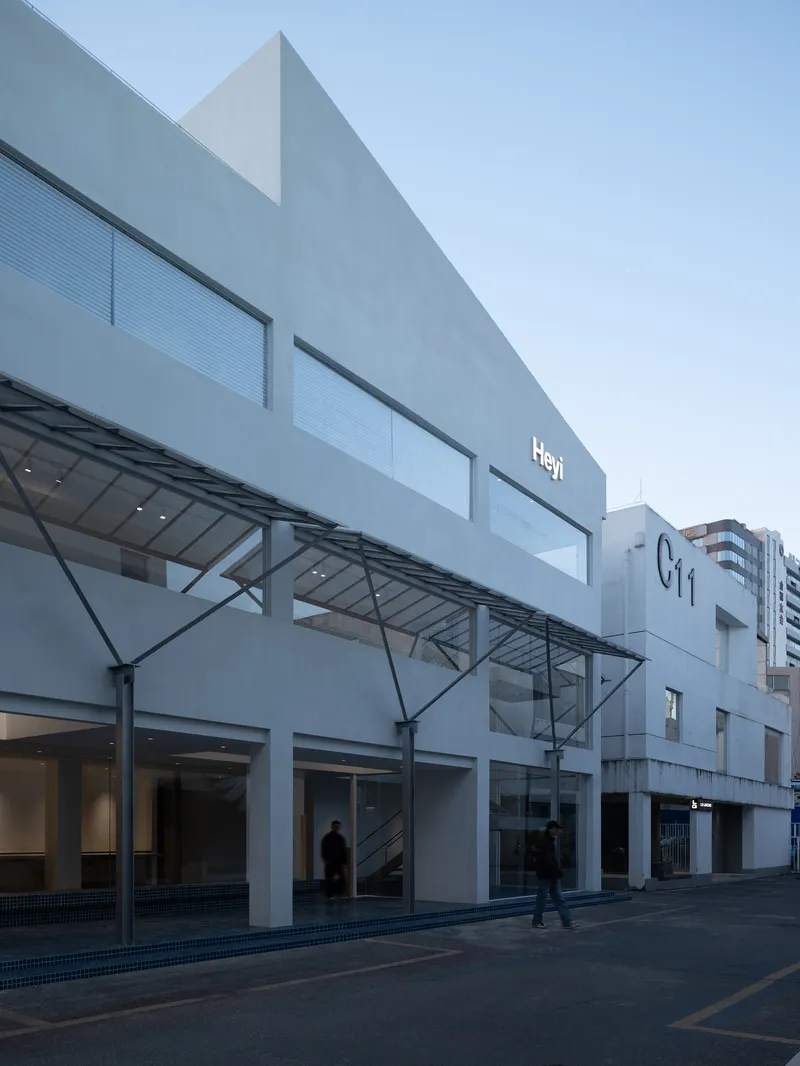
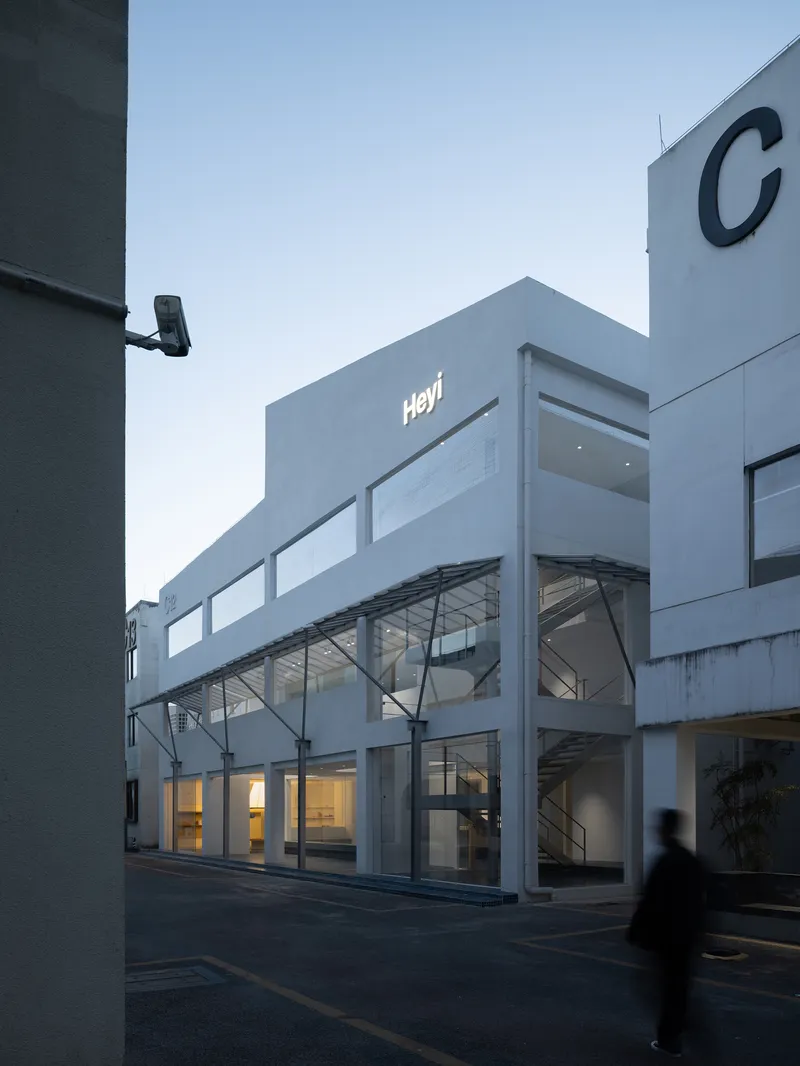
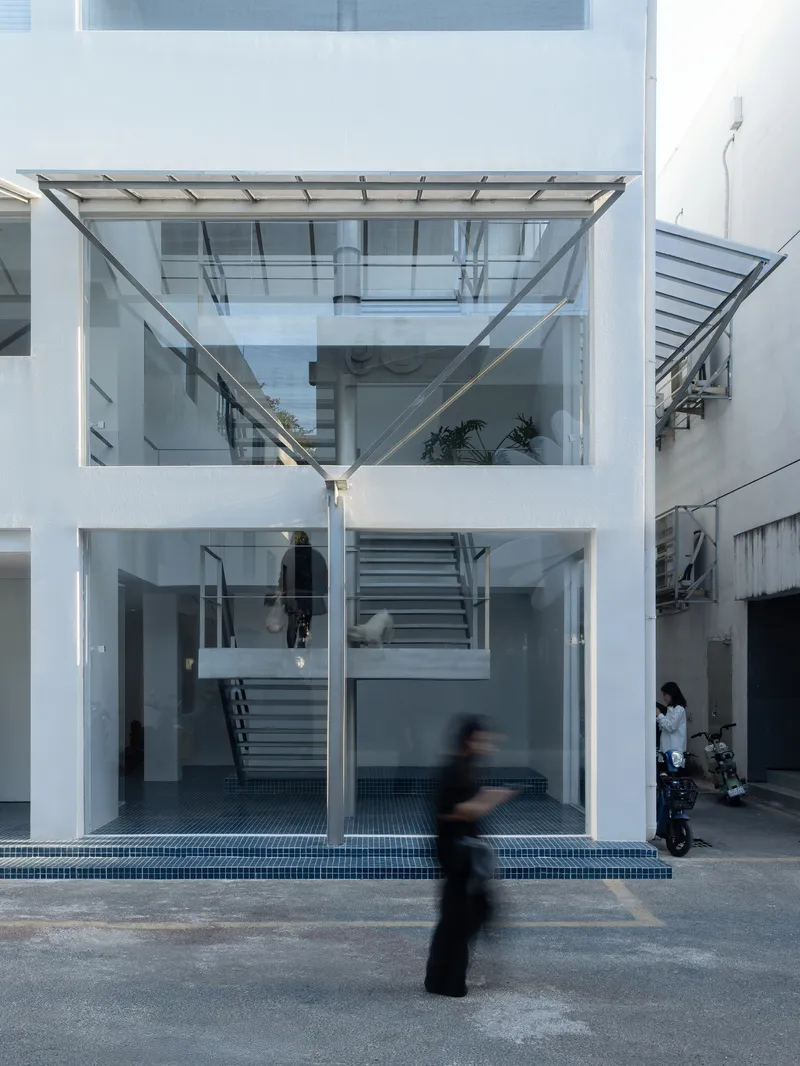
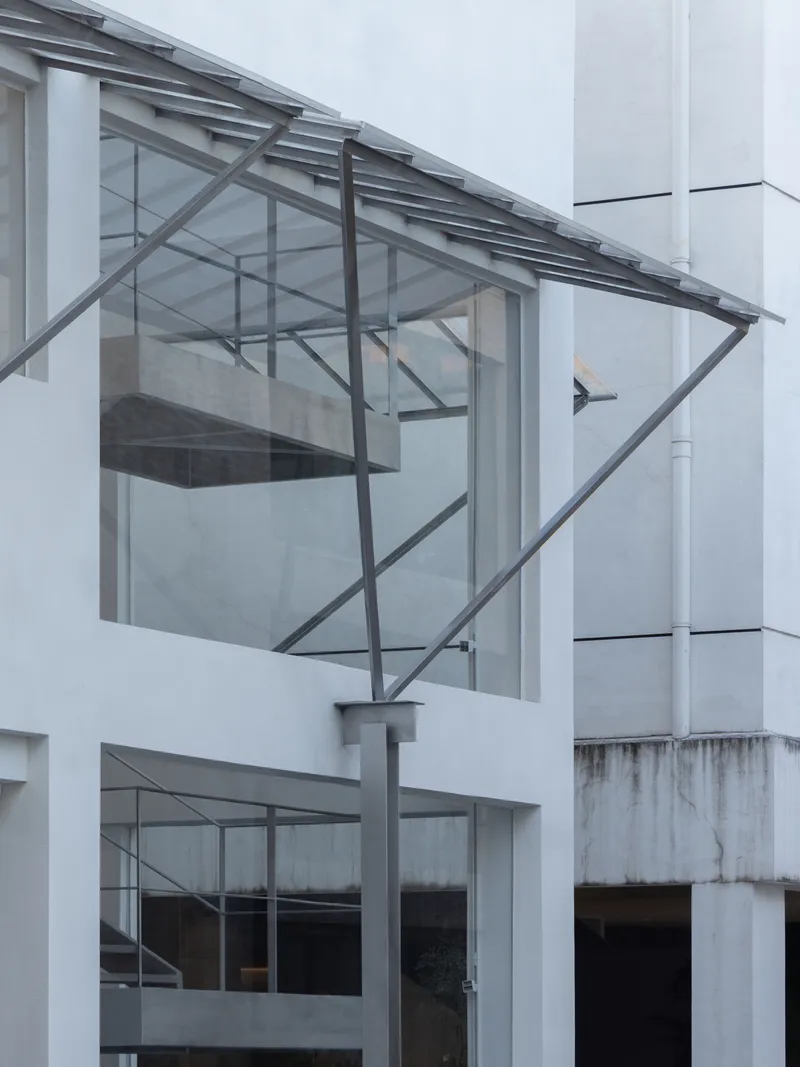
At dusk, the building reveals its interior life. The ground floor colonnade, sheltered by an angled metal canopy supported on cable stays, creates a threshold between the street and the courtyard. Above, horizontal glazing bands expose the diagonal steel bracing that reinforces the structure. The three-story glass facade facing the courtyard puts the central staircase on display, with figures moving through the space as silhouettes against warm interior light.
There is a confidence in letting the structural logic show. The diagonal bracing is not hidden behind cladding; it becomes part of the composition. The cantilevered glass box on the upper floor, with its sloped glazed roof and exposed steel frame, pushes outward from the white facade like an occupied greenhouse. It is a bold move on a building that otherwise maintains restraint.
Courtyard and Threshold
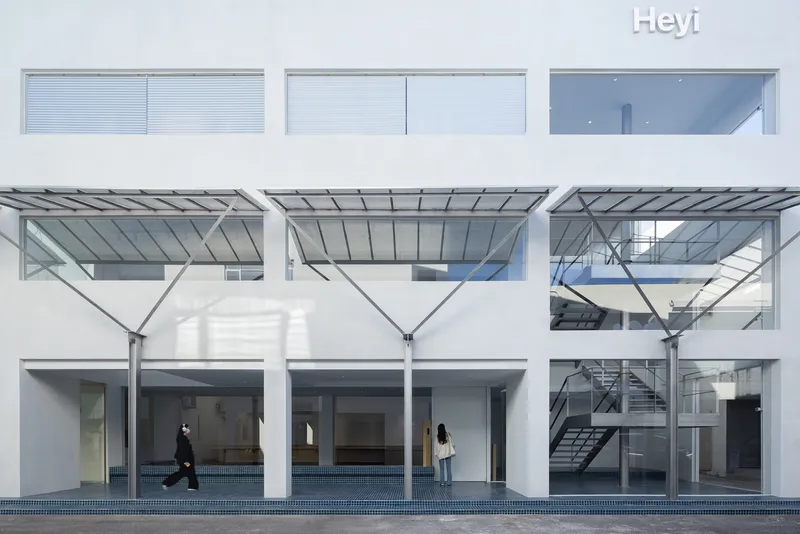
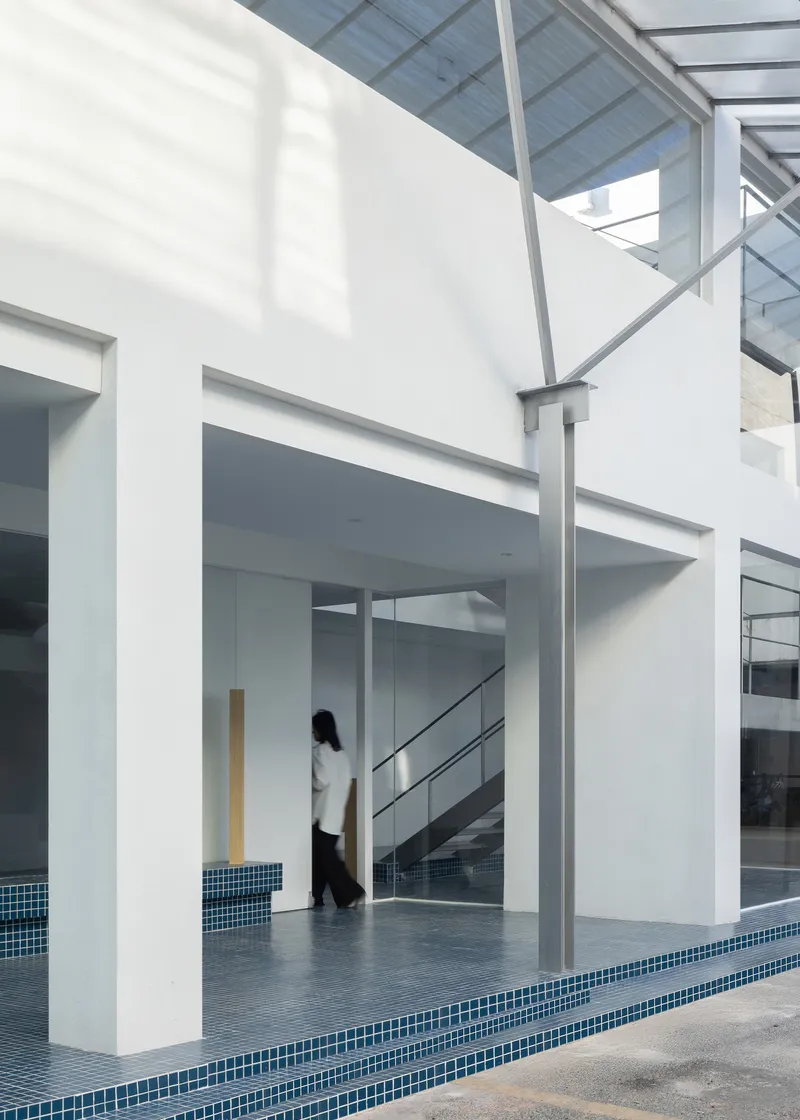
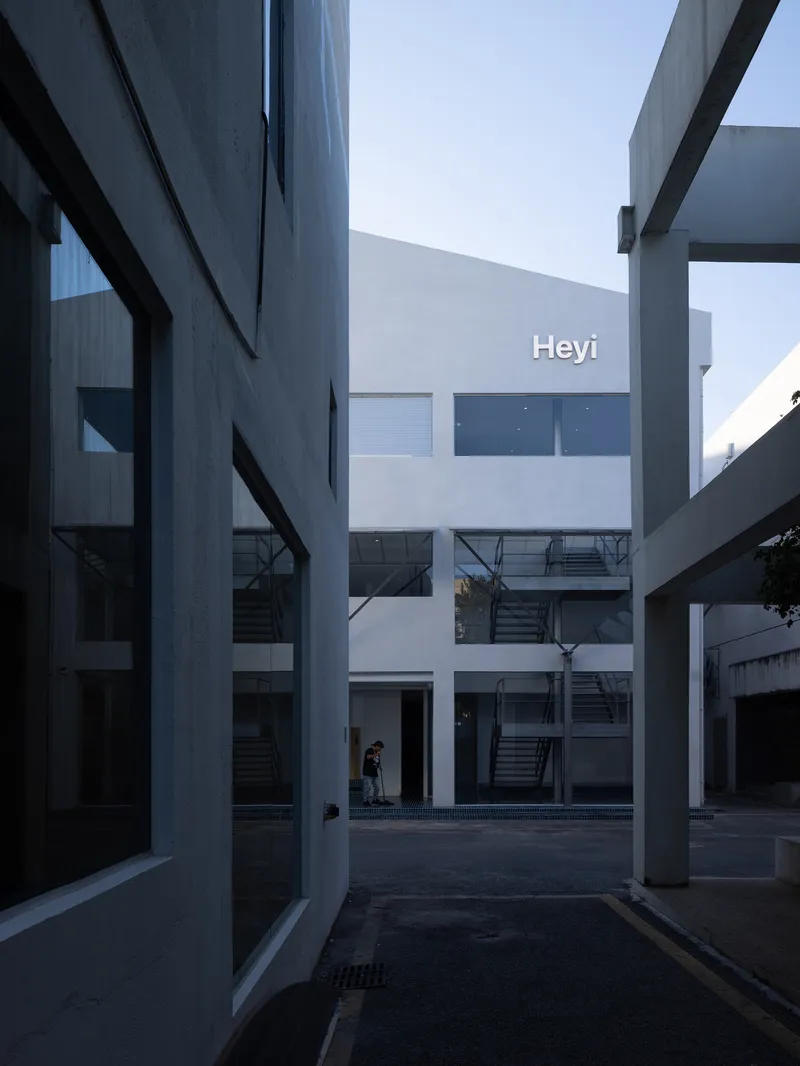
The courtyard is the hinge of the scheme. Blue mosaic tile covers the ground plane, extending from the exterior into the interior and establishing a continuous datum that connects disparate spaces. The steel canopy framework overhead filters daylight without blocking it. Between the white volumes, external steel staircases and bridges provide secondary circulation routes, layering movement across the courtyard elevation.
This is where the garment park origins of the site start to feel productive rather than limiting. The courtyard scale, the narrow gaps between buildings, the multiple entry points: these are conditions that come from the industrial plan, and the design works with them rather than against them.
The Atrium and Vertical Circulation
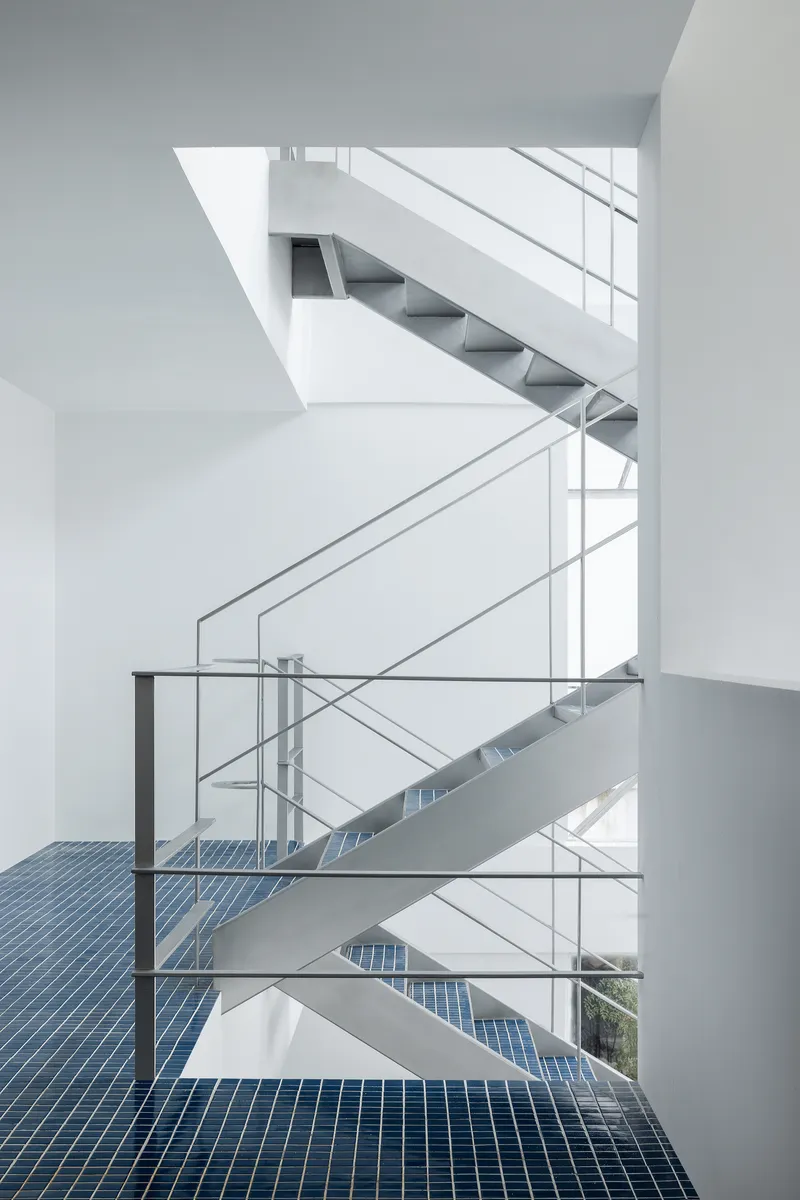
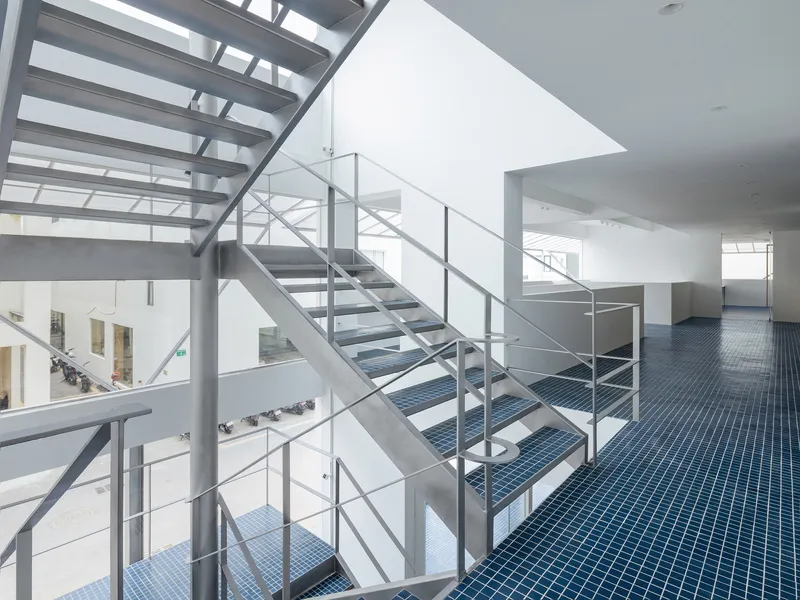
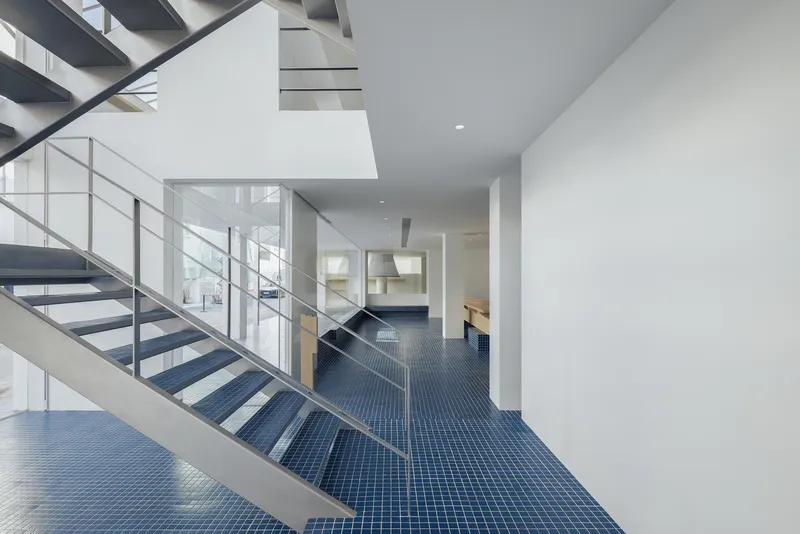
The central atrium is the most significant spatial intervention. Cutting through the existing floor plates creates a vertical void that brings skylighted daylight deep into the building. Switchback steel staircases with open treads and wire balustrades zigzag through this void, making the act of moving between floors a visible, almost theatrical event. The blue mosaic tile on the landings provides orientation: wherever you see it, you know you are on a circulation surface.
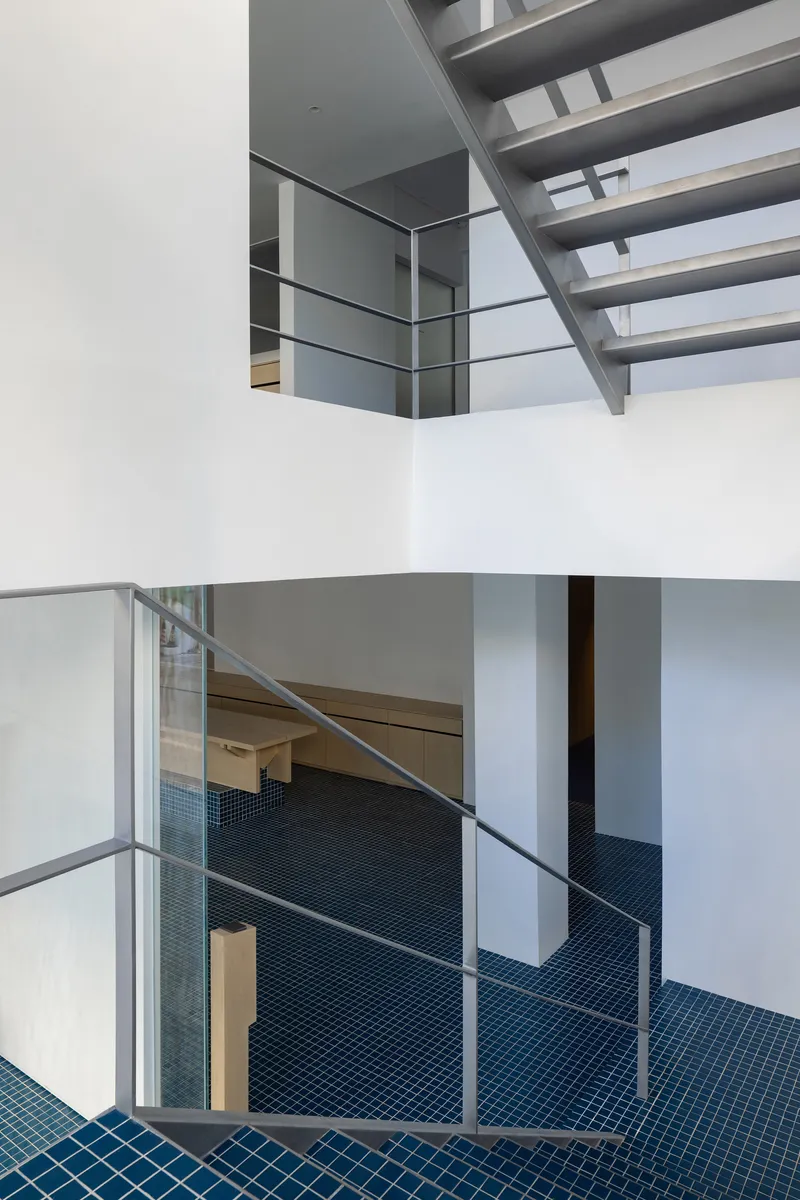
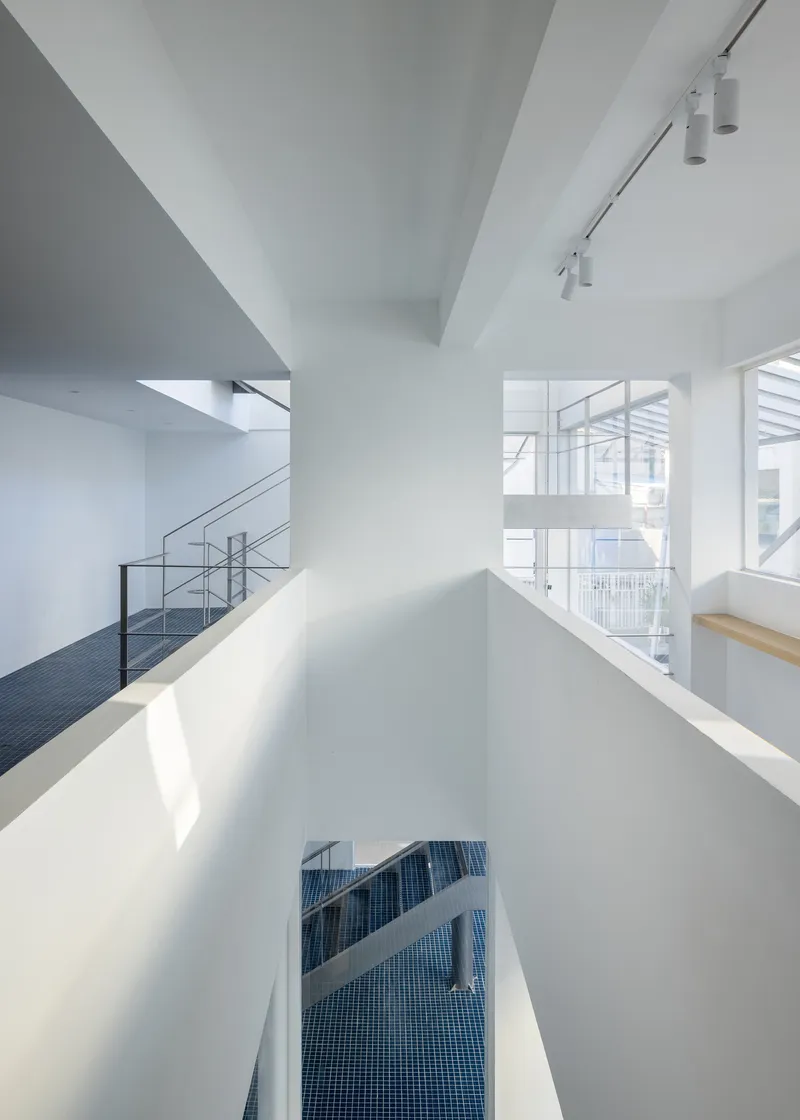
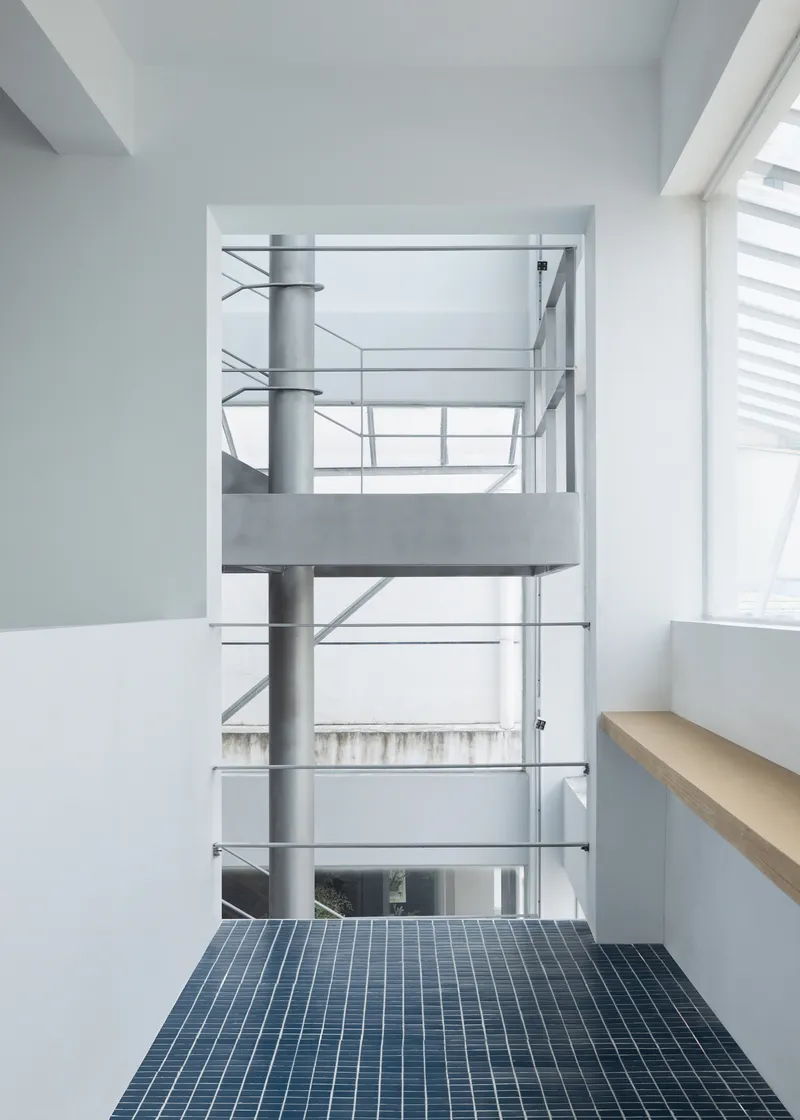
From above, the vertical view down the stairwell reveals the full depth of the building, with daylight filtering through glazed openings onto each landing. The wire railings keep sightlines open across floors, so occupants on one level can see activity on another. For an office building, this kind of visual connectivity is not just pleasant; it actively supports the informal encounters that make shared workplaces function.
Ground Floor: Entry and Reception
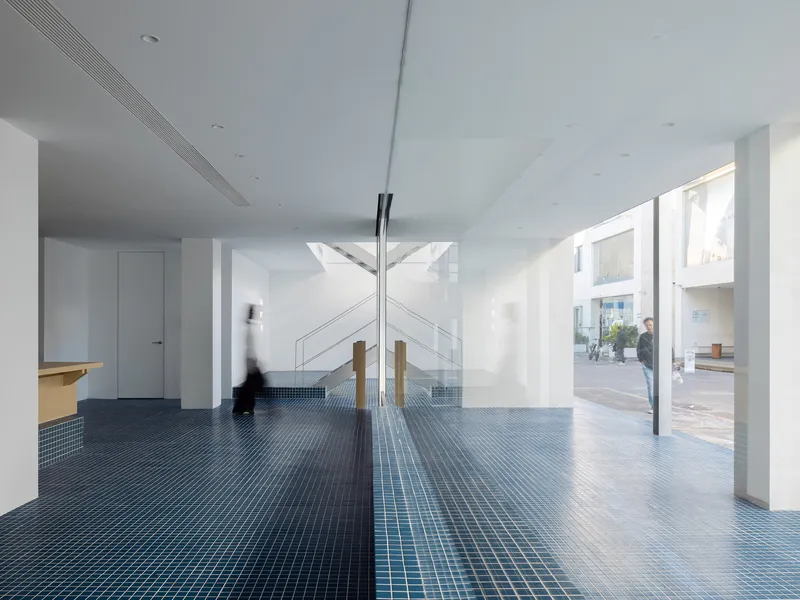
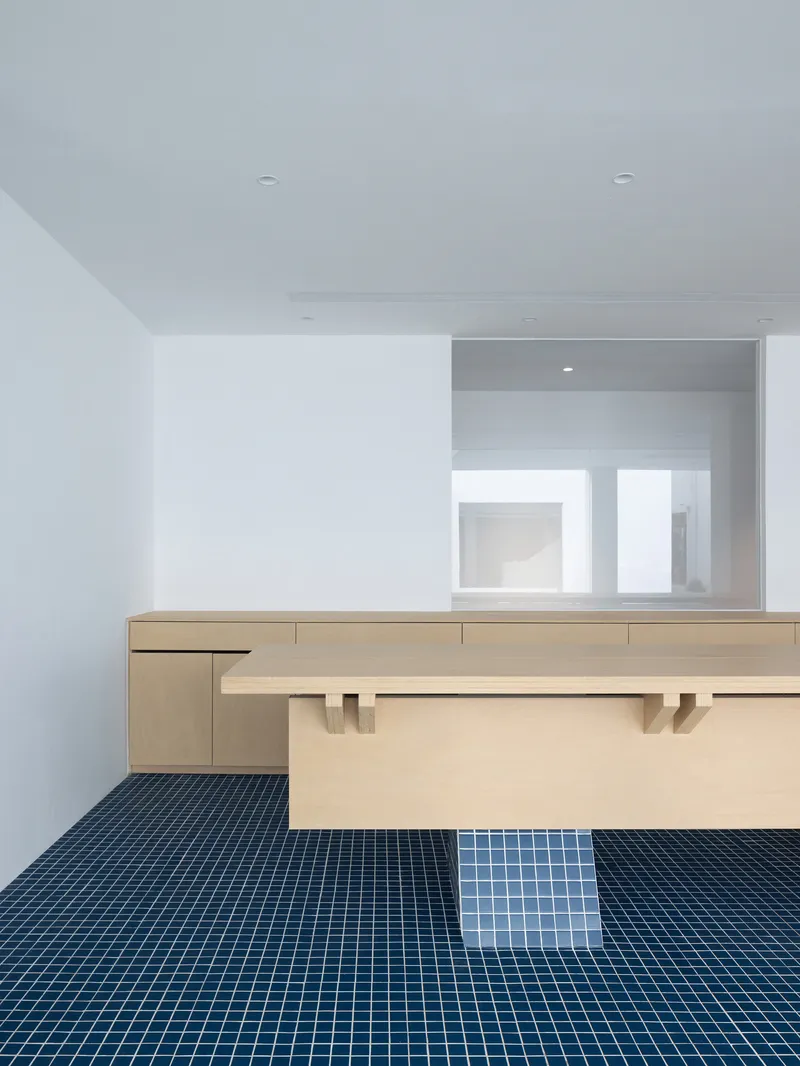
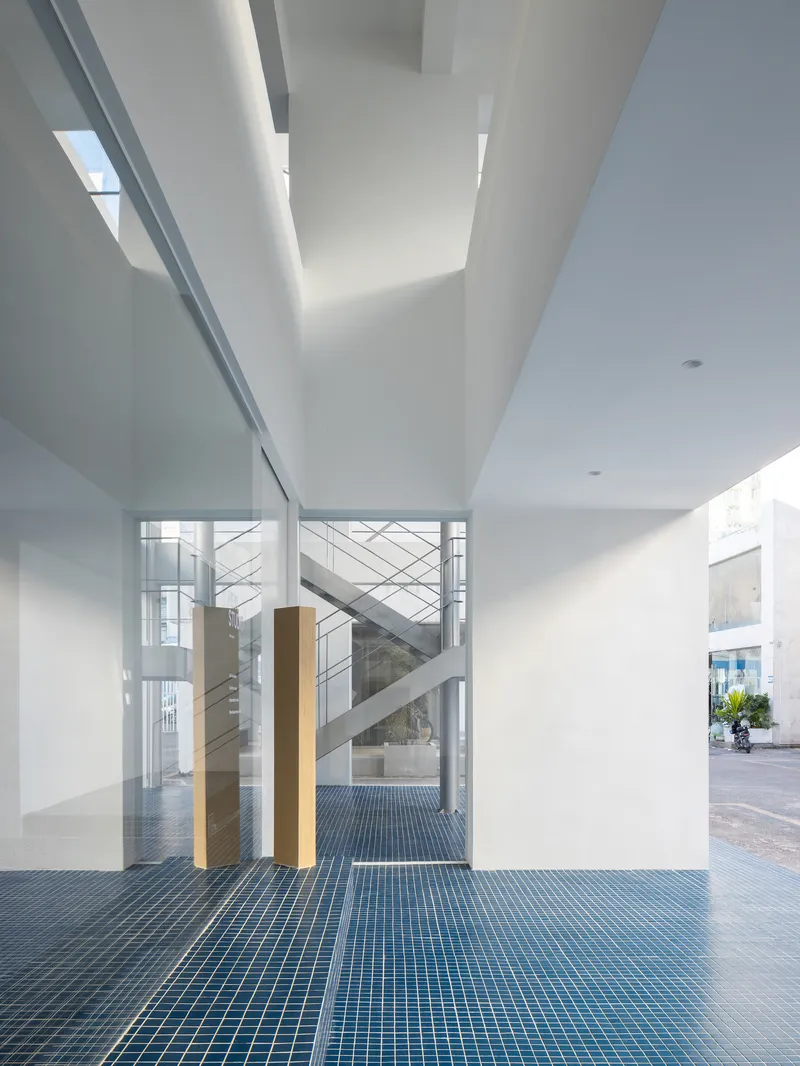
The double-height foyer sets the tone. Timber columns and white ceiling beams establish a warm, structured grid, while the blue mosaic tile floor runs continuously from the courtyard inside. The reception desk in light wood feels modest in scale, appropriate for a building that is about work rather than spectacle. Views through glass walls toward the internal staircase frame the building's sectional complexity from the moment you enter.
Workspace and Meeting Rooms
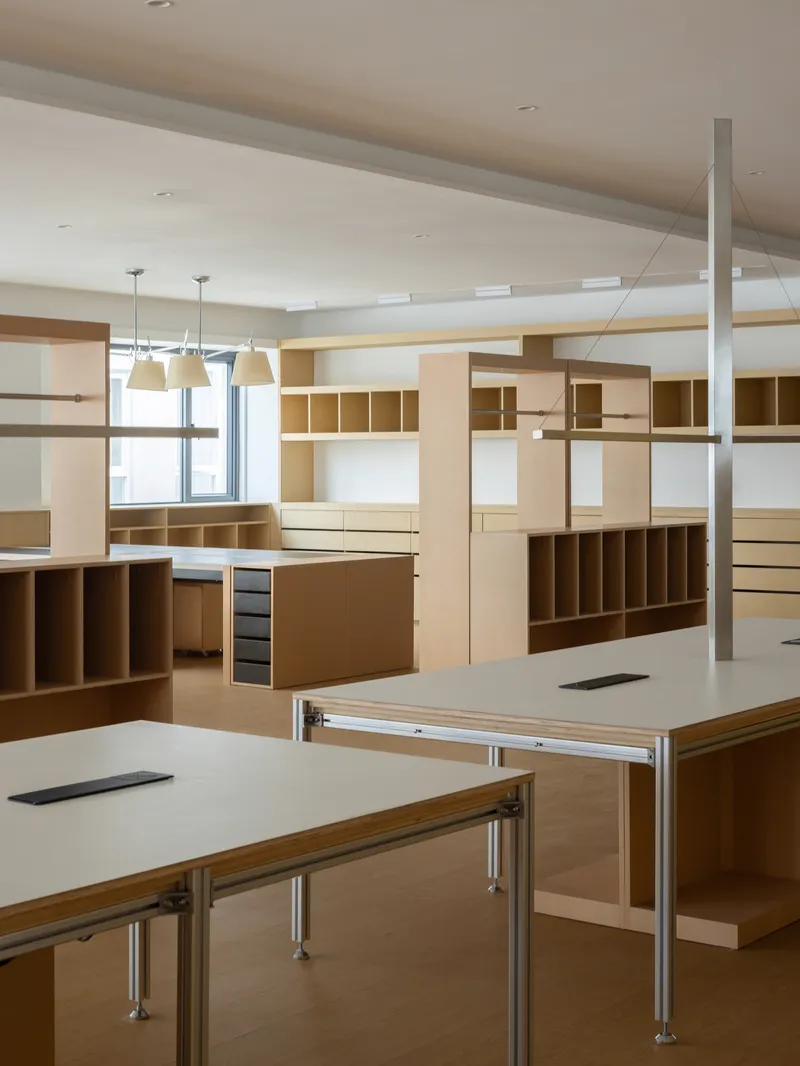
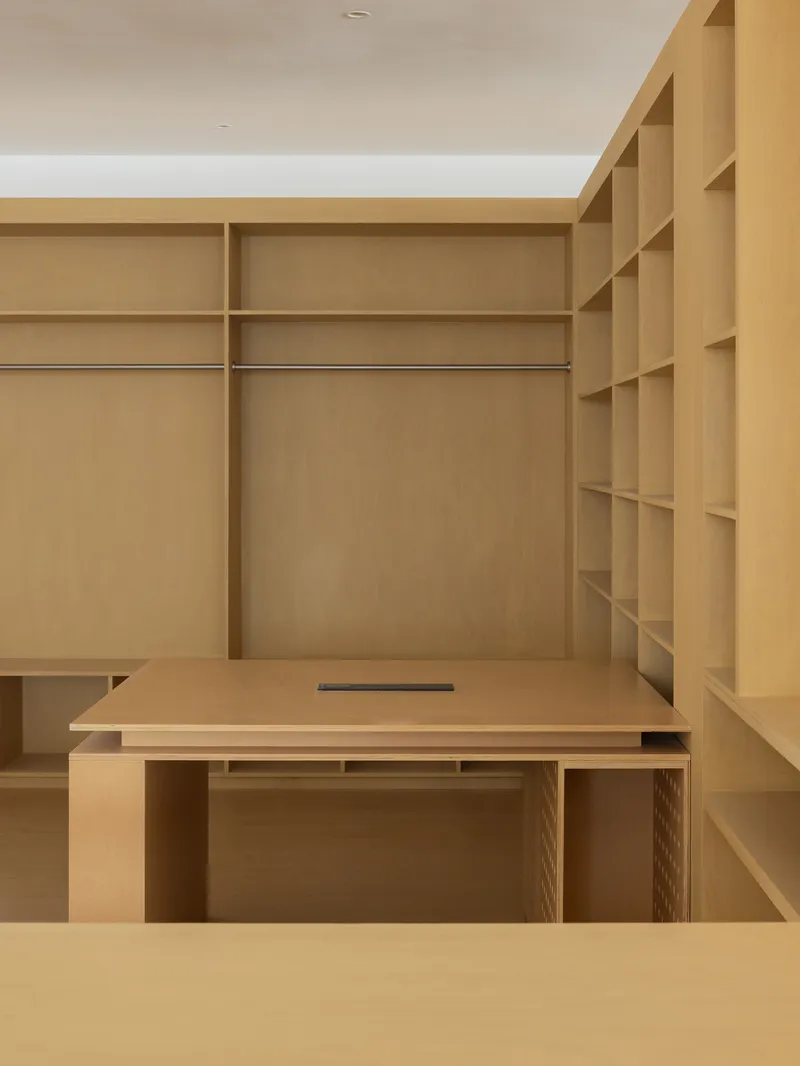
The work areas are fitted out with plywood shelving units and white-topped tables on metal legs, a palette that reads as purpose-built without being precious. The built-in birch plywood desk and shelving system, complete with hanging rails and recessed finger pulls, is clearly designed for the garment industry: clothing samples need to hang, fabrics need to be stored flat. This is not generic coworking furniture; it is tailored to the specific operations of the tenants.
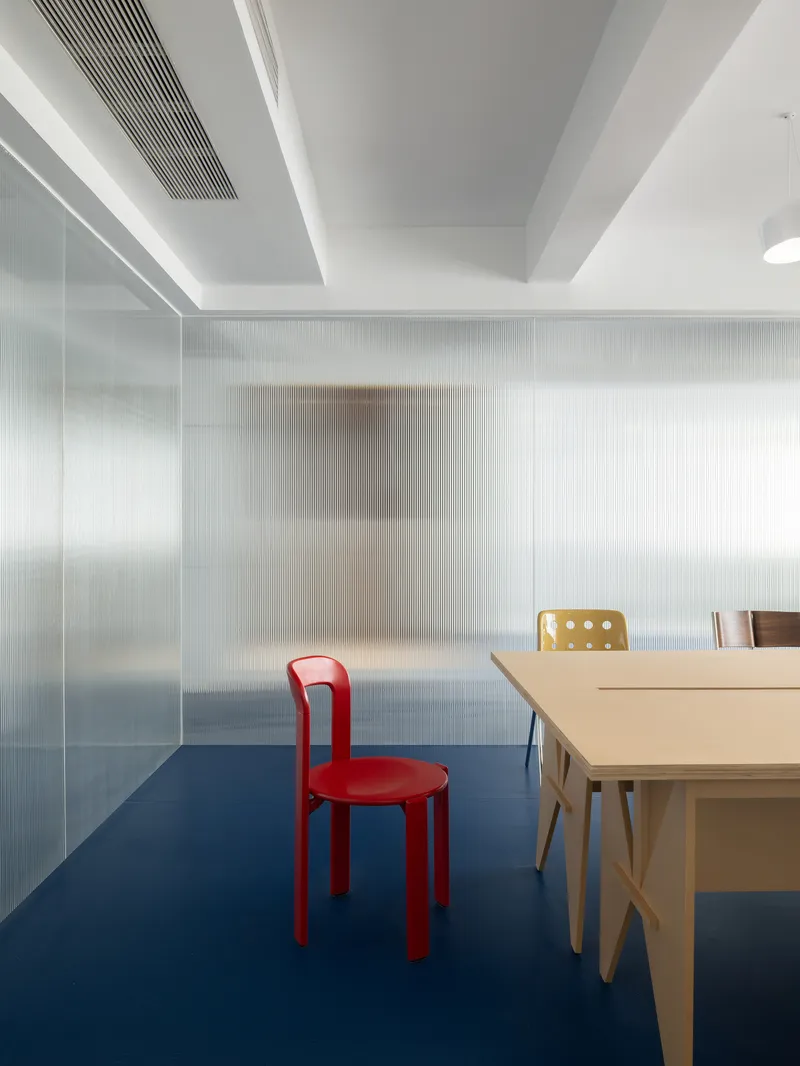
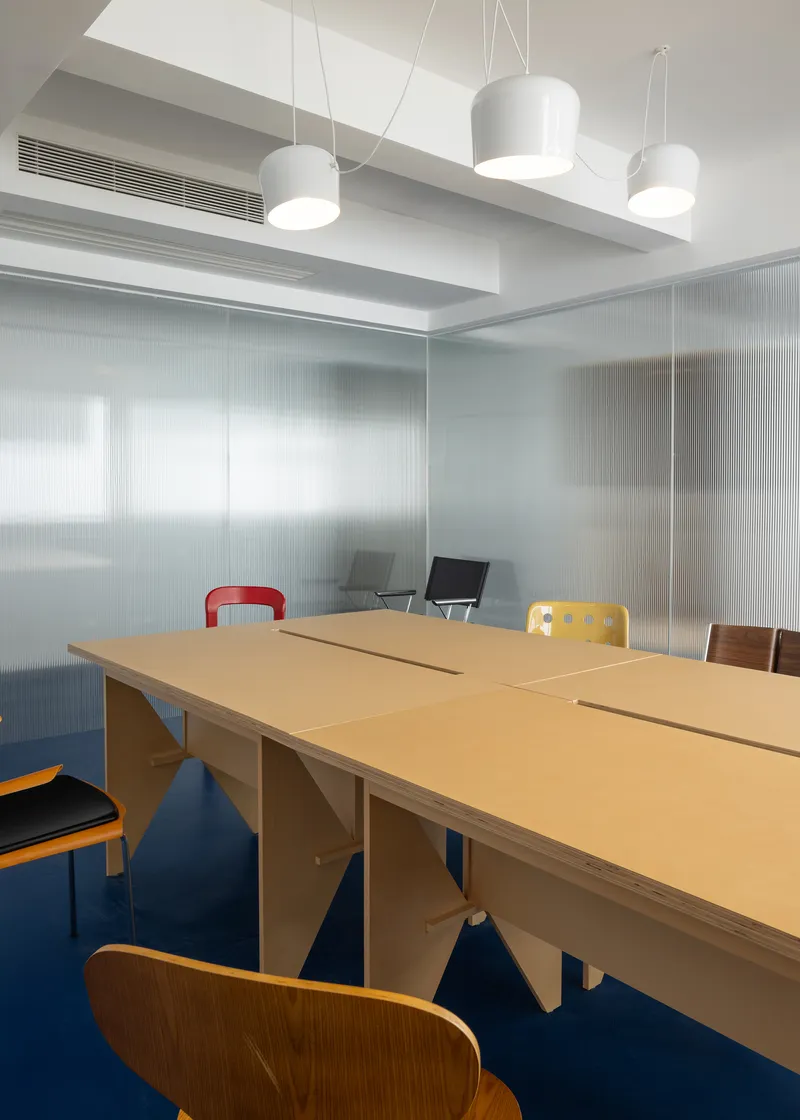
Meeting rooms use translucent ribbed glass partitions to maintain privacy while admitting diffused light. The blue carpet in the conference room picks up the tile color from the circulation spaces, maintaining the building's chromatic logic even behind closed doors. A long wooden table surrounded by mixed chairs in a frosted glass room suggests that formality here is calibrated to the culture of the workplace: present but not stiff.
Plans and Drawings
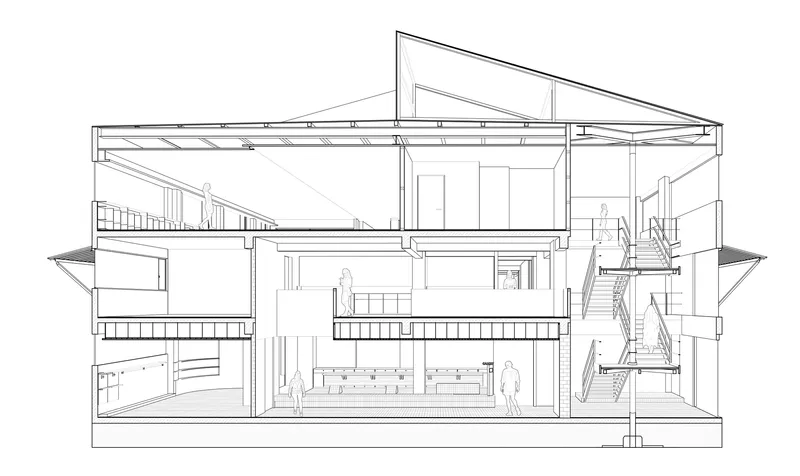
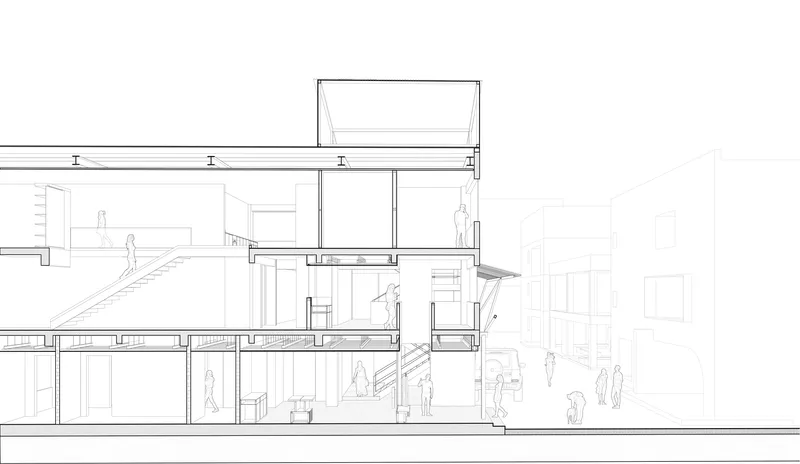
The section drawings reveal how DPAA Design manipulated the existing warehouse volume. Split-level floor plates create spatial variety within what was a straightforward stacked plan. The pitched roof structure accommodates the glass box addition while maintaining a coherent roofline. What the sections make especially clear is the proportion of the central atrium: it is not a token void but a substantial carve-out that reorganizes the entire building around daylight and vertical movement.
Why This Project Matters
Adaptive reuse of industrial buildings is not a new category, but Heyi Office is a useful example of how to do it with discipline. The palette is limited, the structural moves are legible, and the spatial strategy (central atrium, open stairs, courtyard activation) solves real problems rather than performing theoretical ones. DPAA Design resisted the temptation to erase the warehouse and instead used its constraints as a framework for something more complex.
More importantly, the project takes the garment industry seriously as a design client. The custom millwork, the hanging rails, the generous circulation that can accommodate the movement of samples and materials: these are not afterthoughts. They are evidence of an architecture practice that listened to how the building would actually be used. In a city where garment production is a defining economic activity, giving that work a well-designed setting is a quiet but meaningful statement.
Heyi Office by DPAA Design (Lead architects: Dao, Pick Up). Guangzhou, China. 2,000 m². Completed 2025. Photography by Lihao.
About the Studio
DPAA Design
Share Your Own Work on uni.xyz
If projects like this are the kind of work you want to make, uni.xyz is a place to publish your own, find collaborators, and enter design competitions.


Popular Articles
Popular articles from the community

Extended Shell: Retrofitting Kolkata's Balconies as Living Urban Thresholds
A modular retrofit system recovers the social and environmental intelligence of Kolkata's historic verandas for contemporary Park Street residents.

The Amber Palace Opera: A Geological Fiction Surfaces on Tallinn's Baltic Waterfront
Pierre Brillard reimagines a Baltic legend as a public landscape, opera house, and waterfront promenade rooted in Tallinn's coastal identity.

Manzana Morphosis: Stretching Barcelona's Grid into a Living Landscape for 2050
A radical reworking of the Eixample manzana turns density into a tool for generous public space, vertical ecology, and environmental performance.

Opera on the Sea: Driftwood Logic Shapes a Timber Opera House on Estonia's Coast
Trevor Orgill's opera house translates the entangled drift of floating timber into a civic building where wood, water, and music converge.

Similar Reads
You might also enjoy these articles

Pixel Gardens: One Repeated Module Stacked Into a Terraced Social Housing Tower for Famagusta
Salem Bader's shortlisted housing tower builds a vertical neighbourhood from one repeated module, offsetting units to carve terraces, light and air.

Bao Huynh Watercolor Atelier: A Serene Art Retreat in Hội An
Bao Huynh Watercolor Atelier in Hội An blends multifunctional art spaces, sustainable design, local materials, and family-friendly living in a serene environment.

Atelier Macri Concept Store Interior Design by CASE-REAL
Atelier Macri store features a "ko" counter, walnut wood details, cork displays, blending retail, gallery, and seamless customer experiences.

Manuel Vargas Izquierdo Stadium and High-Performance Sports Center: Architectural Excellence in Jalpa de Méndez
The Manuel Vargas Izquierdo Stadium blends sustainable design, inclusive sports facilities, and cultural-inspired architecture, revitalizing Jalpa de Méndez’s public spaces.

Comments (0)
Please login or sign up to add comments
No comments yet. Be the first to comment!