

House in the Forest by Vasconcelos Arquitectura + Espacio Tangible – A Harmonious Family Retreat in Nature
House in the Forest by Vasconcelos Arquitectura blends sustainable design, natural materials, and immersive forest views for a private, family-focused retreat.


Nestled in the lush forests of San Simón el Alto, just 2.5 hours from Mexico City, the House in the Forest by Vasconcelos Arquitectura in collaboration with Espacio Tangible redefines modern family living in natural surroundings. Located on a 10,000 m² plot, surrounded by towering trees up to 30 meters high, the project transforms the traditional cabin concept into a contemporary retreat designed to disconnect from urban routines and reconnect with nature.


The architectural approach is guided by a principle of adaptation: the house adapts to the forest, preserving all existing trees while introducing twelve new native species to revitalize the ecosystem. The residence is strategically hidden from the street and neighboring properties, ensuring complete privacy and immersion in the forest environment.


The main structure comprises two distinct volumes separating public and private areas, connected by a hallway and transparent staircases, creating uninterrupted visual access to the surrounding landscape. Its central position on the site maximizes 360-degree forest views, making nature the protagonist of the home’s design. Each room features expansive windows that frame the forest like living artworks, fostering a constant dialogue between interior and exterior spaces.


The material palette emphasizes authenticity and longevity, utilizing wood, concrete, stone, and steel—all locally sourced from Mexico. These materials are chosen to age gracefully, telling their own story over time. The house’s modular design, with flexible proportions ranging from 1 to 18 feet, allows the spaces to adapt organically to the family’s evolving needs.


Outdoor spaces include a covered terrace serving as a secondary dining and living area, complemented by a hot water pool. Natural pathways, play areas crafted from fallen logs, and a firepit create opportunities for exploration, play, and family bonding. Elevated on a concrete platform supported by columns, the structure minimally impacts the natural water flow, flora, and fauna, emphasizing ecological sensitivity. The southwest orientation optimizes natural light while leveraging the shadows cast by the trees for comfort and energy efficiency.


The interior design prioritizes family life and children’s freedom to explore safely. About 90% of the furniture is custom-made in Mexico, collaborating with local artisans. Rugs woven on backstrap looms from Oaxaca, handcrafted carpentry from Toluca, and bespoke elements reflect the family’s lifestyle. Rooms are personalized: the girls’ bedroom features their favorite colors, while the boys’ space includes a reading corner and loft for play during rainy days. The interiors also showcase emerging Mexican artists, such as Diego Ascencio, blending cultural authenticity with functional design.


The House in the Forest is more than a family residence; it is a sanctuary for contemplation, exploration, and connection. It exemplifies how architecture can harmonize with nature, creating a home that honors its surroundings while offering meaningful, immersive experiences for its inhabitants.


All the photographs are works of Fabián Martínez, Camila Cossio


Popular Articles
Popular articles from the community

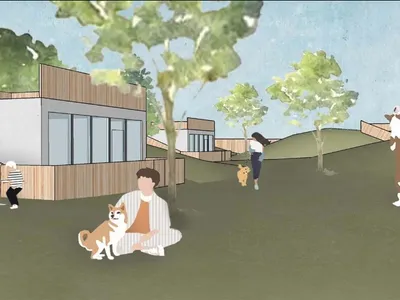
Temporary Home for Dogs: A Reversed Zoo Rethinks Animal Shelter Architecture
In Bucharest, a sinuous corridor and freed landscape flip the logic of containment, designing a shelter that works to make itself unnecessary.
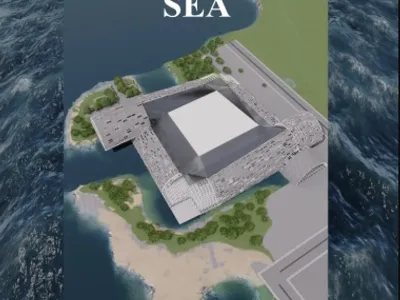
Opera on the Sea: Driftwood Logic Shapes a Timber Opera House on Estonia's Coast
Trevor Orgill's opera house translates the entangled drift of floating timber into a civic building where wood, water, and music converge.
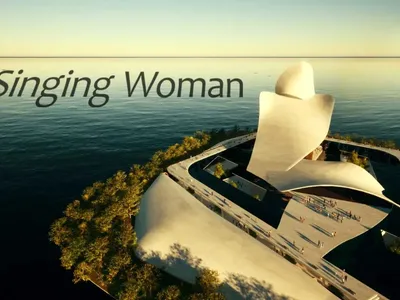
Singing Woman: An Opera House That Performs Before the Curtain Rises
Ovidiu Cristian Pavel's conceptual opera house translates Estonia's choral identity into a sculpted waterfront landmark facing the Baltic Sea.
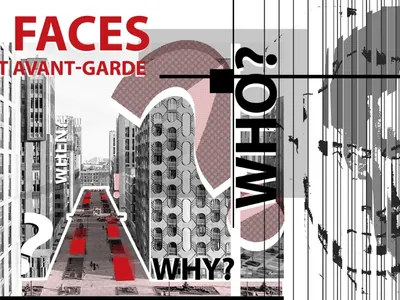
Faces of the Soviet Avant-Garde: Turning Moscow's Street Names into an Open-Air Museum
A network of sculptural installations across a Moscow residential district transforms forgotten architect names into spatial encounters with cultural memor

Similar Reads
You might also enjoy these articles


Hodi-Mandai Geram
Project Function: Preservation and revitalization of the Intangible heritage and socio-spatial identity of the Hodi by Housing, Cultural Memory Center, Sacred Grove, landscape, local tourism economy


Olio Towers: A Mid-Rise for Performers That Fuses Housing, Rehearsal, and Stage
Located blocks from Houston's Theater District, this modular tower stacks living units around a central performance atrium.

Oasis: Modular Green Housing Carved into Dhaka's Urban Fabric
A shortlisted Plugin Housing entry reclaims unauthorized settlements in Dhaka with stepped concrete volumes, green roofs, and ventilation-driven design.

Black Hole: A Floating Megastructure for the Post-Physical Era
Emiliano Mazzarotto envisions a spherical, self-scaling arena where e-sports, digital hotels, and holographic stadiums replace traditional public space.

Explore Housing Competitions
Discover active competitions in this discipline

Challenge to reimagine the Iron Throne

Photograph architecture without architects

Illustrate the lost glory of Angkor Wat - Render Challenge

Design challenge to reuse E-waste
Comments (0)
Please login or sign up to add comments
No comments yet. Be the first to comment!