
House in the Slope: A Modern Riverside Refuge by 77 Studio Architecture
A modern riverside home in Poland seamlessly embedded in a slope, blending corten steel, green roofs, and panoramic Vistula views.


A Home Carved Into Nature
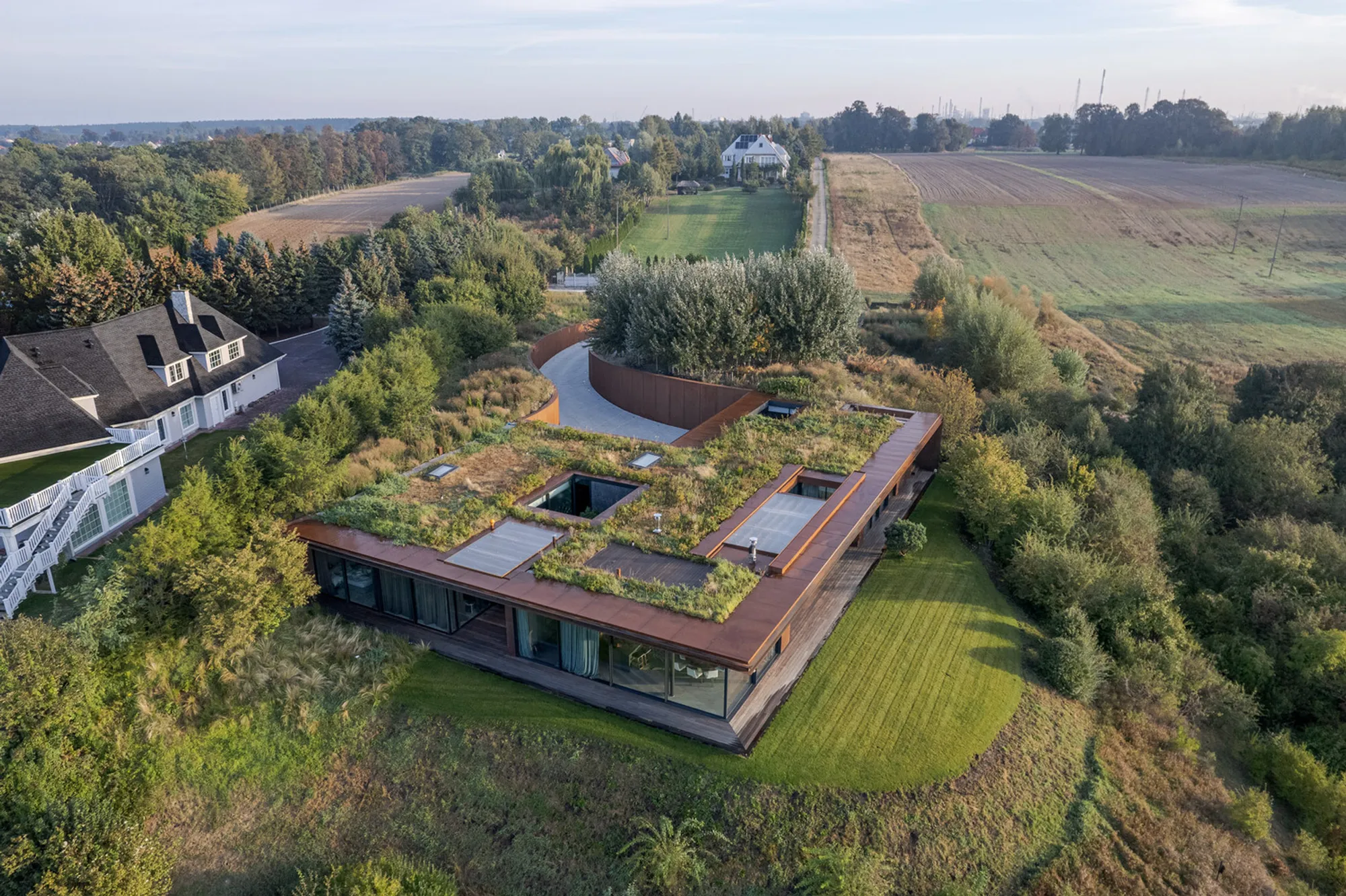
The House in the Slope by 77 Studio Architecture is a masterclass in integrating contemporary design with natural topography. Nestled into a riverside escarpment along the Vistula River, Poland’s longest and most iconic waterway, this 450-square-meter single-family residence redefines what it means to live in harmony with the landscape.
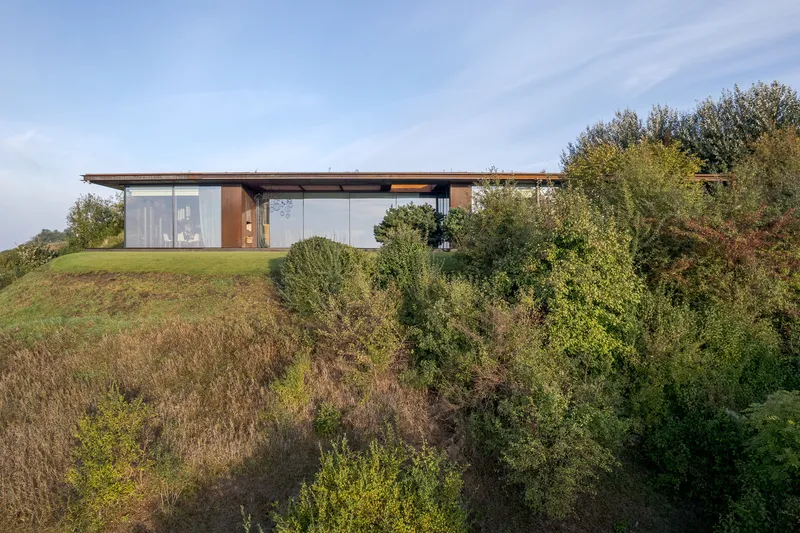
Rather than dominating its surroundings, the structure seems to emerge from the earth itself, reflecting the studio’s core design philosophy: sensitivity to place, view, and nature. The project not only captures panoramic views of the river and the distant city skyline but also offers a profound sense of privacy and tranquility for its residents.
The Vision: A House Born from a View
The project’s story begins with its owner—a nature lover who often visited this riverside slope for its stunning vistas. Standing on a small earthen ledge overlooking the Vistula, he envisioned a home that would allow him to experience that beauty every day.
When the task was handed to Paweł Naduk, founder of 77 Studio Architecture, the guiding principle became clear: the house’s design must build a deep, poetic connection between architecture and landscape.
“We knew one of the most important features of the building would be its relationship with the river,” explains Naduk. “The creative interaction with the surroundings shaped everything—from orientation to material selection.”
Design Concept: Rotation, Immersion, and Respect
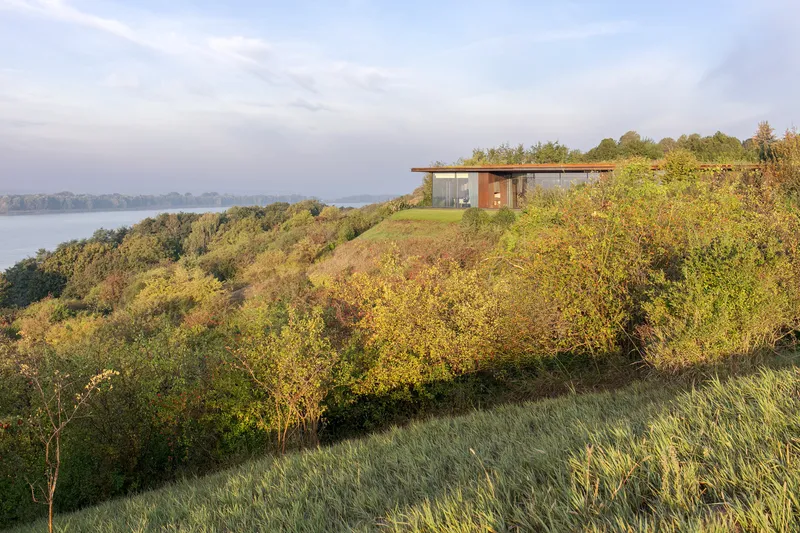
To preserve and frame the best views, the architects rotated the building slightly in relation to the plot’s boundaries, aligning it with the most compelling perspectives of the slope and river. This subtle rotation allowed the interior spaces to perfectly capture the profile of the terrain, vegetation, and the sweeping ribbon of water below.
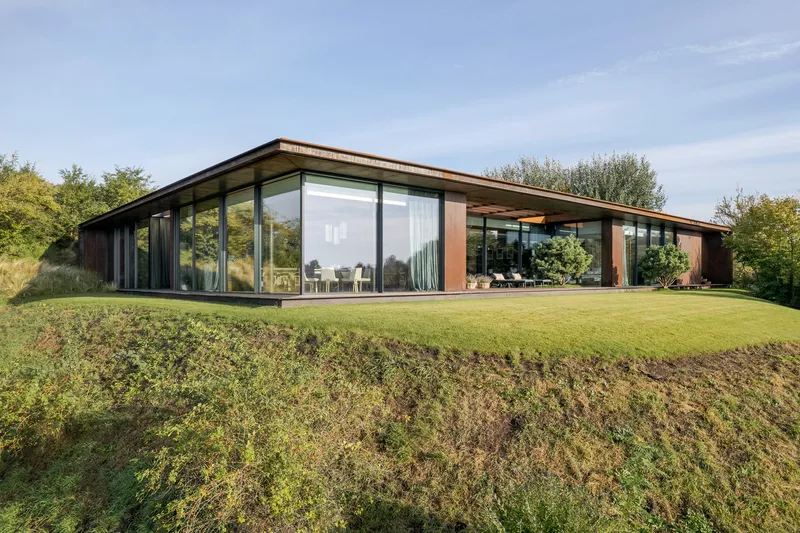
The house is intentionally lowered into the slope, not perched above it. By embedding the structure into the earth, the architects minimized visual impact, maintained the natural skyline, and created an immersive experience of the site. From the river’s edge, the house is visible only as a thin, horizontal cornice line, blending effortlessly with the contours of the landscape.
Architectural Expression: Modesty and Strength
Respect for context drove every design decision. A large, traditional neighboring house nearby discouraged the creation of a bold or competing form. Instead, House in the Slope is deliberately understated, hidden within a wild meadow that gently rises toward the ridge.
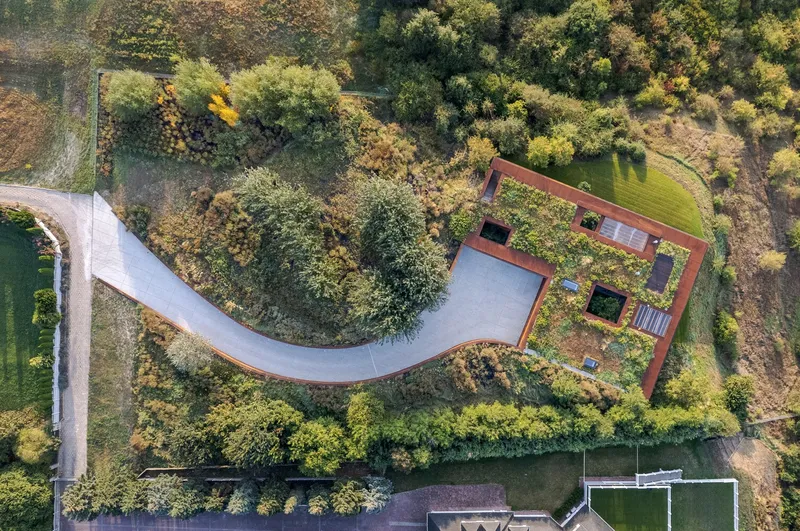
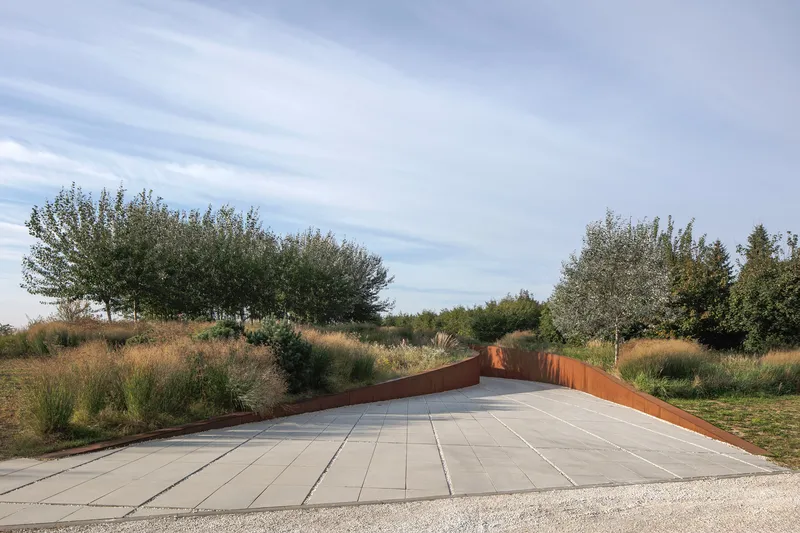
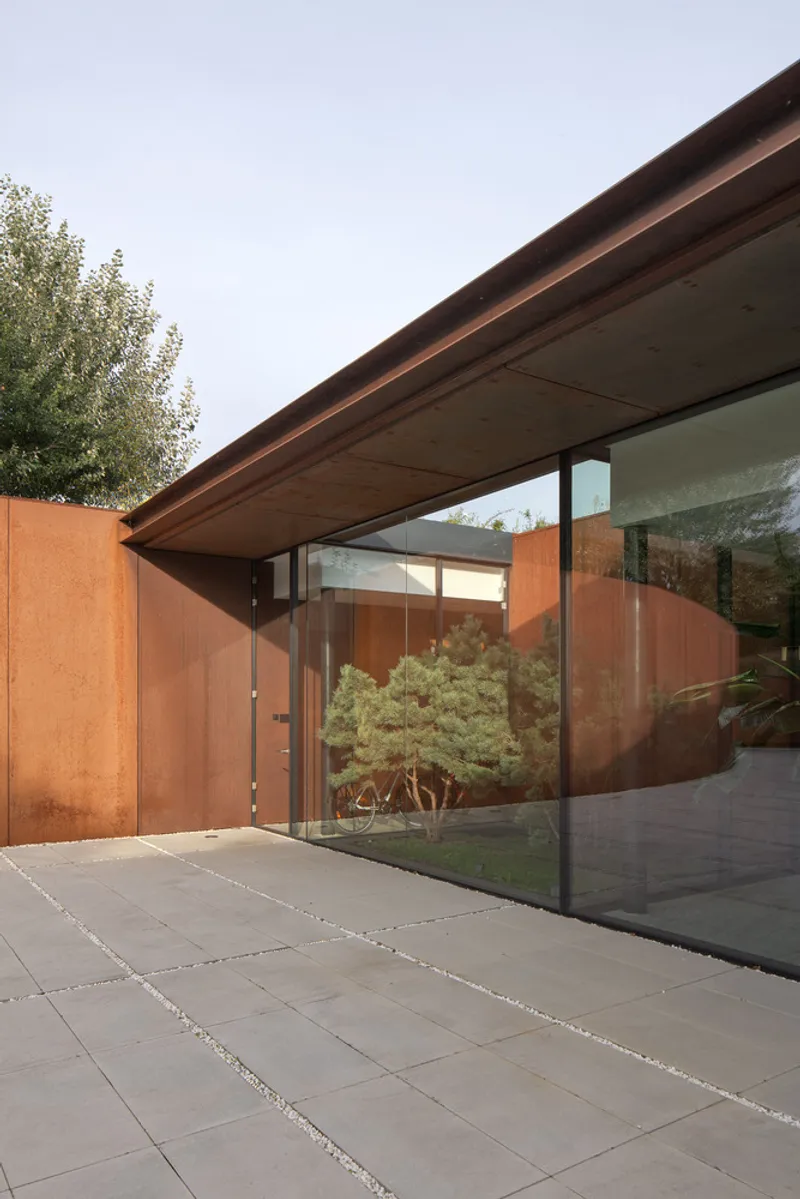
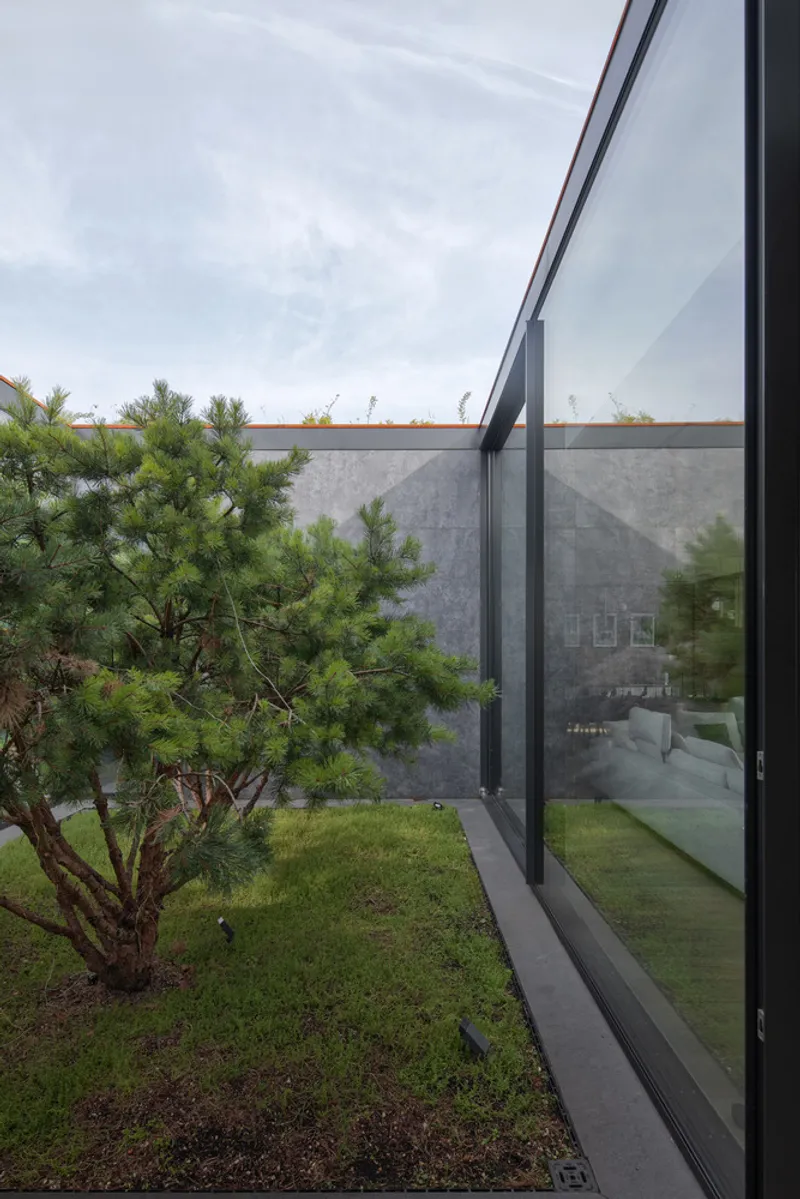
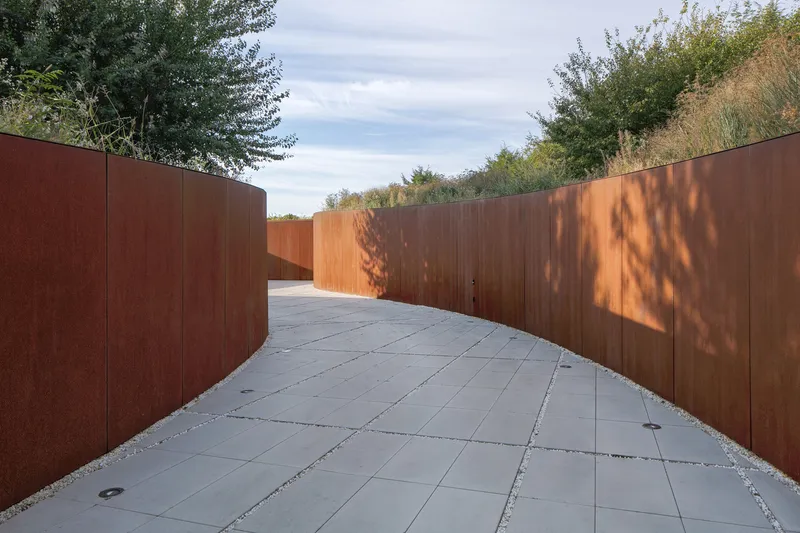
Visitors approach through a “rusty steel ravine” — a corten-lined entrance path cut through the meadow, leading to a recessed patio and the discreet entryway. The result is an element of surprise: the panoramic view of the Vistula remains concealed until one steps inside. This restrained choreography enhances the drama of the revealed landscape.
“We wanted to preserve the natural character and maintain the element of surprise,” says Naduk. “The design creates a quiet, grounded space that opens dramatically to the view beyond.”
Material Palette: Corten Steel and Green Roofs
The building’s façades and driveway edges are clad in robust corten steel panels, their rich, earthy tones complementing the surrounding terrain. The heavy steel plates lend the buried structure a muscular, grounded character, while weathering naturally over time to echo the colors of soil and vegetation.
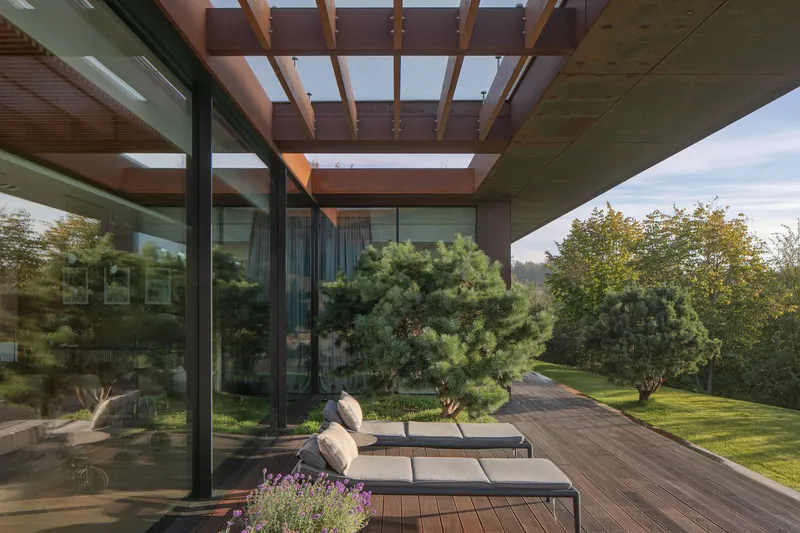
Above, a green roof blankets the structure, merging it seamlessly into the slope and minimizing its environmental footprint. The use of native plant species along the patios and roof reinforces the home’s camouflage effect and biodiversity.
Notably, the property is unfenced—instead, natural shrubs and riverbank flora form an organic boundary, underscoring the project’s commitment to unobtrusive living.
Interior Layout: Light, Landscape, and Flow
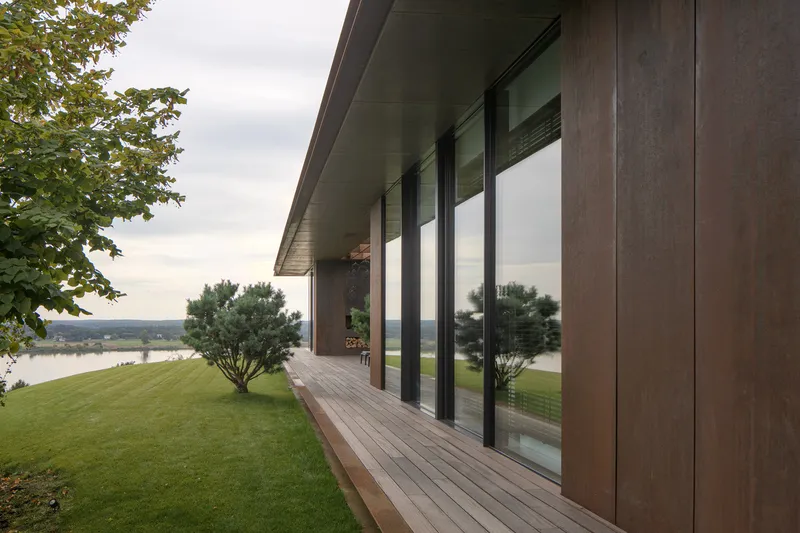
Despite being partially sunken, the House in the Slope enjoys abundant natural daylight, introduced through small courtyards and strategically positioned patios. The single-story layout is organized for both functionality and an uninterrupted visual connection to the river.
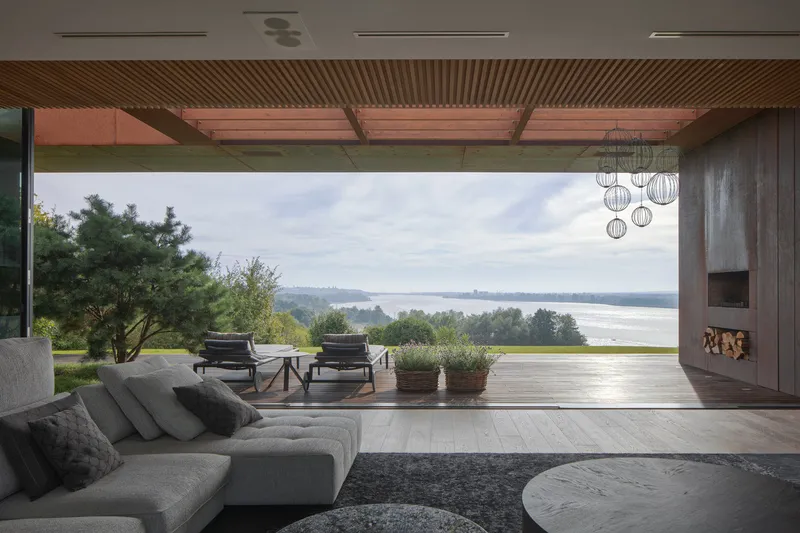
- Living Area: Positioned on the southeast side, the open-plan living room connects directly to a large terrace overlooking the Vistula. A 12-meter-wide sliding glass wall erases the boundary between indoors and outdoors, immersing residents in the scenery.
- Private Spaces: The master bedroom and en suite are nearby, oriented for morning light and serene river views. Two additional bedrooms occupy the southwest side, ensuring privacy and warmth.
- Kitchen and Dining: Located on the southern corner, the kitchen benefits from full sunlight throughout the day, creating a bright, convivial heart of the home.
Every movement through the house maintains a visual dialogue with the landscape, ensuring the river is never out of sight.
Sustainability and Energy Efficiency
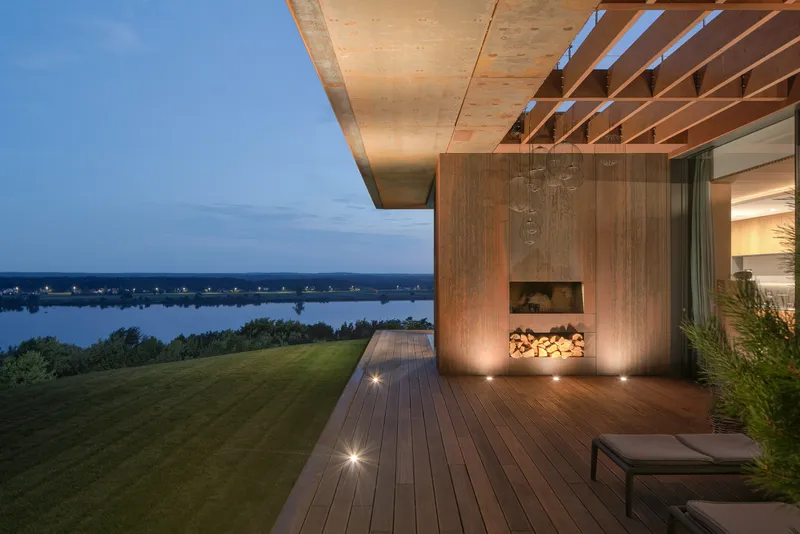
The project embraces sustainable architecture not only in form but in performance. Its partially buried structure enhances thermal stability, while sun breakers, extended cornices, and smart home automation reduce the need for air conditioning. Renewable energy systems further lower the home’s environmental impact, aligning with contemporary green building principles.
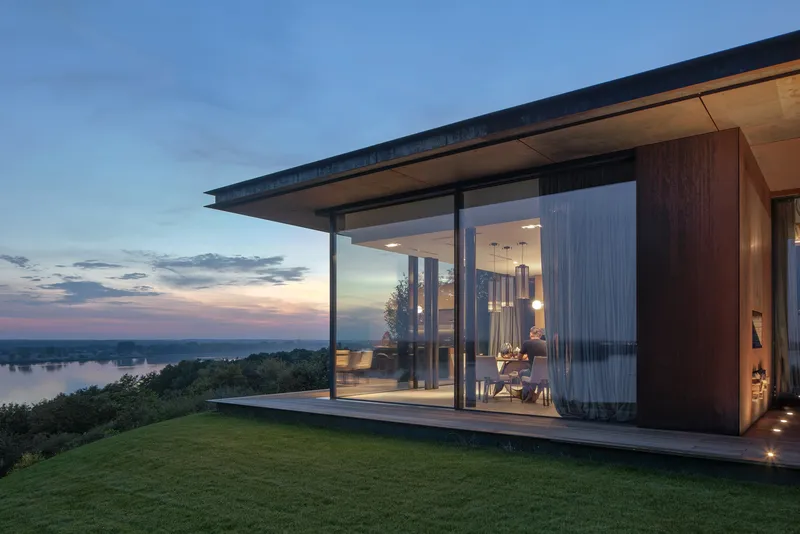
A Dialogue Between Architecture and Earth
Ultimately, the House in the Slope is more than a residential project—it is a meditation on coexistence. By embedding architecture into nature rather than imposing it upon the land, 77 Studio Architecture demonstrates how modern design can amplify the beauty of place while remaining humble within it.
It is a quiet masterpiece—one that reveals its power not through spectacle, but through silence, proportion, and an unwavering respect for its setting.
All photographs are works of Piotr Krajewski



Popular Articles
Popular articles from the community


Lunar Spiral: Space Architecture Shaped by the Mathematics of the Universe
Lunar Spiral reimagines space architecture through Fibonacci geometry, lunar regolith, levitating habitats, and self-sustaining Moon living.

Conexión: Biophilic Design Reimagines High-Rise Living in Hong Kong
Conexión reimagines high-rise living in Hong Kong through biophilic design, green facades, shared spaces, daylight, water and nature within.

The Ocean Hive: Sustainable Architecture for a Self-Sufficient Civilization at Sea
The Ocean Hive imagines sustainable architecture at sea, where modular habitats, algae, wave power and ocean waste sustain a growing colony.

The Musturak Paradise: Senior Living Architecture for a Connected Future in Temara, Morocco
The Musturak Paradise reimagines senior living architecture in Temara via private homes, social spaces, culture, community, and shared care.


Similar Reads
You might also enjoy these articles


Hodi-Mandai Geram
Project Function: Preservation and revitalization of the Intangible heritage and socio-spatial identity of the Hodi by Housing, Cultural Memory Center, Sacred Grove, landscape, local tourism economy


Olio Towers: A Mid-Rise for Performers That Fuses Housing, Rehearsal, and Stage
Located blocks from Houston's Theater District, this modular tower stacks living units around a central performance atrium.

Oasis: Modular Green Housing Carved into Dhaka's Urban Fabric
A shortlisted Plugin Housing entry reclaims unauthorized settlements in Dhaka with stepped concrete volumes, green roofs, and ventilation-driven design.

Black Hole: A Floating Megastructure for the Post-Physical Era
Emiliano Mazzarotto envisions a spherical, self-scaling arena where e-sports, digital hotels, and holographic stadiums replace traditional public space.


Explore Architecture Competitions
Discover active competitions in this discipline



Challenge to reimagine the Iron Throne


Photograph architecture without architects


Illustrate the lost glory of Angkor Wat - Render Challenge


Design challenge to reuse E-waste
Comments (0)
Please login or sign up to add comments
No comments yet. Be the first to comment!