
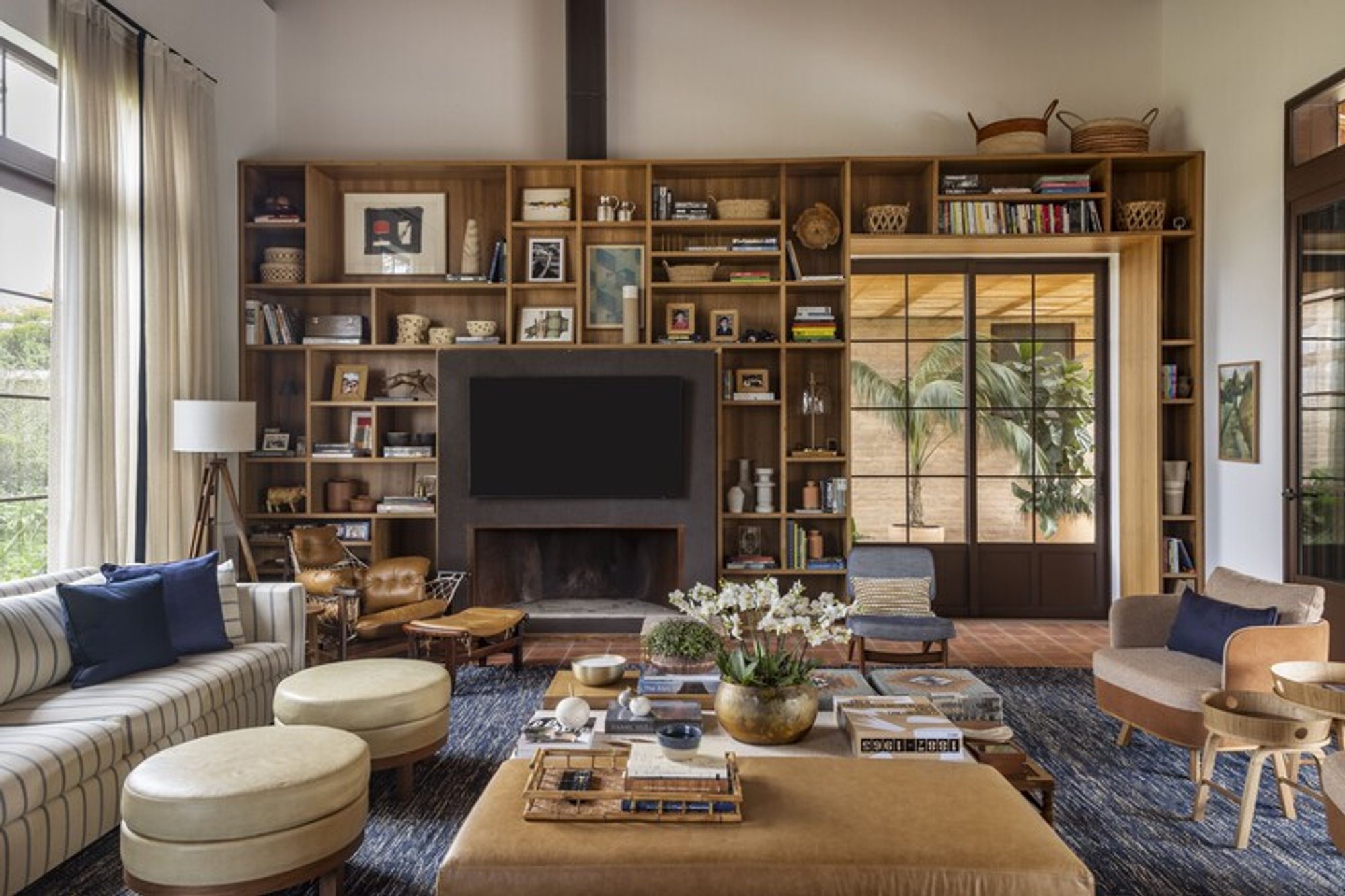
House MF by Daniel Fromer
A contemporary Brazilian residence blending rustic materials, modern comfort, and landscape integration to create a warm, timeless home rooted in place.

Located within a residential condominium in Jardim América, São Paulo, House MF, designed by Daniel Fromer, is a contemporary residence that achieves a rare balance between rustic warmth and modern functionality. Completed in 2023 with an area of 800 m², the house stands out not through monumental gestures, but through its sensitive response to landscape, material memory, and everyday domestic life.
Rustic Modernity and Landscape Integration in the Interior of São Paulo
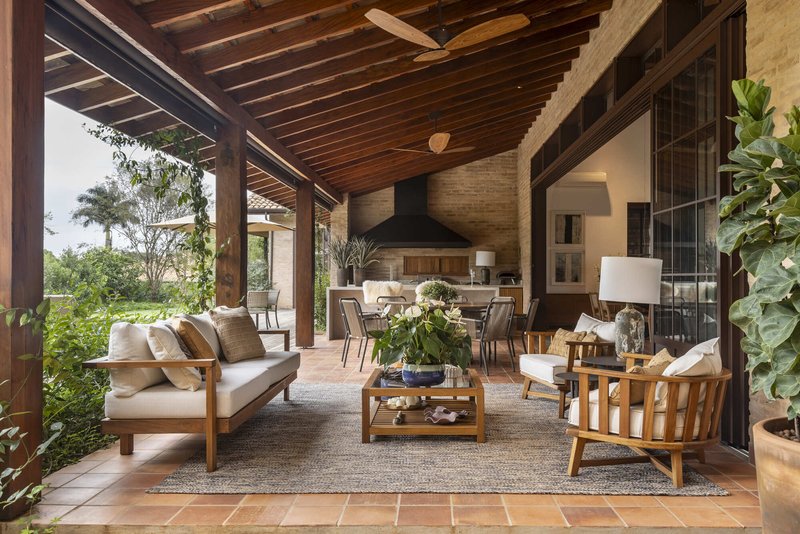
Facing a tree-filled public square, the house was conceived to embrace nature rather than frame it from a distance. From the earliest design stages, the surrounding greenery became a central protagonist, shaping the architecture’s orientation, spatial permeability, and material expression. The result is a residence that feels deeply rooted in place: calm, generous, and quietly timeless.
Respecting Topography and Site Conditions
One of the defining qualities of House MF is its careful response to the site’s original topography. Rather than leveling the land or imposing an artificial geometry, the project adapts itself to the existing terrain. This approach allows the house to sit naturally within the landscape, reinforcing a sense of continuity between built and unbuilt space.
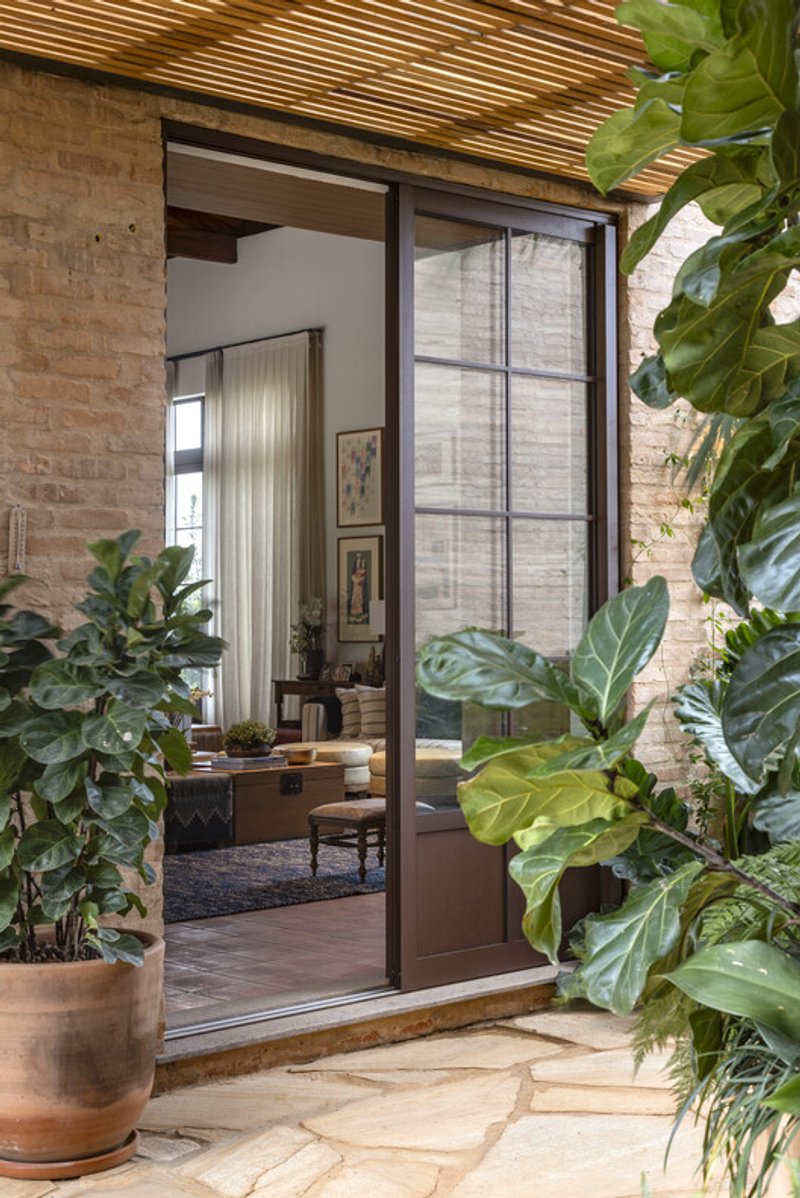
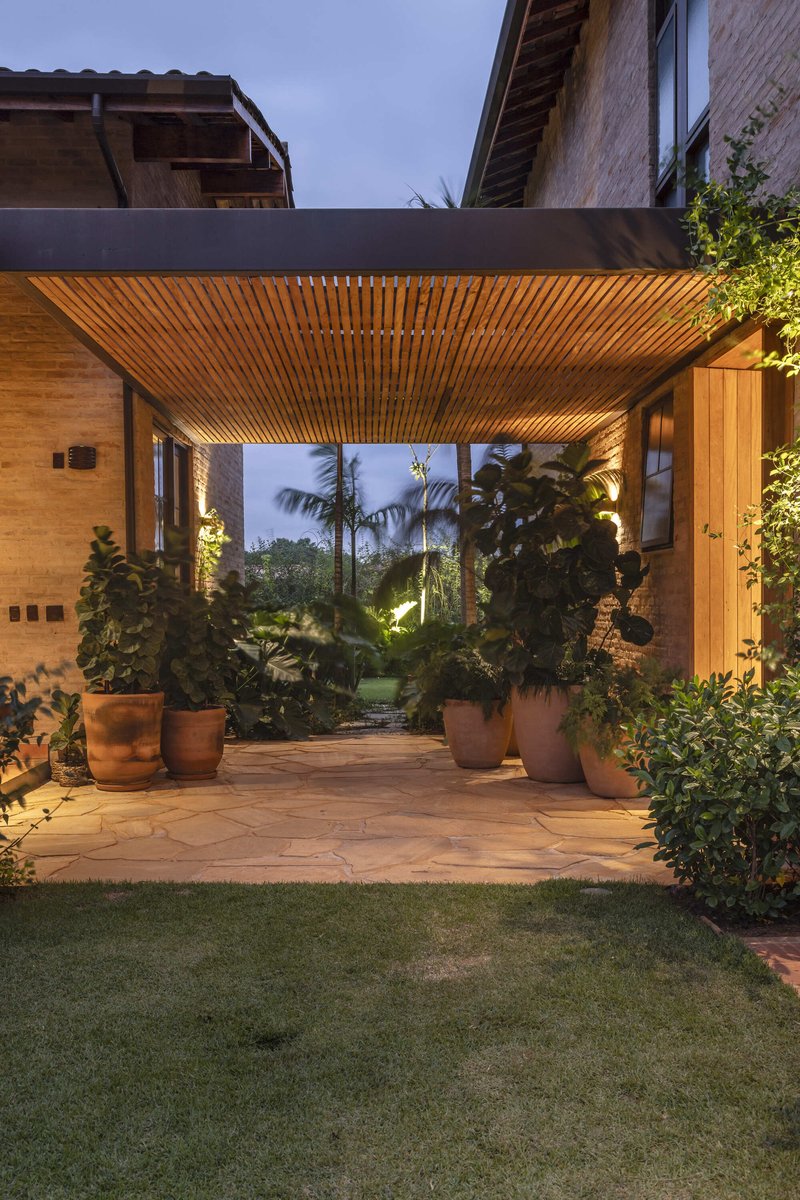
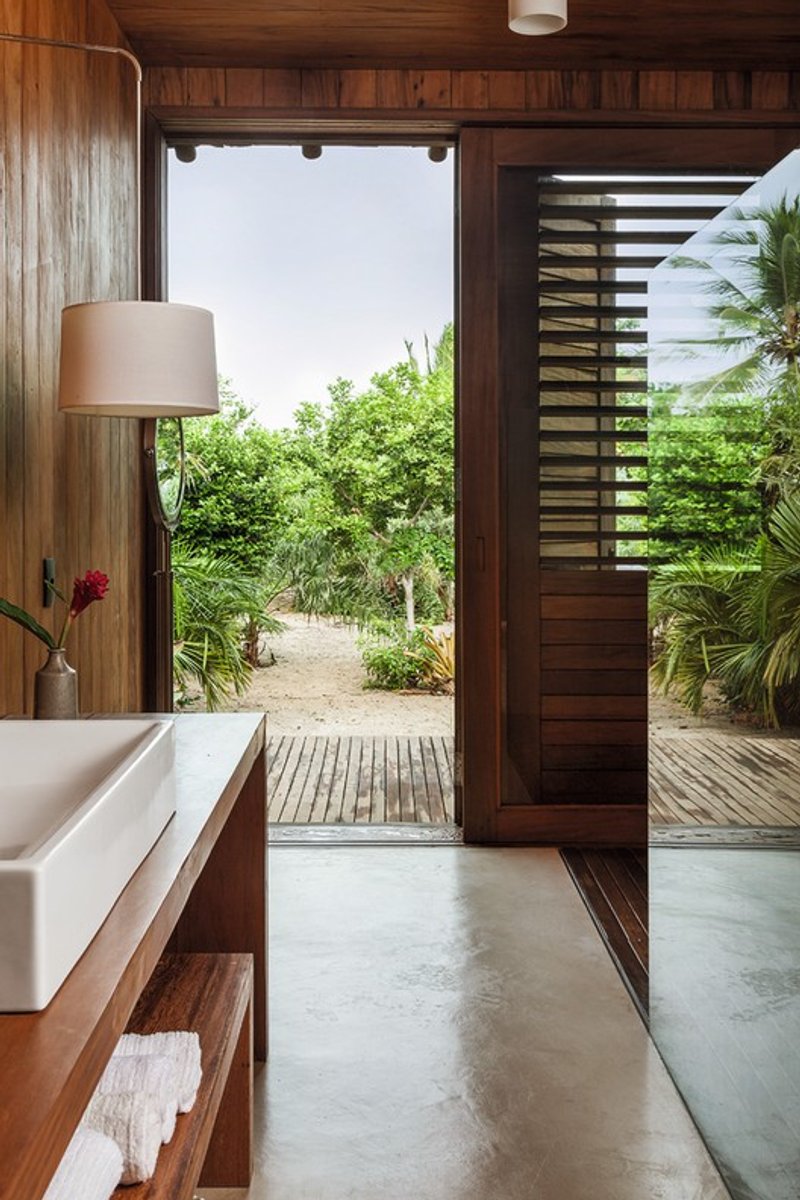
Landscape design by Rodrigo Oliveira plays a crucial role in this integration. Gardens are not treated as decorative margins but as spatial extensions of the house, flowing seamlessly into interior areas. This continuity reinforces the idea that architecture and landscape are not separate disciplines, but complementary systems shaping daily experience.
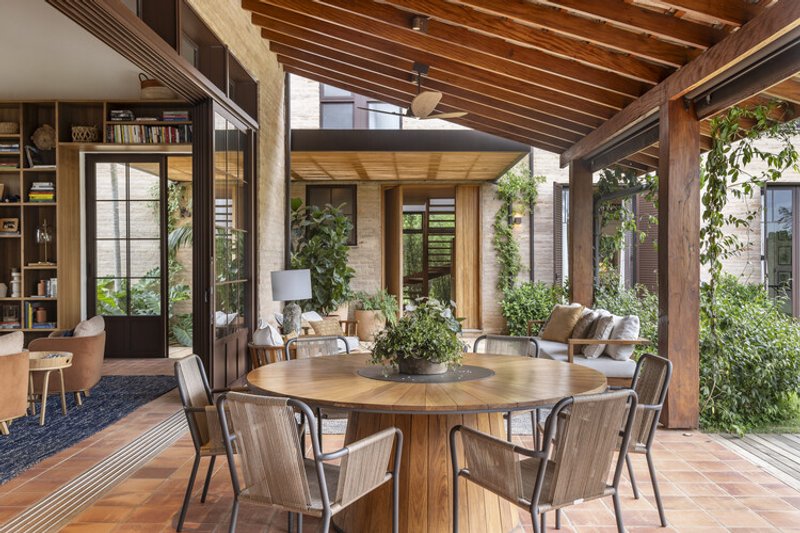
Spatial Permeability and Environmental Comfort
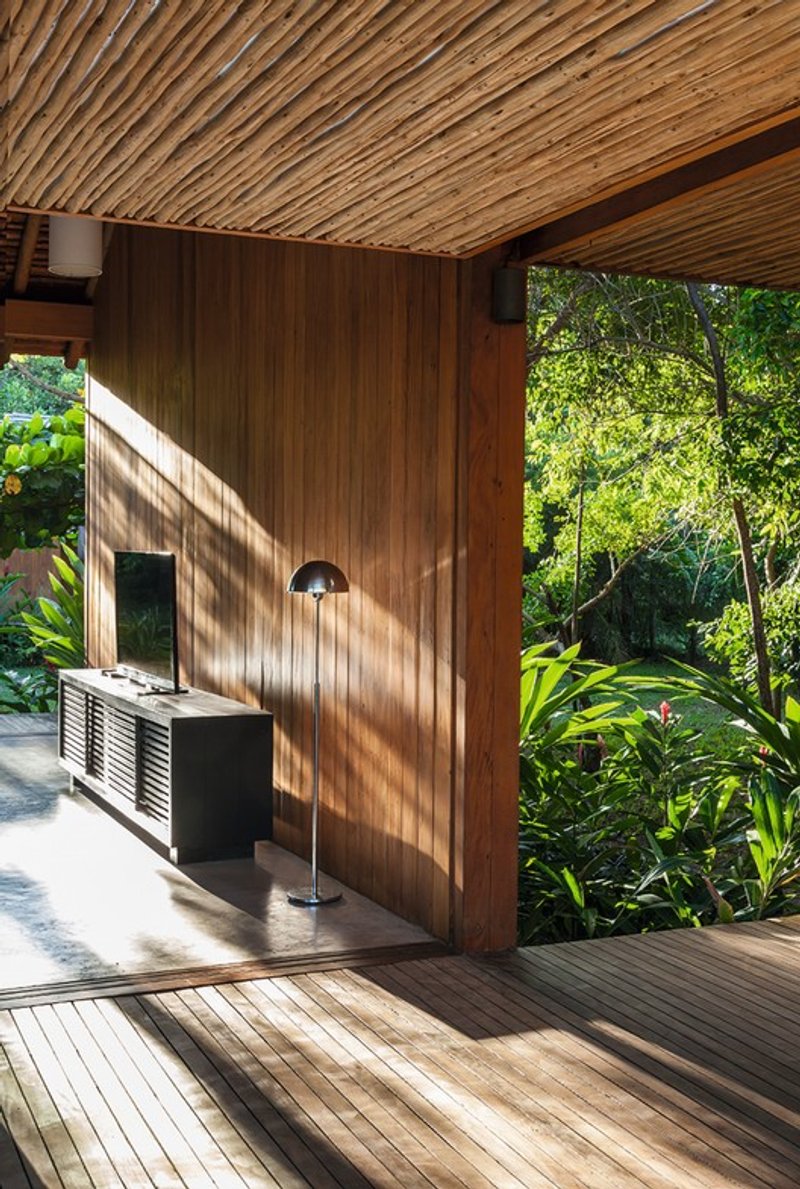
Spatial permeability is a key architectural strategy throughout House MF. Large openings, generous sliding doors, and carefully positioned voids allow the house to breathe naturally, promoting cross-ventilation and reducing reliance on mechanical systems.
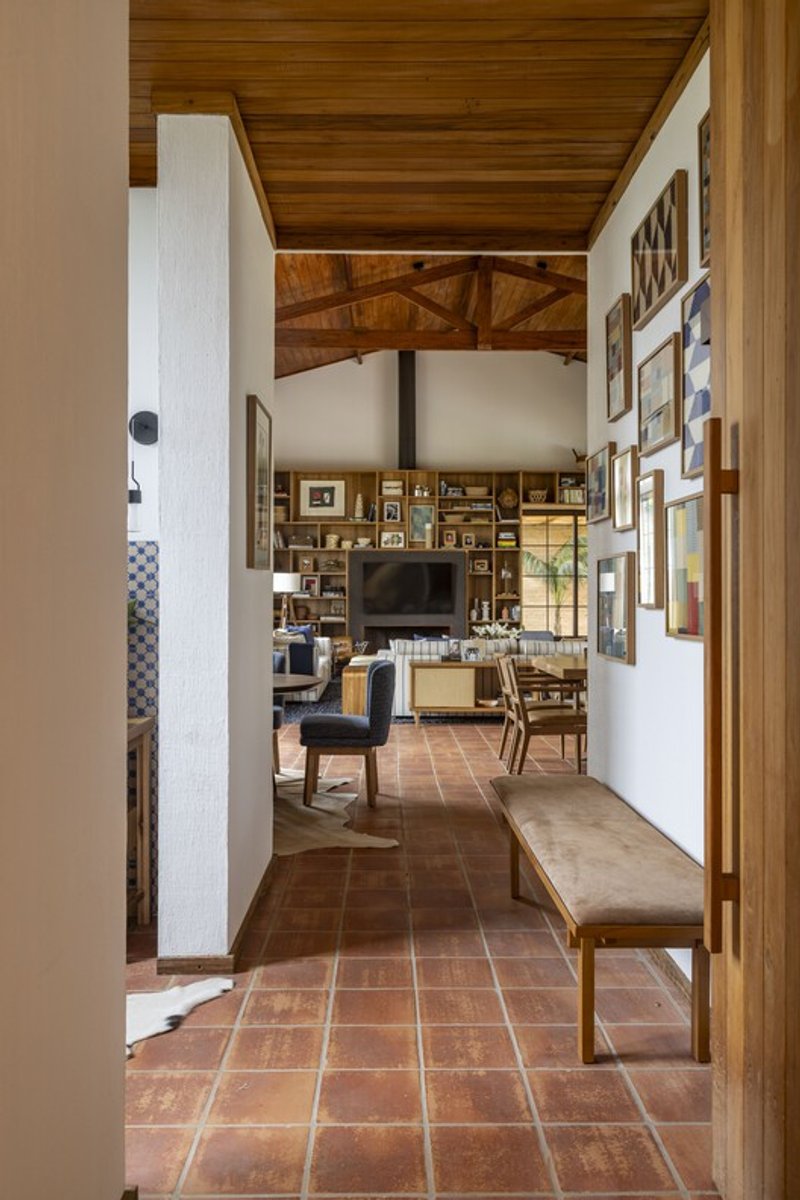
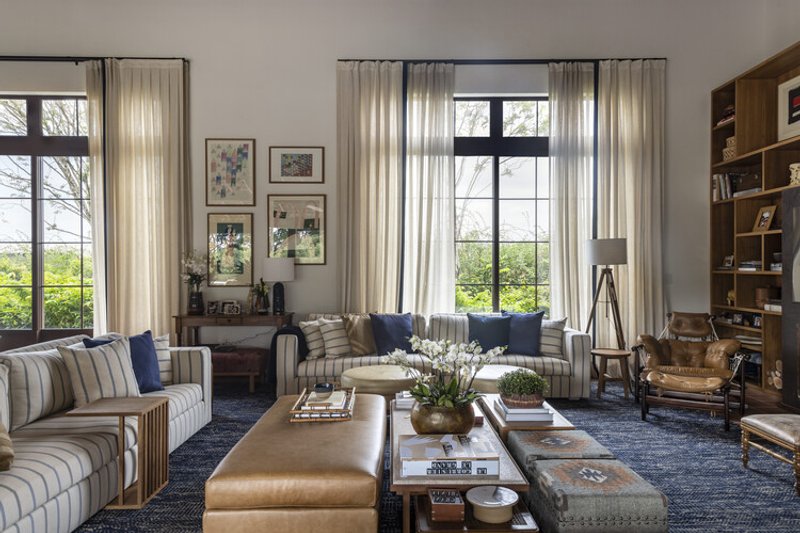
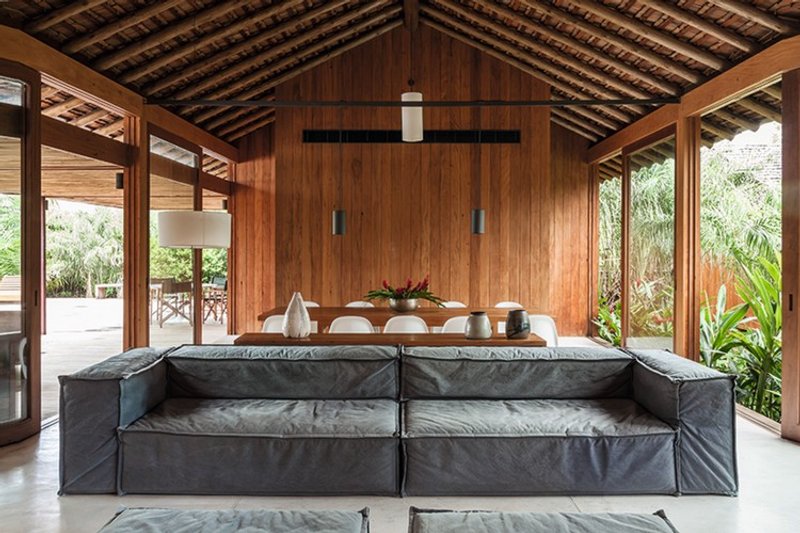
Abundant natural light enters the interiors from multiple directions, creating a constantly changing atmosphere throughout the day. Rather than dramatic contrasts, the light is soft and diffused, reinforcing the tranquil character of the home. Interior and exterior spaces are visually and physically connected, allowing everyday activities to unfold in constant dialogue with the garden.
This permeability fosters a lifestyle closely aligned with Brazil’s climate and culture: one that values openness, fluid movement, and informal social interaction.
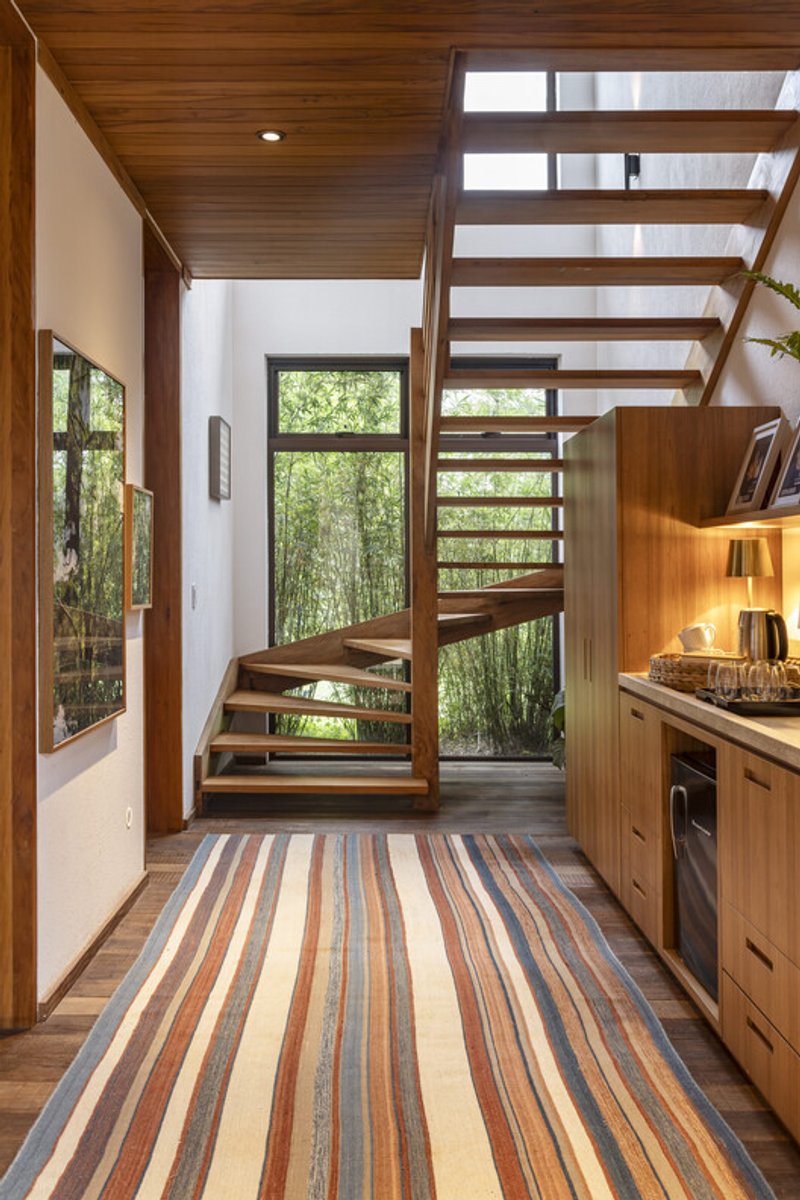
Clear Functional Organization
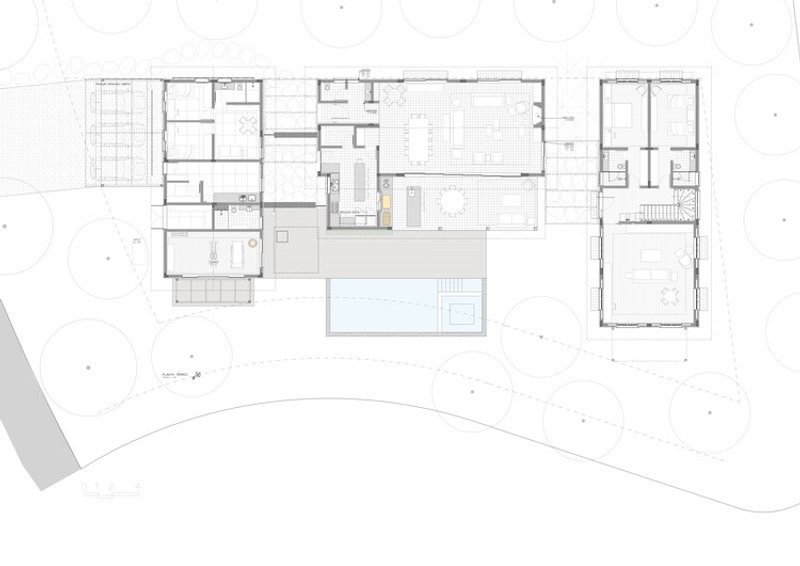
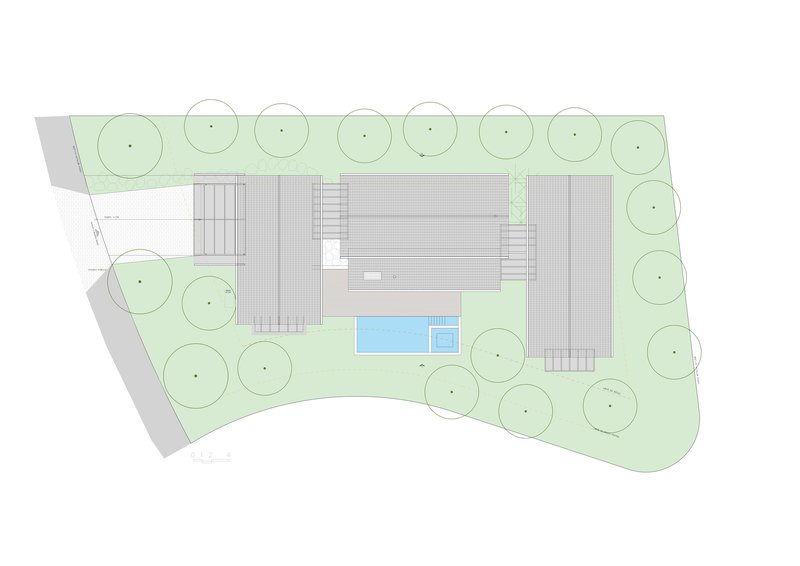
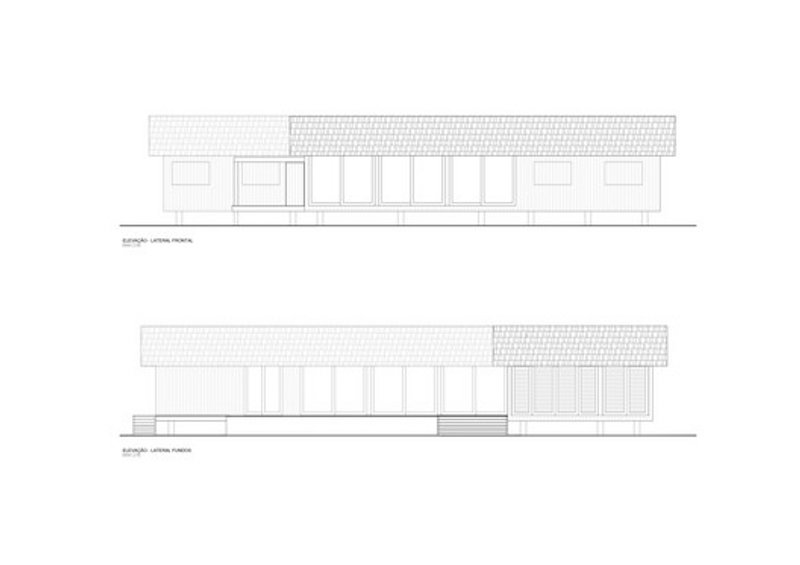
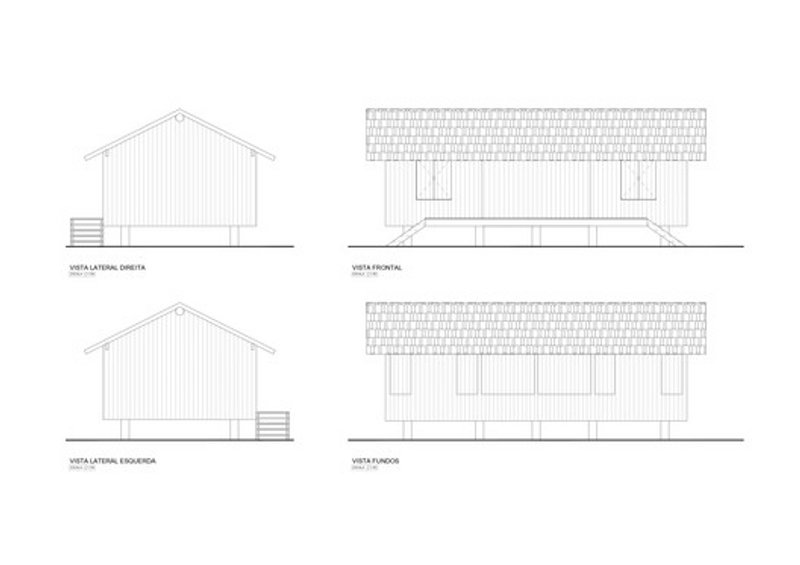
The house is organized into three main volumes, each with a clearly defined role:
- The social block, dedicated to shared activities and gatherings
- The intimate block, ensuring privacy and comfort for the residents
- The service block, discreetly integrated to support daily routines
This clear functional division allows the house to operate efficiently without feeling compartmentalized. Circulation between blocks is intuitive, and transitional spaces are carefully designed to maintain visual continuity.
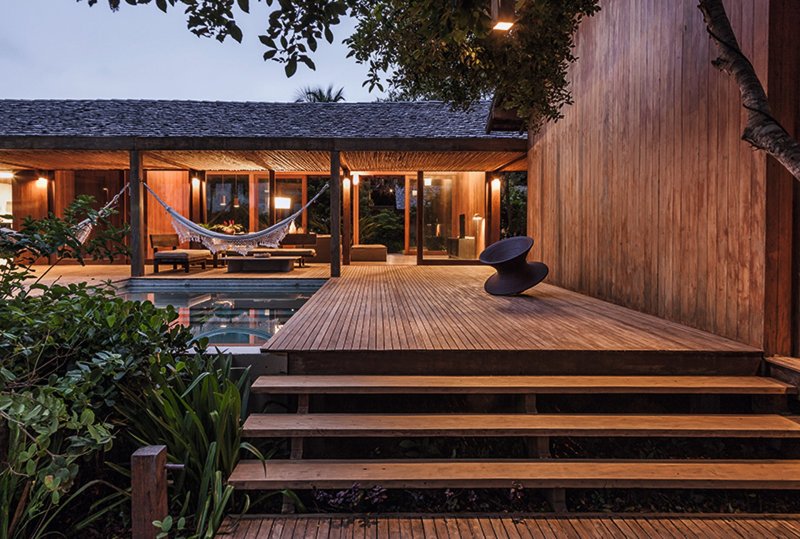
The social block serves as the heart of the house. Living and dining areas open widely onto patios and garden spaces, creating an inviting environment for family life and entertaining. These areas are generous yet intimate, emphasizing comfort over formality.
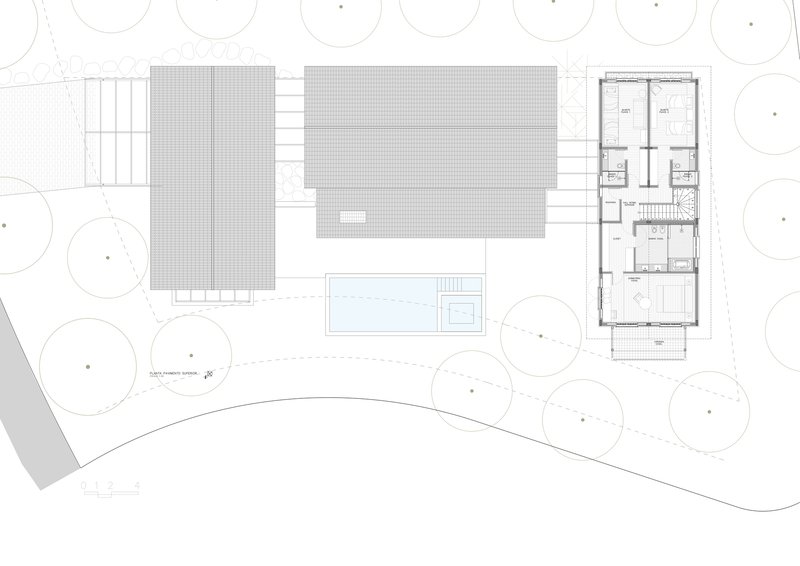
The intimate block is more enclosed, offering a sense of retreat and calm. Bedrooms are oriented to maximize privacy while still benefiting from natural light and views of greenery.
Materiality Rooted in Memory and Place
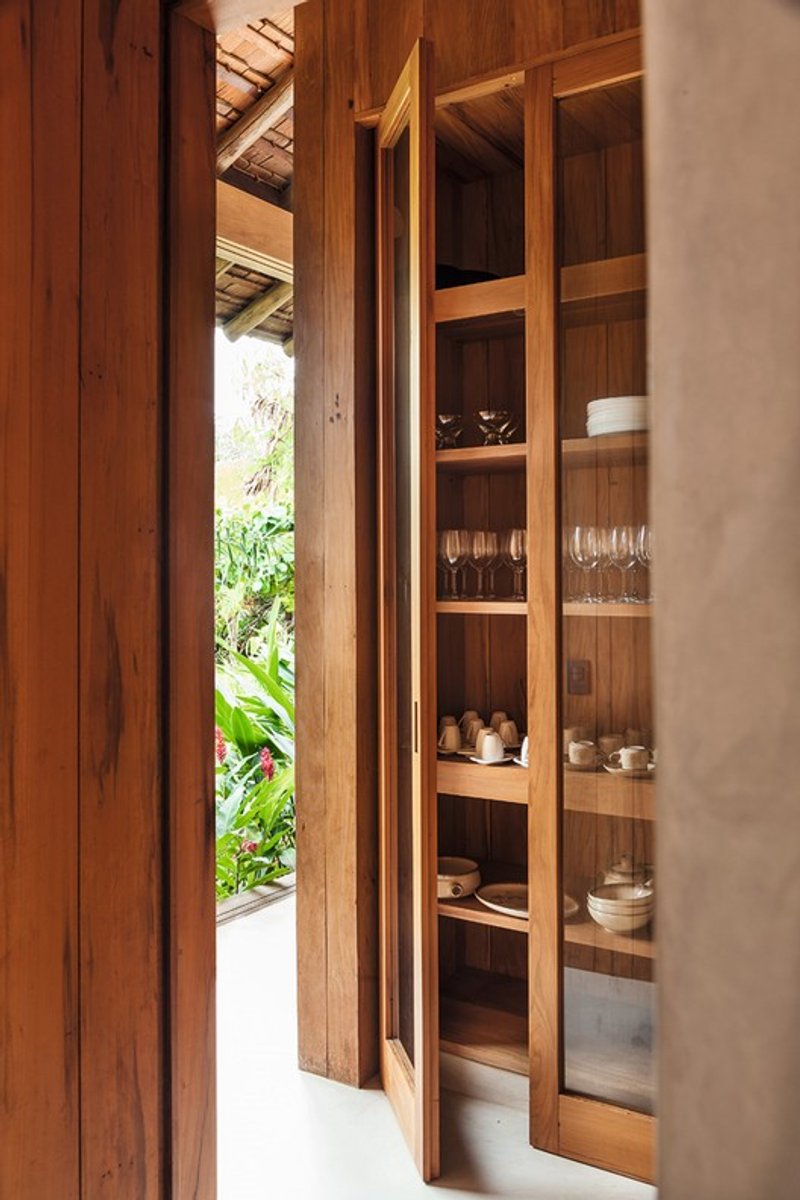
Material selection is central to the identity of House MF. The façade and interiors are composed of wood, ceramic tiles, and reclaimed bricks, materials that evoke rural Brazilian architecture and carry a strong sense of memory.
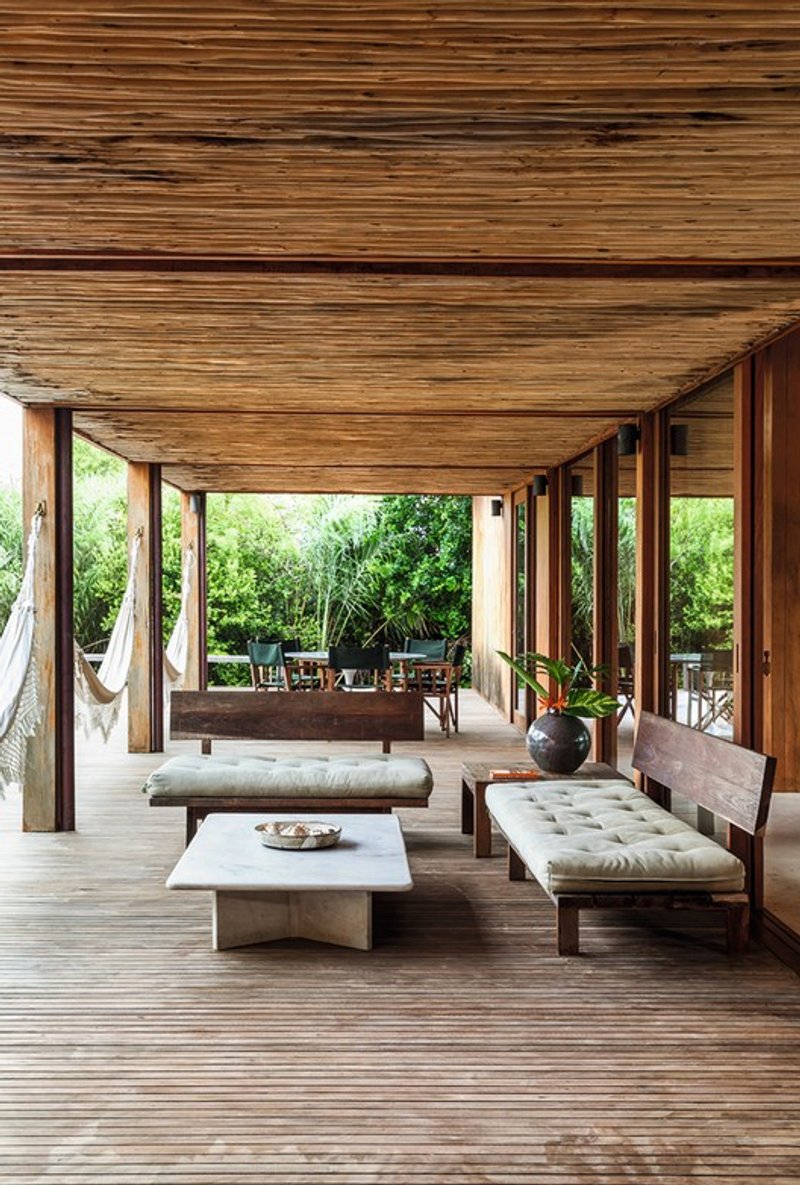
These elements give the house a timeless, almost ancestral quality, as if it had evolved gradually over decades rather than being newly constructed. The use of reclaimed materials reinforces sustainability principles while also grounding the project in a tactile, human scale.
In contrast, metal frames and contemporary detailing introduce a subtle modernity. Rather than competing with traditional materials, these elements highlight their textures and imperfections, creating a balanced dialogue between old and new.
Interior Architecture as an Integrated Discipline
A distinguishing aspect of House MF is the seamless integration between architecture and interior design. From the beginning of the project, interior designers Camila and Mariana Lellis collaborated closely with the architect, ensuring a unified design language across all scales.
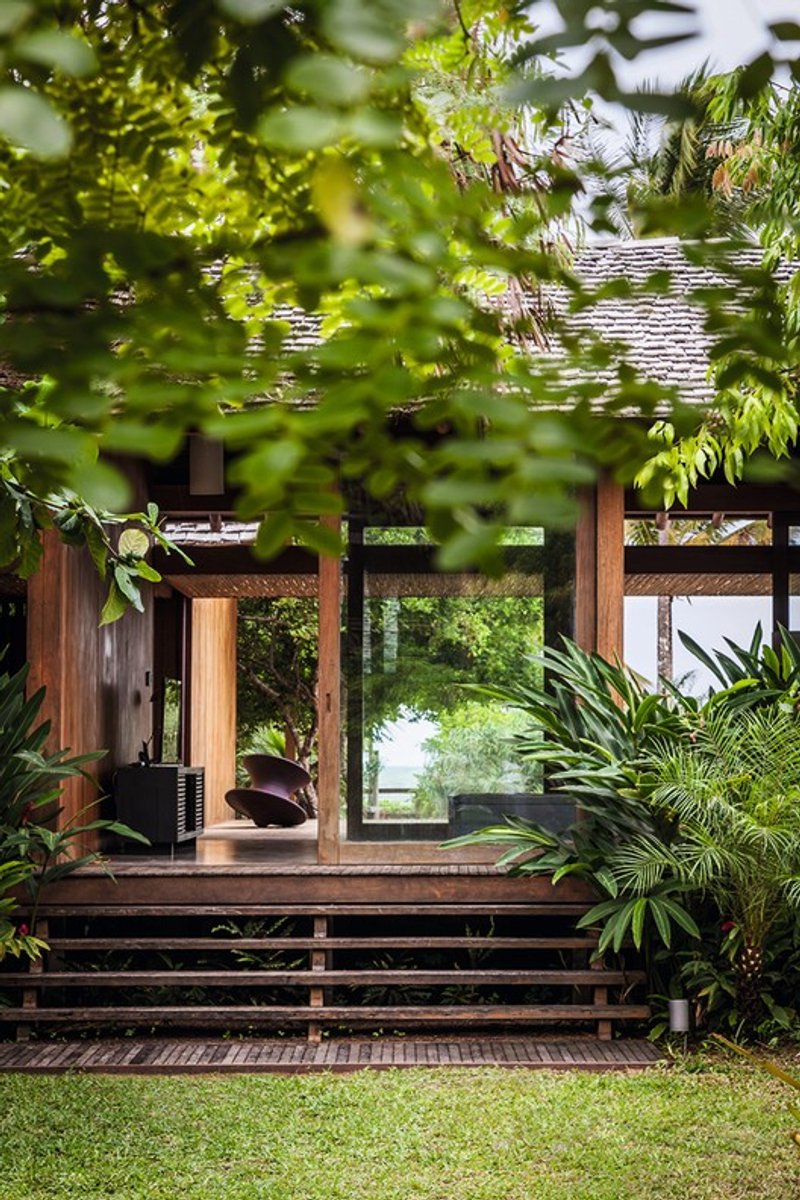
Furniture, lighting, shelving, and finishes were conceived as extensions of the architecture rather than decorative additions. Wood dominates the interiors, reinforcing warmth and continuity, while carefully curated lighting enhances texture and depth.
Custom-built elements, such as shelving and dining furniture, are integrated into walls and spatial structures, strengthening the sense of cohesion. The interiors feel neither rustic nor minimalist, but rather comfortably layered, combining contemporary comfort with the familiarity of traditional materials.
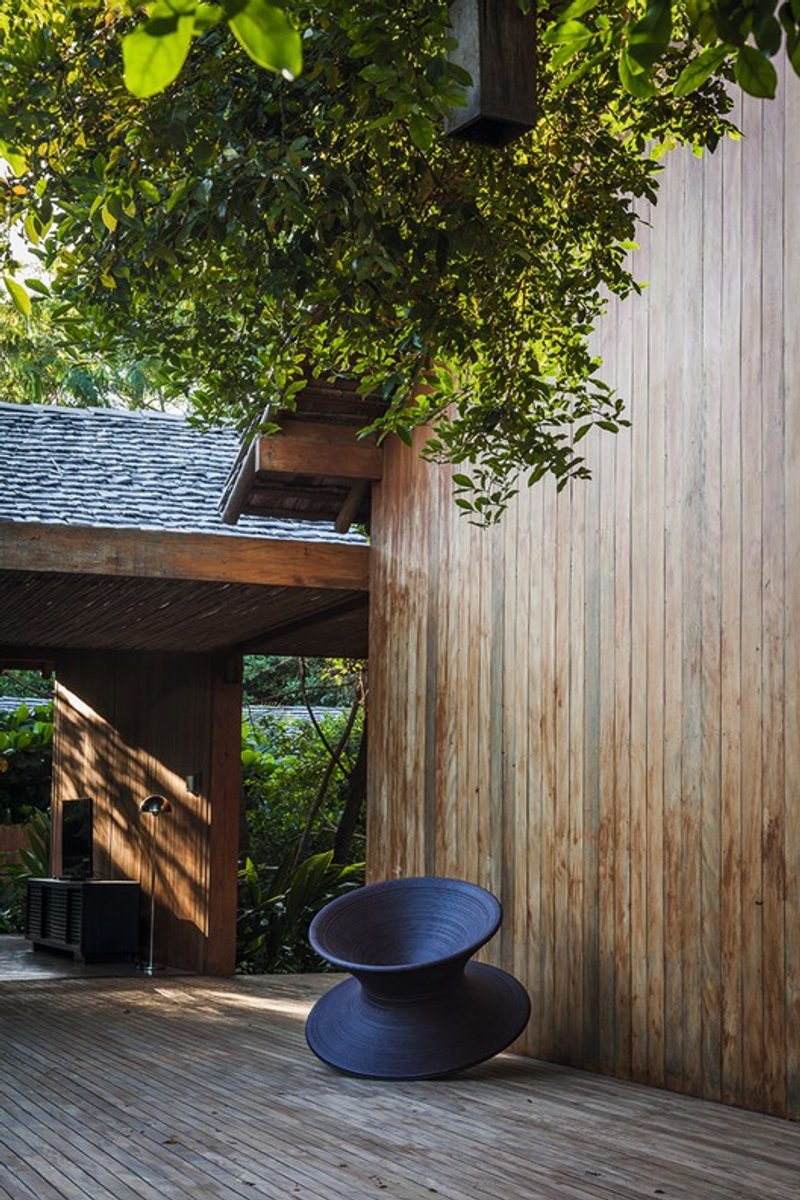
A House Designed for Coexistence
House MF goes beyond functional efficiency to support shared living and coexistence. The social areas are designed to host gatherings effortlessly, while more private spaces allow for retreat and solitude. This balance reflects a contemporary interpretation of country living, where hospitality and introspection coexist naturally.
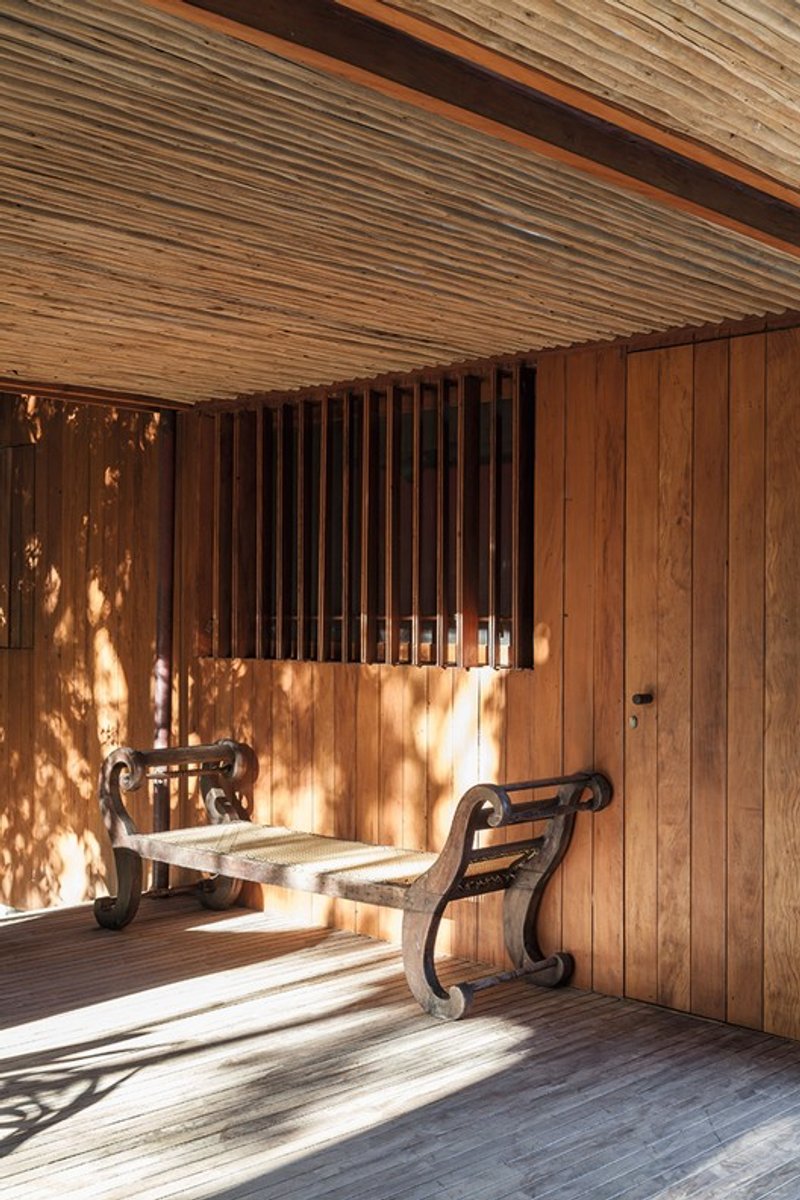
Outdoor patios adjacent to living and dining spaces encourage daily interaction with nature. Whether open for large gatherings or quiet moments, these spaces adapt easily to different rhythms of life.
Sustainability Through Simplicity
Rather than relying on technological spectacle, the house achieves environmental responsibility through passive strategies: natural ventilation, controlled sunlight, and durable materials. The reuse of bricks and traditional construction methods further reduces environmental impact while enhancing architectural character.
This approach reinforces the idea that sustainability can emerge from simplicity and restraint, rather than complexity.
Tradition Reinterpreted
House MF does not replicate vernacular architecture, nor does it pursue a purely modernist expression. Instead, it reinterprets rural references through contemporary design intelligence. The result is a home that feels both familiar and current, deeply connected to Brazilian cultural memory while meeting modern standards of comfort.
The house embodies a lifestyle where architecture supports everyday rituals: shared meals, open conversations, quiet reading, and time spent outdoors. It is a place designed not for display, but for living.
Architecture as Quiet Permanence
Ultimately, House MF is an example of architecture that values permanence over novelty. Its strength lies in proportion, material honesty, and spatial generosity rather than formal experimentation.
Daniel Fromer’s design demonstrates how contemporary residential architecture can remain grounded: rooted in landscape, history, and human scale: while offering comfort, efficiency, and elegance.
House MF stands as a refined domestic refuge, where rustic character and modern living converge in a balanced and enduring architectural expression.
All the Photographs are works of Evelyn Müller




Popular Articles
Popular articles from the community

Inside a Timeless Mumbai Residence by Aether Studio
Aether Studio's 2,250 sq ft apartment in Malad, Mumbai uses marble, brass, boucle, and disciplined restraint to build a quiet retreat from the city.
Etea and Ghostframe Carve a Surreal Domestic World from Arches and Circles in Mérida
Casa Eclipse wraps 385 square meters of sculptural living space around a lush courtyard pool in Mexico's Yucatán Peninsula.
Kaffeebühnen: Coffee Shop Architecture Designed as a Civic Stage Between Vienna’s City and Park
Kaffeebühnen turns coffee shop architecture into a civic stage, linking Vienna’s park edge, urban life, warm timber yards, and coffee craft.
PLATAFORMArq Folds a Concrete Roof Over the Portuguese Mountains in House #474
A 220-square-meter residence in Teixoso, Portugal, wraps board-formed concrete into an angular canopy that frames the Serra da Estrela foothills.


Similar Reads
You might also enjoy these articles

Olio Towers: A Mid-Rise for Performers That Fuses Housing, Rehearsal, and Stage
Located blocks from Houston's Theater District, this modular tower stacks living units around a central performance atrium.

Oasis: Modular Green Housing Carved into Dhaka's Urban Fabric
A shortlisted Plugin Housing entry reclaims unauthorized settlements in Dhaka with stepped concrete volumes, green roofs, and ventilation-driven design.

Black Hole: A Floating Megastructure for the Post-Physical Era
Emiliano Mazzarotto envisions a spherical, self-scaling arena where e-sports, digital hotels, and holographic stadiums replace traditional public space.
Compact & Sustainable Living in Piraeus: A Four-Level Family Home Built Around Light and Air
A narrow townhouse in one of Greece's densest port cities uses a central atrium and passive strategies to house three generations under one roof.


Explore Housing Competitions
Discover active competitions in this discipline




The International Standard for Design Portfolios


The Global Benchmark for Architecture Dissertation Awards


The Global Benchmark for Graduation Excellence


Challenge to reimagine the Iron Throne
Comments (0)
Please login or sign up to add comments
No comments yet. Be the first to comment!