
Huangyan Quarry Cultural & Art Center by DnA: Transforming a 1,400-Year-Old Quarry into a Cultural Landmark
DnA transforms a 1,400-year-old Huangyan quarry into a cultural art center blending geology, architecture, and community through adaptive reuse.


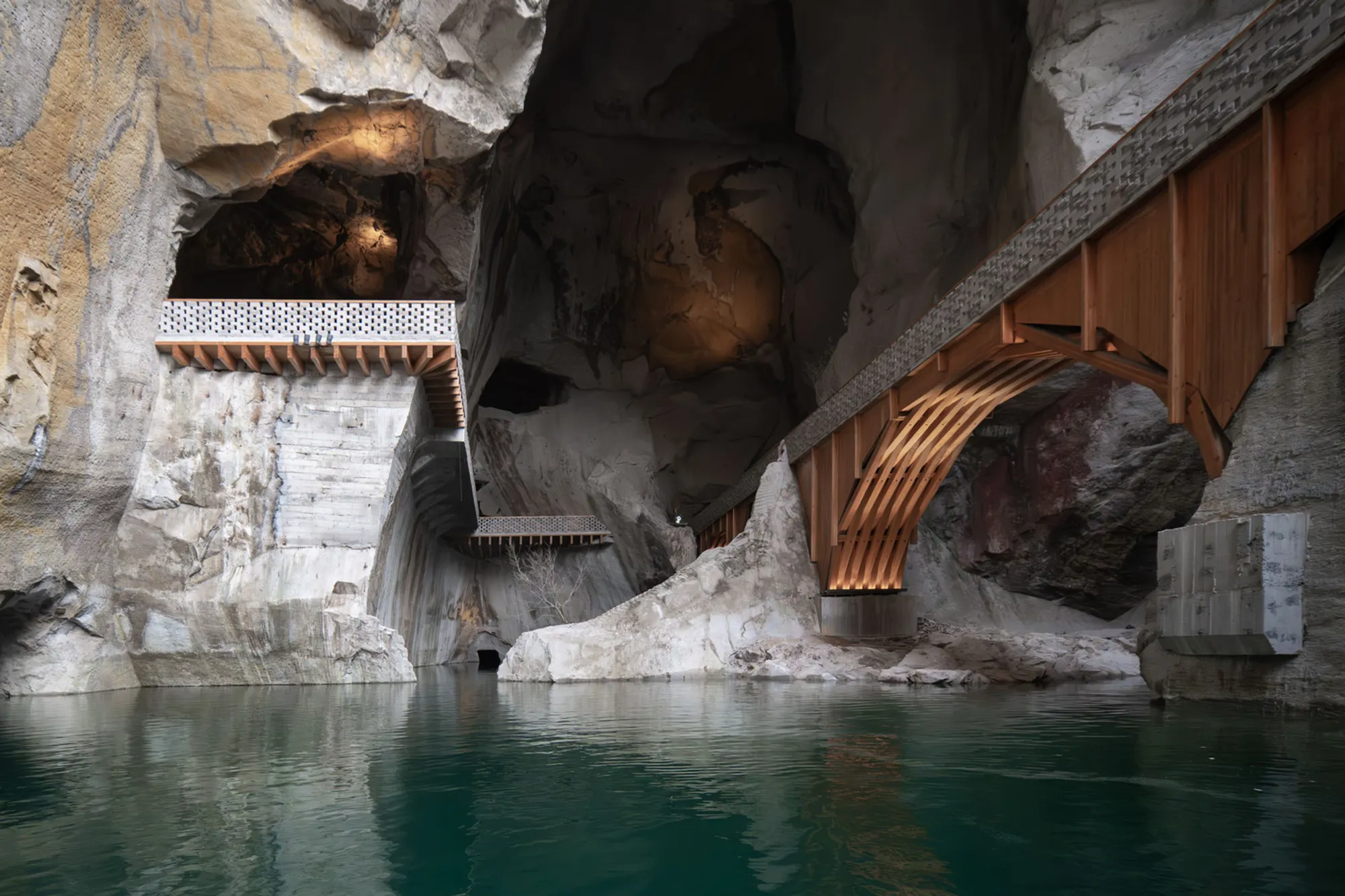
Located in Taizhou, Zhejiang, China, this 19,664 m² cultural project by DnA_Design and Architecture, led by Xu Tiantian, reimagines adaptive reuse within a landscaped context. Completed in 2024, the design harmonizes historic structures with contemporary interventions, blending cultural heritage, functional spaces, and thoughtful landscape integration. Photography by Ziling Wang and Weiqi Jin.


Reimagining Post-Industrial Landscapes
The Huangyan Quarry Cultural & Art Center by DnA_Design and Architecture exemplifies how adaptive reuse can redefine post-industrial landscapes through architecture, culture, and ecology. Located in Huangyan District, Taizhou City, the project transforms a 1,400-year-old quarry site—once used for stone extraction during the Tang Dynasty—into a dynamic cultural destination and public gathering space.
Unlike DnA’s earlier quarry revitalizations in the rural quarries of Jinyun, this site sits within a densely urbanized environment, catering to a younger demographic and integrating seamlessly with the daily rhythms of city life. The project positions the former quarry as an “urban living room”, where geology, history, and contemporary culture converge.


Historical Context: A Landscape Shaped by Time
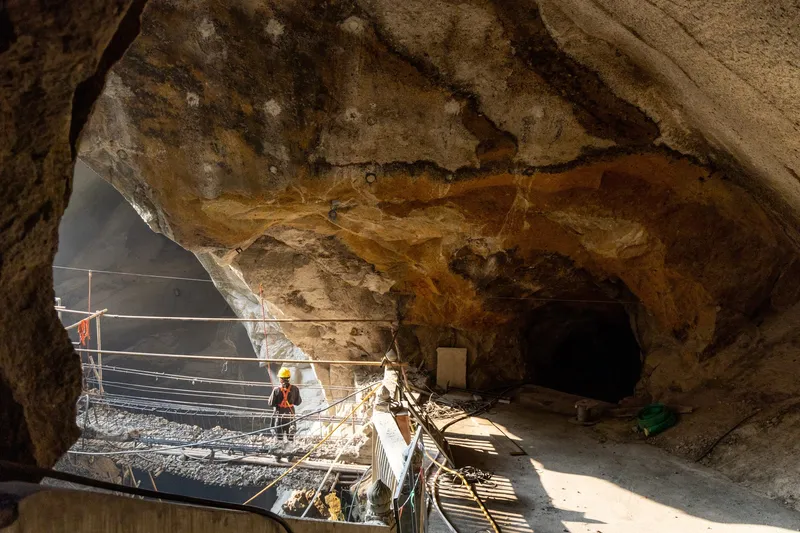
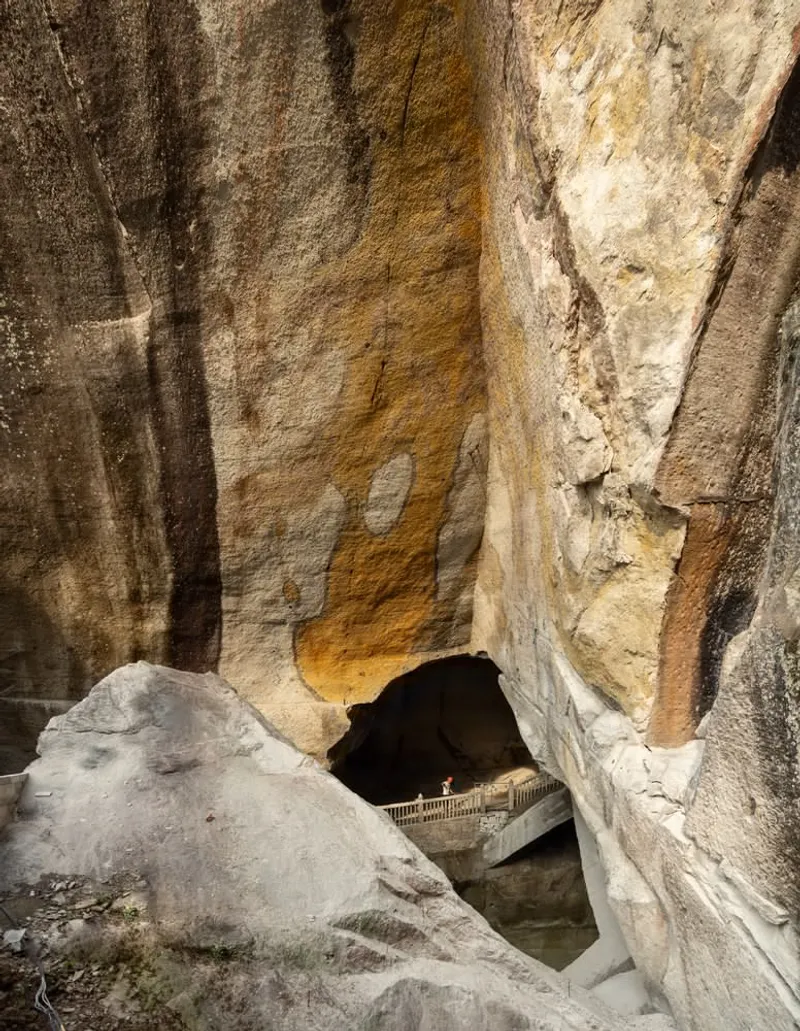
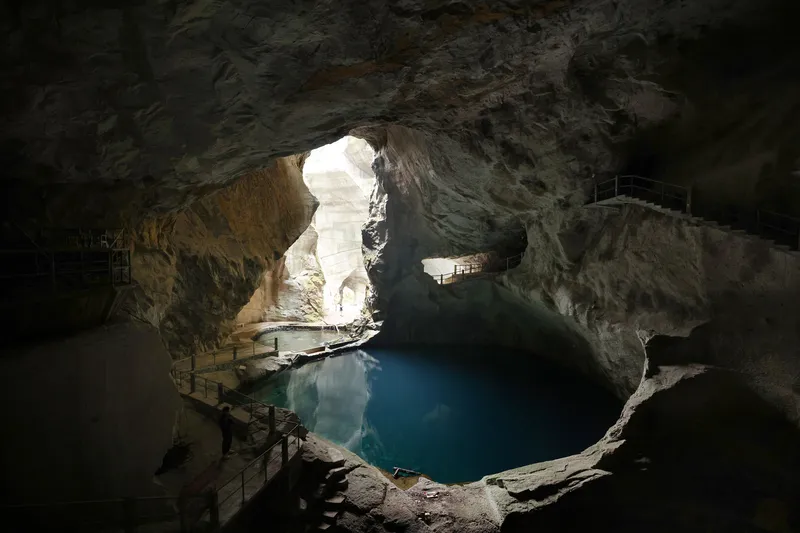
The Huangyan Quarry’s history dates back to 675 AD, when it supplied stone for constructing Yongning County. Over centuries of continuous excavation, workers sculpted an extraordinary subterranean landscape of towering cliffs, vast caverns, and interlinked chambers. Mineral-rich deposits inside the caves formed spectacular yellow-toned surfaces—natural “rock paintings” that gave Huangyan (“Yellow Rock”) its name.
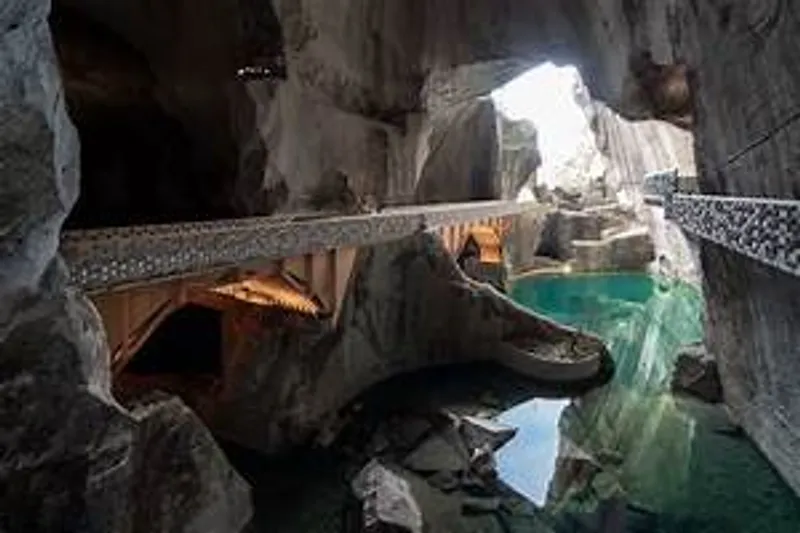
These geological phenomena, combined with emerald pools and underground waterfalls, have transformed the quarry into a site of both natural beauty and cultural memory. However, despite early tourism development in the late 20th century, the site fell into decline by 2015 due to limited infrastructure and investment.

Design Concept: Minimal Intervention, Maximum Transformation
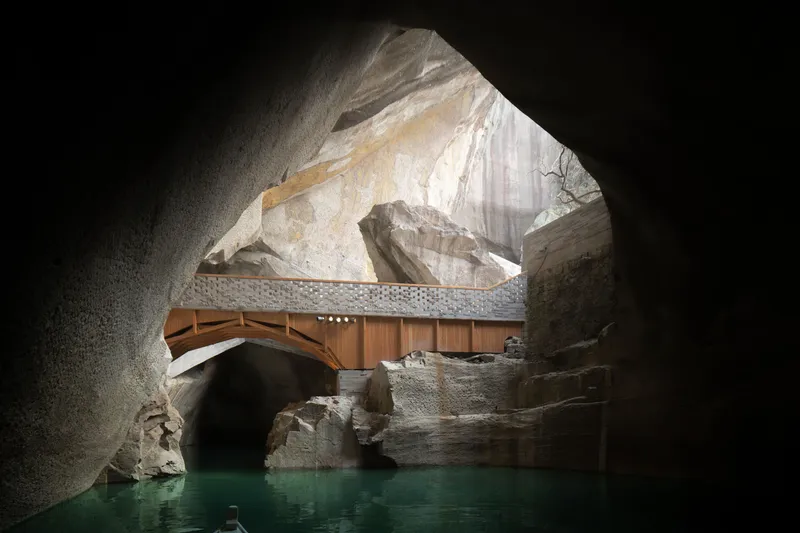
DnA’s approach emphasizes preservation through subtle adaptation. Rather than imposing new architecture, the design introduces a light-touch strategy—highlighting the site’s inherent geological character while enabling new forms of public engagement.
The 20,000-square-meter complex includes three main quarry clusters, connected through a series of circulation routes, platforms, and bridges. Each cluster is programmed for a unique cultural experience, from immersive art and performance to leisure and dining.
The design balances human-scale interventions—such as pathways, viewing decks, and gathering spaces—with the monumental industrial scale of the quarry, allowing visitors to navigate and inhabit the space without diminishing its raw grandeur.

Architectural Strategies: Weaving Structure and Landscape
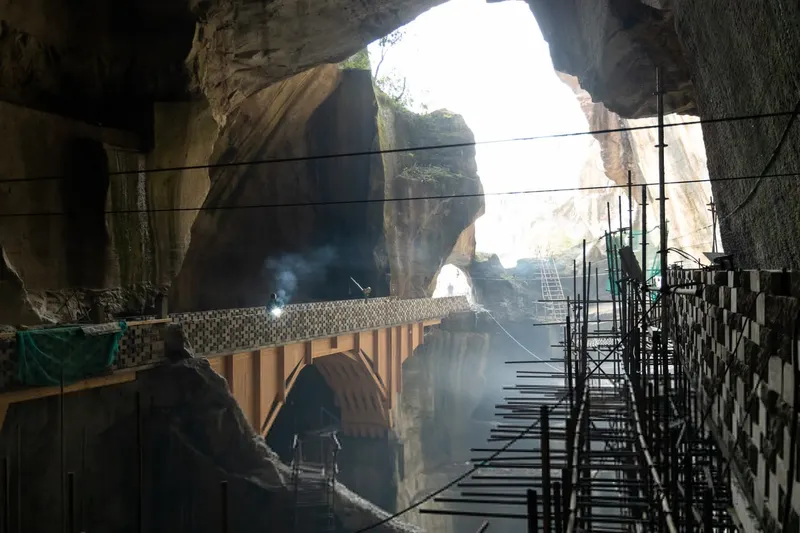
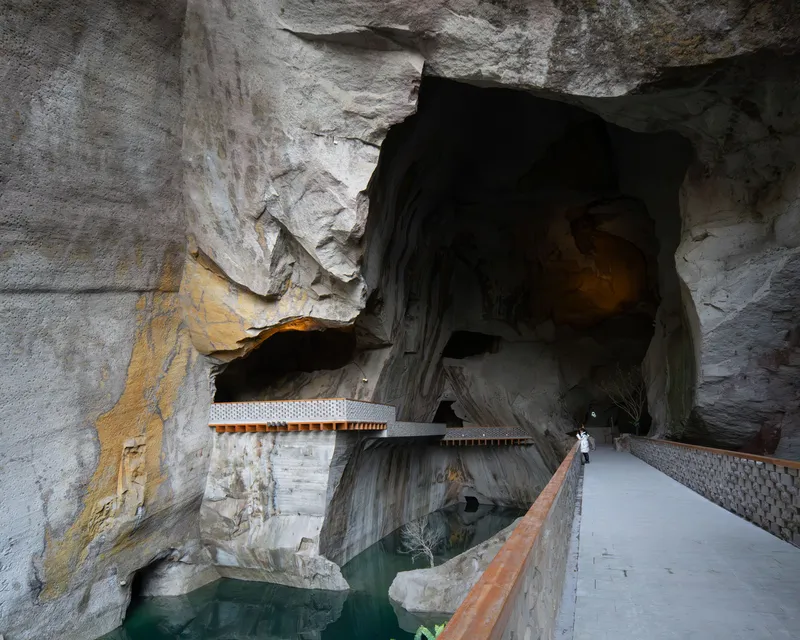
A signature element of the project is the use of woven timber arch bridges, which serve both functional and symbolic roles.
- Structurally, the arches respond to narrow entrances and irregular geometries by using prefabricated timber components assembled on-site—reducing environmental impact and construction challenges.
- Aesthetically, they reference traditional Chinese craftsmanship while establishing a rhythmic visual language that ties together the site’s complex topography.
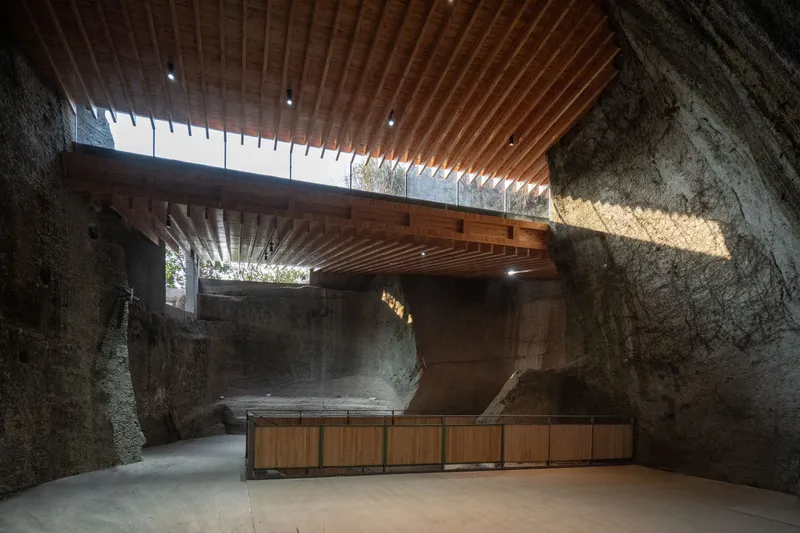
This flexible structural system scales from small bridges to large-span roof structures, as seen in Quarry No. 3, where a woven timber canopy filters natural light through its latticework, creating an ethereal play of shadow and texture.
Light, Material, and the “Yellow Rock” Identity
Lighting design plays a pivotal role in revealing the quarry’s mineral topography. Warm illumination accentuates the natural yellow hues embedded within the rock, turning the walls into vast glowing canvases. These lightscapes not only celebrate the origin of “Huangyan” but also act as wayfinding elements, guiding visitors through the subterranean paths.
The architecture’s restrained material palette—timber, stone, and glass—resonates with the quarry’s raw materiality, allowing new insertions to appear as natural extensions of the rock formations.
Three Quarries, Three Experiences
Quarry No. 1 – The Urban Living Room
The largest and most accessible of the three, Quarry No. 1 is envisioned as a public “living room” that bridges nature, memory, and culture. Spaces include a coffee lounge, reading area, workshops, lecture hall, and docks connecting to turquoise pools below. The interplay of water, stone, and vegetation evokes traditional Chinese landscape aesthetics, while providing flexible spaces for community events and cultural exhibitions.
Quarry No. 2 – Theater of Stone
Defined by its circular stone walls and acoustic resonance, Quarry No. 2 transforms into a natural amphitheater. Three open-air theaters and stage areas are carved into the terrain, offering venues for performances, concerts, and festivals. The quarry’s acoustics and topography create a unique sensory experience, complemented by potential future additions like rock climbing and diving zones—a celebration of leisure and adventure within nature’s architecture.
Quarry No. 3 – The Secret Garden
Hidden within a series of narrow tunnels and intimate chambers, Quarry No. 3 serves as a secluded retreat. Its new woven timber roof structure lightly encloses the space, allowing daylight to filter through without altering the quarry’s original form. Inside, the quarry accommodates a restaurant, café, and reception area, blending culinary and cultural experiences amid geological grandeur.
Connecting Tunnels as Gallery Spaces
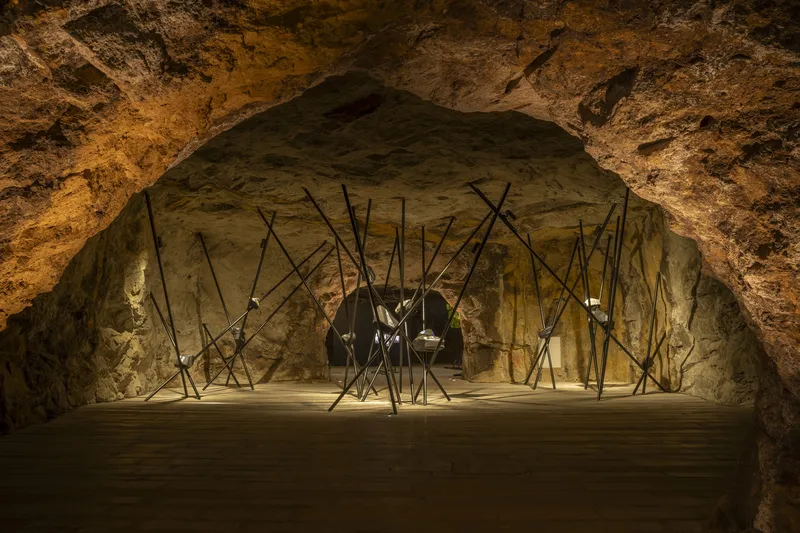
The original tunnels linking the three quarries have been repurposed as exhibition corridors, featuring rotating displays and immersive installations. This integration of art within geological passageways underscores the project’s ethos of adaptive reuse and spatial continuity.
A Model for Sustainable Cultural Regeneration
The Huangyan Quarry Cultural & Art Center demonstrates how architecture can mediate between ecology and urbanity, transforming industrial scars into cultural assets. Through minimal intervention, structural innovation, and sensitive programming, DnA has turned an abandoned quarry into a living monument—one that honors history while inviting new social and creative energies.

Project Credits
Architects: DnA_Design and Architecture Lead Architect: Xu Tiantian Photography: Ziling Wang, Weiqi Jin Location: Huangyan District, Taizhou City, Zhejiang Province, China Area: 19,664 m² Year: 2024
All photographs are works of Ziling Wang, Weiqi Jin



Popular Articles
Popular articles from the community


Co-life: Sustainable Architecture for Age-Friendly Community Living
Co-life reimagines sustainable architecture for seniors through courtyards, rammed earth, shared gardens, and spaces designed for belonging.

Lunar Spiral: Space Architecture Shaped by the Mathematics of the Universe
Lunar Spiral reimagines space architecture through Fibonacci geometry, lunar regolith, levitating habitats, and self-sustaining Moon living.

Conexión: Biophilic Design Reimagines High-Rise Living in Hong Kong
Conexión reimagines high-rise living in Hong Kong through biophilic design, green facades, shared spaces, daylight, water and nature within.

The Earth Pod: 3D Printed Homes for Resilient Refugee Communities
The Earth Pod reimagines refugee housing through 3D printed homes made from clay, combining resilience, self-sufficiency, and rapid shelter.


Similar Reads
You might also enjoy these articles


Hodi-Mandai Geram
Project Function: Preservation and revitalization of the Intangible heritage and socio-spatial identity of the Hodi by Housing, Cultural Memory Center, Sacred Grove, landscape, local tourism economy


Olio Towers: A Mid-Rise for Performers That Fuses Housing, Rehearsal, and Stage
Located blocks from Houston's Theater District, this modular tower stacks living units around a central performance atrium.

Oasis: Modular Green Housing Carved into Dhaka's Urban Fabric
A shortlisted Plugin Housing entry reclaims unauthorized settlements in Dhaka with stepped concrete volumes, green roofs, and ventilation-driven design.

Black Hole: A Floating Megastructure for the Post-Physical Era
Emiliano Mazzarotto envisions a spherical, self-scaling arena where e-sports, digital hotels, and holographic stadiums replace traditional public space.

Explore Cultural Architecture Competitions
Discover active competitions in this discipline



Challenge to reimagine the Iron Throne


Photograph architecture without architects


Illustrate the lost glory of Angkor Wat - Render Challenge


Bring back Drive In's
Comments (0)
Please login or sign up to add comments
No comments yet. Be the first to comment!