
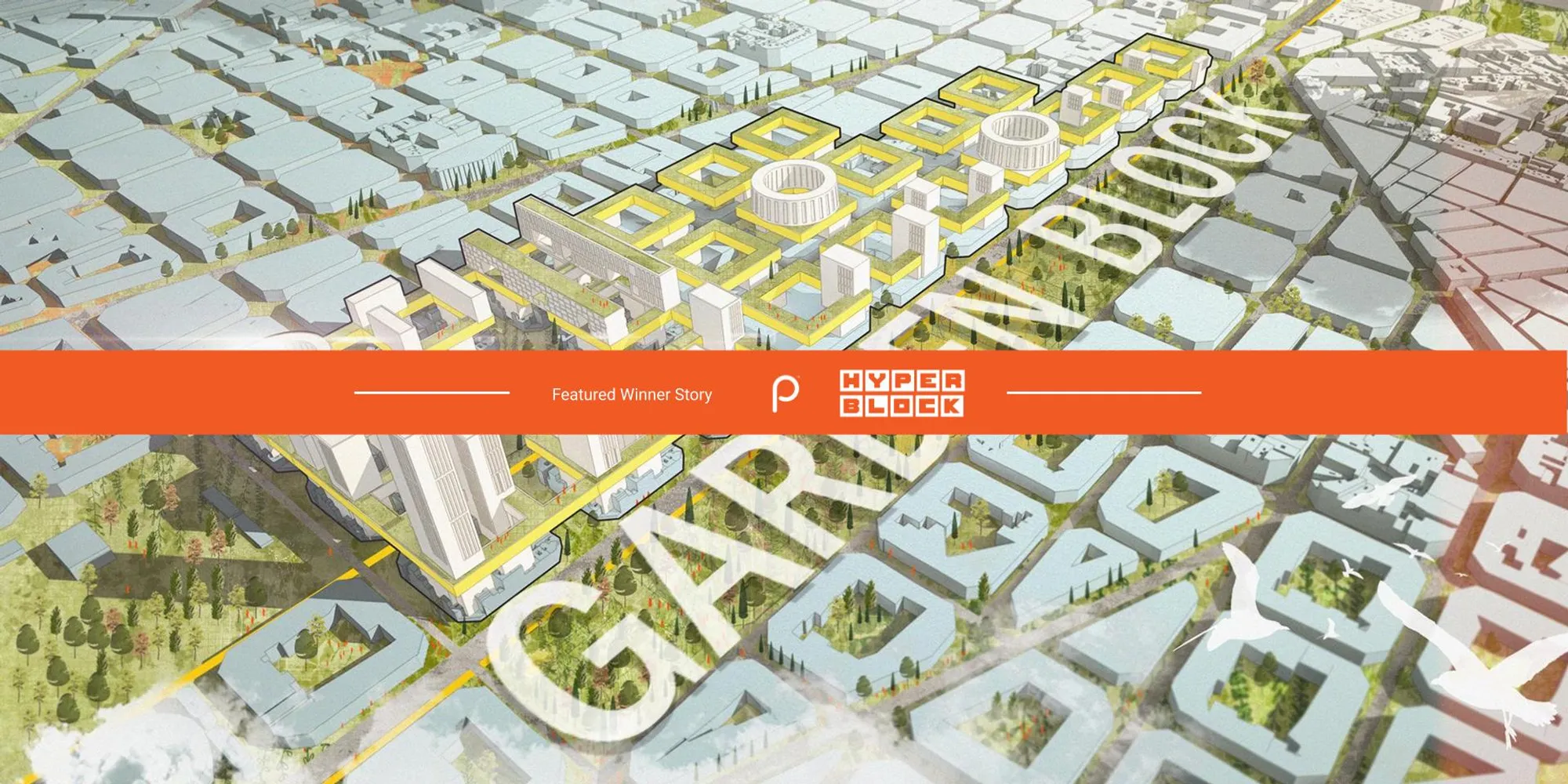
Rethinking Cerda's Legacy
Hyperblock - Result Story


Urbanization has led to cities being overcrowded and cramped. Barcelona, a city known for its unique planning is slowly becoming a victim of uncontrolled urbanization. It has always been a walled city since it was founded as ‘Barcino’. In the middle ages, with growing urbanization the city couldn’t contain its population so an order was passed to expand the walls. In 1854, to deal with the rapid growth of the city the Spanish government finally gave the order to take down the walls. As soon as the walls were demolished, plans began for the expansion of the city to promote the Ensanche Project (Eixample District) giving rise to the ‘City of Cerda’.
In 1855, Ildefons Cerda’s utopian plan was approved by the central Spanish government. The design envisioned a rationalized open city, with a grid of wide streets. What was unique about Cerda’s grid was the refusal to address hierarchies apart from few exceptions (diagonal avenues and the Gran Via). The goal was to combine rural living (green spaces, ventilation, fresh air, community) and urban living (commerce, facilities, culture) So what made the humanitarian marvel collapse?
Cerda imagined a garden city for Barcelona but with the growing demands of the population, the majority of the land was covered for construction. As a result, green spaces disappeared, roads became narrower, provision of sunlight and ventilation and therefore psychological well-being was compromised.
What was once a design to make Barcelona healthier, now has to be dramatically rethought for the same reasons.
A city like Barcelona is meant to attract people. As a result, it is one of the densest cities in Europe. Population density is deemed to grow in the coming years as more and more people are moving to cities in search of better opportunities. Is there an alternative design scheme to attain controlled urbanization?
Cerda 20 invites visionary ideas for redesigning the city with one of the most unique plans, set in the distant future, ‘2050’. The brief is set up to identify what should have been and what it can be in the future.
Brief: Musing over the culture and heritage of Barcelona, redesign Cerda blocks, recognizing the current and possible social and environmental challenges. Also plan pedestrian and vehicular movement around it.
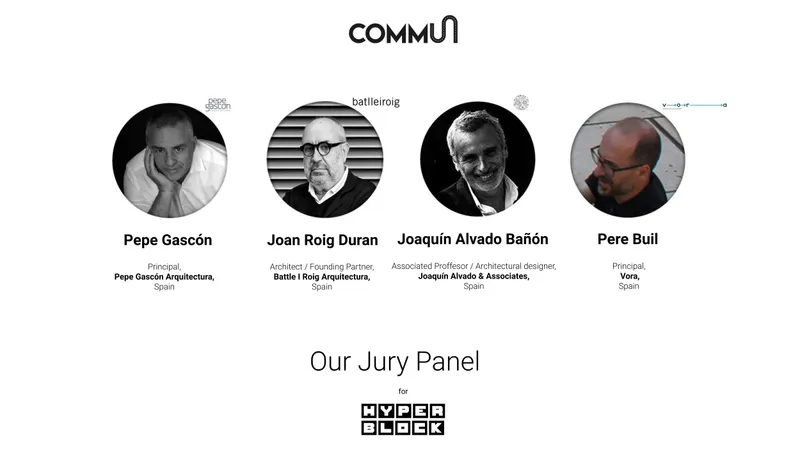
The jury for the competition consisted of esteemed designers, professionals, and academicians from around the world. The Lead Jurors for the competitions were as follows:
Pepe Gascón, Principal, Pepe Gascón Arquitectura, Spain
JOAN ROIG DURAN, Architect / Founding Partner, Battle I Roig Arquitectura, Spain
Joaquín Alvado Bañón, Associated Proffesor / Architectural designer, Joaquín Alvado & Associates, Spain
Pere Buil, Principal, Vora, Spain
Some of the Best of competition projects as follows:
Winning Project: ProEixample_4.0
By: Paul Strobel, Jochen Schumacher & Max Blake

Description: Taking inspiration from a previously implemented, gratification movement in Barcelona, and using the Superblock scheme as a basis for investigation, ProEixample_4.0 poses the following questions: What does one do with the leftover road-area in a "car-free" city? And how could this new area be used to greenify the urban realm?
-----------------
People’s Choice: Garden block
By: Дмитрий Цатуров, настя шкарупа, Irina Tormysheva & Vlad Vorontsov
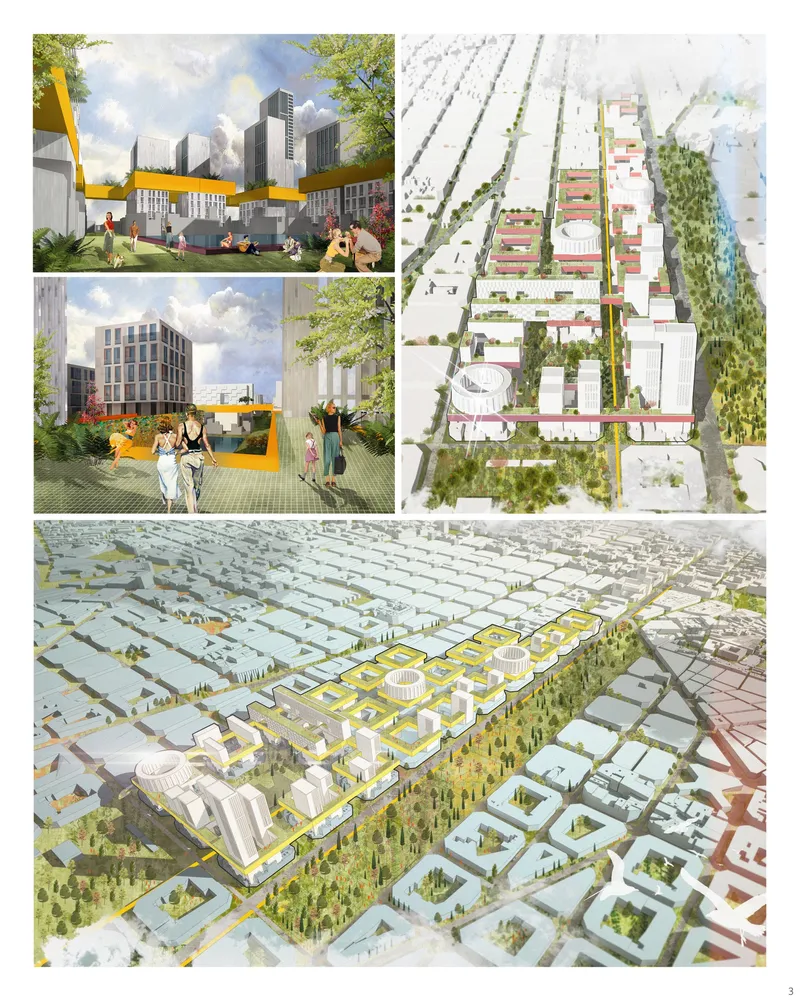
Description: "Hyper-block" is a fractal composition that combines 9 historical blocks into one united space. The main idea is the transition from one block function to multifunctionality. New blocks can be universal and transform depending on the situation and specific historical value. By combining additional space appears between the blocks, for public needs.
-----------------
Editor’s Choice: Barcelonas vein
By: Veronika Felix
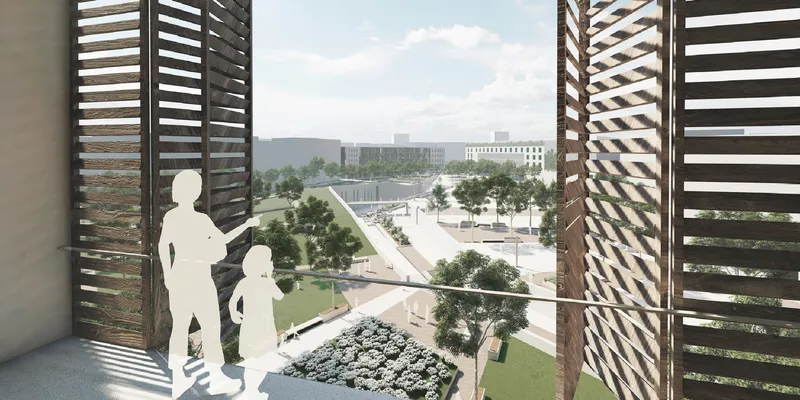
Description: This project reinterprets the work of Ildefons Cerda in a modern way and improves Barcelona's situation in terms of ventilation, noise pollution, and accessibility.
-------------------------
Editor’s Choice: GREEN GRID
By: Nikolai Werner, Daniel Branchereau, Vassilissa Airaudo & Moritz Scharwaechter
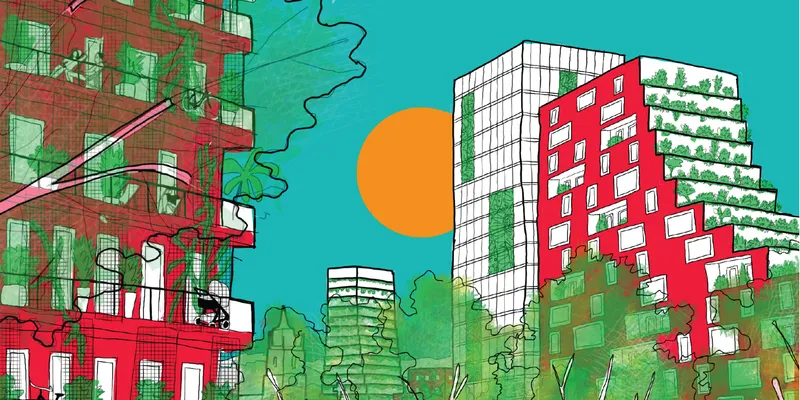
Description: The concept is based on the GREEN GRID, a public open space, which creates a spacious passage in the planning area and defines points of contact with the surroundings. The GREEN GRID forms a balance to the built-up area, incorporates a variety of different social, urban climate, and mobility functions, and in this way the backbone of the concept is formed.
-----------------
Editor’s Choice: Manzana Morphosis
By: Ruben Andersen

Description: Reshaping the blocks of Cerda as a future urban garden landscape - this project is a development and re-imagining of the manzanas and grid of Eixample - a future solution that can address and handle issues of sustainability and liveability.
-----------------
Editor’s Choice: COMMU[C]ITY
By: Florentina Anastasia
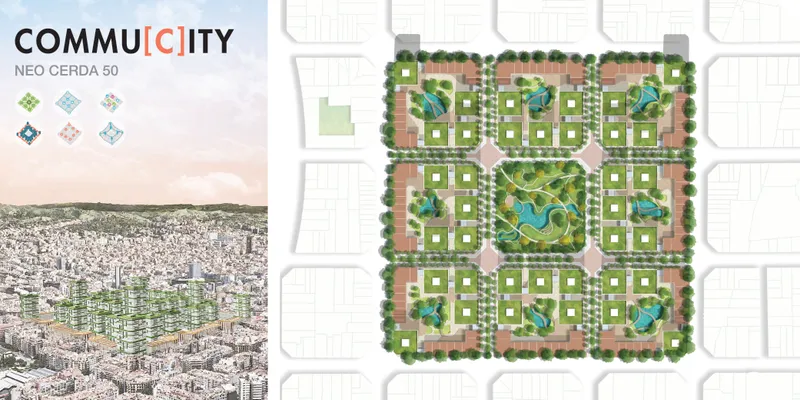
Description: Commu[C]ity aims to create integrated-compact urban infrastructures, restore nature in urban forms, reduce carbon emissions and vehicular footprints, and promote future mobility models. Commu[C]ity is an urban form of rethinking land use plan by providing Cerda Towers, a new way to live-work-play just in your next door.
-----------------
Editor’s Choice: An urban social network
By: Ivette Caveli
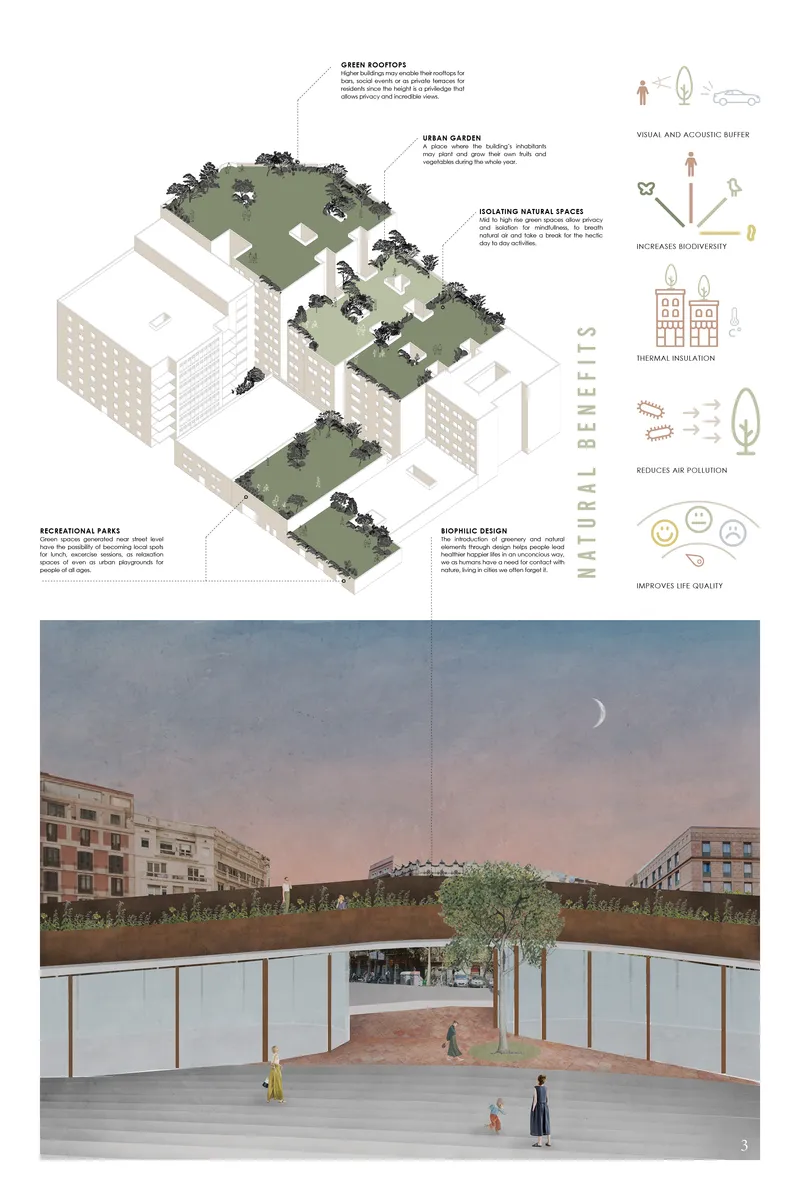
Description: Our proposal implies a way to design the city thinking of all population segments, from little kids that start to discover their neighborhood to senior citizens that hardly go out anymore because their needs have changed. We designed a main collective adaptable space for different programs accompanied by a series of niche public spaces within housing blocks.
-----------------
Editor’s Choice: HYPERBLOCK
By: Vicky Daroca

Description: Re-thinking the city as a flexible System.
-----------------
Organizer’s Choice: CUSTOMIZED INSTANT CITY MODULE OPERATING SYSTEM
By: Wanzhu Jiang & Jiaqi Wang
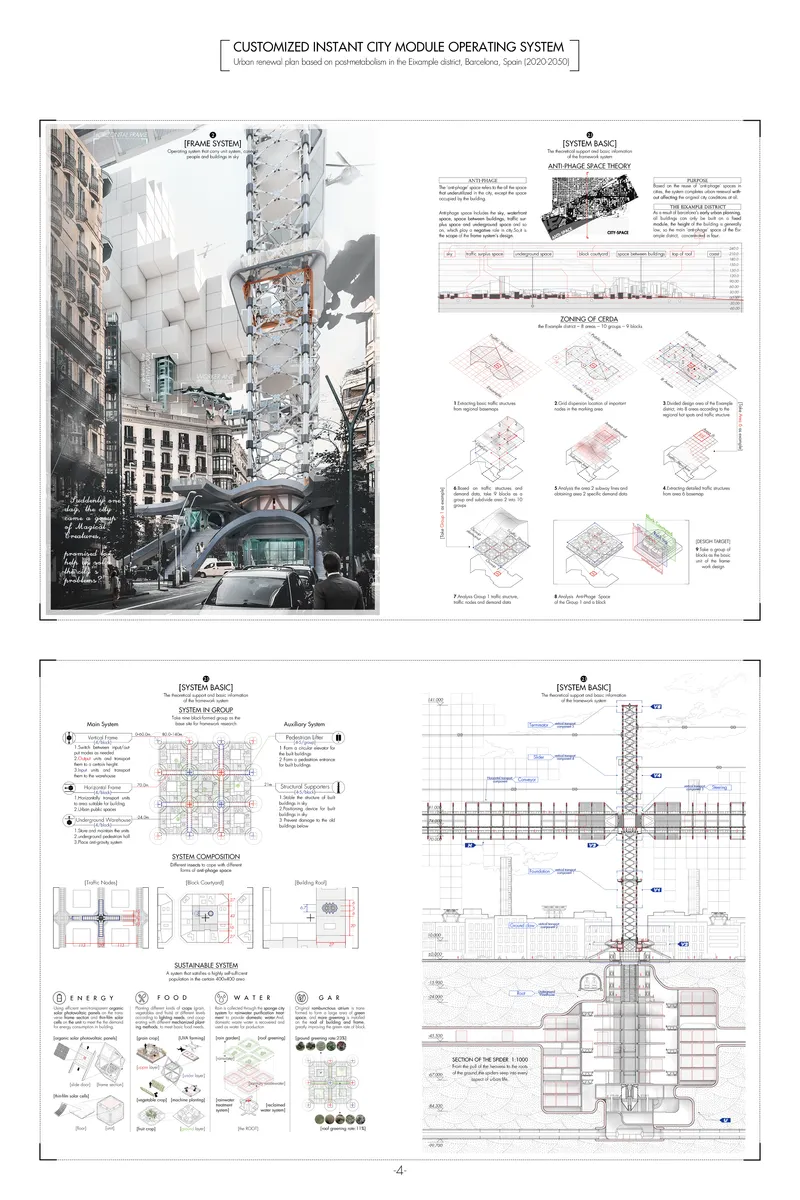
Description: Urban renewal plan based on post-metabolism in the Eixample district, Barcelona, Spain (2020-2050).
Discover the design brief here: https://uni.xyz/competitions/hyperblock/info/about
Discover the full results here: https://uni.xyz/competitions/hyperblock/entries
Follow us on social media: Facebook | Instagram | LinkedIn | Twitter | Youtube
Discover other design competitions to participate here: https://uni.xyz/competitions




Popular Articles
Popular articles from the community


Hill & Cross Opera: Sculptural Opera House Architecture Shaped by Tallinn’s Landscape and Identity
Hill & Cross Opera reimagines opera house architecture in Tallinn through its sculptural hill, civic plaza, glass wave and a luminous cross.

Co-life: Sustainable Architecture for Age-Friendly Community Living
Co-life reimagines sustainable architecture for seniors through courtyards, rammed earth, shared gardens, and spaces designed for belonging.

The Earth Pod: 3D Printed Homes for Resilient Refugee Communities
The Earth Pod reimagines refugee housing through 3D printed homes made from clay, combining resilience, self-sufficiency, and rapid shelter.

Riyadh For All: Intergenerational Urban Design for Active Aging in Rabat
Riyadh For All reimagines urban design in Rabat with intergenerational co-living, adaptive courtyards, and Moroccan cultural exchange today.


Similar Reads
You might also enjoy these articles

The Musturak Paradise: Senior Living Architecture for a Connected Future in Temara, Morocco
The Musturak Paradise reimagines senior living architecture in Temara via private homes, social spaces, culture, community, and shared care.

The Leaf Center: Cultural Center Architecture for Social Integration in Amsterdam
Cultural center architecture becomes a bridge at The Leaf Center, connecting international students with Amsterdam through art and exchange.

Conexión: Biophilic Design Reimagines High-Rise Living in Hong Kong
Conexión reimagines high-rise living in Hong Kong through biophilic design, green facades, shared spaces, daylight, water and nature within.

Wander to Wonder: Modular Playground Design for Children in Kutupalong Refugee Camp
Wander to Wonder uses modular playground design to create flexible, imaginative play spaces for children in Kutupalong refugee camp.
Comments (0)
Please login or sign up to add comments
No comments yet. Be the first to comment!