
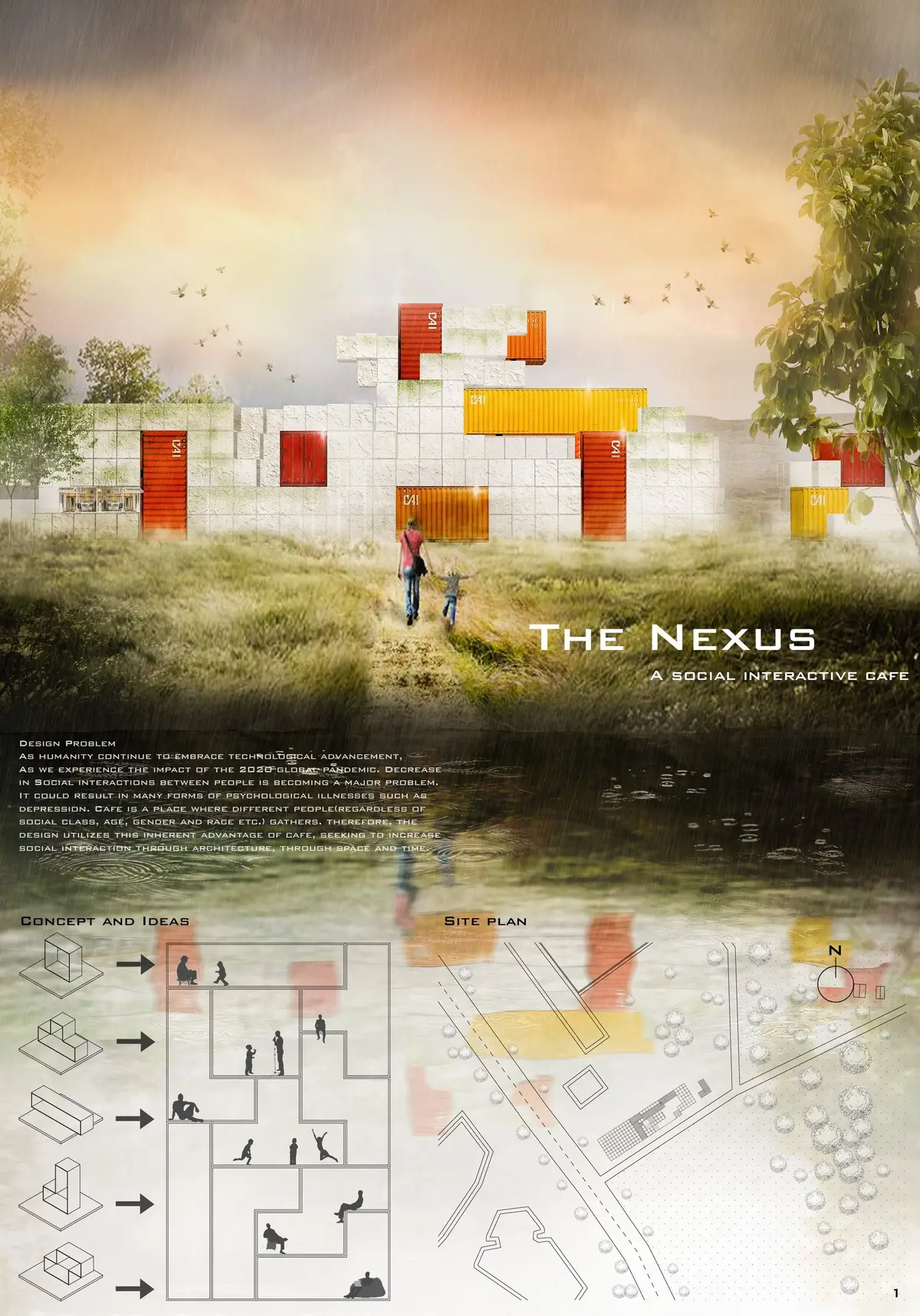
The Nexus – A Modular Container Architecture Cafe Redefining Social Interaction
A modular container architecture cafe designed to reconnect people through interactive spaces, adaptable systems, and dynamic social experiences.


In an era increasingly shaped by digital isolation, architecture is being reimagined as a catalyst for human connection. The Nexus, designed by Zhicheng Wang, Qiongsen Jin, and Yi Lin, positions itself at the intersection of spatial innovation and social engagement. Rooted in modular container architecture, the project proposes a contemporary coffee house that transforms everyday interactions into meaningful spatial experiences.
The design responds to a critical cultural shift. As technology continues to mediate communication, physical environments must actively encourage presence, movement, and interaction. The Nexus addresses this challenge through a system of stacked, adaptable container units that function not only as structure but as a framework for social exchange.
Editor's Choice entry of Brewed 2020
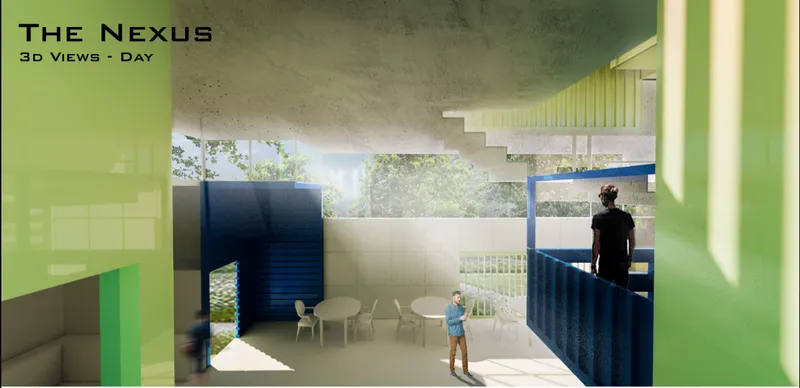

Modular Container Architecture as a Social Framework
At the core of the project lies a strategic use of recycled shipping containers. This approach leverages the inherent strengths of modular container architecture: flexibility, sustainability, and scalability. Rather than treating containers as static volumes, the design reinterprets them as dynamic building blocks capable of generating layered spatial relationships.
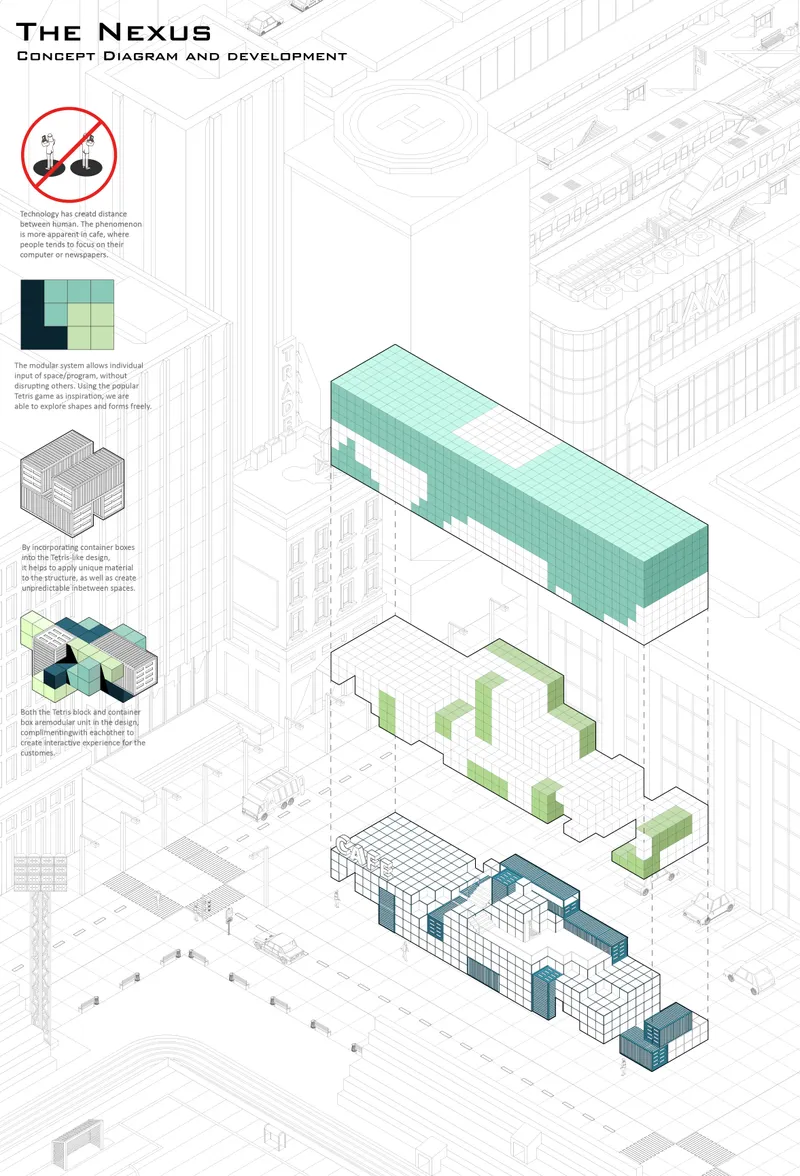
The modular logic operates both horizontally and vertically, enabling a Tetris-like aggregation of units. Each module maintains autonomy while contributing to a larger spatial ecosystem. This creates a network of interconnected zones that blur the boundaries between public, semi-private, and private spaces.
Interior environments are directly shaped by the geometry of the container boxes. The raw material expression reinforces spatial clarity while allowing for diverse programmatic insertions. From seating areas and reading zones to performance platforms, each module adapts to specific user needs without compromising the overall system.
Interactivity Through Spatial Design
The primary ambition of The Nexus is to increase interactivity between users. This is achieved through deliberate spatial sequencing and circulation strategies embedded within the modular system.
Unlike conventional cafes that prioritize static seating layouts, The Nexus encourages movement. Users navigate through stacked volumes, climb between levels, and encounter others along transitional paths. This circulation model fosters spontaneous interactions and social overlap.
The design introduces semi-private pockets within the open framework. These zones offer intimacy without isolation, allowing users to engage selectively with their surroundings. The interplay between openness and enclosure becomes a key driver of social behavior.
Additionally, the architecture extends beyond the interior. Interstitial spaces between containers act as thresholds, terraces, and informal gathering points. These in-between conditions are critical in transforming the building into an interactive environment rather than a passive container of activities.
Site Integration and Urban Context
Located near Wien Hauptbahnhof in Vienna, the project benefits from a highly active urban context. The site is surrounded by transportation networks, hotels, and public amenities, making it a natural hub for diverse user groups.
Accessibility plays a significant role in the design strategy. The site is well connected by train, bus, tram, bicycle routes, and pedestrian pathways. This multi-modal connectivity ensures a continuous flow of users, reinforcing the cafe’s role as a social condenser.
The proximity to a dog park further informs the programmatic decisions. A dedicated pet-friendly zone is integrated into the design, extending the inclusivity of the space and accommodating a broader demographic.
Concept Development: From Modules to Form
The conceptual framework draws inspiration from modular systems and game logic, particularly the adaptability of Tetris blocks. This analogy informs both the formal composition and the spatial organization of the project.
The building mass is generated through the aggregation of 1m x 1m cubic units, which are then consolidated into larger container volumes. This process allows for a high degree of formal flexibility while maintaining structural coherence.
Container boxes are strategically inserted into this framework to enhance spatial diversity and visual identity. Each unit is color-coded, emphasizing individuality within the collective system. This chromatic differentiation also aids in wayfinding and spatial recognition.
The result is a layered architectural composition that appears both systematic and playful, reflecting the dual objectives of order and interaction.
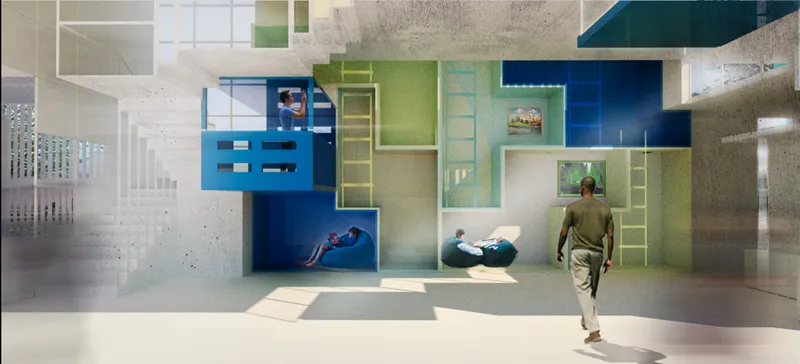
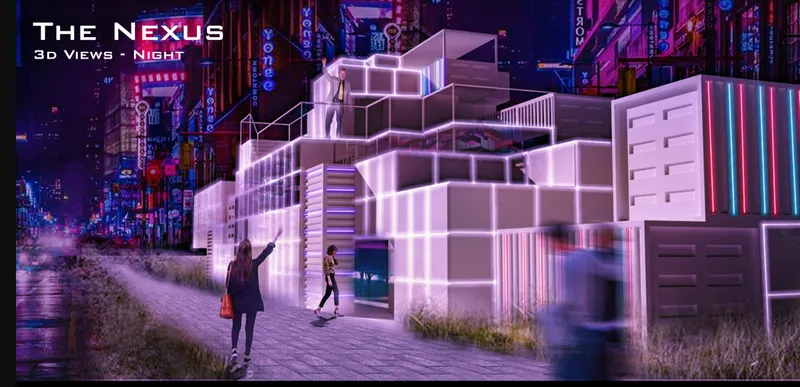
Programmatic Diversity and Flexibility
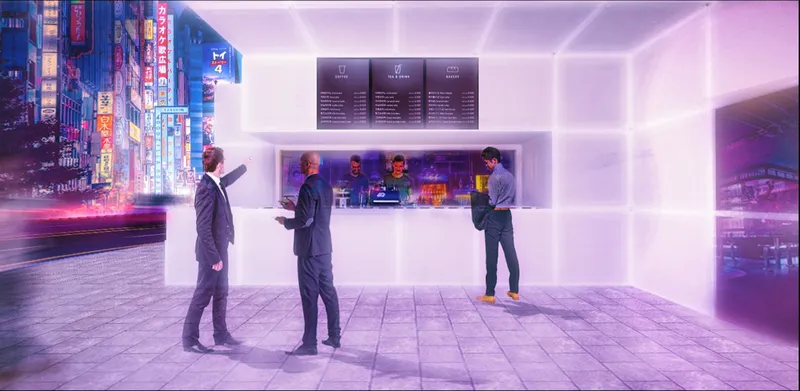
The Nexus accommodates a wide range of functions within its modular framework. The ground level includes essential components such as the coffee bar, kitchen, and storage areas, ensuring operational efficiency.
Beyond these core functions, the design introduces flexible programmatic zones. Modular seating areas can transform into reading spaces, collaborative zones, or informal meeting areas. Upper levels provide outdoor terraces and semi-open environments that connect users with nature.
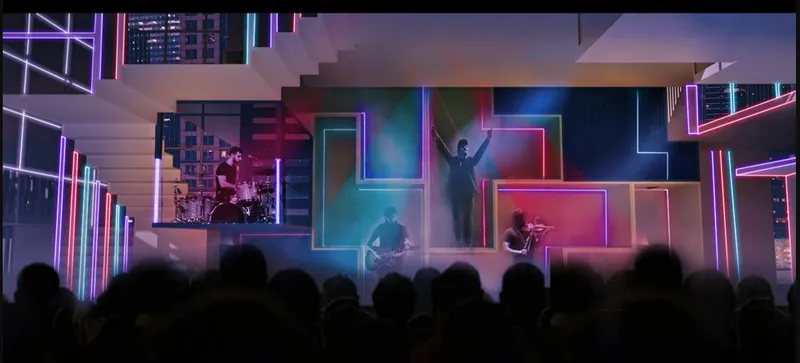
A unique feature of the project is its ability to adapt to events. The modular units can function as performance stages, enabling the cafe to transform into a cultural venue for music, exhibitions, or community gatherings. This adaptability ensures that the architecture remains relevant across different temporal conditions.
Indoor–Outdoor Continuity
The relationship between interior and exterior spaces is carefully orchestrated. The entrance features a dedicated outdoor pickup area, catering to users seeking quick transactions. This is complemented by a more immersive interior experience for those who wish to stay and engage.
Visual and physical connections between levels enhance spatial continuity. Openings, voids, and transparent surfaces allow light to penetrate deep into the structure, creating a dynamic interplay of shadows and illumination.
The second-floor outdoor seating area extends the social experience into a natural setting. This integration of greenery and open air reinforces the project’s emphasis on well-being and community.
Material Strategy and Aesthetic Expression
The material palette is intentionally restrained to highlight the inherent qualities of container architecture. White granite and neutral finishes provide a clean backdrop that accentuates the geometric clarity of the modules.
The textured surfaces of the containers interact with light to produce varied visual effects throughout the day. At night, integrated lighting transforms the building into a luminous urban landmark, emphasizing its modular grid and enhancing its presence within the cityscape.
Color-coded modules introduce moments of vibrancy within the otherwise minimal palette. These accents reinforce the identity of individual spaces while contributing to the overall visual coherence.
Reinterpreting Viennese Coffee Culture
The Nexus reimagines the traditional Viennese coffee house for a contemporary audience. Historically, these spaces functioned as hubs for intellectual exchange and social interaction. The project retains this cultural essence while adapting it to modern behavioral patterns.
By integrating modular container architecture, the design creates a more inclusive and flexible environment. It invites users from diverse backgrounds to participate in shared experiences, echoing the democratic spirit of traditional coffee houses.
At the same time, the project introduces new forms of engagement through spatial interactivity. The architecture itself becomes an active participant in shaping social dynamics, rather than merely providing a backdrop.
The Nexus demonstrates the potential of modular container architecture as a tool for redefining social spaces. Through its adaptive system, interactive design strategies, and contextual sensitivity, the project offers a compelling vision for the future of urban cafes.
By prioritizing human connection within a technologically driven world, the design transcends its functional program. It becomes a platform for interaction, exploration, and community building, positioning architecture as a critical mediator of social life.


Popular Articles
Popular articles from the community


Play: Fragments of Their World
Familiar architecture becomes modular playground design, creating safe spaces where displaced children can learn, connect, imagine and play.

Co-life: Sustainable Architecture for Age-Friendly Community Living
Co-life reimagines sustainable architecture for seniors through courtyards, rammed earth, shared gardens, and spaces designed for belonging.

Conexión: Biophilic Design Reimagines High-Rise Living in Hong Kong
Conexión reimagines high-rise living in Hong Kong through biophilic design, green facades, shared spaces, daylight, water and nature within.

Little Red Riding Hood: Architectural Design as a Journey Through Fear, Light, and Storytelling
Little Red Riding Hood reimagines the fairy tale through architectural design shaped by fear, light, scale, memory, uncertainty, and choice.

Similar Reads
You might also enjoy these articles

Eco Chapel: A Green Architecture Pavilion Designed in Symbiosis with the Forest
Eco Chapel uses green architecture to weave prayer, learning and reuse into a forest pavilion shaped by modular hexagonal canopies for life.
Kaffeebühnen: Coffee Shop Architecture Designed as a Civic Stage Between Vienna’s City and Park
Kaffeebühnen turns coffee shop architecture into a civic stage, linking Vienna’s park edge, urban life, warm timber yards, and coffee craft.
Healing Façade: Sustainable Architecture for Reforestation, Community, and Sacred Ecology in Ethiopia
Healing Façade reimagines sustainable architecture as a living wall that restores soil, catches water and renews Ethiopia's forest churches.


Urban Forest: A Vertical Ecosystem for 5,000 Workers in Singapore's Changi Business Park
Radially stacked pods and layered green decks turn a 7-acre plot into 47 acres of ecological workspace projected for 2040.

Explore Contextual Architecture Competitions
Discover active competitions in this discipline

Challenge to design mud housing for contemporary communities

Challenge to design luxury tourism on rails

Challenge to reimagine the Iron Throne

Photograph architecture without architects
Comments (0)
Please login or sign up to add comments
No comments yet. Be the first to comment!