
Inclusion Gap
Rebuild Trust with Society Through Playing

Considering cost and environmental concerns, we decided to use sustainable and recyclable materials as much as possible, such as recycled plastic, metal, wood, etc.
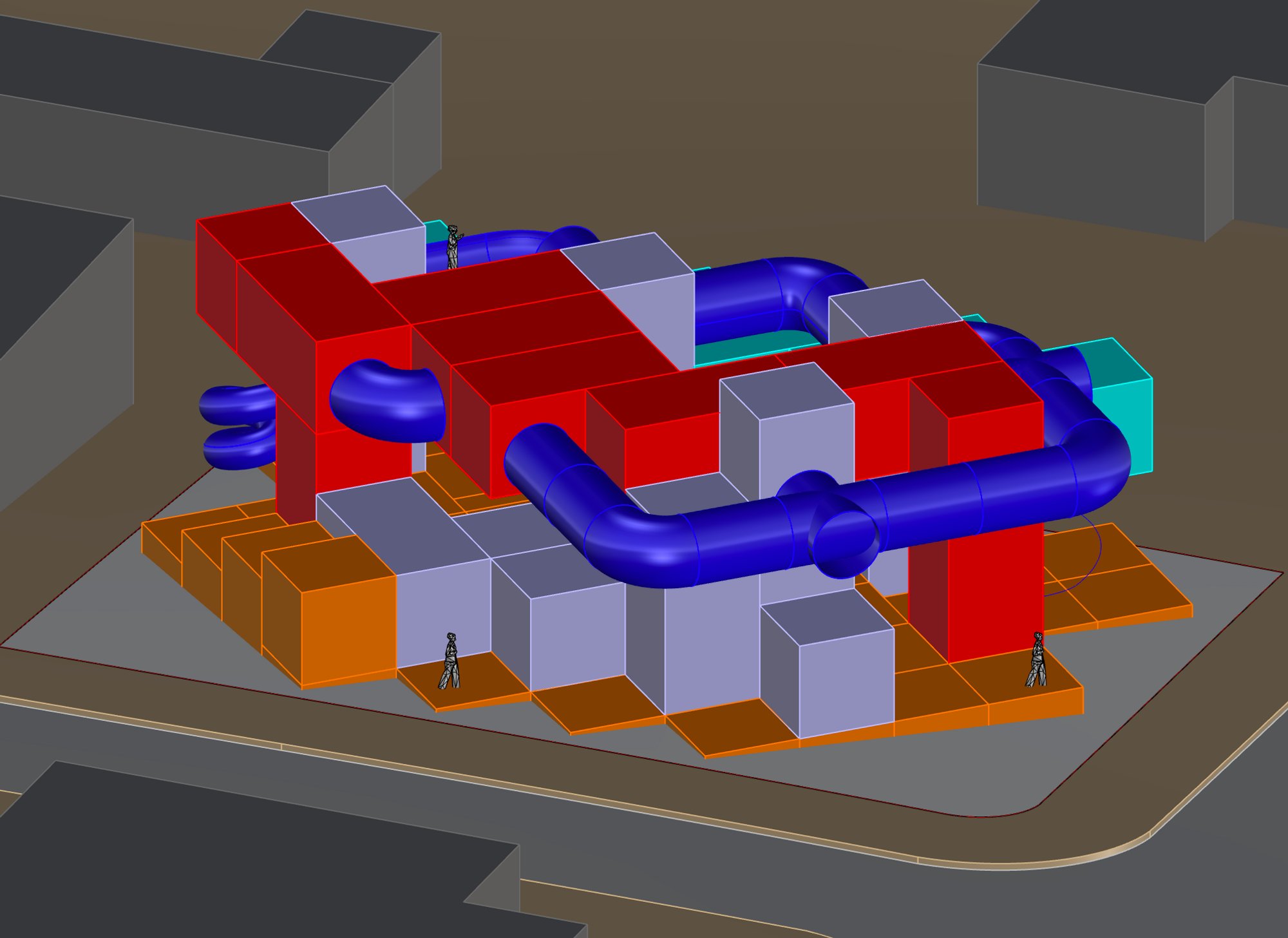
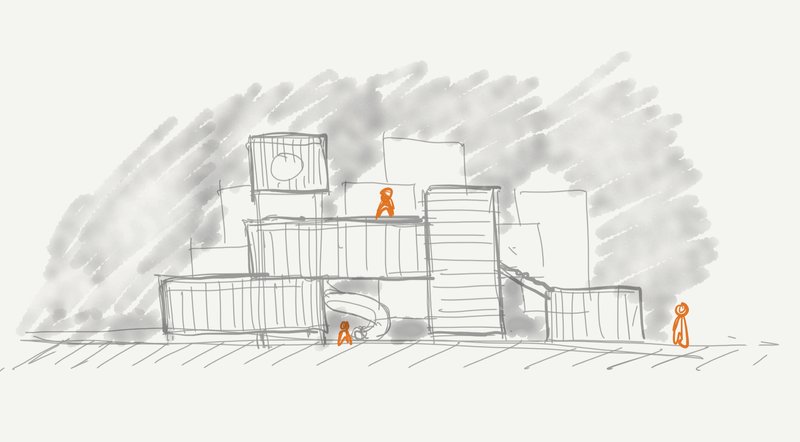
We decided to use container boxes for the main body of the building, which is low-cost and can be assembled quickly, and can be easily replaced and expanded in the future with changes in function or scale.
we started to think of the possibilities of the permutation and combination of container boxes.
Through many experiments, we found that rotating the whole building by 45 degrees is a good way to immediately get some small square spaces. We used these small spaces as playgrounds and as a transition between the building and the street as well. And this is an important area for children to build their initial sense of trust with the help center.
Considering about the limited site capacity, we simplified the horizontal circulation as much as possible.
We hoped to incorporate more sustainable elements into the design, including the use of sustainable materials such as container boxes, recycled water pipes, recycled wood for interior walls.


Popular Articles
Popular articles from the community


Solar Steam: A Climate-Responsive Architecture That Redefines the Monument
A climate-responsive memorial architecture that transforms heat, decay, and time into a living system reflecting humanity’s ecological impact.
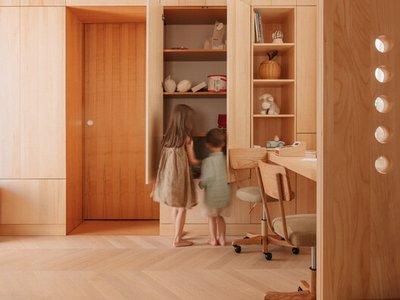
Treehouse Apartment: A Warm Timber Interior Blending Craft, Play, and Contemporary Living
Warm timber apartment with integrated treehouse, combining natural materials, craftsmanship, and playful design to create a flexible, family-oriented living environment.


The Ken Roberts Memorial Delineation Competition (Krob)
As the most senior architectural drawing competition currently in operation anywhere in the world, it draws hundreds of entries each year, awarding the very best submissions in a series of medium-based categories.
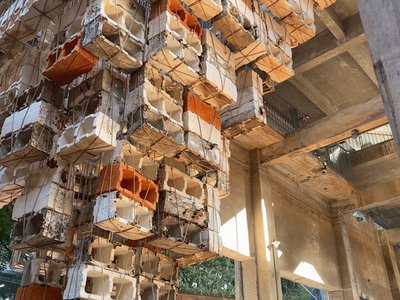
Inverted Architecture Installation by Studio Link-Arc: Exploring the Intersection of Architecture and Living Organisms
Inverted Architecture Installation by Studio Link-Arc blends mycelium, sustainability, inverted design, ecological cycles, and urban adaptive architecture in Shenzhen.

Similar Reads
You might also enjoy these articles

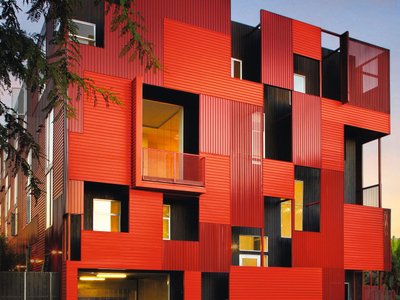
Converge Hub – A Human-Centered and Sustainable Mobility Hub at the Urban Edge
Its open and permeable design promotes sustainable movement through walkable connections, green axes, and integrated public transport
51st Annual KRob - Ken Roberts Memorial Delineation Competition
Join us in celebrating 51 years in excellence in architectural representation! With $2,400 in prize money awarded across 8 categories, this prompt-less competition is accessible to all!

Comments (0)
Please login or sign up to add comments
No comments yet. Be the first to comment!