
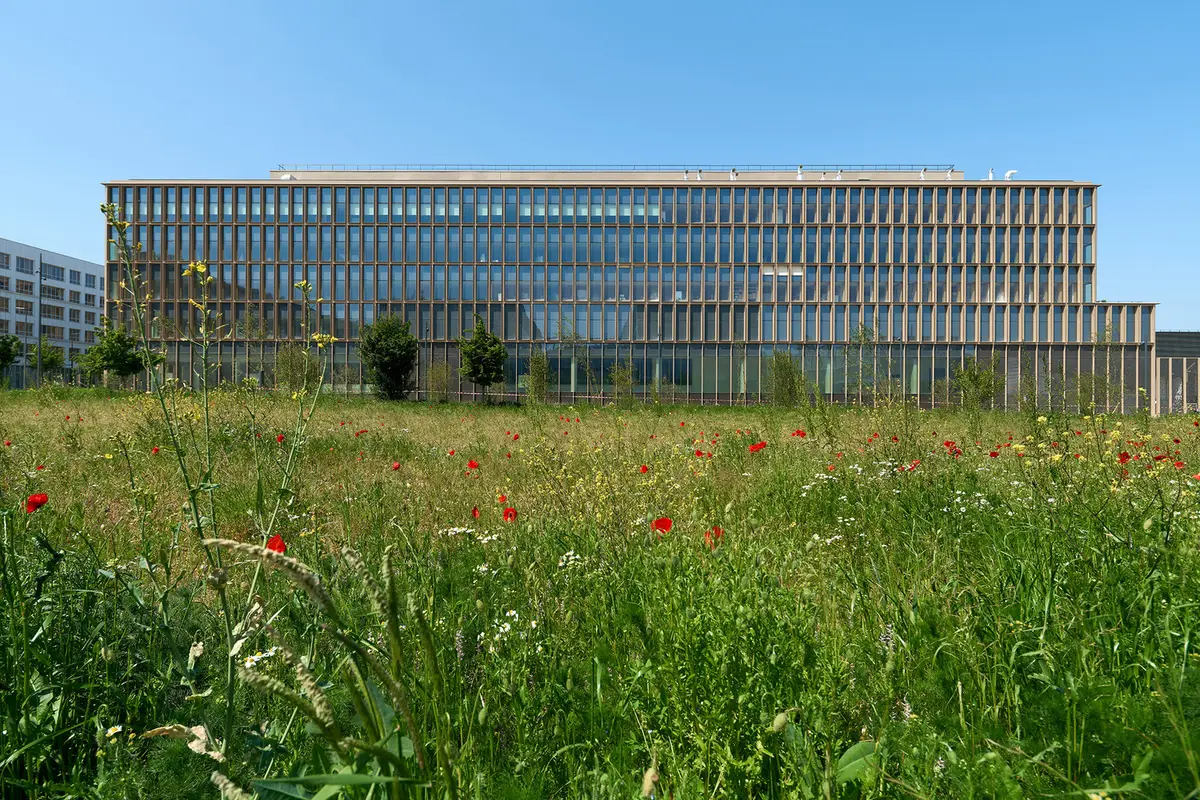
In’Cube Danone Research & Innovation Center by Arte Charpentier: A Beacon of Sustainable Innovation in Food Research
Sustainable research center blending innovation, transparency, and biophilic design to foster food-tech collaboration on Paris-Saclay’s scientific campus.


Located in the heart of the internationally acclaimed Plateau de Saclay, the In’Cube Danone Research & Innovation Center, designed by Arte Charpentier, exemplifies a bold new vision for research architecture—where sustainability, innovation, and wellbeing converge. Completed in 2022 and spanning 21,500 square meters, this landmark facility serves as a catalyst for Danone’s mission to transform the future of food through cutting-edge research, collaboration, and eco-conscious design.
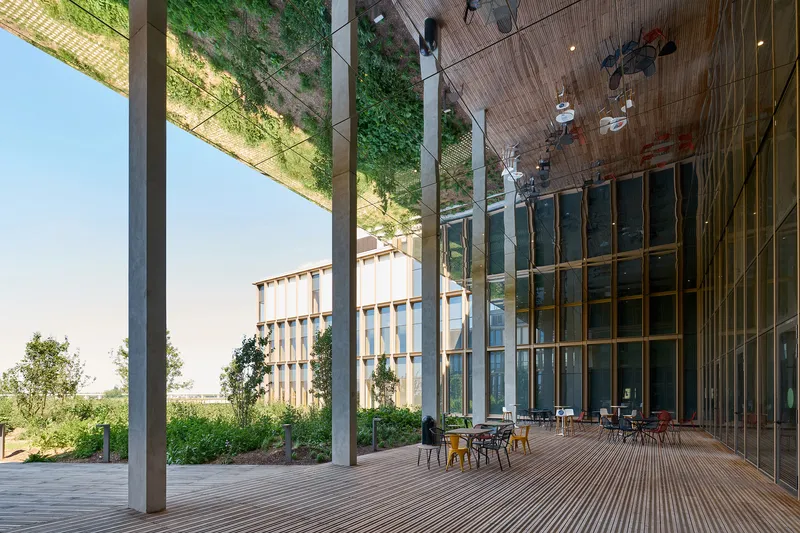
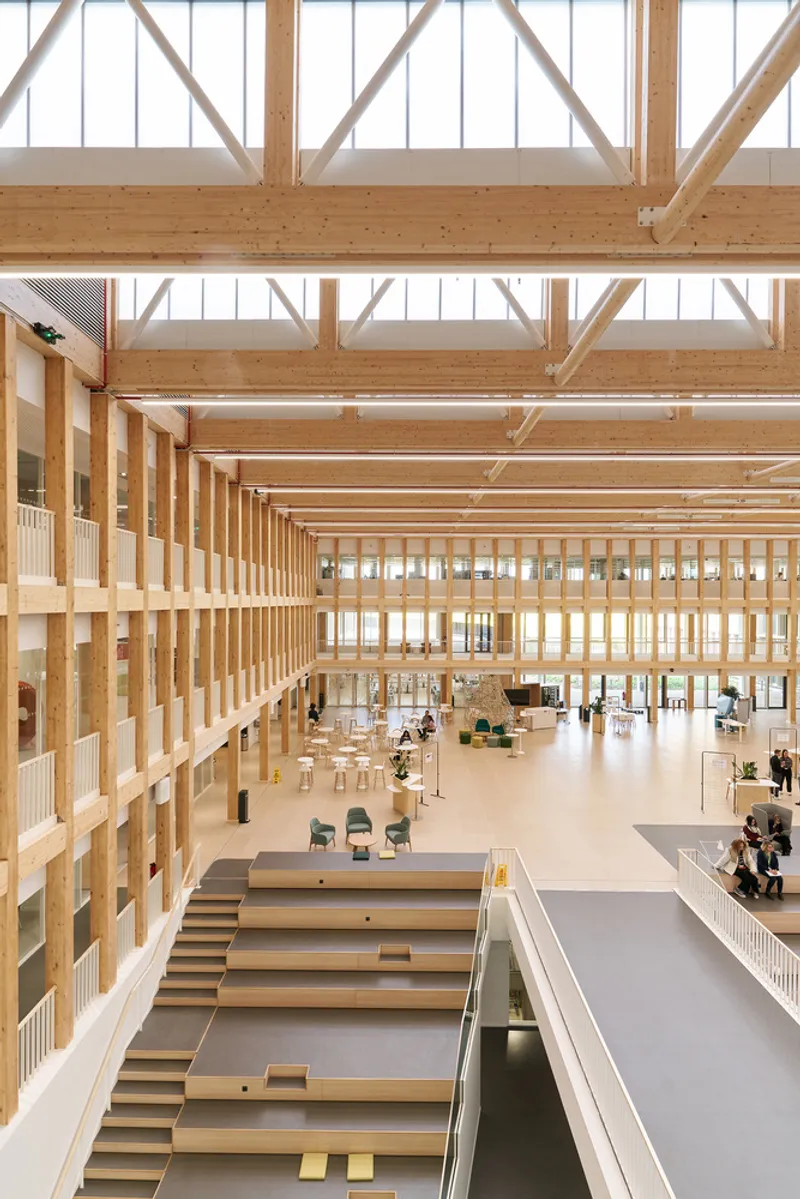
A Living Laboratory for Food Innovation
As the global food industry evolves, In’Cube rises to meet the challenge—housing over 600 researchers, scientists, designers, and technologists. The center is dedicated to life sciences, nutrition, consumer experience, product design, and pilot testing. With a clear focus on fostering interdisciplinary synergy, the architecture supports Danone’s mission to lead the food revolution and strengthen ties with food-tech startups, universities, and consumers.
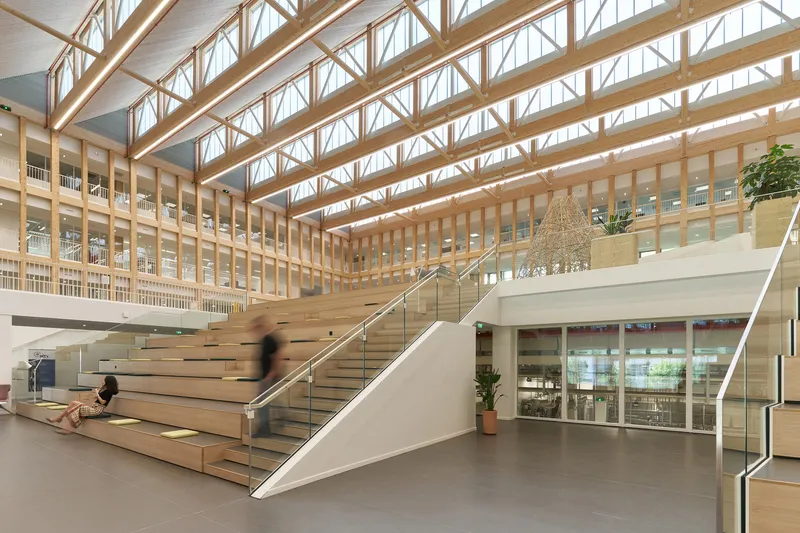
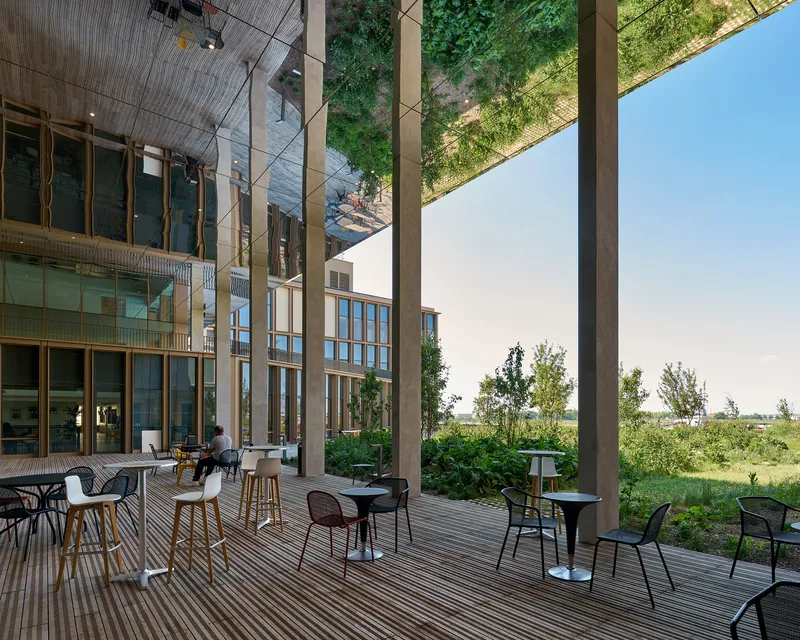
Sustainable Design for a Better Future
Certified as a low-carbon building, In’Cube is a prime example of eco-responsible architecture. Arte Charpentier's design integrates sustainable materials, hybrid structures, circular economy principles, and adaptive reuse strategies. The entire architectural language reflects a commitment to environmental stewardship and regulatory innovation, reinforcing Danone’s global leadership in sustainable food innovation.
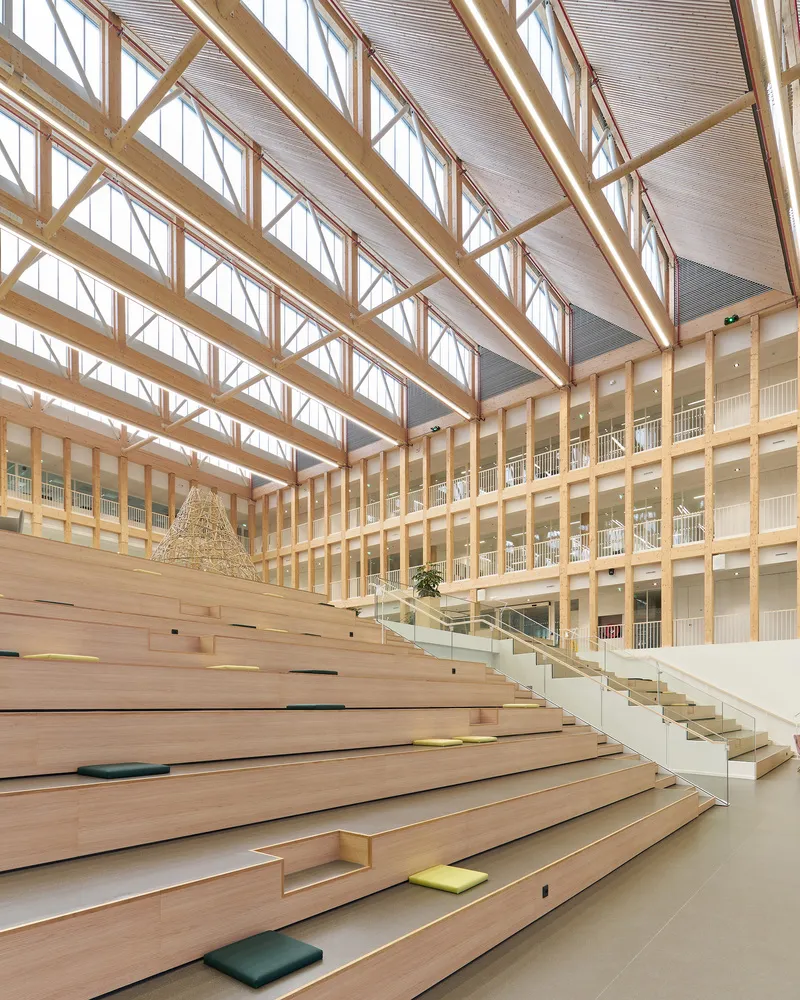
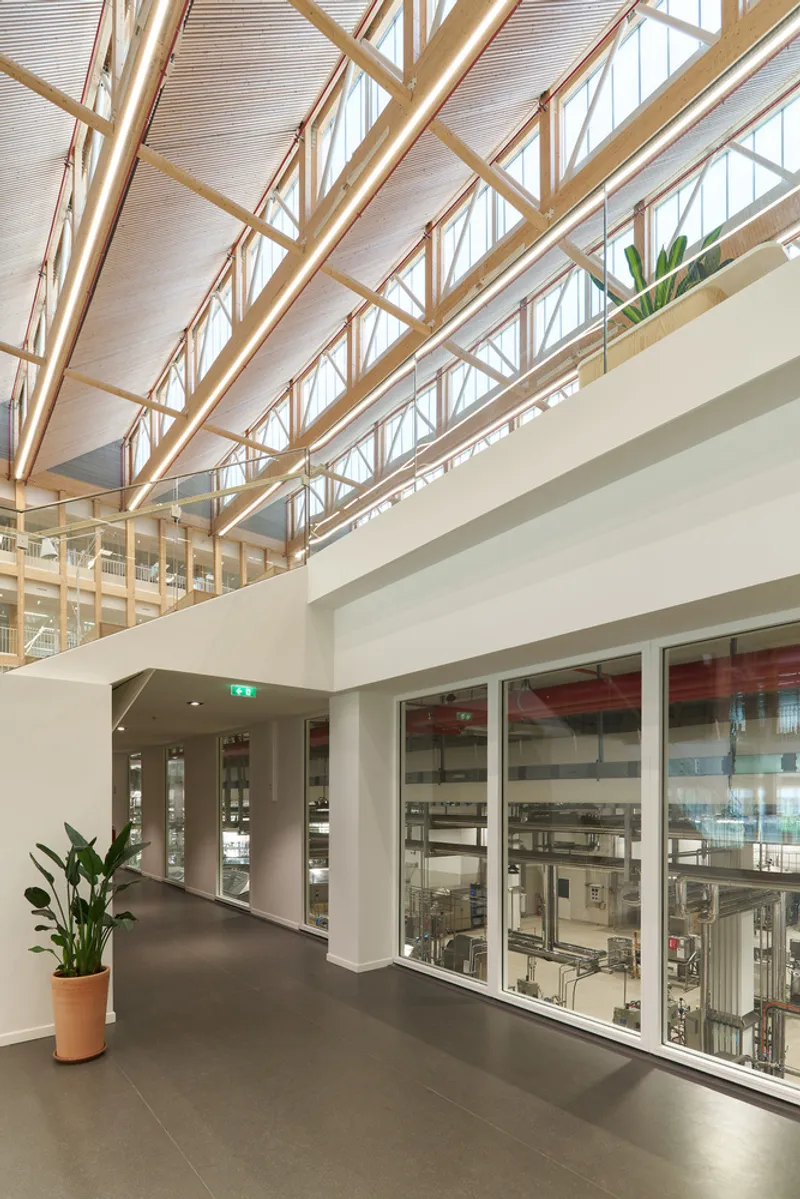
Human-Centric Architecture and Spatial Transparency
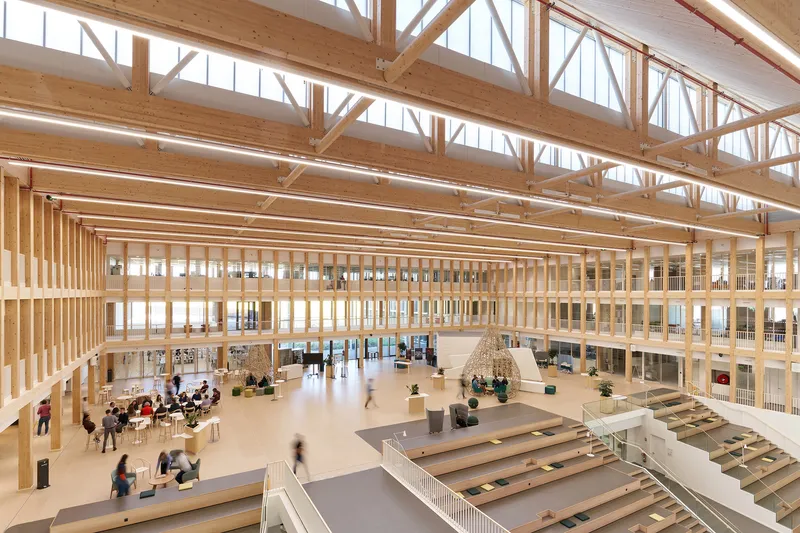
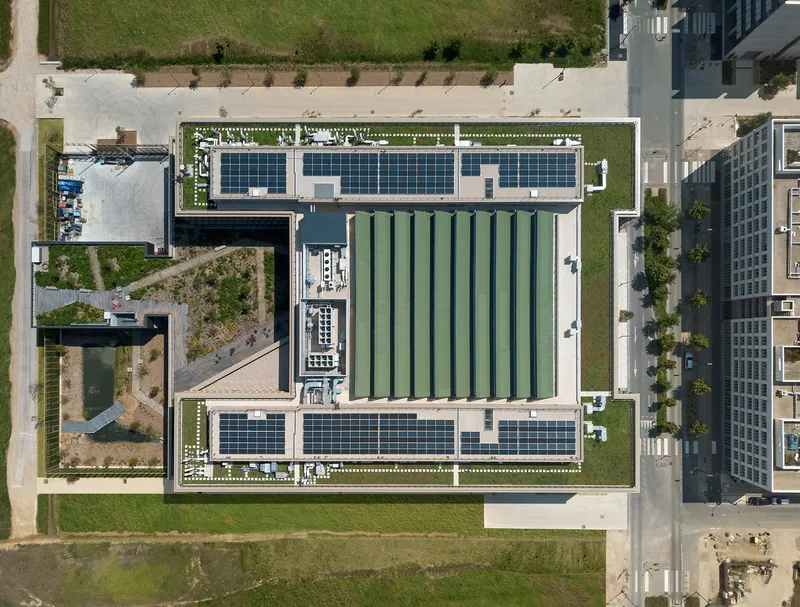
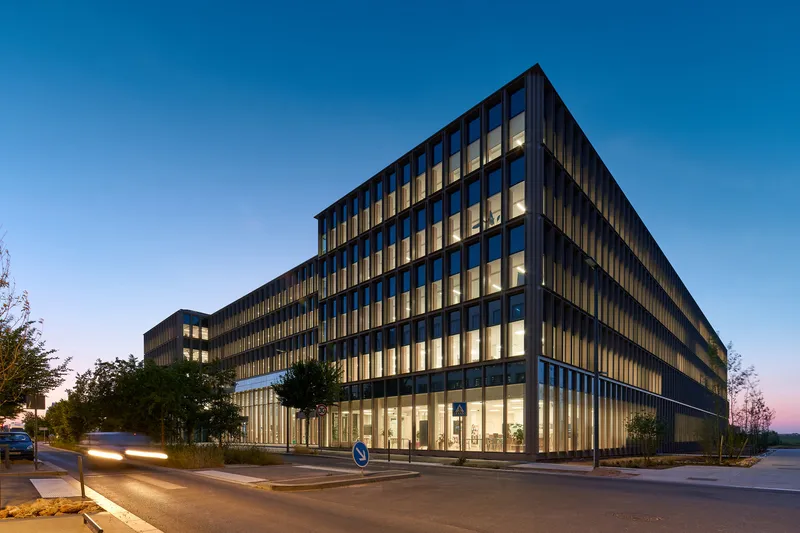
Standing 24 meters tall and occupying a 90x75m rectangular footprint, the building adopts a distinctive U-shaped layout around a luminous central plaza. This “village square” concept fosters spontaneous interaction, community engagement, and vertical circulation. Above it, a shed roof with zenithal lighting bathes the interior in natural light, while the extensive use of wood introduces warmth and a biophilic connection.
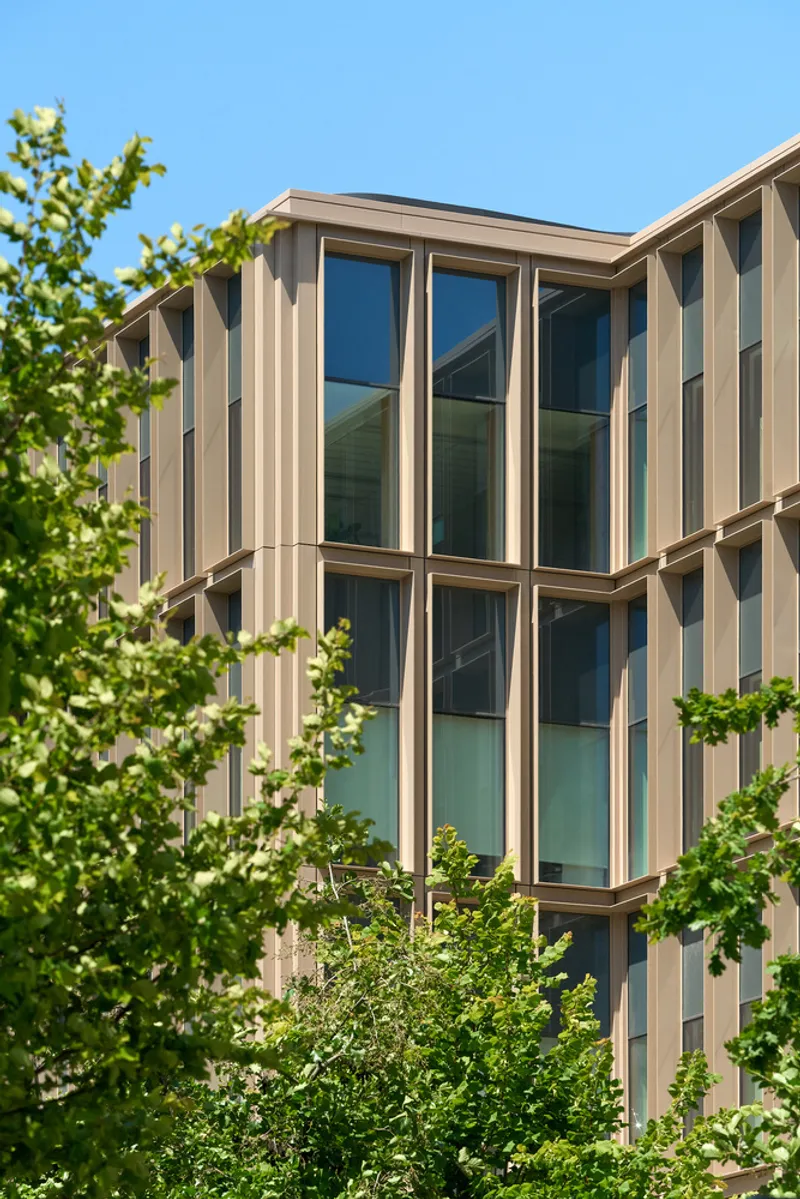
The transparent façade opens the research process to public view—an architectural gesture that symbolizes openness and innovation. Visitors and collaborators can observe micro-factory operations, R&D activities, and pilot productions, reinforcing the idea of an open innovation ecosystem.
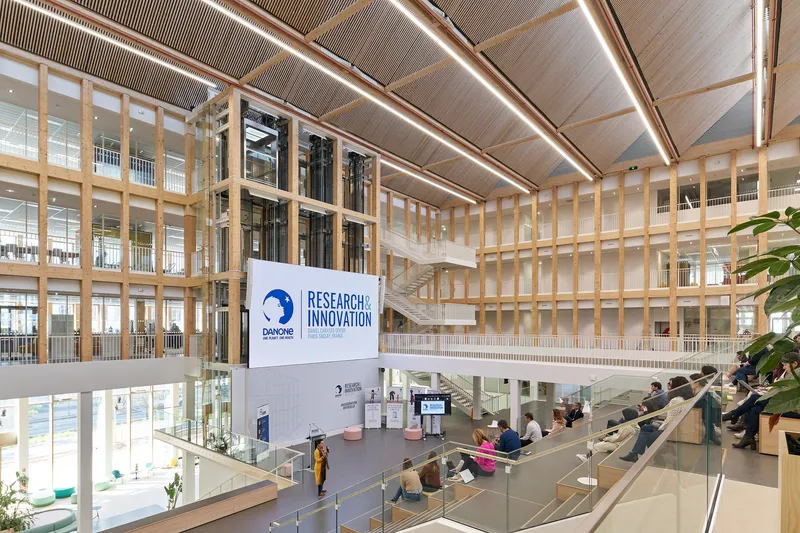
Landscape Integration and Water Management
Nestled within the natural context of the Paris-Saclay campus, In’Cube integrates landscape as an essential component of its identity. A thoughtfully designed network of green spaces, garden terraces, and rain gardens reflects the site’s historic hydraulic legacy. Rainwater is channeled from roof to ground and sustainably managed through open-ground systems before being directed into the district’s drainage infrastructure—underscoring the project's commitment to resilient urban hydrology.
A Model for Future Innovation Campuses
In’Cube is more than a building—it is a collaborative and immersive environment designed to accelerate breakthroughs in health, sustainability, and consumer well-being. By merging advanced architectural design with ecological responsibility and scientific purpose, the Danone Research & Innovation Center sets a new standard for future-ready, sustainable research environments.
All Photograhs are works of Christophe Valtin


Popular Articles
Popular articles from the community


David Macias Steps a Doorless Stone and Plaster House Down a Tropical Colombian Hillside
In the humid hills of Colombia, Threshold House replaces the front door with an open void and terraces its 850 m² down the slope instead of fighting it.

Cube Design Draws an Ecological Corridor Between Two Shenzhen Hills with the Nankai Building
Beside Shenzhen's container docks, the Nankai Building pairs stacked balconies with a climbing green screen to connect two hillsides across its height.

Architekt Andreas Gruber Scatters 23 Dark Timber Chalets Across a South Tyrolean Forest Edge
In Molini di Tures, Amonti Chalets breaks a resort into a hamlet of gabled timber houses, with parking, storage and services pushed into the slope.

Jaramillo Van Sluys Arquitectura and Urbanismo Turn a Demolished Registry Lot in Quito into an Orchard Plaza
In Quito's Centro Histórico, a 2,800 m² plaza exposes the San Agustín convent wall and redraws its lost Augustinian orchard in volcanic stone.

Similar Reads
You might also enjoy these articles


Hodi-Mandai Geram
Project Function: Preservation and revitalization of the Intangible heritage and socio-spatial identity of the Hodi by Housing, Cultural Memory Center, Sacred Grove, landscape, local tourism economy


Olio Towers: A Mid-Rise for Performers That Fuses Housing, Rehearsal, and Stage
Located blocks from Houston's Theater District, this modular tower stacks living units around a central performance atrium.

Oasis: Modular Green Housing Carved into Dhaka's Urban Fabric
A shortlisted Plugin Housing entry reclaims unauthorized settlements in Dhaka with stepped concrete volumes, green roofs, and ventilation-driven design.

Black Hole: A Floating Megastructure for the Post-Physical Era
Emiliano Mazzarotto envisions a spherical, self-scaling arena where e-sports, digital hotels, and holographic stadiums replace traditional public space.

Explore Industrial Building Competitions
Discover active competitions in this discipline

Challenge to reimagine the Iron Throne

Photograph architecture without architects

Illustrate the lost glory of Angkor Wat - Render Challenge

Design challenge to reuse E-waste
Comments (0)
Please login or sign up to add comments
No comments yet. Be the first to comment!