

ISO House by Ply Architecture: A Modernist Family Home Reimagined Through Craft, Light, and Landscape
ISO House blends Modernist principles, crafted interiors, and seamless indoor-outdoor connections, transforming a U-shaped villa into a warm, contemporary family home.


ISO/, designed by Ply Architecture, is a 330 m² residential project in Australia that transforms an existing U-shaped villa into a contemporary family home. Completed in 2023 by lead architects Benjamin Edwards and Christopher Jeffery, the project celebrates Modernist principles, material honesty, craftsmanship, and a seamless relationship between indoor and outdoor spaces. Through thoughtful alterations and strategic additions, the architects reimagine the dwelling as a dynamic living environment shaped by transparency, openness, and intimate private zones.
Reinterpreting Modernism Through Renovation
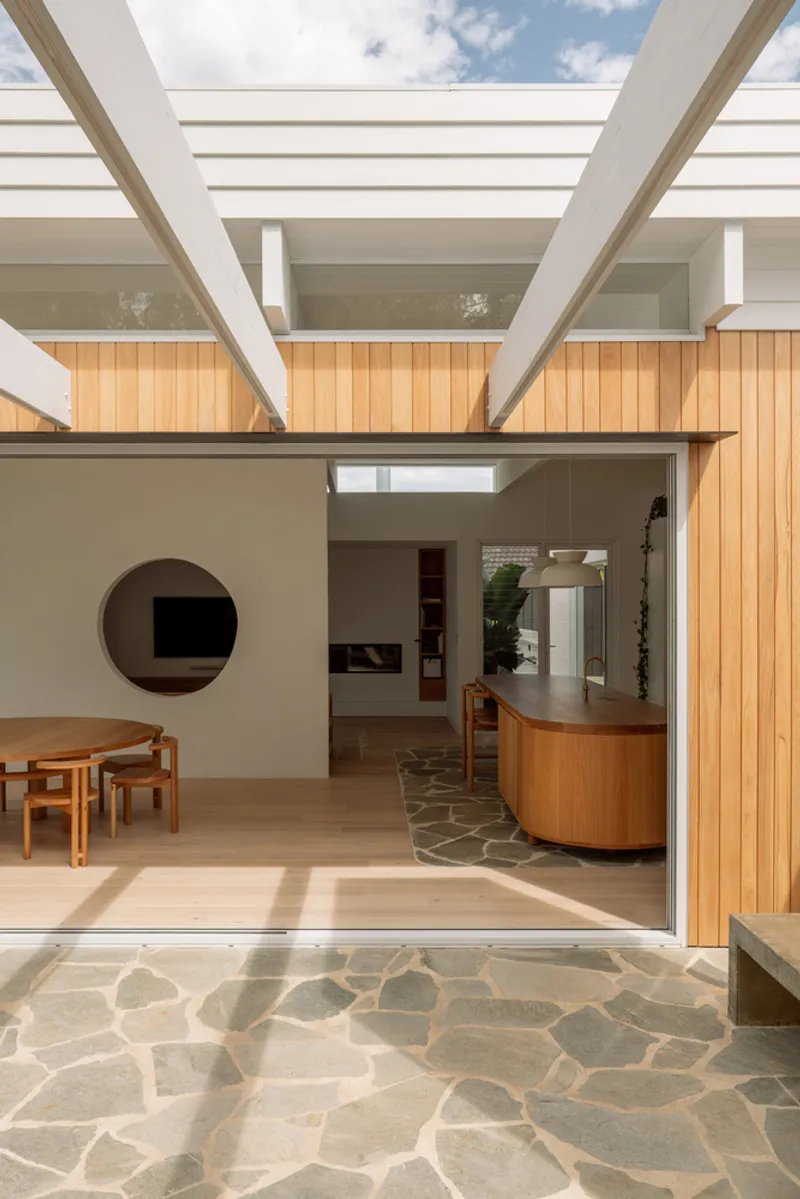
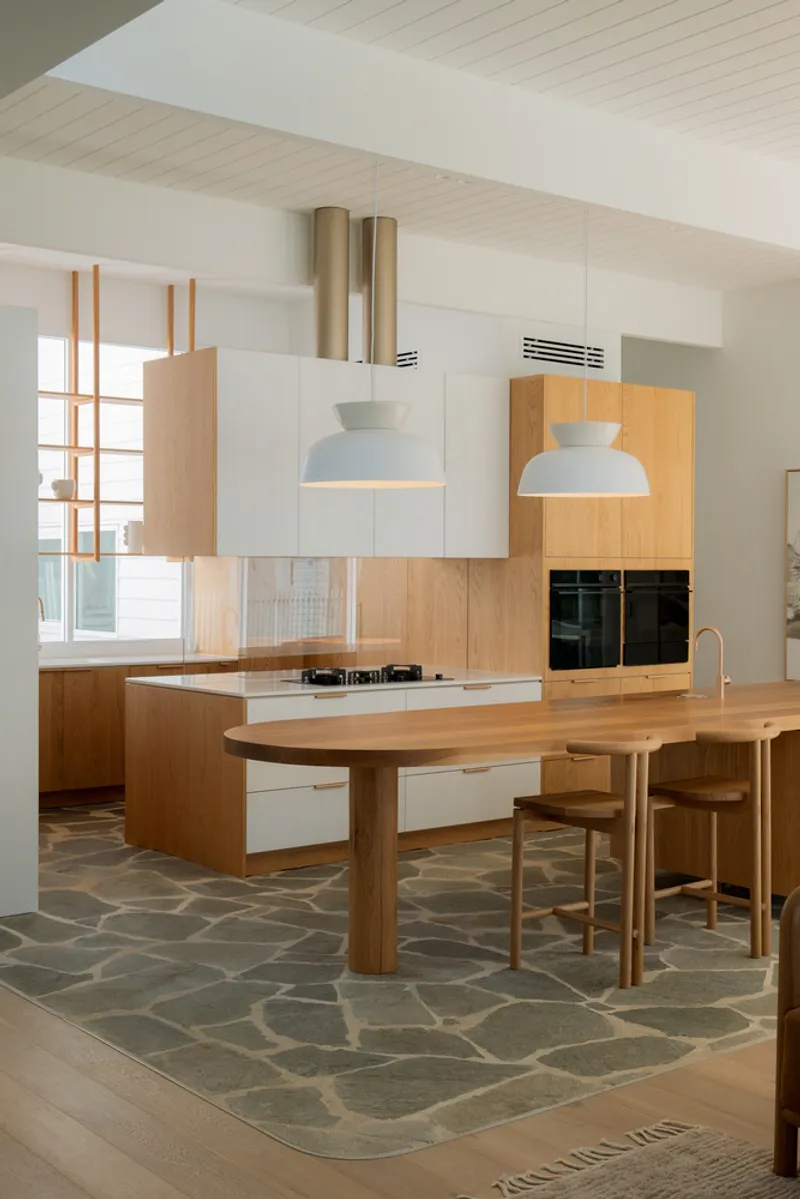
At its core, ISO/ is driven by the clients’ interest in Modernism and hands-on making. Instead of replacing the original structure, Ply Architecture carefully carved into the existing framework—retaining the villa’s character while redefining its spatial organization. The center of the former U-shaped plan is transformed into a new volume that supports a modern lifestyle, offering greater fluidity, natural light, and communal connection.
This balanced approach honors the home’s architectural legacy while presenting a forward-looking model of adaptive reuse and residential evolution.
Crafting Spatial Balance: Privacy and Transparency
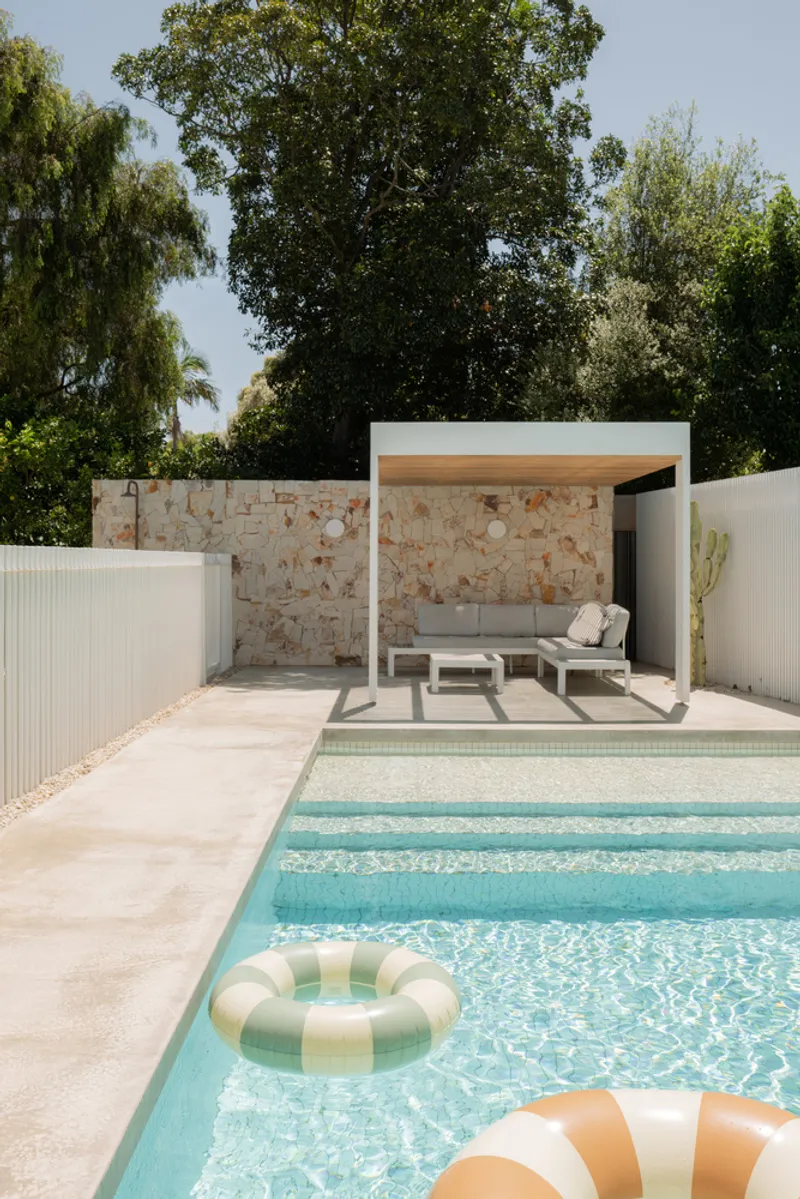
Ply Architecture introduces a deliberate tension between openness and retreat throughout the home. Private spaces remain grounded within the original footprint, where compressed volumes create intimacy and encourage a sense of calm. Meanwhile, the new additions function as public zones designed for gathering, interaction, and leisure.
Strategic sightlines expand the interior’s reach toward the surrounding neighborhood, enhancing openness without sacrificing privacy. Internal layers—sliding panels, screens, and material transitions—allow residents to modulate transparency and create controlled, operable environments.
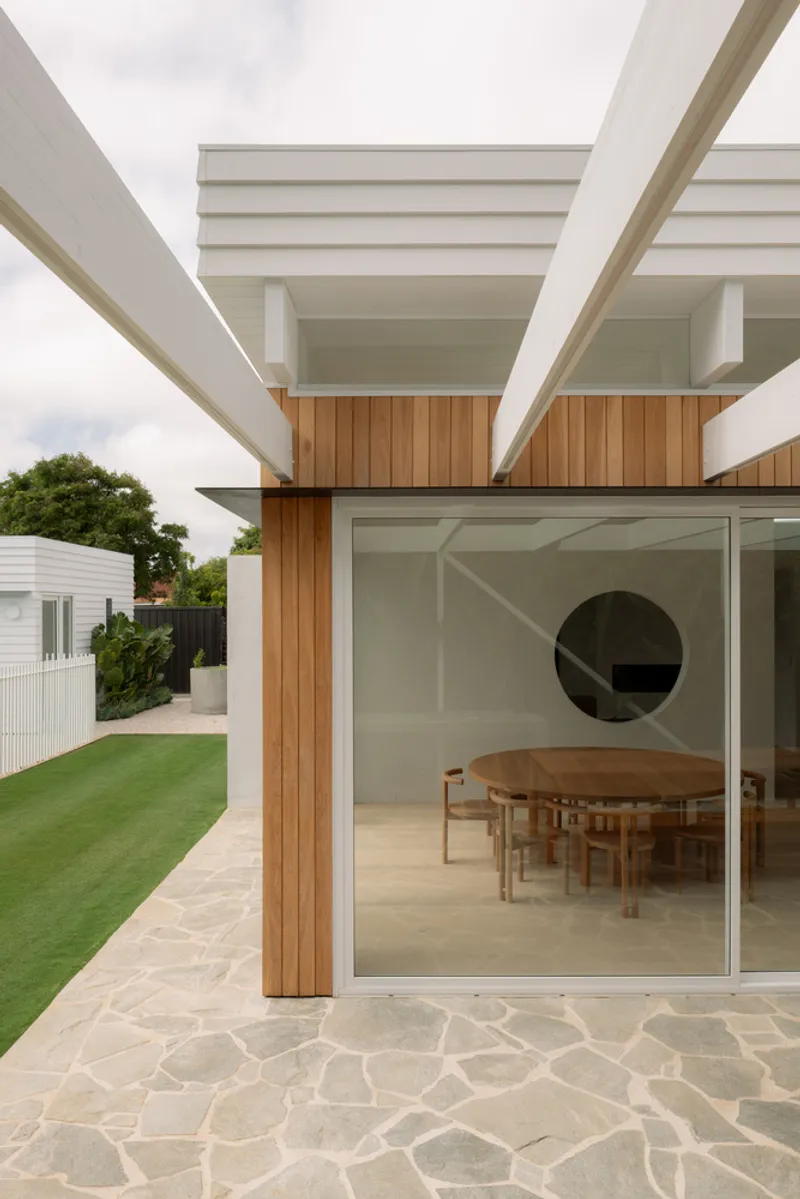

Blurring Boundaries Between Inside and Outside
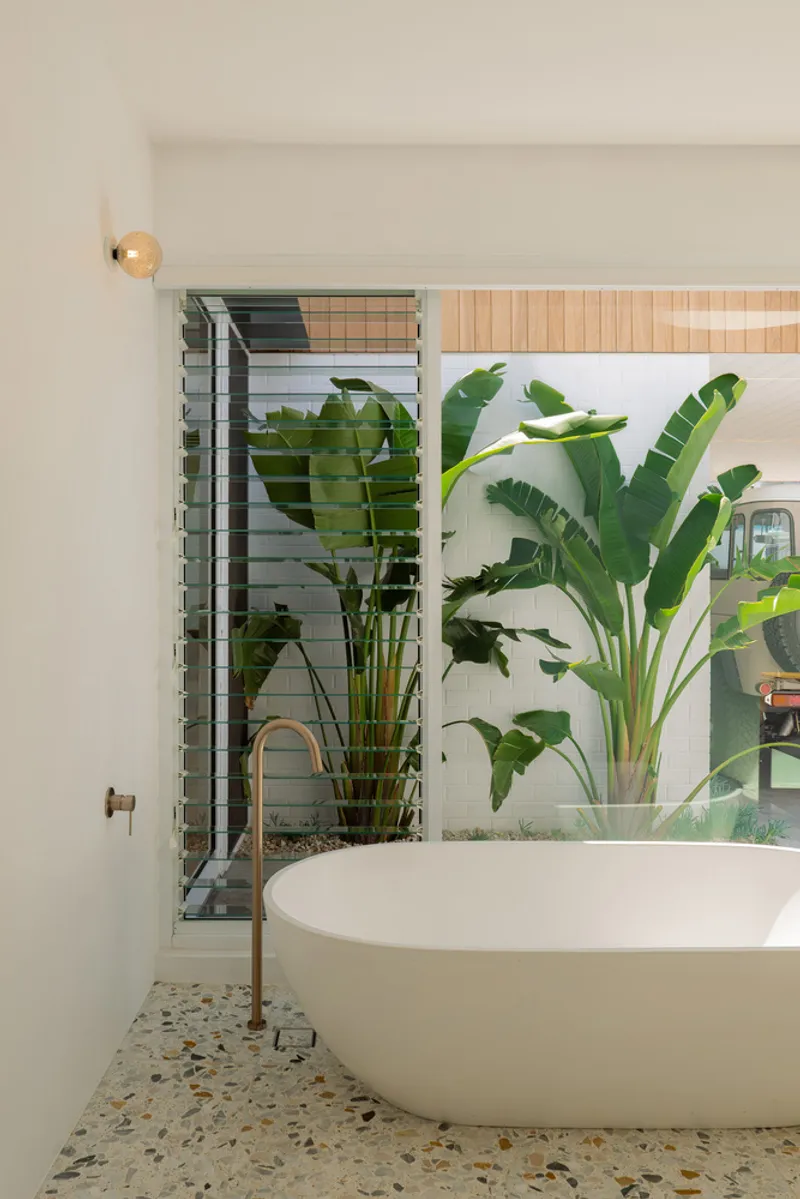
A defining characteristic of ISO/ is its seamless connection between interior rooms and the garden. Transparent thresholds dissolve the distinction between built and natural environments, creating a living experience that shifts with the landscape and daylight.
The garden is visible from nearly every part of the home, reinforcing the dwelling’s connection to place and climate. These transitions are supported by warm natural materials, exposed beams, crafted wood detailing, and gentle lighting that enriches the sensory experience of moving through the house.
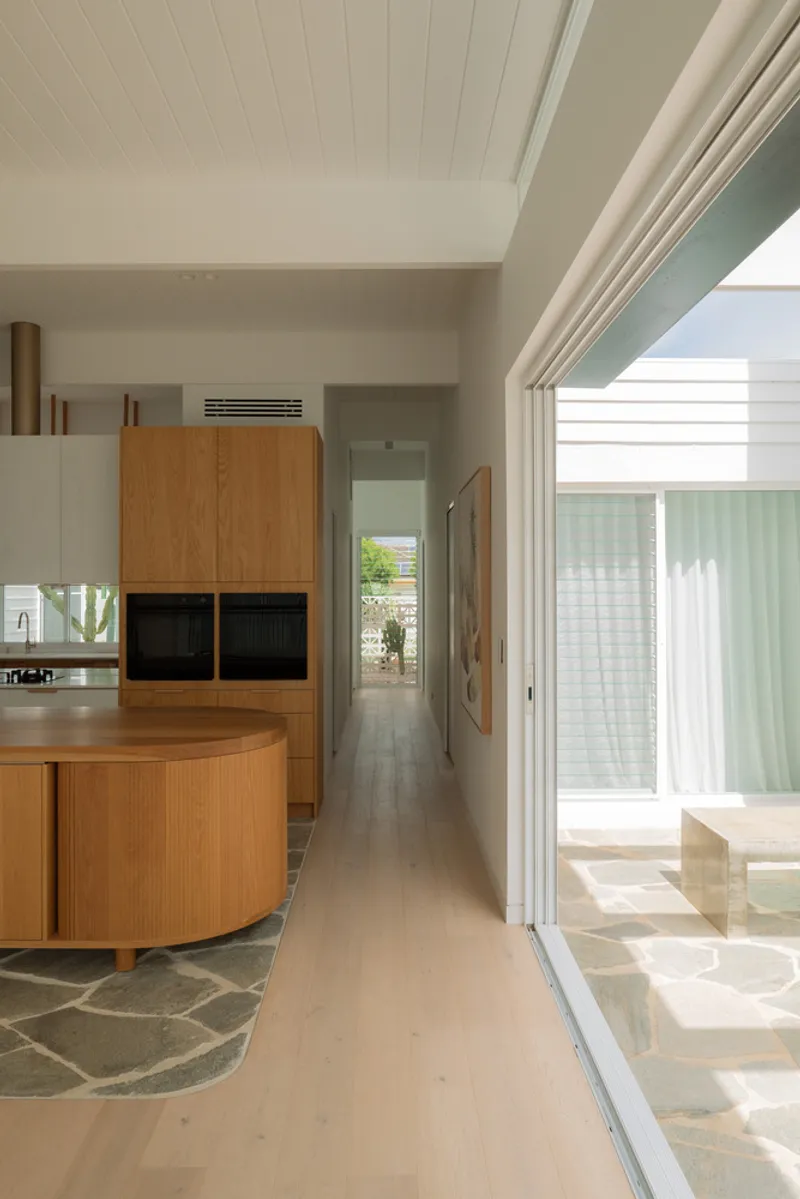
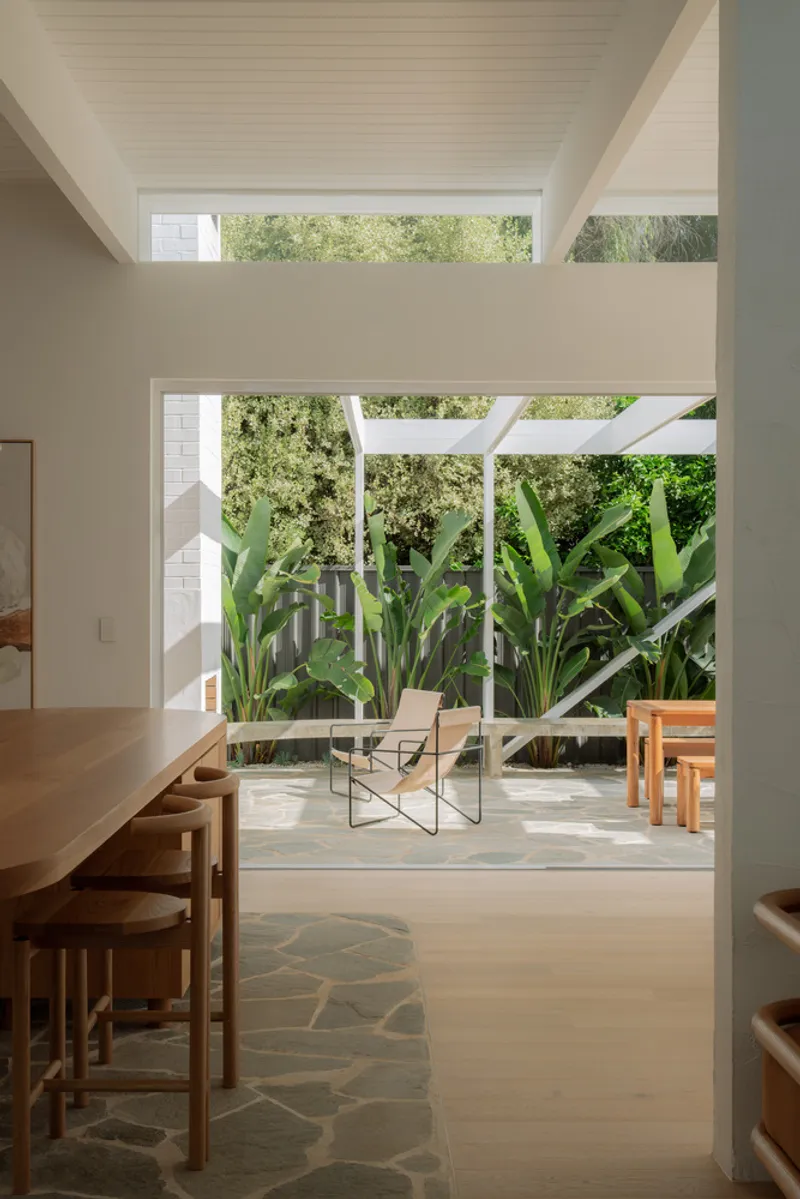
Architecture as Inspiration for Craft
ISO/ also fuels the clients’ personal work as furniture makers. The architectural details—joinery lines, material junctions, textures, and proportions—inspire the development of a furniture collection directly influenced by the home. This reflects a rare and compelling feedback loop in which design not only supports daily life but also becomes a catalyst for creative production.
Macro details from the architecture translate into furniture pieces that are tactile, functional, and aesthetically aligned with the dwelling, underscoring the intimate relationship between space, craft, and personal identity.

Respect for Country
ISO/ stands on the land of the Kaurna people. The project acknowledges this connection to Country, emphasizing respect for the cultural and historical significance of place.
ISO/ represents a thoughtful, modern transformation that reinterprets a traditional villa through the lens of Modernism, craft, and family living. Ply Architecture’s design emphasizes balanced volumes, layered transparency, and an immersive connection to nature—resulting in a home that is both architecturally refined and deeply personal. By merging past and present, shelter and landscape, architecture and craft, ISO/ offers a compelling model for contemporary Australian residential design.
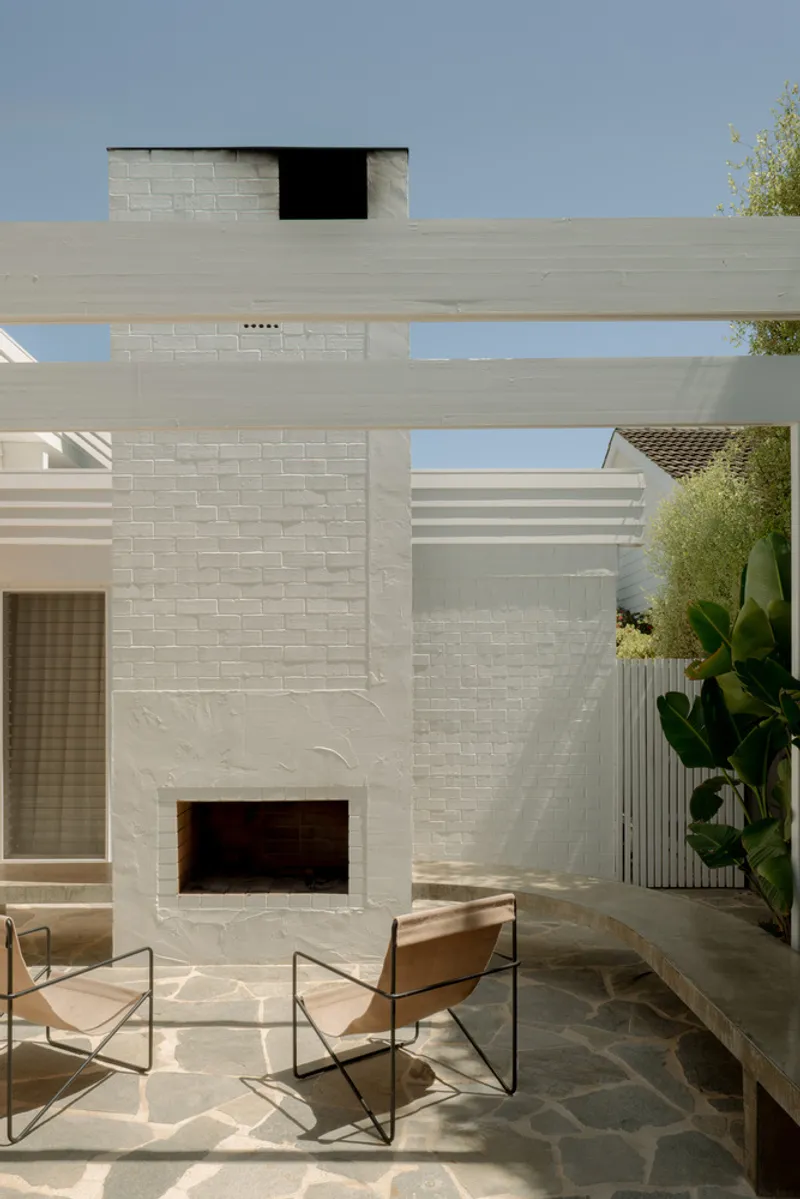
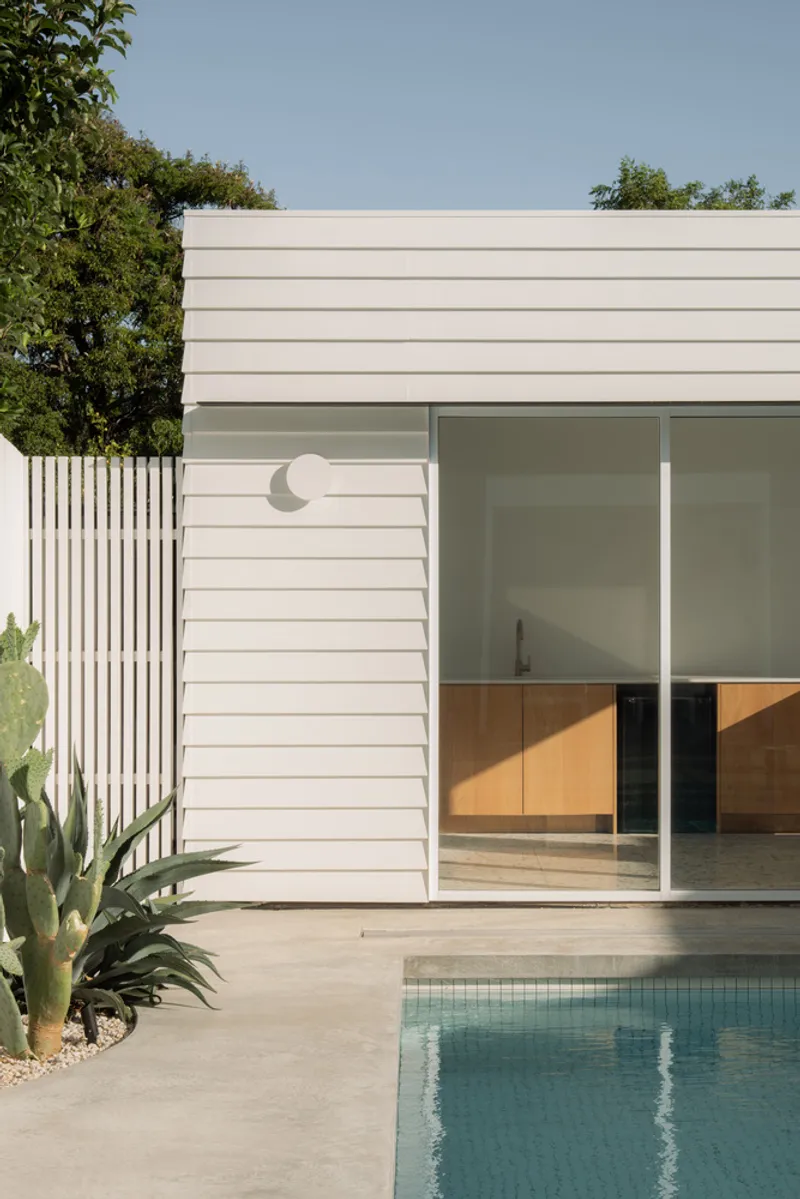
All photographs are works of Alexander Miller




Popular Articles
Popular articles from the community


Lunar Spiral: Space Architecture Shaped by the Mathematics of the Universe
Lunar Spiral reimagines space architecture through Fibonacci geometry, lunar regolith, levitating habitats, and self-sustaining Moon living.

Co-life: Sustainable Architecture for Age-Friendly Community Living
Co-life reimagines sustainable architecture for seniors through courtyards, rammed earth, shared gardens, and spaces designed for belonging.

The Ocean Hive: Sustainable Architecture for a Self-Sufficient Civilization at Sea
The Ocean Hive imagines sustainable architecture at sea, where modular habitats, algae, wave power and ocean waste sustain a growing colony.

Play: Fragments of Their World
Familiar architecture becomes modular playground design, creating safe spaces where displaced children can learn, connect, imagine and play.


Similar Reads
You might also enjoy these articles


Hodi-Mandai Geram
Project Function: Preservation and revitalization of the Intangible heritage and socio-spatial identity of the Hodi by Housing, Cultural Memory Center, Sacred Grove, landscape, local tourism economy


Olio Towers: A Mid-Rise for Performers That Fuses Housing, Rehearsal, and Stage
Located blocks from Houston's Theater District, this modular tower stacks living units around a central performance atrium.

Oasis: Modular Green Housing Carved into Dhaka's Urban Fabric
A shortlisted Plugin Housing entry reclaims unauthorized settlements in Dhaka with stepped concrete volumes, green roofs, and ventilation-driven design.

Black Hole: A Floating Megastructure for the Post-Physical Era
Emiliano Mazzarotto envisions a spherical, self-scaling arena where e-sports, digital hotels, and holographic stadiums replace traditional public space.

Explore Residential Design Competitions
Discover active competitions in this discipline



Challenge to reimagine the Iron Throne


Photograph architecture without architects


Illustrate the lost glory of Angkor Wat - Render Challenge


Design challenge to reuse E-waste
Comments (0)
Please login or sign up to add comments
No comments yet. Be the first to comment!