
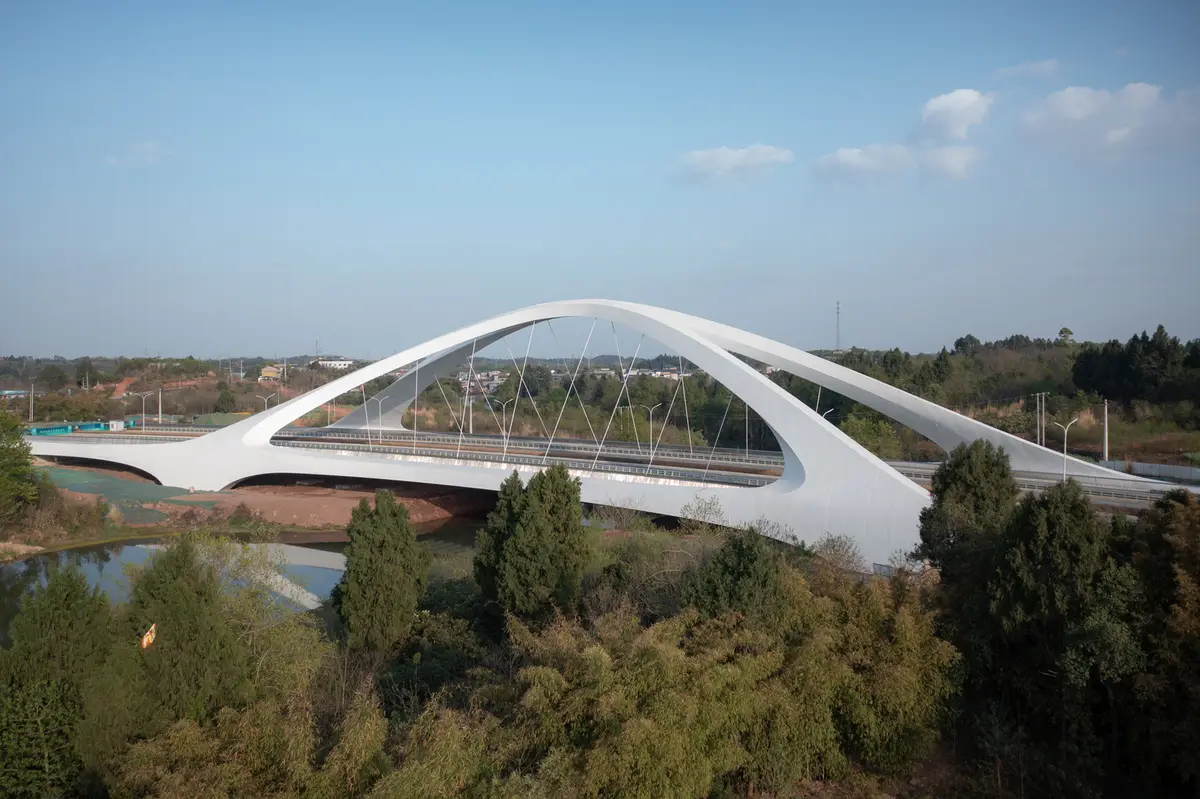
Jiangxi River Bridge by Zaha Hadid Architects: A Sculptural Landmark Redefining Chengdu’s Infrastructure
Sculptural steel-arched bridge in Chengdu by Zaha Hadid Architects, blending innovative engineering, sustainable design, and multi-modal urban connectivity.


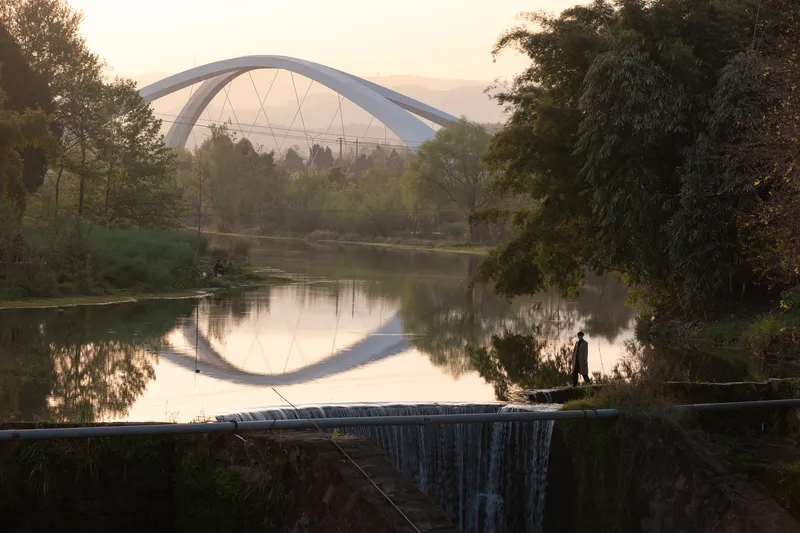
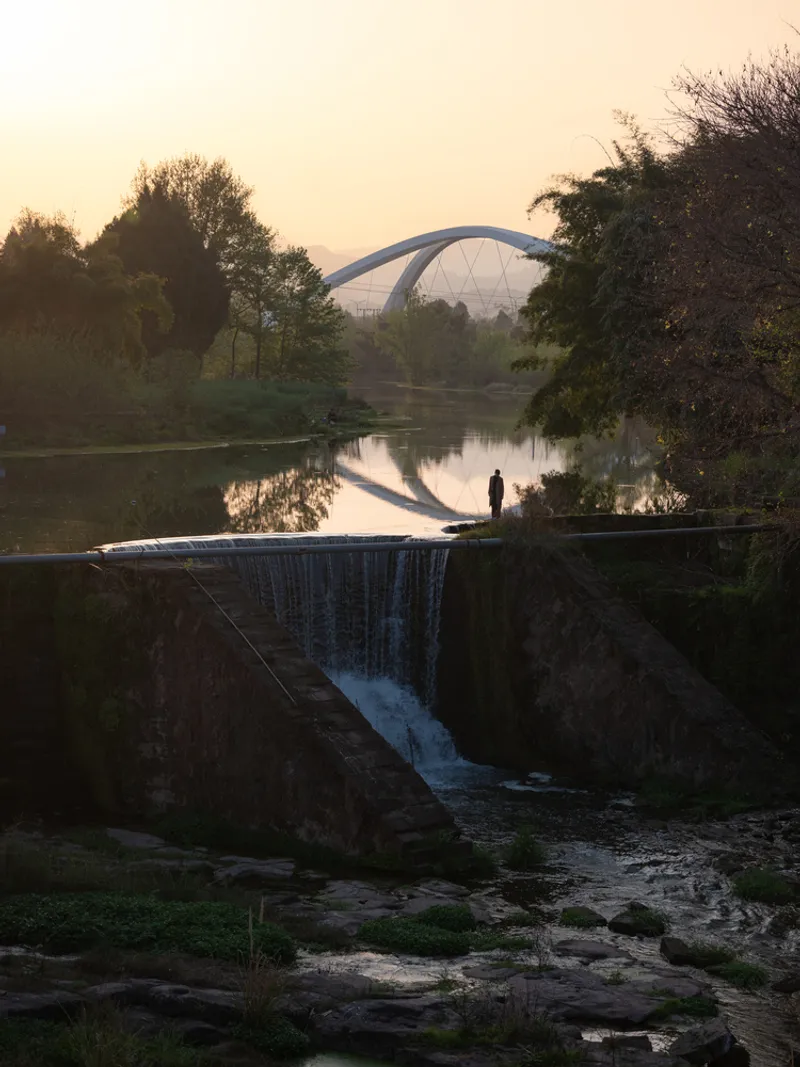
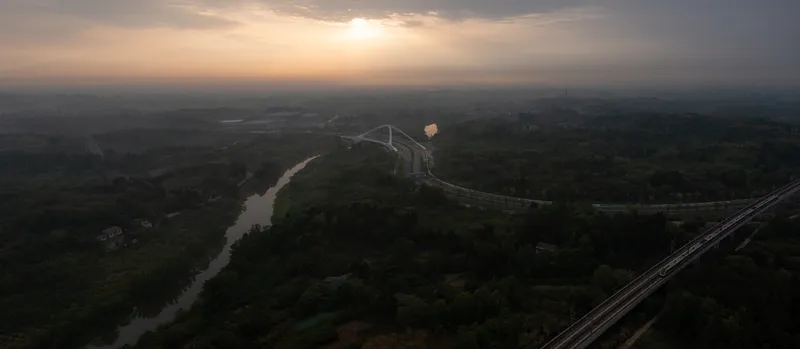
The Jiangxi River Bridge, officially known as the Chengdu West First Bridge, is a groundbreaking infrastructure project designed by Zaha Hadid Architects (ZHA). Completed in 2023, this 295-meter-long bridge marks the first in a series of crossings along Chengdu's West Line Road, enhancing multi-modal connectivity across the city.
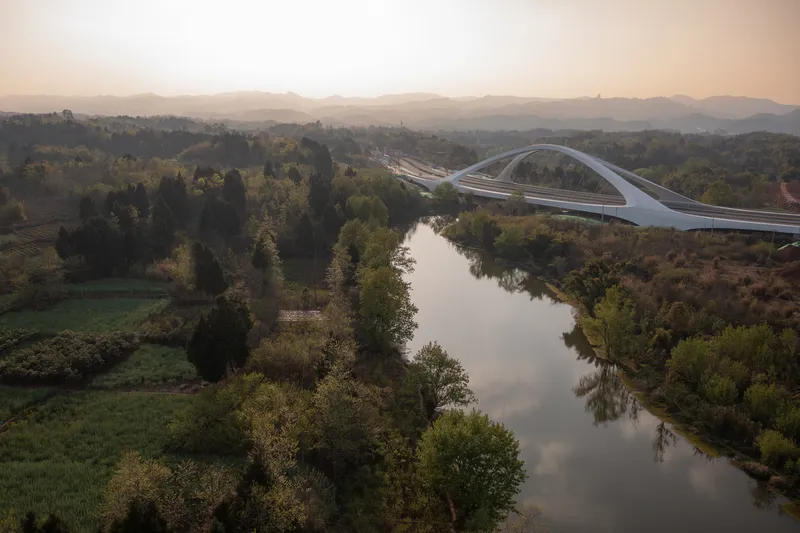
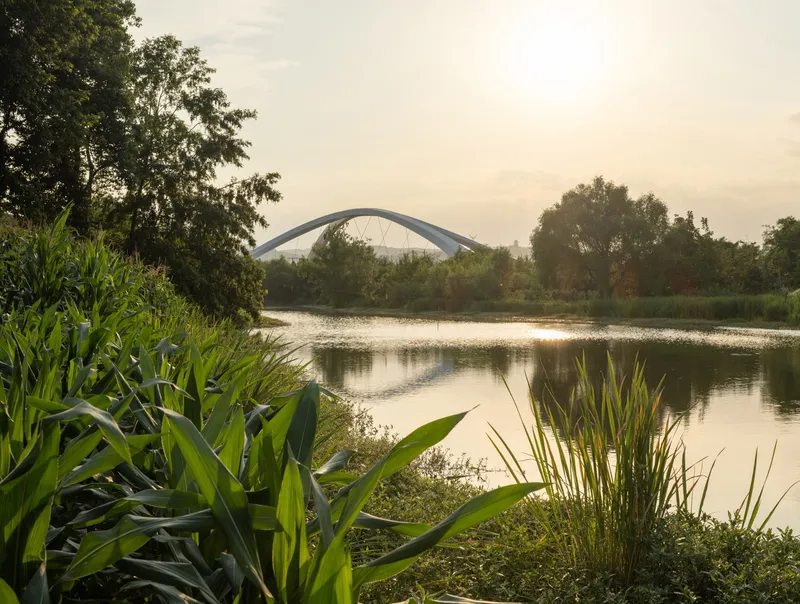
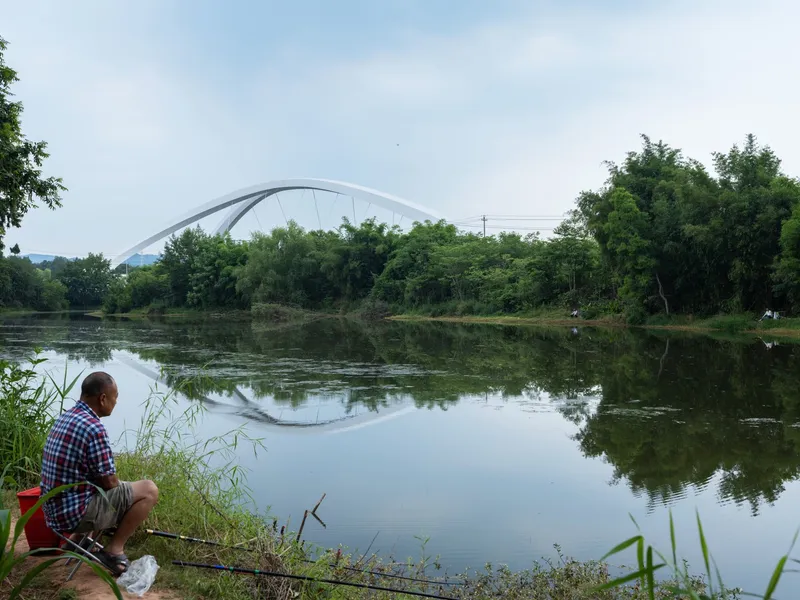
Spanning the Jiangxi River, a tributary of the Tuojiang River in China’s Sichuan province, the bridge accommodates vehicles, bicycles, and pedestrians, playing a pivotal role in integrating the Airport New Town ring-road and cycle route with the broader Chengdu transport network.
Sculptural Design Meets Structural Integrity
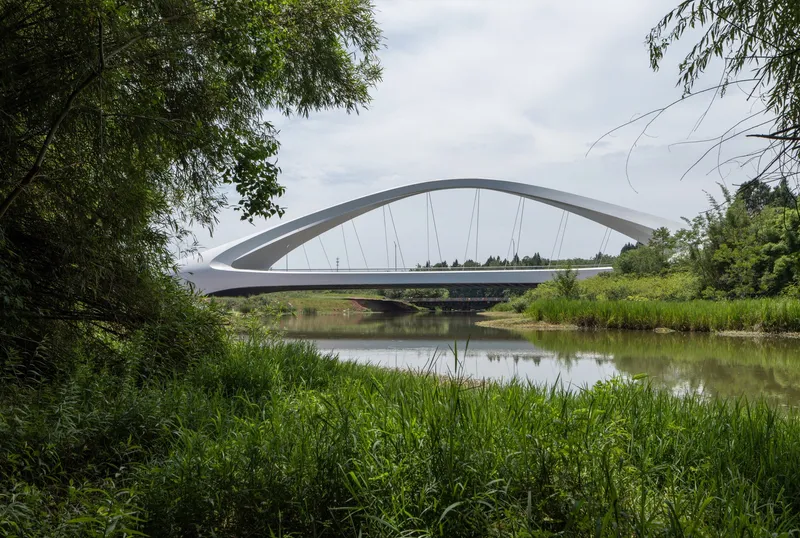
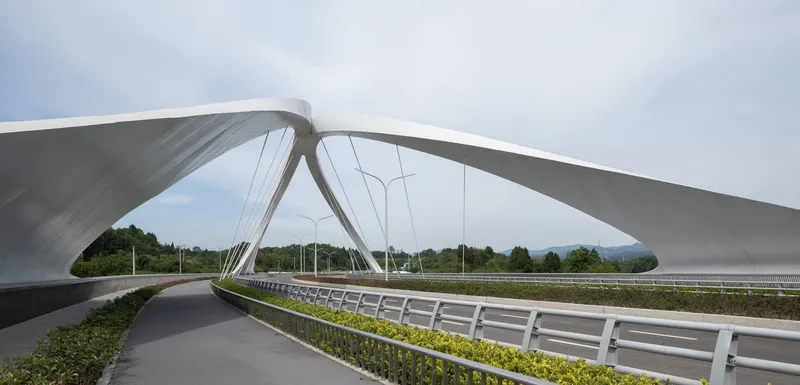
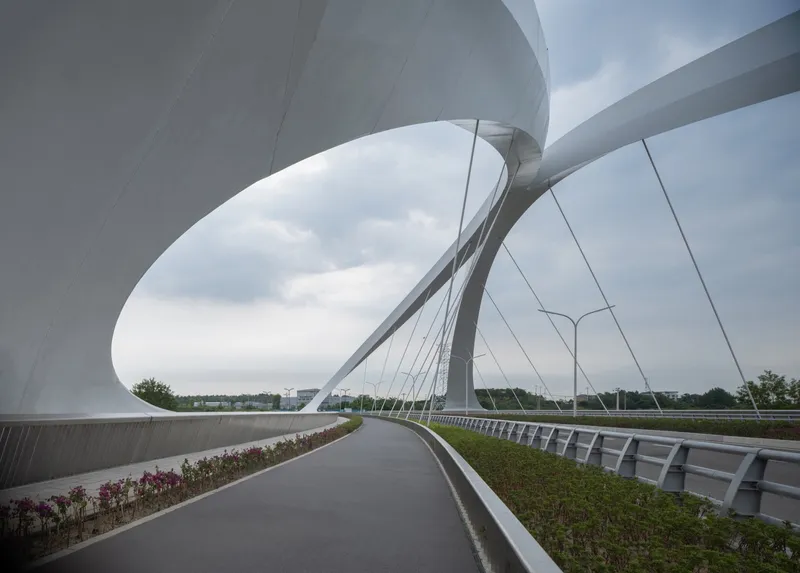
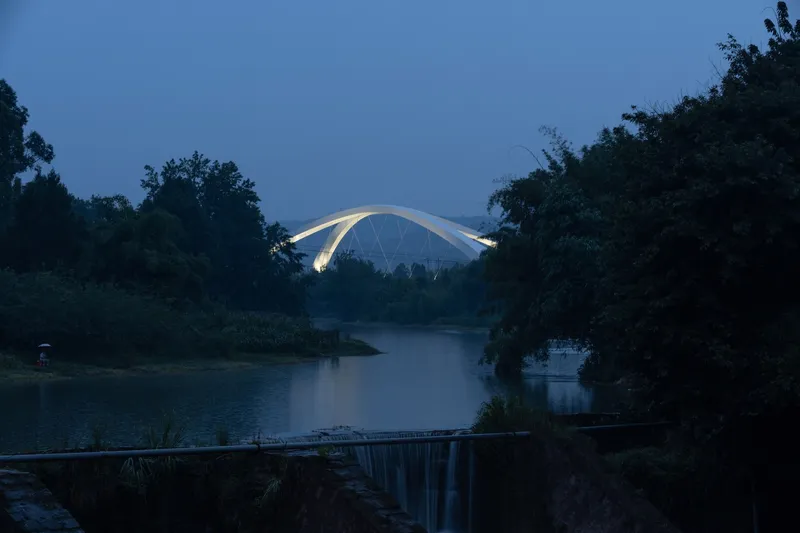
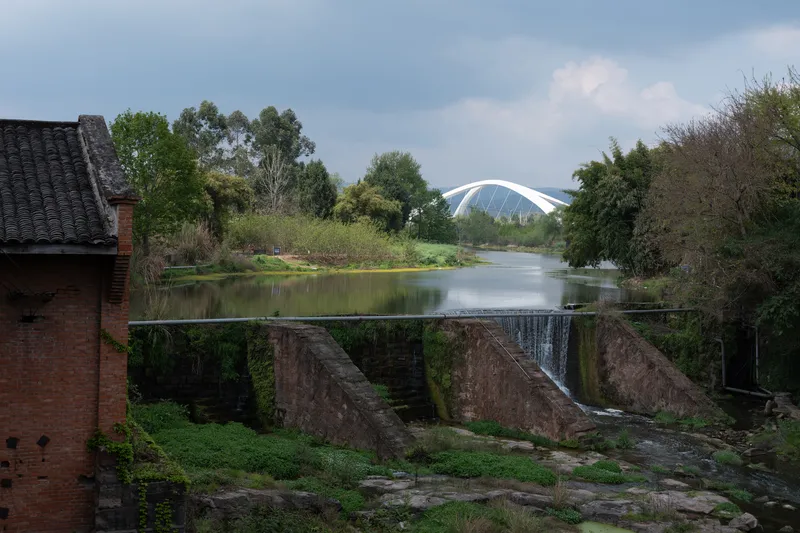
The bridge's design is defined by two soaring steel arches that rise symmetrically from either side of the road deck. These arches gracefully lean inward to touch at their apex, forming a tangential crown that reinforces structural stability against lateral wind forces. With a height-to-span ratio of 1:6, the arches reach an impressive 30 meters in height, tied at their bases with longitudinal box girders that absorb outward horizontal forces—minimizing pressure on the foundations.
The tapered piers and abutments create a seamless sculptural form, harmonizing architecture and engineering into a dynamic visual landmark within Chengdu’s evolving urban fabric.
Advanced Engineering and Sustainability
ZHA collaborated with Buro Happold and the China Southwest Architectural Design & Research Institute Corp. Ltd. to ensure robust structural performance. Advanced digital modeling and structural analysis evaluated all aspects—from material load and traffic to wind and thermal dynamics—ensuring resilience to 200-year climate events.
To reduce environmental impact, the bridge avoids placing any foundations directly in the river. Instead, intermediate piers are positioned on either bank. This minimizes ecological disruption and preserves the natural river flow.
Innovative Construction Techniques
The bridge utilized prefabrication methods for speed and precision. The steel box sections forming the arches and edge girders were manufactured offsite, transported in optimal sizes, and assembled using on-site welding. The concrete road deck was made of precast panels fixed to the cross girders via in-situ concrete stitching—accelerating installation and maintaining high quality control.
Mobile cranes enabled rapid assembly of the prefabricated elements, streamlining construction and reducing labor-intensive processes.
Urban Integration and Public Use
Strategically located at the heart of Chengdu’s West Line Road, the Jiangxi River Bridge not only serves transportation but also enhances urban connectivity. Its design integrates balustrades, benches, and pedestrian pathways, encouraging community engagement with the structure as more than a transit route—it's a public space and architectural experience.
Upon full completion of the West Line Road, the bridge will open to the public, becoming a vital artery within Chengdu’s growing smart mobility and sustainable infrastructure network.
All the photographs are works of Arch Exist, Liang Xue


Popular Articles
Popular articles from the community


Cube Design Draws an Ecological Corridor Between Two Shenzhen Hills with the Nankai Building
Beside Shenzhen's container docks, the Nankai Building pairs stacked balconies with a climbing green screen to connect two hillsides across its height.


Manzana Morphosis: Stretching Barcelona's Grid into a Living Landscape for 2050
A radical reworking of the Eixample manzana turns density into a tool for generous public space, vertical ecology, and environmental performance.

David Ortega Stacks a Two-Story Mexico City Penthouse Around a Steel Stair and a Pergola-Shaded Roof Terrace
In Colonia Roma, a 300 m² penthouse uses oak joinery, a planted steel stair and a slatted roof pergola to make a new-build apartment feel like a house.

The Amber Palace Opera: A Geological Fiction Surfaces on Tallinn's Baltic Waterfront
Pierre Brillard reimagines a Baltic legend as a public landscape, opera house, and waterfront promenade rooted in Tallinn's coastal identity.

Similar Reads
You might also enjoy these articles


Hodi-Mandai Geram
Project Function: Preservation and revitalization of the Intangible heritage and socio-spatial identity of the Hodi by Housing, Cultural Memory Center, Sacred Grove, landscape, local tourism economy


Olio Towers: A Mid-Rise for Performers That Fuses Housing, Rehearsal, and Stage
Located blocks from Houston's Theater District, this modular tower stacks living units around a central performance atrium.

Oasis: Modular Green Housing Carved into Dhaka's Urban Fabric
A shortlisted Plugin Housing entry reclaims unauthorized settlements in Dhaka with stepped concrete volumes, green roofs, and ventilation-driven design.

Black Hole: A Floating Megastructure for the Post-Physical Era
Emiliano Mazzarotto envisions a spherical, self-scaling arena where e-sports, digital hotels, and holographic stadiums replace traditional public space.

Explore Mechanical Bridge Competitions
Discover active competitions in this discipline

Challenge to reimagine the Iron Throne

Photograph architecture without architects

Illustrate the lost glory of Angkor Wat - Render Challenge

Design challenge to reuse E-waste
Comments (0)
Please login or sign up to add comments
No comments yet. Be the first to comment!