

Jules-Verne School by Barré Lambot Architectes: A Sustainable Timber-Structure Campus in Montaigu-Vendée, France
Sustainable timber school integrating nature, light, and community, featuring flexible learning spaces, bio-based materials, courtyards, and bioclimatic design in Montaigu-Vendée, France.


A New Educational Landmark Rooted in Community and Nature
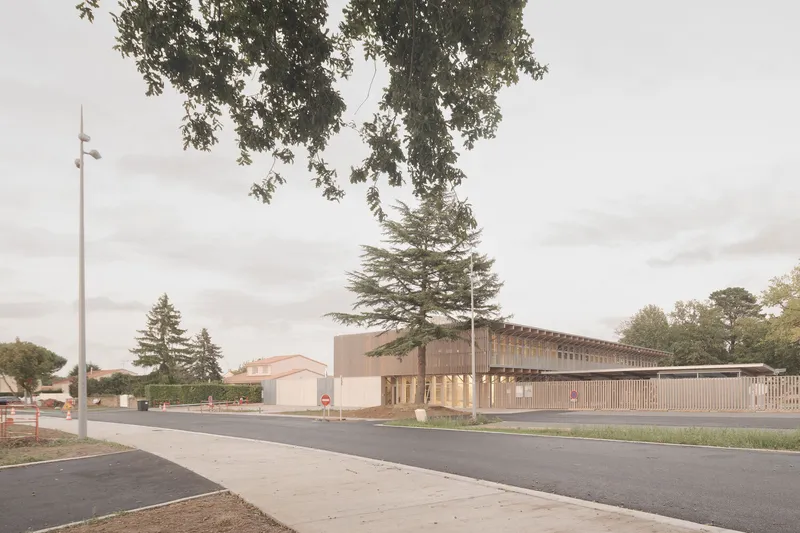
Designed by Barré Lambot Architectes, the new Jules-Verne School in Montaigu-Vendée, France, is a thoughtful educational complex that blends timber construction, bioclimatic design, and community-oriented planning. Completed in 2025, the 1,885 m² school serves both preschool and elementary students, offering a warm and nature-driven learning environment.
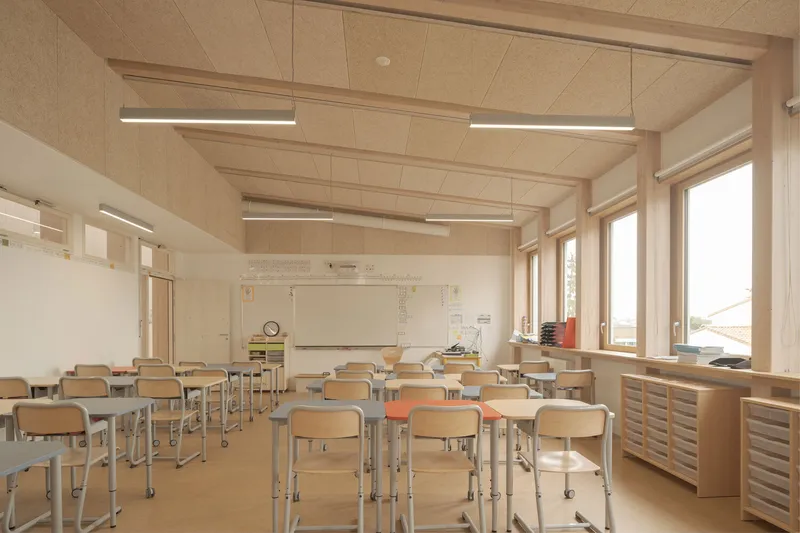
The project reimagines a former urban housing site, creating a civic anchor for the neighborhood while maintaining the site’s historic green character. Its architecture prioritizes ecological responsibility, visual permeability, and human-scaled design, aligning contemporary educational needs with environmental stewardship.
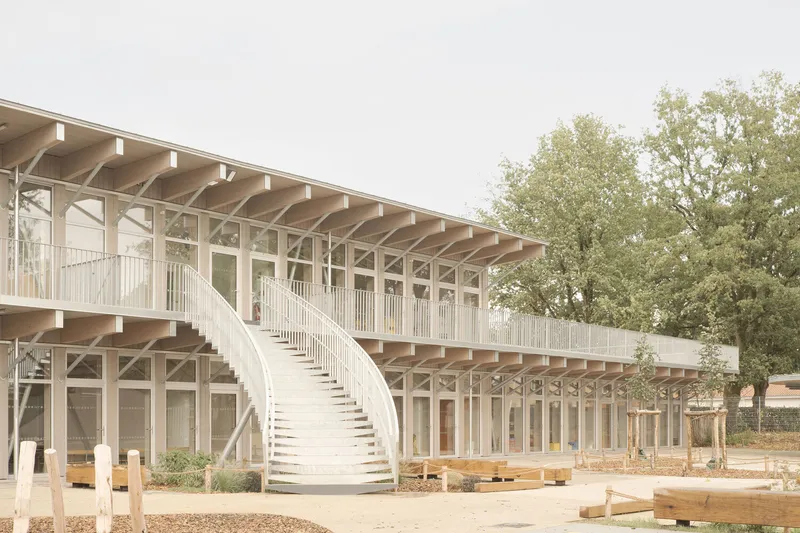
Program and Spatial Organization
The school consists of:
- 3 preschool classrooms with adjacent rest spaces on the ground floor
- 7 elementary classrooms on the first floor
- A visual arts workshop
- Administration area, including offices, teachers' lounge & technical rooms
- Library & extracurricular space located near the central hall
- A motor skills room connected to early childhood spaces
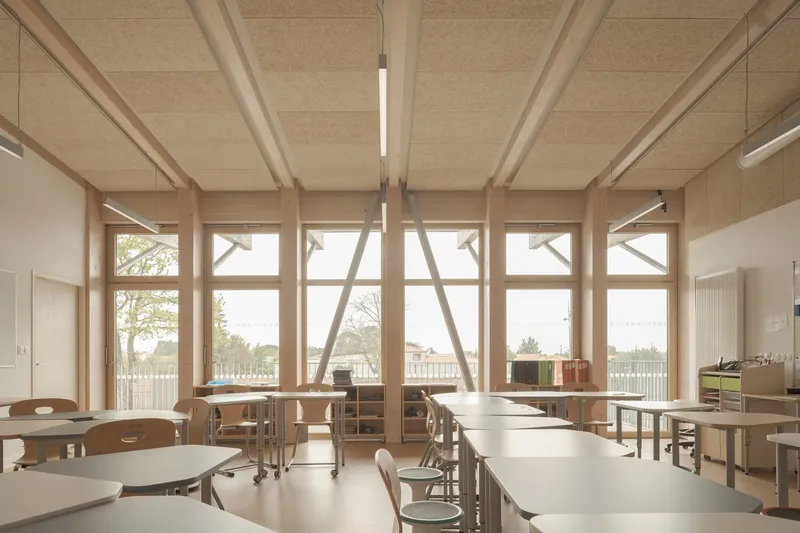
Spaces are organized to support autonomy, comfort, and accessibility, with classrooms benefiting from direct outdoor connections and generous natural light.
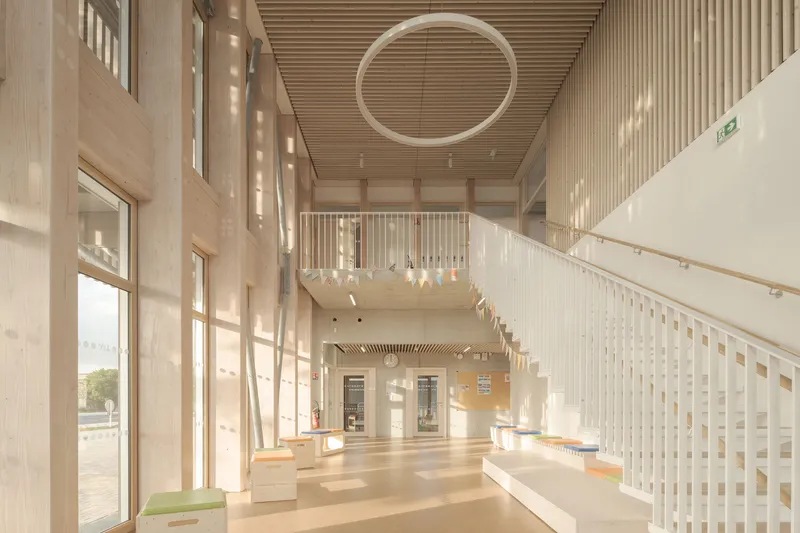
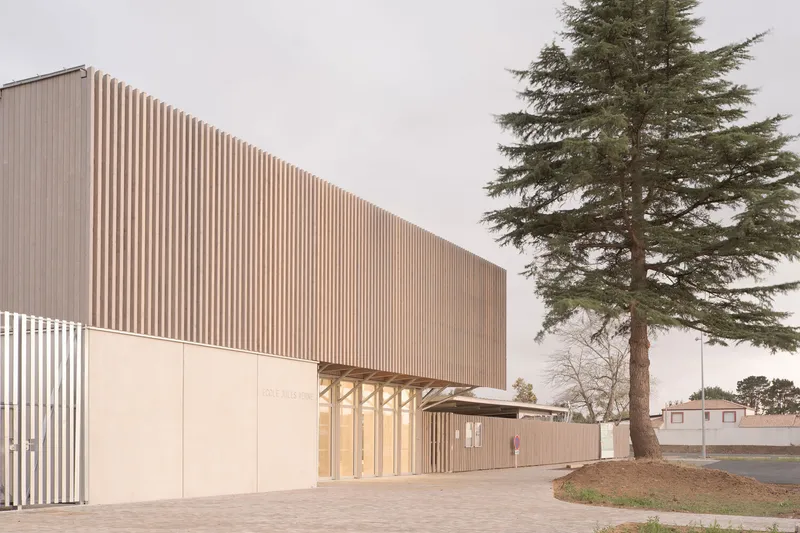
Urban Integration and Site Strategy
Situated on the former “Cité de l’Aurore” site—previously occupied by five residential towers—the project maintains the site's characteristic visual openness toward the wooded landscape.
Key urban design goals:
- Preserve pedestrian permeability and connections to surrounding green areas
- Reinforce Rue de l’Aurore as a cohesive urban corridor
- Prepare for future housing developments on the southern site
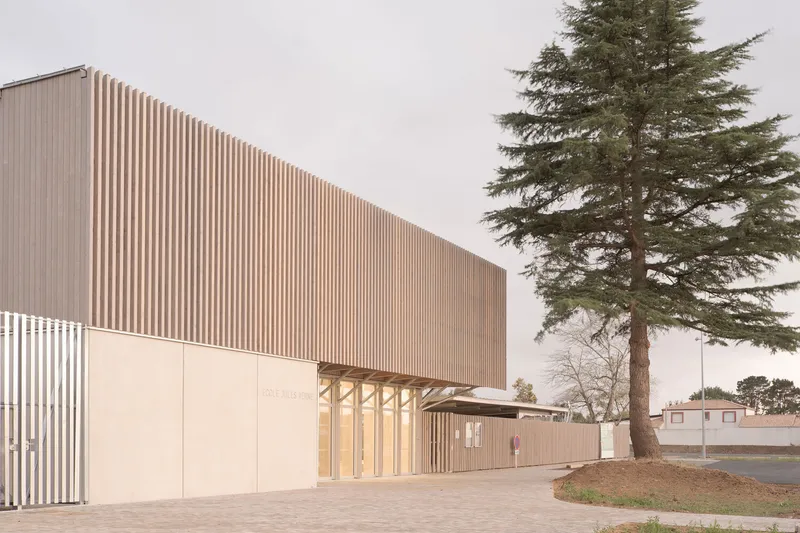
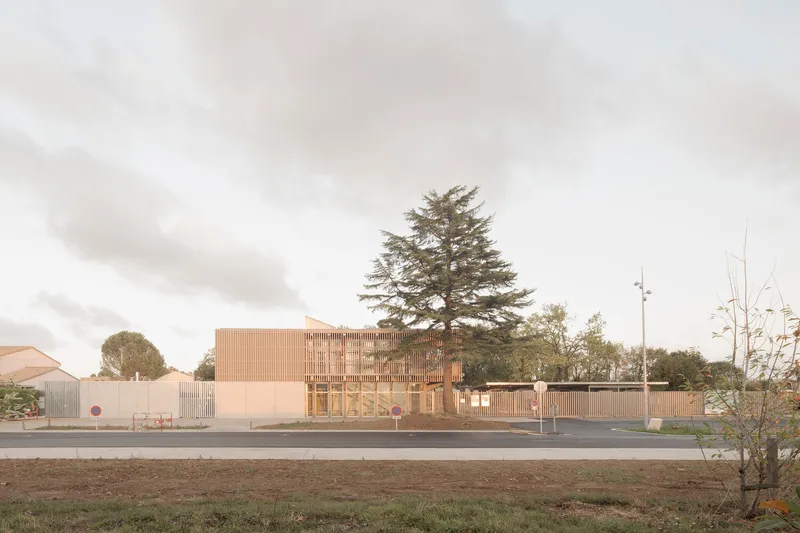
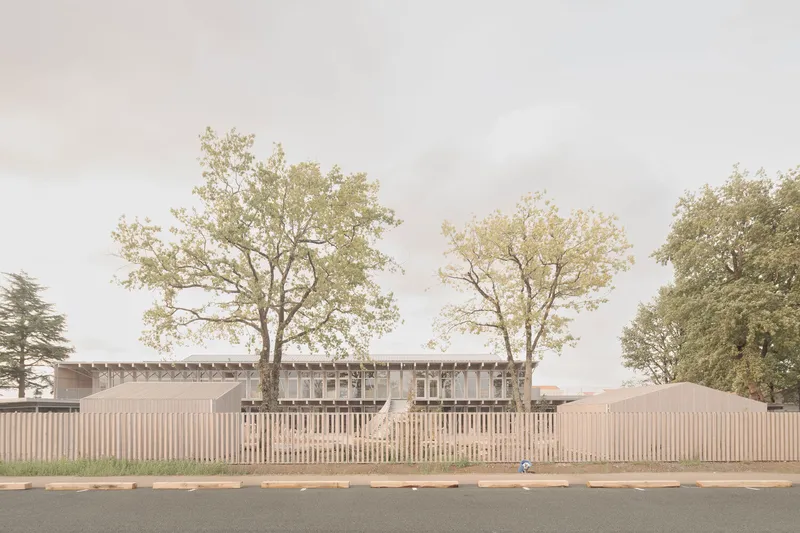
The building volume runs longitudinally across the site, forming a protective edge and defined arrival sequence, while framing a welcoming public forecourt. This alignment enhances neighborhood integration and ensures urban continuity.
Architecture Driven by Light, Climate, and Learning
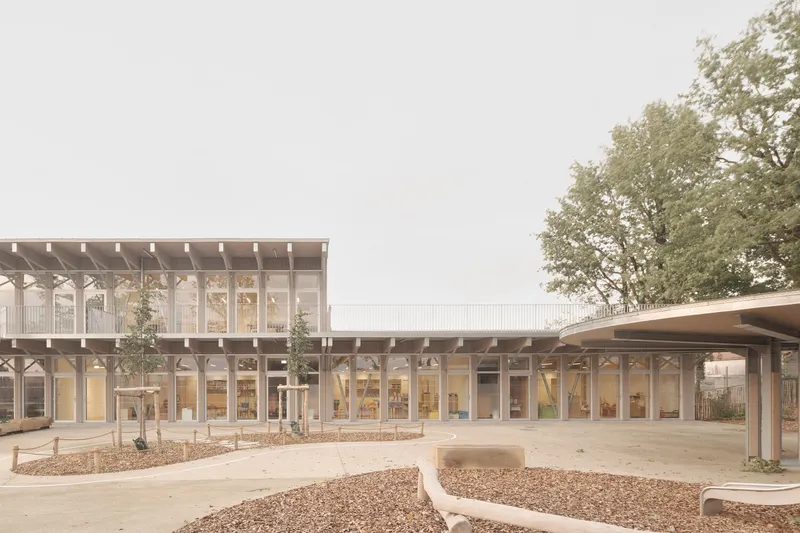
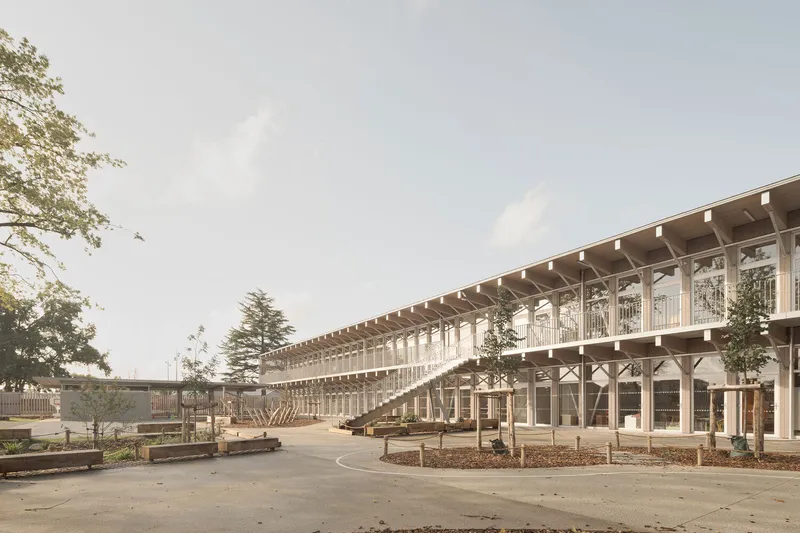
The school is oriented northeast–southwest to maximize natural light and outdoor access. South-facing courtyards serve as extensions of the classrooms, fostering outdoor learning and play.
Sustainable design features include:
- Deep timber overhangs and walkways for solar control
- Upper-level outdoor circulation easing internal movement
- A northern educational garden offering quiet ecological learning space
These strategies create bioclimatic comfort and encourage interaction with nature throughout the school day.
Materiality and Environmental Performance
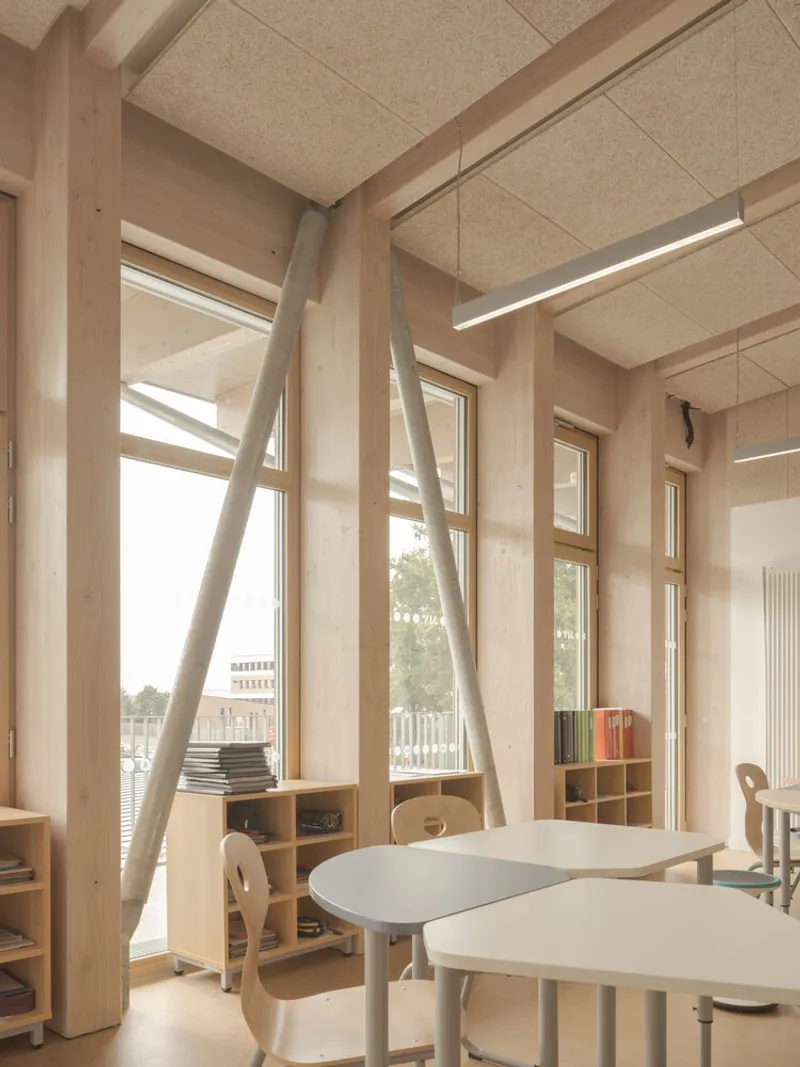
The project uses a hybrid timber-concrete structure, chosen for durability, acoustic comfort, and reduced carbon footprint.
Structural strategy:
- Ground-floor concrete base for acoustic-sensitive functions and service areas
- Timber half-frames above supporting a wood-concrete hybrid slab
- Fully timber-framed upper volume
Bio-based materials:
- Wood wool
- Hemp insulation
- Recycled textile fibers
Exterior stained larch cladding and oak-aluminum composite windows reinforce the natural palette, contributing to a warm, tactile environment for students.
A Compact Form with Generous Outdoor Relationships
The school’s compact footprint optimizes internal circulation and energy performance. Thoughtfully planted courtyards and shaded exterior walkways create calm, natural learning environments, enhancing biodiversity and student well-being.
The Jules-Verne School stands as a model for contemporary educational architecture in France—prioritizing sustainability, child-centered design, and community context. Through a sensitive approach to site history and a commitment to bio-sourced materials and timber innovation, Barré Lambot Architectes deliver a future-ready school deeply connected to place, nature, and learning.
All photographs are works of Juan Cardona



Popular Articles
Popular articles from the community


Hill & Cross Opera: Sculptural Opera House Architecture Shaped by Tallinn’s Landscape and Identity
Hill & Cross Opera reimagines opera house architecture in Tallinn through its sculptural hill, civic plaza, glass wave and a luminous cross.

The Earth Pod: 3D Printed Homes for Resilient Refugee Communities
The Earth Pod reimagines refugee housing through 3D printed homes made from clay, combining resilience, self-sufficiency, and rapid shelter.

Co-life: Sustainable Architecture for Age-Friendly Community Living
Co-life reimagines sustainable architecture for seniors through courtyards, rammed earth, shared gardens, and spaces designed for belonging.

The Musturak Paradise: Senior Living Architecture for a Connected Future in Temara, Morocco
The Musturak Paradise reimagines senior living architecture in Temara via private homes, social spaces, culture, community, and shared care.
Similar Reads
You might also enjoy these articles


Hodi-Mandai Geram
Project Function: Preservation and revitalization of the Intangible heritage and socio-spatial identity of the Hodi by Housing, Cultural Memory Center, Sacred Grove, landscape, local tourism economy


Olio Towers: A Mid-Rise for Performers That Fuses Housing, Rehearsal, and Stage
Located blocks from Houston's Theater District, this modular tower stacks living units around a central performance atrium.

Oasis: Modular Green Housing Carved into Dhaka's Urban Fabric
A shortlisted Plugin Housing entry reclaims unauthorized settlements in Dhaka with stepped concrete volumes, green roofs, and ventilation-driven design.

Black Hole: A Floating Megastructure for the Post-Physical Era
Emiliano Mazzarotto envisions a spherical, self-scaling arena where e-sports, digital hotels, and holographic stadiums replace traditional public space.
Explore Pont-Aven School Competitions
Discover active competitions in this discipline



Challenge to design public laboratory


Challenge to reimagine the Iron Throne


Photograph architecture without architects


Illustrate the lost glory of Angkor Wat - Render Challenge
Comments (0)
Please login or sign up to add comments
No comments yet. Be the first to comment!