

Kampoong Guha: A Mixed-Use Architectural Oasis in Tangerang
Kampoong Guha is a sustainable mixed-use project in Tangerang, integrating library, co-working, residence, gardens, and ecological systems for community engagement.


Blending Community, Work, and Learning
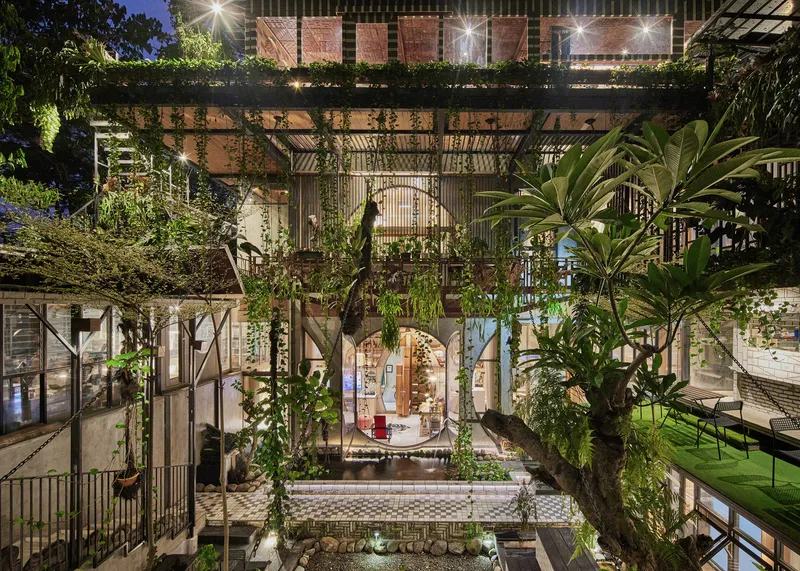
Kampoong Guha is a pioneering mixed-use project by Realrich Architecture Workshop, designed to integrate work, learning, and residential life into a single, cohesive environment. The project accommodates multiple functions, including the OMAH Library (serving children and the public), a co-working studio for Realrich Architecture Workshop, a workshop hall, home education classrooms, and an architect’s residence with a boarding house for designers. Spanning 800 m², the design establishes a vibrant hub for community, creativity, and sustainability.
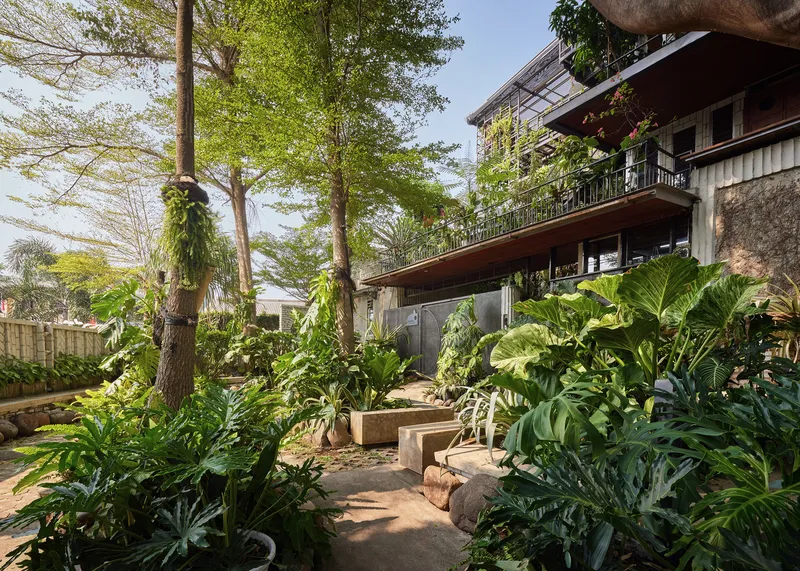

Strategic Location: Bridging Formal and Informal Neighborhoods
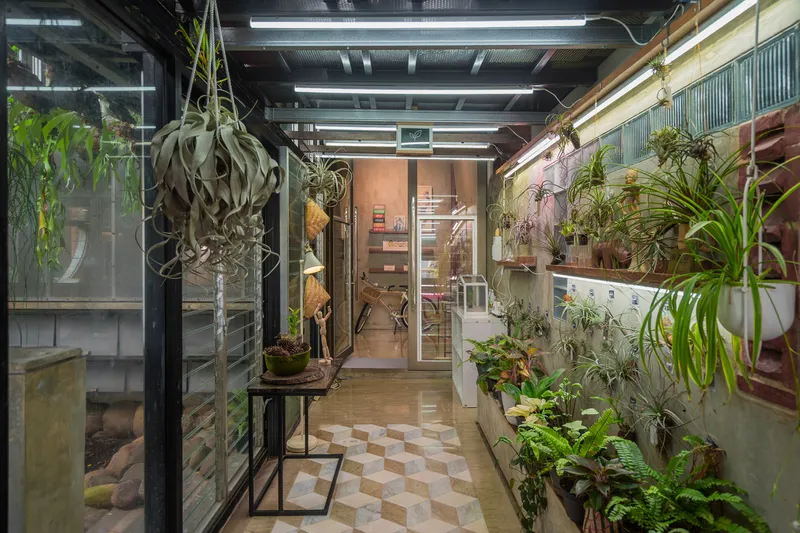
Located at the junction of a formal and informal neighborhood, Kampoong Guha connects Kampung Haji Brit—a dense, traditional alley—to the north, and a Mediterranean-style gated community in Meruya, Tangerang, to the south. The project thoughtfully preserves existing Trembesi and flamboyant trees, while planting tropical greenery along pathways that link these contrasting zones. This landscaping not only provides shade but creates a natural transition between urban typologies.
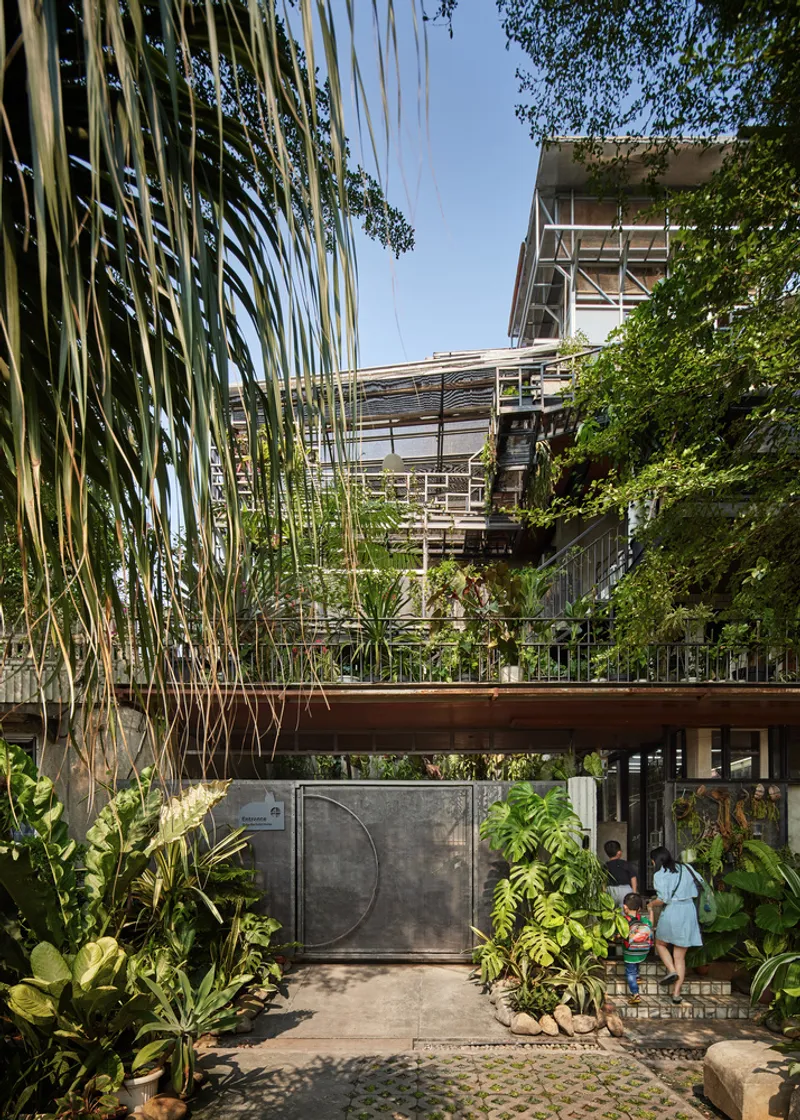
The Children’s Library: A Shared Community Space
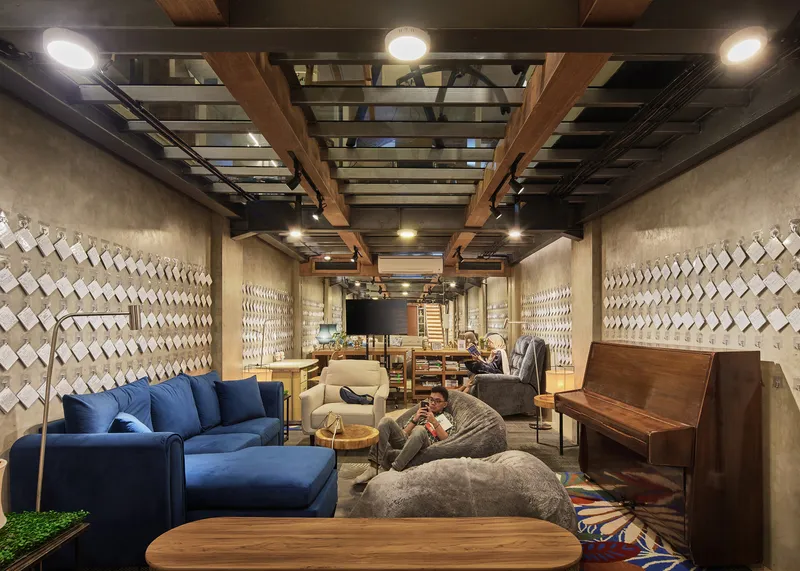
Positioned at the site’s forefront, the children’s library acts as a cultural bridge between neighborhoods. Modular wooden shelves measuring 200 mm × 400 mm × 600 mm form arch-like structures that ensure both structural integrity and visual appeal. Originally built in 2012 and relocated three times, the library now serves as a hub for reading, studying, and play. Its west-side entrance, separated by a lush garden, introduces visitors to the broader Kampoong Guha complex.

Architecture and Materiality: A “Chameleon-Like” Approach
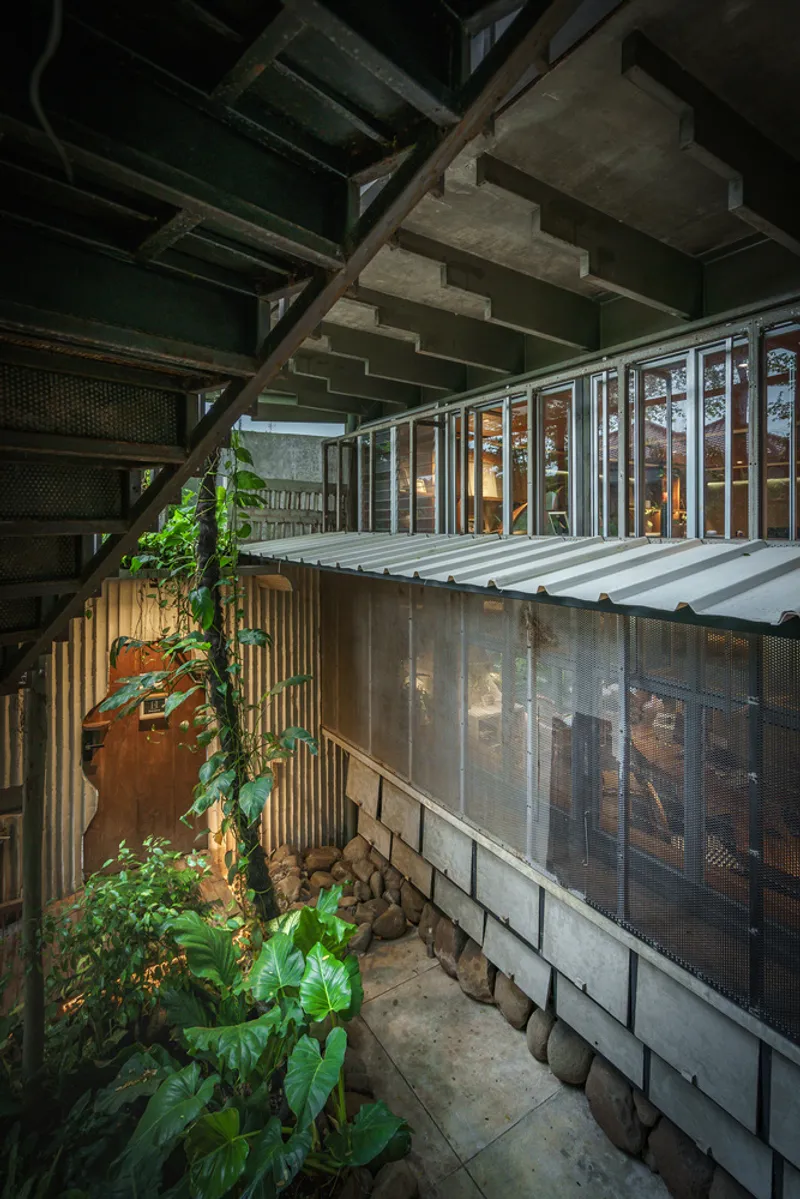
Kampoong Guha’s architecture unfolds like a kampung journey, seamlessly blending traditional and industrial materials. The design employs low-tech, local materials such as wood, bamboo, and recycled tiles, alongside high-tech industrial elements like concrete, glass, steel, and gypsum. Passive cooling strategies, including deep terraces and shading devices, reduce heat gain, keeping interiors comfortable under Jakarta’s harsh sunlight between 10 AM and 3 PM.
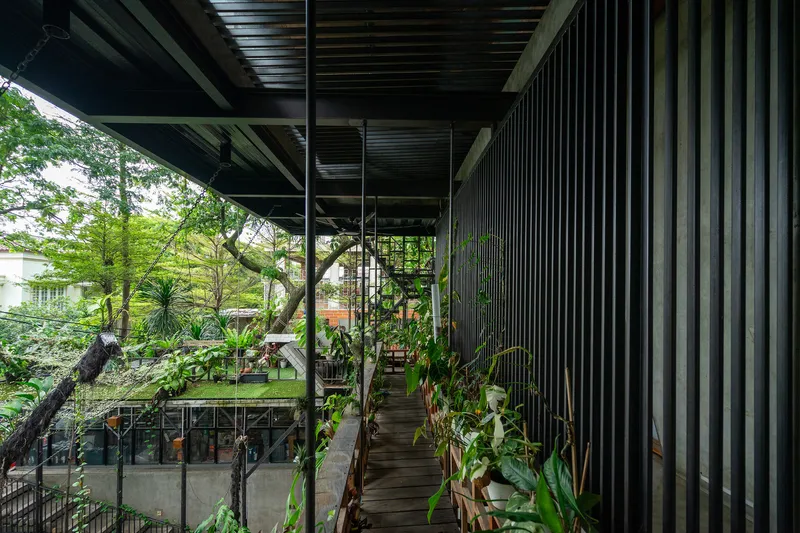
Spatial Experience: Flexible, Accessible, and Multifunctional
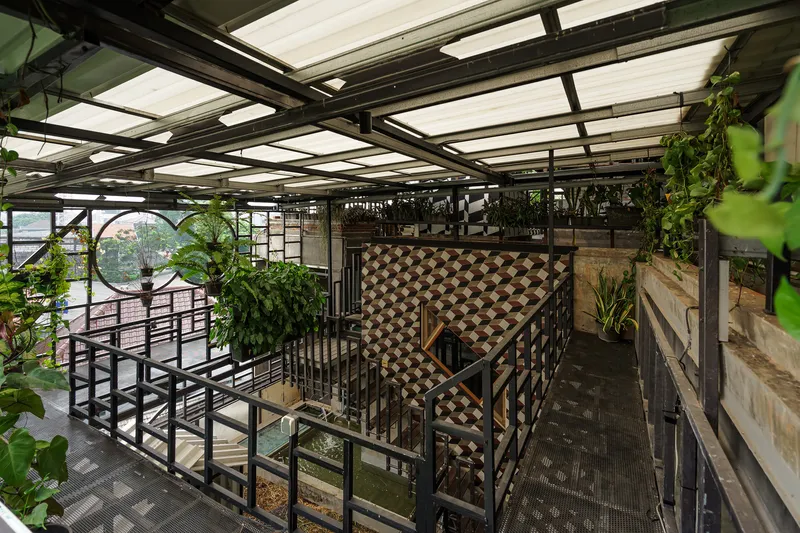
Visitors are greeted by a double-height foyer with stacked concrete walls, functioning as both a visual gateway and a passive air-stacking device. The OMAH Library features shaded terraces, gardens, and two basement levels. Glass-covered basement areas house the main collection and accommodate informal classes, workshops, and community events.
The entire site is designed as a flexible labyrinth, with maximum room spans of 4 meters and over 200 doors. The complex has three main access points: a public entrance for the library, a private entrance for the architect’s residence, and a service entrance from the south. Residential spaces include family bedrooms, 12 boarding rooms for students (including bunk-bed layouts), and areas for gymnastics, art, and prayer.
Co-Working and Communal Spaces: Collaboration at Every Level
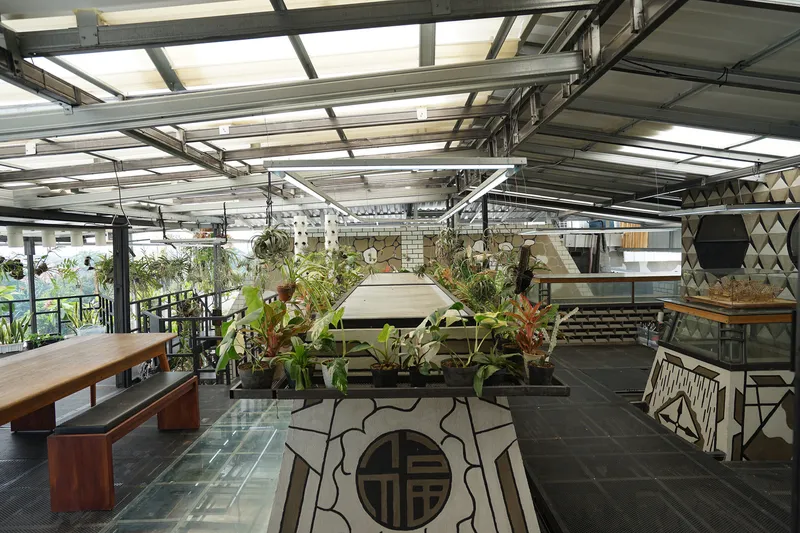
The ground-floor Benteng Area includes a 3 × 15 m corridor serving as a shared co-working space. Circulation concludes at a bamboo foyer on the east side, hosting communal dining tables and a canteen. Atop the structure, the Sky Office floats above the building, offering an open-plan studio, cascading orchid gardens, and panoramic views of Jakarta.
This ecological loop integrates small animals such as goats, tortoises, lizards, guinea pigs, and chickens, which contribute compost and natural fertilizer to rooftop and terrace gardens. The green roof not only supports biodiversity but also functions as thermal insulation, maintaining indoor temperatures below 30°C in tropical conditions.
Sustainability and Urban Adaptation
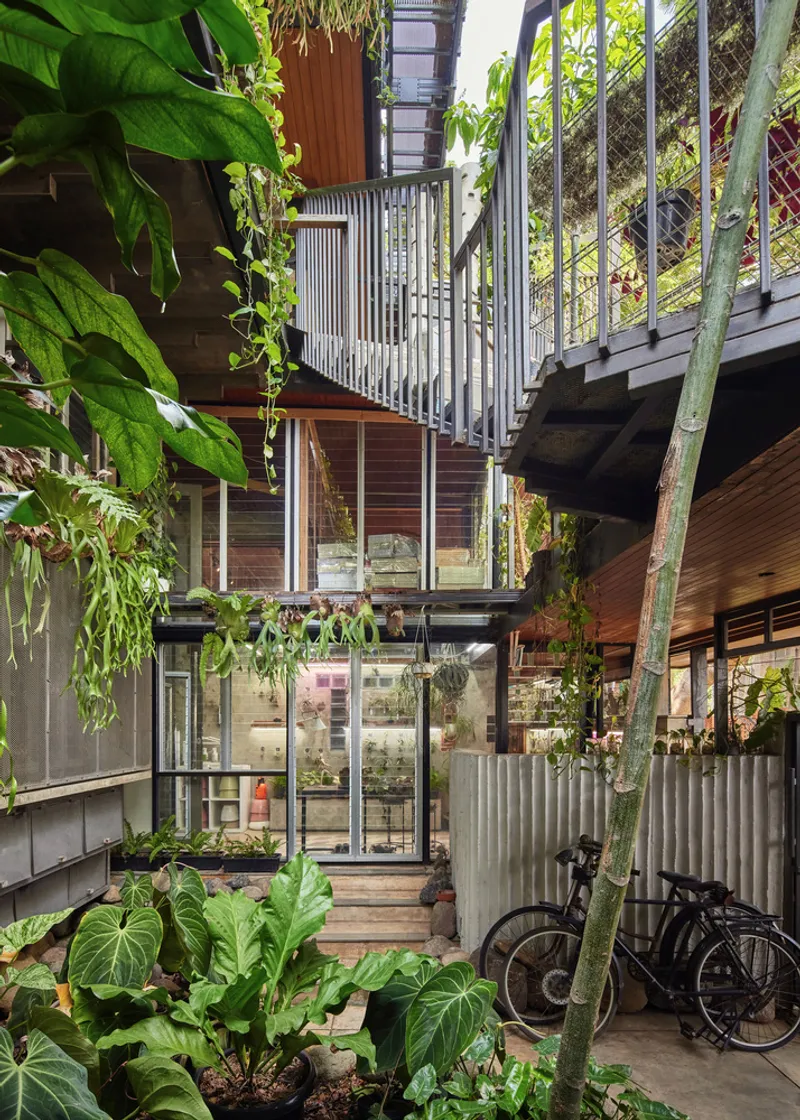
Kampoong Guha exemplifies a prototype for urban survival and resilience, demonstrating how architecture can address dense city challenges. By integrating library, co-working, home education, residential, and ecological systems into one cohesive project, it creates an oasis within the busy Jakarta-Tangerang context. The design prioritizes adaptability to microclimate conditions, efficient spatial use, and enhanced social engagement, offering a blueprint for future mixed-use developments.
A Model for Jakarta’s Architectural Evolution
Through innovative design, material experimentation, and community-centered programming, Kampoong Guha illustrates how architecture in Tangerang can evolve and grow sustainably. Realrich Architecture Workshop’s vision demonstrates the potential for urban spaces to nurture learning, creativity, and ecological balance, making Kampoong Guha a landmark mixed-use project in Indonesia.
All Photographs are works of Lu’Luil Ma’nun, Kie Arch, Aryo Phramudhito


Popular Articles
Popular articles from the community


GROUP A Strips a 1969 Rotterdam Harbor Headquarters to Its Frame and Wraps It in Timber Louvers
In Rotterdam's M4H harbor district, Ferro Offices reuses a 1969 frame, adds one timber storey and reaches BREEAM-NL Outstanding.

U.GA Architects Wraps an Oval Rooftop Pool in Curved Board-Formed Concrete on Busan's Jeollidan-gil
In Busan's Jeonpo-dong, a 454 m² mixed-use block stacks a neighborhood facility, guest rooms and an oval rooftop pool inside spiraling concrete walls.

Juan García Correa, John González and Claudia Rueda Sink a Circular Amphitheater into a Manizales Engineering Building
On the La Nubia campus in Manizales, Colombia, the S1 Building folds labs and offices into a hillside of ramped lawns that double as a campus route.

LT2A and OPEN Architectes Thread a Brick and Glass High School Through a Wooded Belgian Campus
In Braine-l'Alleud, a 3,000 m² wing for Collège Cardinal Mercier pairs pale brick with a glazed colonnade, deferring to a small chapel and a dense wood.

Similar Reads
You might also enjoy these articles


Hodi-Mandai Geram
Project Function: Preservation and revitalization of the Intangible heritage and socio-spatial identity of the Hodi by Housing, Cultural Memory Center, Sacred Grove, landscape, local tourism economy


Olio Towers: A Mid-Rise for Performers That Fuses Housing, Rehearsal, and Stage
Located blocks from Houston's Theater District, this modular tower stacks living units around a central performance atrium.

Oasis: Modular Green Housing Carved into Dhaka's Urban Fabric
A shortlisted Plugin Housing entry reclaims unauthorized settlements in Dhaka with stepped concrete volumes, green roofs, and ventilation-driven design.

Black Hole: A Floating Megastructure for the Post-Physical Era
Emiliano Mazzarotto envisions a spherical, self-scaling arena where e-sports, digital hotels, and holographic stadiums replace traditional public space.

Explore Housing Competitions
Discover active competitions in this discipline

Challenge to reimagine the Iron Throne

Photograph architecture without architects

Illustrate the lost glory of Angkor Wat - Render Challenge

Design challenge to reuse E-waste
Comments (0)
Please login or sign up to add comments
No comments yet. Be the first to comment!