
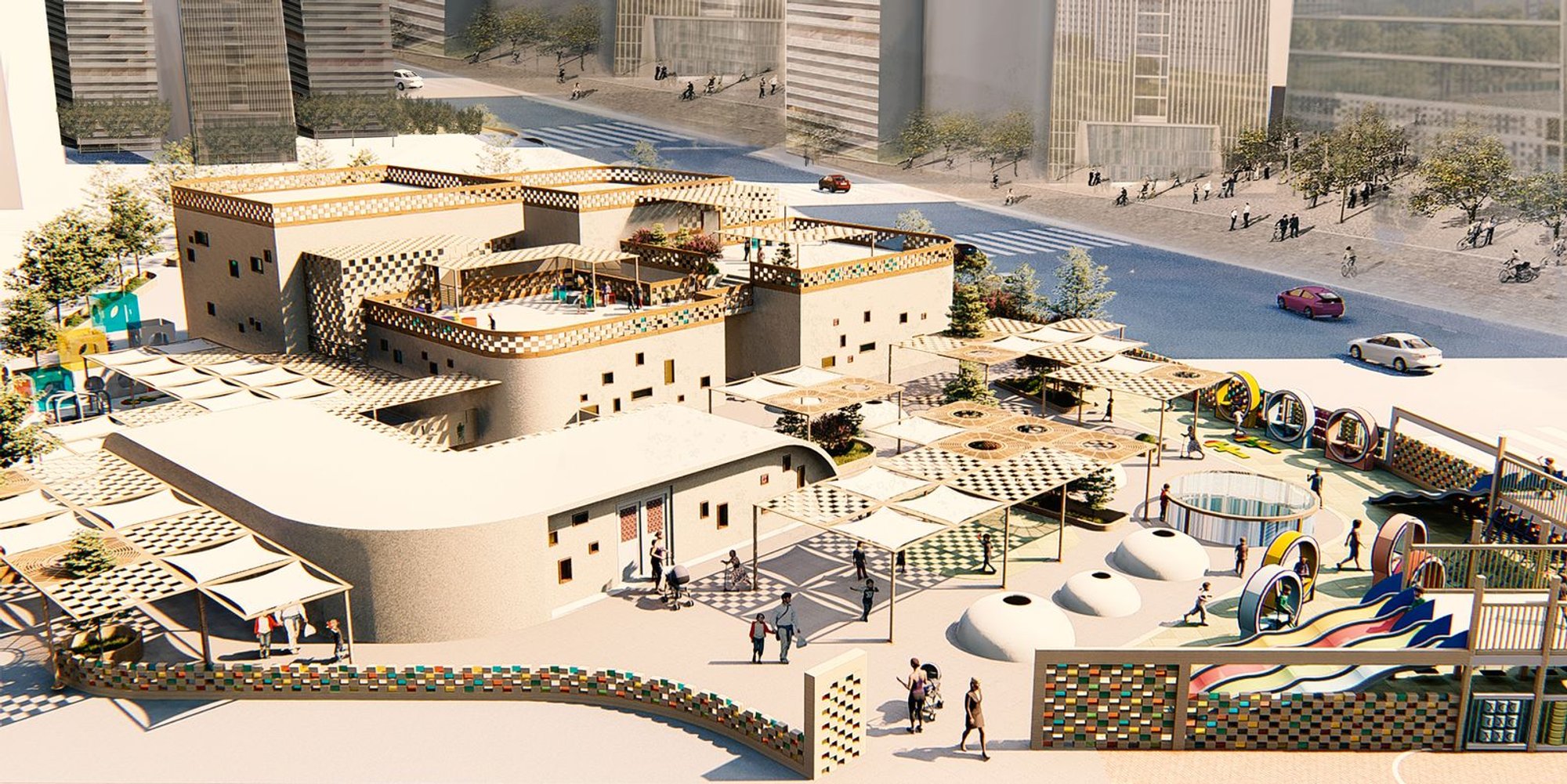
Kids Heaven Daycare: Climate-Responsive Architecture Rooted in Yazd’s Desert Context
A climate-responsive daycare architecture that reinterprets ancient desert wisdom to create a thermally comfortable, playful, and sustainable environment for children in Yazd.

Kids Heaven Daycare is a thoughtful exploration of climate-responsive architecture tailored for early childhood education in Yazd, Iran—a city defined by its hot, arid climate, dramatic diurnal temperature variations, and historic water-based urban systems. Designed for children aged 0–7, the project reimagines the daycare as a protective yet playful environment where architecture actively mediates climate while supporting learning, safety, and joy.
Rather than relying on mechanical systems, the design draws from Yazd’s indigenous architectural knowledge, combining passive cooling, earth sheltering, water-based microclimates, and controlled daylight to achieve thermal comfort throughout the year.
The project is designed by Neda Motamedi, Afsane Sanei, Kimia Lavasani, and Mohadeseh Hamidi.
Site and Climatic Context: Learning from Yazd
Yazd is globally recognized for its desert architecture, where survival has historically depended on intelligent environmental design. Extreme summer heat, cold winter nights, drought conditions, and strong solar exposure demanded solutions that minimized energy consumption while maximizing comfort.
Kids Heaven Daycare embraces this context by positioning thermal comfort as the primary architectural driver. The project responds directly to seasonal temperature shifts, solar angles, wind patterns, and humidity levels—turning climate constraints into spatial opportunities.
Conceptual Framework: Qanat as the Spatial and Climatic Spine
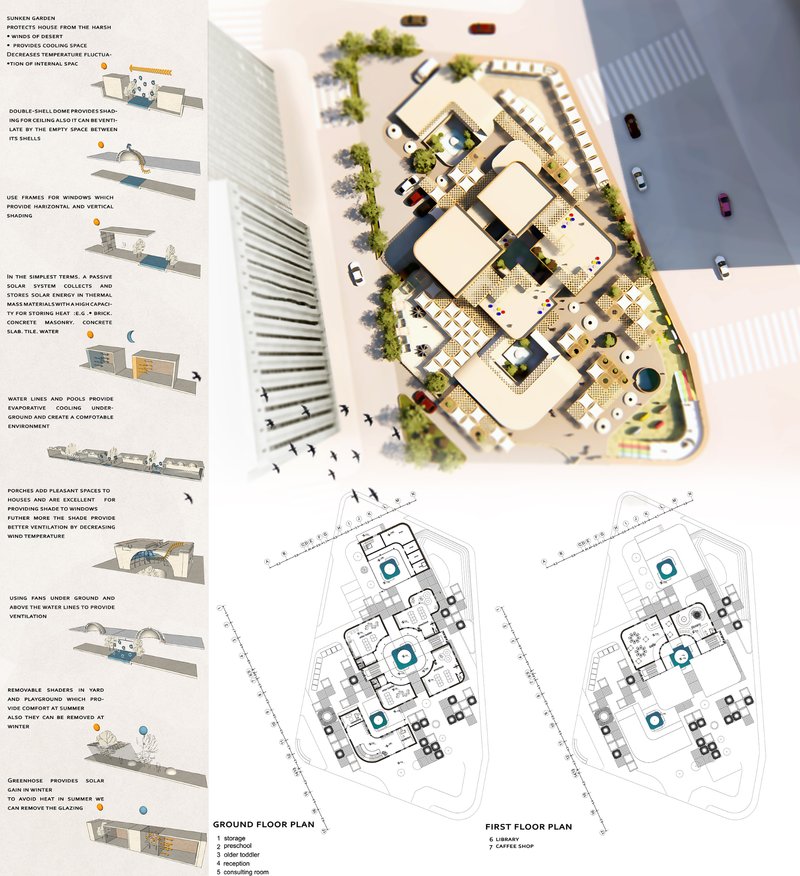
At the heart of the project lies the reinterpretation of the Qanat system, an ancient underground water network native to Yazd. Traditionally used to transport water and cool urban environments, the qanat becomes the central organizing axis of the daycare.
In this project, the qanat-inspired water line:
- Acts as the main circulation spine, improving wayfinding for children
- Serves as a thermal moderator, enabling evaporative cooling
- Connects underground and above-ground spaces visually and spatially
- Creates a strong architectural identity rooted in local heritage
By merging circulation, water, and spatial orientation, the qanat transforms into an educational and experiential element rather than a purely infrastructural one.
Spatial Organization Based on Age and Thermal Sensitivity
Recognizing that children have different thermal needs than adults, the daycare is carefully zoned according to age groups and physiological comfort levels.
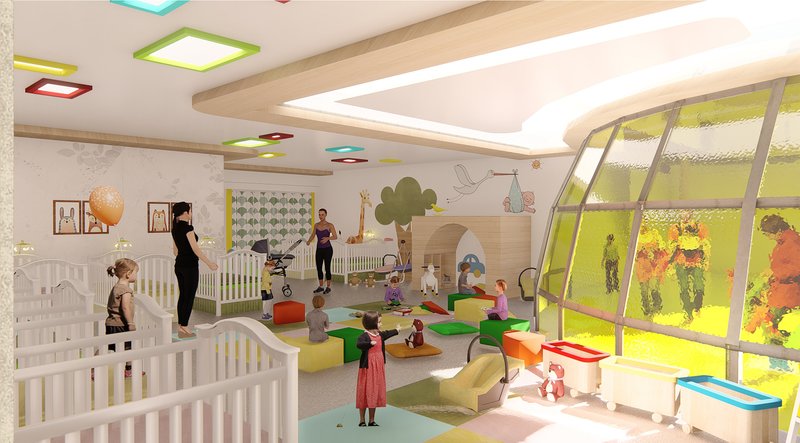
- Infants and Younger Toddlers (Basement Level): Earth-sheltered spaces provide stable temperatures close to the thermal comfort zone, reducing heat exchange and protecting the most sensitive users.
- Older Toddlers and Preschoolers (Ground Level): Located above ground to benefit from natural daylight, these spaces support early learning while remaining thermally controlled through shading and ventilation.
- Adults and Supervisory Areas: Distributed across basement and ground levels to ensure visual supervision and functional efficiency.
This stratified organization allows architecture itself to regulate comfort without over-reliance on mechanical systems.
Passive Design Strategies: Architecture as a Climate Moderator
Kids Heaven Daycare employs a layered system of passive strategies that define its climate-responsive architecture:
Earth Sheltering
Subterranean spaces leverage the earth’s thermal mass to maintain steady indoor temperatures, significantly reducing cooling and heating demands.
Sunken Courtyards
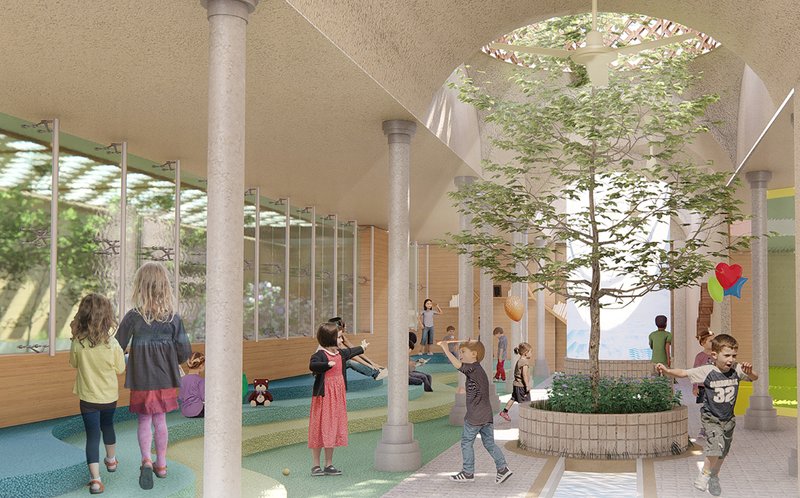
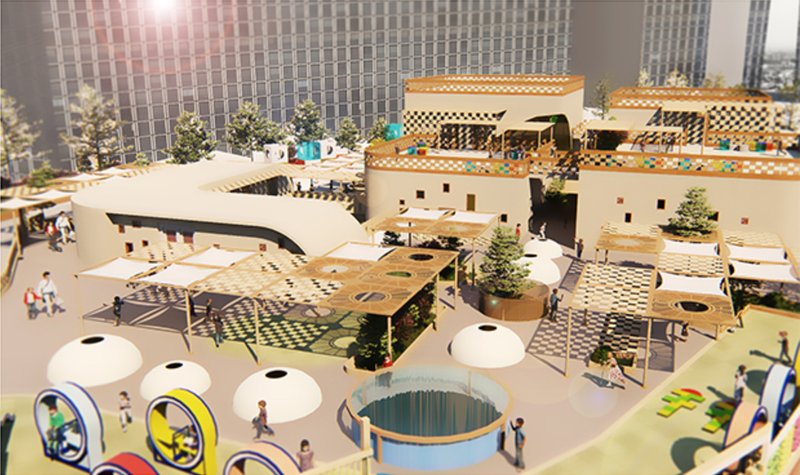
Multiple sunken courtyards introduce daylight and vegetation into underground spaces while creating cooler microclimates protected from harsh desert winds.
Double-Shell Domes
Double-layered domes provide ceiling shading and enable air circulation between shells, reducing heat gain and improving ventilation.
Shading Systems
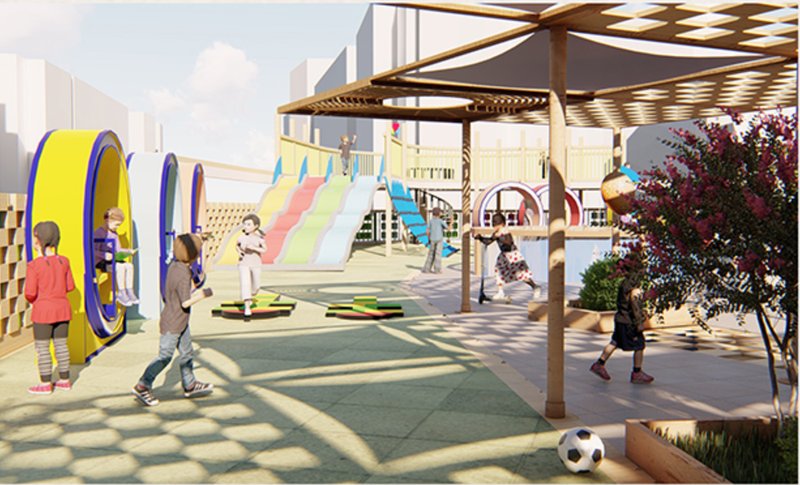
- Removable yard and playground shades provide comfort in summer
- Window frames enable both horizontal and vertical shading
- Porches reduce solar gain while enhancing transitional spaces
These elements collectively transform the daycare into a thermally adaptive architectural system.
Water, Air, and Evaporative Cooling
Water plays a critical environmental role beyond symbolism. Integrated water lines and pools enable evaporative cooling, especially in underground and semi-open areas.
Air movement is carefully controlled through:
- Underground and above-ground ventilation paths
- Fan-assisted airflow along water corridors
- Reduced wind temperature via shaded outdoor spaces
Together, water and air create comfortable conditions even during peak summer months.
Material Strategy and Thermal Performance
Material selection reinforces the building’s passive performance. High thermal-mass materials such as brick, concrete, and masonry store solar energy and release it gradually, stabilizing indoor temperatures.
Simulation-based analysis informed material decisions, ensuring appropriate U-values and reduced heat transfer across building envelopes. Aerated blocks and insulated wall assemblies further enhance performance.
Environmental Simulation and Performance Analysis
Environmental simulations using climate analysis and energy modeling software validated the project’s effectiveness. Key findings include:
- Reduced air temperature in sunken courtyards during summer
- Improved relative humidity levels through water-based cooling
- Stable daylight levels suitable for children’s spaces
- Decreased CO₂ concentration through vegetation and open-air circulation
These analyses confirm that architectural form, rather than mechanical intervention, drives environmental comfort.
A Playful Learning Environment Rooted in Climate Logic
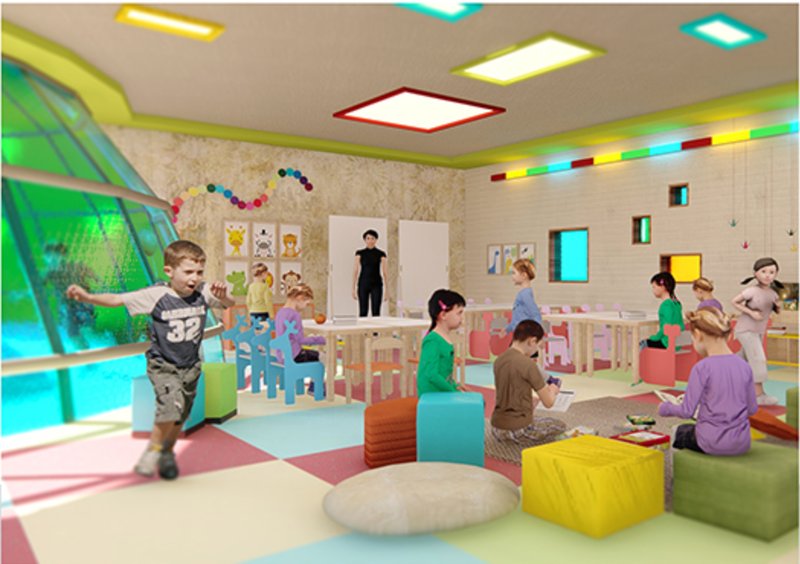
Despite its technical depth, Kids Heaven Daycare remains fundamentally child-centric. Soft geometries, colorful interiors, interactive courtyards, and visual connections to water and nature create an environment that supports exploration, safety, and imagination.
Architecture becomes a silent educator—teaching children about climate, nature, and spatial awareness through everyday experience.
Kids Heaven Daycare demonstrates how climate-responsive architecture can shape humane, sustainable educational spaces in extreme environments. By fusing Yazd’s ancient environmental wisdom with contemporary design tools, the project offers a replicable model for future daycare and educational facilities in hot, arid regions.
Rather than resisting climate, the architecture embraces it—proving that comfort, sustainability, and play can coexist through intelligent design.




Popular Articles
Popular articles from the community

Atelier Macri Concept Store Interior Design by CASE-REAL
Atelier Macri store features a "ko" counter, walnut wood details, cork displays, blending retail, gallery, and seamless customer experiences.
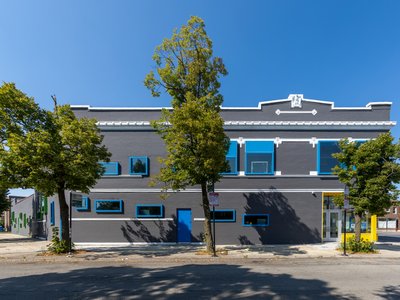
Gads Hill Early Learning Center by JGMA: Adaptive Reuse Shaping Community-Focused Educational Architecture
Adaptive reuse transforms fragmented structure into vibrant early learning center with playful façade, natural light, and community-focused sustainable design.
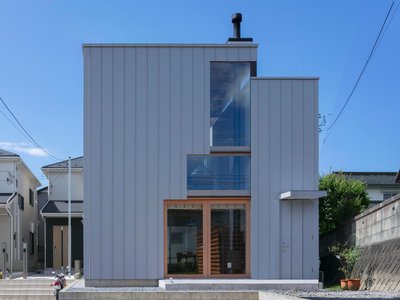
Split House: A Compact Urban Home Blending Privacy, Light, and Flexible Living in Japan
Compact Japanese home featuring DOMA space, flexible café potential, passive lighting, privacy zoning, and sustainable urban living design.



Similar Reads
You might also enjoy these articles

Digital Façade Design for our cities’ urban fronts
Prima Facie - Result Story
Protecting avian biodiversity: Bird observatories to help spread awareness & save rare bird species.
Results for ‘Fly’ - Landscape design competition out now
Connecting with nature: Forest interpretation center in Australia's Wollemi National Park
‘Asatti’ - Landscape design competition - Result story






Comments (0)
Please login or sign up to add comments
No comments yet. Be the first to comment!