
CHS+R Arquitectos and Carlos Montes Build a Tower from Harvested Salt in Cádiz
A temporary pavilion in San Fernando merges ancestral salt crystallization with digital fabrication inside a natural park.


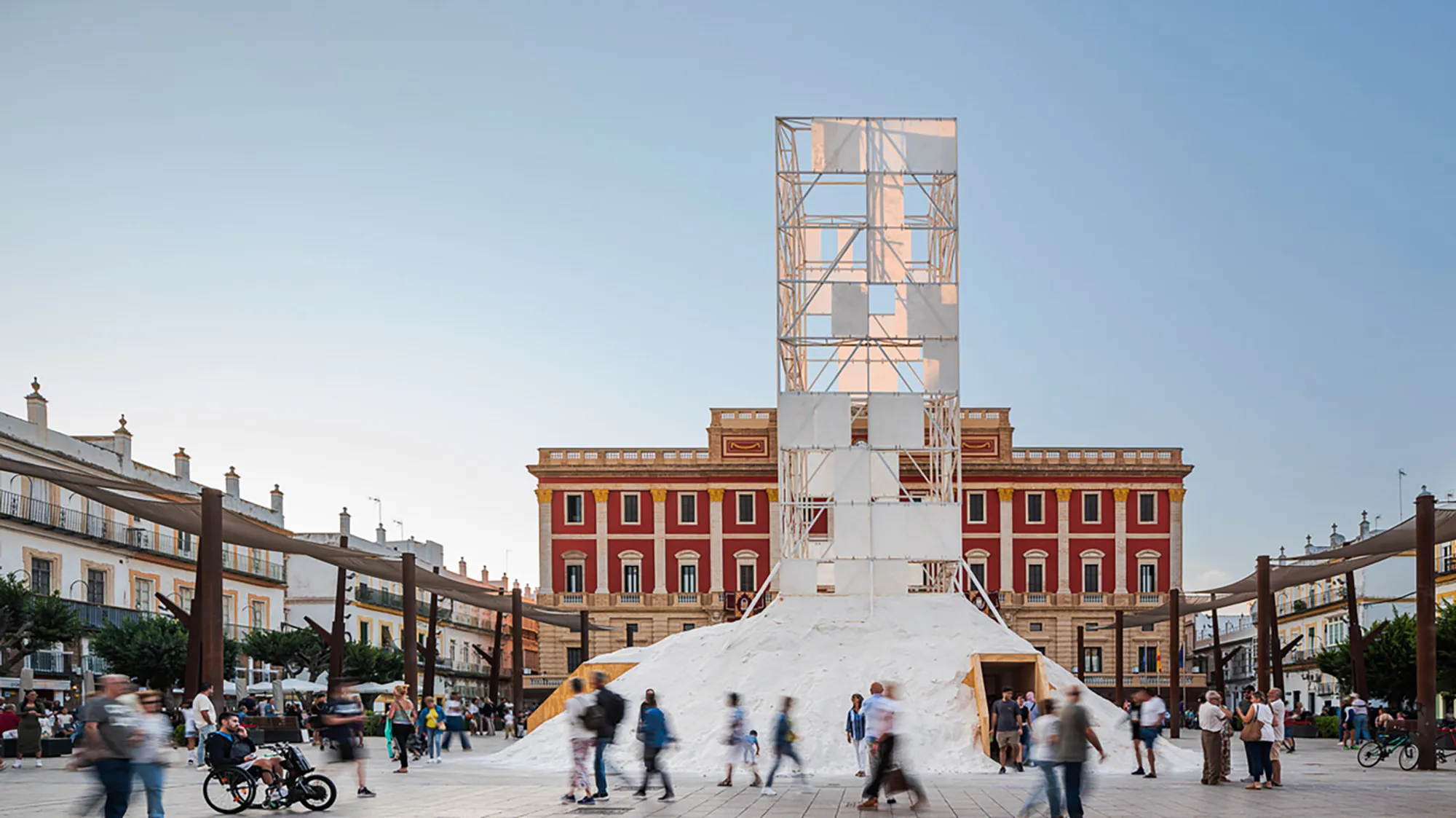
Salt is one of those materials that architects rarely consider structural or even decorative. It dissolves, crumbles, and resists permanence. That is precisely what makes La Sal Pavilion so compelling. Designed by CHS+R arquitectos and Carlos Montes for a public plaza in San Fernando, the 400 m² temporary intervention takes salt, the region's most historically significant commodity, and turns it into architecture. A mound of crystallized salt forms the base, a timber and steel tower rises from within it, and the entire assembly sits in the central Plaza del Rey as if a chunk of the surrounding Bahía de Cádiz Natural Park had migrated into town.
What keeps this from being mere spectacle is the seriousness of the material research. The salt panels covering the tower are not decorative appliqués; they are the product of a genuine crystallization process, harvested from working salt pans by a local salinero, then bonded to recycled acrylic sheets using manually applied bio-resin. The tower itself borrows its skeletal logic from the industrial metal frameworks that once moved salt across the region. Every formal decision traces back to a real practice or artifact from the area's salt economy, making the pavilion a kind of three-dimensional index of local knowledge.
A Salt Mountain in the Plaza
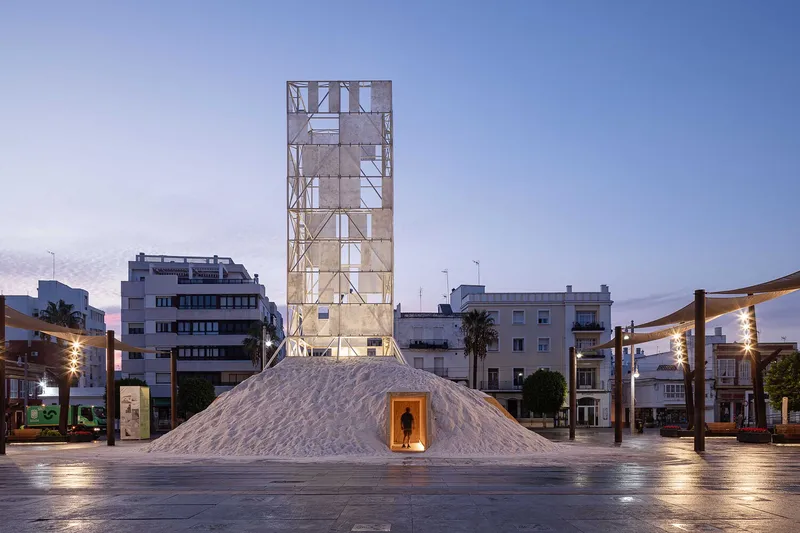
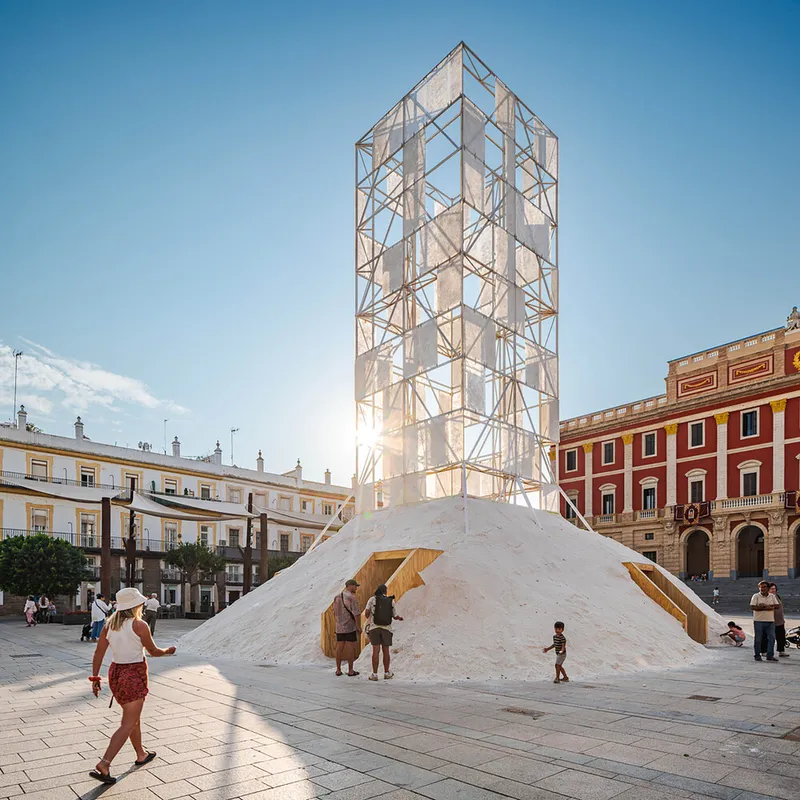
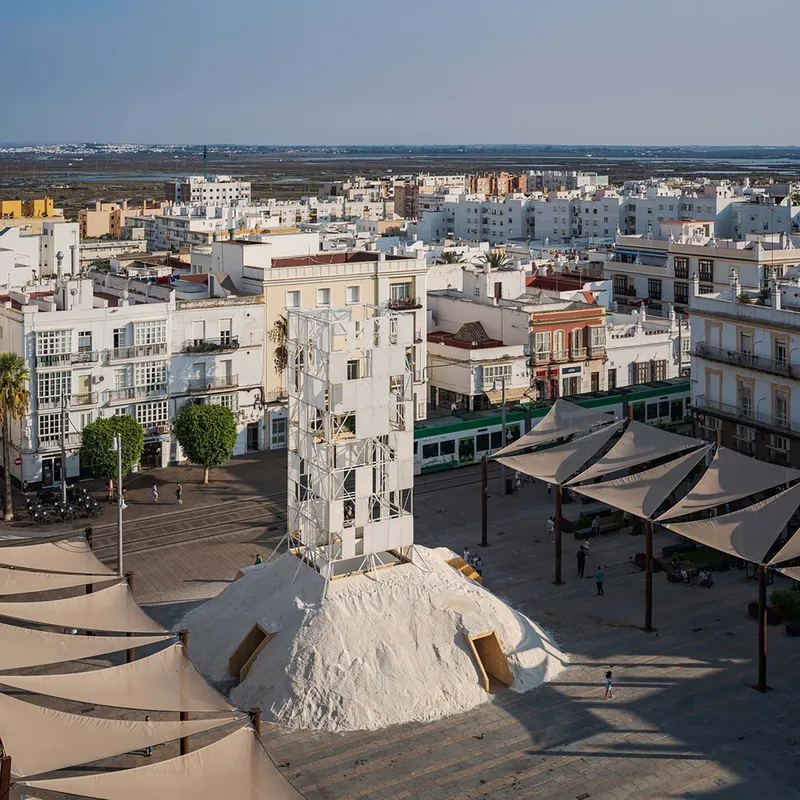
The base of the pavilion replicates the mountains of harvested salt that dot the landscape around San Fernando. Visitors approach what reads as a geological formation with a triangular opening punched through its face, a doorway that frames the interior and draws people in. From above, the mound sits cleanly within the paving grid of the plaza, its white mass contrasting with the surrounding stone and the ochre facades of existing buildings. The form is blunt and immediate: there is no ambiguity about what this material is or where it comes from.
At dusk, the entry glows from within, turning the salt mass into a lantern. The effect is not theatrical lighting design but a byproduct of the translucent salt panels catching interior illumination. Light passes through crystal structures that formed naturally, which means no two panels transmit light in quite the same way. The mound ceases to be inert and becomes atmospheric, shifting with the time of day.
The Tower as Viewing Device
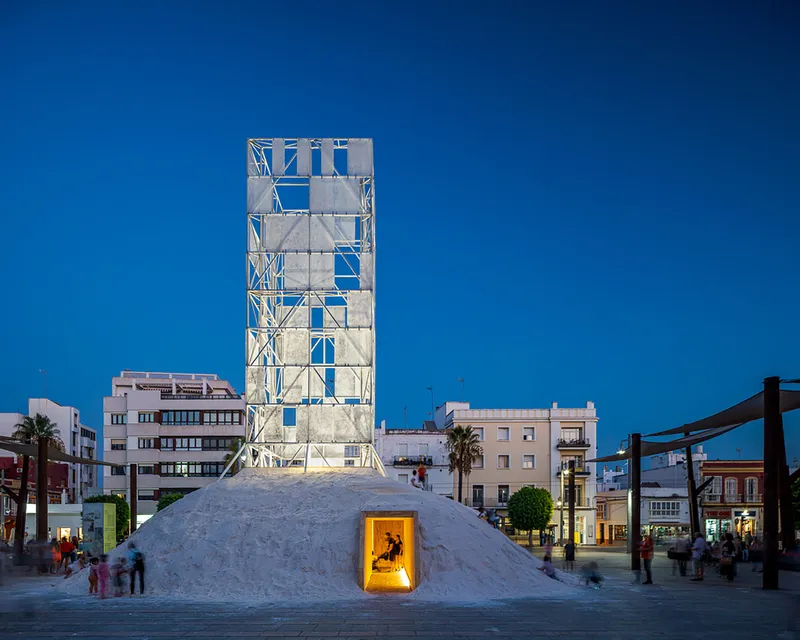
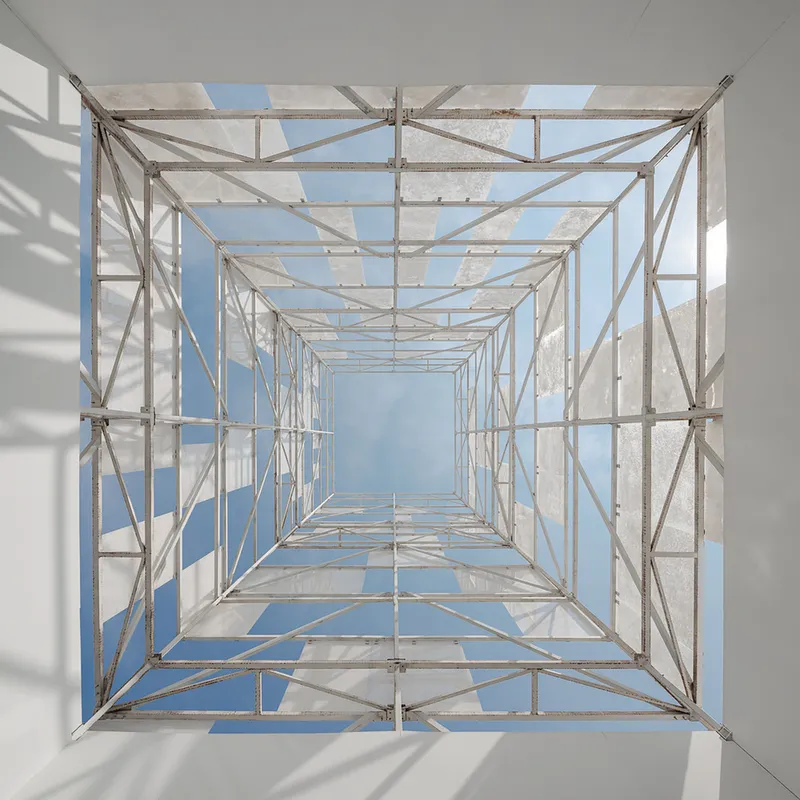
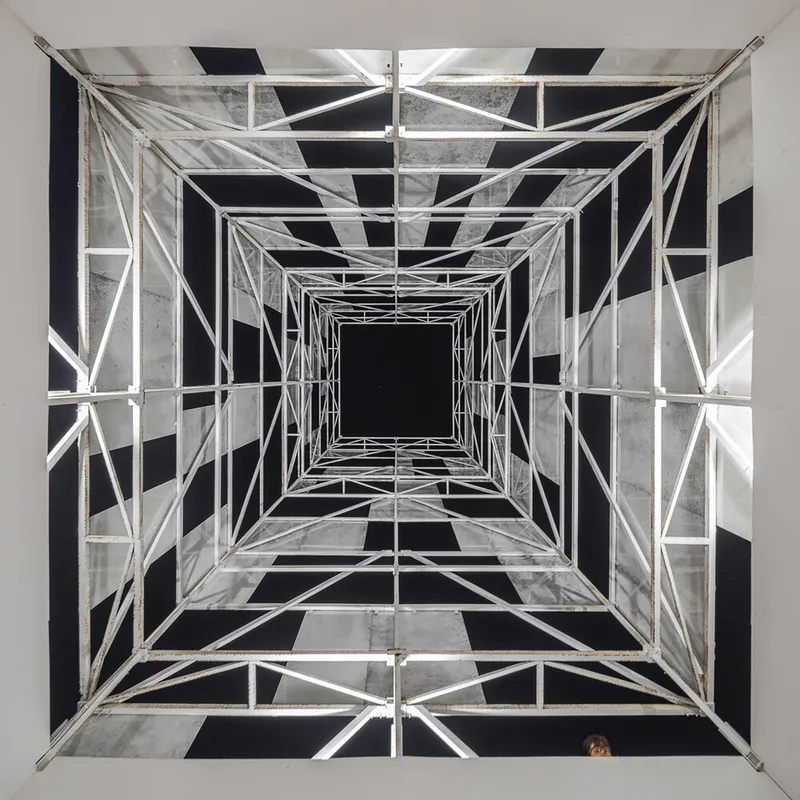
Rising from the salt base is a vertical steel tower wrapped in a lattice of bracing members. The architects cite the Tower of Hercules as a typological reference, framing the structure as a device for understanding landscape rather than merely occupying it. From the top, visitors can read the complex network of salt pans, tidal channels, and estuaries that constitute the natural park. The tower reorients attention outward, from the urban core toward the ecological systems that sustain it.
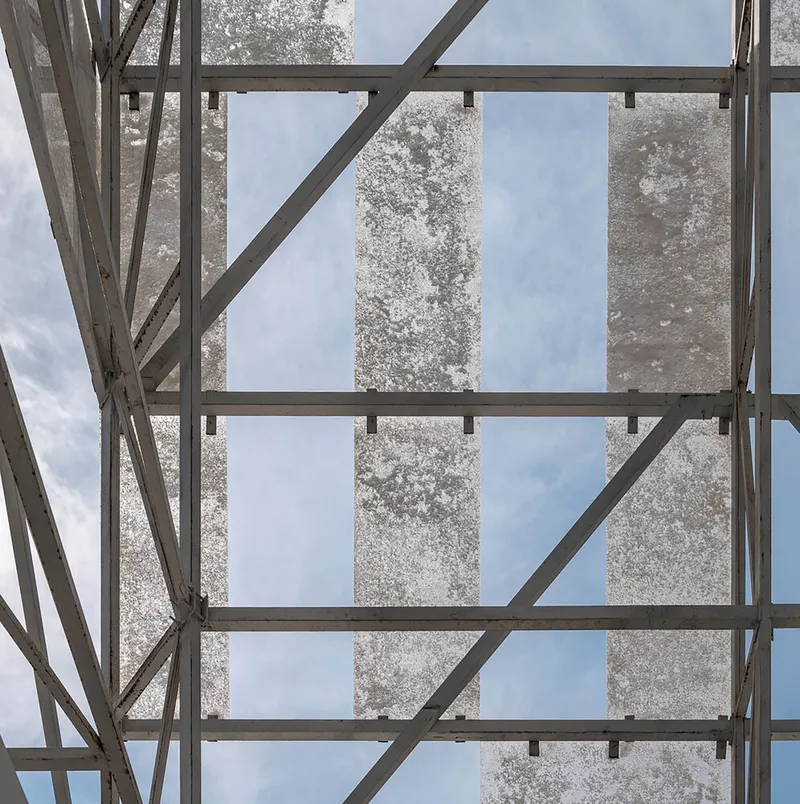
Seen from below, the scaffolding frame opens to the sky like a vertical shaft. The steel grid holds salt-crusted panels and opaque infill in a rhythm that filters light and frames fragments of cloud. At night the composition inverts: illuminated panels glow against dark voids, and the tower becomes a signal visible across the plaza. The white lacquered steel reads cleanly against both conditions, maintaining legibility without competing with the salt.
Material Research at Full Scale
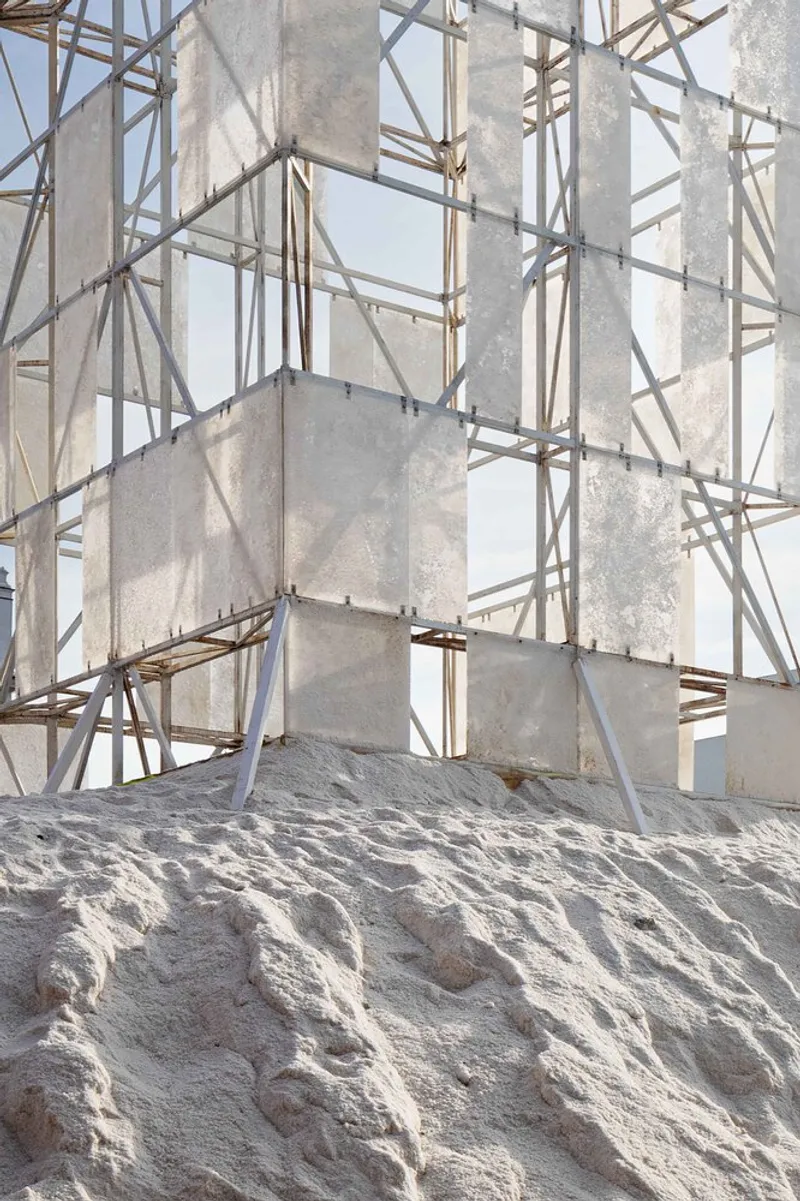
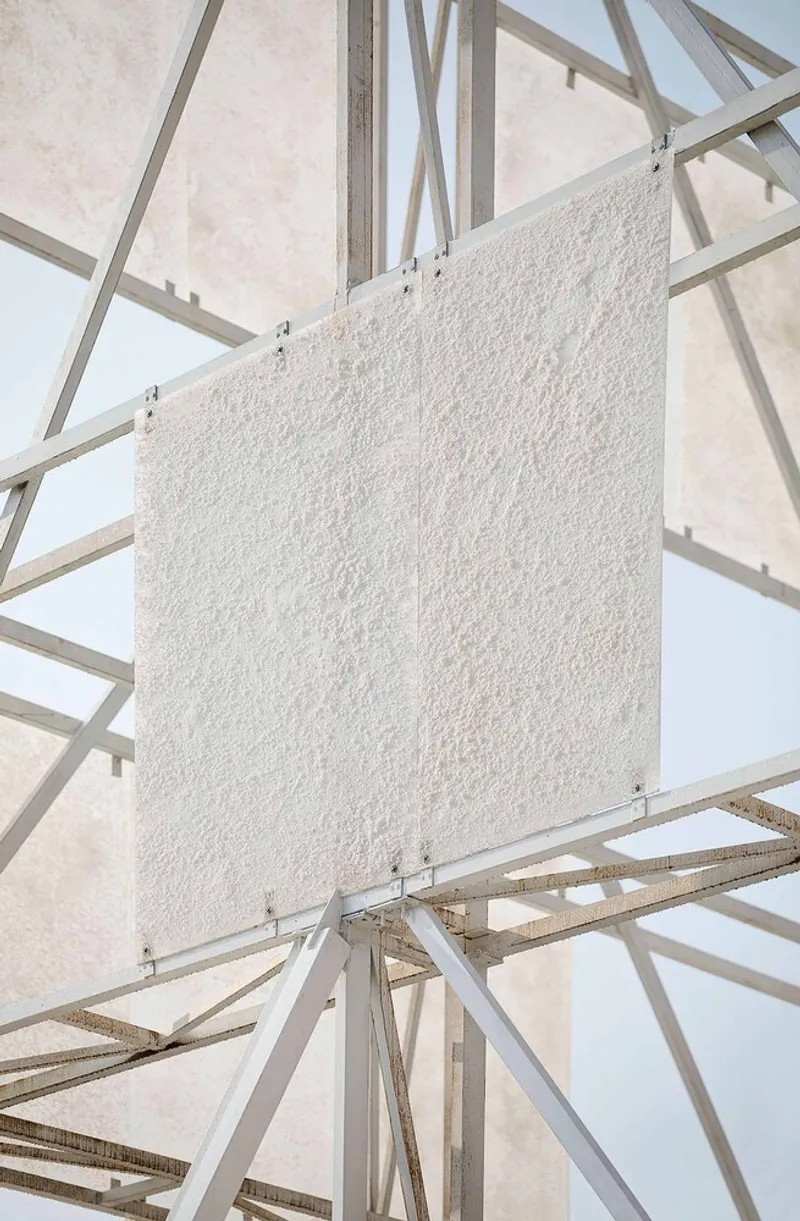
The salt panels are the technical heart of the project. Each one begins as a sheet of 100% recycled cast acrylic, onto which a layer of bio-resin is applied by hand. Salt is then poured over the surface and left to crystallize naturally, bonding to the substrate through the adhesive medium. The result is a composite that is part industrial product, part geological specimen. Close up, the panels reveal irregular crystal formations, weathering patterns, and subtle translucency that no synthetic finish could replicate.
The weathering is not a flaw but a feature. Because the pavilion interacts with sun, wind, and moisture, its surface changes over time. Salt crystals grow, erode, and reform in response to atmospheric conditions. The architects designed for this impermanence rather than against it, accepting that the building would look different from week to week. That willingness to cede control to natural processes is rare in contemporary practice and gives the pavilion a temporal dimension that most temporary installations lack.
Interior as Knowledge Space
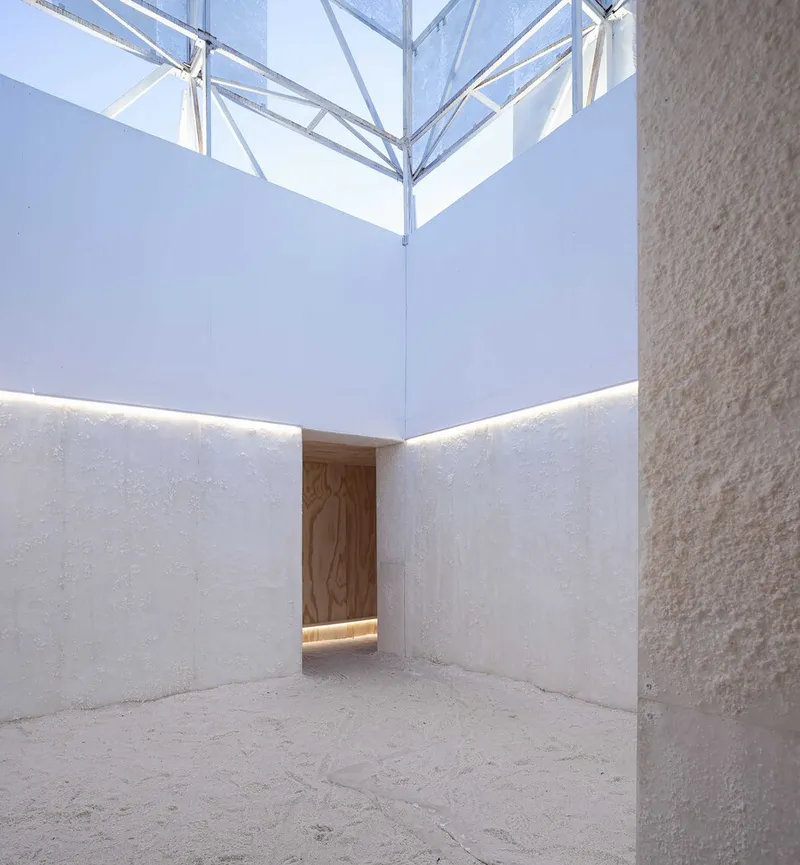
Step through the triangular opening and the pavilion shifts register entirely. The interior is a quiet courtyard defined by white plastered walls, timber framing, and a skylight formed by the exposed steel truss of the tower above. Daylight enters from the top, filtered through the lattice, casting geometric shadows that move through the day. The scale is intimate, almost domestic, a sharp contrast to the monumental presence of the exterior mound.
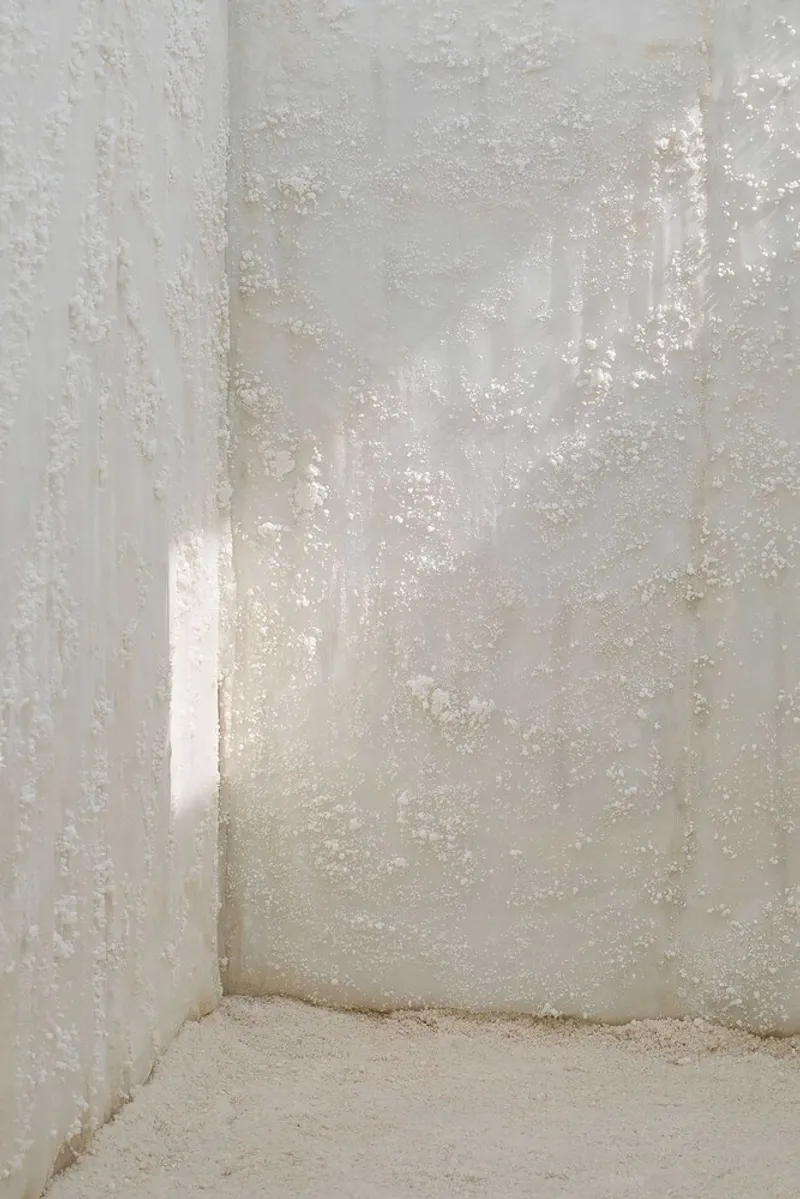
The architects programmed this space for education, workshops, and community gatherings focused on the region's salt heritage and ecological future. The corner detail where salt-crusted walls meet the floor shows how carefully the material palette was controlled inside: soft natural light, white surfaces, and the faint mineral texture of crystallized salt underfoot. It is a space that encourages close looking, which is exactly what an educational program about a vanishing craft requires.
From Crystallizer to Construction Site
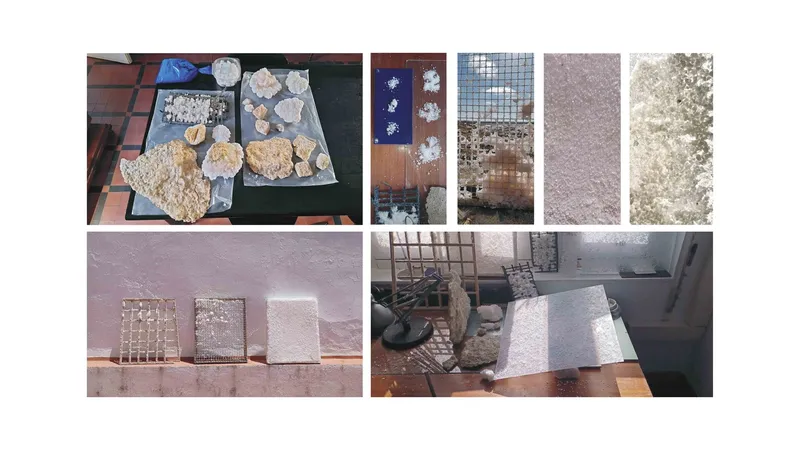
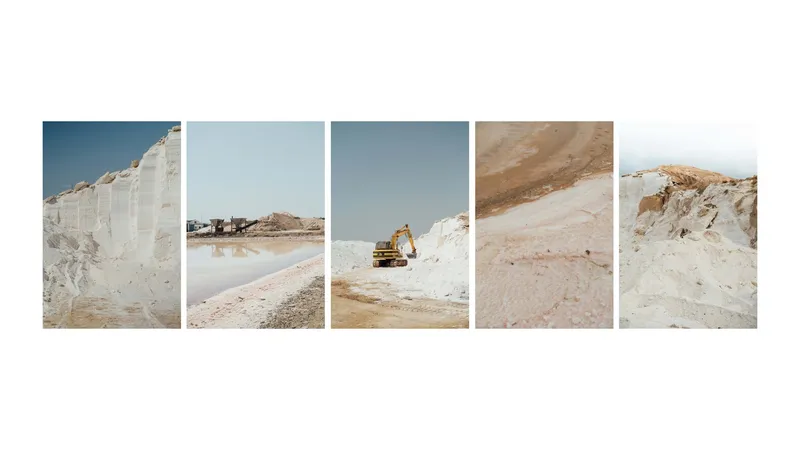
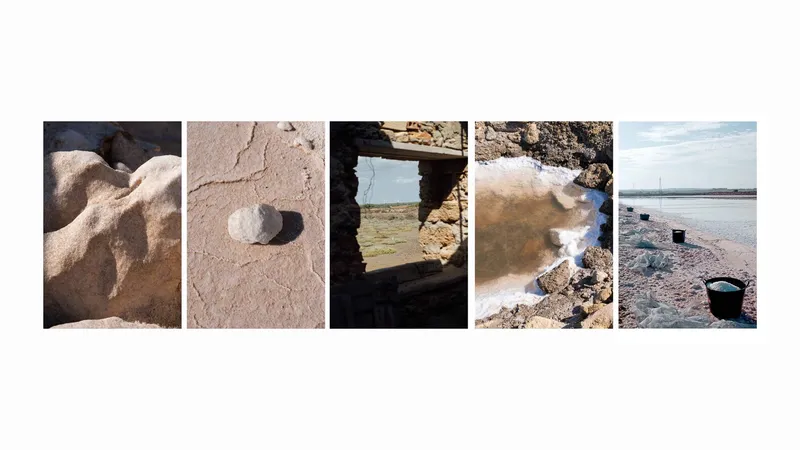
The process documentation reveals how deeply the project is rooted in actual salt production. Salt was harvested by a salinero from Salina del Molino de Ossio, a working salt pan near the site. Fine fiberglass nets were immersed in the crystallizer, where a crust of salt formed naturally over time. Once extracted, these nets were repurposed as textiles with embedded crystals, an elegant closure of the material loop. Alongside this vernacular harvesting, the studio developed panel mockups using controlled crystallization in buckets at a coastal site, testing adhesion, translucency, and structural integrity before scaling up.
The material study boards show the range of crystal densities and light transmission qualities the team evaluated. Some samples are nearly opaque, others glass-like. This variance became a design tool: panels were placed within the tower grid according to their optical properties, creating a gradient of transparency that shifts the tower's character depending on viewing angle and light conditions.
Assembly and Structure
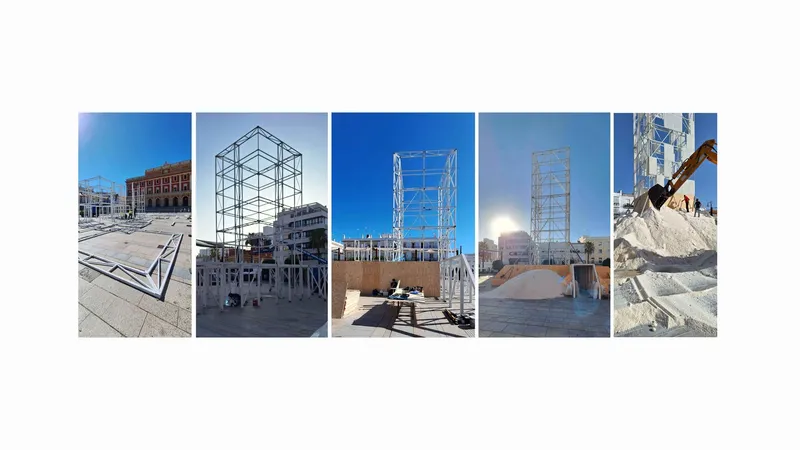
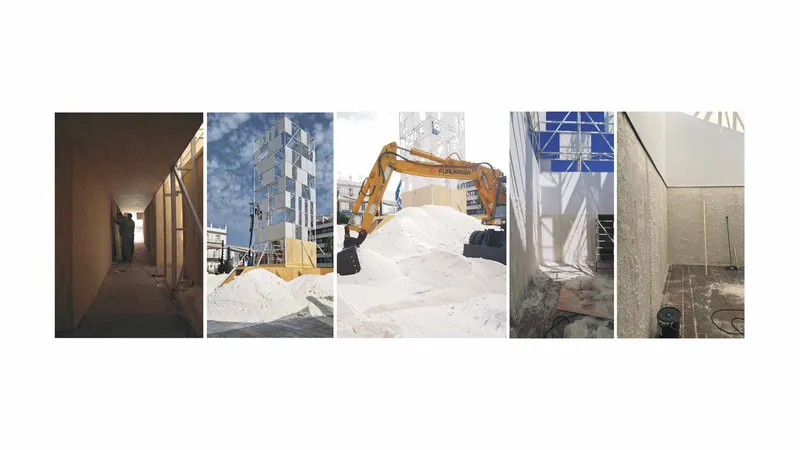
Construction photographs capture the pavilion mid-assembly, when the steel frames stood bare in the plaza before salt was loaded around and onto them. An excavator loads salt aggregate beside the emerging structure, a deliberately low-tech operation that underscores the project's hybrid nature: digital fabrication and CNC-cut steel joints coexisting with a machine scooping mineral deposits. The translucent blue glow of a partially clad tower segment hints at the optical effects to come.
The juxtaposition of heavy machinery and handcrafted salt panels is not incidental. It reflects the project's central thesis that vernacular knowledge and contemporary technology are not opposites but collaborators. The salinero's manual harvest and the architect's parametric modeling serve the same goal: activating salt as a viable building material.
Plans and Drawings
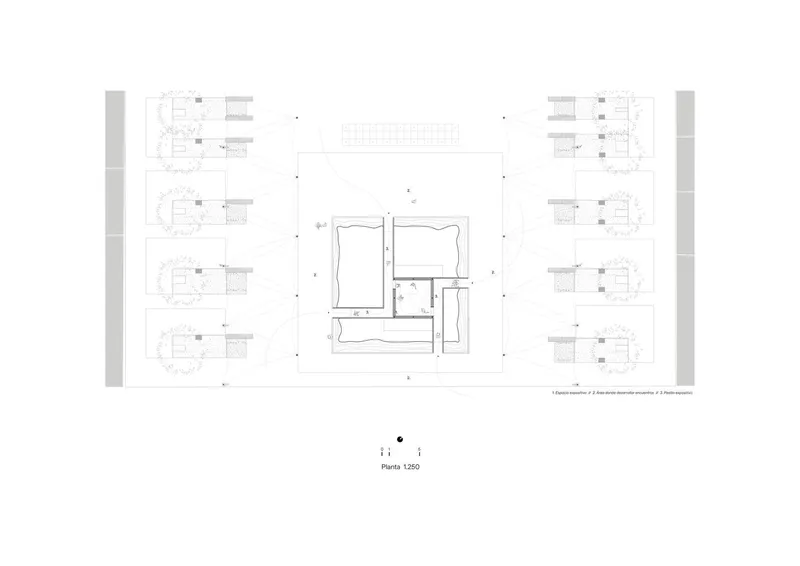
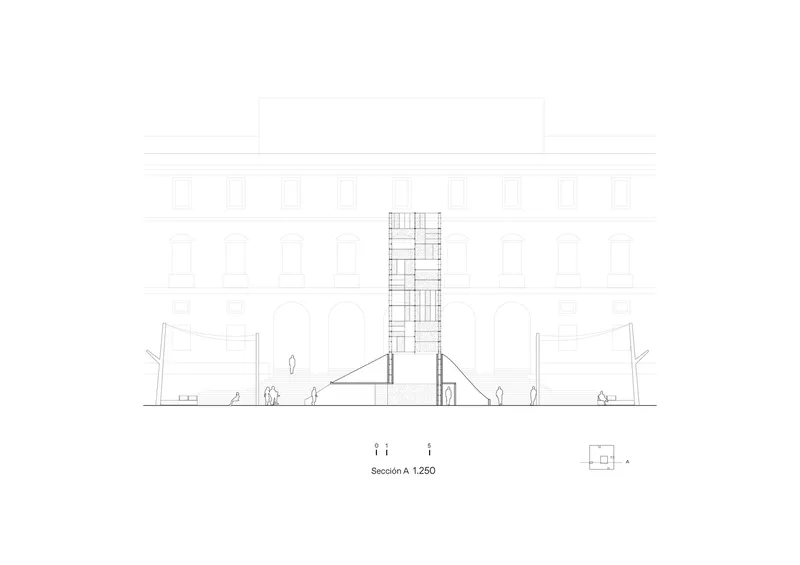
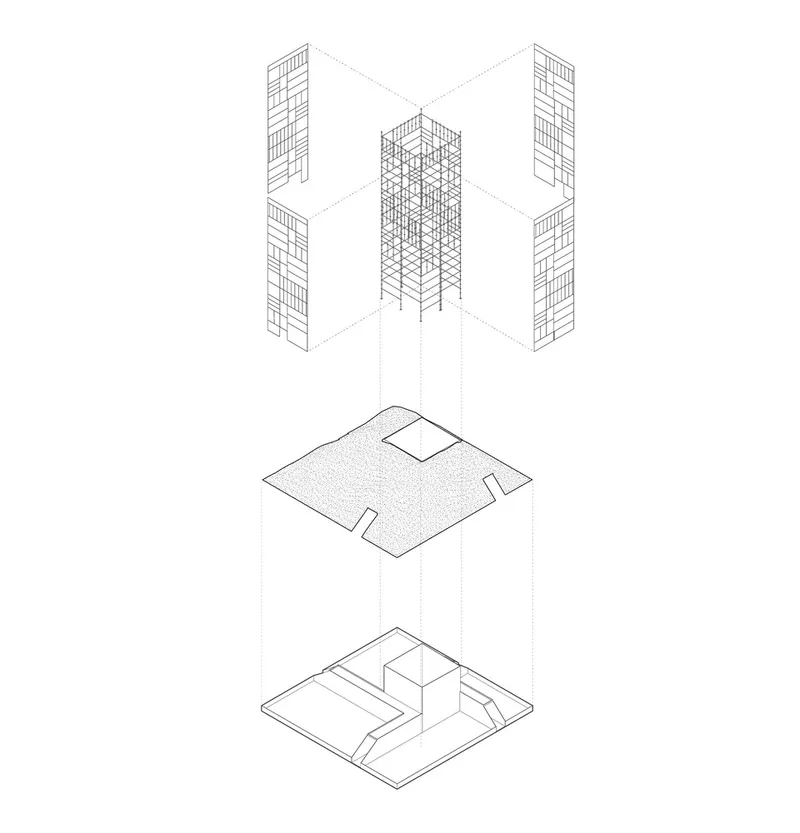
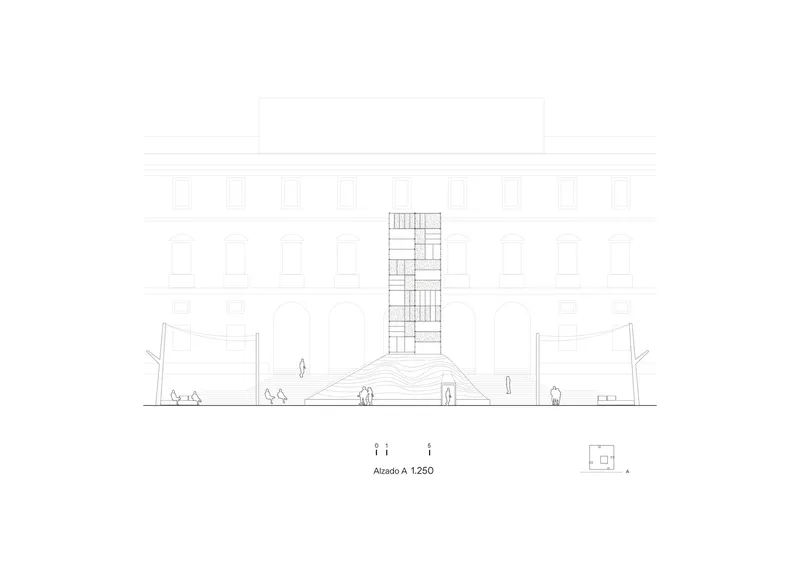
The site plan clarifies the pavilion's relationship to the plaza: a central courtyard embedded within the salt mound, flanked by the existing building elevations that define the square. The section drawing is particularly revealing, showing how the tower mediates between the rooflines of the adjacent buildings, rising just enough to clear them and establish a sightline to the natural park beyond. It is a calibrated insertion, not an imposition.
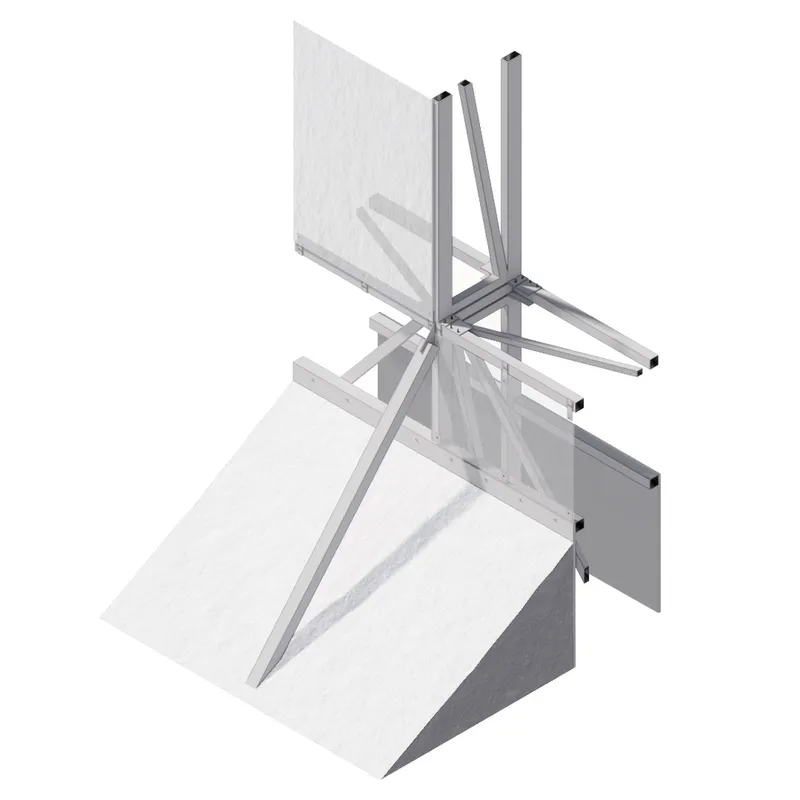
The axonometric detail of the steel node connections shows a clean, efficient joint system that accommodates the panel infill. The exploded axonometric breaks the pavilion into its constituent layers: ground plane, salt mound, timber interior, steel frame, and panel cladding. Each layer operates as an independent system that locks into the others, making assembly and eventual disassembly straightforward. For a temporary structure, this is essential; the pavilion was designed to arrive and to leave without scarring the plaza.
Why This Project Matters
La Sal Pavilion matters because it treats a hyper-local material with the same rigor that most firms reserve for engineered timber or high-performance concrete. Salt is abundant, renewable, and deeply embedded in the culture and economy of the Bahía de Cádiz. By developing a genuine construction technique around it, complete with bio-resin bonding, crystallization protocols, and panel grading, CHS+R arquitectos and Carlos Montes have pushed the conversation about sustainable materials beyond the usual suspects. The pavilion is proof of concept, not just provocation.
It also demonstrates what a temporary intervention in public space can accomplish when it takes its site seriously. Rather than importing a flashy object to generate social media content, the designers extracted a project from the landscape itself. The tower looks out toward the salt pans that produced it. The mound recalls the piles of harvest that have shaped local skylines for centuries. The interior gathers communities around the knowledge systems that make all of this possible. Architecture does not always need to last forever to leave a lasting impression.
La Sal Pavilion, designed by CHS+R arquitectos and Carlos Montes. San Fernando, Cádiz, Spain. 400 m². Completed 2024. Photography by Javier Orive, Fernando Alda, and DEL RIO BANI.
About the Studio
Carlos Montes
Share Your Own Work on uni.xyz
If projects like this are the kind of work you want to make, uni.xyz is a place to publish your own, find collaborators, and enter design competitions.



Popular Articles
Popular articles from the community


Conexión: Biophilic Design Reimagines High-Rise Living in Hong Kong
Conexión reimagines high-rise living in Hong Kong through biophilic design, green facades, shared spaces, daylight, water and nature within.

Lunar Spiral: Space Architecture Shaped by the Mathematics of the Universe
Lunar Spiral reimagines space architecture through Fibonacci geometry, lunar regolith, levitating habitats, and self-sustaining Moon living.

Riyadh For All: Intergenerational Urban Design for Active Aging in Rabat
Riyadh For All reimagines urban design in Rabat with intergenerational co-living, adaptive courtyards, and Moroccan cultural exchange today.

The Earth Pod: 3D Printed Homes for Resilient Refugee Communities
The Earth Pod reimagines refugee housing through 3D printed homes made from clay, combining resilience, self-sufficiency, and rapid shelter.

Similar Reads
You might also enjoy these articles


Hodi-Mandai Geram
Project Function: Preservation and revitalization of the Intangible heritage and socio-spatial identity of the Hodi by Housing, Cultural Memory Center, Sacred Grove, landscape, local tourism economy


Olio Towers: A Mid-Rise for Performers That Fuses Housing, Rehearsal, and Stage
Located blocks from Houston's Theater District, this modular tower stacks living units around a central performance atrium.

Oasis: Modular Green Housing Carved into Dhaka's Urban Fabric
A shortlisted Plugin Housing entry reclaims unauthorized settlements in Dhaka with stepped concrete volumes, green roofs, and ventilation-driven design.

Black Hole: A Floating Megastructure for the Post-Physical Era
Emiliano Mazzarotto envisions a spherical, self-scaling arena where e-sports, digital hotels, and holographic stadiums replace traditional public space.


Explore Architecture Competitions
Discover active competitions in this discipline



Challenge to reimagine the Iron Throne


Photograph architecture without architects


Illustrate the lost glory of Angkor Wat - Render Challenge


Design challenge to reuse E-waste
Comments (0)
Please login or sign up to add comments
No comments yet. Be the first to comment!