
Lac Rougeaud Residence: Contemporary Vernacular Architecture in the Laurentian Mountains
DKA's Laurentian lakeside retreat reinterprets Quebec vernacular through three gabled volumes, minimizing site impact while framing nature through restrained material palette.


Introduction: Where Architecture Recedes and Nature Commands
In the rugged wilderness of Quebec's Laurentian Mountains, where dense forests meet crystalline lakes and granite outcroppings punctuate the landscape, the Lac Rougeaud Residence emerges as a meditation on architectural restraint. Completed in 2024 by Montreal-based firm DKA (Dupont Blouin Architectes), this 534-square-meter family retreat demonstrates how contemporary architecture can honor regional building traditions while responding sensitively to extraordinary natural settings.
This is not architecture that announces itself through bold formal gestures or demands attention through material extravagance. Instead, it represents a more difficult and ultimately more rewarding approach: designing buildings that enhance human experience of place while consciously stepping back to allow landscape to remain the protagonist. The house reveals itself gradually, engages the site respectfully, and creates interior environments where the ever-changing drama of natural phenomena—light moving across water, wind animating tree canopies, seasonal transformations—takes precedence over architectural display.
For a family seeking respite from urban pressures and daily demands, DKA has created not merely a vacation house but a carefully calibrated instrument for experiencing wilderness—a building that frames views, orchestrates movement, modulates light, and ultimately disappears into the background, allowing its occupants to engage fully with the remarkable landscape that surrounds them.
Regional Context: The Laurentian Mountains
Geographic and Ecological Setting
The Laurentides (Laurentian Mountains) form an ancient mountain range extending across southern Quebec, roughly parallel to the St. Lawrence River. Though modest in elevation compared to younger mountain ranges—highest peaks reach only 1,000 meters—the Laurentians possess distinctive character shaped by their extreme age (over one billion years) and glacial history.
The Pre-Cambrian Shield bedrock underlying the region creates a landscape of countless lakes occupying glacially-scoured depressions, forests of mixed deciduous and coniferous species, and dramatic topographic variation over short distances. This geology also produces challenging building sites—thin soils over bedrock, steep slopes, dense vegetation, and isolated locations far from urban infrastructure.
Cultural and Recreational Significance
The Laurentians have served as Montreal's recreational hinterland since the late nineteenth century when railway connections made the region accessible for weekend and seasonal escapes. Early tourism focused on mountain resorts and lakeside camps—rustic retreats where urban families could experience wilderness while maintaining basic comforts.
This tradition continues today, with the region hosting year-round recreation: skiing and snowshoeing in winter, hiking and water sports in summer. The area maintains complex character—simultaneously wilderness preserve, recreational landscape, site of seasonal residences, and home to permanent communities balancing tourism with forestry and agriculture.
Lac Rougeaud
The specific location—Lac Rougeaud (Red Lake)—suggests a smaller lake away from major tourist centers. Quebec contains thousands of named lakes, most accessible only via rough roads or water, maintaining wilderness character despite proximity to major cities. Building on such sites requires careful planning to minimize environmental impact while achieving necessary access and infrastructure.
Quebec Vernacular Architecture: The Archetypal House
Historical Foundations
Quebec's vernacular residential architecture emerged from French colonial building traditions adapted to North American climate and available materials. The archetypal Quebec house features several consistent characteristics:
Gabled Roof: Steeply pitched to shed heavy snow loads, the gable roof dominates Quebec's architectural landscape. Its simple geometry—two sloping planes meeting at a ridge—provides maximum interior volume while minimizing structural complexity.
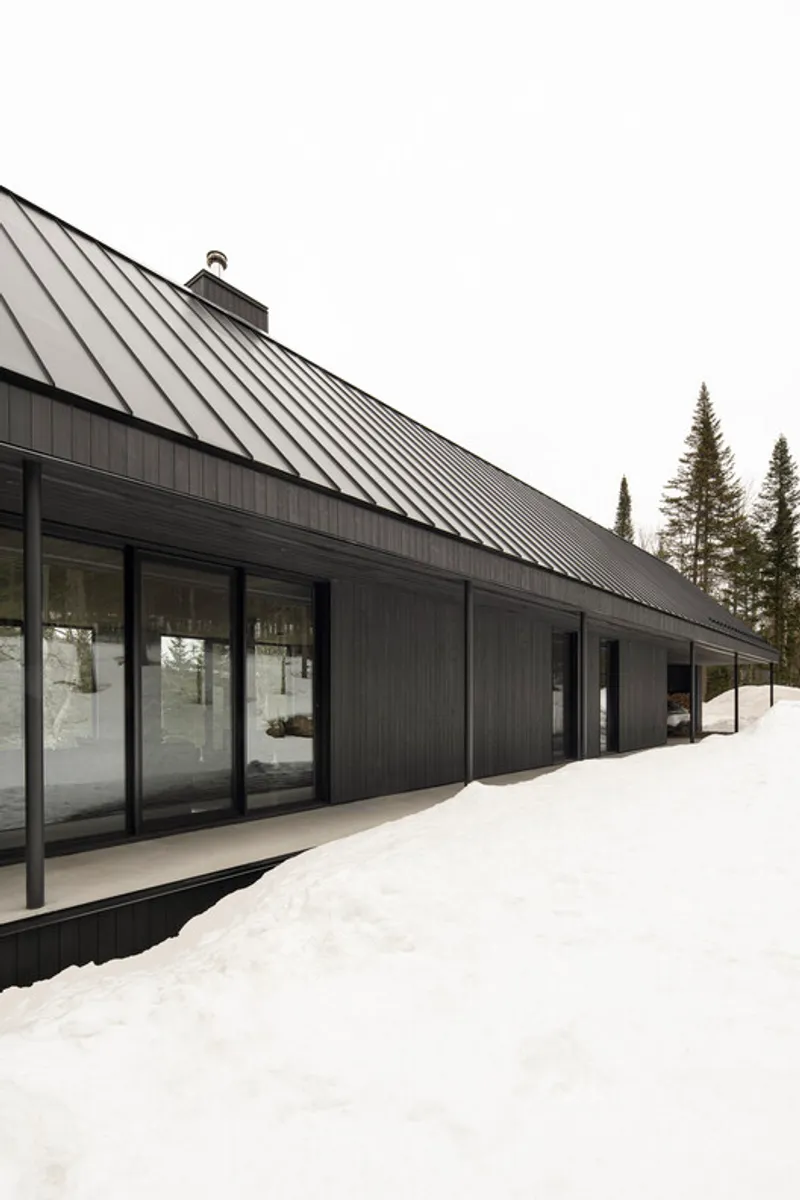
Rectangular Plan: Simple rectangular footprints optimize structural efficiency, simplify construction, and facilitate heating—critical in Quebec's severe winter climate where compact forms reduce heat loss.
Symmetrical Façade: Balanced fenestration and centered entrances reflect classical proportions inherited from French building traditions.
Substantial Construction: Thick stone or timber walls provide thermal mass and weather resistance necessary for continental climate with temperature swings from -30°C winters to +30°C summers.
Functional Minimalism: Decoration remains subordinate to function. Where ornament appears—carved brackets, painted shutters—it typically serves practical purposes or derives from structural expression.
Evolution and Contemporary Relevance
While modernist architecture often rejected regional traditions in favor of universal solutions, contemporary practice increasingly recognizes that vernacular buildings embody centuries of climate adaptation, material optimization, and cultural meaning. The challenge lies in reinterpreting these traditions through contemporary means—honoring principles rather than copying appearances, learning from precedent without being imprisoned by it.
The Lac Rougeaud Residence engages this challenge directly, taking the archetypal gabled house as departure point for contemporary exploration. The result is simultaneously familiar and fresh, rooted and innovative.
Site Strategy: Minimal Intervention, Maximum Preservation
The Rugged Site
The property presents typical Laurentian characteristics: dense vegetation including mature conifers and deciduous trees, rocky terrain with exposed bedrock, steep slopes, and presumably limited soil depth. Such sites pose significant construction challenges while offering extraordinary beauty and privacy.
Immersive Approach Sequence
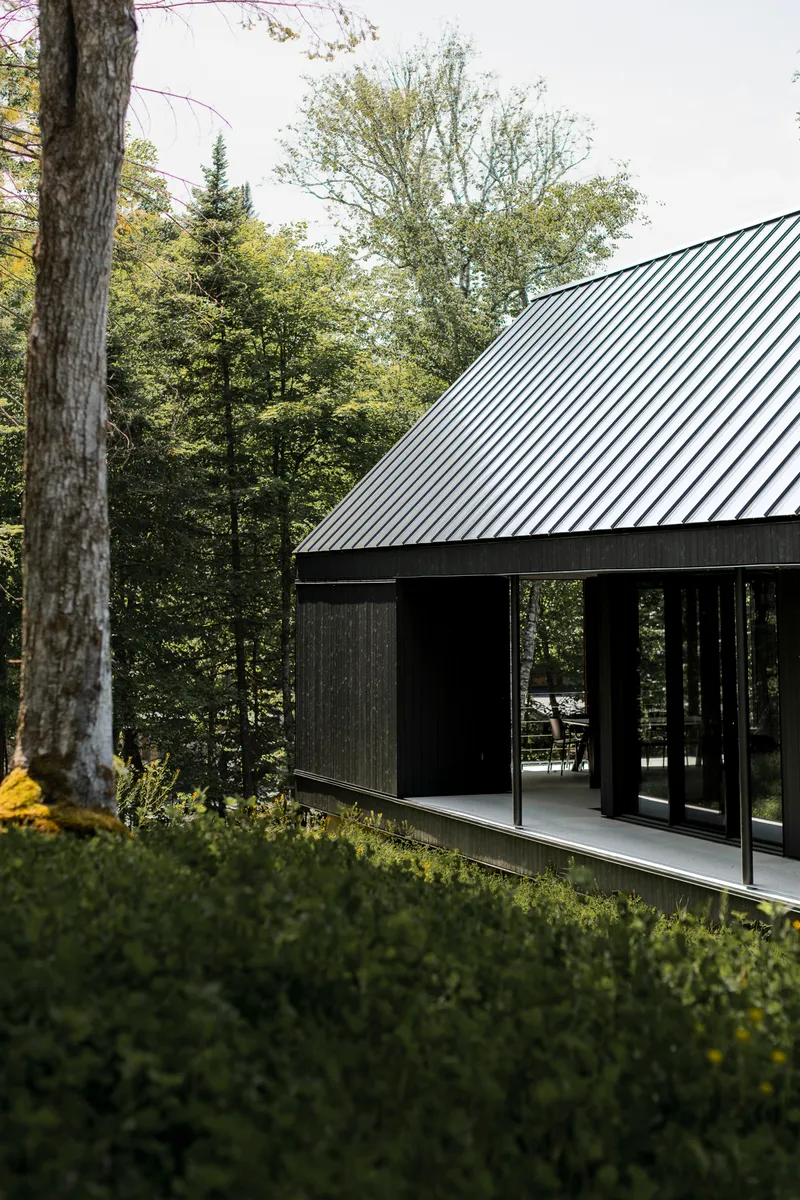
Rather than clearing the site dramatically to announce the building's presence, DKA designed an immersive discovery sequence. The house reveals itself gradually as visitors progress along the access road through dense forest. This approach serves multiple purposes:
Environmental: Minimizing deforestation preserves existing ecosystems, maintains habitat corridors for wildlife, prevents soil erosion, and reduces visual impact.
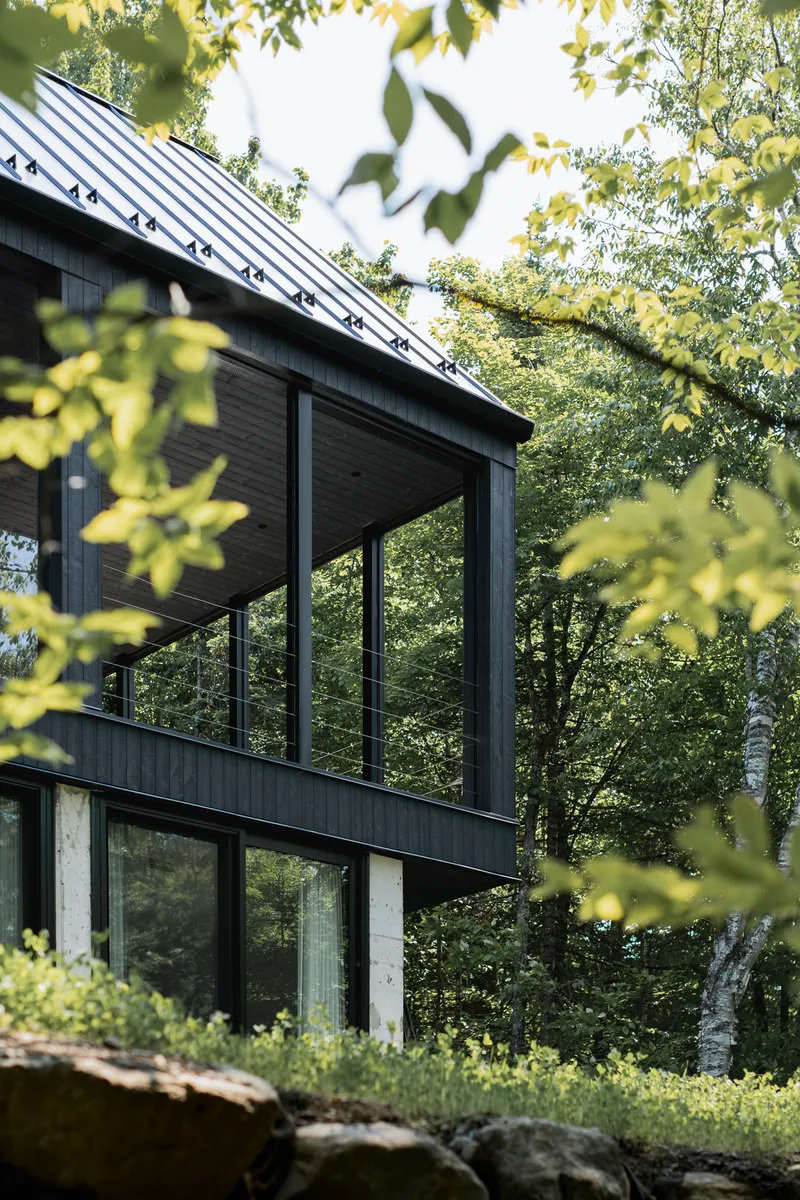
Experiential: The gradual revelation creates anticipation and heightens the moment of arrival. Visitors transition slowly from public road to private realm, from forest to clearing, from anticipation to inhabitation.
Climatic: Preserved vegetation provides natural windbreaks, reduces winter snow accumulation in certain areas, and creates summer shade—passive climate modification through landscape preservation.
Privacy: Dense vegetation screens the house from distant views while screening views from the house, creating intimate relationship with immediate surroundings rather than panoramic exposure.
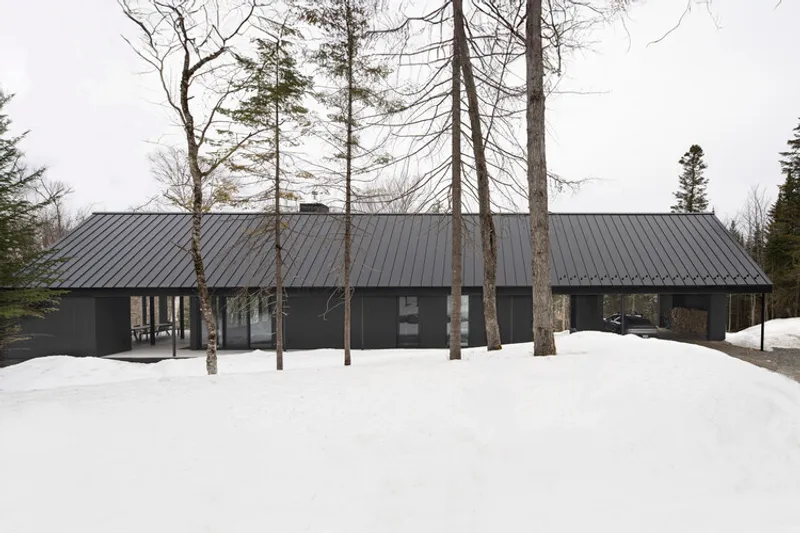
Responsive Composition
The building's siting responds carefully to existing landscape features—topography, vegetation, solar orientation, and lake views. Rather than imposing a predetermined design regardless of site conditions, the architecture emerges from dialogue with place. This approach reflects mature understanding that exceptional sites deserve respect, not domination.
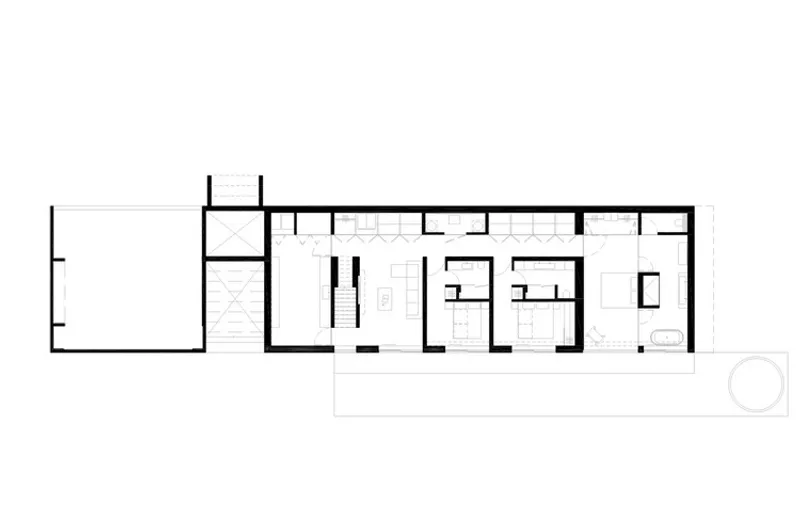
The composition balances sensitivity with presence. The house occupies its site confidently—this is not architecture that apologizes for existing—yet does so without unnecessary disruption. Trees were removed selectively where necessary for construction and views while preserving the forest's overall character and ecological function.
Formal Strategy: Three Volumes, Two Openings
Deconstructing the Archetype
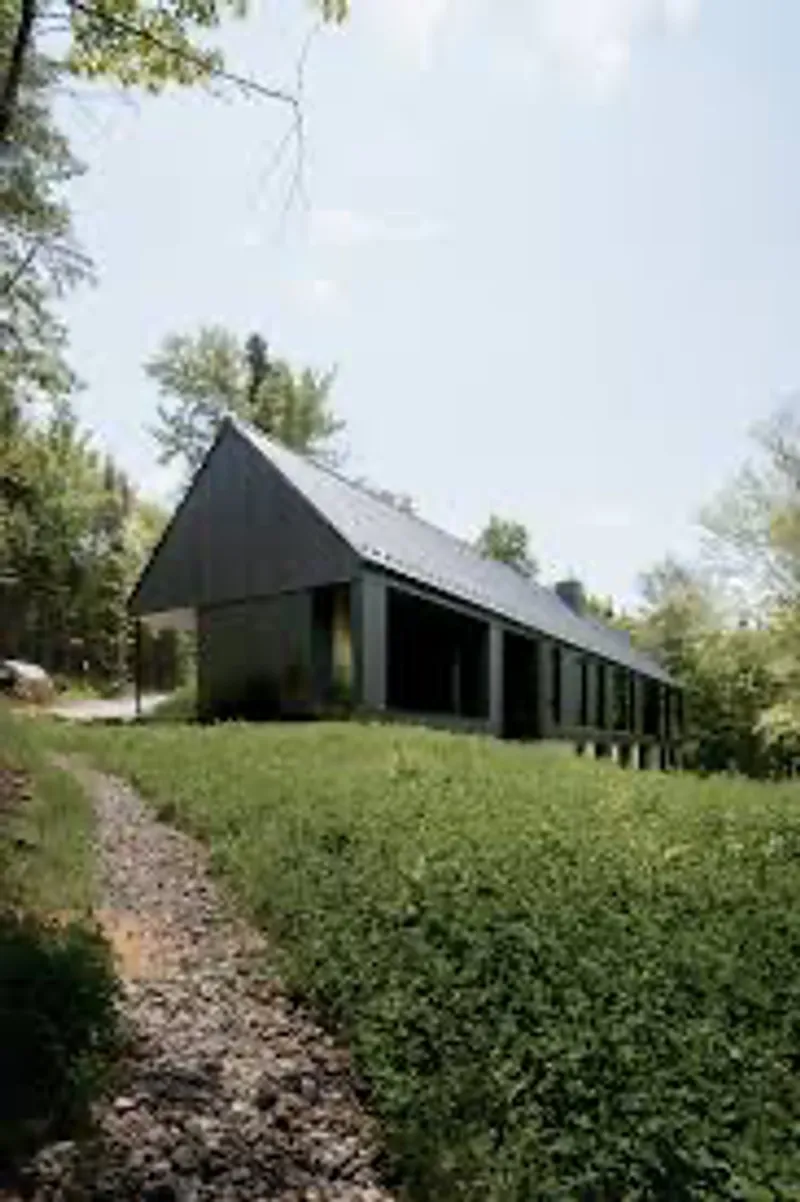
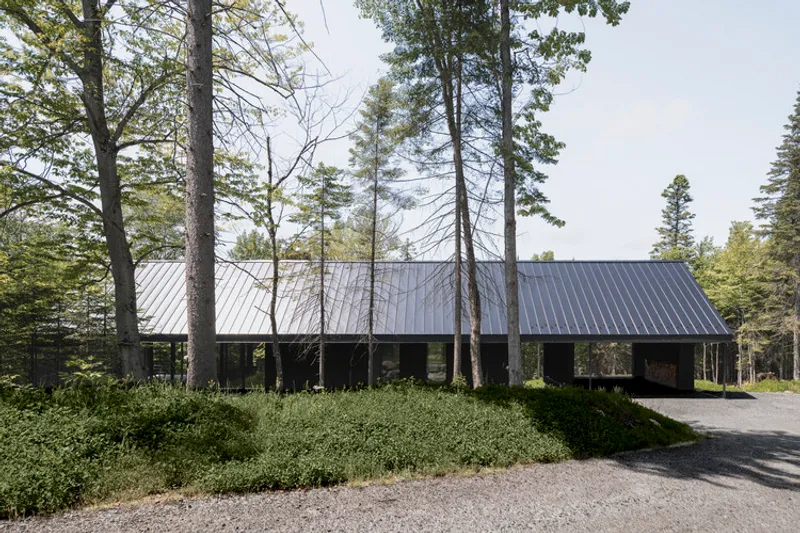
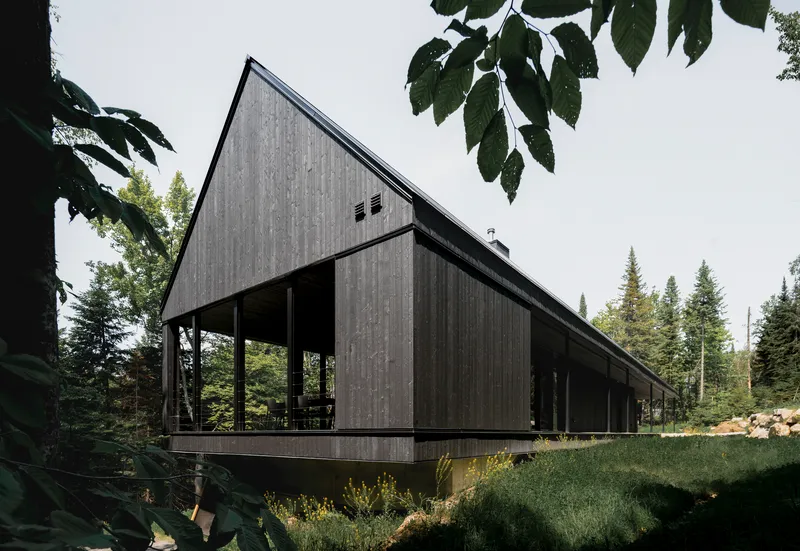
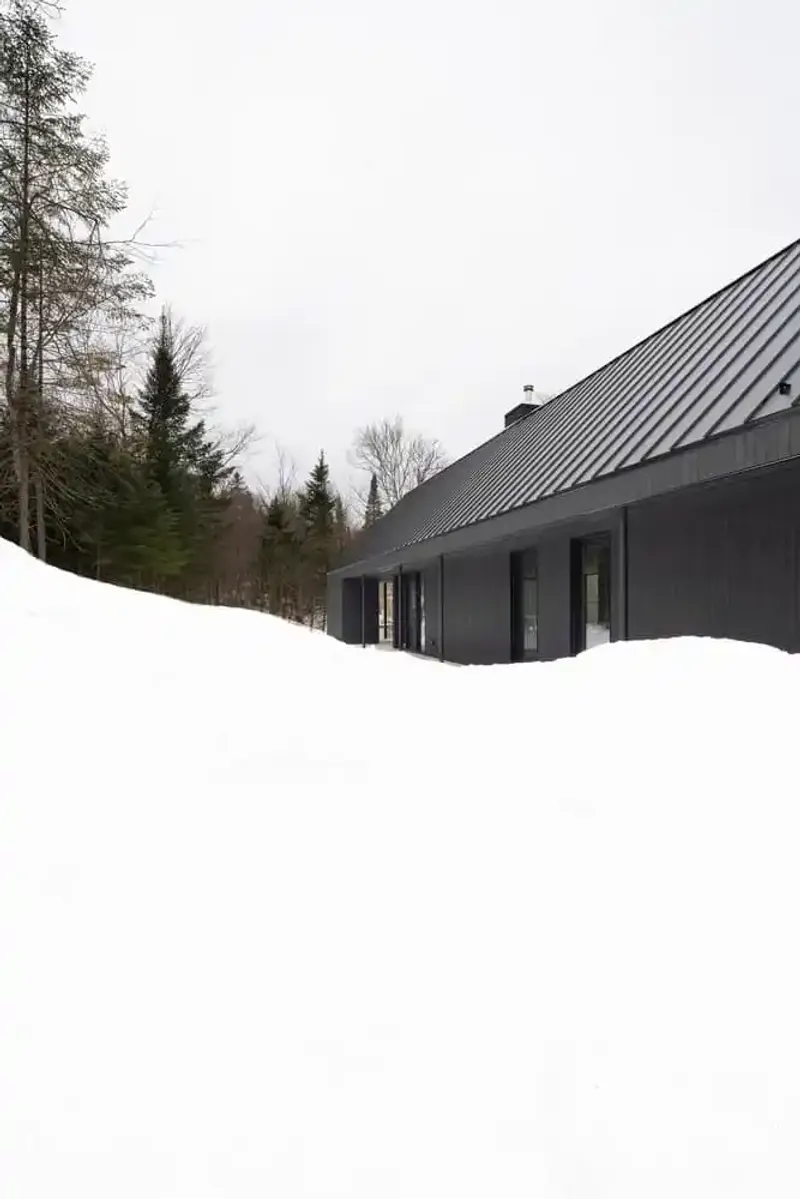
The design takes the archetypal Quebec house—gabled roof on rectangular volume—and strategically deconstructs it into three distinct entities. This volumetric breakdown serves multiple functions:
Scale Reduction: Breaking the 534-square-meter program into three volumes reduces apparent mass. Rather than one large house overwhelming the site, three smaller pavilions settle more comfortably into the landscape.
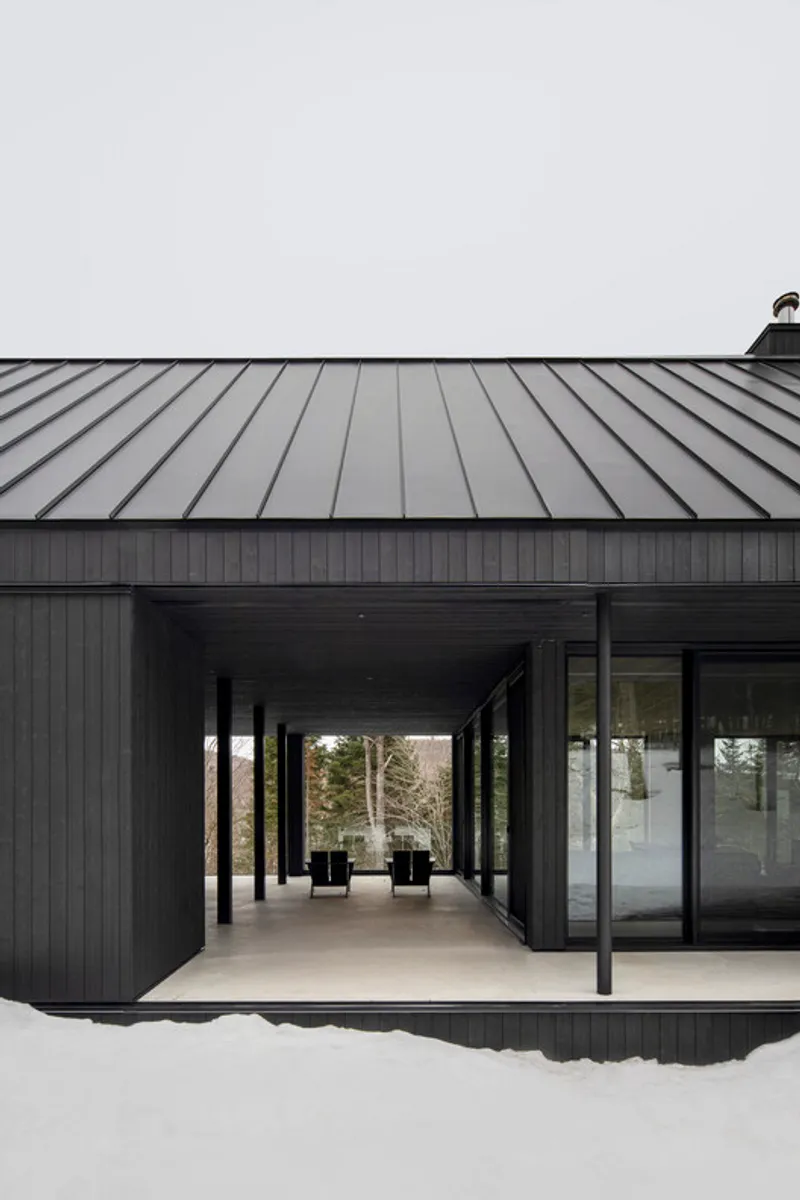
Formal Rhythm: The repetition of three similar volumes creates architectural rhythm—theme and variation—that gives the composition coherence while avoiding monotony.
Functional Zoning: Different volumes can house different programmatic elements—garage/service, public living areas, private sleeping quarters—allowing functional separation that enhances privacy and organization.
View Framing: The gaps between volumes become strategic viewing opportunities, creating framed apertures toward the lake while maintaining the sense of shelter and enclosure that solid volumes provide.
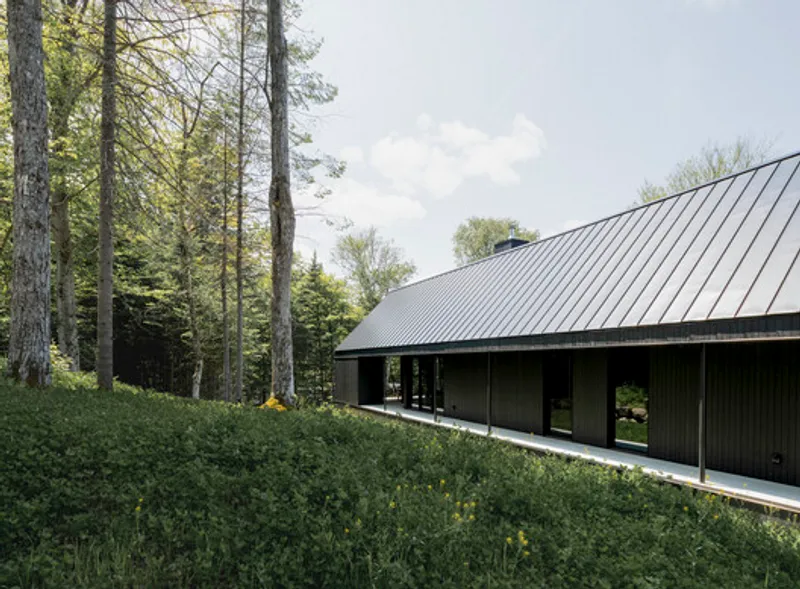
The Two Clear Openings
Between the three volumes, two openings frame views toward Lac Rougeaud. These gaps are not merely residual space left between buildings but carefully designed voids that serve as visual and experiential focal points. The openings:
Frame Views: Like picture frames around paintings, the architectural volumes frame natural views, intensifying visual impact through careful composition.
Create Threshold Spaces: The openings become outdoor rooms—partially enclosed by adjacent volumes yet open to sky and view—serving as transitional zones between fully interior and fully exterior conditions.
Enable Cross-Ventilation: Openings allow breezes to flow through the site, providing natural cooling during warm weather.
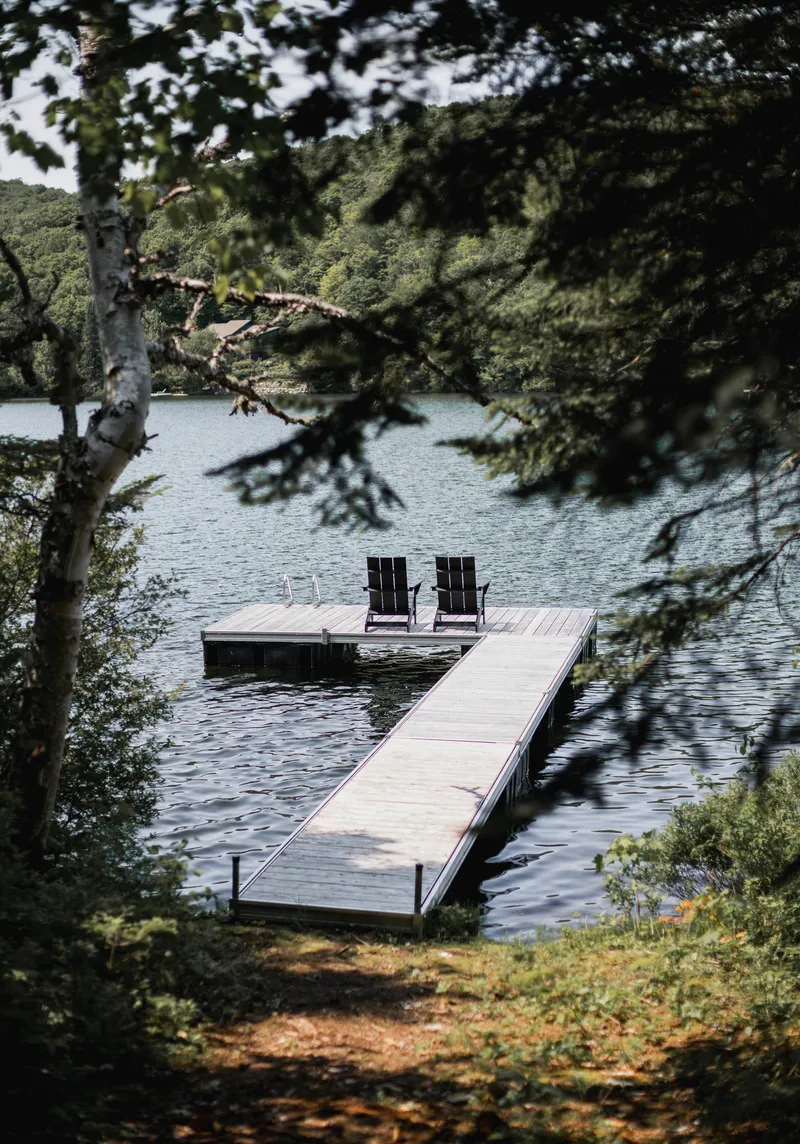
Connect Interior to Exterior: Openings visible from interior spaces create visual connection to lake even from rooms not directly overlooking water.
Material Restraint
A deliberately limited material palette reinforces the building's simplicity and timeless character. Rather than employing many different materials that would create visual complexity and detract from the architectural volumes' clarity, DKA specified few materials used consistently:
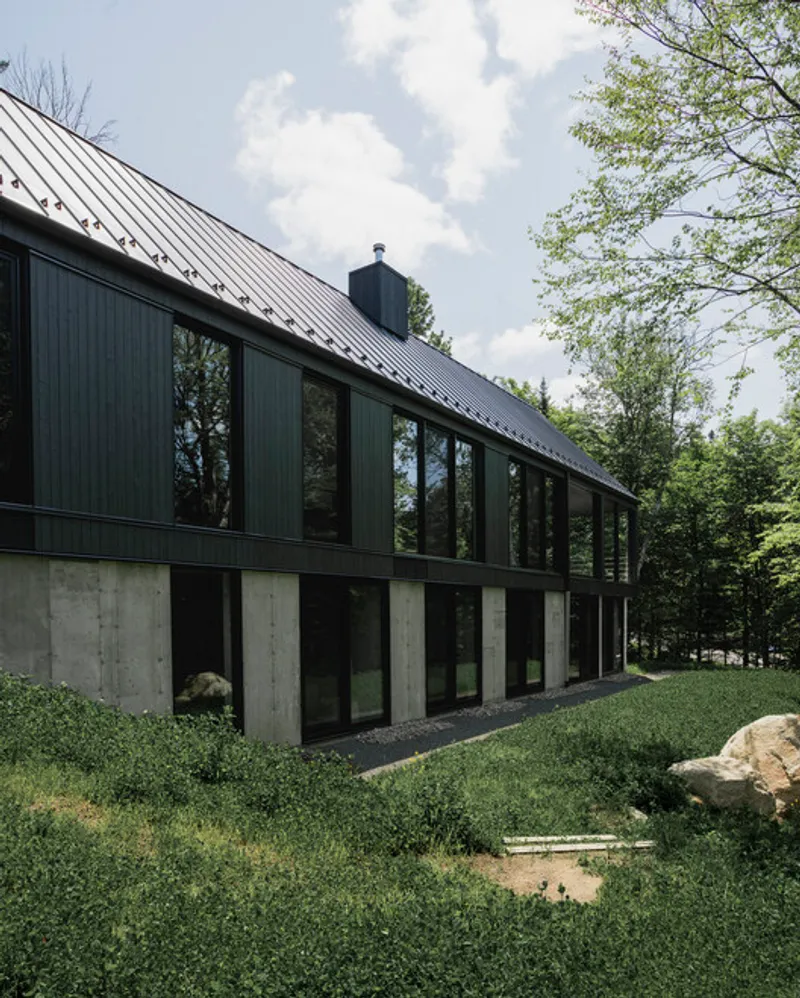
Wood Cladding: Likely cedar or another durable species, wood siding references Quebec building traditions while providing natural texture and color that harmonizes with forest surroundings. The material weathers gracefully, developing silver-gray patina that further integrates buildings with landscape.
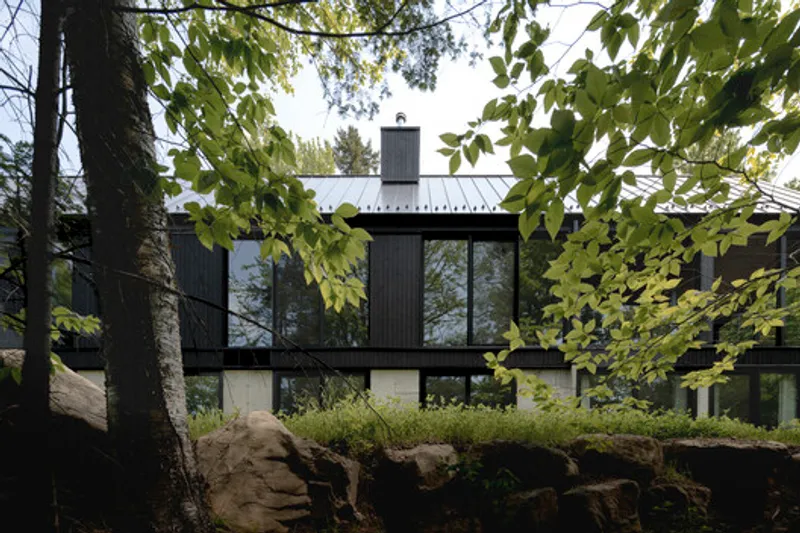
Dark-Toned Finishes: Darker colors—charcoals, browns, grays—help buildings recede visually into shadowed forest rather than standing out as bright objects against dark vegetation.
Natural Materials: Stone, wood, and metal connect buildings to regional building culture and landscape geology, creating material continuity between architecture and site.
The restrained palette demonstrates confidence: the architecture doesn't need material variety to maintain interest because formal clarity and spatial quality provide sufficient richness.
Arrival and Entry: The Covered Passageway
First Glimpse of Water
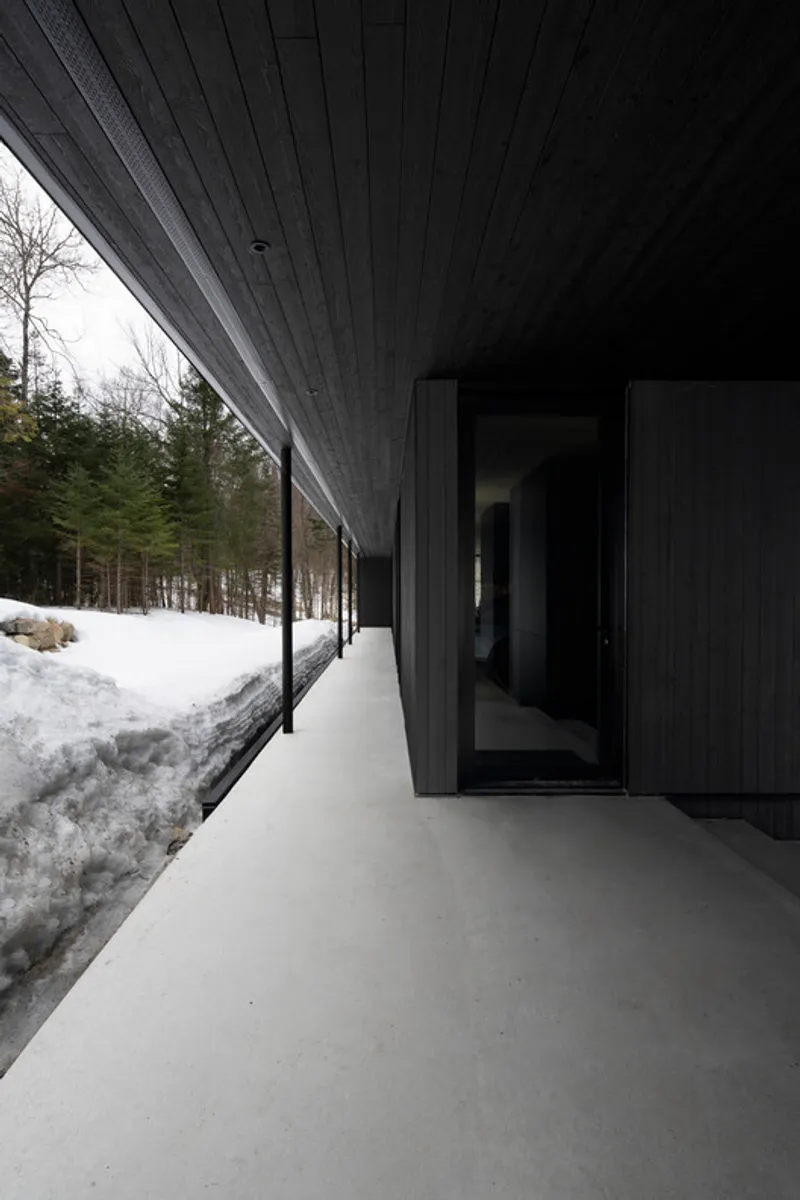
Between the garage volume and main entrance, a covered passageway provides the first glimpse of water—a carefully choreographed moment that establishes the lake as the organizing principle around which the entire architectural composition revolves. This initial view is not fully revealed panorama but tantalizing preview, creating anticipation for the fuller revelation that will come as one moves through the house.
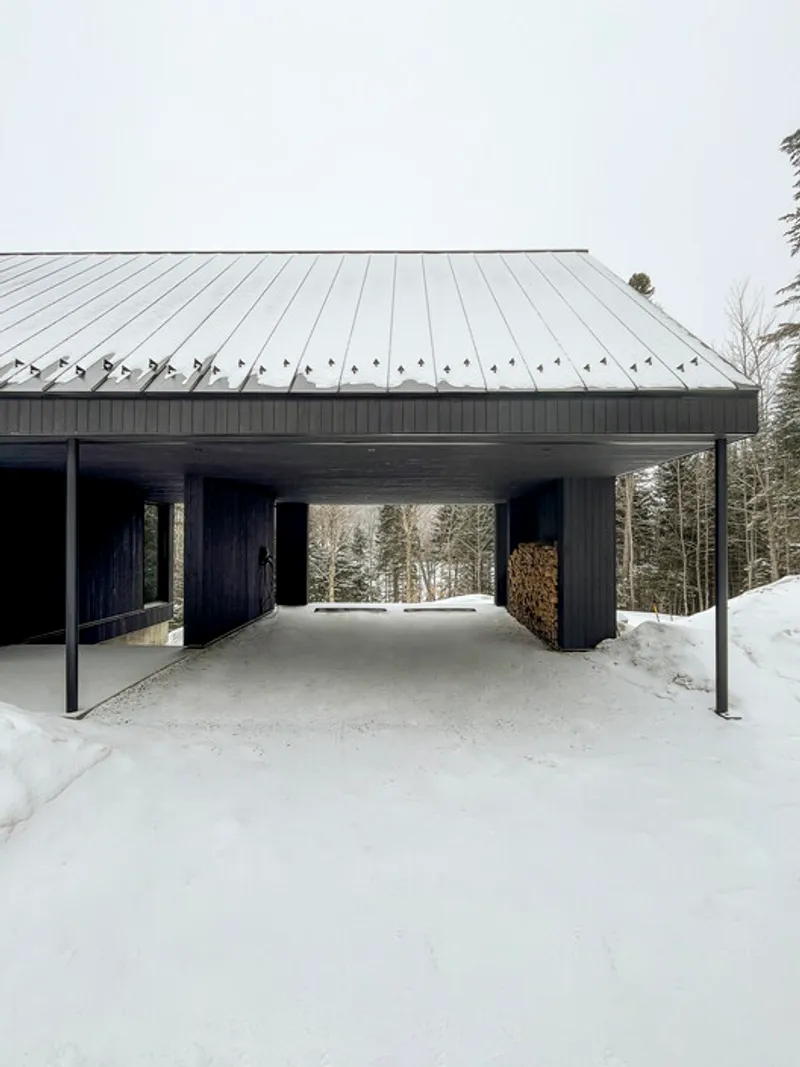
The passageway serves multiple functions:
Weather Protection: Covered circulation between garage and entrance allows occupants to move between vehicles and house without exposure to rain, snow, or extreme temperatures—essential in Quebec's challenging climate.
Threshold Experience: The passageway creates a transitional sequence between arrival and interior, a decompression zone where visitors shift from travel mode to domestic inhabitation.
View Framing: The architectural frame created by the passageway focuses attention on the carefully selected view beyond, enhancing its visual impact through deliberate composition.
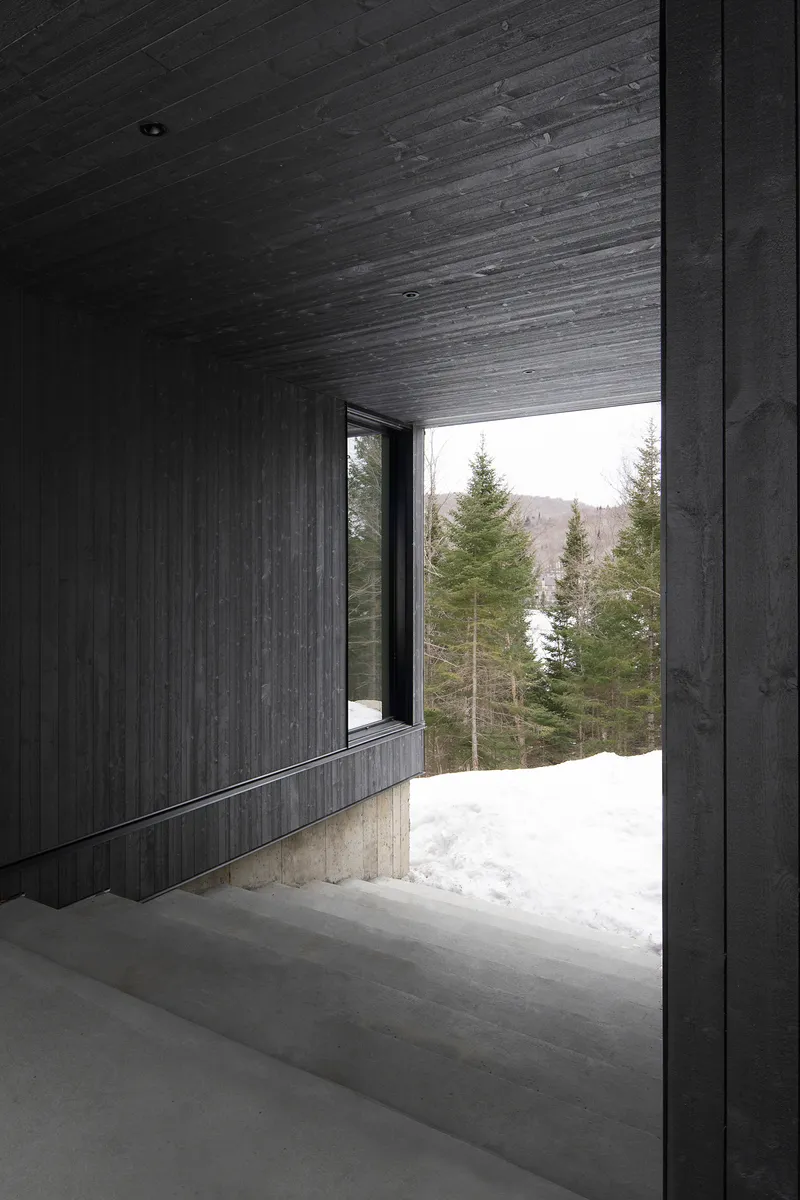
Privacy Screening: While creating a view toward the lake, the passageway also screens the main entrance from direct view of approaching visitors, maintaining privacy for interior spaces.
Interior Organization: Peripheral Circulation and Expanding Openings
Circulation Strategy
Inside, a peripheral circulation axis ensures fluid movement throughout the home. Rather than central corridors that create residual spaces on either side, the circulation runs along the building's perimeter, allowing rooms to occupy prime interior territory while maintaining clear wayfinding and spatial flow.
This organizational strategy provides several benefits:
Spatial Efficiency: Eliminates dead corridor space that consumes area without providing habitable rooms.
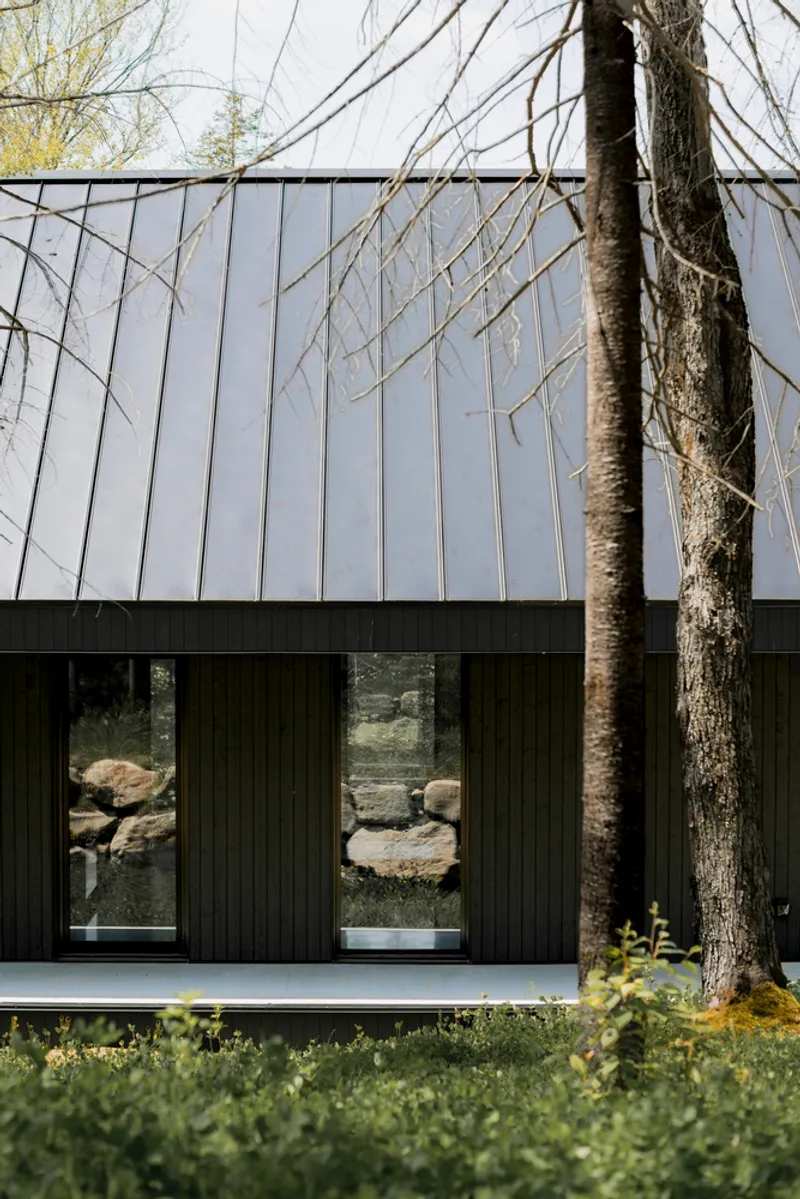
Natural Light: Peripheral circulation can receive natural light from exterior walls rather than being dark internal passages.
View Access: Circulation paths along building perimeters maintain visual connection to landscape and lake.
Flexibility: The clear circulation system allows rooms to be accessed independently, supporting different occupancy patterns and providing privacy when needed.
Progressive Opening
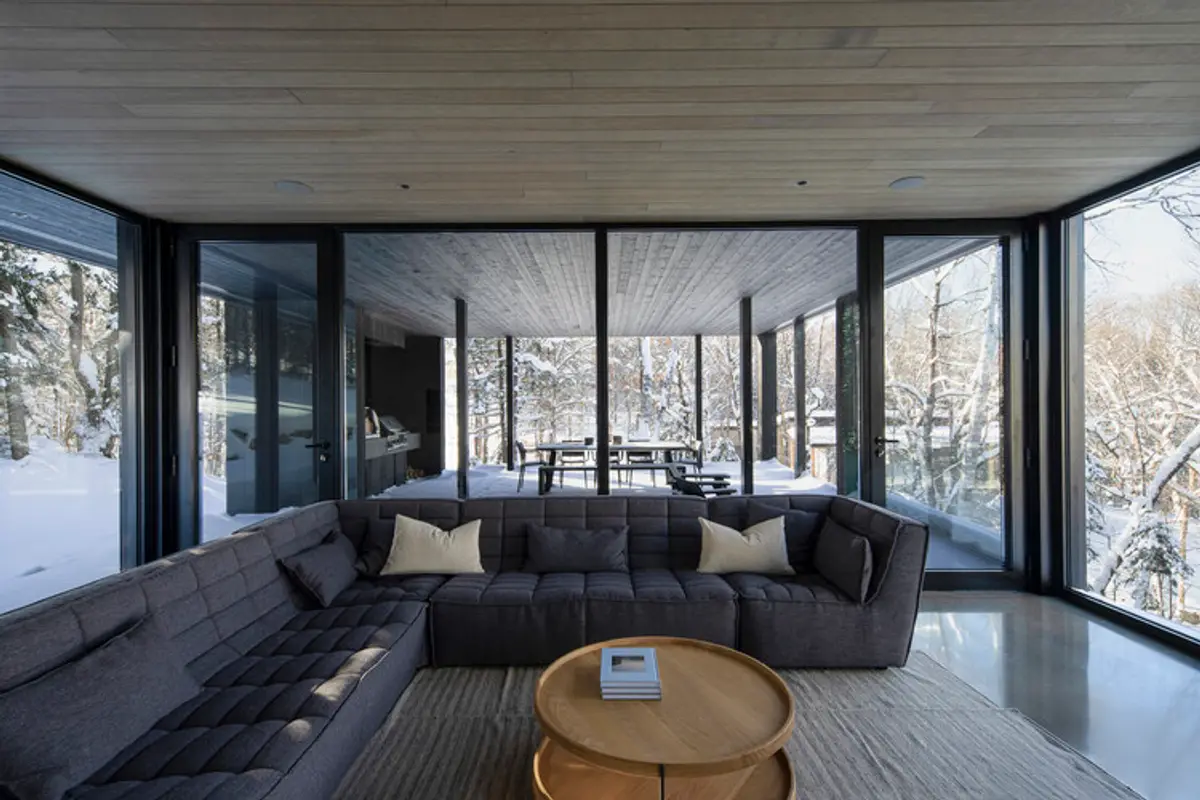
One of the most sophisticated spatial strategies involves how openings gradually expand as one progresses through the spaces. This creates the impression that common areas extend toward the covered terrace of the third volume—a sense of continuous flow from fully enclosed interior through transitional zones to sheltered exterior.
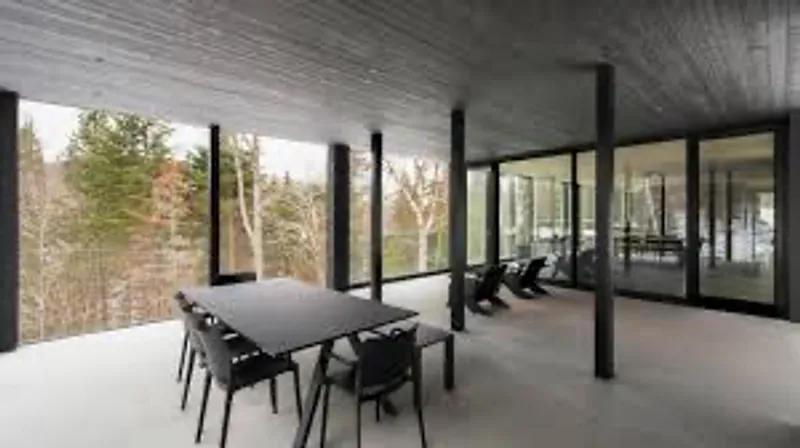
This progressive opening operates both literally and perceptually:
Literal: Window and door openings physically increase in size—modest windows in entry areas, larger windows in living spaces, and finally fully opening glass walls connecting to terraces.
Perceptual: Sightlines and spatial connections create the impression of continuous space even where solid walls maintain physical separation. Views through rooms to landscape beyond make spaces feel larger and more connected than their actual dimensions.
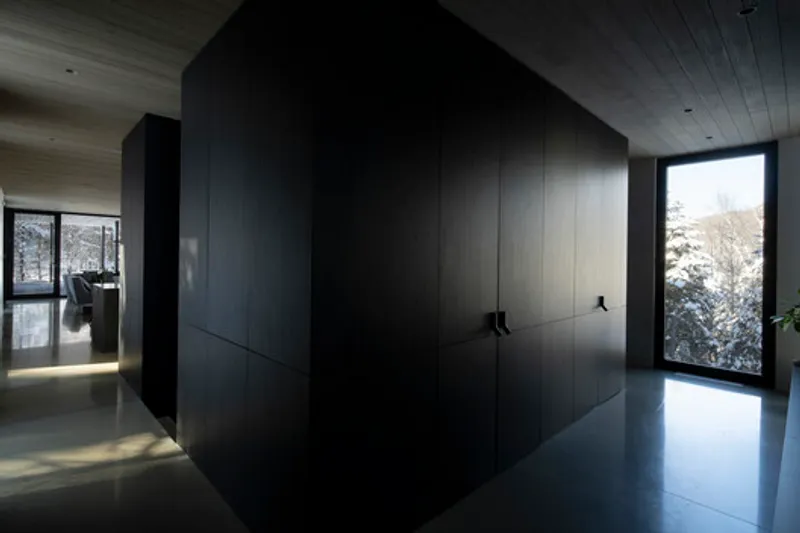
The effect transforms the house from a container that separates inside from outside into a permeable membrane that mediates between different degrees of enclosure and exposure, allowing occupants to modulate their relationship to landscape and climate.
Living Spaces: The Fireplace as Anchor
Spatial Organization Around the Hearth
The fireplace anchors the living spaces—a traditional role in Quebec architecture where heating sources necessarily organized domestic life. Even in contemporary homes with distributed mechanical heating, fireplaces retain symbolic and social importance as gathering points and focal elements.
In the Lac Rougeaud Residence, the fireplace serves multiple functions:
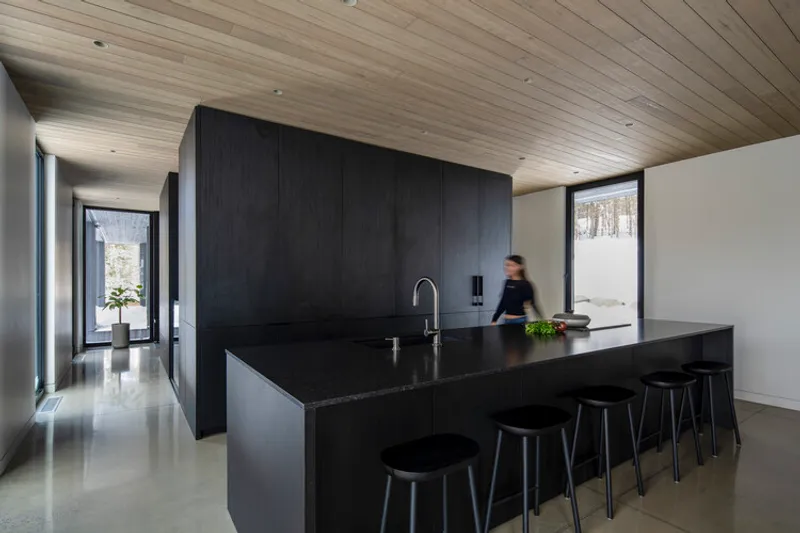
Spatial Division: The fireplace mass buffers the activity of kitchen and dining area from the calm of the living room, creating acoustic and visual separation without solid walls that would fragment the open plan.
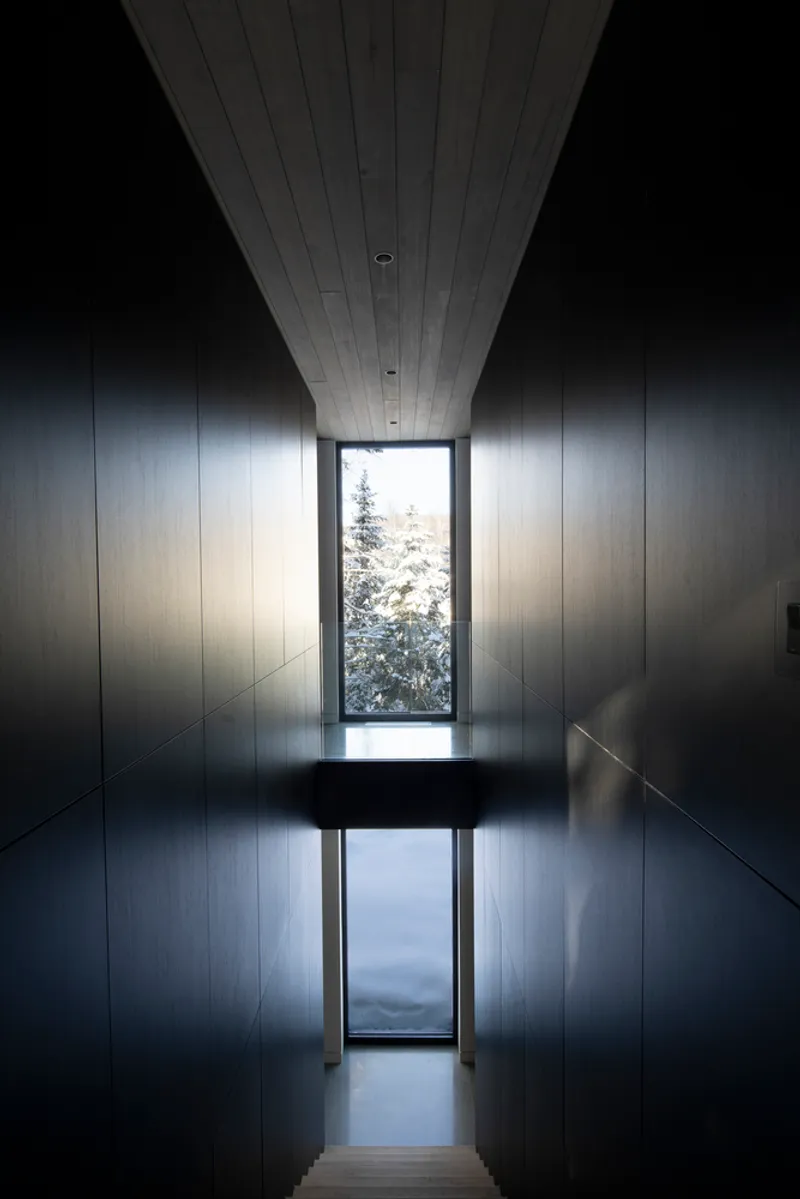
Thermal Comfort: A high-performance wood-burning fireplace (likely the Stuv unit mentioned in the manufacturer list) provides supplementary heating while creating the psychological warmth and visual pleasure of fire—particularly important in a wilderness retreat where connection to elemental forces enhances experience.
Visual Anchor: The fireplace mass creates a focal point that organizes the composition, giving the eye a place to rest and providing a counterpoint to the expansive views that might otherwise overwhelm interior spaces.
Social Gathering: Fireplaces naturally attract people, creating informal gathering spaces where family and guests congregate for conversation and shared experience.
Kitchen and Dining
The kitchen and dining area occupy the more active zone of the living level—where food preparation, dining, and social gathering create natural activity and sound. Positioning these functions separate from the living room allows simultaneous use without conflict: children can eat and play while adults converse; meal preparation can proceed while guests relax; different groups can occupy different zones according to preference.
The Fisher & Paykel appliances suggest high-quality kitchen appointments appropriate to a family that values cooking and entertaining. The kitchen likely features ample workspace, storage, and connectivity to outdoor dining areas for warm-weather entertaining.
Wooden Ceilings: Warmth and Grounding
Wooden ceilings introduce warmth and a sense of grounding to interior spaces that might otherwise feel too crisp or minimal. The wood provides:
Acoustic Absorption: Wood surfaces absorb sound more effectively than hard plaster or concrete, creating quieter, more comfortable acoustic environments.
Thermal Perception: Wood feels warmer than other materials—both actually (higher surface temperature than masonry or metal) and psychologically (cultural associations with warmth and nature).
Visual Interest: Wood grain provides organic texture and pattern that prevents minimalist interiors from feeling sterile while maintaining overall aesthetic restraint.
Regional Connection: Wooden interior finishes connect to Quebec building traditions where timber was primary construction material, creating material continuity with architectural heritage.
The wooden ceilings demonstrate how thoughtful material deployment can introduce warmth and character without undermining the overall restraint that allows architecture to recede and nature to dominate.
Upper Floor: Openness and Connection
The upper floor—likely the main living level given typical Laurentian site conditions where buildings often step down hillsides—emphasizes openness and connection to landscape. The expanding openings strategy reaches its culmination here, with generous glazing providing commanding views of lake and forest.
Spatial Character
The upper floor's openness reflects its public/social function. Living rooms, dining areas, and kitchens benefit from generous space, abundant light, and strong landscape connections. The open plan facilitates social gathering, allows multiple activities to occur simultaneously, and creates the impression of expansive space despite the building's modest overall dimensions.
Covered Terrace Extension
The design creates the impression that common areas extend toward the covered terrace of the third volume—blurring boundaries between inside and outside, between conditioned and unconditioned space. This extension is both visual and functional:
Visual: Sightlines from interior spaces look through toward terraces, creating apparent spatial continuity.
Functional: Doors open to connect interior and terrace, allowing seamless flow during pleasant weather and enabling terraces to function as outdoor rooms.
The covered terrace provides essential outdoor living space that extends the house's usable area while maintaining weather protection. In Quebec's climate, covered outdoor spaces offer crucial middle ground—accessible during light rain, providing shade during hot summer days, and offering sheltered spots for three-season use.
Garden Level: Retreat and Envelopment
Contrasting Character
In deliberate contrast to the upper floor's openness, the garden level—likely the lower level stepping down the hillside toward the lake—is conceived as a single volume dedicated to retreat. This programmatic and spatial differentiation reflects sophisticated understanding of domestic life's varied requirements.
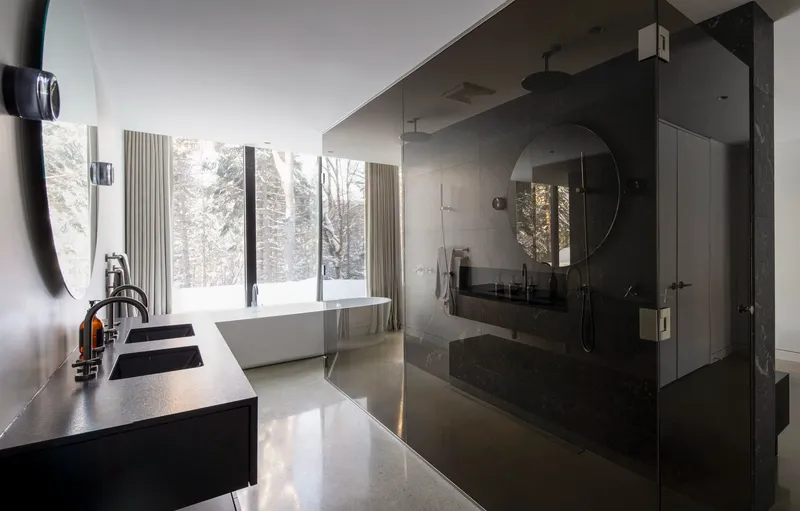
Where the upper floor serves social gathering, the garden level provides private refuge. Where the upper floor opens expansively to views, the garden level offers intimate enclosure. Where the upper floor emphasizes brightness and visual connection, the garden level creates calming atmosphere through darker tones and enveloping finishes.
Darker Tones and Enveloping Finishes
The intentional use of darker tones—deep grays, rich browns, muted charcoals—creates psychological effects distinct from the lighter upper floor:
Calming Atmosphere: Dark colors create cocoon-like environments conducive to rest, contemplation, and privacy.
Visual Warmth: Despite being literally darker, deep tones can feel warm and embracing rather than cold and forbidding when properly executed.
Reduced Visual Stimulation: Darker surfaces reduce reflectivity and visual contrast, creating quieter environments that facilitate relaxation.
Intimate Scale: Dark colors make spaces feel smaller and more enclosed—often liability but here deliberate strategy to create protected retreat character.
Enveloping finishes—continuous surfaces that wrap spaces without interruption—reinforce the sense of enclosure and protection. Rather than articulated walls with multiple materials and trim details, enveloping finishes create seamless environments that embrace occupants.
Carefully Placed Openings
While darker and more enclosed than the upper floor, the garden level is not windowless bunker. Carefully placed openings invite nature to flow into these intimate spaces—but selectively, focusing attention on specific views and natural phenomena rather than creating undifferentiated openness.
These strategic openings might include:
Ground-Level Views: Low windows looking into forest floor rather than expansive vistas, creating intimate connection with immediate landscape.
Skylights: Overhead natural light that illuminates without compromising wall-based privacy or creating glare from bright views.
Clerestory Windows: High windows that admit light while maintaining privacy and focusing views upward toward tree canopies and sky.
Courtyard Connections: Private courtyards carved into the sloping site provide secure outdoor spaces and natural light sources for basement-level rooms.
Material Strategy: Extending Landscape Indoors
Material as Mediator
The choice of materials extends the surrounding landscape indoors—a strategy that blurs boundaries between building and site while creating sensory connections to place. Rather than using materials that contrast sharply with the natural setting, DKA selected materials that echo landscape colors, textures, and tones:
Wood: References the surrounding forest while bringing organic texture, warmth, and familiar material into interior spaces.
Stone: Likely local or regional stone references the Pre-Cambrian bedrock underlying the site, creating direct material connection to landscape geology. Stone Tile mentioned in manufacturer list suggests stone applications in floors or accent walls.
Earth Tones: Color palette derived from landscape—grays of granite, browns of tree bark and soil, greens of vegetation—creates chromatic continuity between exterior and interior.
Animated by Natural Light
A crucial aspect of the material strategy involves how surfaces respond to changing natural light throughout the day:
Tonal Shifts: Materials that appear one color in morning light look different in afternoon light and different still in overcast conditions, creating dynamic interior environments that change continuously.
Revealing Movement: Shadows cast by moving tree branches, ripples of light reflected from water, the slow arc of sun across sky—all these natural phenomena animate interior surfaces, revealing the movement of nature through shadow and reflection.
Temporal Connection: The changing quality of interior light connects occupants to daily and seasonal cycles, maintaining awareness of natural phenomena even when inside.
This attention to how materials behave under natural light demonstrates sophisticated understanding that architecture is not static composition but dynamic environment whose character shifts continuously in response to natural phenomena.
Sustainability Through Site Sensitivity
Environmental Strategy
While the project description doesn't foreground environmental performance metrics, the design embodies sustainable principles through fundamental architectural strategies:
Minimal Site Disruption: Preserving existing vegetation and minimizing grading reduces environmental impact, maintains ecosystem function, and prevents erosion.
Compact Form: The simple gabled volumes minimize surface-area-to-volume ratio, reducing heat loss in winter and heat gain in summer.
Natural Ventilation: The openings between volumes enable cross-ventilation that reduces mechanical cooling needs during warm weather.
Passive Solar Design: The orientation toward the lake presumably optimizes solar exposure for passive heating while overhangs and strategic glazing prevent overheating.
Durable Materials: Wood, stone, and metal offer longevity with appropriate maintenance, reducing lifecycle impacts through extended service life.
Local Materials: Using regional materials (Maibec siding, likely Quebec-sourced stone) reduces transportation impacts while supporting local economies.
All the Photographs are works of Maxime Bourgault, Josee Marino


Popular Articles
Popular articles from the community


Jaramillo Van Sluys Arquitectura and Urbanismo Turn a Demolished Registry Lot in Quito into an Orchard Plaza
In Quito's Centro Histórico, a 2,800 m² plaza exposes the San Agustín convent wall and redraws its lost Augustinian orchard in volcanic stone.

Juan García Correa, John González and Claudia Rueda Sink a Circular Amphitheater into a Manizales Engineering Building
On the La Nubia campus in Manizales, Colombia, the S1 Building folds labs and offices into a hillside of ramped lawns that double as a campus route.

Architekt Andreas Gruber Scatters 23 Dark Timber Chalets Across a South Tyrolean Forest Edge
In Molini di Tures, Amonti Chalets breaks a resort into a hamlet of gabled timber houses, with parking, storage and services pushed into the slope.

Cube Design Draws an Ecological Corridor Between Two Shenzhen Hills with the Nankai Building
Beside Shenzhen's container docks, the Nankai Building pairs stacked balconies with a climbing green screen to connect two hillsides across its height.

Similar Reads
You might also enjoy these articles


Hodi-Mandai Geram
Project Function: Preservation and revitalization of the Intangible heritage and socio-spatial identity of the Hodi by Housing, Cultural Memory Center, Sacred Grove, landscape, local tourism economy


Olio Towers: A Mid-Rise for Performers That Fuses Housing, Rehearsal, and Stage
Located blocks from Houston's Theater District, this modular tower stacks living units around a central performance atrium.

Oasis: Modular Green Housing Carved into Dhaka's Urban Fabric
A shortlisted Plugin Housing entry reclaims unauthorized settlements in Dhaka with stepped concrete volumes, green roofs, and ventilation-driven design.

Black Hole: A Floating Megastructure for the Post-Physical Era
Emiliano Mazzarotto envisions a spherical, self-scaling arena where e-sports, digital hotels, and holographic stadiums replace traditional public space.

Explore Quebec Retreats Competitions
Discover active competitions in this discipline

Challenge to reimagine the Iron Throne

Photograph architecture without architects

Illustrate the lost glory of Angkor Wat - Render Challenge

Design challenge to reuse E-waste
Comments (0)
Please login or sign up to add comments
No comments yet. Be the first to comment!