
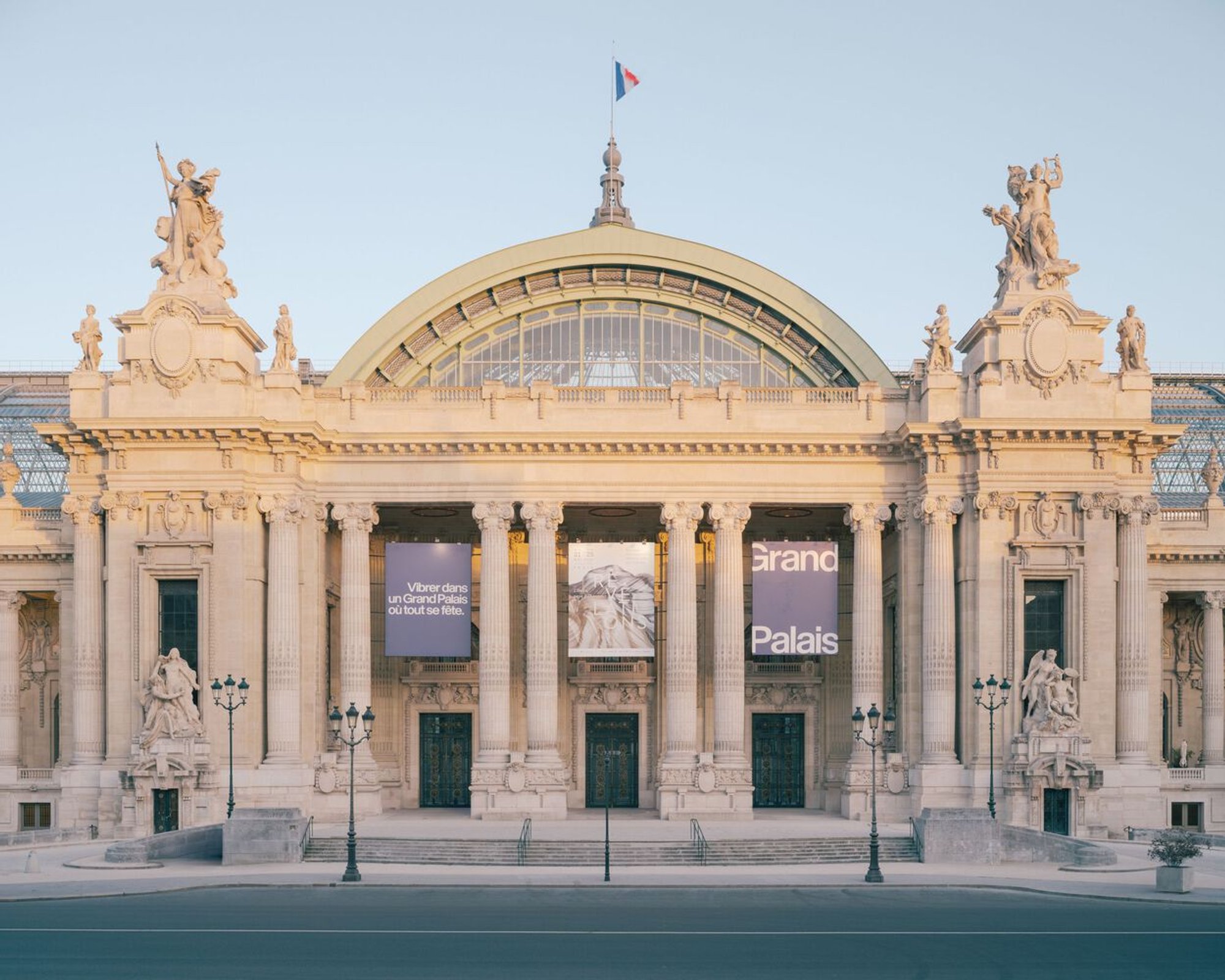
Le Grand Palais Renovation by Chatillon Architectes Revitalizes a Parisian Icon
Le Grand Palais renovation restores historic grandeur, improves accessibility, enhances circulation, and reconnects Parisian landmark with city, gardens, and contemporary cultural life.

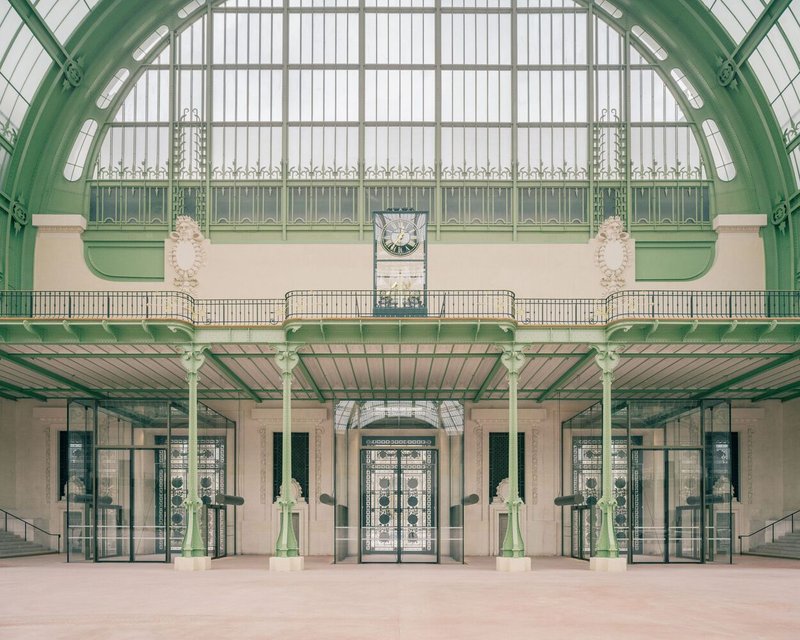
The renovation of the Grand Palais in Paris by Chatillon Architectes marks one of the most significant heritage restoration projects in contemporary French architecture. Originally constructed for the 1900 Universal Exhibition, the Grand Palais was conceived as a temporary Beaux-Arts structure yet evolved into one of Paris’s most enduring cultural landmarks. Nestled between the Champs-Élysées and the Seine, the building has long symbolized artistic excellence, innovation, and national pride. The ambitious restoration, initiated in 2021 and scheduled for full completion in 2025, repositions the Grand Palais as a fully accessible, sustainable, and future-ready public monument.
Over more than a century of continuous use, the Grand Palais became the primary international stage for French cultural life, hosting world-renowned exhibitions, artistic events, and public gatherings. However, decades of fragmented interventions, spatial closures, and deferred maintenance gradually compromised its architectural coherence and public accessibility. Certain areas were closed entirely, circulation became confusing, and the building’s original spatial logic was obscured. At one point in its history, the monument even faced the threat of demolition, highlighting the urgency of a comprehensive and respectful restoration strategy.
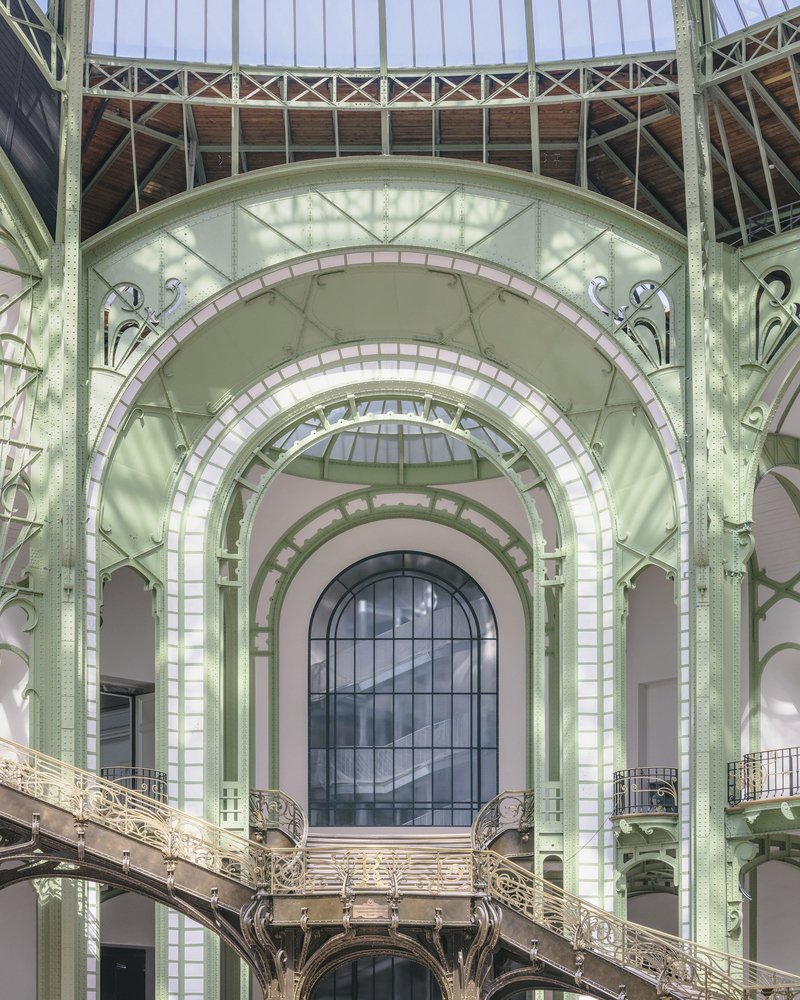
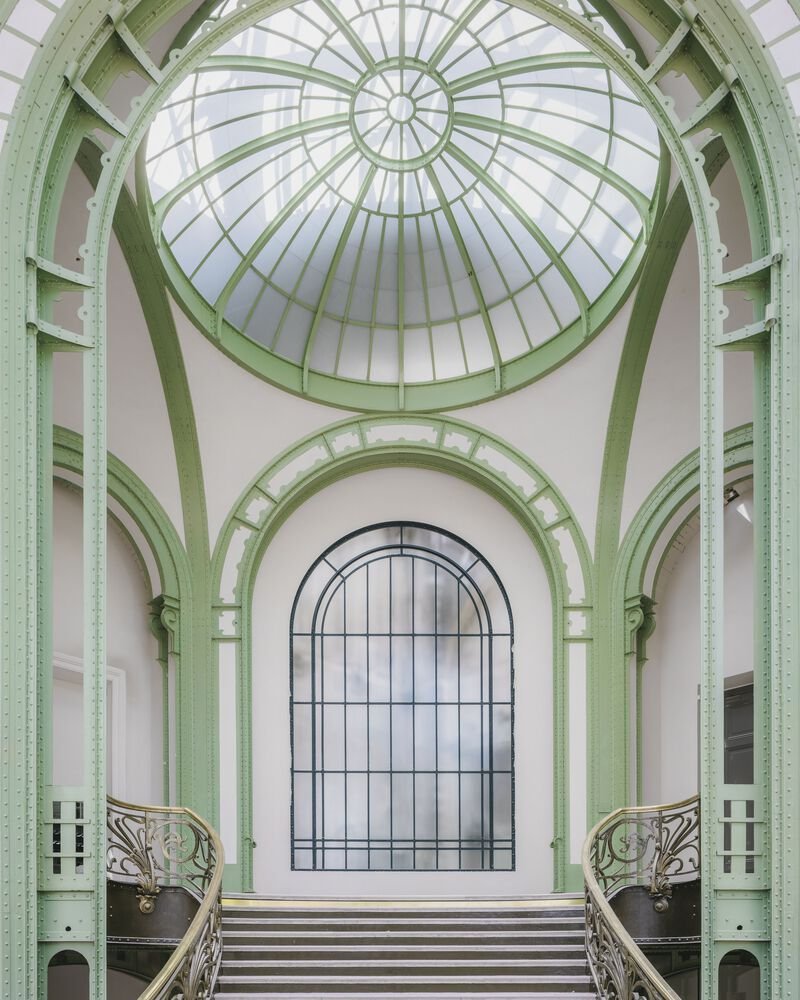
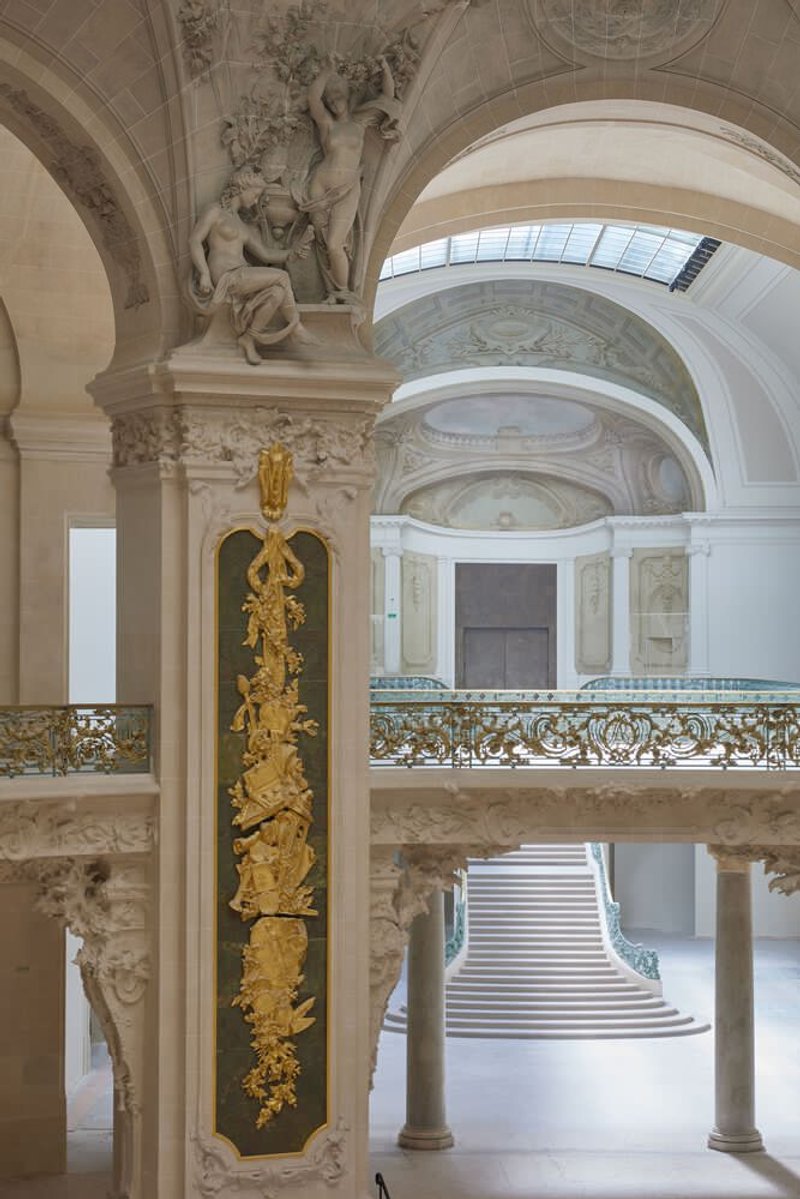
Chatillon Architectes, widely recognized for their expertise in transforming historic structures, approached the renovation with a deep respect for the building’s heritage while addressing contemporary demands. The project prioritizes public accessibility, enhanced natural daylight, spatial clarity, and reconnection with the surrounding urban fabric. According to François Chatillon, founder of the practice, the renovation represents more than a technical upgrade; it is an opportunity to return the Grand Palais to its fundamental role as a civic and cultural space, adaptable for major international events such as the Olympic Games and for generations to come.
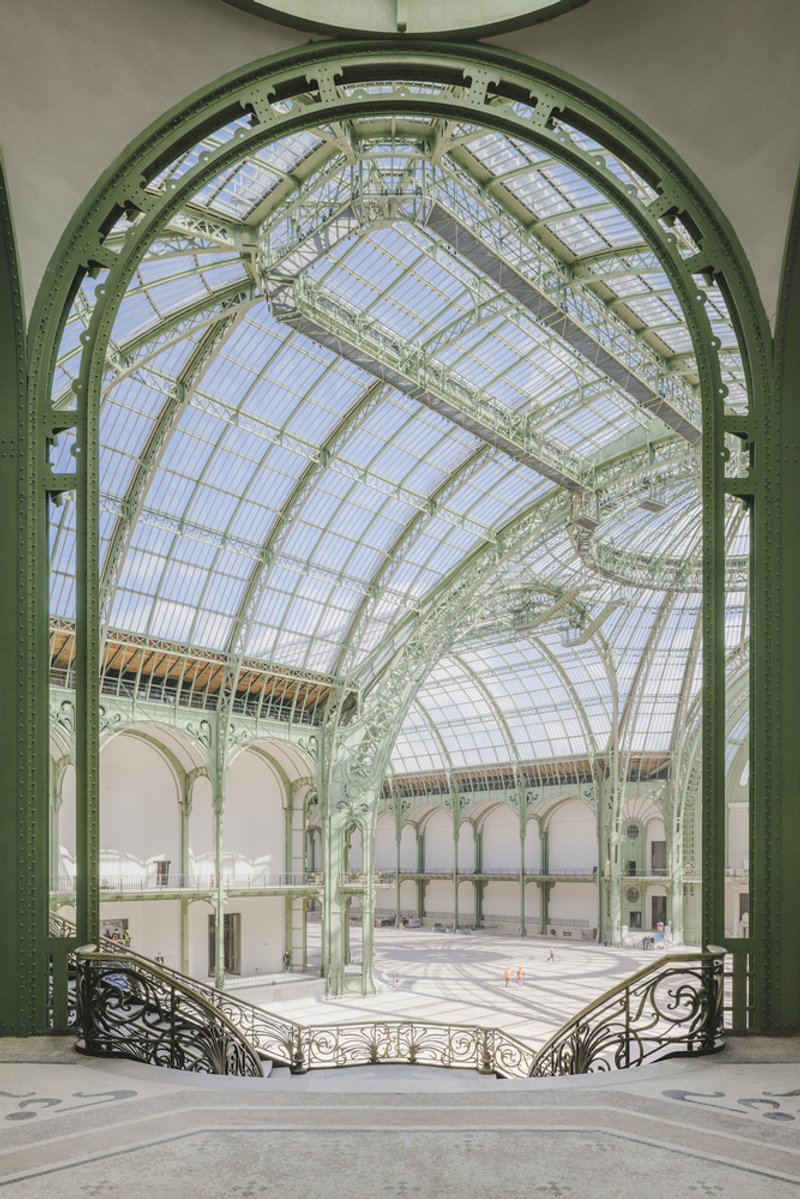
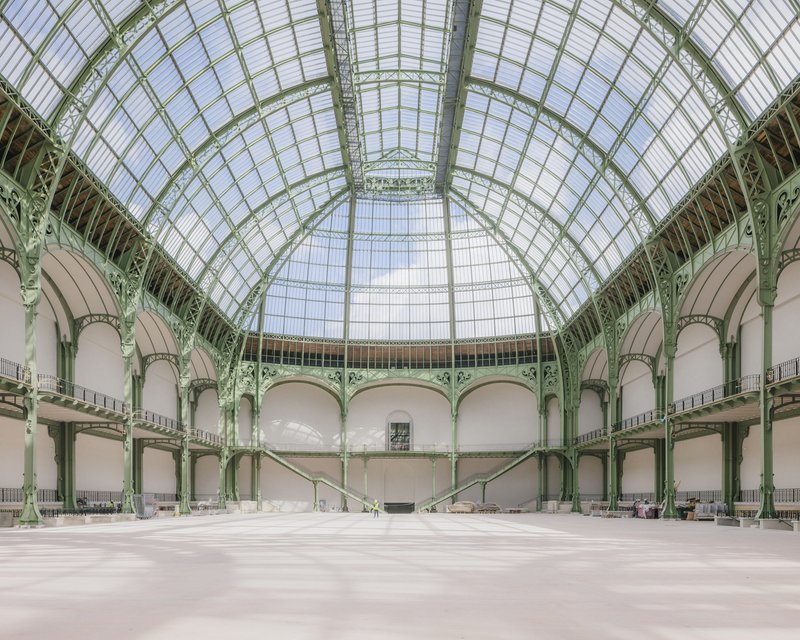
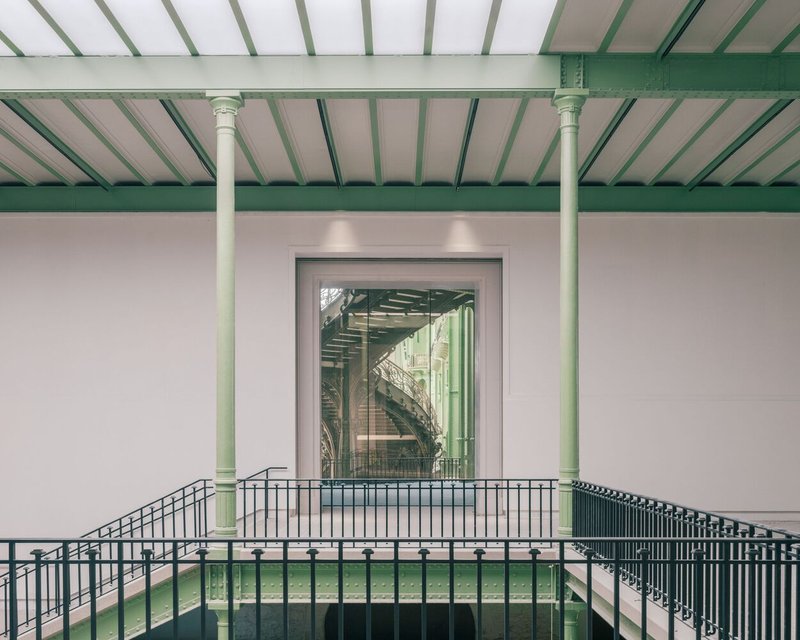
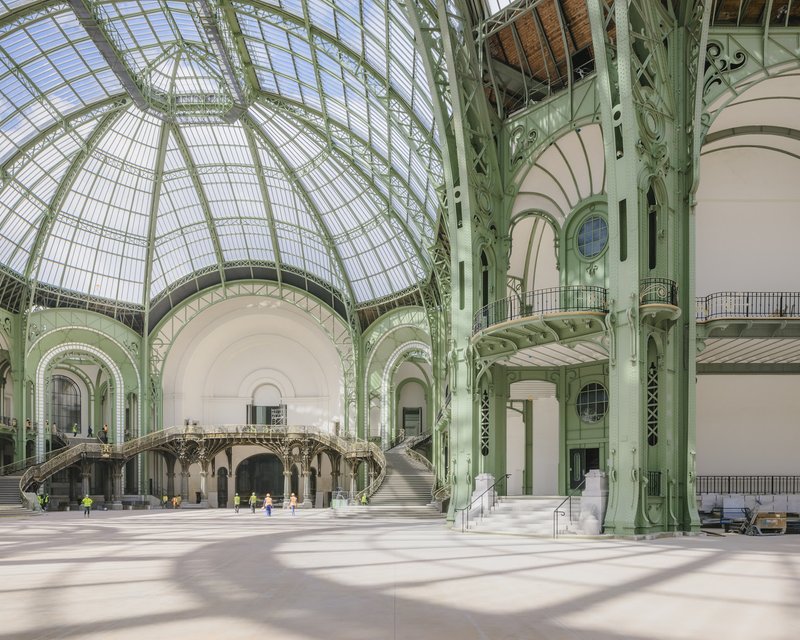
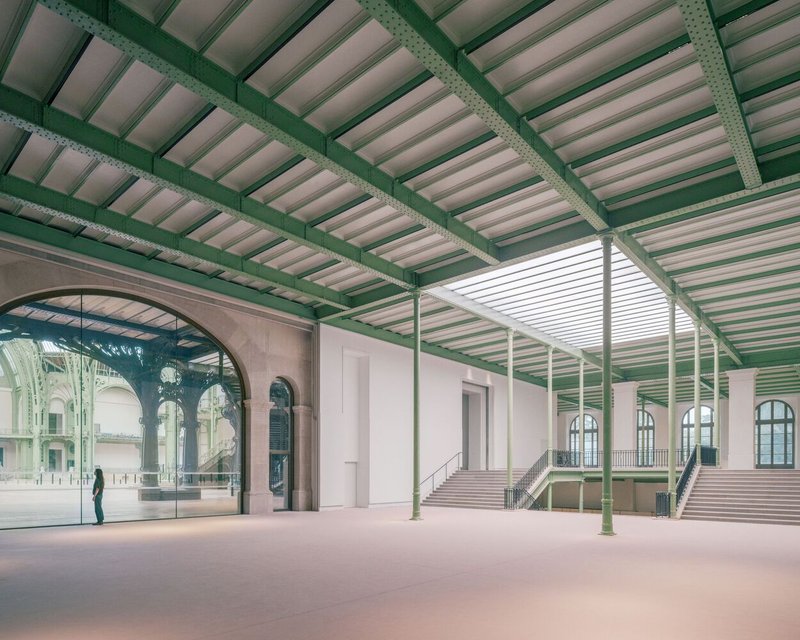
The renovation is the first major intervention of this scale in the Grand Palais’s history. Thousands of archival drawings, photographs, and documents informed the design process, allowing the architects to restore original intentions while correcting decades of spatial fragmentation. A central objective was to re-establish unity across the building’s vast and diverse interiors. As a result, the project significantly improves visitor orientation, increases overall capacity, and enhances safety standards. Notably, the iconic Nef now accommodates approximately 60 percent more visitors, reinforcing its role as a monumental event space.
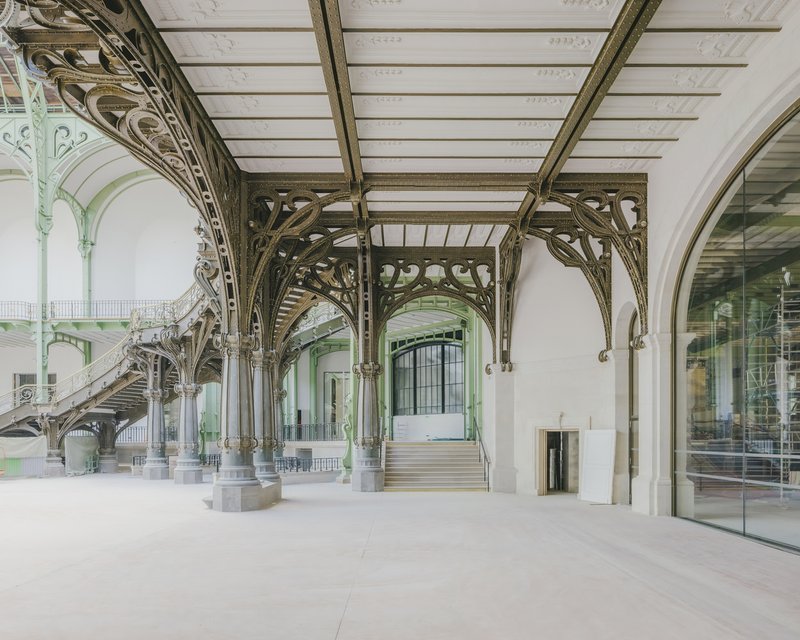
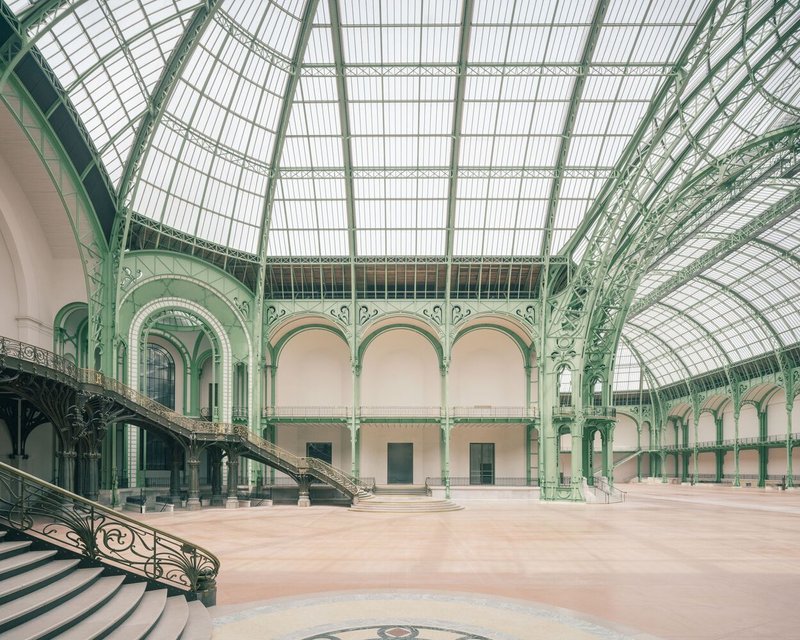
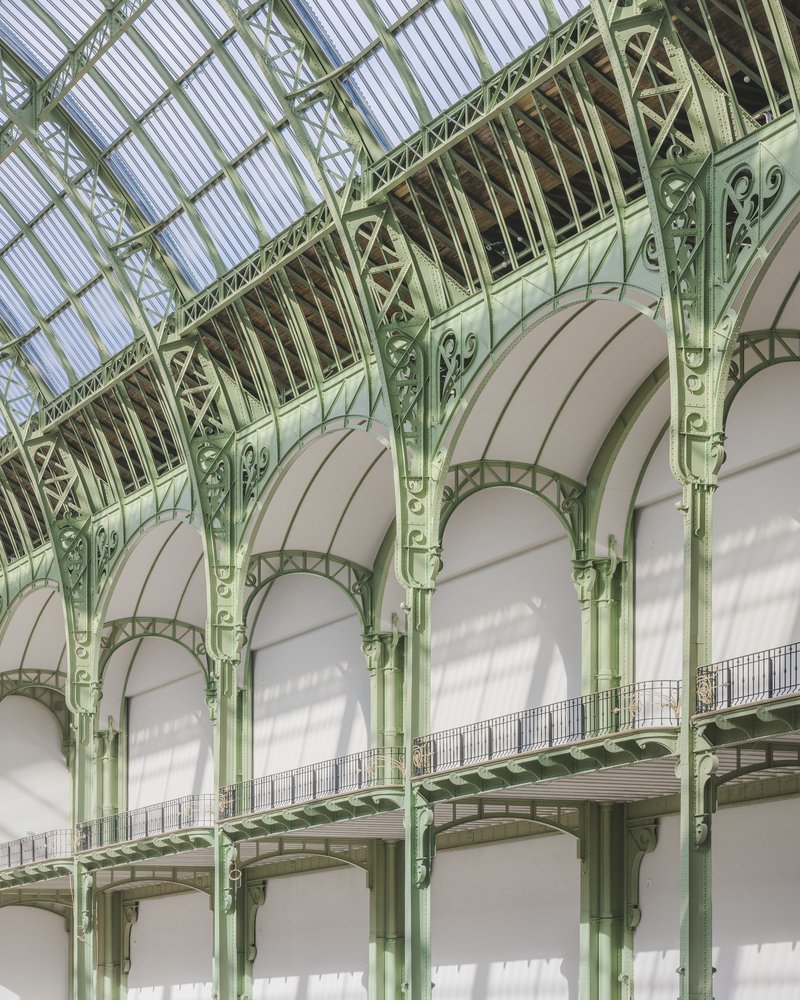
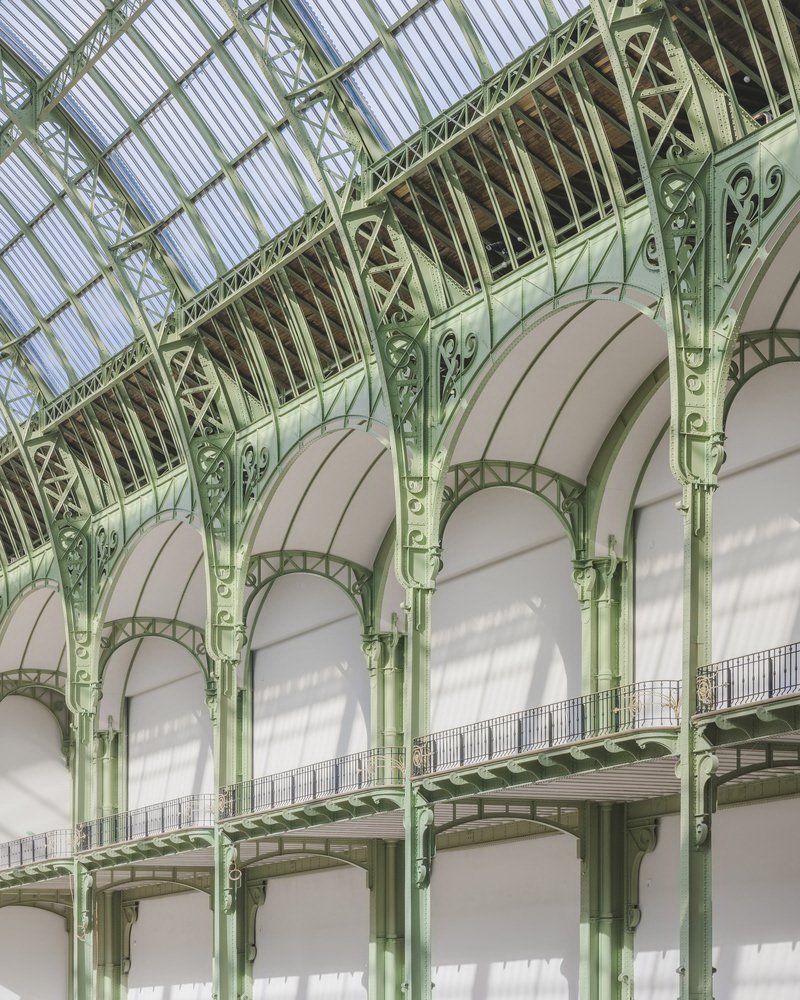
A defining feature of the renovation is the creation of new spatial connections between the Grand Palais’s three principal areas. Improved circulation routes and new visitor services allow for a continuous interior journey that reconnects previously isolated zones. A new public interior walk links Square Jean Perrin to the Seine, passing through the central square and connecting the Palais d’Antin with the Nave. This fluid sequence enables visitors to rediscover historic architectural elements while experiencing the building as a coherent whole.
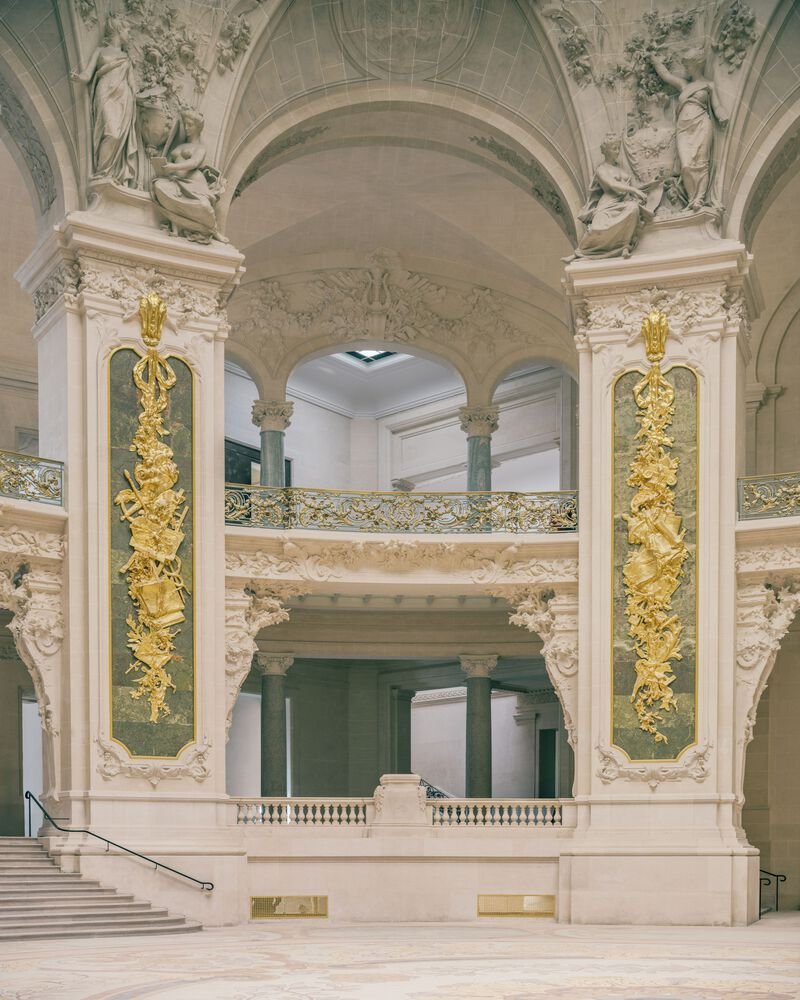
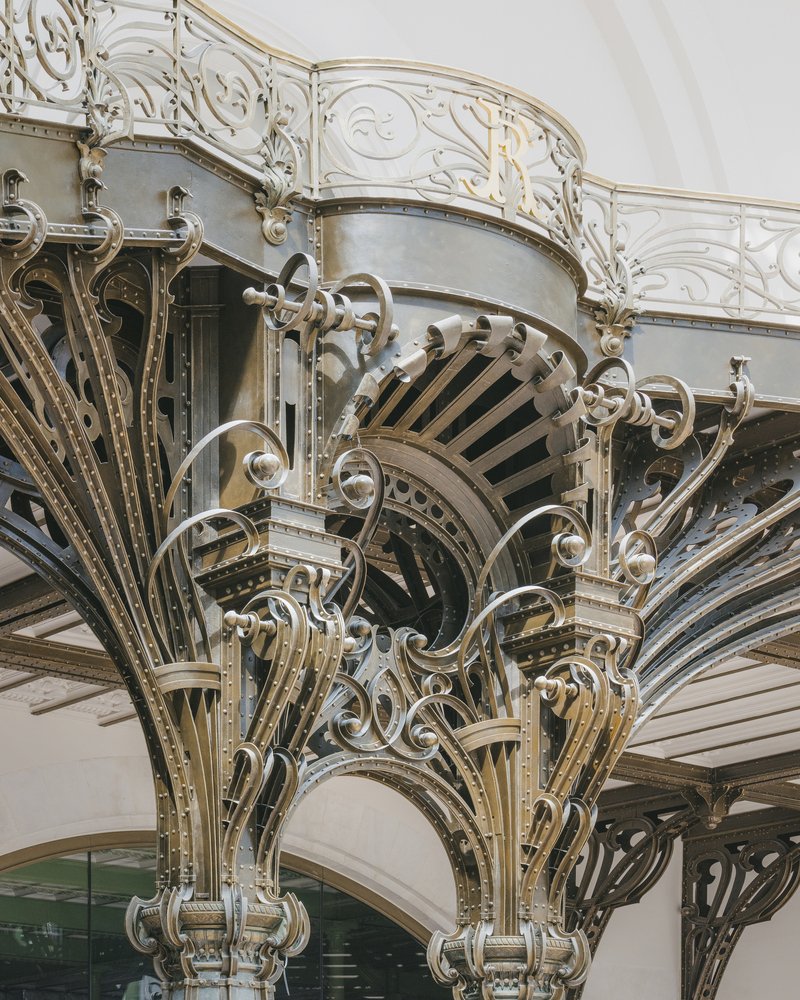
The restoration also brings renewed attention to the Nef’s surrounding balconies, which incorporate some of the earliest known cantilevered structures in architectural history. These elements have been carefully reinforced and restored, allowing public access once again and offering elevated viewpoints across the monumental interior. Their reintegration not only enhances visitor experience but also highlights the building’s pioneering structural innovations.
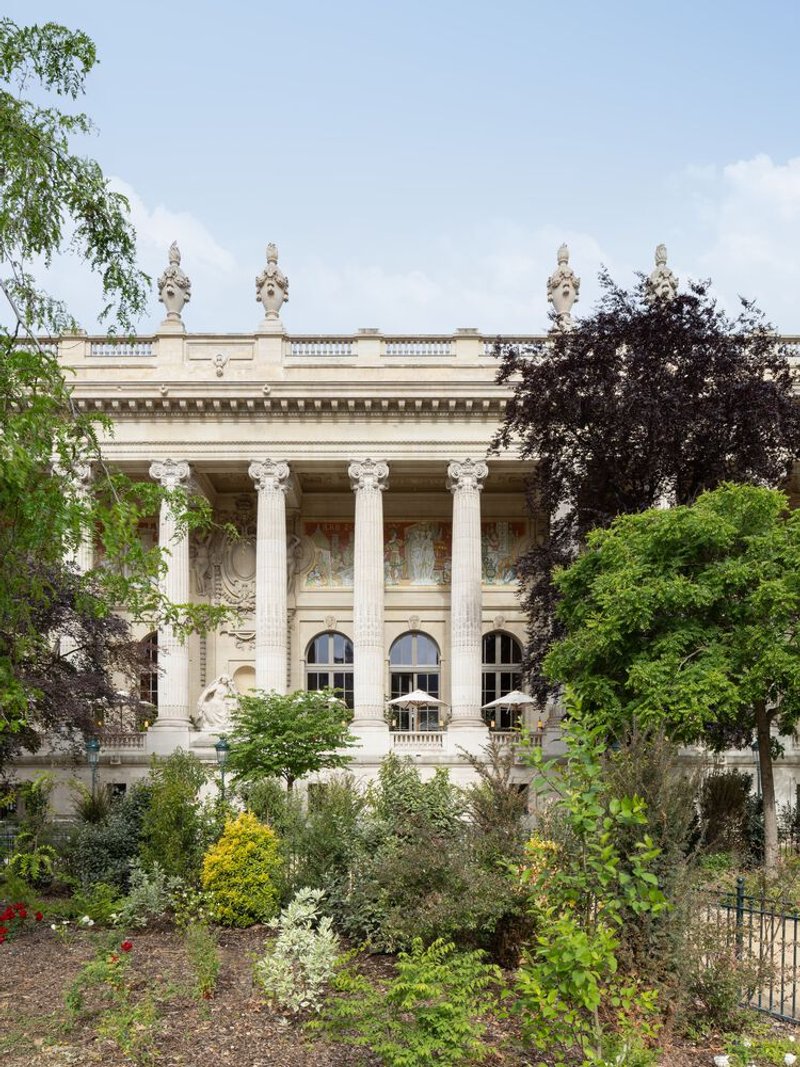
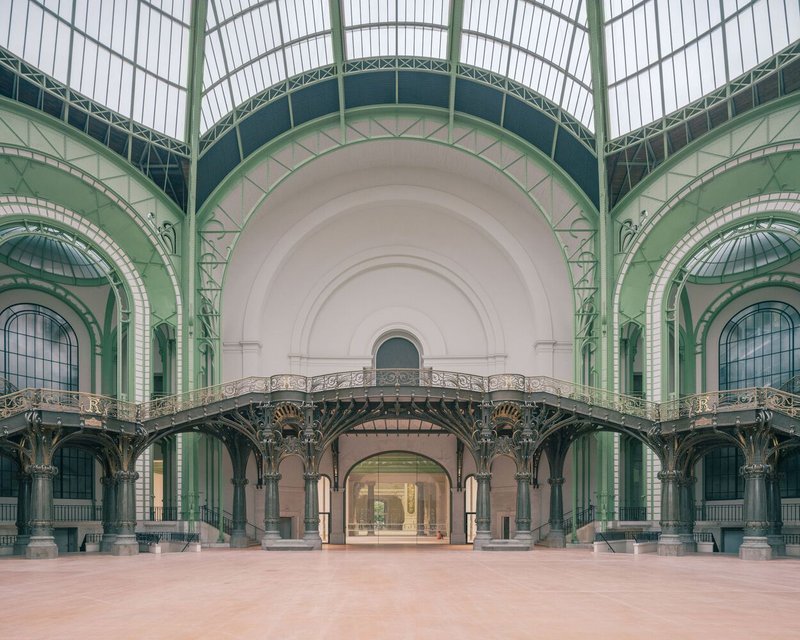
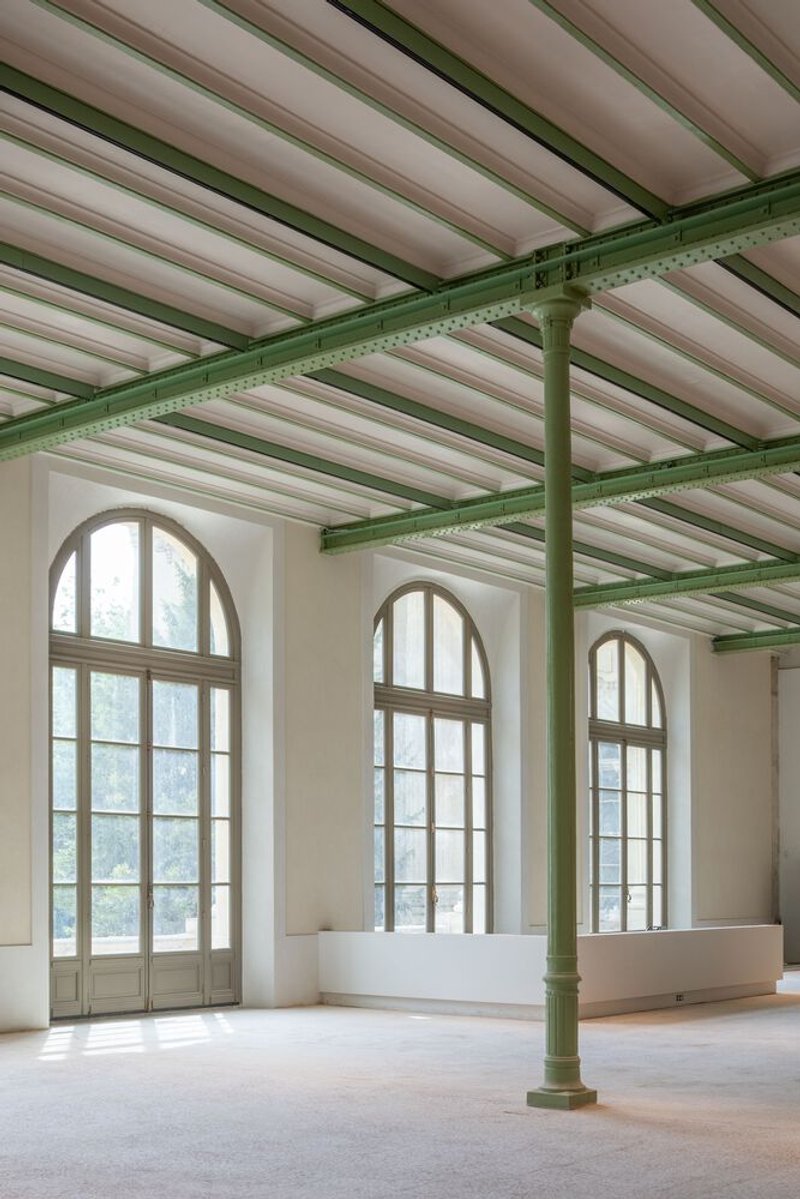
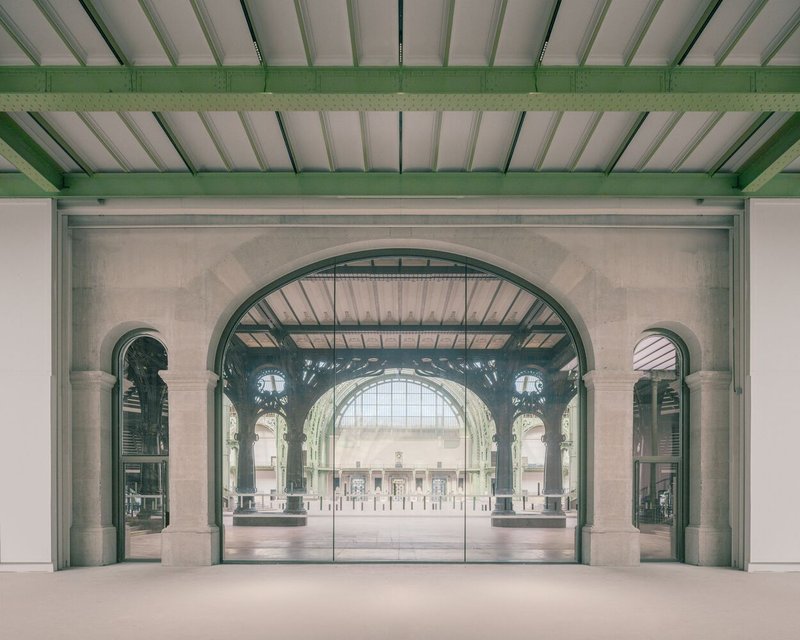
To restore clarity and openness, Chatillon Architectes removed numerous ad hoc partitions added throughout the twentieth century. The reinstatement of the original central axis is particularly transformative, reconnecting the main nave with the Palais de la Découverte and reopening a historic view from the Rotunda unseen since 1939. This gesture restores the Grand Palais’s original spatial hierarchy while strengthening its visual and physical connection to neighboring landmarks such as the Petit Palais and the Champs-Élysées.
Beyond the building itself, the project extends into the surrounding landscape with the creation of new public gardens inspired by the historic Champs-Élysées gardens. Curved paths, lawns, and richly planted beds establish a soft transition between architecture and city. More than 250 plant species and over 60,000 individual plants contribute to biodiversity, while rainwater harvested from the roof irrigates the new lawns. The landscape strategy emphasizes ecological responsibility, local plant species from the Paris basin, and support for urban pollination.
Sustainability is a central pillar of the Grand Palais renovation. The project integrates modern technical systems, energy-efficient solutions, and responsible management practices while respecting the building’s cultural and architectural significance. Through this careful balance, Chatillon Architectes ensures the monument’s longevity without compromising its historic identity.
All photographs are work of Laurent Kronental, Charly Broyez, Antoine Mercusot



Popular Articles
Popular articles from the community

Louis Malle Cinema: A Limestone Cultural Landmark Revitalizing Community Life in Prayssac
Limestone cinema extension with public forecourt, blending heritage and modern design to create flexible cultural spaces and strengthen community interaction.
Treehouse Apartment: A Warm Timber Interior Blending Craft, Play, and Contemporary Living
Warm timber apartment with integrated treehouse, combining natural materials, craftsmanship, and playful design to create a flexible, family-oriented living environment.
Inverted Architecture Installation by Studio Link-Arc: Exploring the Intersection of Architecture and Living Organisms
Inverted Architecture Installation by Studio Link-Arc blends mycelium, sustainability, inverted design, ecological cycles, and urban adaptive architecture in Shenzhen.
On the Brooks House by Monsoon Collective – A Contemporary Kerala Home Rooted in Tradition
Kerala home blending tradition and modernity with water-inspired design, brick architecture, courtyard planning, and sustainable rainwater harvesting strategies.

Similar Reads
You might also enjoy these articles


The Ken Roberts Memorial Delineation Competition (Krob)
As the most senior architectural drawing competition currently in operation anywhere in the world, it draws hundreds of entries each year, awarding the very best submissions in a series of medium-based categories.

Waterfront Redevelopment and Urban Revitalization in Mumbai: Forging a New Dawn for Darukhana
A transformative waterfront redevelopment project reimagining Darukhana’s shipbreaking heritage into an inclusive urban future.

OUT-OF-MAP: A Call for Postcards on Feminist Narratives of Public Space
Rhizoma Design and Research Lab invites artists, designers, architects, researchers, and students to reflect on how feminist perspectives can reshape public space. Selected works will be exhibited in Barcelona, October 2026. Submissions open until 15 April 2026.

Documentation Work on Buddhist Wooden Temple
Architectural syncretism and cultural hybridity: A comparative study of the Buddhist temples in Chattogram Hill tracks


Explore Architecture Competitions
Discover active competitions in this discipline




The International Standard for Design Portfolios


The Global Benchmark for Architecture Dissertation Awards


The Global Benchmark for Graduation Excellence


Challenge to design an urban locus of culture and heritage
Comments (0)
Please login or sign up to add comments
No comments yet. Be the first to comment!