
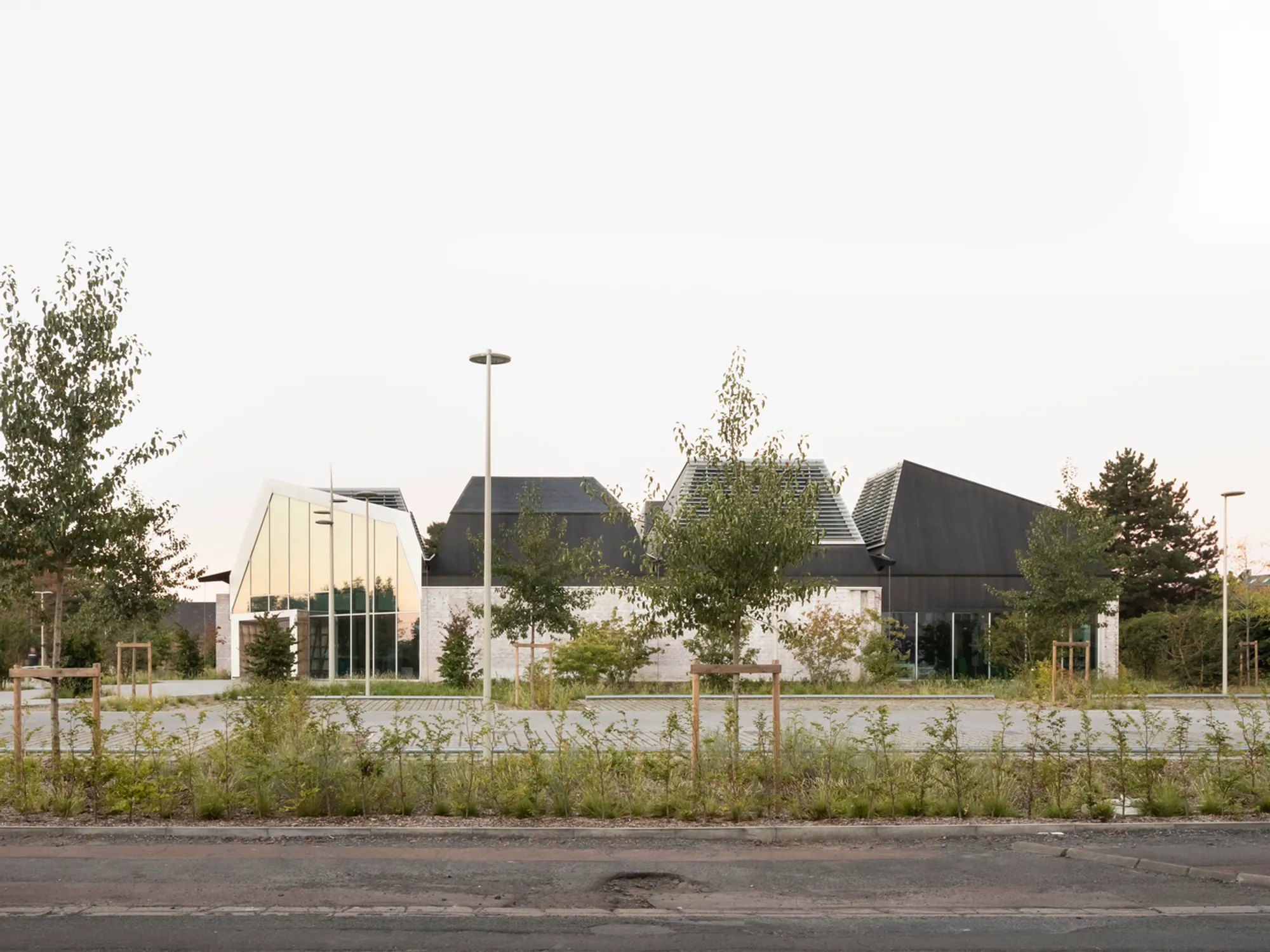
Les Halles Building – From Commercial Hub to Cultural Landmark
Les Halles transforms from commercial space into a light-filled media library and multifunctional hub, blending adaptive reuse, community engagement, and cultural identity.


Media Library & Multifunctional Space by Zita! Damien Guiot Architectes + Urbanistes
In the heart of Courcelles-lès-Lens, France, the Les Halles Building has undergone a remarkable transformation — evolving from a retail-focused “temple of consumption” into a vibrant “cathedral of culture.” Designed by Zita! Damien Guiot Architectes + Urbanistes in collaboration with Leblanc-Venacque for landscape architecture and Bollinger+Grohmann GmbH for structural engineering, this 1,120 m² rehabilitation project redefines how communities experience public architecture.
From Retail Shell to Civic Soul
The existing commercial structure offered two unique advantages — a vast, open floor plan and freedom from load-bearing constraints. Rather than demolishing these qualities, the architects embraced them, preserving the lower slab and select masonry walls. Within this structural frame, they developed a new architectural identity — one that merges openness with cultural purpose.
A Distinctive Roofscape: The Shell System
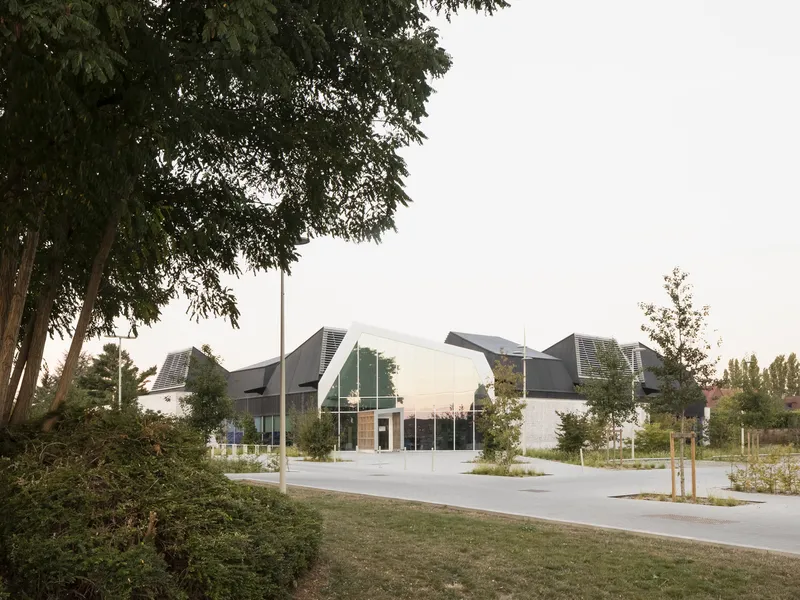
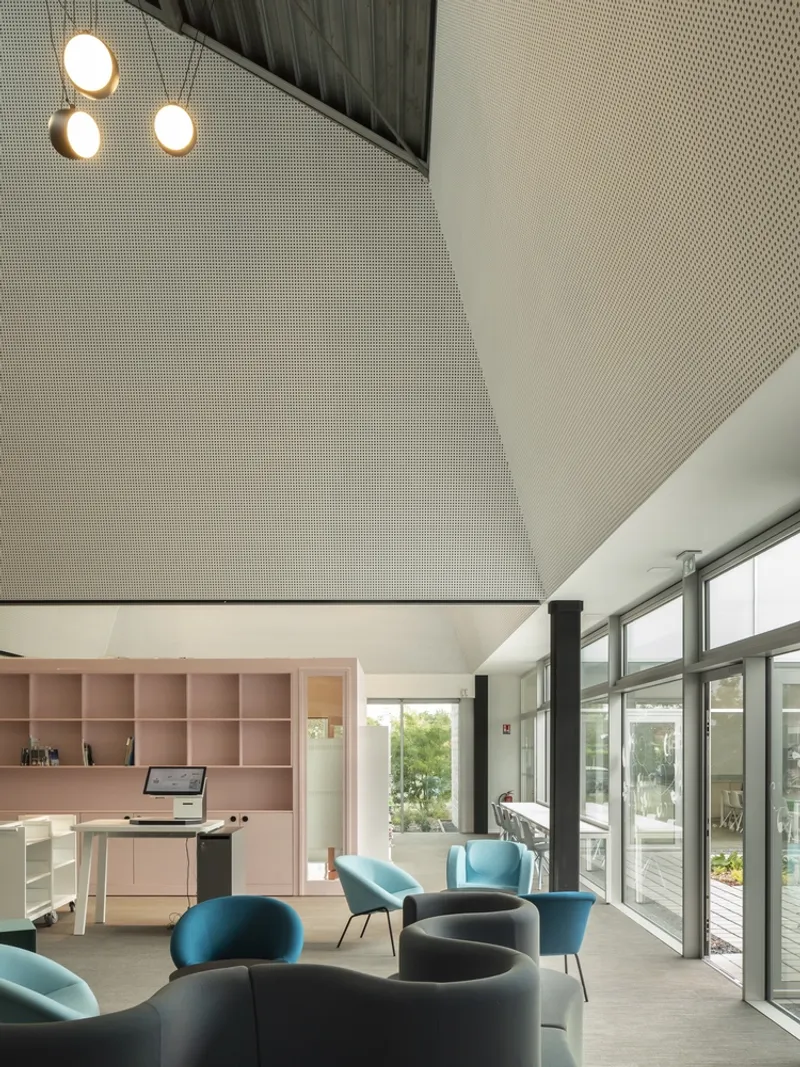
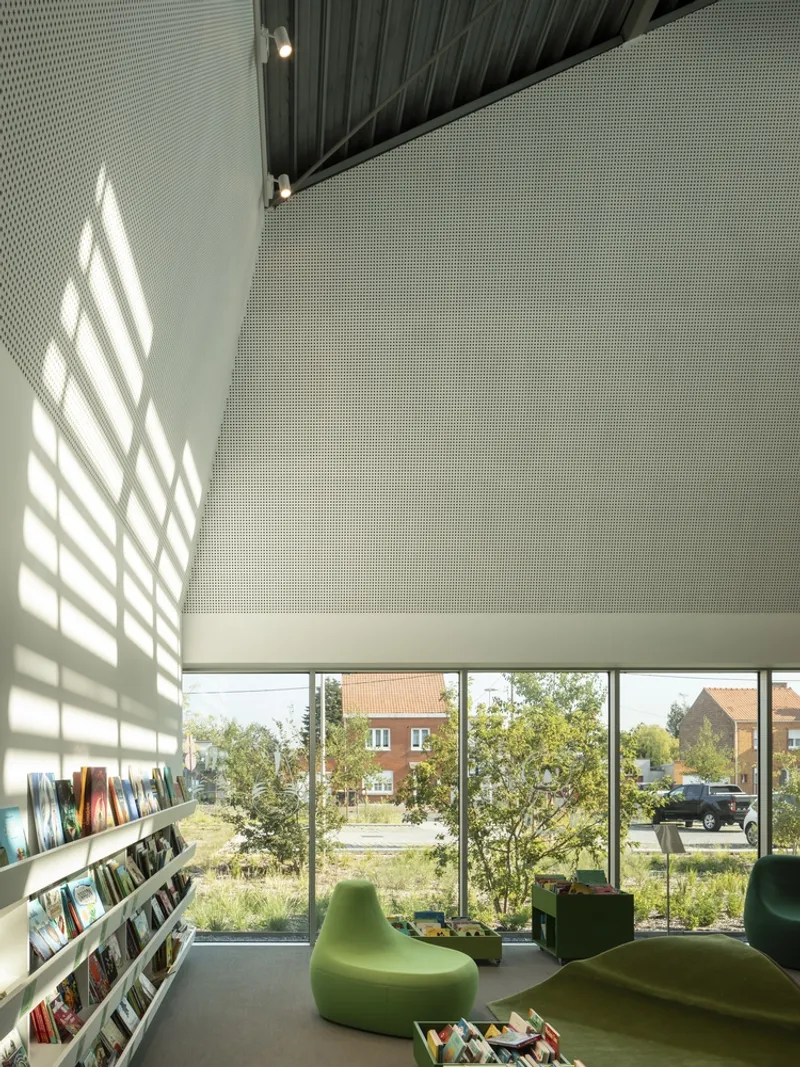
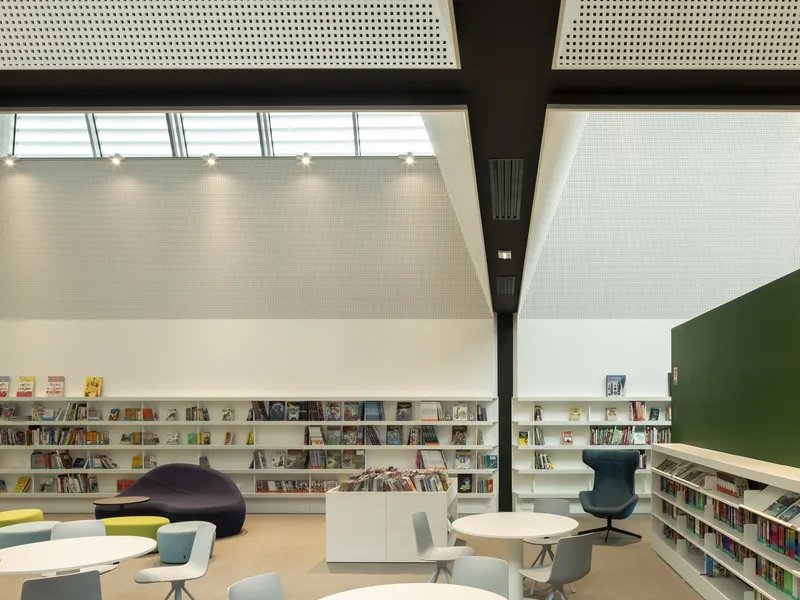
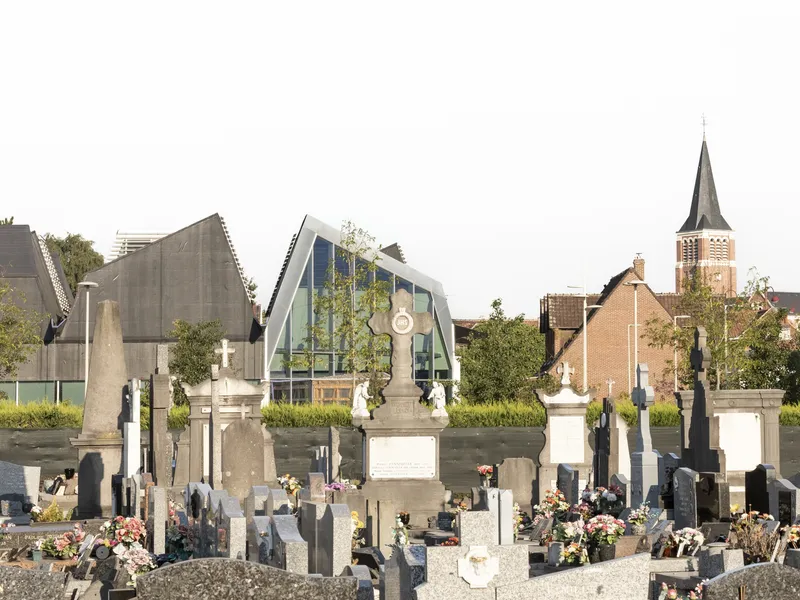
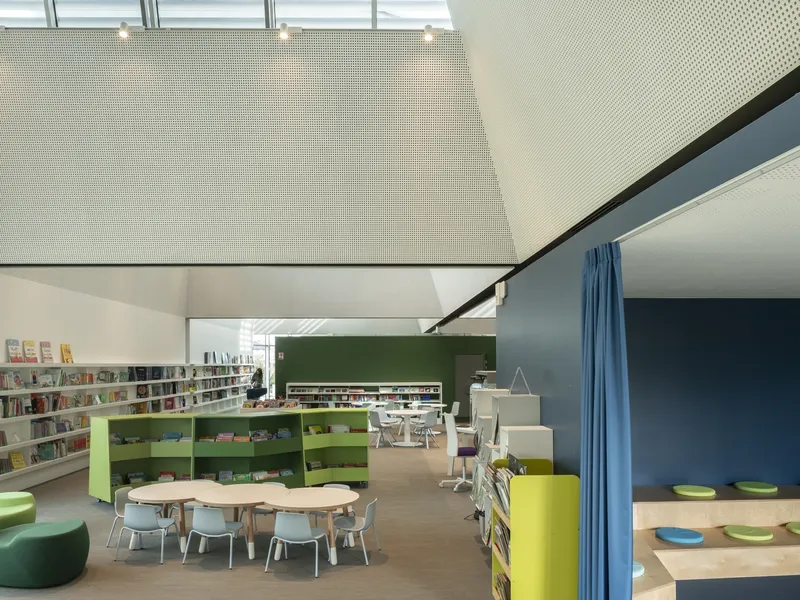
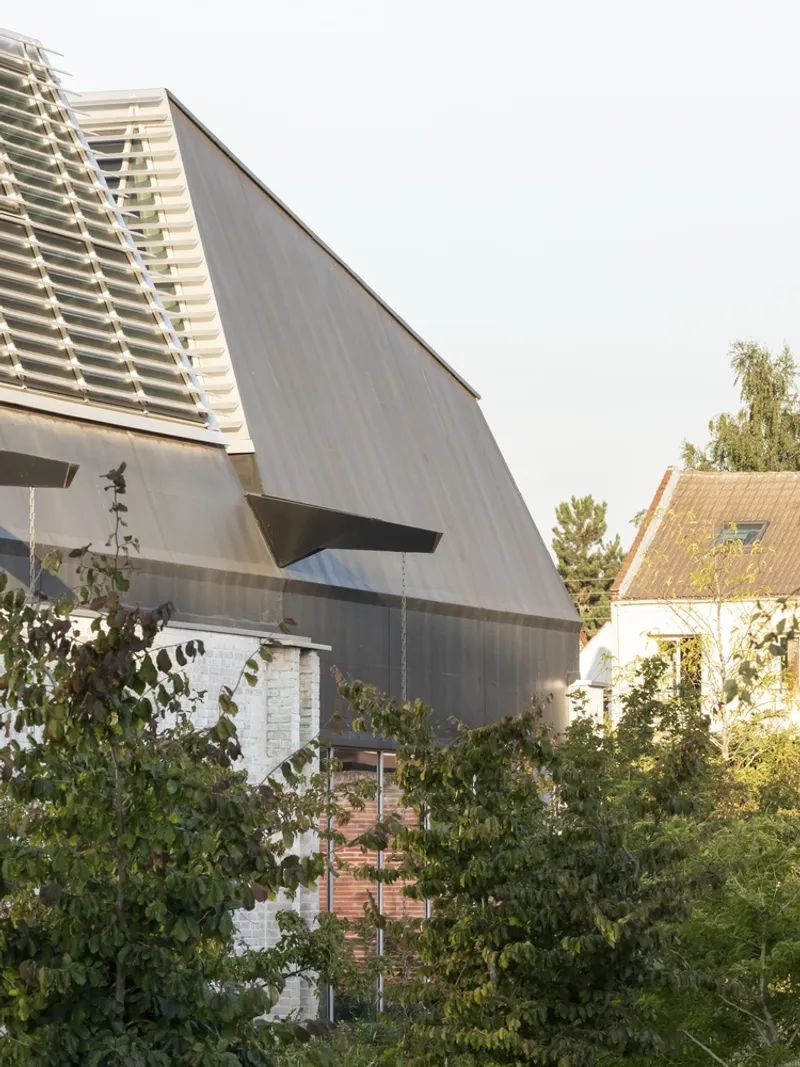
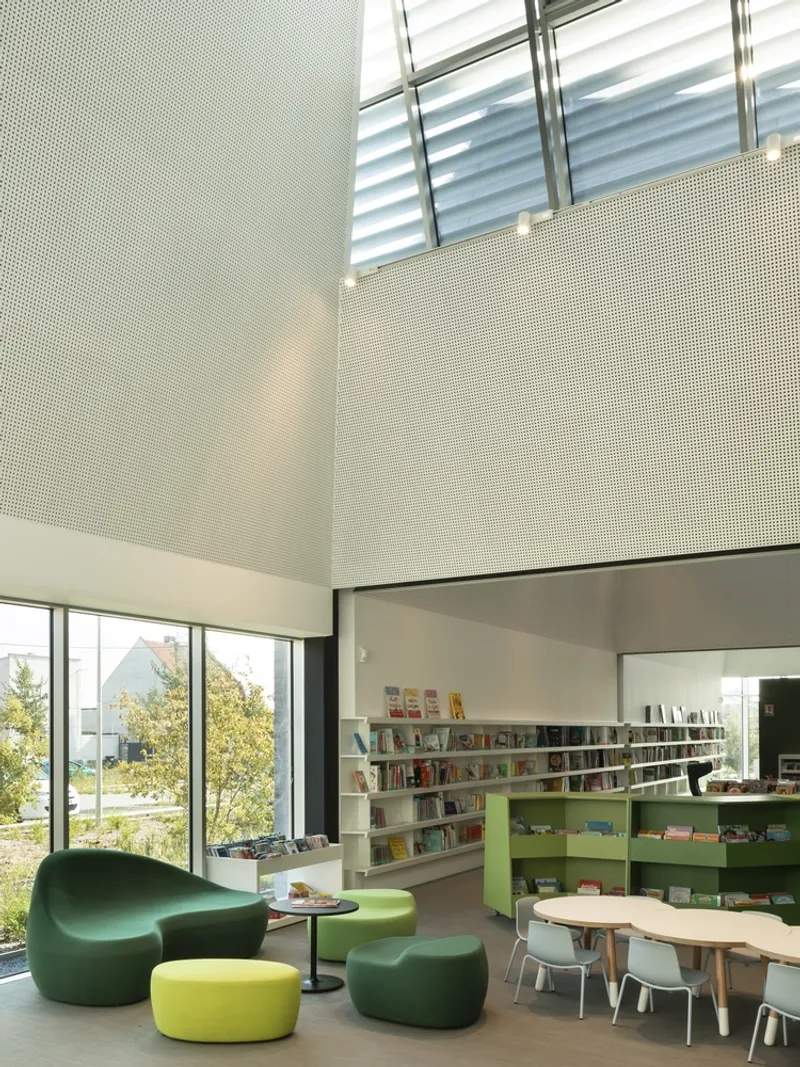
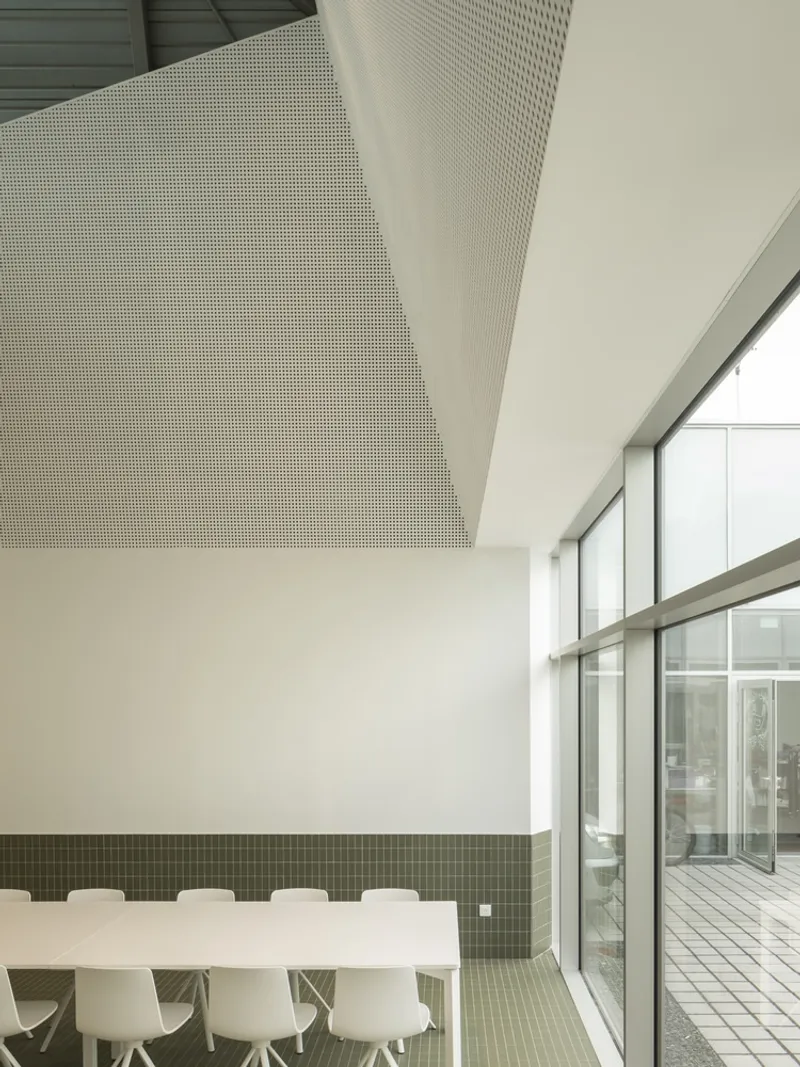
The project’s most striking feature is its series of identical architectural shells rising above the original walls. Each shell features glazing on its highest side, flooding the media library with natural light at all hours of the day and framing views of the sky, surrounding trees, and the town’s historic church tower.
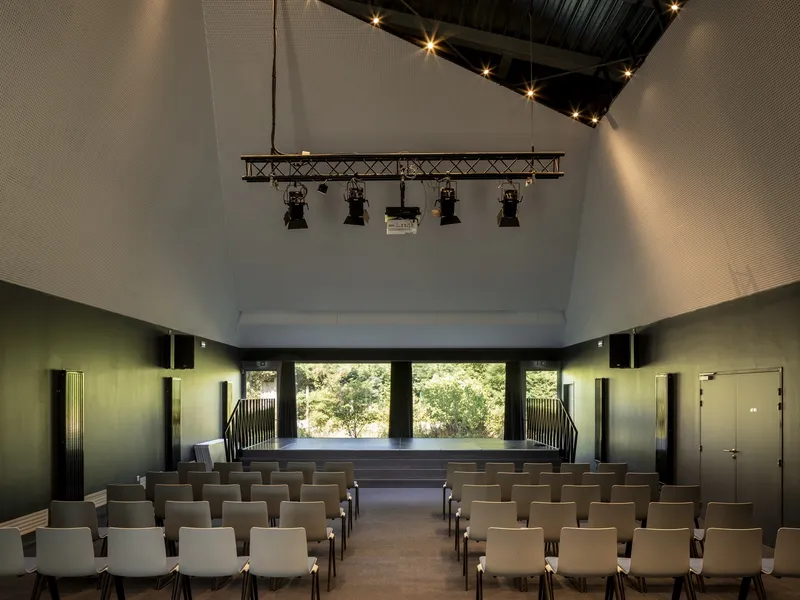
This shell system also improves acoustics, with its egg-crate geometry reducing sound reverberation in reading and consultation areas. The repetition of forms creates a strong visual identity, signaling renewal while maintaining harmony with the site’s urban context.
Structural and Material Precision
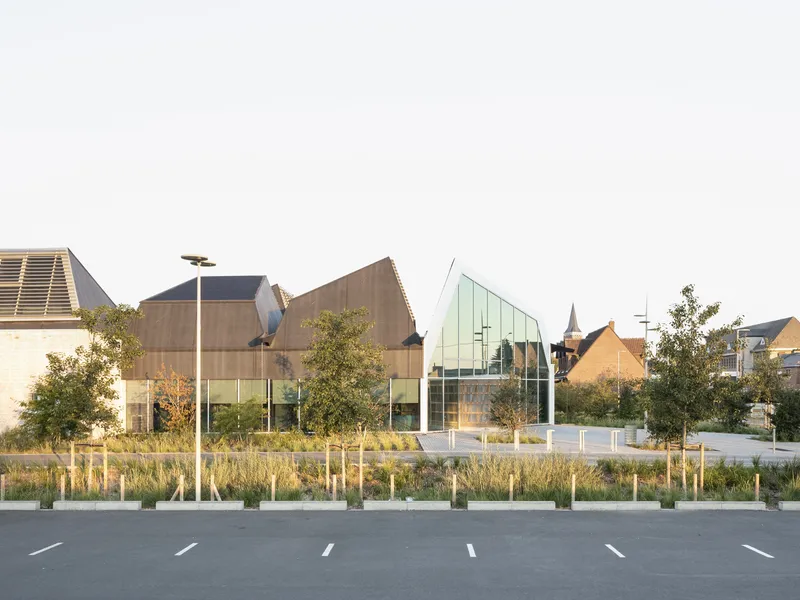
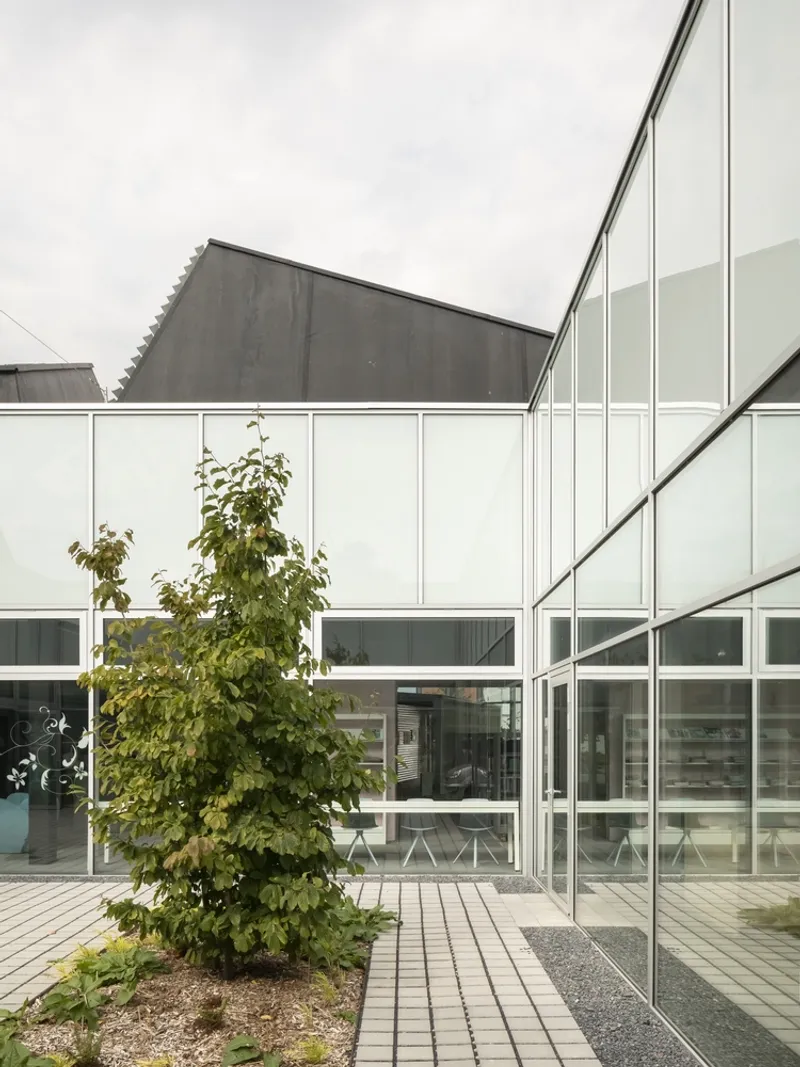
A steel framework spans an impressive 750 m² without intermediate supports, allowing for uninterrupted interior space. The roof is protected by an EPDM membrane, while aluminum-framed windows and visible metal gargoyles highlight rainwater drainage — channeling it towards landscaped green spaces.
Flexible, Open, and Human-Scaled Spaces
Inside, the design maintains an open-plan layout where most spaces flow seamlessly into one another. Essential enclosed areas are housed in functional “boxes” scattered across the hall. These structures serve dual purposes — defining smaller, human-scaled zones while acting as display surfaces, picture rails, and integrated shelving.
This approach eliminates the need for rigid, linear shelving units, instead encouraging fluid circulation between thematic zones and fostering dynamic exhibition opportunities.
A Community Anchor for Culture and Learning
Les Halles is no longer a place for transactions, but a hub for knowledge sharing, social engagement, and cultural exchange. By reimagining an existing commercial space, the architects demonstrate the potential of adaptive reuse to create environmentally responsible, socially inclusive public spaces.
Project Details
- Location: Courcelles-lès-Lens, France
- Area: 1,120 m²
- Year: 2021
- Architects: Zita! Damien Guiot Architectes + Urbanistes
- Landscape Architecture: Leblanc-Venacque
- Structural Engineers: Bollinger+Grohmann GmbH
- Manufacturers: Dickson, EPDM Solutions, Placo, Reynaers
- Photography: Maxime Vermeulen



Popular Articles
Popular articles from the community


The Ocean Hive: Sustainable Architecture for a Self-Sufficient Civilization at Sea
The Ocean Hive imagines sustainable architecture at sea, where modular habitats, algae, wave power and ocean waste sustain a growing colony.

Co-life: Sustainable Architecture for Age-Friendly Community Living
Co-life reimagines sustainable architecture for seniors through courtyards, rammed earth, shared gardens, and spaces designed for belonging.

The Musturak Paradise: Senior Living Architecture for a Connected Future in Temara, Morocco
The Musturak Paradise reimagines senior living architecture in Temara via private homes, social spaces, culture, community, and shared care.

Co-Life: Senior Housing Design That Reconnects Older Adults With the City
Co-Life reimagines senior housing design through healing gardens, shared streets, workshops, and a sustainable community across generations.


Similar Reads
You might also enjoy these articles


Hodi-Mandai Geram
Project Function: Preservation and revitalization of the Intangible heritage and socio-spatial identity of the Hodi by Housing, Cultural Memory Center, Sacred Grove, landscape, local tourism economy


Olio Towers: A Mid-Rise for Performers That Fuses Housing, Rehearsal, and Stage
Located blocks from Houston's Theater District, this modular tower stacks living units around a central performance atrium.

Oasis: Modular Green Housing Carved into Dhaka's Urban Fabric
A shortlisted Plugin Housing entry reclaims unauthorized settlements in Dhaka with stepped concrete volumes, green roofs, and ventilation-driven design.

Black Hole: A Floating Megastructure for the Post-Physical Era
Emiliano Mazzarotto envisions a spherical, self-scaling arena where e-sports, digital hotels, and holographic stadiums replace traditional public space.


Explore Educational Building Competitions
Discover active competitions in this discipline



Challenge to design public laboratory


Challenge to reimagine the Iron Throne


Photograph architecture without architects


Illustrate the lost glory of Angkor Wat - Render Challenge
Comments (0)
Please login or sign up to add comments
No comments yet. Be the first to comment!