
Lion-Feuchtwanger-Strasse Housing Residential Blocks by FAR frohn&rojas
FAR frohn&rojas redefine Berlin housing with modular concrete structures, communal garden plateaus, and sustainable mobility spaces fostering social and ecological living.


Reinventing Collective Living in Berlin’s Urban Landscape
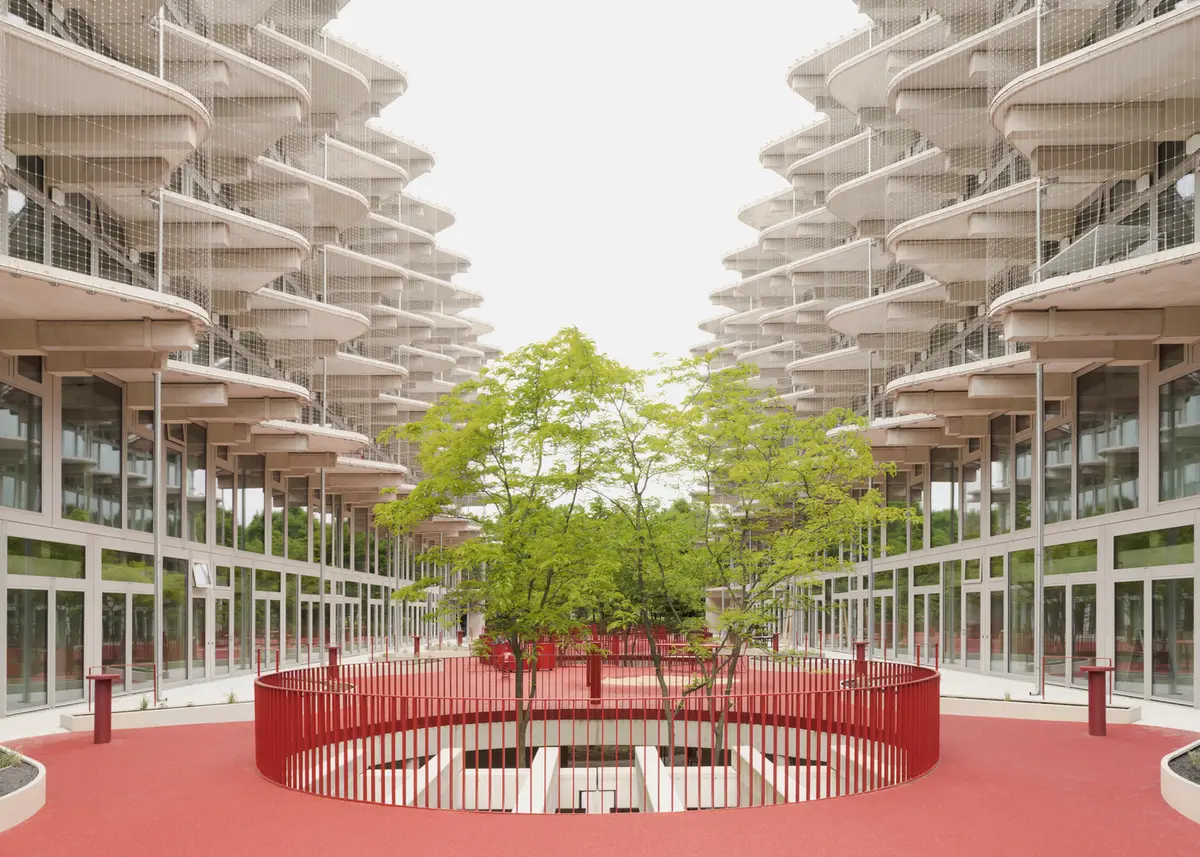
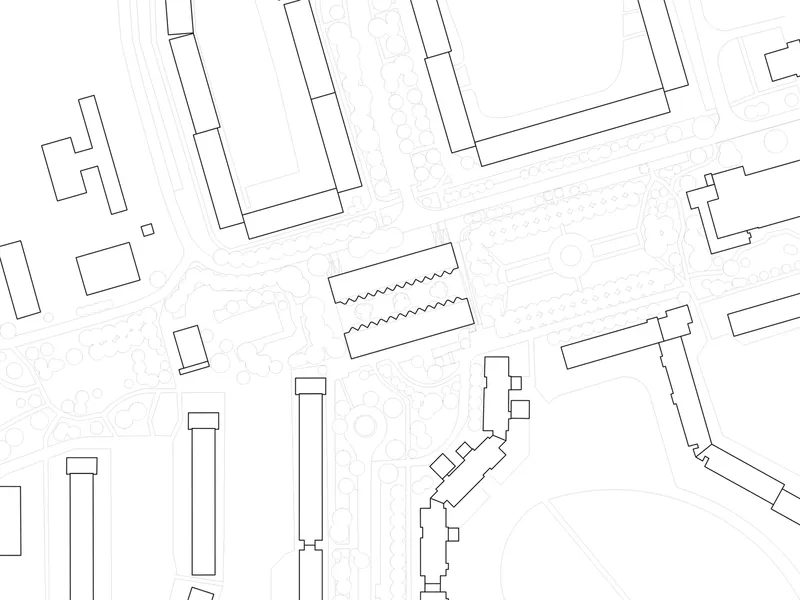
The Lion-Feuchtwanger-Strasse Housing Residential Blocks by FAR frohn&rojas redefine the essence of contemporary urban housing in Berlin’s Kaulsdorf Nord district. Located at the intersection of two green axes that traverse this former GDR residential area, the project establishes a new architectural dialogue between nature, community, and modular construction.
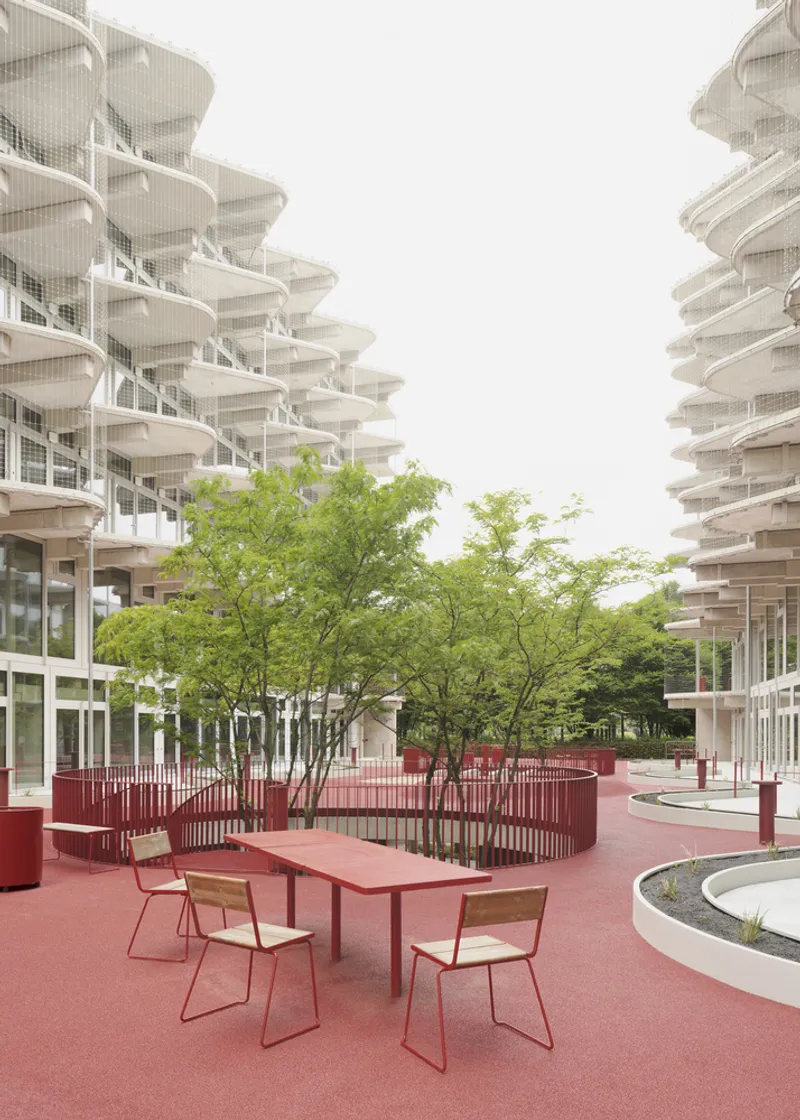
Two six-story residential blocks frame an elevated garden plateau, which acts as the heart of the complex — a vibrant communal zone with recreational areas, children’s play spaces, and social gathering points. Beneath this landscape, the day-lit mobility level integrates everyday needs, including parking for cars and bicycles, charging stations for e-mobility, sports facilities, and even a package delivery station. This spatial layering optimizes land use while promoting a sustainable and socially active living environment.
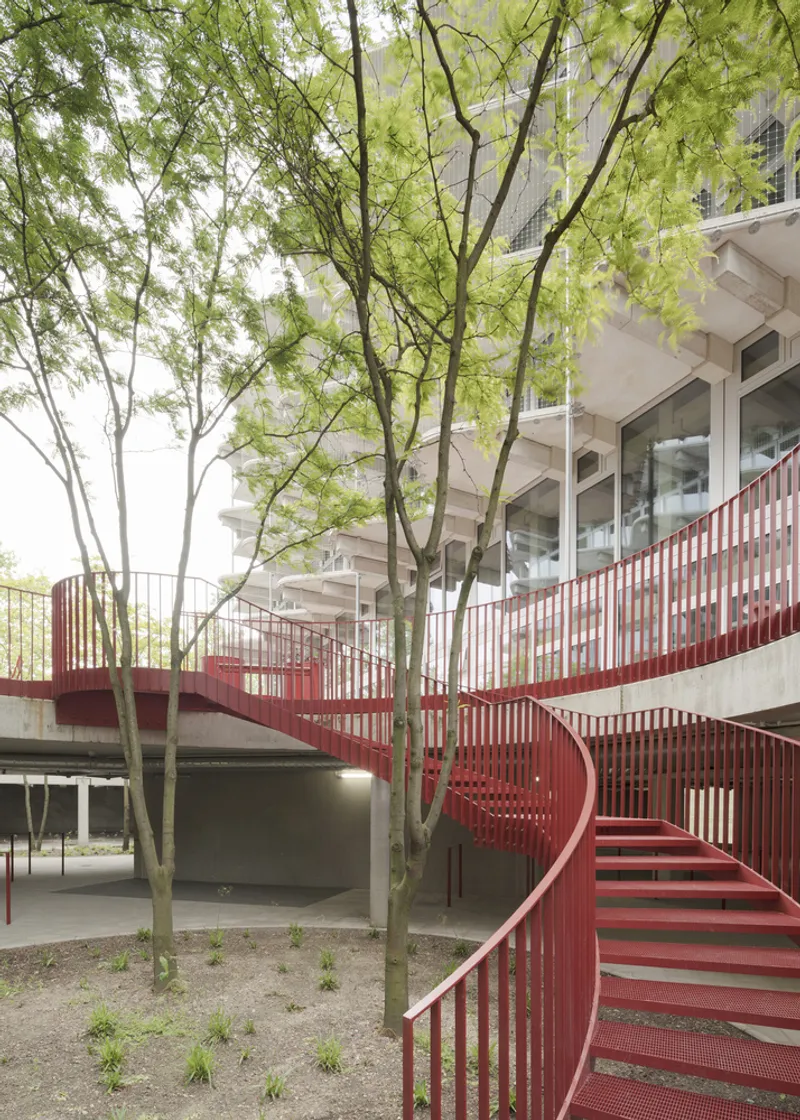
Continuing the Legacy of Serial Construction
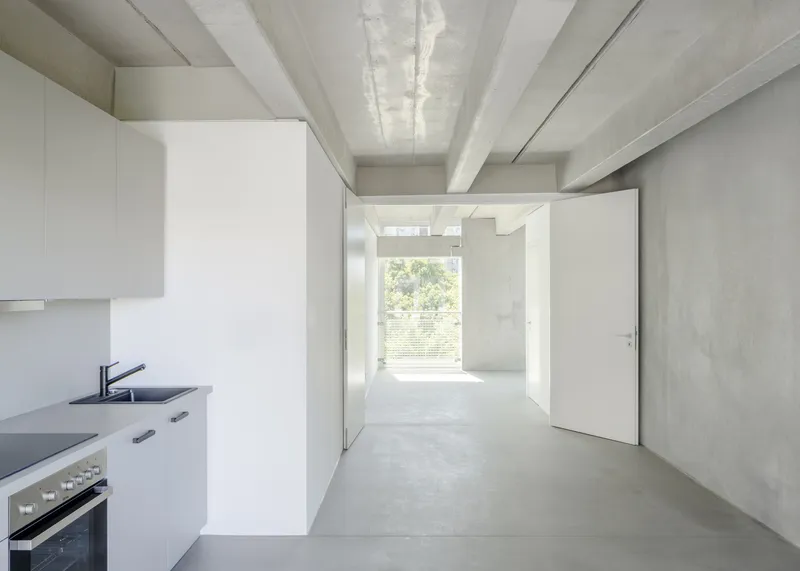
Surrounded by prefabricated housing from the 1980s, the project builds upon the tradition of serial construction while giving it a fresh and flexible architectural identity. Instead of conventional wall panels, FAR frohn&rojas employ a skeleton system of precast concrete elements, typically used in industrial and commercial buildings. This structural choice allows for adaptability, efficiency, and openness — addressing the diverse lifestyles and evolving expectations of modern urban dwellers.
This project extends the firm’s research into modular and prefabricated housing systems, first explored in their acclaimed Wohnregal in Moabit, Berlin. Through this architectural evolution, the firm demonstrates how industrial construction methods can be reinterpreted to foster community-oriented housing and architectural diversity within the same structural framework.
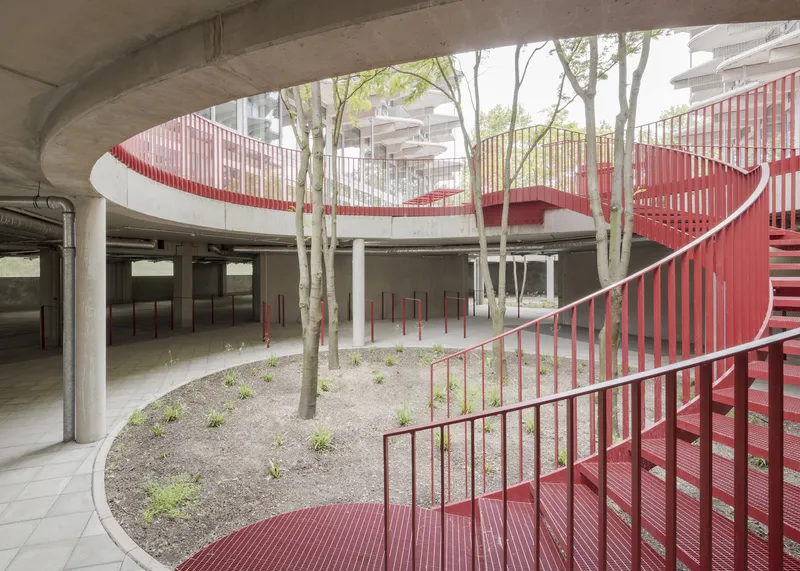
Circulation as a Social and Spatial Connector
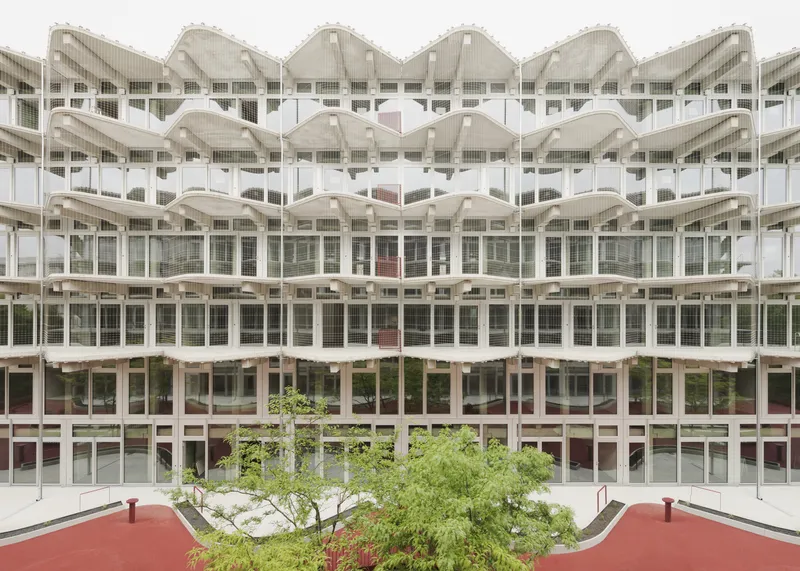
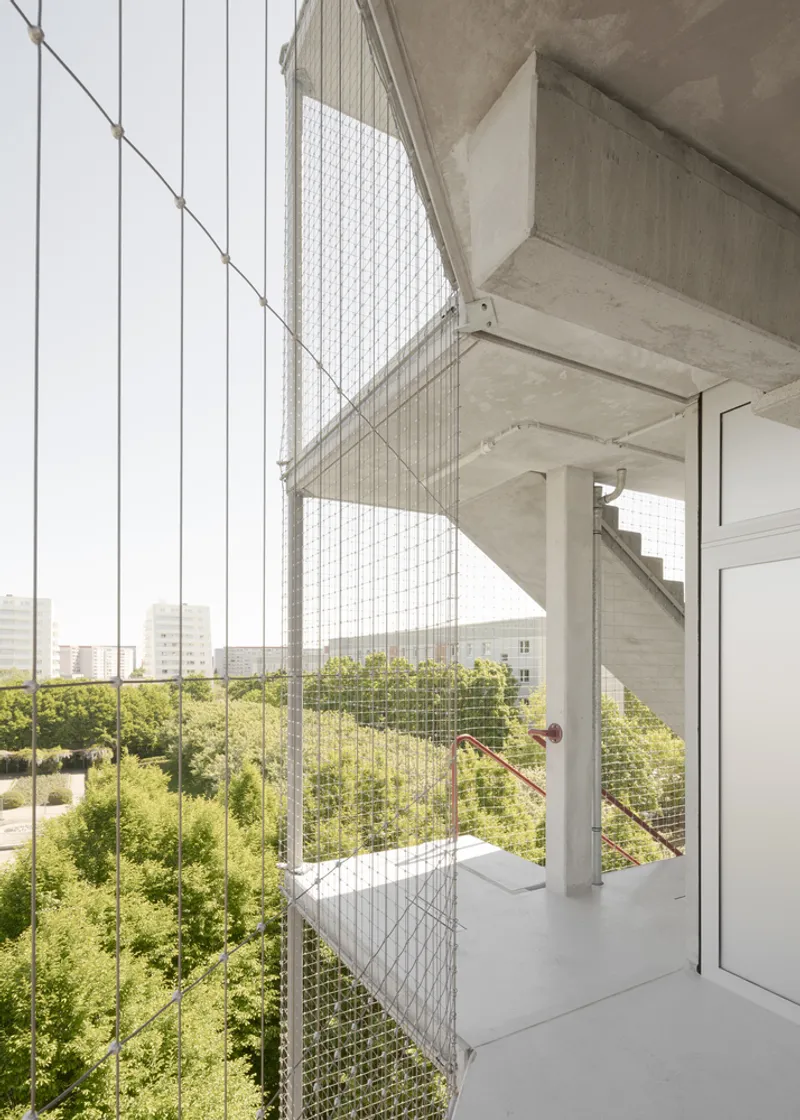
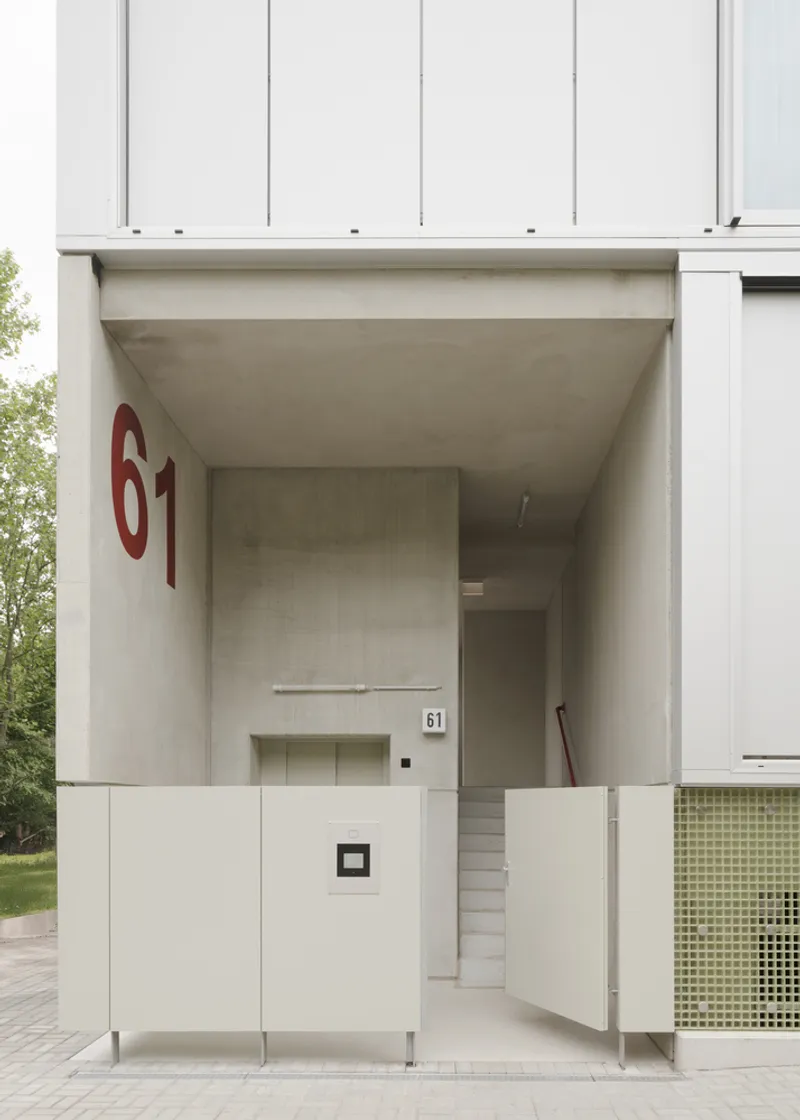
The design transforms circulation into a social space. Open arcades along the garden-facing façades provide access to the upper-level apartments and double as semi-private outdoor zones. These wave-shaped balconies offer residents intimate seating areas overlooking the central garden. The subtle use of stainless steel mesh as balustrades enhances visual lightness while supporting climbing plants, blending architecture and greenery.
This innovative circulation system encourages neighborhood interaction and passive surveillance, reinforcing community bonds while maintaining privacy. The resulting spaces blur boundaries between public and private realms — a hallmark of human-centered residential architecture.
A Spectrum of Living Typologies
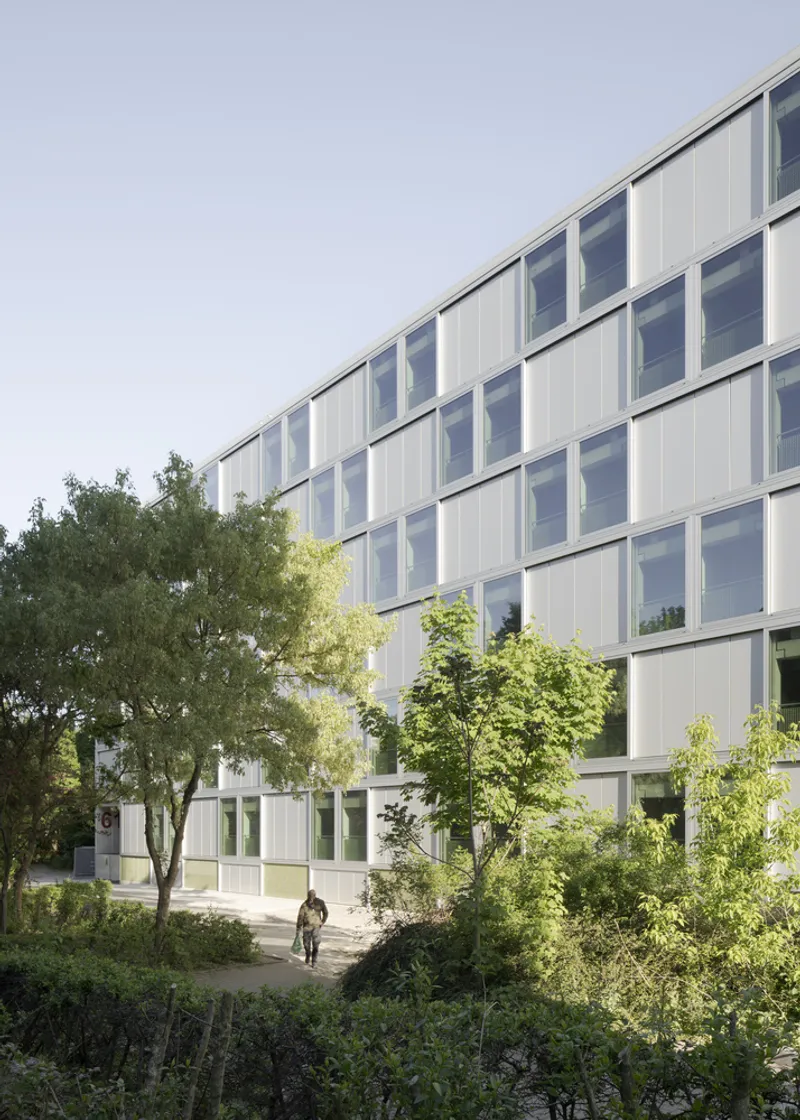
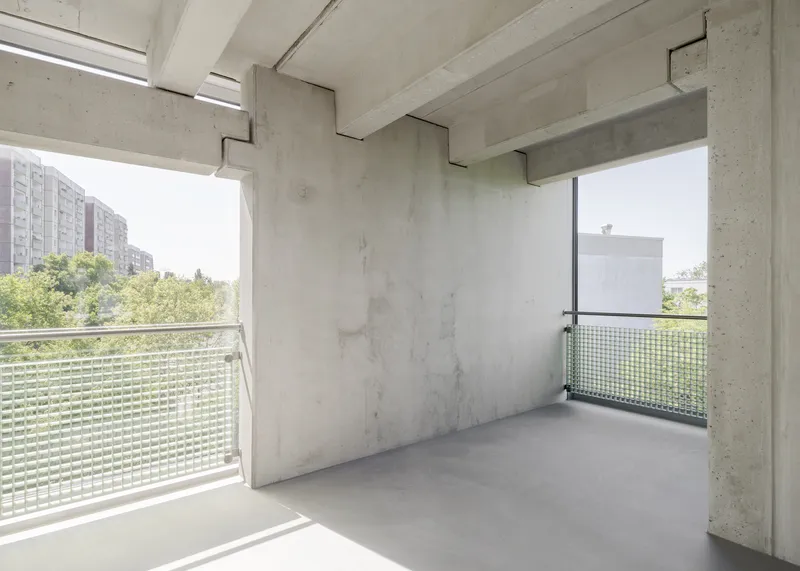
The project embraces residential variety within a coherent architectural system. Toward the exterior, the buildings present a more solid, rhythmic façade featuring French balconies, floor-to-ceiling sliding windows, and aluminum panels that alternate to create dynamic light reflections throughout the day.
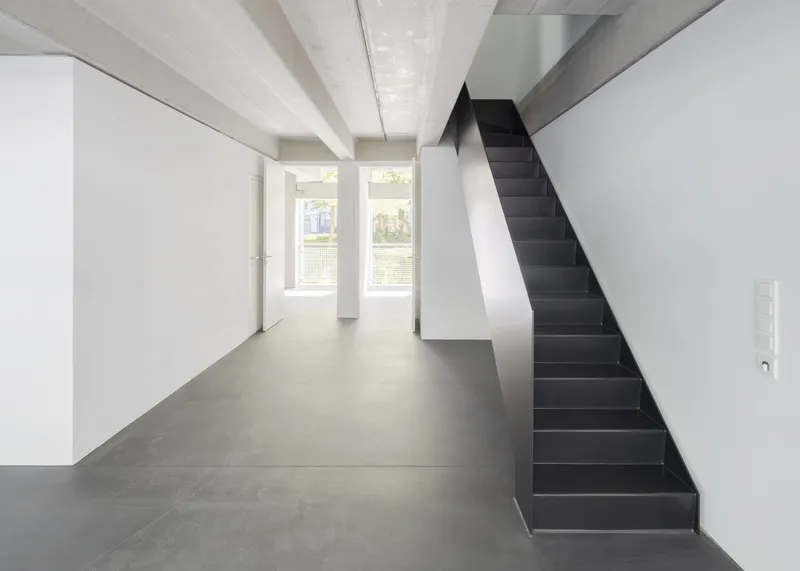
Each apartment benefits from dual orientation — facing both the garden plateau and the surrounding neighborhood — allowing residents to define their own balance between openness and retreat. The interior layouts support flexible living arrangements, accommodating both individuals and families.
At the ground level, two-story townhouses directly engage with the communal garden, fostering family life and outdoor connection. Above them, a diverse mix of single-story apartments caters to different demographics, reinforcing social inclusivity and adaptability in residential design.
Sustainable Urban Integration
Beyond architectural innovation, the project demonstrates a commitment to sustainability and mobility-conscious living. Its integration of e-mobility infrastructure, green recreational spaces, and efficient structural systems positions it as a model for future urban regeneration in post-GDR residential neighborhoods.
Through Lion-Feuchtwanger-Strasse Housing Residential Blocks, FAR frohn&rojas reimagine what communal living can look like in the 21st century — modular, green, and socially cohesive — while continuing Berlin’s long tradition of experimentation in modern housing architecture.
All Photographs are works of David Hiepler


Popular Articles
Popular articles from the community


The Amber Palace Opera: A Geological Fiction Surfaces on Tallinn's Baltic Waterfront
Pierre Brillard reimagines a Baltic legend as a public landscape, opera house, and waterfront promenade rooted in Tallinn's coastal identity.

Aquadapt: An Underwater Habitat That Rewrites Its Rooms by the Hour
Curved modules ring the seabed while one shell shifts from breakfast room to cinema, farm and football pitch as residents' needs change.


graciastudio Turns a Viewless Tijuana Lot Inward Around a Courtyard of Concrete, Timber and Trees
In Tijuana, Jorge Gracia's GA2 House stacks a timber-clad private floor over exposed concrete and replaces a missing view with a planted interior patio.

ETEH Reworks the Shared Spaces of São Domingos School in Brazil Around Timber, Color and Hanging Plants
At São Domingos School in Brazil, 436 m² of hall, refectory and library are recast with timber joinery, a yellow and blue code and trailing greenery.

Similar Reads
You might also enjoy these articles


Hodi-Mandai Geram
Project Function: Preservation and revitalization of the Intangible heritage and socio-spatial identity of the Hodi by Housing, Cultural Memory Center, Sacred Grove, landscape, local tourism economy


Olio Towers: A Mid-Rise for Performers That Fuses Housing, Rehearsal, and Stage
Located blocks from Houston's Theater District, this modular tower stacks living units around a central performance atrium.

Oasis: Modular Green Housing Carved into Dhaka's Urban Fabric
A shortlisted Plugin Housing entry reclaims unauthorized settlements in Dhaka with stepped concrete volumes, green roofs, and ventilation-driven design.

Black Hole: A Floating Megastructure for the Post-Physical Era
Emiliano Mazzarotto envisions a spherical, self-scaling arena where e-sports, digital hotels, and holographic stadiums replace traditional public space.

Explore Housing Block Competitions
Discover active competitions in this discipline

Challenge to design mud housing for contemporary communities

Challenge to reimagine the Iron Throne

Photograph architecture without architects

Illustrate the lost glory of Angkor Wat - Render Challenge
Comments (0)
Please login or sign up to add comments
No comments yet. Be the first to comment!