
Long House with an Engawa Senior Daycare Center by Yamazaki Kentaro Design Workshop
A senior daycare blending tradition and care, fostering intergenerational bonds through Engawa-style architecture, promoting inclusivity, community, and sustainable living.


A Harmonious Blend of Tradition and Modern Care
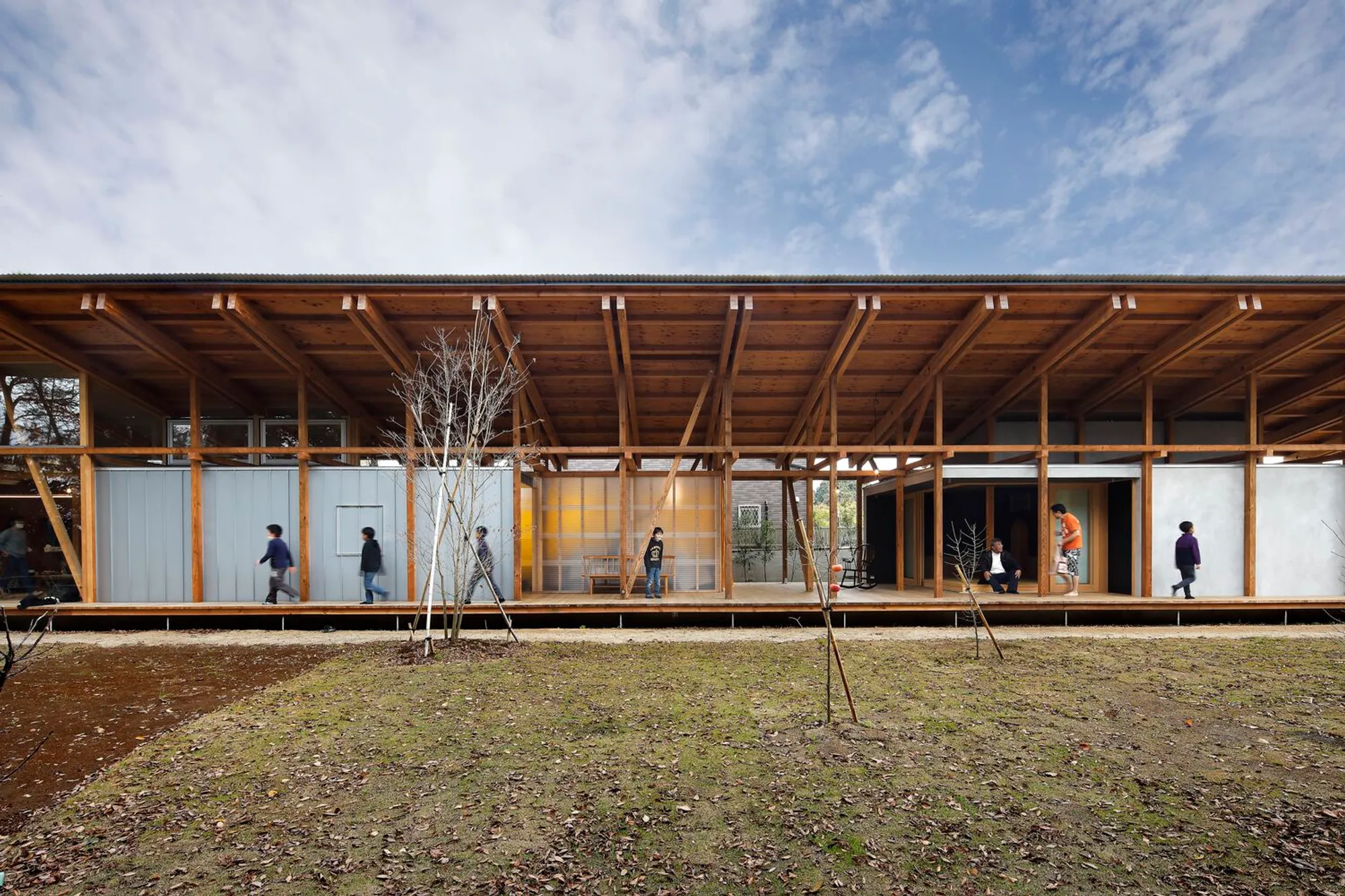
The Long House with an Engawa is a senior daycare center designed by Yamazaki Kentaro Design Workshop in Yachiyo, Japan. This facility seamlessly blends architecture with caregiving by creating an inclusive environment that supports people with conditions such as dementia. The visionary client, Mr. Ishii, a caretaker dedicated to allowing elderly individuals to live with dignity, inspired the design. The project aims to dissolve the barriers between aging and everyday life by fostering interaction between residents, the local community, and nature.
Site and Structural Concept: Embracing Nature and Community
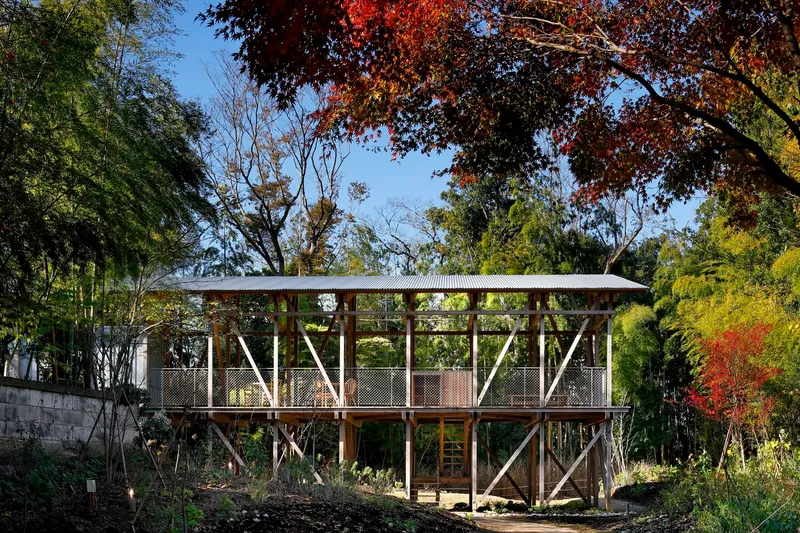
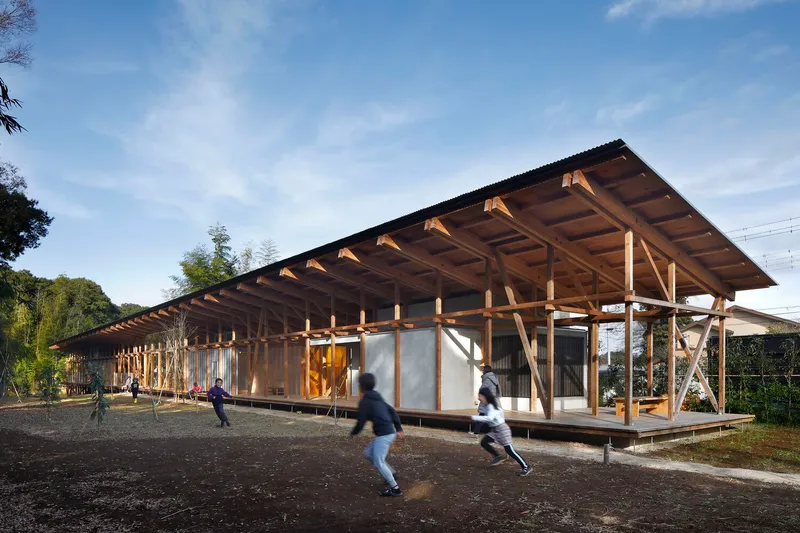
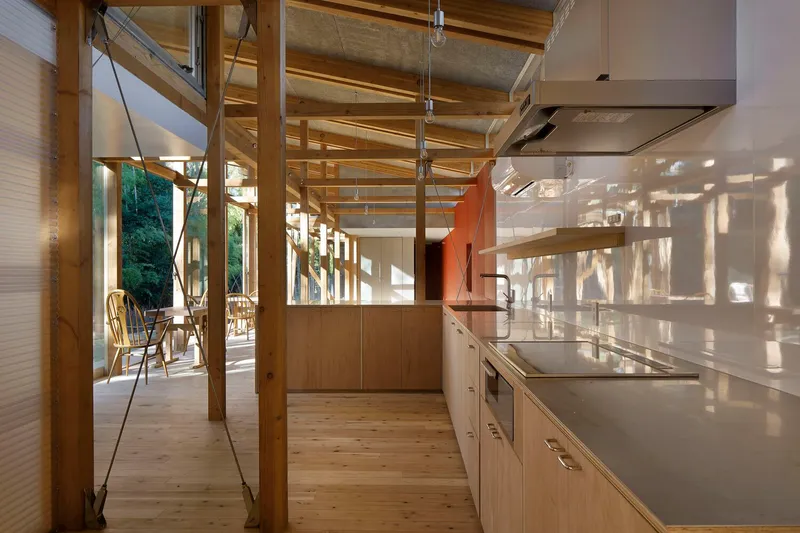
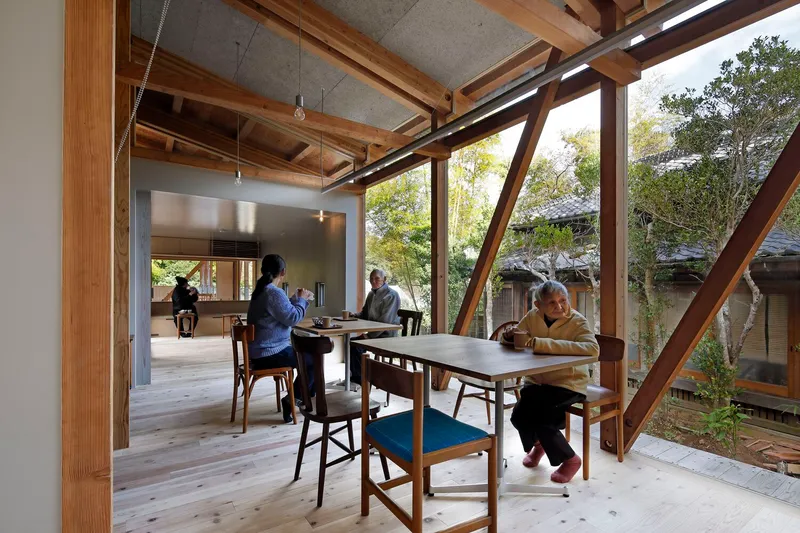
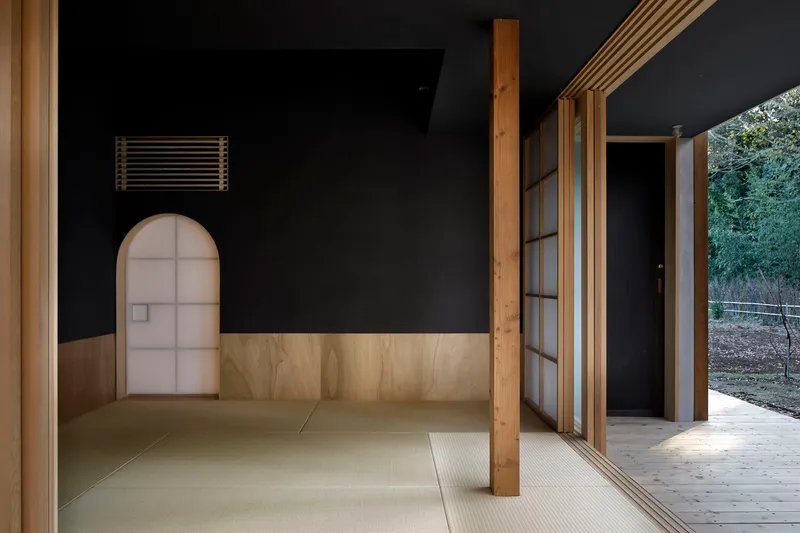
The site, located on a narrow plot with restrictions due to building regulations over cliffs, posed significant challenges. To counter these limitations, the architects introduced a 2.5-ken (4.55 meters) wide Engawa-style veranda, running parallel to the structure and serving as a transition between the indoors and outdoors. This veranda acts as a communal platform, inviting interaction from multiple access points. The facility integrates three main outdoor spaces:
• A café and workshop catering to local residents.
• A living room area designed for the elderly.
• A tatami room and bath reminiscent of a traditional hanare (detached room), promoting cultural continuity.
Small volumes and partitions were thoughtfully placed to create human-scale spaces that encourage comfort and familiarity.
Thoughtful Interiors: Bridging Boundaries Through Design
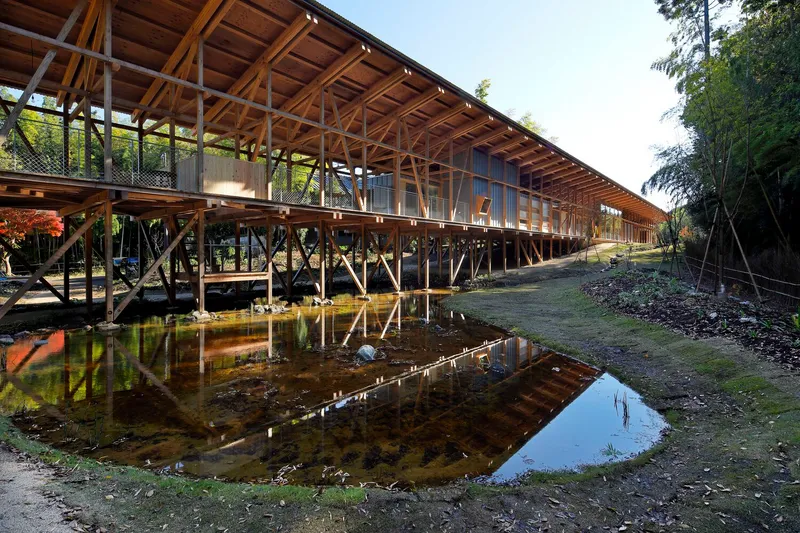
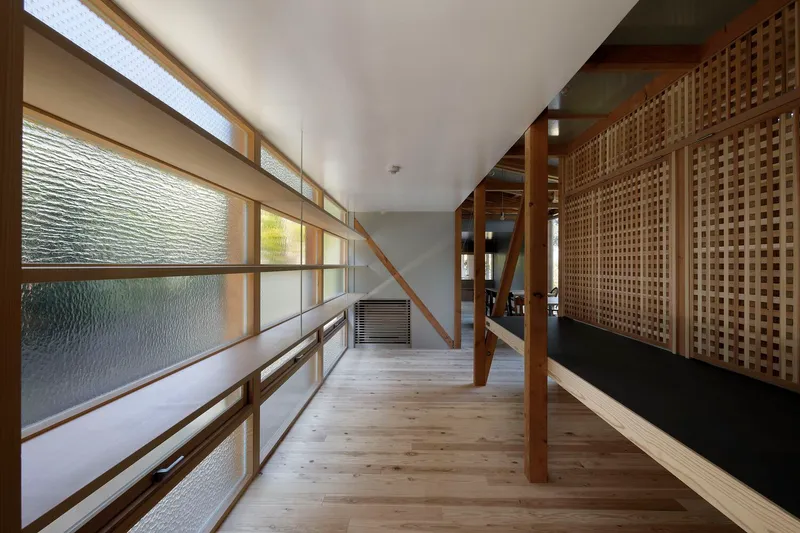
The interior layout prioritizes flexibility and inclusivity, designed to encourage interaction and rest. Special emphasis was placed on designing the boundaries between elements. Large windows connect the indoor and outdoor environments, while carefully placed daybeds near these windows invite occupants to rest and engage with their surroundings. These cozy nooks create an “ikata,” a state where one can enjoy the company of others while maintaining solitude.
To reinforce a sense of belonging, local NPOs and Mr. Ishii’s company collaborated to ensure that the space would serve as a safe haven not just for the elderly but also for marginalized groups such as single-parent families and children who may not attend school. This multi-purpose functionality transforms the daycare center into a vibrant community hub where intergenerational bonds flourish.
Community Integration: Building Bridges Across Generations
The Long House with an Engawa serves as more than a daycare center—it becomes a symbol of communal solidarity. The garden pond and bamboo fences were created in collaboration with local residents through workshops that showcased the spirit of shared effort. The architecture evokes a sense of nostalgia, resembling traditional Japanese structures like temples and bridges, where communal interaction naturally unfolds.
Here, the elderly sit on the Engawa porch, enjoying moments of tranquility while savoring onigiri (rice balls), rekindling a cultural connection that modern Japan often overlooks. The architecture reintroduces this forgotten essence, fostering a sense of place and belonging for everyone who gathers in this space.
Sustainability and Energy Efficiency
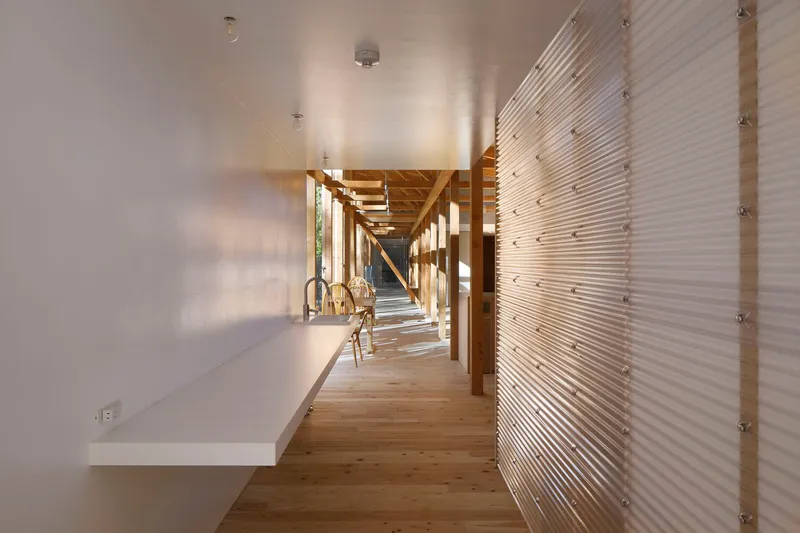
The building incorporates sustainable design principles that enhance energy efficiency while maintaining environmental harmony. The structure utilizes natural materials from Aica Kogyo Company, C.I. TAKIRON Corporation, SEKINO, and TAKEMURA INDUSTRY, ensuring durability and minimizing environmental impact. Additionally, the use of natural ventilation and daylight reduces the building’s energy consumption, aligning with modern sustainability standards.
A Space That Nurtures Belonging and Care
The Long House with an Engawa transcends conventional senior daycare centers by offering a space where the elderly, children, and marginalized communities can coexist harmoniously. The architecture nurtures a spirit of inclusivity, promoting independence while creating opportunities for interaction across generations. As a bridge between the past and the future, this space rekindles a sense of community that modern society often forgets, making it a beacon of care and belonging in Yachiyo, Japan.All photographs are works of Naomi Kurozumi




Popular Articles
Popular articles from the community


Riyadh For All: Intergenerational Urban Design for Active Aging in Rabat
Riyadh For All reimagines urban design in Rabat with intergenerational co-living, adaptive courtyards, and Moroccan cultural exchange today.

Co-Life: Senior Housing Design That Reconnects Older Adults With the City
Co-Life reimagines senior housing design through healing gardens, shared streets, workshops, and a sustainable community across generations.

Lunar Spiral: Space Architecture Shaped by the Mathematics of the Universe
Lunar Spiral reimagines space architecture through Fibonacci geometry, lunar regolith, levitating habitats, and self-sustaining Moon living.

Conexión: Biophilic Design Reimagines High-Rise Living in Hong Kong
Conexión reimagines high-rise living in Hong Kong through biophilic design, green facades, shared spaces, daylight, water and nature within.


Similar Reads
You might also enjoy these articles


Hodi-Mandai Geram
Project Function: Preservation and revitalization of the Intangible heritage and socio-spatial identity of the Hodi by Housing, Cultural Memory Center, Sacred Grove, landscape, local tourism economy


Olio Towers: A Mid-Rise for Performers That Fuses Housing, Rehearsal, and Stage
Located blocks from Houston's Theater District, this modular tower stacks living units around a central performance atrium.

Oasis: Modular Green Housing Carved into Dhaka's Urban Fabric
A shortlisted Plugin Housing entry reclaims unauthorized settlements in Dhaka with stepped concrete volumes, green roofs, and ventilation-driven design.

Black Hole: A Floating Megastructure for the Post-Physical Era
Emiliano Mazzarotto envisions a spherical, self-scaling arena where e-sports, digital hotels, and holographic stadiums replace traditional public space.

Explore Ageing-Well Design Competitions
Discover active competitions in this discipline



Challenge to reimagine the Iron Throne


Photograph architecture without architects


Illustrate the lost glory of Angkor Wat - Render Challenge


Design challenge to reuse E-waste
Comments (0)
Please login or sign up to add comments
No comments yet. Be the first to comment!