
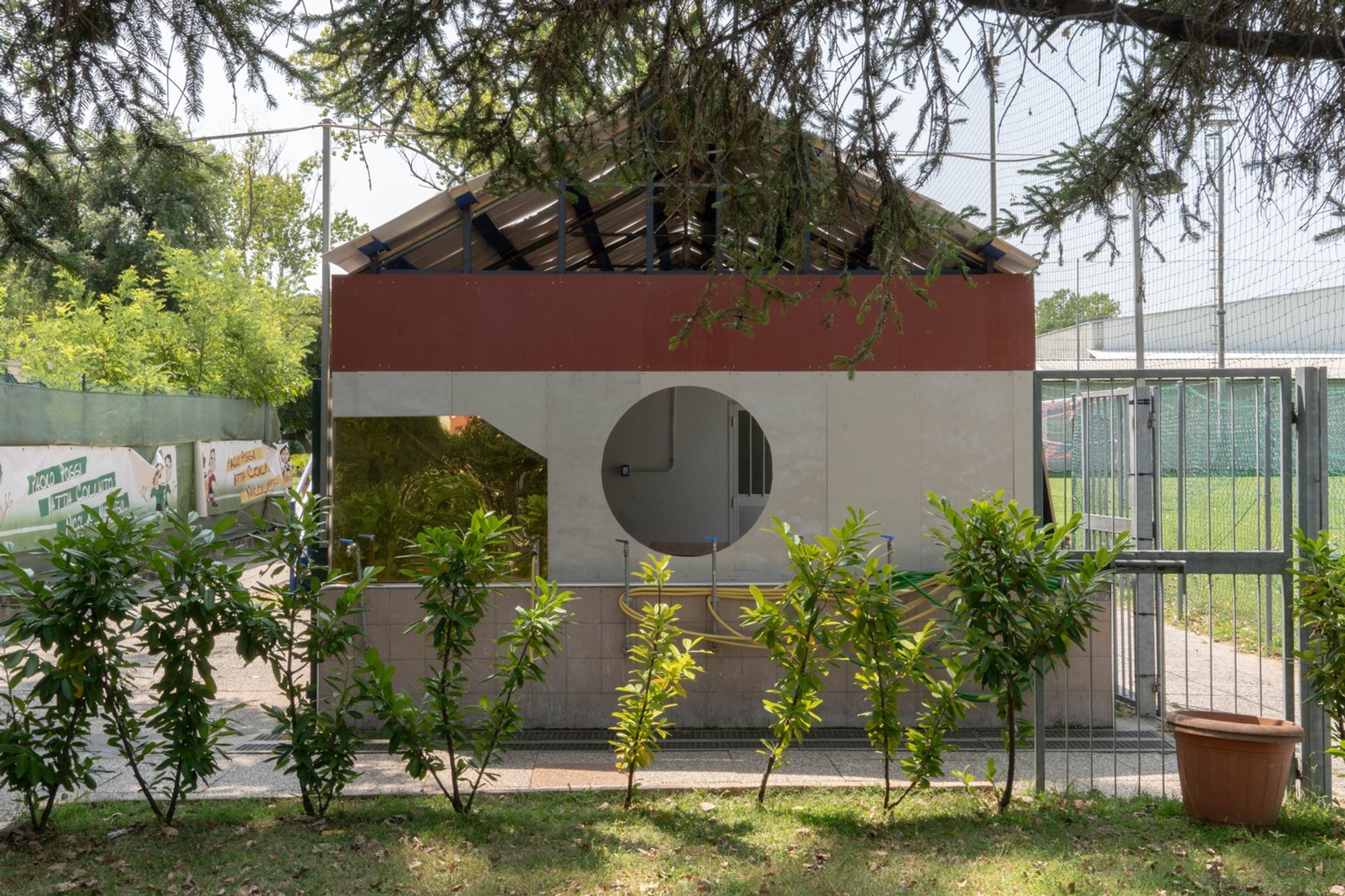
Maintenance 1:1 – Creating a Sustainable Meeting Place with Reused Materials
Sustainable pavilion in Venice using reclaimed materials, designed by ETH Zürich and University of Antwerp to foster community and architectural reuse.

A Circular Design Pavilion at the Venice Architecture Biennale
In the context of the 18th Venice Architecture Biennale 2023, the German Pavilion launched a forward-thinking reuse laboratory under the theme of care, repair, and maintenance. From this initiative emerged “Maintenance 1:1 – Creating a Meeting Place”, a sustainable architectural intervention designed and built collaboratively by students and faculty from ETH Zürich, the University of Antwerp, and the University of Venice.
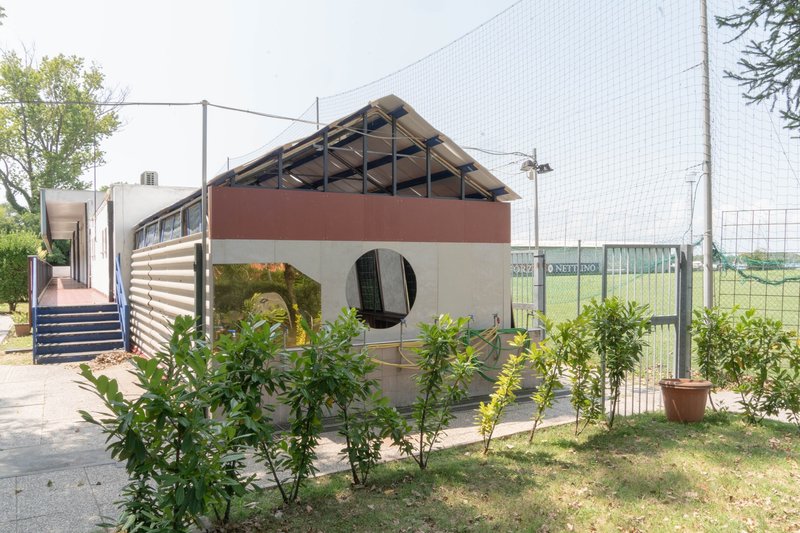
Taking place at Campo Sportivo Jacopo Reggio on Lido island, this project transformed salvaged materials from over 40 national pavilions of the 2022 Venice Art Biennale into a permanent, community-centered architectural structure. The result: a modest yet impactful 34 m² pavilion that functions as an enclosed terrace for a local football club, offering both social engagement and architectural innovation.
A Community-Driven Workshop in Circular Architecture
The six-day intensive design-build workshop brought together 18 architecture students who were tasked with designing and constructing a structure using only reclaimed materials and a pre-existing steel support frame. The participants worked on-site and at the reuse workshop in the German Pavilion, practicing availability-based design, a method that prioritizes what materials are accessible over starting from scratch.
Through hands-on collaboration, participants analyzed the material stock—including timber, cement fiber boards, foam, fabric, multiplex panels, and steel sheets—before developing modular systems that could be easily assembled, disassembled, and repurposed.
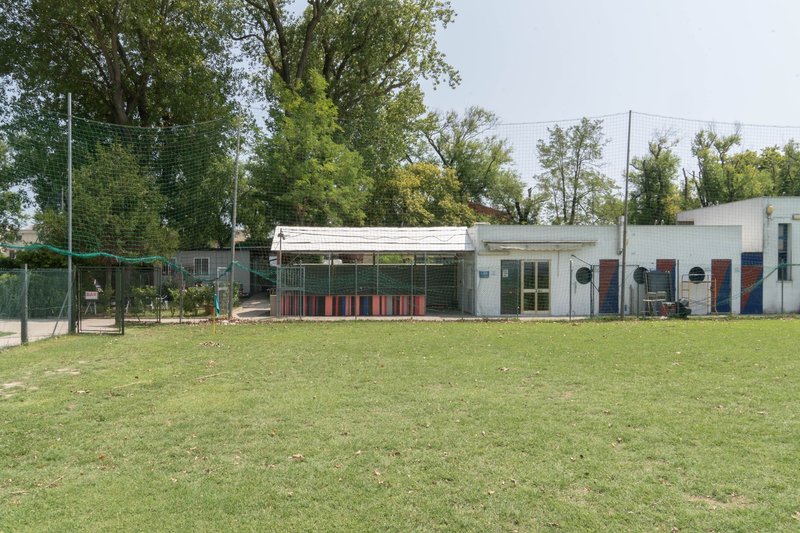
Designing with Local Needs and Seasonal Adaptability in Mind
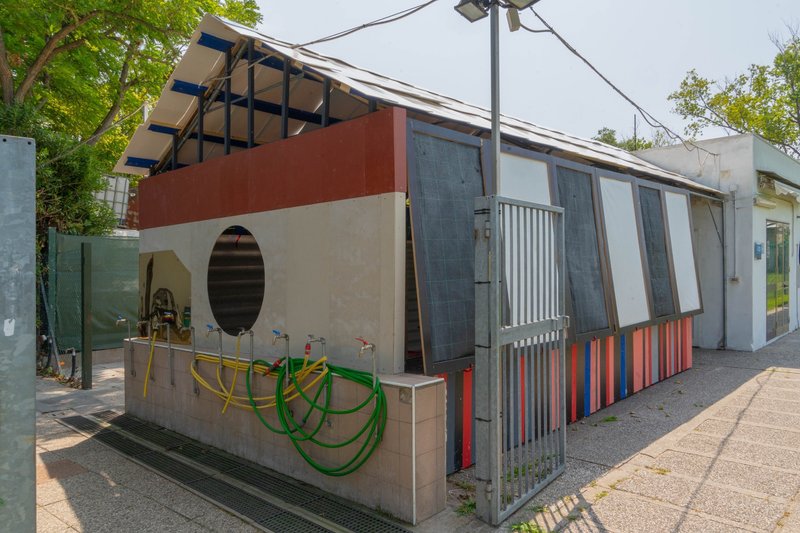
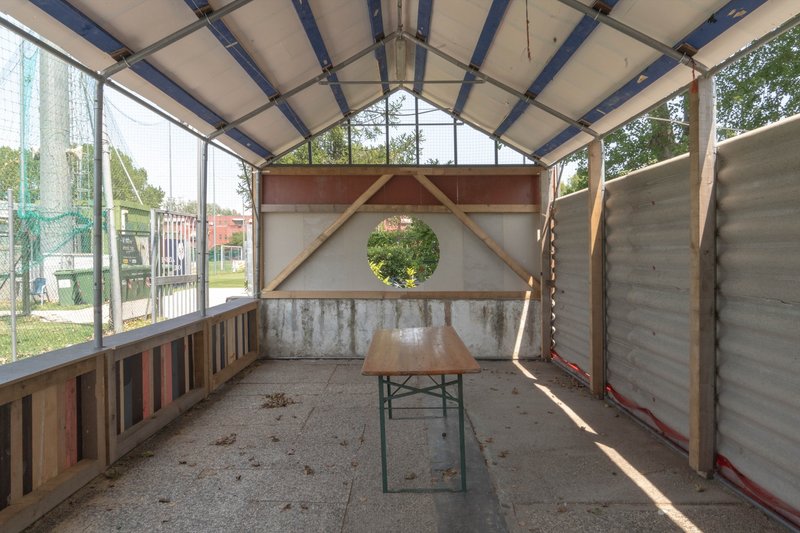
The final structure was conceived with local climate and community usage in mind. Its semi-permanent envelope is crafted with corrugated concrete panels and cement fiber boards for durability, while fabric-lined, lightweight detachable frames allow full openness toward the football pitch. This design ensures cross-ventilation during Venice’s hot summers and flexibility throughout the seasons.
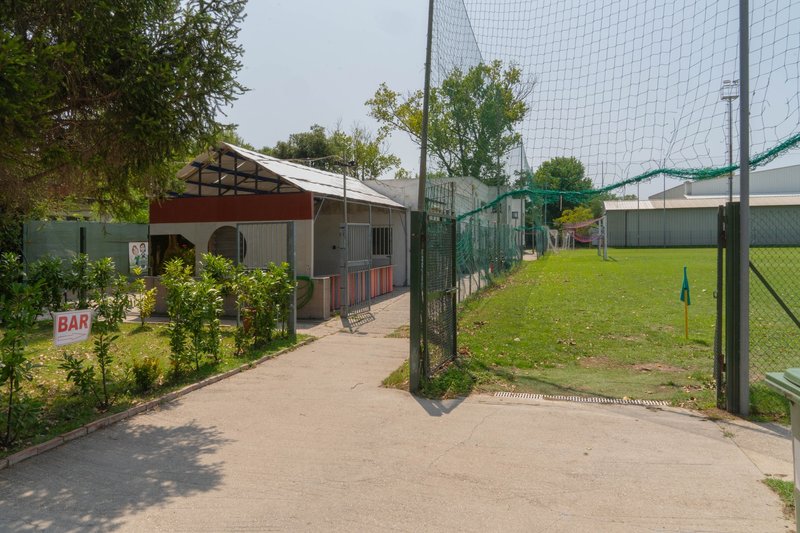
Inside, a circular window offers a visual connection to the sports field entrance, while the terrace frames unobstructed views of the pitch. The pavilion’s most finished façade—facing the approach to the café—includes a golden mirror, blending functionality and playful design as athletes refresh themselves.
Architecture as an Educational and Social Tool
“Maintenance 1:1” is more than a pavilion—it’s a living case study in adaptive reuse, participatory design, and the pedagogy of making. It demonstrates how sustainability in architecture can go beyond energy efficiency by integrating material circularity, community involvement, and educational experimentation.
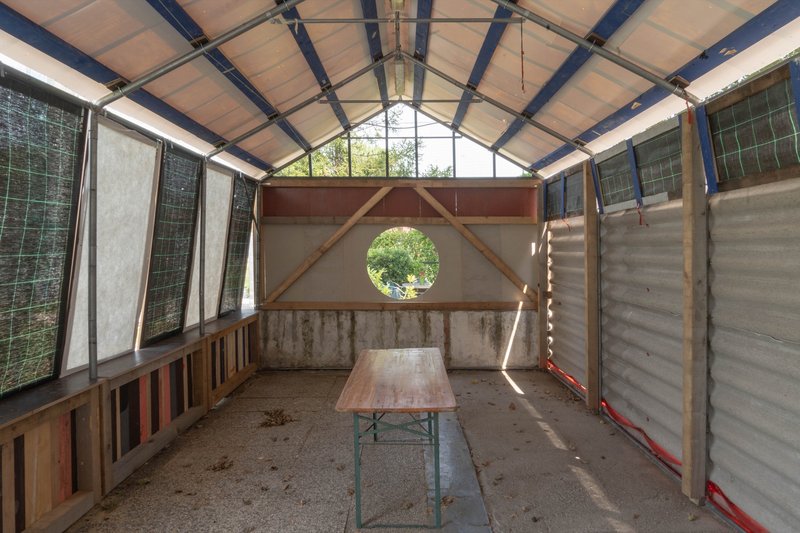
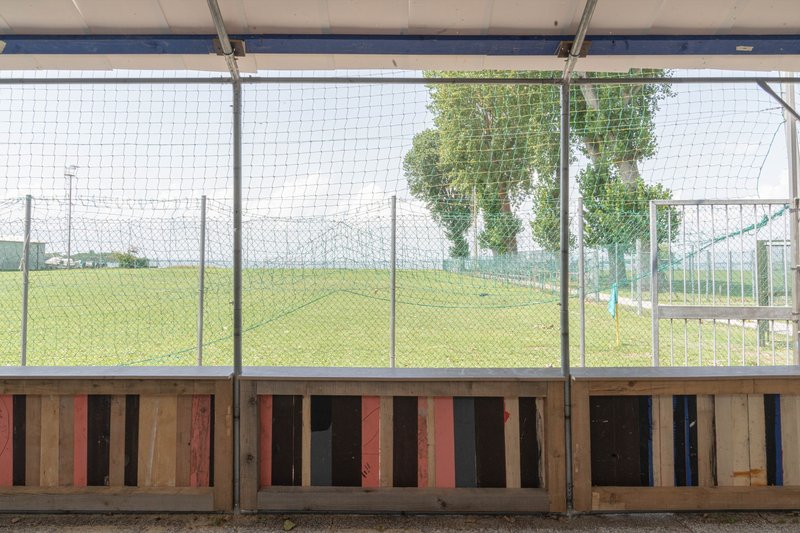
The entire construction process emphasized hands-on learning, resourcefulness, and design integrity, without compromising on aesthetics or durability. Every design decision was grounded in material availability and site-specific response, making the pavilion a model for sustainable public architecture.
A Future of Many Afterlives
The pavilion redefines the idea of permanence. Built to be dismantled and reused, the structure sets a precedent for modular architecture with a low environmental footprint. It bridges the gap between temporary exhibition architecture and long-term utility, offering inspiration for future urban interventions, community projects, and design education programs.
In its built form and conceptual depth, Maintenance 1:1 exemplifies how architecture can be both a meeting place and a medium of sustainable transformation.
All the photographs are works of Mario Rinke



Popular Articles
Popular articles from the community

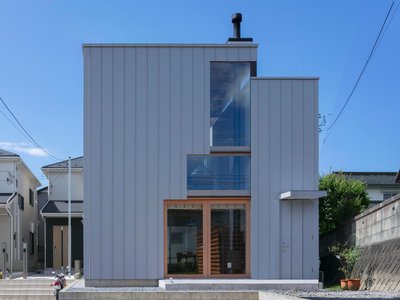
Split House: A Compact Urban Home Blending Privacy, Light, and Flexible Living in Japan
Compact Japanese home featuring DOMA space, flexible café potential, passive lighting, privacy zoning, and sustainable urban living design.

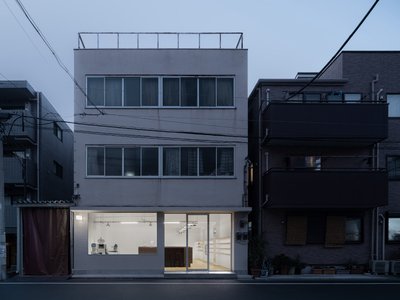
Atelier Macri Concept Store Interior Design by CASE-REAL
Atelier Macri store features a "ko" counter, walnut wood details, cork displays, blending retail, gallery, and seamless customer experiences.
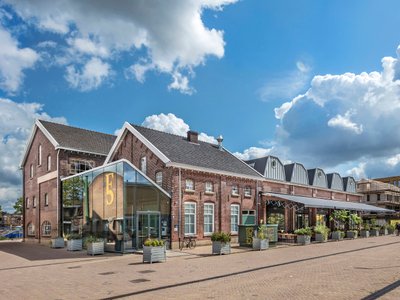
Fifth NRE Jazz Club – De Bever Architecten: Eindhoven’s Revitalized Cultural Hub
Historic gas factory transformed into Fifth NRE Jazz Club blending modern sustainability, jazz culture, dining, and heritage architecture seamlessly.


Similar Reads
You might also enjoy these articles


The Ken Roberts Memorial Delineation Competition (Krob)
As the most senior architectural drawing competition currently in operation anywhere in the world, it draws hundreds of entries each year, awarding the very best submissions in a series of medium-based categories.


Waterfront Redevelopment and Urban Revitalization in Mumbai: Forging a New Dawn for Darukhana
A transformative waterfront redevelopment project reimagining Darukhana’s shipbreaking heritage into an inclusive urban future.

OUT-OF-MAP: A Call for Postcards on Feminist Narratives of Public Space
Rhizoma Design and Research Lab invites artists, designers, architects, researchers, and students to reflect on how feminist perspectives can reshape public space. Selected works will be exhibited in Barcelona, October 2026. Submissions open until 15 April 2026.


Documentation Work on Buddhist Wooden Temple
Architectural syncretism and cultural hybridity: A comparative study of the Buddhist temples in Chattogram Hill tracks

Explore Architecture Competitions
Discover active competitions in this discipline




The International Standard for Design Portfolios


The Global Benchmark for Architecture Dissertation Awards


The Global Benchmark for Graduation Excellence


Challenge to reimagine the Iron Throne
Comments (0)
Please login or sign up to add comments
No comments yet. Be the first to comment!