

Metro Arquitetos Gives MASP a 14-Story Companion That Refuses to Compete with Lina Bo Bardi
A perforated metal tower on Avenida Paulista doubles the museum's gallery space while deferring to one of Brazil's most revered buildings.


Building next to a masterpiece is an act of controlled ego. The original MASP, Lina Bo Bardi's gravity-defying red box lifted above its famous free span, is arguably the single most recognizable piece of architecture in São Paulo. When Metro Arquitetos, led by Martin Corullon and Gustavo Cedroni, took on the task of expanding the museum, the question was never really about what to add. It was about what to withhold.
The result, the Pietro Maria Bardi Building, is a 14-story tower wrapped in black corrugated and perforated aluminum that nearly doubles the institution's footprint, bringing the total complex to roughly 17,680 square meters. It is emphatically vertical where Bo Bardi's original is horizontal, emphatically dark where the original is red, and emphatically quiet where the original is dramatic. The interesting move here is not architectural spectacle but architectural discipline: Metro Arquitetos found a way to deliver five new galleries, classrooms, a conservation lab, a restaurant, and a café inside the skeleton of a 1940s residential building they chose to retrofit rather than demolish.
A Tower That Knows Its Place
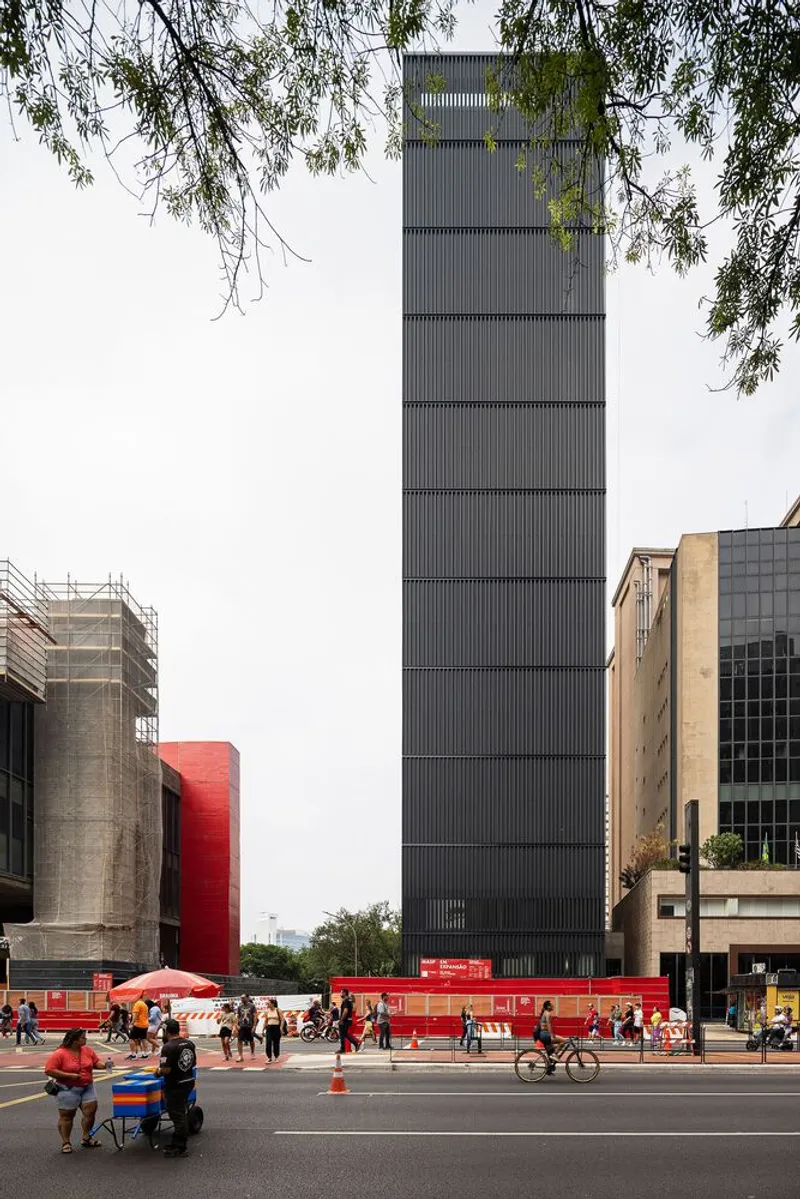
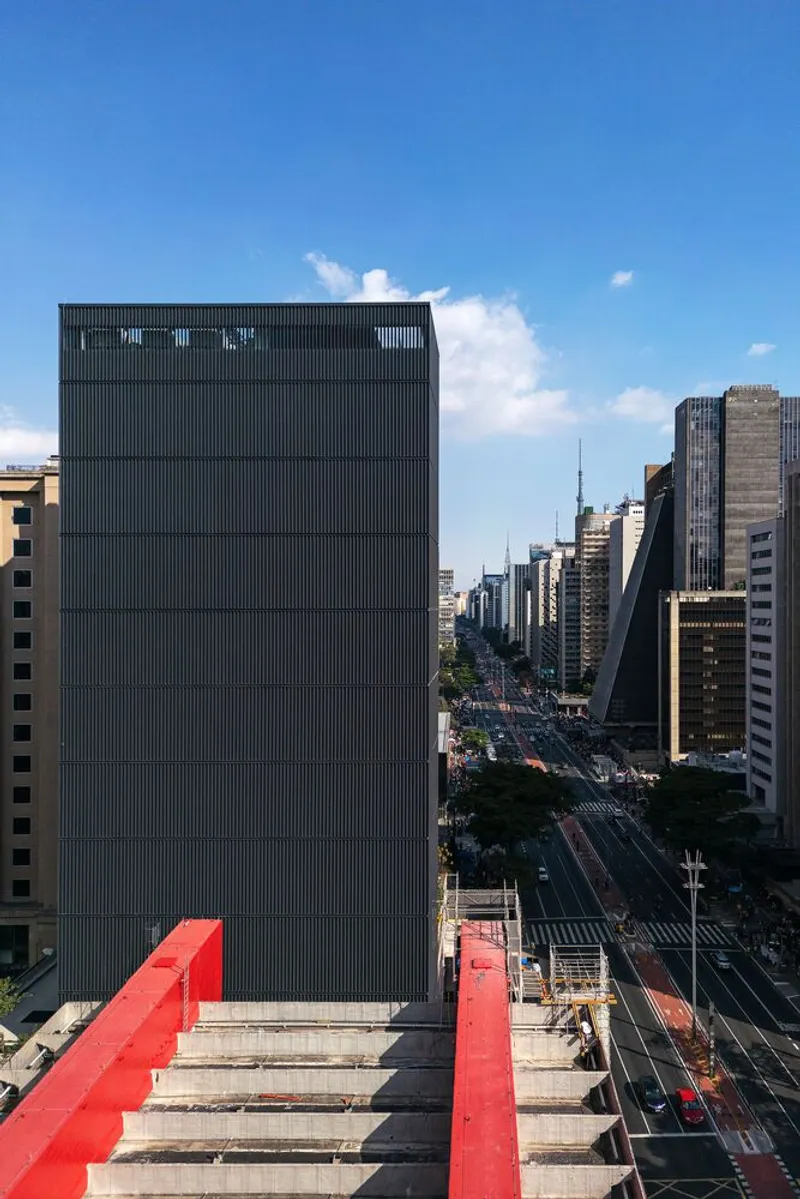
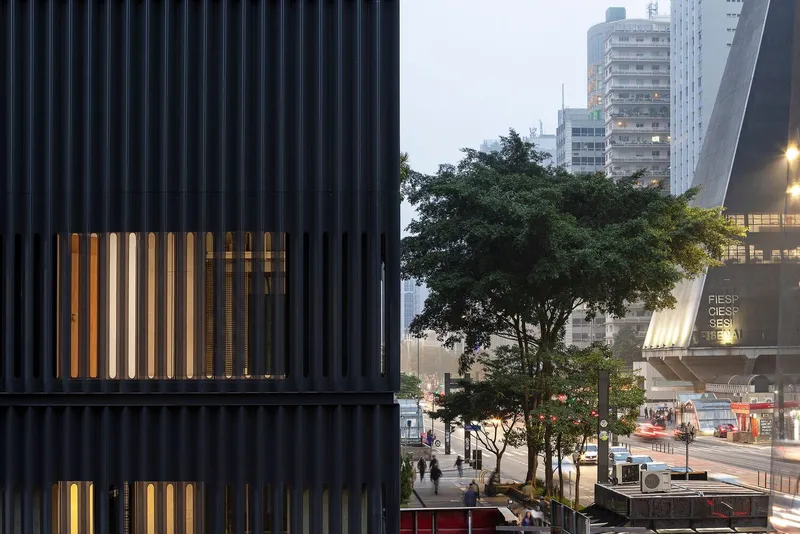
From street level, the Bardi Building reads as a slender dark monolith, its corrugated metal cladding absorbing light rather than reflecting it. The tower's footprint and overall dimensions were deliberately calibrated to match the original museum, establishing a proportional kinship that avoids visual conflict. At 73 meters, a single exposed concrete panel runs the full height of the exterior, anchoring the composition with a material choice that nods to Paulo Mendes da Rocha, another titan of São Paulo's modernist legacy.
The building's personality emerges at dusk, when vertical window openings glow behind the metal screen and the tower shifts from opaque backdrop to lantern. During daylight, the facade is deliberately self-effacing, letting Bo Bardi's red frame dominate the Avenida Paulista streetscape as it always has.
The Metal Skin as Environmental Machine
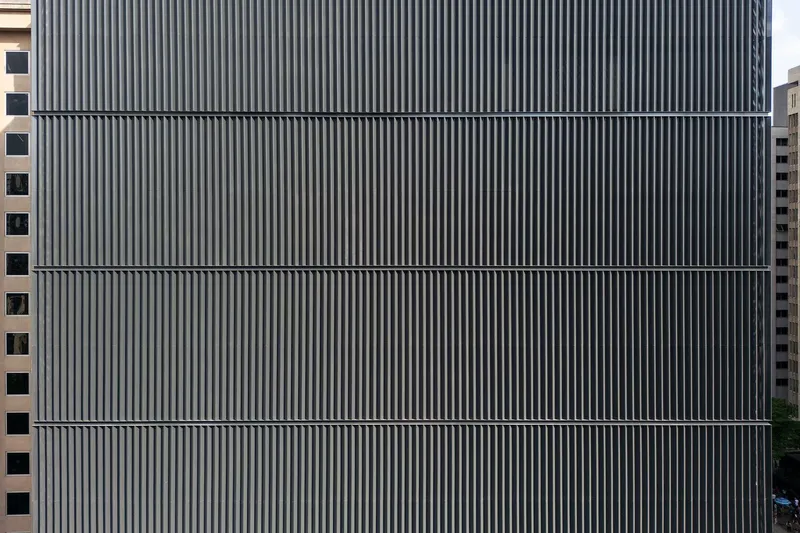
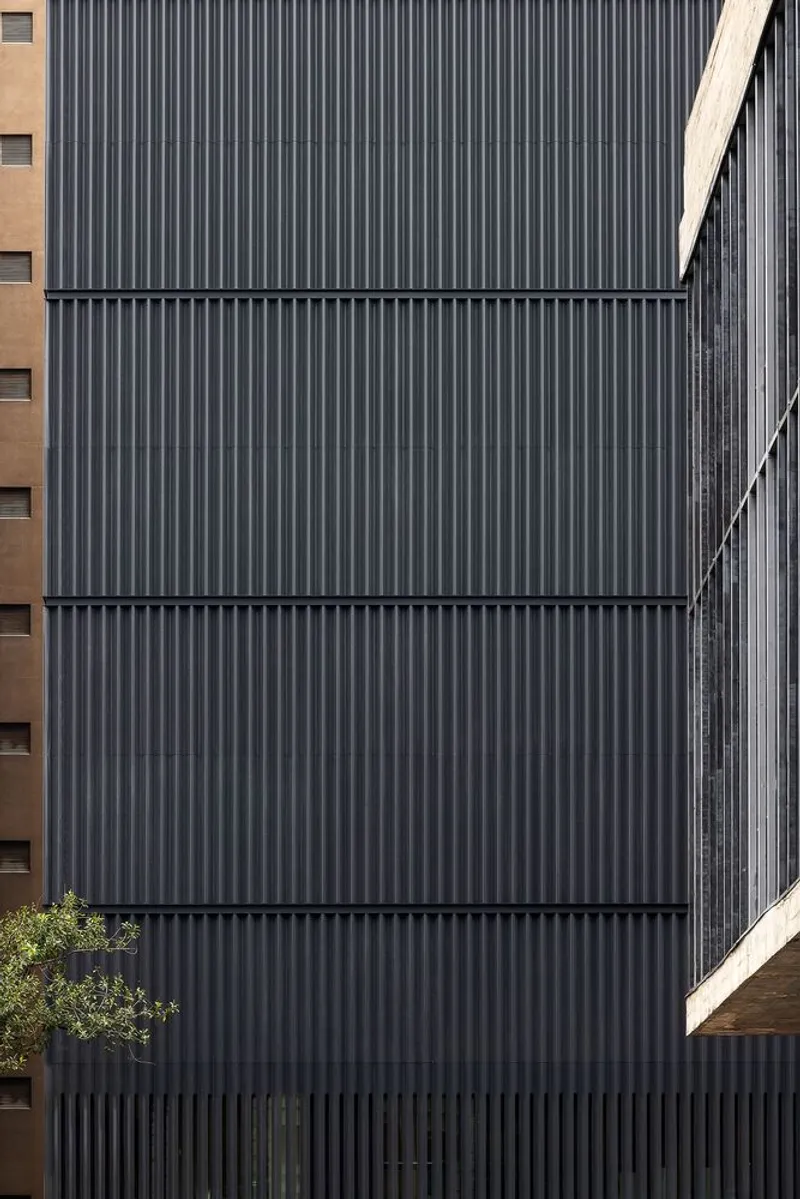
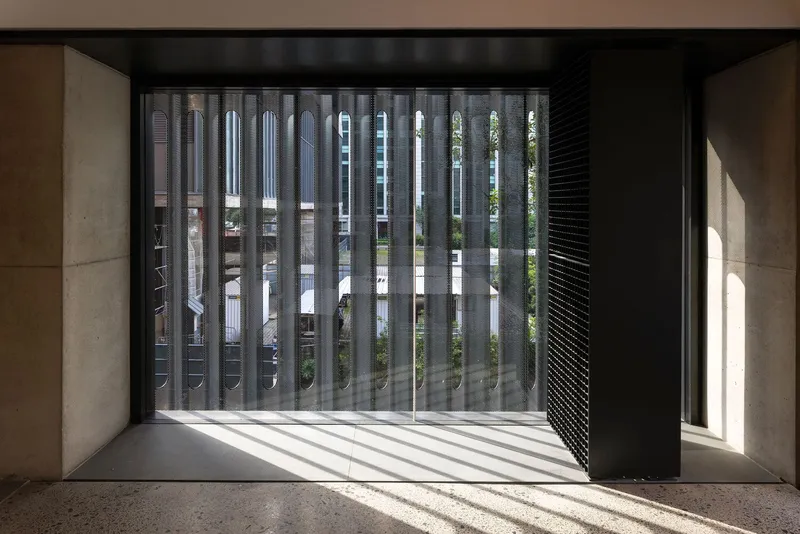
The perforated and pleated aluminum facade is not decoration. It is a working double skin that creates an air layer between the building envelope and the exterior cladding, forming a microclimate that buffers solar radiation and reduces the internal thermal load. For a museum housing sensitive artworks, this is not optional: consistent temperature and light control is a conservation imperative. The metal mesh filters sunlight into striped shadow patterns on the interior concrete floors, turning environmental performance into spatial experience.
Combined with automated LED lighting and advanced HVAC systems, the facade strategy helped the project earn LEED certification. The approach is pragmatic rather than performative: the skin works hardest on the sun-facing elevations, where thermal gain is highest, while generous glazing on other faces admits views and daylight where they do no harm.
Concrete Stairs and Inherited Craft
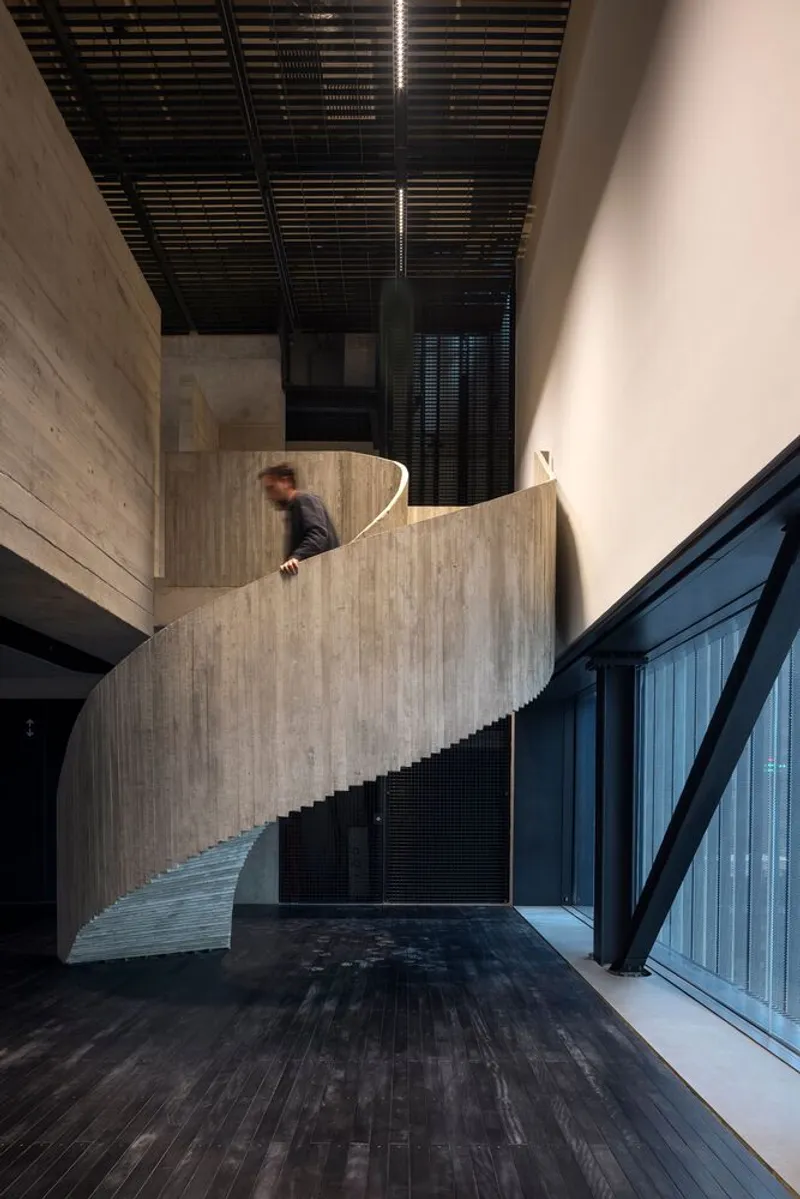
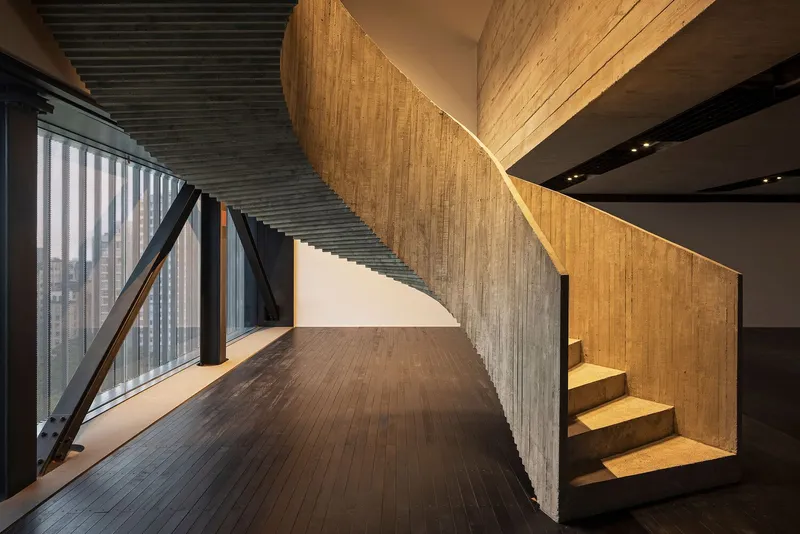
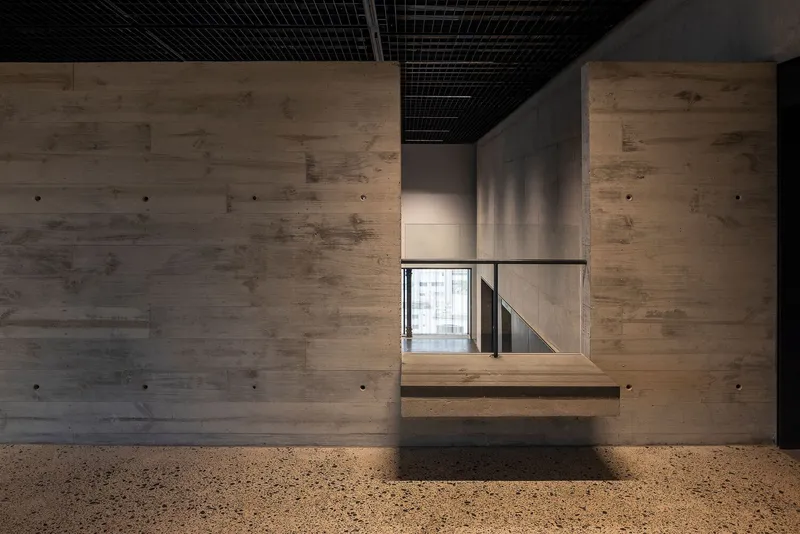
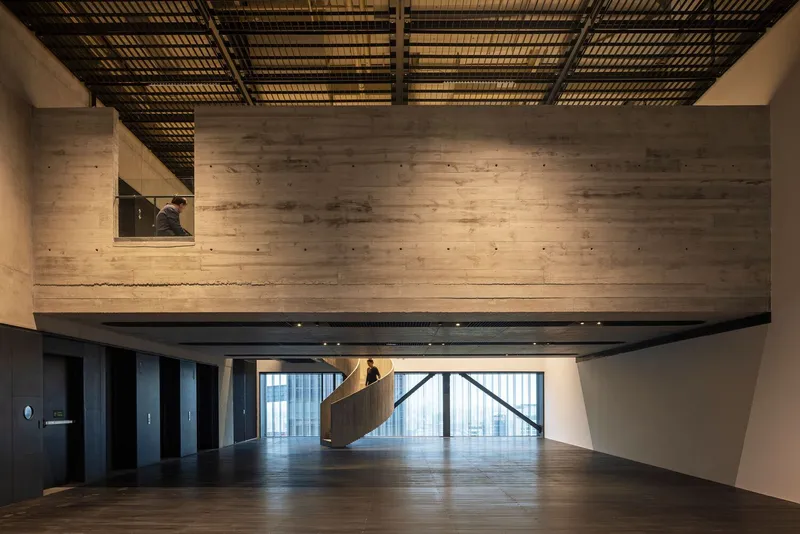
The board-formed concrete staircases inside the Bardi Building are among its most emotionally charged elements. Their spiraling geometry and rough timber imprints carry a direct lineage to Paulo Mendes da Rocha's work, and the connection is literal: the wood forms were built by Oscar Kusaka, the same craftsman, now in his eighties, who constructed Mendes da Rocha's celebrated stairs decades earlier. In an era of parametric fabrication, this is a deliberate investment in embodied knowledge and manual skill.
The stairs are not tucked away as fire escapes. They are primary circulation, lit by natural light through fireproof glass and designed to make the act of moving between floors part of the museum experience. Visitors descend from the upper galleries through a sequence of double-height spaces, encountering the building's materiality at close range: the grain of the formwork, the weight of the concrete, the warmth of timber-clad volumes overhead.
Gallery Interiors Built for Looking
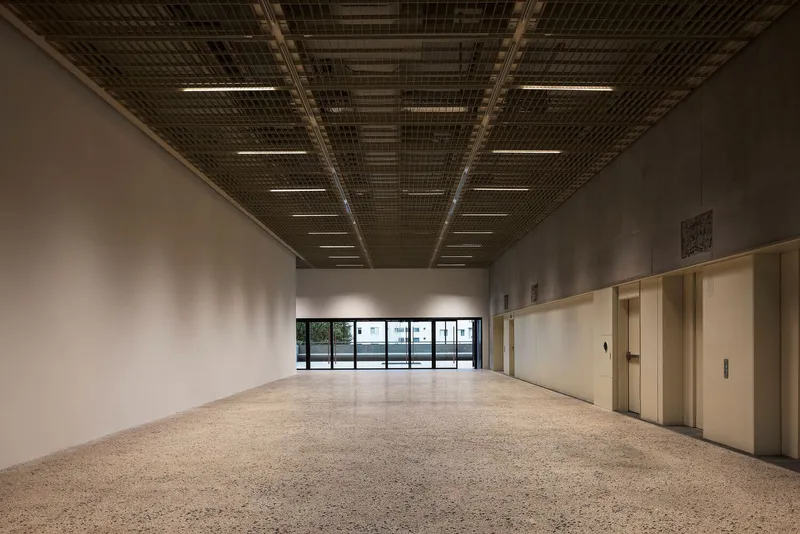
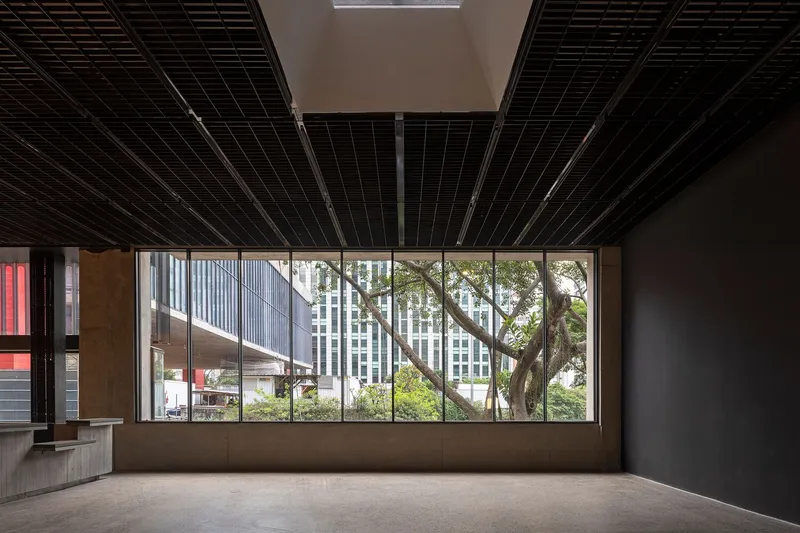
Five exhibition galleries occupy the middle floors, each with 4.95-meter ceilings created by the strategic removal of every other floor from the original 1940s structure. The selective demolition is an extraordinary engineering decision: rather than starting fresh, Metro Arquitetos carved generous double-height volumes out of an existing residential grid, preserving the foundations and lower structure while adding floors above to increase the building's total height.
The galleries themselves are restrained. White walls, polished terrazzo floors, metal mesh ceilings with integrated linear lighting, and carefully placed horizontal windows that frame mature trees and neighboring towers. The window at image five is particularly effective: it treats the canopy of a street tree as a living artwork, a curatorial gesture that connects the interior to the dense urban fabric outside without breaking the contemplative atmosphere.
Bridging Two Buildings, Freeing the Free Span
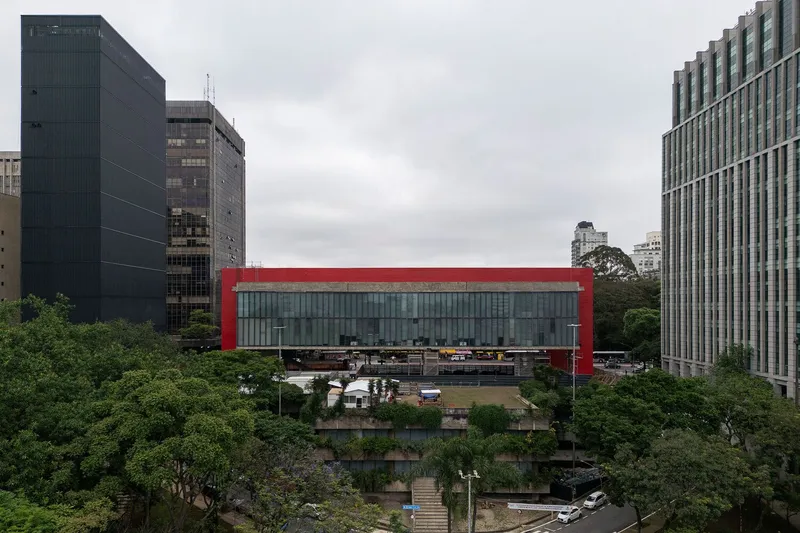
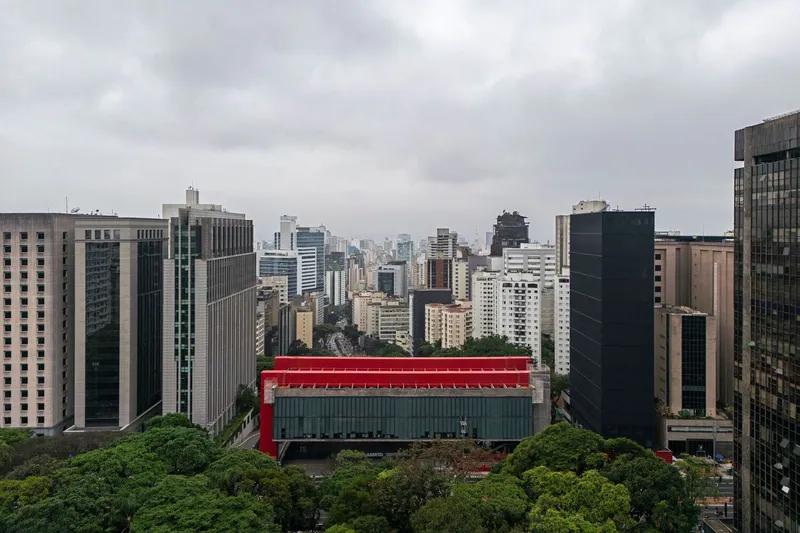
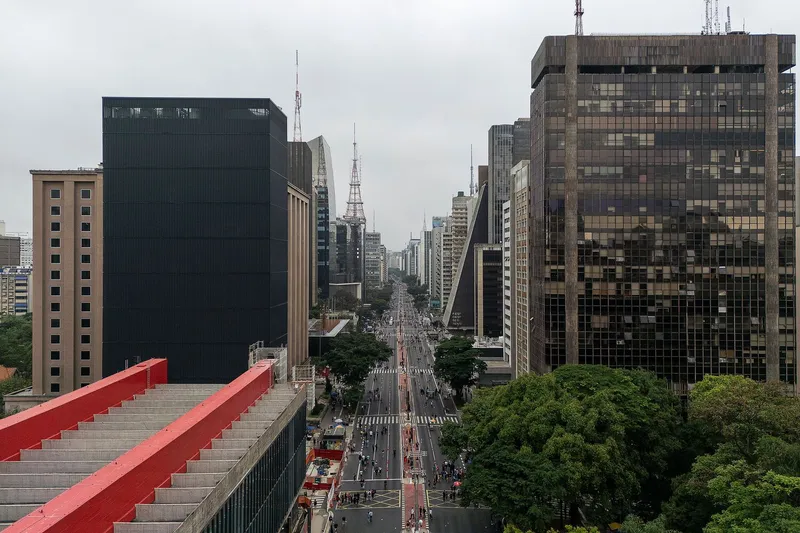
The red-framed glass bridge that links the Bardi Building to Bo Bardi's original structure is more than a convenience; it is a liberation. By moving ticketing, security, and shop functions into the base of the new tower, Metro Arquitetos restored the celebrated vão livre, the open span beneath the original MASP, to its intended purpose as a public gathering space. A subterranean tunnel connects the two buildings at basement level, allowing artworks to move between them without exposure to weather or street traffic.
The bridge itself adopts Bo Bardi's red as an explicit signal of allegiance, a visible thread stitching the two buildings together across the planted sunken plaza below. From the rooftop, a diagonal staircase leads to the bridge level, framing a long view down Avenida Paulista that positions the visitor at the intersection of old and new. It is the one moment where the expansion allows itself a theatrical gesture, and it earns it.
Material Palette and Ground Floor Encounters
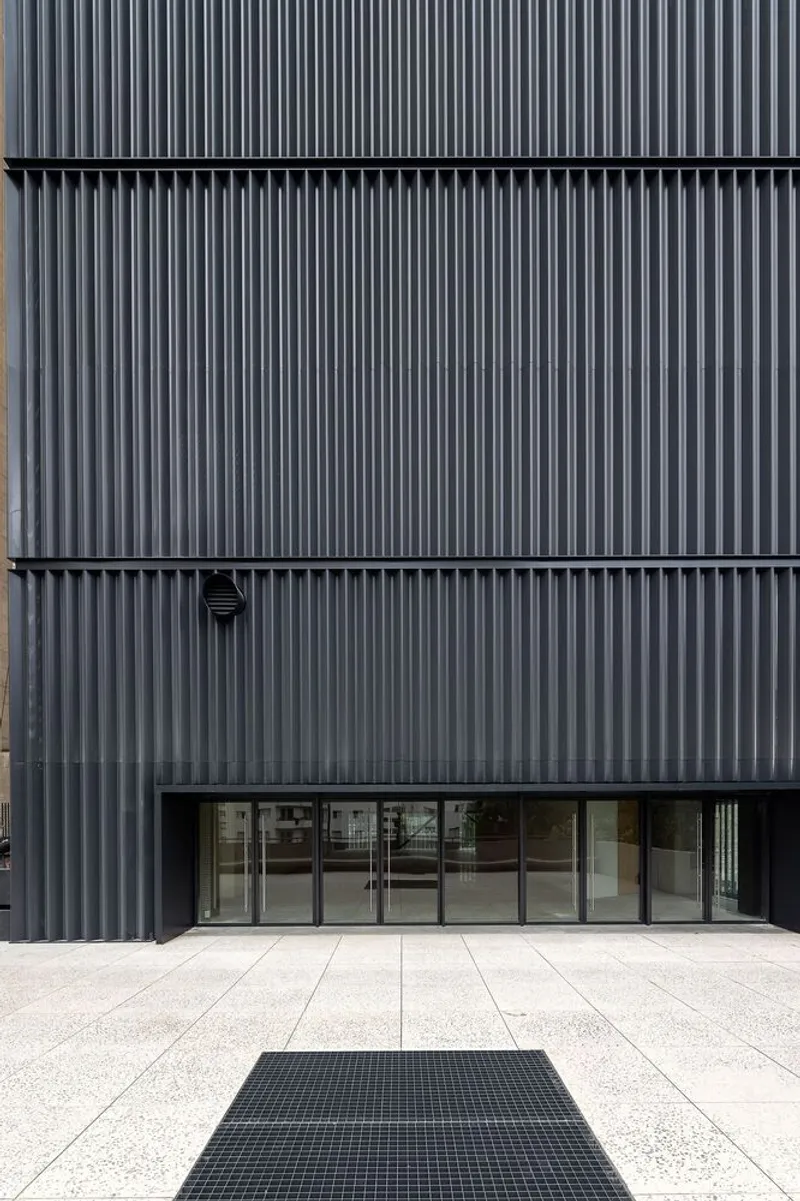
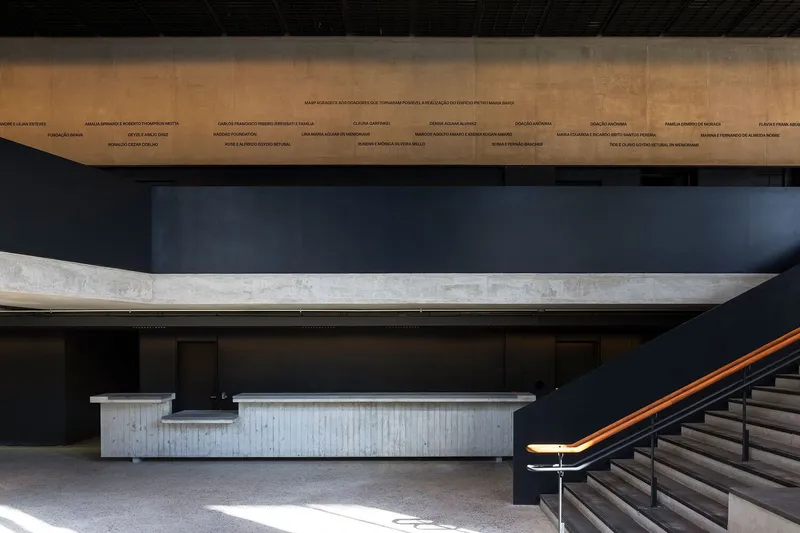
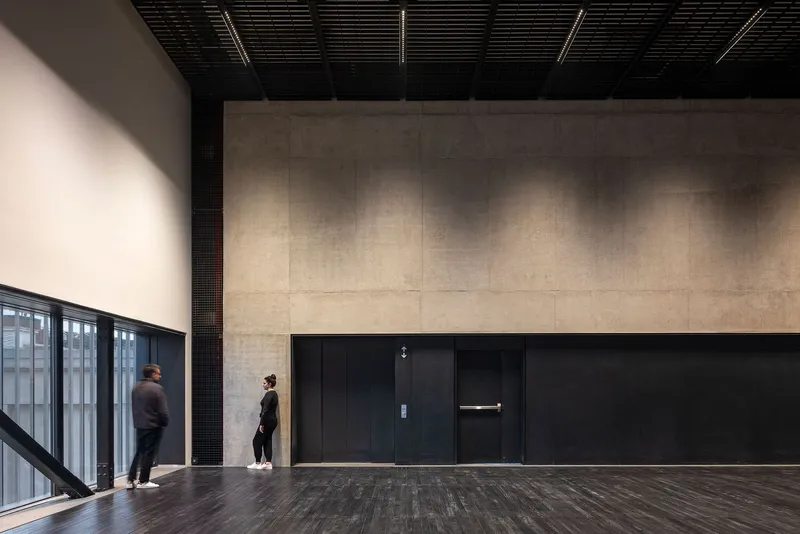
The building's base meets the street through glass doors set into the corrugated metal facade, a deliberately understated threshold for one of Brazil's most important cultural institutions. Inside, the lobby deploys black hardwood floors, concrete service desks, black-tiled walls, and bronze stair rails, a material palette that is somber without being austere. The ground floor houses the restaurant and shop, activating the street edge and drawing foot traffic from Professor Otávio Mendes Street.
Basalt stone extends from the interior to the sidewalk, blurring the boundary between public infrastructure and institutional architecture. It is a small detail that signals a larger ambition: the Bardi Building wants to belong to the city, not merely to the museum.
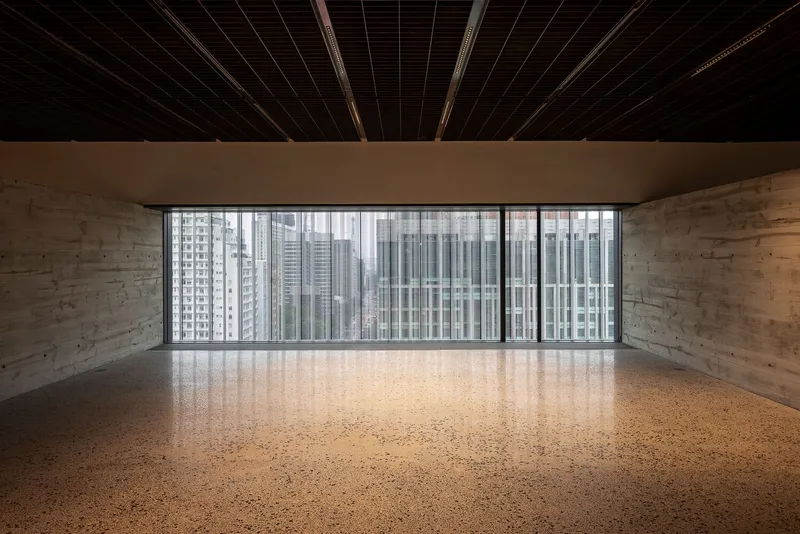
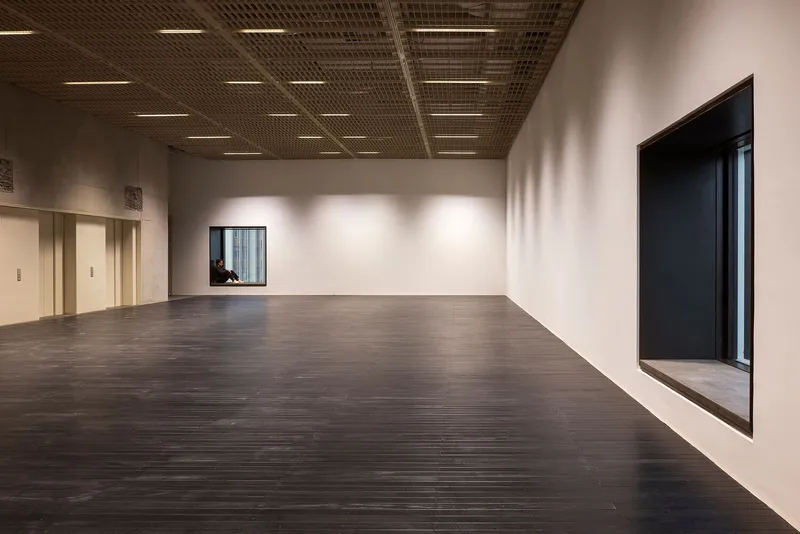
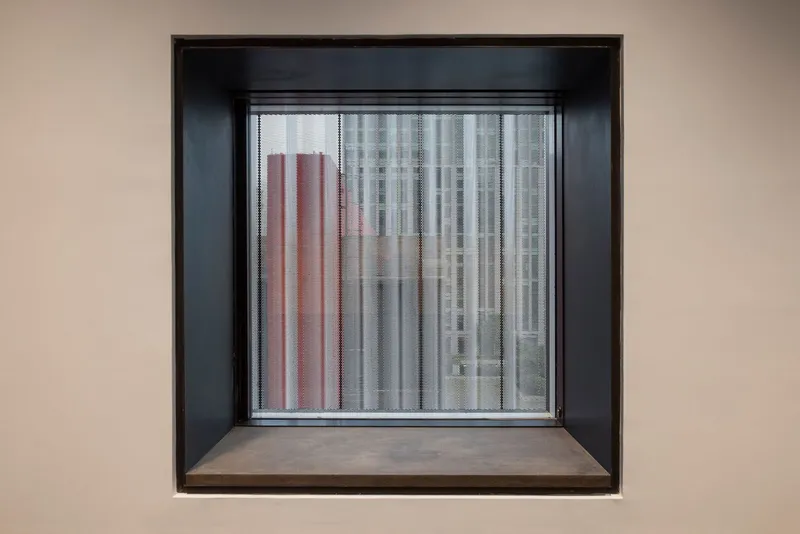
Throughout the upper floors, deep-set windows with black steel frames and timber sills create intimate viewing alcoves. Some are occupied by visitors who sit inside the apertures, using the thick wall section as a bench. The polished terrazzo and floor-to-ceiling glazing on other faces open up panoramic views of the dense high-rise surroundings. These moments of transparency counterbalance the opacity of the metal skin, reminding occupants that the building, however introverted, exists within one of Latin America's most intense urban corridors.
Facade Detail and the Logic of the Screen
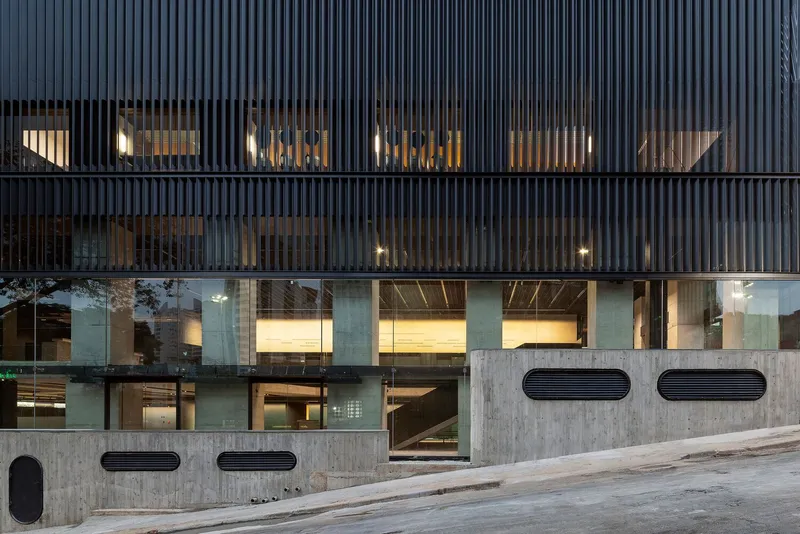
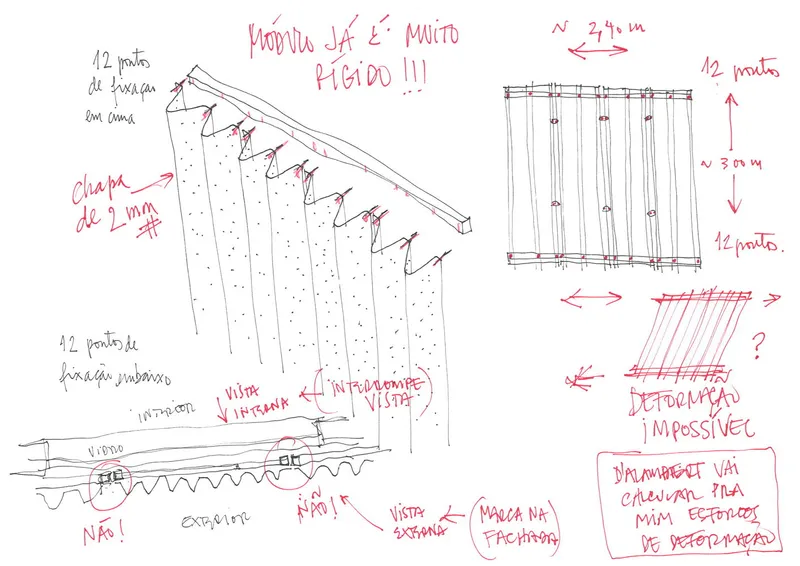
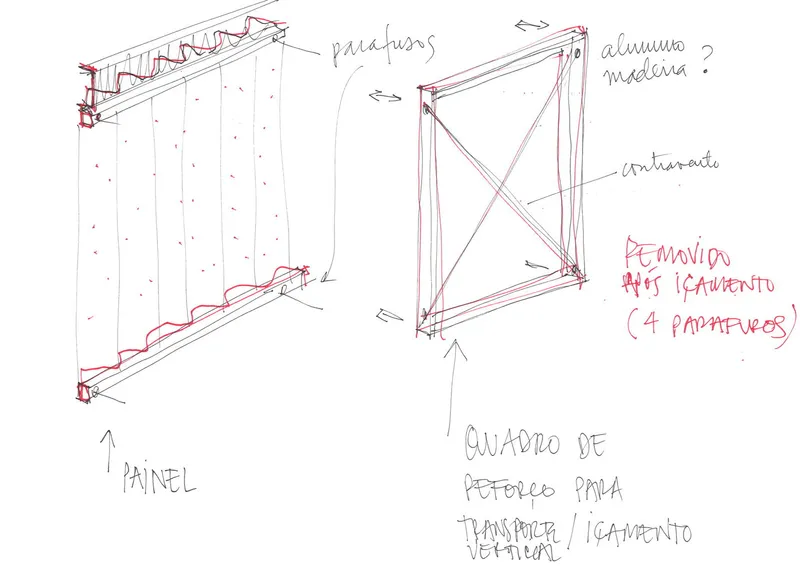
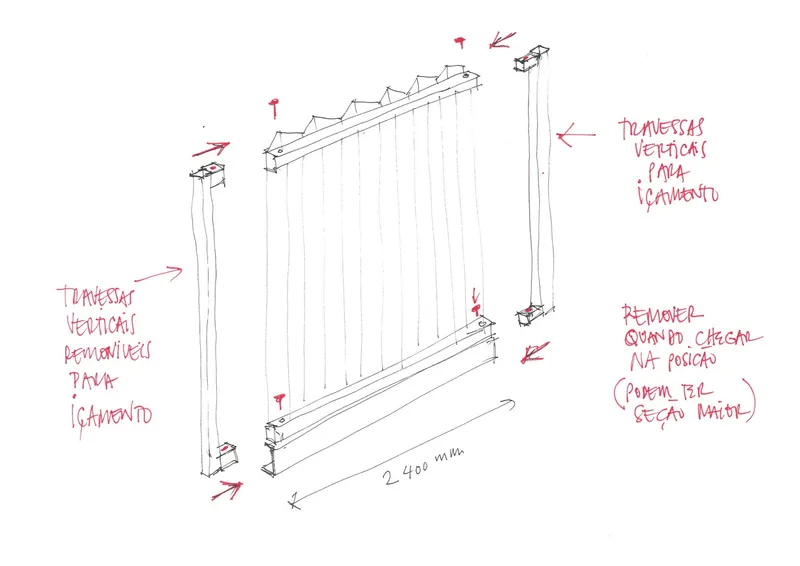
The facade system is composed of vertical metal fins arranged in horizontal bands, with removable panels secured by cross-bracing and mounting brackets. Hand-drawn construction sketches reveal the care taken in detailing angled structural members and panel connections, an approach that treats the skin as a modular, maintainable system rather than a monolithic shell. Panels can be removed individually for maintenance or replacement, a pragmatic concession to the long life span the building is designed to achieve.
Roughly 3,000 cubic meters of new concrete were treated with crystalline waterproofing admixture, and additional sealants were applied to the 73-meter exterior concrete panel. These are the kinds of decisions that rarely appear in architectural photography but determine whether a building looks this good in twenty years.
Plans and Drawings
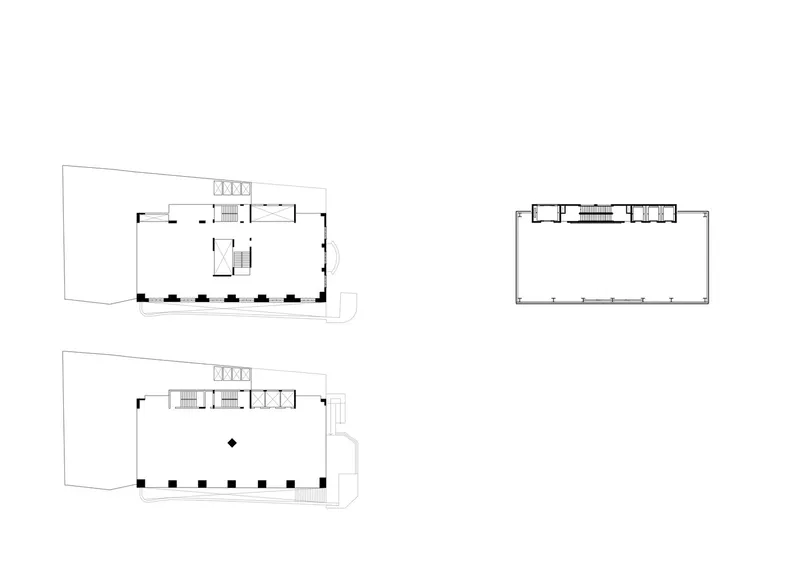
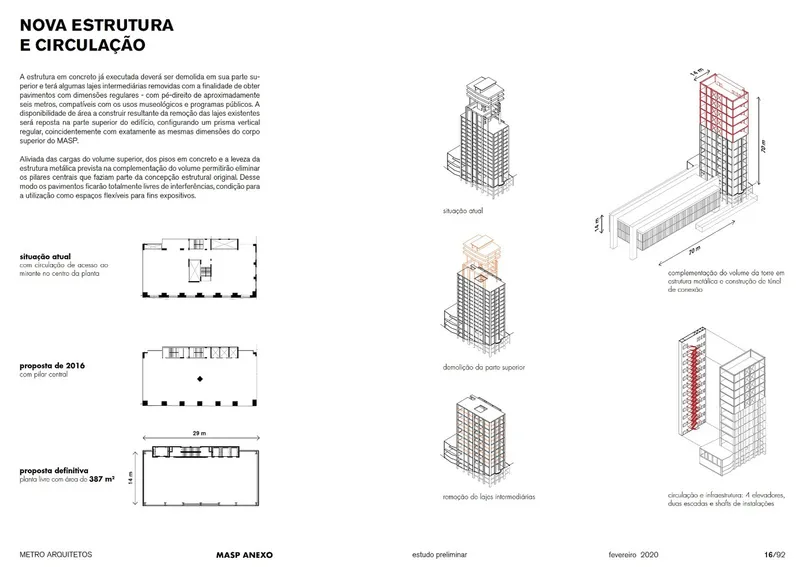
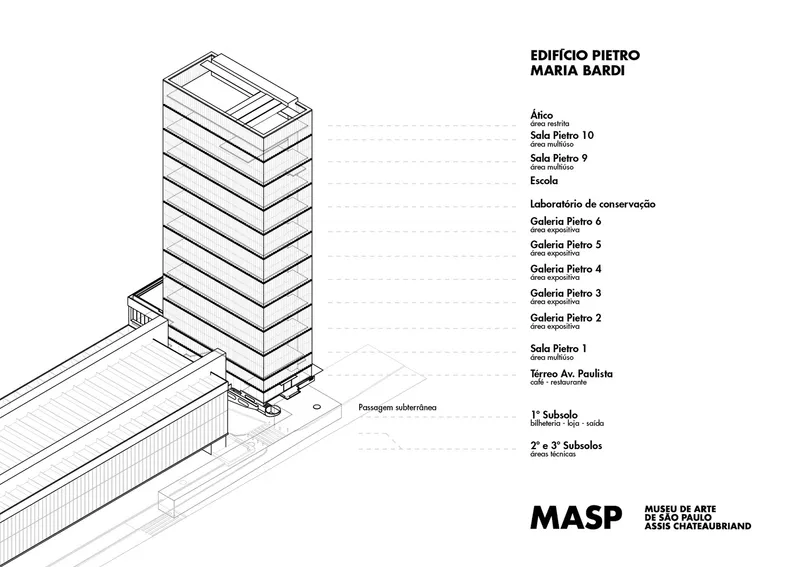
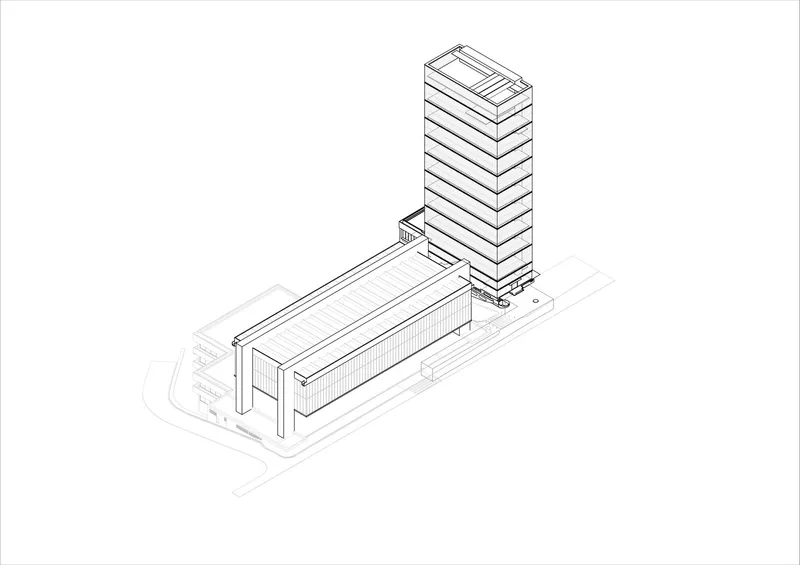
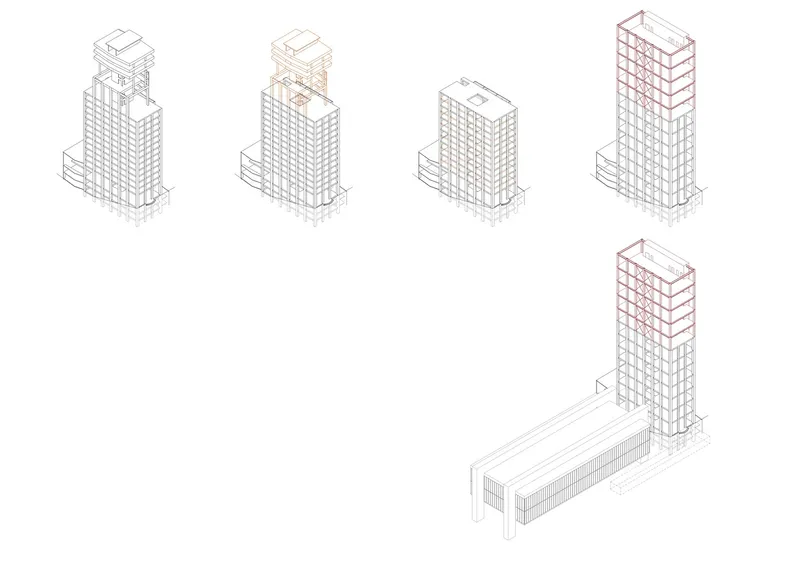
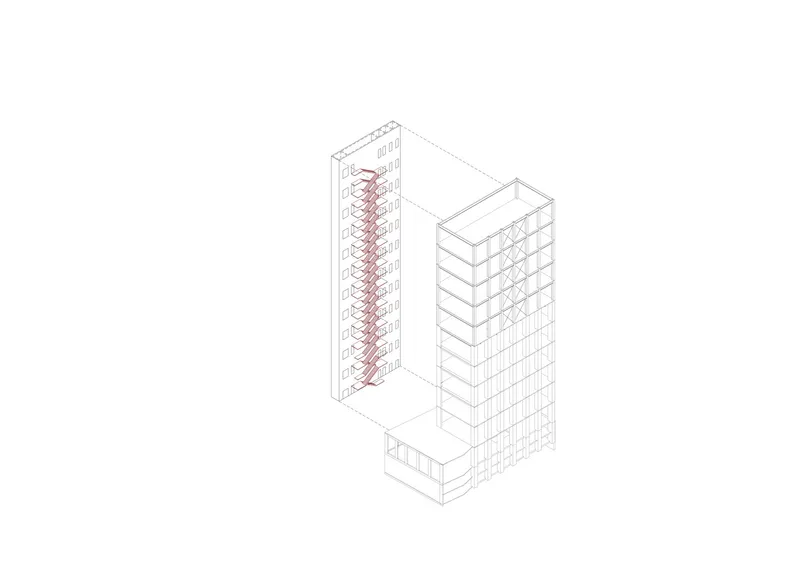
The axonometric drawings make the structural strategy legible in a way photographs cannot. The sequence showing the evolution from enclosed volumes to exposed red structural grids illustrates the conceptual separation between the vertical circulation core and the surrounding floor plates. Floor plans confirm the open, column-free gallery layouts made possible by retaining and reinforcing the 1940s structural grid. The isometric site drawing reveals the scalar relationship between the tall tower and the low horizontal volume of Bo Bardi's museum, two figures standing side by side on Avenida Paulista with fundamentally different postures but shared proportional DNA.
Why This Project Matters
Museum expansions are often exercises in architectural vanity, opportunities for a new architect to assert dominance over a predecessor's vision. What Metro Arquitetos has done with the Bardi Building is rarer and harder: they have built a substantial, technically sophisticated structure that makes Lina Bo Bardi's original look better than it has in years. By absorbing the operational clutter that had colonized the free span, the new building restores the ideological clarity of the 1968 design. The underground tunnel, the relocated ticketing, the activated street frontage: these are logistical moves with profound spatial consequences.
The adaptive reuse of the 1940s residential structure is equally significant. In a city where demolition is the default response to inadequate buildings, Metro Arquitetos proved that selective surgery, removing every other floor, reinforcing foundations, adding height, can produce gallery spaces as compelling as any new-build. The Bardi Building is a case study in the architecture of deference: knowing when to step forward, when to step back, and how to make the difference invisible.
MASP Expansion Project (Pietro Maria Bardi Building) by Metro Arquitetos (Martin Corullon and Gustavo Cedroni). São Paulo, Brazil. 7,680 m² (new building); 17,680 m² (total complex). Photography by Leonardo Finotti.
About the Studio
Share Your Own Work on uni.xyz
If projects like this are the kind of work you want to make, uni.xyz is a place to publish your own, find collaborators, and enter design competitions.


Popular Articles
Popular articles from the community


Jaramillo Van Sluys Arquitectura and Urbanismo Turn a Demolished Registry Lot in Quito into an Orchard Plaza
In Quito's Centro Histórico, a 2,800 m² plaza exposes the San Agustín convent wall and redraws its lost Augustinian orchard in volcanic stone.

David Macias Steps a Doorless Stone and Plaster House Down a Tropical Colombian Hillside
In the humid hills of Colombia, Threshold House replaces the front door with an open void and terraces its 850 m² down the slope instead of fighting it.

Juan García Correa, John González and Claudia Rueda Sink a Circular Amphitheater into a Manizales Engineering Building
On the La Nubia campus in Manizales, Colombia, the S1 Building folds labs and offices into a hillside of ramped lawns that double as a campus route.

Cube Design Draws an Ecological Corridor Between Two Shenzhen Hills with the Nankai Building
Beside Shenzhen's container docks, the Nankai Building pairs stacked balconies with a climbing green screen to connect two hillsides across its height.

Similar Reads
You might also enjoy these articles


Hodi-Mandai Geram
Project Function: Preservation and revitalization of the Intangible heritage and socio-spatial identity of the Hodi by Housing, Cultural Memory Center, Sacred Grove, landscape, local tourism economy


Olio Towers: A Mid-Rise for Performers That Fuses Housing, Rehearsal, and Stage
Located blocks from Houston's Theater District, this modular tower stacks living units around a central performance atrium.

Oasis: Modular Green Housing Carved into Dhaka's Urban Fabric
A shortlisted Plugin Housing entry reclaims unauthorized settlements in Dhaka with stepped concrete volumes, green roofs, and ventilation-driven design.

Black Hole: A Floating Megastructure for the Post-Physical Era
Emiliano Mazzarotto envisions a spherical, self-scaling arena where e-sports, digital hotels, and holographic stadiums replace traditional public space.

Explore Architecture Competitions
Discover active competitions in this discipline

Challenge to reimagine the Iron Throne

Photograph architecture without architects

Illustrate the lost glory of Angkor Wat - Render Challenge

Design challenge to reuse E-waste
Comments (0)
Please login or sign up to add comments
No comments yet. Be the first to comment!