
MATERIA Weaves a Cultural Center into the Gardens of a 1906 Mérida Estate
Prefabricated concrete pavilions, sunken galleries, and porticoed courtyards extend the life of a Paseo Montejo landmark in Yucatán.


Paseo Montejo in Mérida is lined with mansions that recall the sisal boom of the early twentieth century, and few are as totemic as the Quinta Montes Molina. Built in 1906, the house became a museum in 2006 and had been hosting social events in its gardens since 2000. When MATERIA, led by Gustavo Carmona, was first called in to design a pavilion in 2015, the scope was modest. A year later, a request for a parking lot grew into something far more ambitious: a full Cultural Center that took six years of planning, financing, design, and construction to realize.
What makes the project worth studying is the discipline of the refusal. MATERIA chose not to produce an object. Instead they produced a sequence, a procession of pavilions linked by porticoes, thresholds, and sunken volumes that defer to a grove of hundred-year-old trees and to the original house itself. The building disappears behind green canopy and reappears as a rhythm of columns, gravel courts, and reflecting pools. The program, which includes a sunken art gallery, restaurant, bookstore, workshop spaces, art cinema, and multipurpose hall, is distributed across these fragments so that every room negotiates between garden and sky.
Porticoes as Architecture
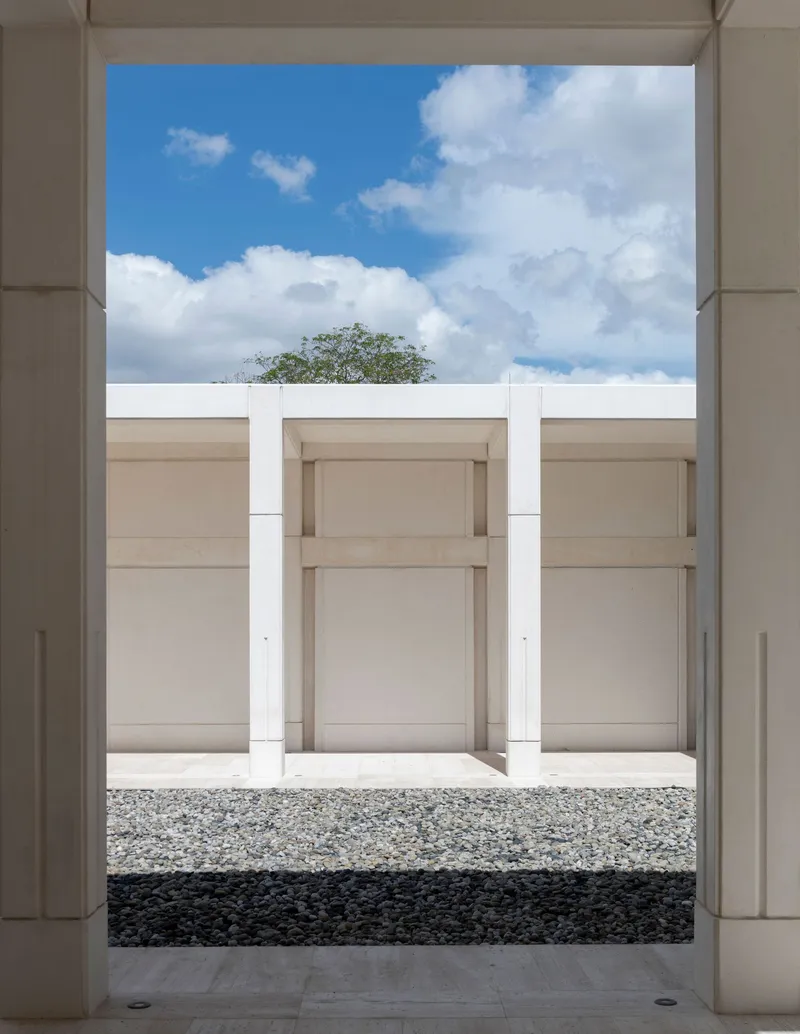
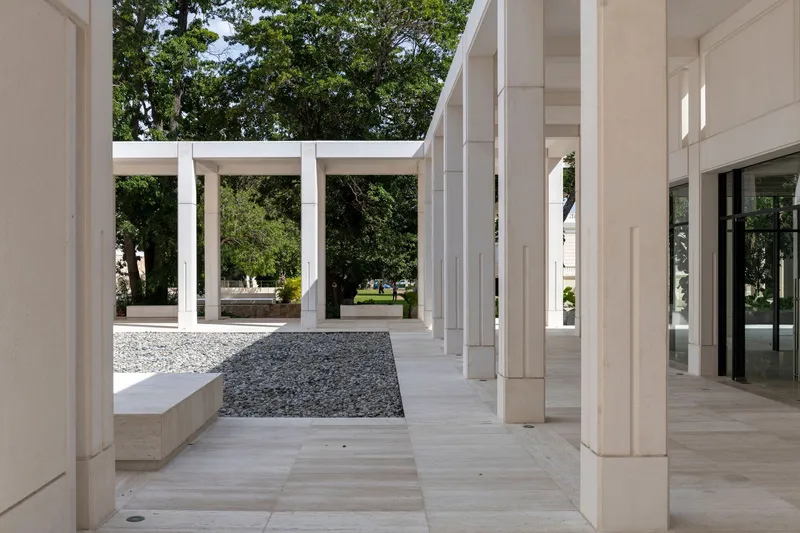
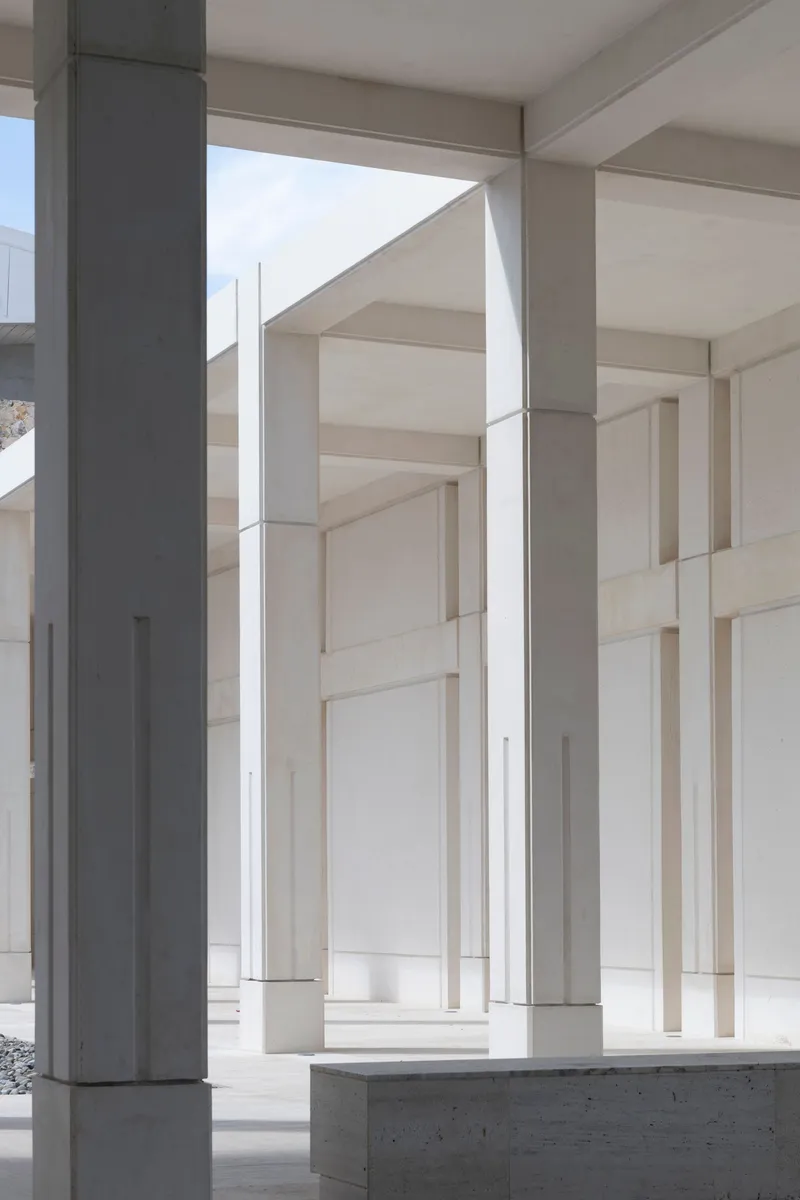
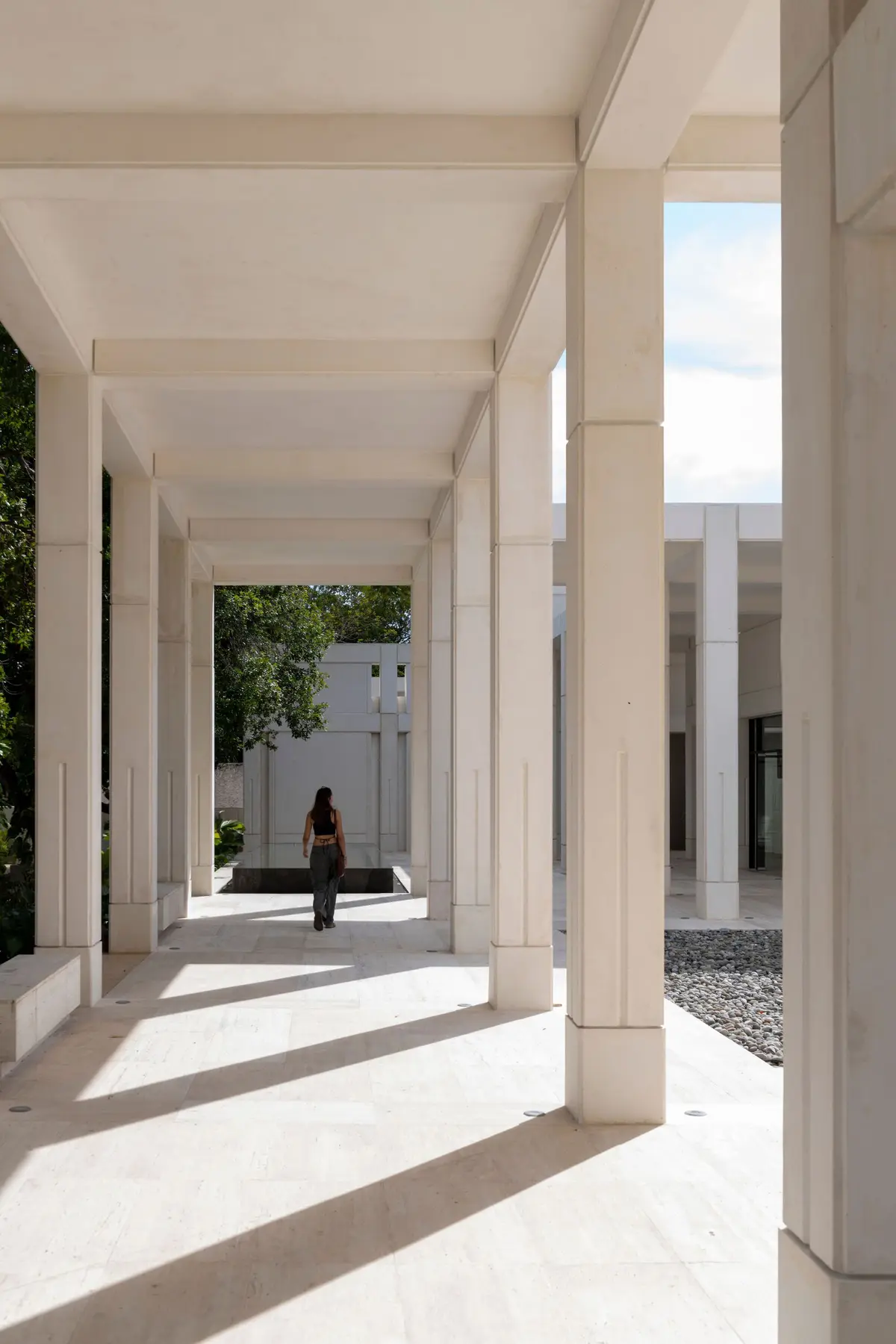
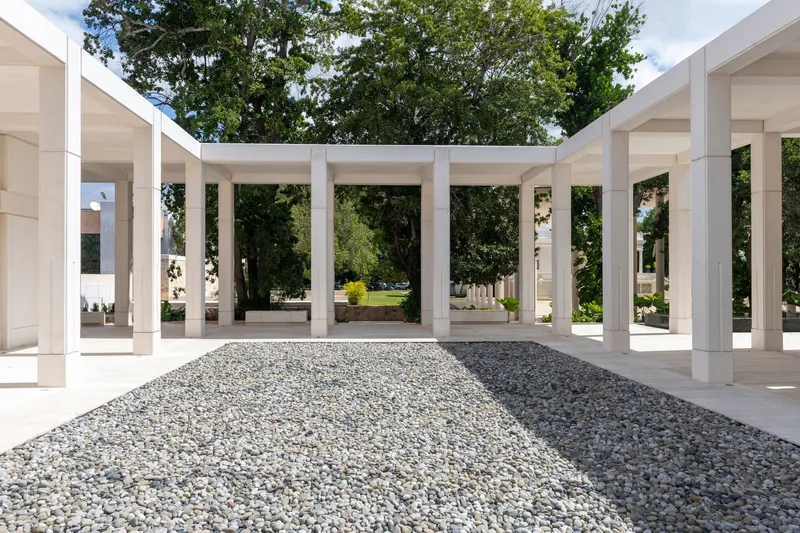
The portico is the project's primary architectural unit, not a transitional element but the element itself. Slender concrete columns define a structural grid that frames views toward gravel courtyards, planted trees, and the sky above. The coffered ceilings and pale stone finishes read as an abstraction of the ornamental vocabulary of the 1906 house: classical proportion reinterpreted through prefabricated concrete rather than carved stucco.
Prefabricated concrete made with regional aggregates kept both costs and construction time in check. But the choice was also aesthetic. The material arrives with a uniformity that allows the columns to feel almost weightless, their surfaces catching light and projecting shadow in ways that shift throughout the day. Structure and ornament collapse into a single gesture.
Thresholds and Courtyards
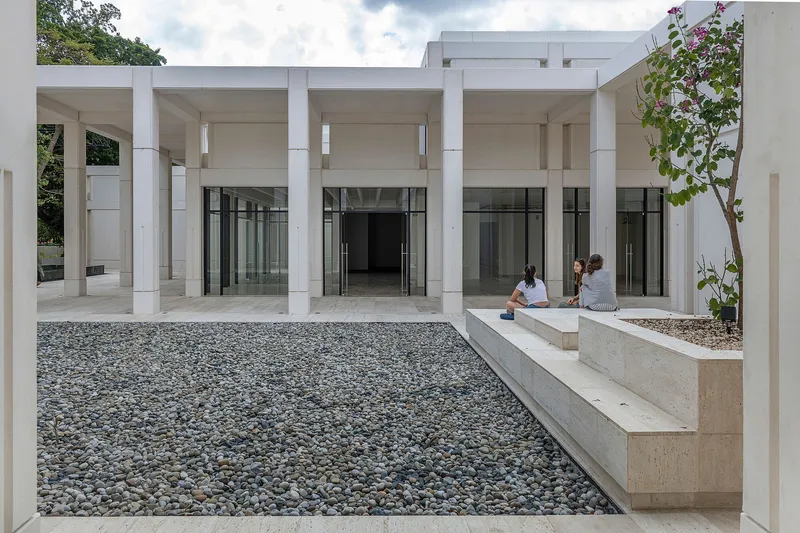
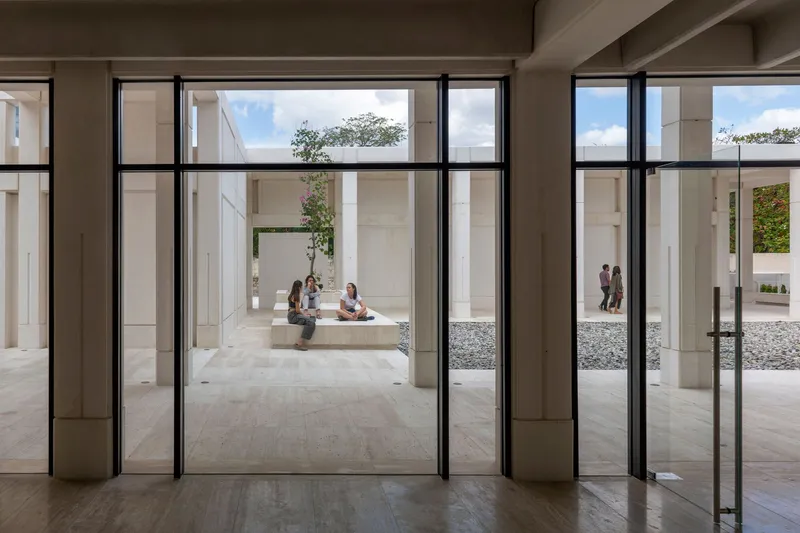
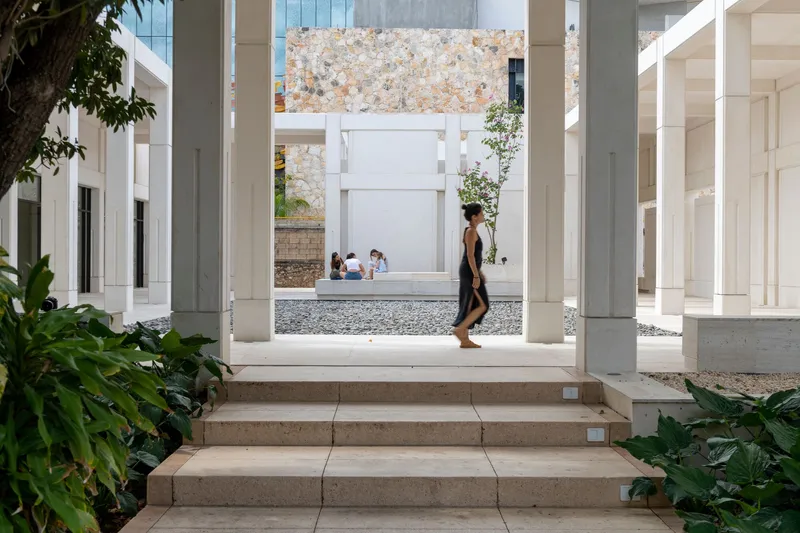
Rather than a single entrance, the Cultural Center offers a series of thresholds. You move from gravel to stone to polished floor, from open sky to coffered shade, and each transition signals a shift in program or mood. The courtyards are not leftover voids; they are designed rooms. Gravel beds with concrete benches become gathering spaces, and the interplay of enclosure and openness keeps visitors oriented to the landscape rather than a corridor.
Steel-framed glass doors mark the boundary between exterior and interior without severing the visual connection. People visible on both sides of these planes reinforce the Cultural Center's purpose as a civic space: you are always aware of others occupying the building alongside you.
Water, Light, and Passive Cooling
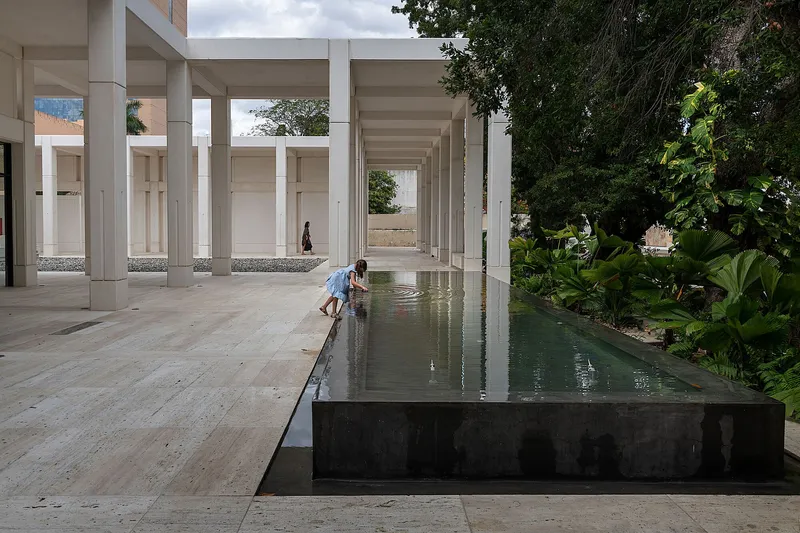
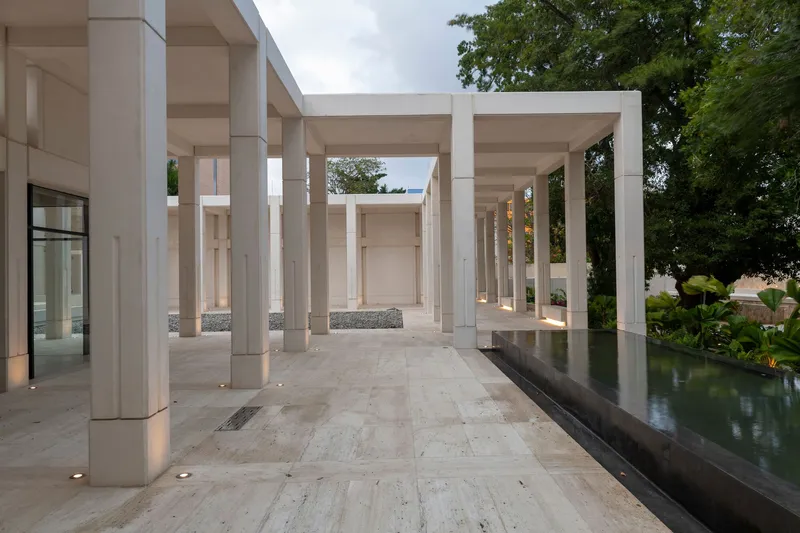
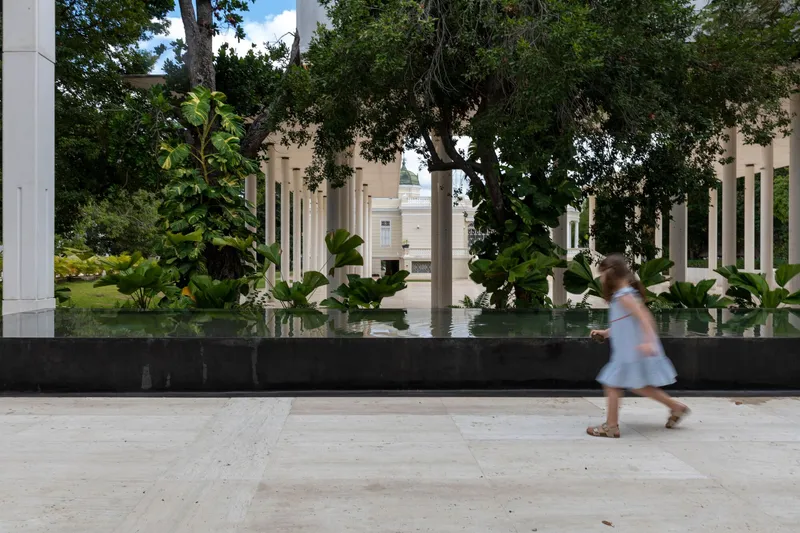
Reflecting pools serve double duty in Mérida's tropical climate. They lower perceived air temperature and, at night, transform the colonnades into mirror images of themselves. The raised pool in the central courtyard sits at child height, drawing families into the space; the longer pool along the covered walkway adds a meditative stillness, its lotus plants a quiet counterpoint to the hard geometry of concrete.
Light filtering is equally deliberate. Wood screens along the perimeter soffit moderate direct sunlight, while slot windows cut through layered concrete walls to project angular shafts of light that move across surfaces hour by hour. The sunken gallery, carved below grade, stays cool passively and controls natural light from above, a strategy well suited to both the climate and the display of art.
The Sunken Gallery and Interior Sequence
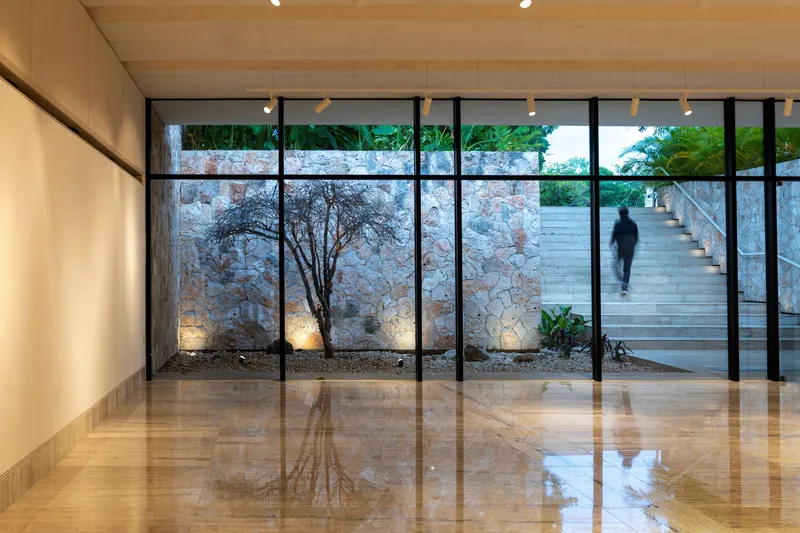
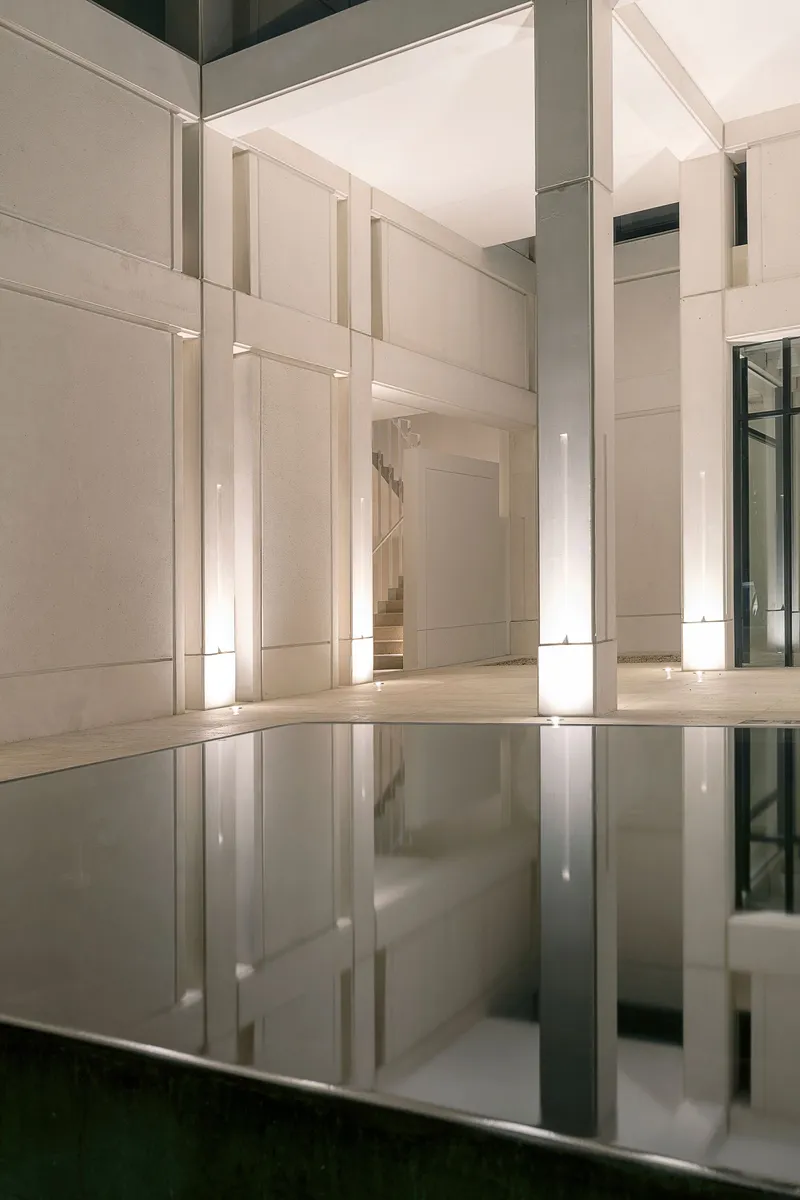
Digging the art gallery into the ground was the move that unlocked the whole project. By subtracting volume rather than adding it, MATERIA preserved the gardens' open character and kept the new construction from competing with the historic house. The gallery roof becomes an exterior terrace, restoring the ground plane even as it hides a generous exhibition space below.
Inside, polished stone floors and glazed walls keep the gallery connected to courtyard trees and exterior stairs. At night, illuminated wall panels reflected in the interior atrium pool turn the space into something almost sacral, a controlled environment for art that still breathes with the life happening above and around it. The exposed columns and upper slabs are left visible, reinforcing the tectonic honesty that runs through every part of the design.
Landscape as Buffer
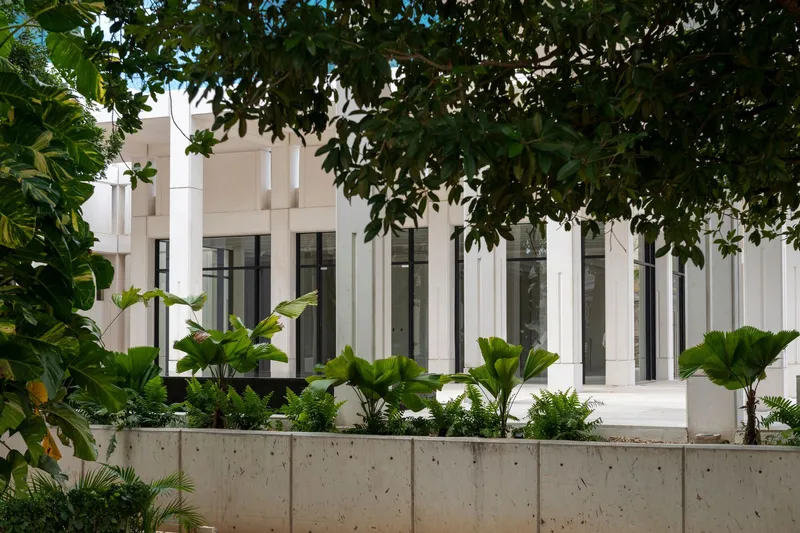
The hundred-year-old trees along the avenue are not just scenery; they are infrastructure. MATERIA positioned the pavilion behind this existing green wall so that the canopy absorbs traffic noise and shields the cultural center from the bustle of Paseo Montejo. Concrete planter walls and banana plants reinforce this buffer at a lower register, creating a layered gradient from urban boulevard to intimate courtyard.
Gustavo Carmona collaborated with Molino Lab and Jarde on the landscape design, and the result feels grown rather than imposed. River stone flooring in the exterior rest areas, gravel beds that drain tropical downpours, and planted raised beds housing flowering trees all contribute to a material palette drawn from the Yucatán ground itself.
Shadow, Detail, and Tectonic Expression
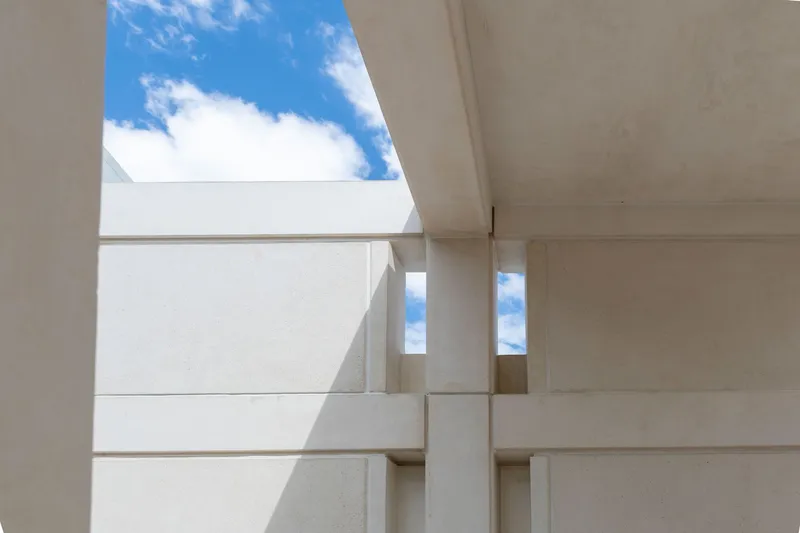
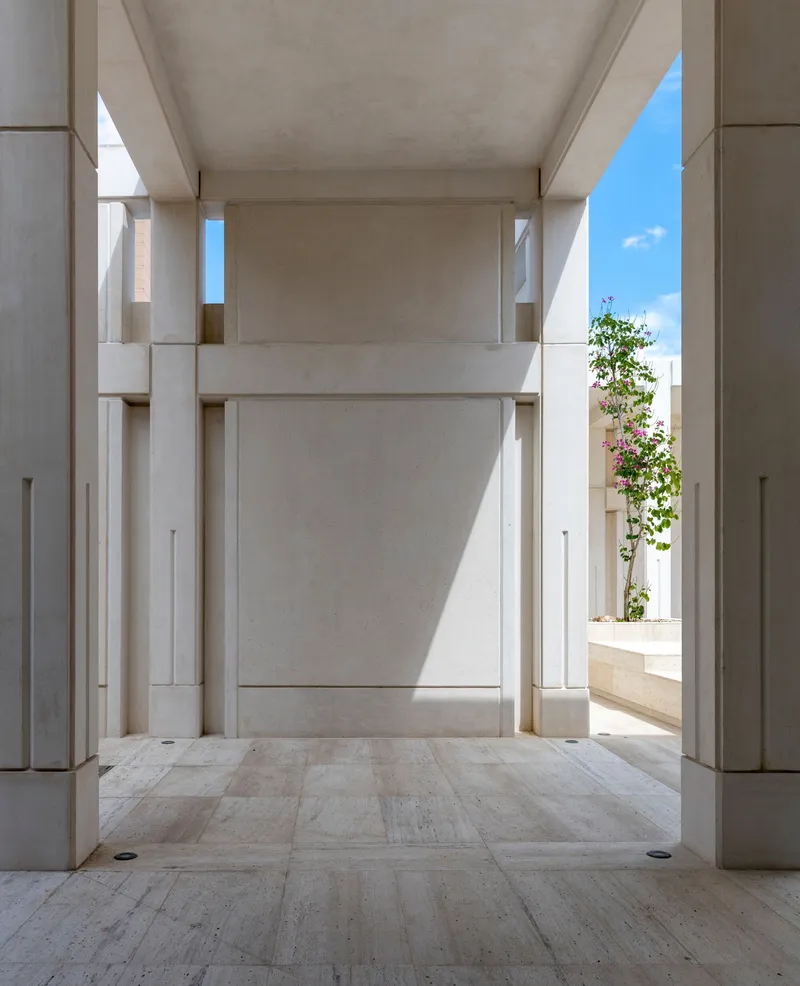
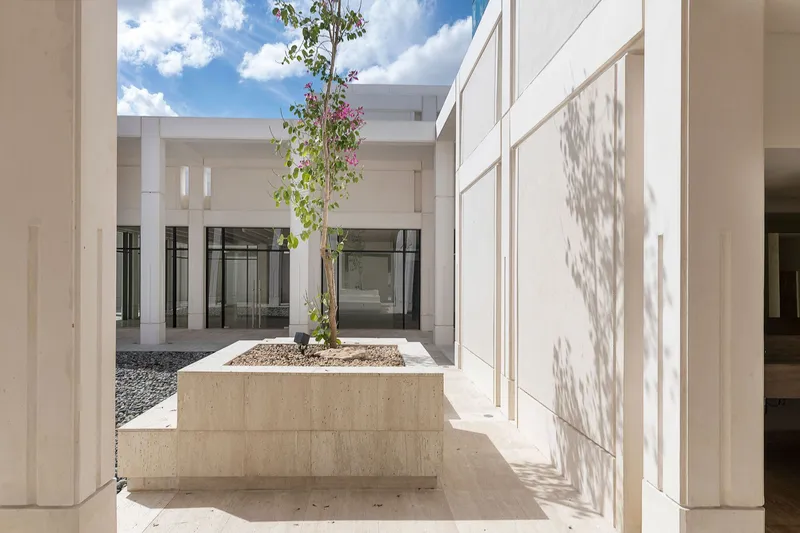
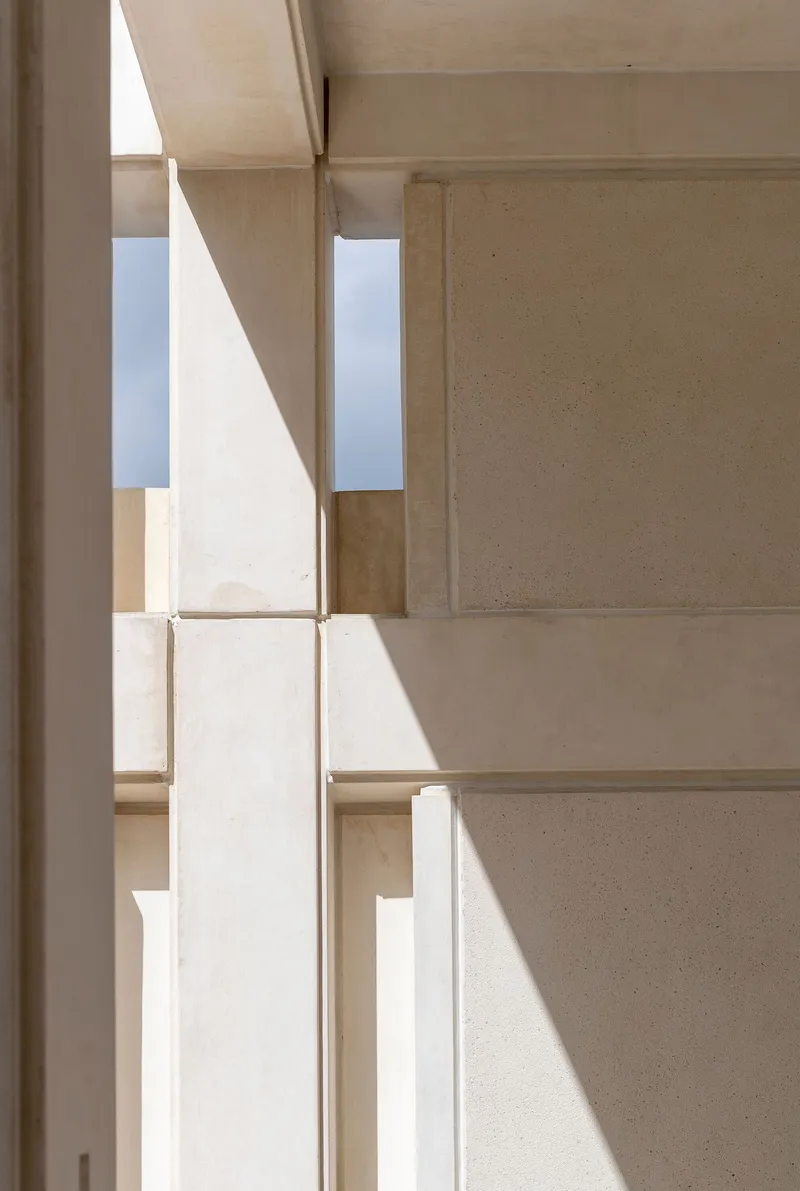
Look at the stacked concrete slabs against the sky and you see the project's argument distilled. Structure is the ornament. The sharp geometry of columns, beams, and overhangs generates patterns of shadow that change with the sun's angle, giving the building a temporal dimension that no applied finish could match. A vertical slot between two masses frames a vine and a strip of sky, turning a joint between pavilions into a moment of composed stillness.
Internal courtyards with raised planters holding flowering trees under open sky function like light wells in reverse: they let the building exhale. These pockets of garden within the structure dissolve the boundary between inside and outside, making the Cultural Center feel porous and breathable rather than sealed and institutional.
Everyday Occupation
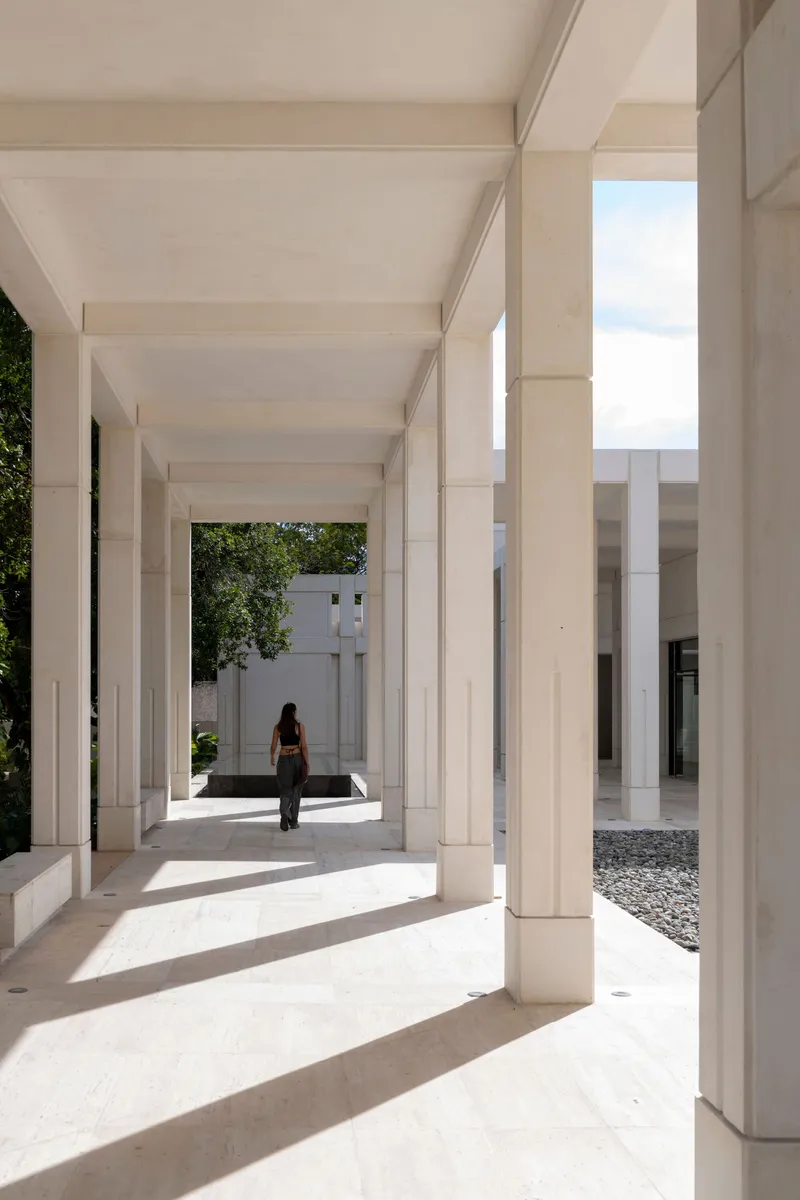
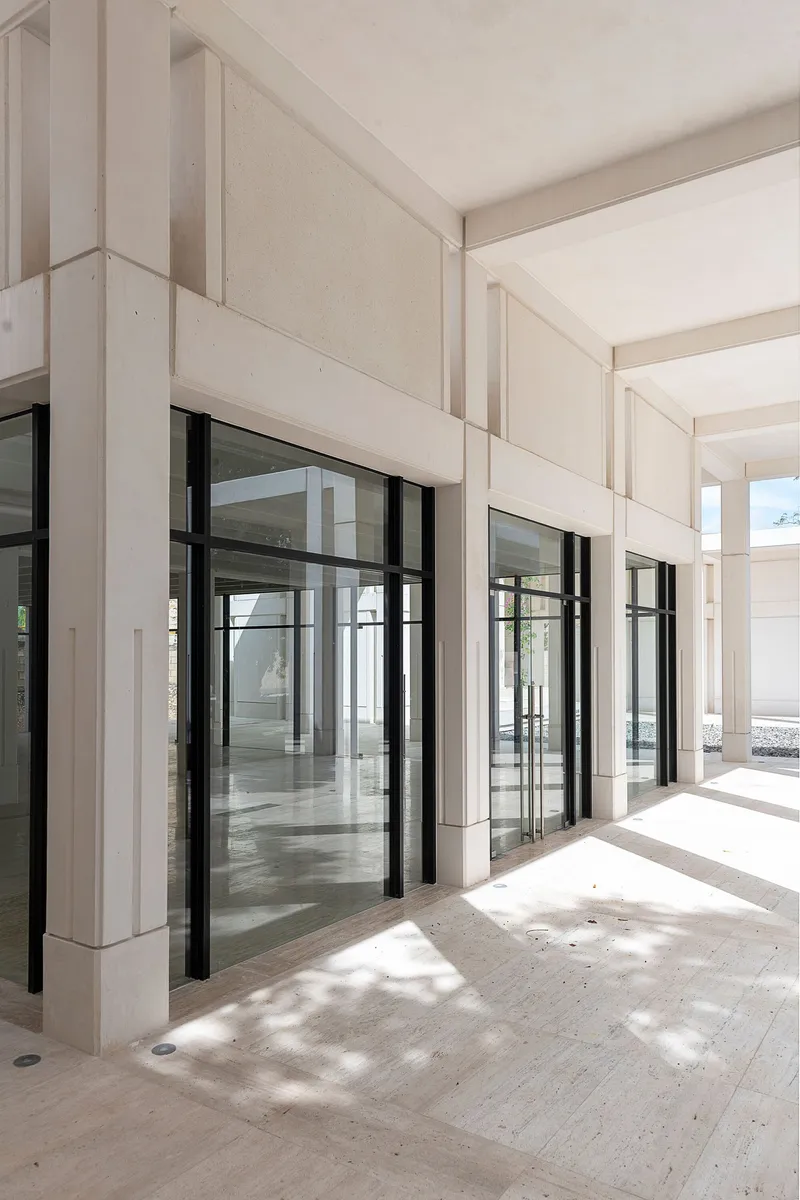
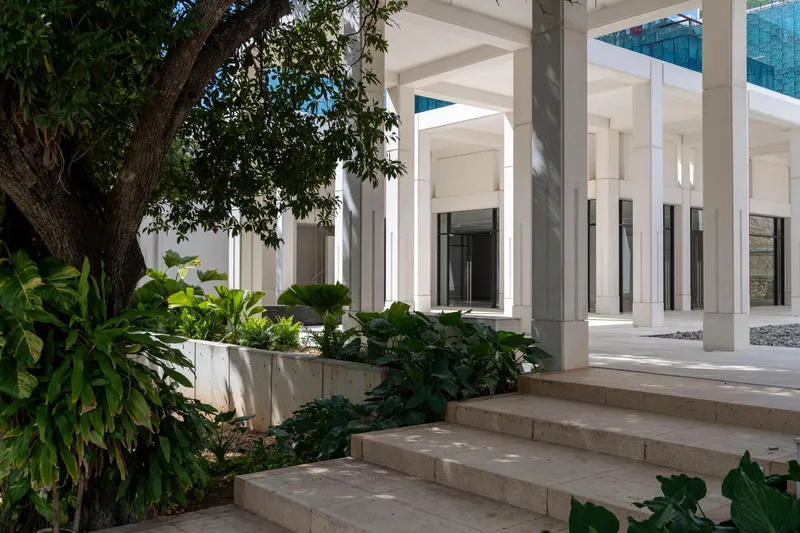
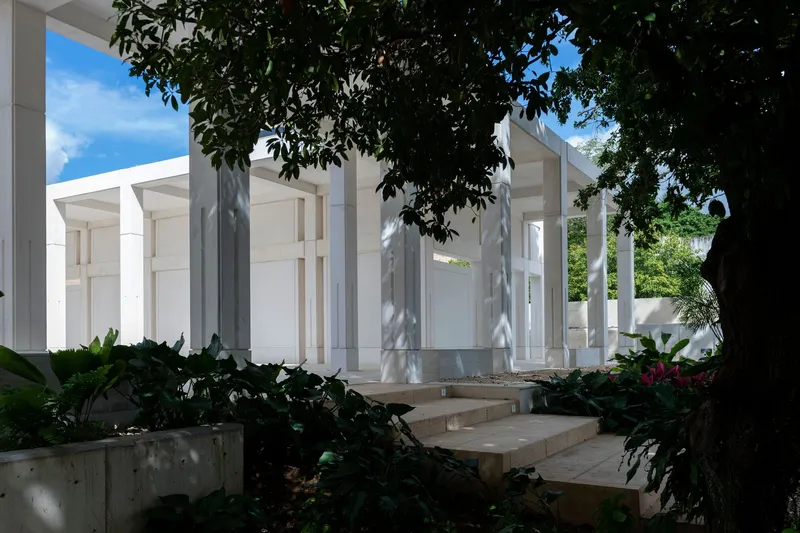
A cultural center lives or dies by how people actually use it between exhibitions. The covered walkways with their coffered ceilings and dappled shadows invite lingering. Exterior terraces under porticoes with dining adjacent to a reflecting pool turn the restaurant into an experience rather than an amenity. Stone steps ascending toward colonnades frame arrivals as small events, lending a gentle ceremony to the act of showing up.
The multipurpose hall and administrative offices occupy the upper floors, where two terraces give staff and event visitors long views over the gardens and back toward the original house. By stacking serviced program above and spreading public program across the ground and below it, MATERIA ensures that the most generous spaces belong to the city.
Plans and Drawings
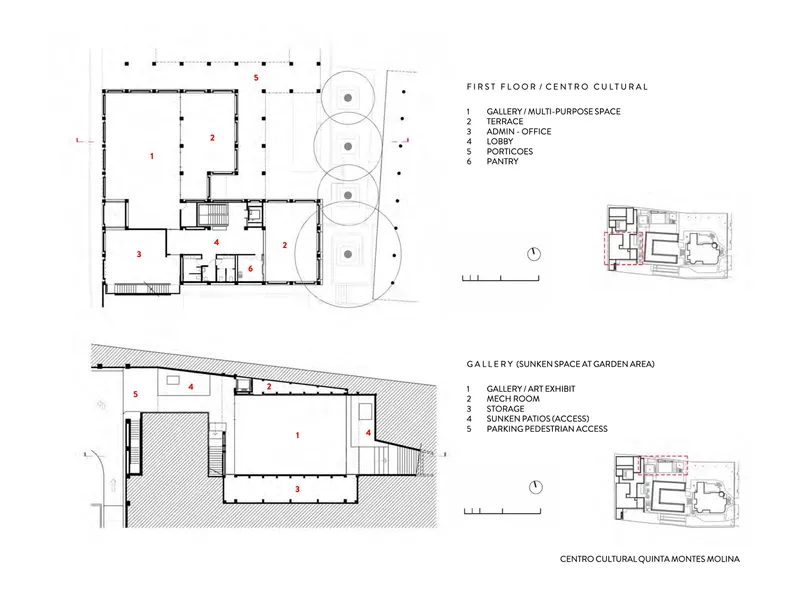
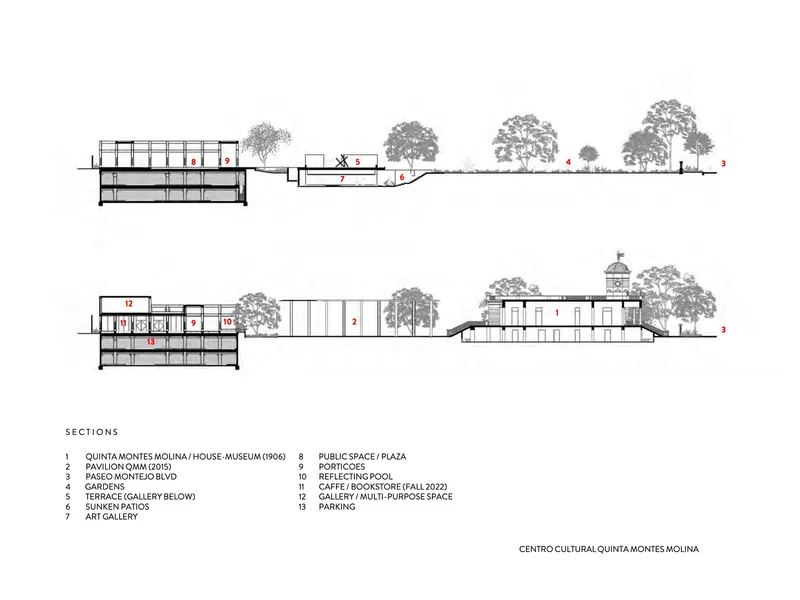
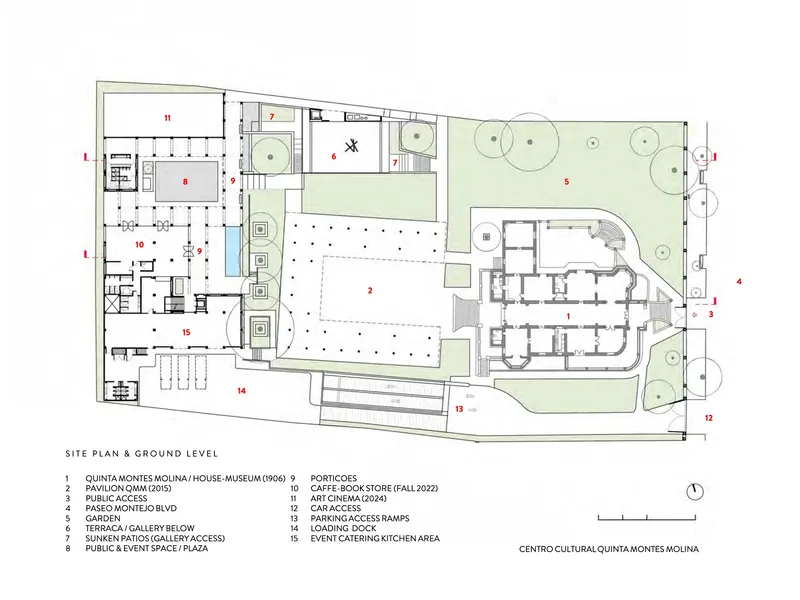
The floor plan reveals the pavilion logic clearly: discrete volumes connected by colonnades, with the sunken gallery visible as a void punched into the southeast quadrant. Circular symbols for existing trees confirm that the plan was drawn around the landscape, not the other way around. The section drawings show how terraced volumes step down through the site, burying the gallery while keeping the upper levels open to sky and canopy. The site plan places the full ensemble in relation to the original museum, making the dialogue between old and new legible in a single view.
Why This Project Matters
Adaptive reuse projects often focus on the existing structure and treat new additions as polite background. MATERIA inverts that hierarchy. The new Cultural Center is an autonomous work of architecture that happens to share a site with a revered historic house, and the terms of coexistence are spatial rather than stylistic. The gardens, the trees, and the ground itself mediate the relationship, so neither building needs to imitate or defer to the other.
The project also offers a model for cultural infrastructure in tropical climates. Sunken galleries, wood screens, reflecting pools, and tree canopy buffers handle heat and light passively, reducing the building's dependence on mechanical systems without compromising the quality of exhibition or gathering spaces. In a region where many institutional buildings fight the climate with brute-force air conditioning, the Quinta Montes Molina Cultural Center demonstrates that architecture can work with the ground and the sky to make a place that feels inevitable rather than imposed.
Quinta Montes Molina Cultural Center, designed by MATERIA (lead architect: Gustavo Carmona), Mérida, Yucatán, Mexico. Completed 2022. Photographs by Jaime Navarro.
About the Studio
Share Your Own Work on uni.xyz
If projects like this are the kind of work you want to make, uni.xyz is a place to publish your own, find collaborators, and enter design competitions.


Popular Articles
Popular articles from the community


Lunar Spiral: Space Architecture Shaped by the Mathematics of the Universe
Lunar Spiral reimagines space architecture through Fibonacci geometry, lunar regolith, levitating habitats, and self-sustaining Moon living.

Co-Life: Senior Housing Design That Reconnects Older Adults With the City
Co-Life reimagines senior housing design through healing gardens, shared streets, workshops, and a sustainable community across generations.

Hill & Cross Opera: Sculptural Opera House Architecture Shaped by Tallinn’s Landscape and Identity
Hill & Cross Opera reimagines opera house architecture in Tallinn through its sculptural hill, civic plaza, glass wave and a luminous cross.

Co-life: Sustainable Architecture for Age-Friendly Community Living
Co-life reimagines sustainable architecture for seniors through courtyards, rammed earth, shared gardens, and spaces designed for belonging.

Similar Reads
You might also enjoy these articles

Bao Huynh Watercolor Atelier: A Serene Art Retreat in Hội An
Bao Huynh Watercolor Atelier in Hội An blends multifunctional art spaces, sustainable design, local materials, and family-friendly living in a serene environment.

Atelier Macri Concept Store Interior Design by CASE-REAL
Atelier Macri store features a "ko" counter, walnut wood details, cork displays, blending retail, gallery, and seamless customer experiences.

Manuel Vargas Izquierdo Stadium and High-Performance Sports Center: Architectural Excellence in Jalpa de Méndez
The Manuel Vargas Izquierdo Stadium blends sustainable design, inclusive sports facilities, and cultural-inspired architecture, revitalizing Jalpa de Méndez’s public spaces.

KAKR Buluh Awar Hall: Revitalizing Community and Ecology Through Bamboo Architecture
Community built bamboo hall revitalizes Buluh Awar village, empowering youth, restoring ecology, celebrating vernacular craftsmanship through sustainable architecture and culture.


Comments (0)
Please login or sign up to add comments
No comments yet. Be the first to comment!