

Metamorphosis 70’s Bungalow Oss: A Model of Sustainable Home Renovation
Revitalizing a 70s bungalow in Oss with sustainable practices, merging indoor and outdoor living seamlessly.


In the serene environs of Oss, The Netherlands, a 1970s bungalow has undergone a transformative sustainable renovation under the visionary guidance of Bas Termeer Architect. This project, spanning an area of 475 m² and vividly captured by photographer Merle van de Veerdonk, is a testament to the harmonious integration of modern sustainability practices with meticulous aesthetic rejuvenation.


Reviving the Lost Qualities
Originally constructed in 1971, the bungalow had undergone various modifications that masked its original qualities. Tasked with reviving the building, the renovation focused on achieving energy neutrality, enhancing the connection between the living spaces and the expansive garden, and undergoing a complete aesthetic overhaul.


A Strategic Approach to Volume and Space
The architectural intervention began by stripping away non-original extensions, further emphasizing the irregularity of the existing structure through deliberate extensions that mimic the original's disjointed contours. This created enclosed outdoor spaces, defined by a sweeping roof that extends to form various outdoor functionalities—from carports to pergolas—while incorporating mature trees through strategic openings.


Harmonizing Indoor and Outdoor Living
The renovation introduces a raised section at the heart of the home, accentuating the central kitchen-diner with ample daylight and views of the surrounding trees. This central space acts as a conduit, seamlessly connecting the front and rear gardens and blurring the boundaries between indoor and outdoor living. Integrated verandas and the strategic layout offer a multitude of options for enjoying the outdoors, irrespective of the time of day.


Materiality in Dialogue with Nature
In keeping with the goal of natural integration, the facades are clad in vertical pre-greyed, thermally preserved wooden planks, creating a subtle dialogue with the lush green surroundings. The use of natural-colored oak for the structural columns, treated to prevent graying, introduces a lasting contrast against the grey backdrop. The addition of a brown natural stone-clad outdoor fireplace further complements the architectural ensemble, enhancing the bungalow’s connection to its environment.


A Collaborative Construction Process
The renovation was characterized by a collaborative approach, with the client actively participating in the procurement of building materials to manage costs effectively. A team of skilled professionals worked closely with the client and architect Bas Termeer to realize this ambitious renovation, ensuring that every detail aligns with the overarching vision of sustainability and aesthetic refinement.


A Blueprint for Sustainable Renovation
The metamorphosis of this 1970s bungalow in Oss by Bas Termeer Architect stands as a blueprint for sustainable home renovation, showcasing how energy efficiency, aesthetic renewal, and a deep connection with the natural environment can be achieved in harmony. This project not only revitalizes a dated structure but also sets a new standard for sustainable living in contemporary residential design.


All photographs are work of Merle van de Veerdonk


Popular Articles
Popular articles from the community

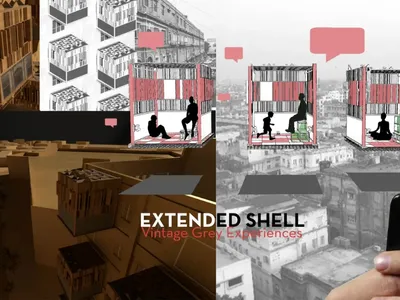
Extended Shell: Retrofitting Kolkata's Balconies as Living Urban Thresholds
A modular retrofit system recovers the social and environmental intelligence of Kolkata's historic verandas for contemporary Park Street residents.
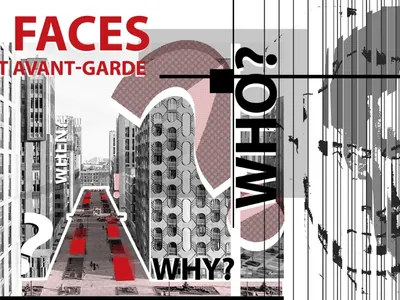
Faces of the Soviet Avant-Garde: Turning Moscow's Street Names into an Open-Air Museum
A network of sculptural installations across a Moscow residential district transforms forgotten architect names into spatial encounters with cultural memor
Cloaked Colonization: A Mobile Underwater Habitat That Moves Like a Fish
Micah Abaya's shortlisted EHC Pacific entry reimagines ocean settlement as a dispersed network of self-sustaining architectural organisms.
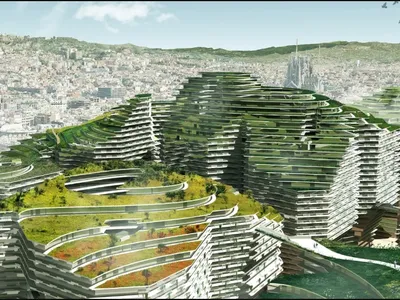
Manzana Morphosis: Stretching Barcelona's Grid into a Living Landscape for 2050
A radical reworking of the Eixample manzana turns density into a tool for generous public space, vertical ecology, and environmental performance.

Similar Reads
You might also enjoy these articles


Hodi-Mandai Geram
Project Function: Preservation and revitalization of the Intangible heritage and socio-spatial identity of the Hodi by Housing, Cultural Memory Center, Sacred Grove, landscape, local tourism economy


Olio Towers: A Mid-Rise for Performers That Fuses Housing, Rehearsal, and Stage
Located blocks from Houston's Theater District, this modular tower stacks living units around a central performance atrium.

Oasis: Modular Green Housing Carved into Dhaka's Urban Fabric
A shortlisted Plugin Housing entry reclaims unauthorized settlements in Dhaka with stepped concrete volumes, green roofs, and ventilation-driven design.

Black Hole: A Floating Megastructure for the Post-Physical Era
Emiliano Mazzarotto envisions a spherical, self-scaling arena where e-sports, digital hotels, and holographic stadiums replace traditional public space.

Explore Architecture Competitions
Discover active competitions in this discipline

Challenge to reimagine the Iron Throne

Photograph architecture without architects

Illustrate the lost glory of Angkor Wat - Render Challenge

Design challenge to reuse E-waste
Comments (0)
Please login or sign up to add comments
No comments yet. Be the first to comment!