

Minima
Habitat on move

Minima is a cleverly compact and crafted small footprint home catering to all the basic needs of a family. It is characterized by an easy assemble and disassemble process, a compact and flexible structure catering to the basic needs of all the members. It has the potential to become a tiny house, a rural retreat or a suburban studio.
As the plans show, a standard minima prototype can house two people and as the family expands another module can be added, creating an S shaped compact house. This layout will be suitable for growing families, as new members join the family the house can expand to accommodate the users. It also is a good option for people who had or wanted more space and provide a potential to expand and contract as per the owner's requirements.
Minima expands to include four beds, a kitchen, two toilets, living and dining areas. The design relies on a series of zones, overlap of functions and plenty of storage space. Built in cupboards, beds, toilet and kitchen tucked inside the service unit as shown in the section, creating an open and flexible circulation space. The wet areas including toilets and kitchen are placed in service blocks with space below and above for allocating the required services i.e. pump, geyser and space for water storage.
The prototype generates electricity through solar panels installed on the roof minimizing its energy consumption. The screen also provides diffused light inside the house in the day. For greater contact with nature, the screen can be completely folded or removed. This provides potential for complete transformation of the space into a more public zone. This planning and attention to detail ensures that Minima is made with a home for everything, all within a deceptively small footprint.
The structure works on the principle of retraction. It opens when in use and retracts into a box while getting transferred. In mobile state the structure can be folded into a box at 10sq.m and can either be transported on a vehicle or can be transferred to different areas by local transport available i.e. trains, trucks etc. as per the user’s requirements and in stationary state expands to accommodate the requirements of a home. The environment is totally compact, taking advantage of all spaces and bringing the concept and awareness of what is really essential for human beings to live with quality of life. Therefore, each corner turns the house into a real nest, in a simple and welcoming way.
Material:
To keep production streamlined - and retain Minima’s essential elements - the building envelope stays the same with minimal alterations. The design the three service blocks, which are supported by steel sections. The skin of the prototype is enveloped by aluminum sheets on the exterior and plywood in interiors with insulation sandwiched in the middle. These panels go in like cassettes between the steel sections. A screen has been added to the expanded space which can either be covered by canvas in a tropical climate and can be replaced with insulated sheets in extreme climates for protection against the harsh climate. The flooring can also be dismantled and stored in the service modules.
Aluminum sheets have been used as the exterior skin as it is a durable material, it can withstand hail storms and severe weather conditions. It is easy to install and also light weight. It is corrosion resistant and easy to recycle and reuse making it a sustainable choice. For interiors plywood has been chosen as it is made of wood. It is light and easy to maintain and can be reused. Also it provides a uniform and rich material palette.
This prototype is a step towards revisiting the past and understanding how humans lived in their surroundings with minimal changes - coexisting with nature and other forms of life and learning to live a minimal life. It also gives us a chance to explore new surroundings and meet new people and break away from our stationery and synthetic lifestyle. Home is a sensitive and supportive place for all of us and in a time of adversity and transitions we should have a hard look at it and understand what is holding us back from living our lives to its full potential coexisting with nature.

Popular Articles
Popular articles from the community


Singing Woman: An Opera House That Performs Before the Curtain Rises
Ovidiu Cristian Pavel's conceptual opera house translates Estonia's choral identity into a sculpted waterfront landmark facing the Baltic Sea.
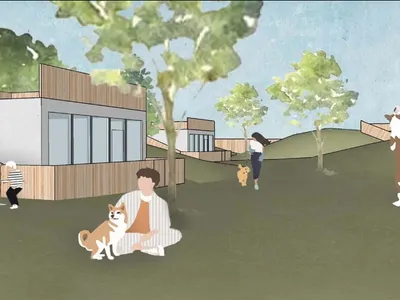
Temporary Home for Dogs: A Reversed Zoo Rethinks Animal Shelter Architecture
In Bucharest, a sinuous corridor and freed landscape flip the logic of containment, designing a shelter that works to make itself unnecessary.
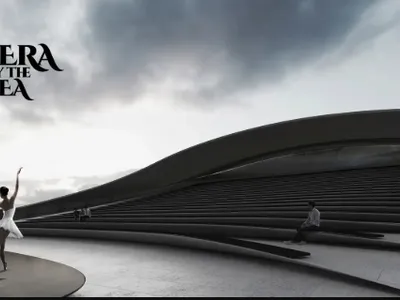
Opera by the Sea Estonia: Three Shells Dissolving Architecture into Tallinn's Coastline
A winning opera house proposal replaces monumental form with interconnected shells that blur the boundary between building, park and Baltic Sea.

Opera on the Sea: Driftwood Logic Shapes a Timber Opera House on Estonia's Coast
Trevor Orgill's opera house translates the entangled drift of floating timber into a civic building where wood, water, and music converge.

Similar Reads
You might also enjoy these articles

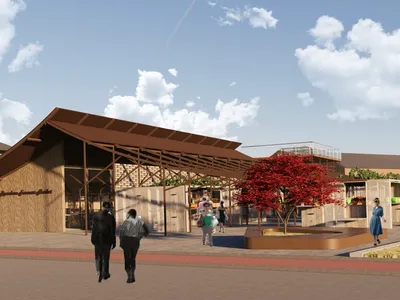
The Rhythm of Seasons
A Farmers' Market Connecting Nature and the City

More Than a Building-Designing a Living System
More Than a Building-Designing a Living System
Base Beyond
DESERT COMPOUND ARID: TOURISM OF ABSENCE AND ABUNDANCE

Explore Habitat Competitions
Discover active competitions in this discipline


Bring back Drive In's

Packaging challenge - Design meets sustainability
Comments (0)
Please login or sign up to add comments
No comments yet. Be the first to comment!