

MÔ He’ritage Villa: Rewriting Heritage Through Contemporary Hospitality Architecture
MÔ He’ritage Villa reimagines Vietnamese heritage through contemporary hospitality architecture, blending memory, material reuse, Feng Shui principles, and sustainable living.


Completed in 2025, MÔ He’ritage Villa is a deeply poetic hospitality project by MÔ he studio, located in Sơn Tây (Doài – Westernland) on the western edge of Hanoi. Rather than treating heritage as a static artifact or a nostalgic aesthetic, the project reinterprets cultural memory as a living, emotional, and spatial experience. With an area of 307 square meters, the villa quietly weaves together architecture, landscape, material reuse, and Vietnamese cosmology to form a microcosm of place, identity, and time.
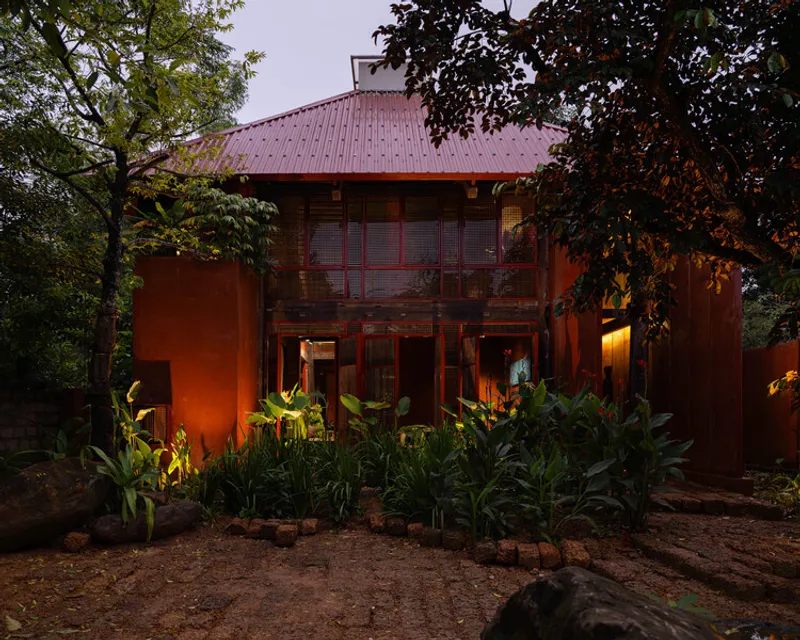
Conceived as part of a series of resort villas and intimate homestays, the project embraces modesty, intimacy, and emotional resonance. The name “MÔ”, derived from a Central Vietnamese dialect meaning “where”, functions as both a question and an invitation—calling visitors to reflect on where they are, where they come from, and how architecture can hold memory without becoming monumental.

Architecture as a Microcosm of Place and Ego
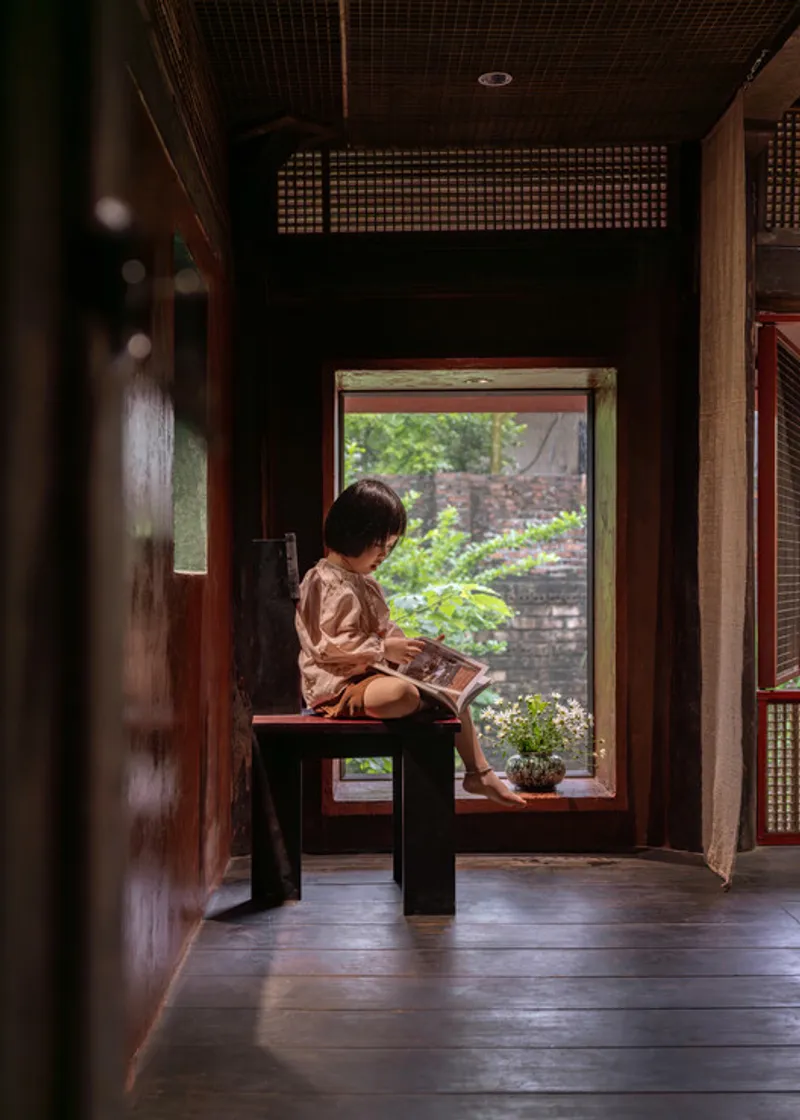
The conceptual foundation of MÔ He’ritage Villa is rooted in the idea that architecture is a microcosm, reflecting both the external world and the inner emotional landscape of its inhabitants. Rejecting exaggerated forms or iconic gestures, the villa is intentionally quiet, gentle, and restrained—evoking the innocence and emotional clarity of childhood memories rather than asserting itself as a landmark.
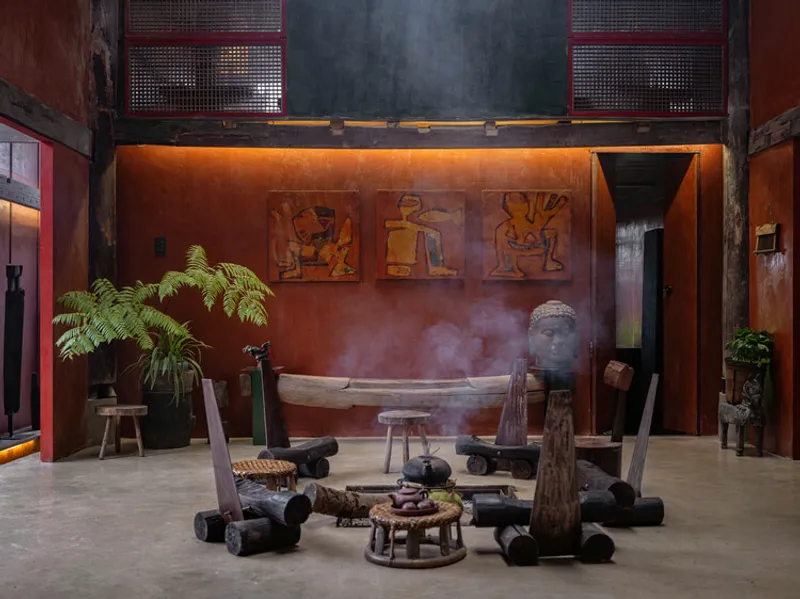
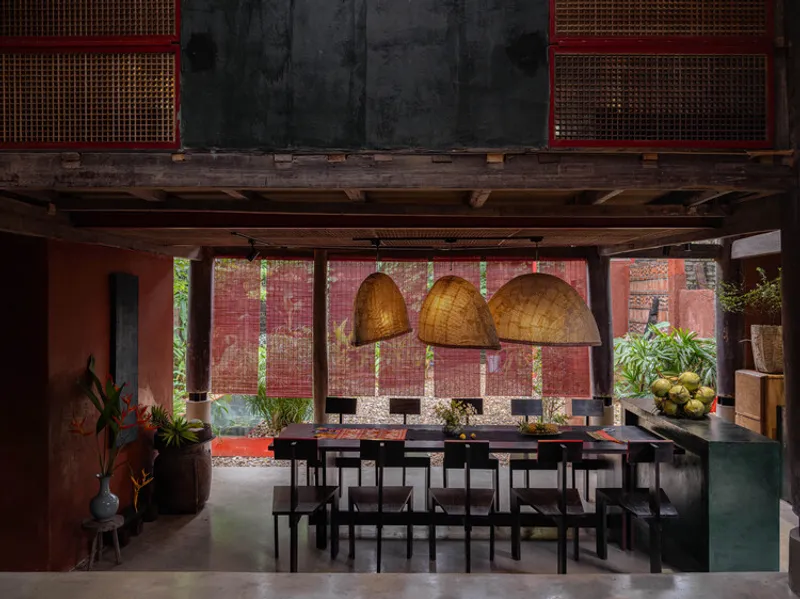
Situated near significant cultural and natural sites such as Đường Lâm Ancient Village, Va Temple, and Ba Vì Mountain, the project acts as a connective node within a broader cultural landscape. The architects describe the villa as an act of “rewriting the story of heritage”, transforming both tangible materials and intangible traditions of the Doài region into contemporary architectural language.
The Space of the Mind: Memory as Architecture
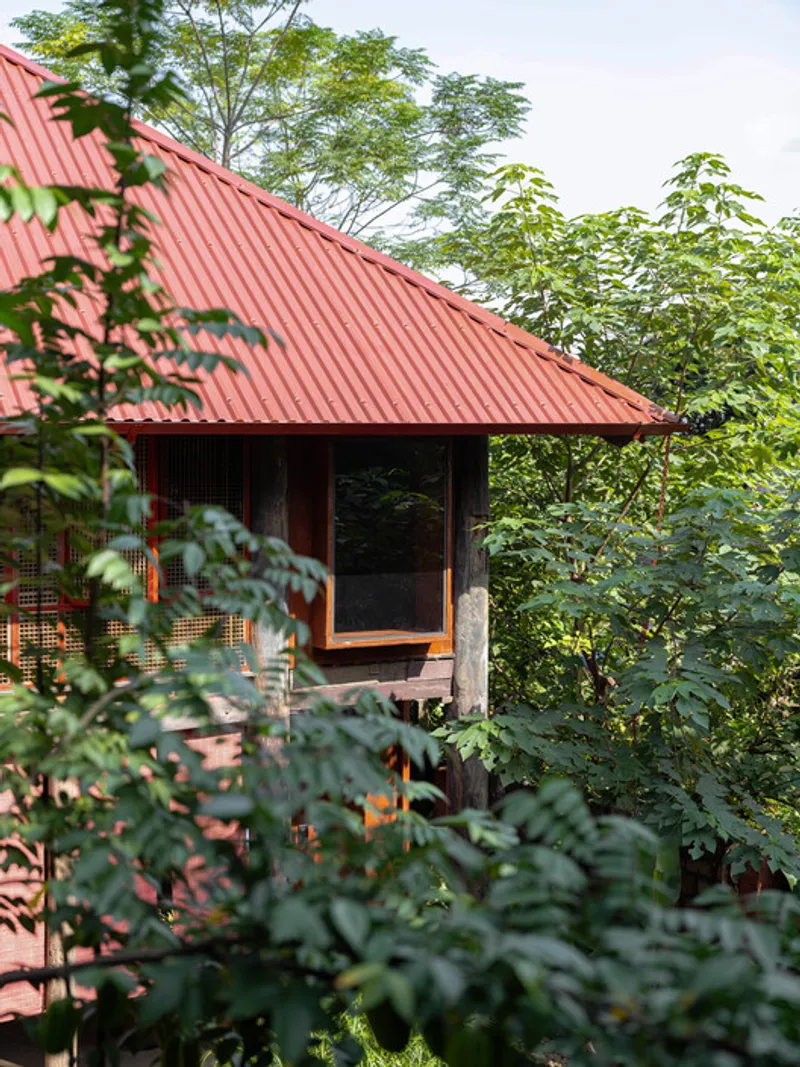
Đường Lâm is renowned for its laterite stone, timber houses, and traditional village structure defined by banyan trees, ferry crossings, and communal courtyards. These spatial memories are not reproduced literally at MÔ He’ritage Villa; instead, they are recalled through materiality, texture, and atmosphere.
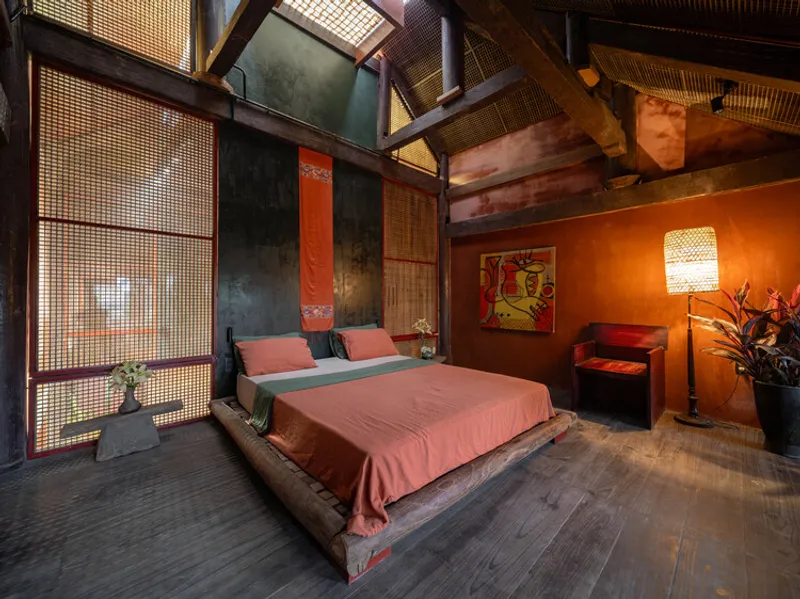
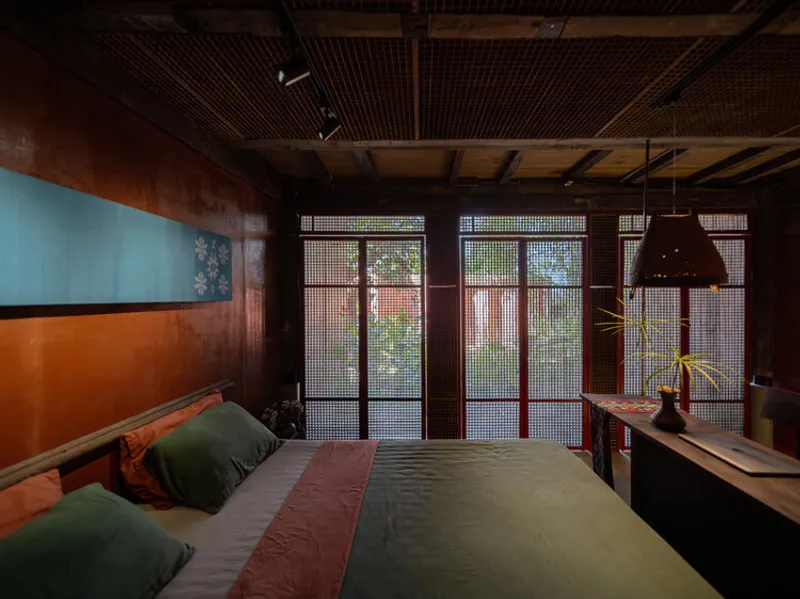
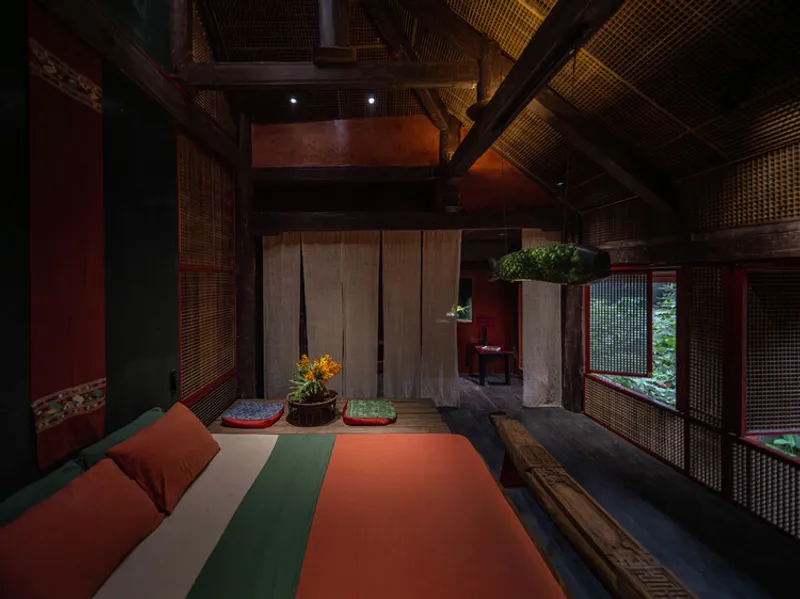
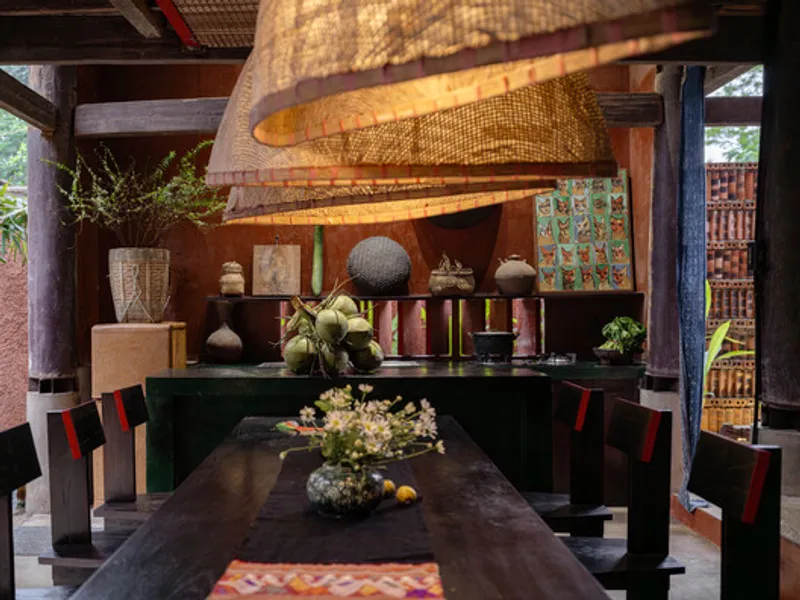
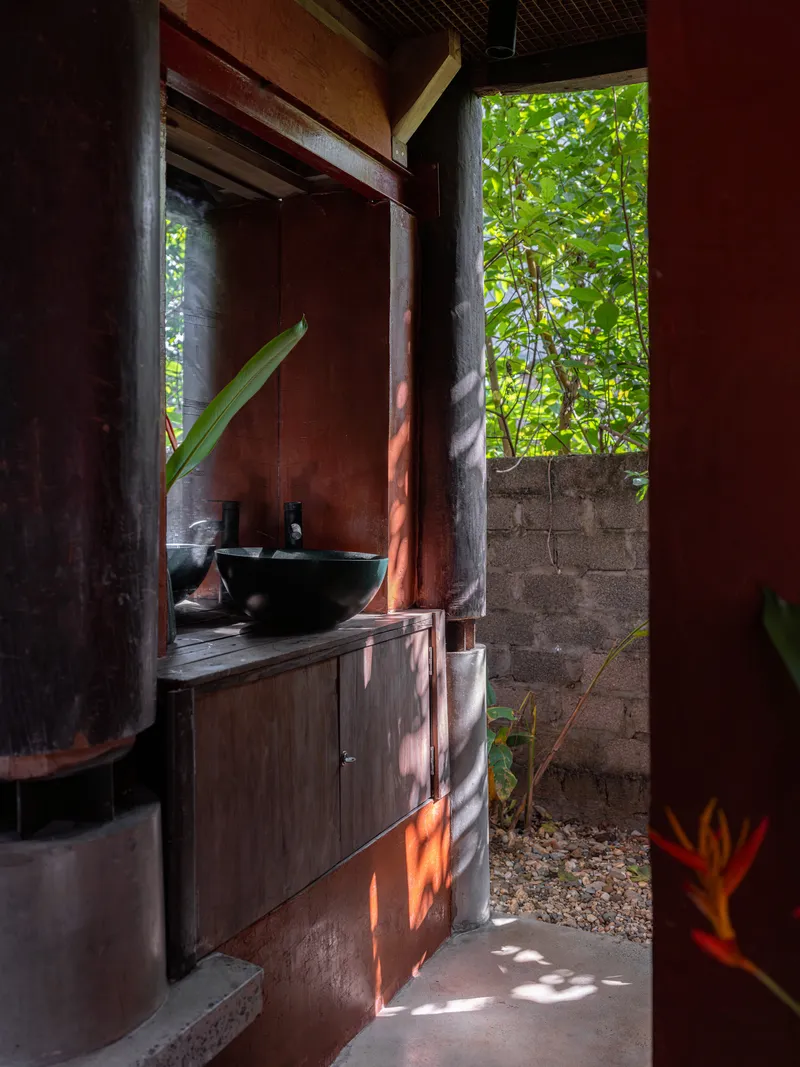
Laterite-inspired earthen walls, aged timber beams, and reused wooden columns evoke the scent, weight, and tactile memory of traditional northern Vietnamese houses. Visitors are invited to wander slowly, allowing their minds to drift through space and material, discovering that what feels ancient can also be contemporary, comfortable, and quietly luxurious.
Heritage Fragments and Architectural Storytelling
A defining feature of the villa is its treatment of heritage fragments. Rather than framing reuse as a technical or sustainability-driven gesture, MÔ he studio treats reclaimed elements as carriers of narrative and emotion. Hand-carved wooden components salvaged from damaged traditional houses—some centuries old—are integrated into the villa as benches, structural elements, and tactile installations.
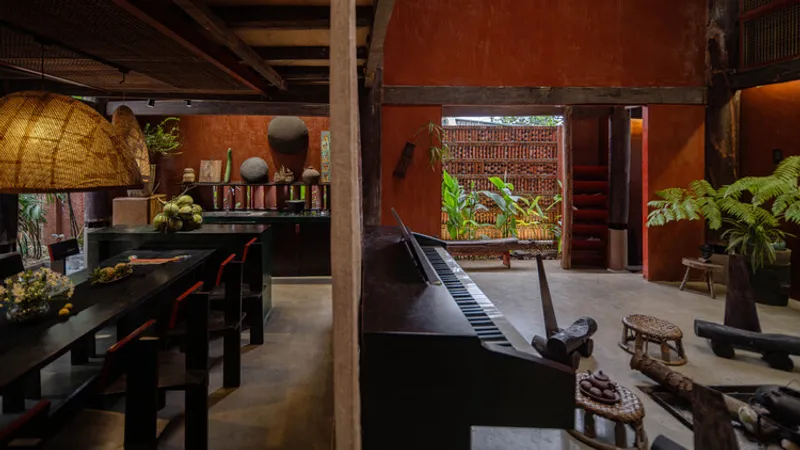
These fragments are not isolated as museum artifacts. Instead, they are meant to be touched, sat upon, and lived with. Each piece tells a story without dramatization, allowing heritage to exist naturally within everyday life. In this way, the villa becomes an architectural exhibition of memory, where preservation, renewal, and storytelling merge seamlessly.

Five Elements and the Flow of Energy
Vietnamese traditional architecture has long been aligned with nature, Feng Shui, and the five elements—Fire, Water, Wood, Metal, and Earth. MÔ He’ritage Villa reinterprets these principles not as rigid rules, but as a fluid system of energy flow that shapes space, movement, and atmosphere.

Fire: The Heart of the House
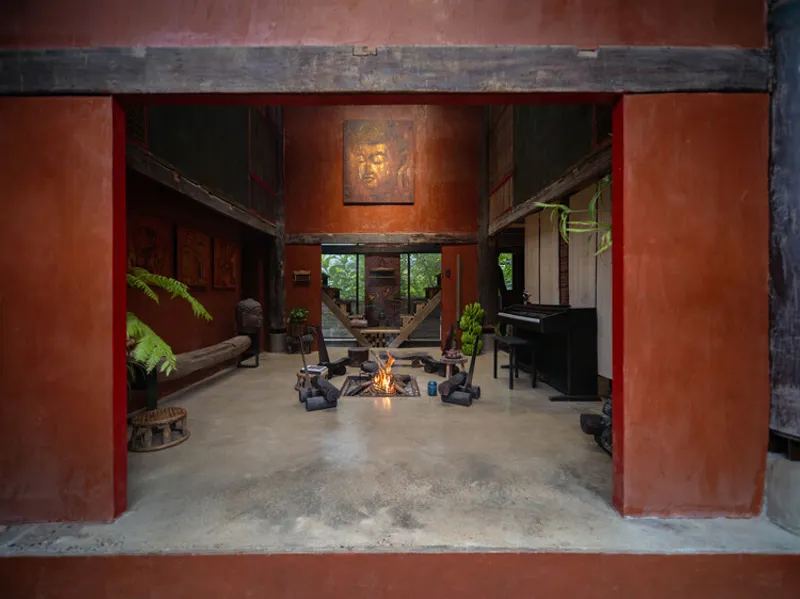
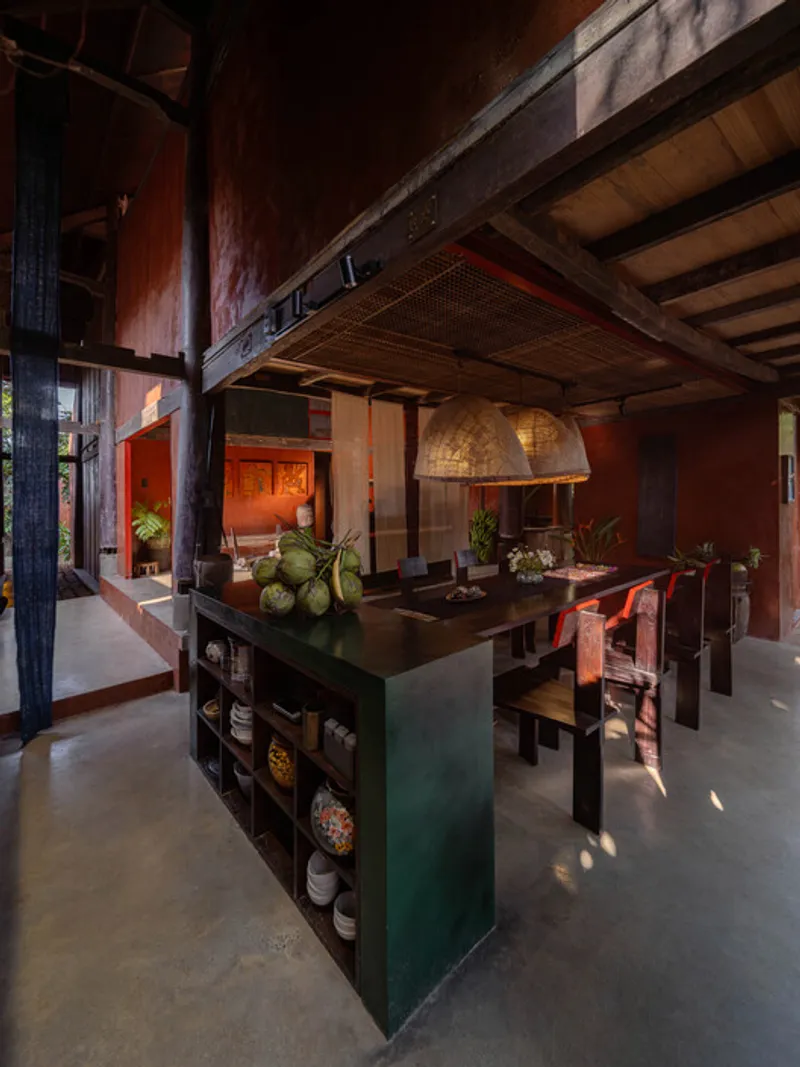
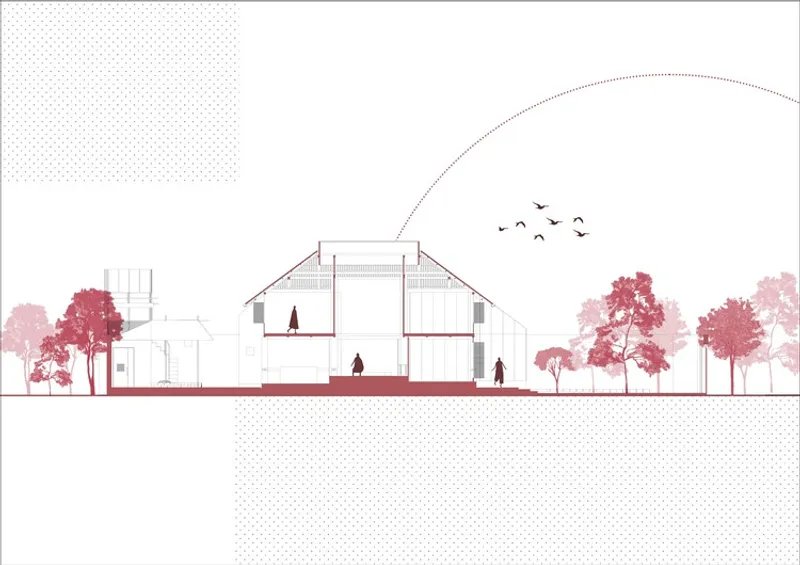
At the center of the villa lies the kitchen and hearth, echoing the traditional Vietnamese home where family members gather around fire for warmth, food, and storytelling. Fire here is both functional and symbolic—representing vitality, memory, and connection. It becomes the organizing axis of the house, with other spaces radiating outward in balance.
Water: Gentle Yin Energy
A modest water tank provides cooling, sound, and reflection. Its scale is intentionally restrained—just enough to evoke village ponds, nearby lakes, and the Red River when viewed from above. The water element introduces Yin energy, balancing the warmth of the hearth and creating a sensory dialogue between sound, light, and movement.

Wood: Longevity and Living Memory
Reused wooden columns and structural elements define the villa’s spatial rhythm. Salvaged from ancient houses, these timbers carry Yang energy, symbolizing growth, continuity, and endurance. Combined with surrounding trees and garden corridors, wood becomes both structure and story, reinforcing the project’s ecological and cultural sustainability.
Metal: Contemporary Transition
Steel structures and corrugated metal roofing introduce the Metal element, representing neutrality and transition between tradition and modernity. Painted in native hues and constructed with double-layer insulation, the metal roof enhances durability, energy efficiency, and acoustic connection to nature. The sound of rain, wind, and insects becomes an integral part of the living experience.

Earth: Soil as Shelter
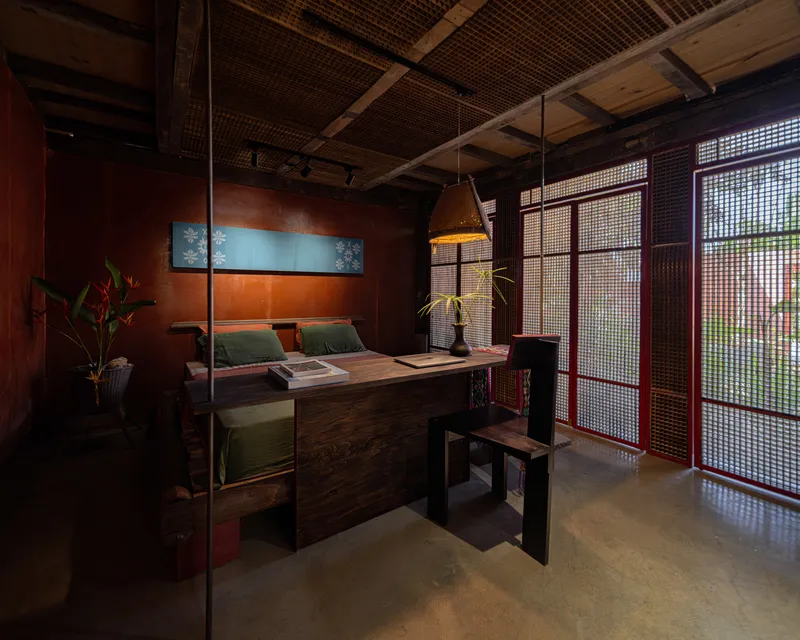
Earthen walls, handmade using local soil and pigments, anchor the villa to its landscape. These walls provide thermal insulation, soundproofing, and passive cooling, creating a comfortable microclimate without mechanical reliance. Earth represents stability and grounding, completing the elemental balance of the house.
Sustainability Through Culture, Not Technology
Sustainability at MÔ He’ritage Villa is not driven by high-tech systems, but by cultural intelligence and material wisdom. Passive cooling, reused materials, handmade finishes, and climate-responsive construction form a holistic ecological approach rooted in vernacular knowledge.
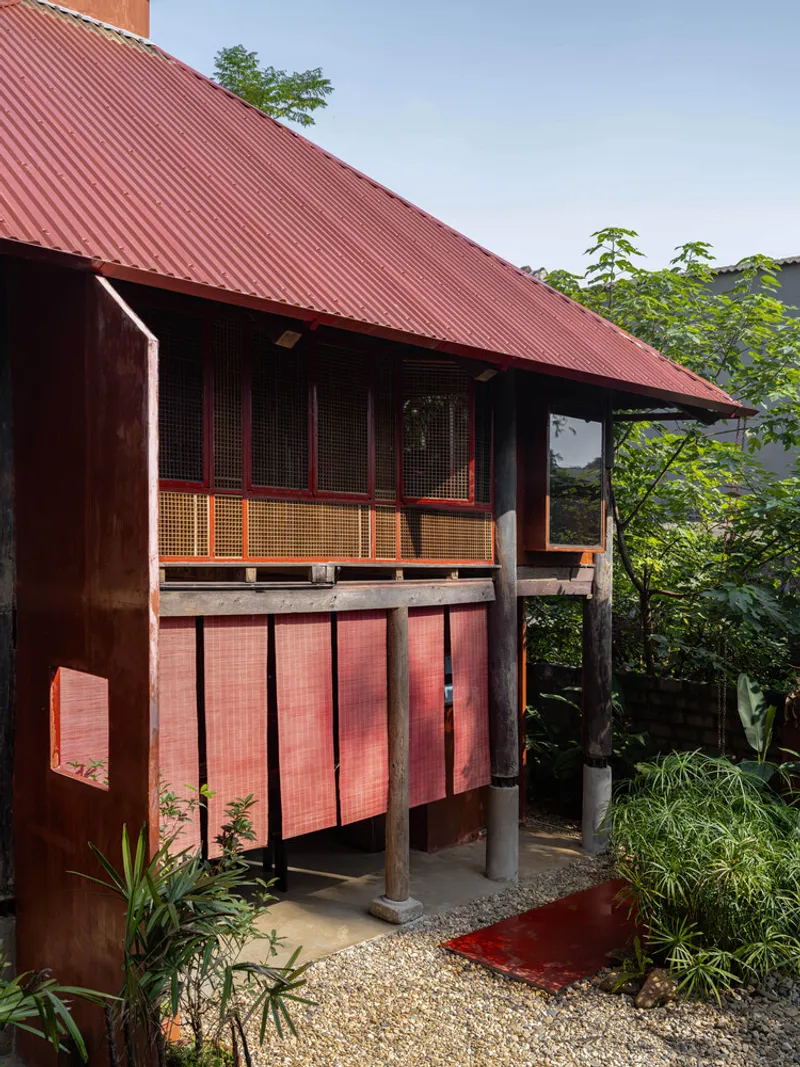
By allowing architecture to breathe, age, and adapt naturally, the project demonstrates how heritage-based design can contribute meaningfully to contemporary green building practices—without sacrificing comfort, aesthetics, or emotional depth.

A Contemporary Retreat Rooted in Memory
MÔ He’ritage Villa stands as a quiet manifesto for heritage-driven hospitality architecture. It does not freeze the past, nor does it romanticize it. Instead, it allows memory to evolve—transforming fragments of tradition into spaces of reflection, warmth, and human connection.
In doing so, the villa becomes more than a place to stay. It becomes a place to remember, to feel, and to rediscover the timeless dialogue between architecture, nature, and the human spirit.


Popular Articles
Popular articles from the community


Tsunami Convergenics: Turning Catastrophic Ocean Forces into Underwater Housing Infrastructure
A speculative underwater settlement off the coast of Onagawa, Japan, treats tsunamis and typhoons as energy sources rather than threats.

Opera by the Sea Estonia: Three Shells Dissolving Architecture into Tallinn's Coastline
A winning opera house proposal replaces monumental form with interconnected shells that blur the boundary between building, park and Baltic Sea.

Manzana Morphosis: Stretching Barcelona's Grid into a Living Landscape for 2050
A radical reworking of the Eixample manzana turns density into a tool for generous public space, vertical ecology, and environmental performance.

Temporary Home for Dogs: A Reversed Zoo Rethinks Animal Shelter Architecture
In Bucharest, a sinuous corridor and freed landscape flip the logic of containment, designing a shelter that works to make itself unnecessary.

Similar Reads
You might also enjoy these articles


Hodi-Mandai Geram
Project Function: Preservation and revitalization of the Intangible heritage and socio-spatial identity of the Hodi by Housing, Cultural Memory Center, Sacred Grove, landscape, local tourism economy


Olio Towers: A Mid-Rise for Performers That Fuses Housing, Rehearsal, and Stage
Located blocks from Houston's Theater District, this modular tower stacks living units around a central performance atrium.

Oasis: Modular Green Housing Carved into Dhaka's Urban Fabric
A shortlisted Plugin Housing entry reclaims unauthorized settlements in Dhaka with stepped concrete volumes, green roofs, and ventilation-driven design.

Black Hole: A Floating Megastructure for the Post-Physical Era
Emiliano Mazzarotto envisions a spherical, self-scaling arena where e-sports, digital hotels, and holographic stadiums replace traditional public space.

Explore Heritage Competitions
Discover active competitions in this discipline

Challenge to reimagine the Iron Throne

Photograph architecture without architects

Illustrate the lost glory of Angkor Wat - Render Challenge

Design challenge to reuse E-waste
Comments (0)
Please login or sign up to add comments
No comments yet. Be the first to comment!