
Morphosis Lifts a Landscaped Plaza Over 25,000 Square Feet of Gallery Space in Costa Mesa
The new Orange County Museum of Art rethinks the inward-facing institution with a 10,000-square-foot rooftop terrace and terracotta skin.


Museums tend to be introverted buildings. They pull visitors inward, seal off daylight, and treat the exterior as packaging. The new Orange County Museum of Art by Morphosis Architects reverses that logic with a simple conceptual move: lift a green public terrace into the air and slide 25,000 square feet of exhibition space underneath it. The result is a 53,000-square-foot building in Costa Mesa, California, that treats its roof as civic ground and its galleries as the structure holding that ground aloft.
What makes the project genuinely interesting is not the formal complexity, which Morphosis has delivered many times before, but how that complexity is graded. The building moves from a highly articulated, non-orthogonal entry sequence to rectilinear, flexible gallery boxes deeper inside. The drama is front-loaded where the public gathers; the neutrality is reserved for art. That gradient is the real design thesis, and it holds up.
A Terracotta Skin with 6,534 Reasons to Look Closely
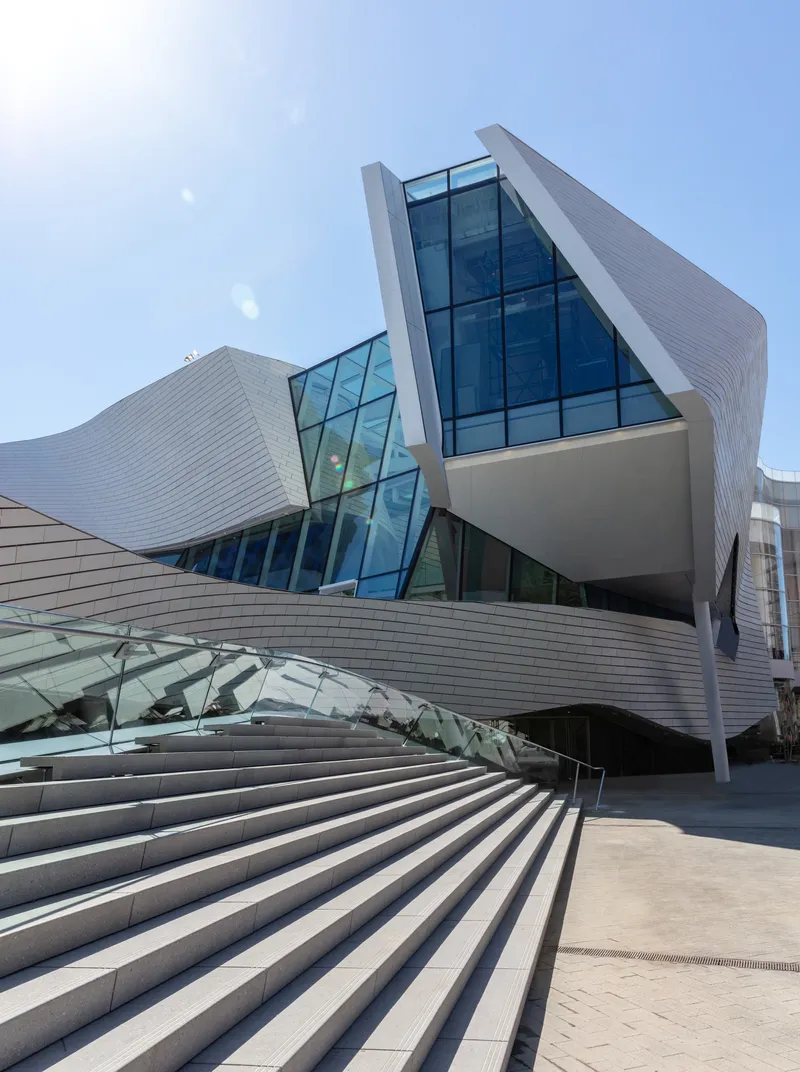
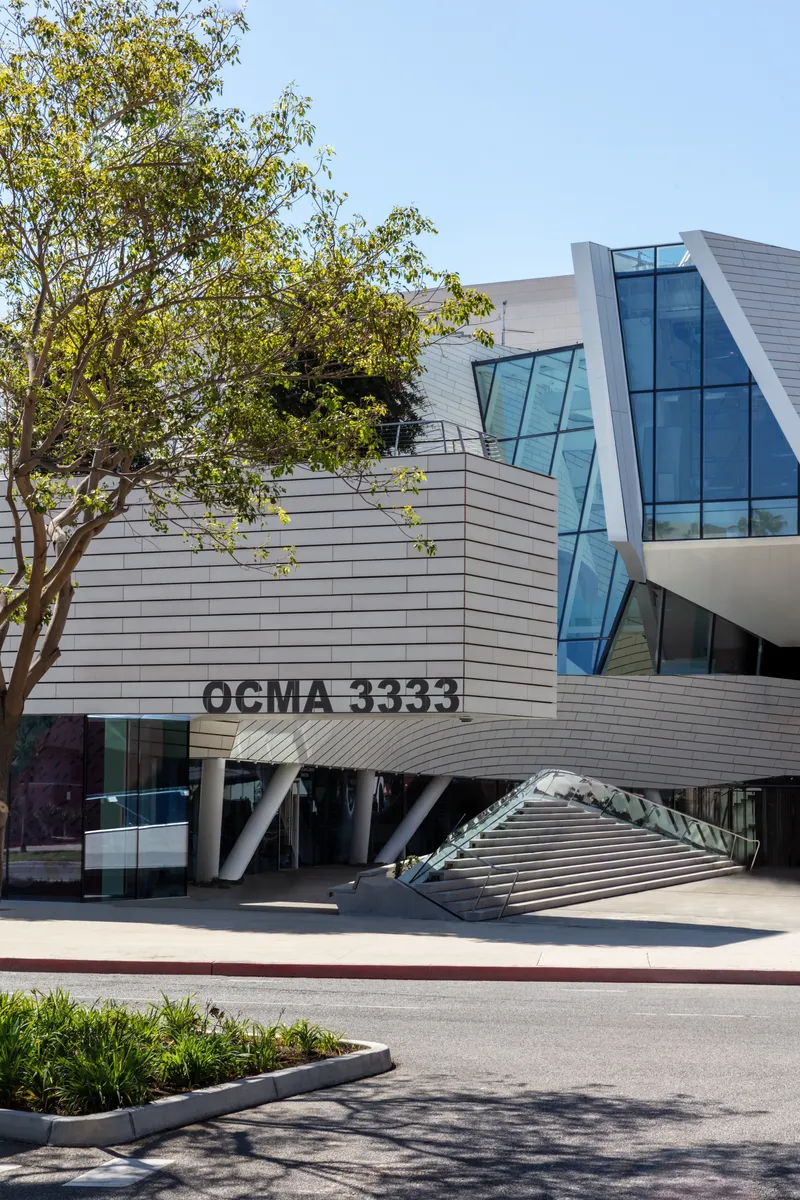
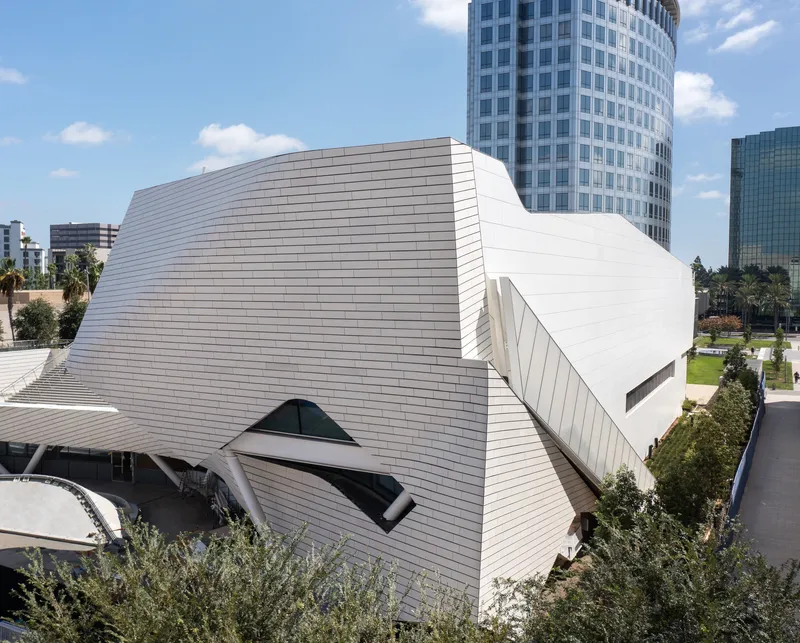
The building is wrapped in 6,534 glazed white terracotta tiles, each analyzed digitally using CATIA software but fabricated by Boston Valley Terra Cotta using traditional extrusion methods. About 70% of the tiles were made flat; the remaining 30% were draped over wooden forms to achieve specific curves or bends. After installation, the entire facade was laser scanned to confirm tolerances. The result reads as a single continuous surface from a distance, but at close range it reveals the slight imperfections and tonal shifts that only a handmade material can produce.
Terracotta is a deliberate choice for Southern California. It handles UV exposure and thermal cycling better than painted metal panels, and its glazed surface repels dirt in a region where rain is scarce. It also ages well, a consideration that matters when you are building on the campus of the Segerstrom Center for the Arts, surrounded by institutional neighbors that will outlast any trend.
The Atrium as Vertical Street
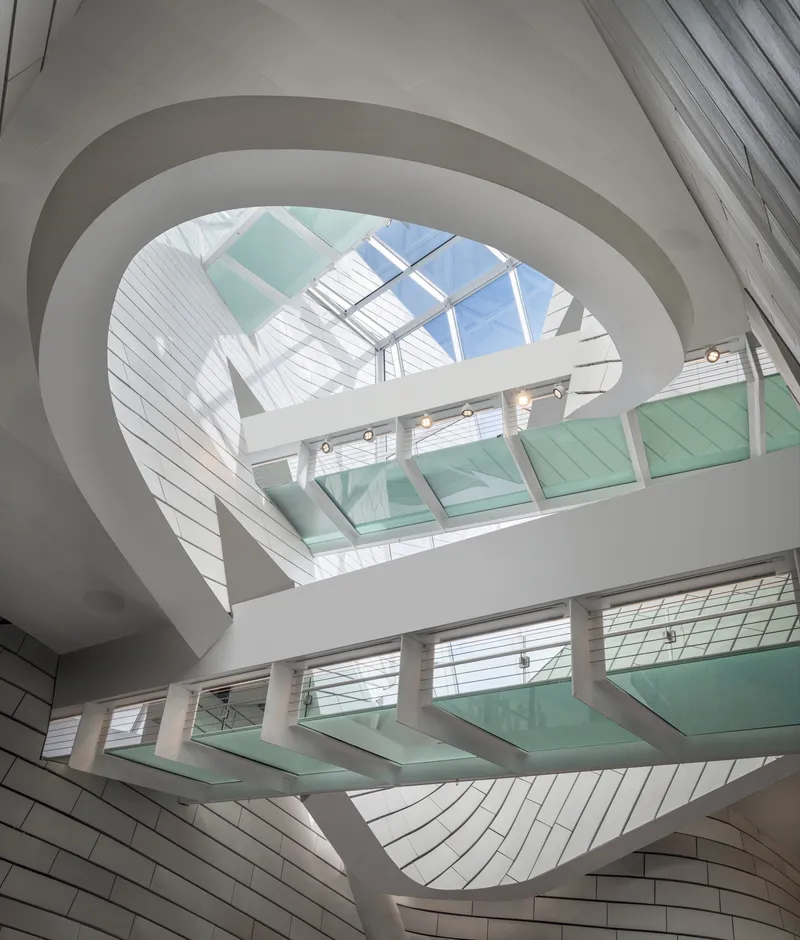
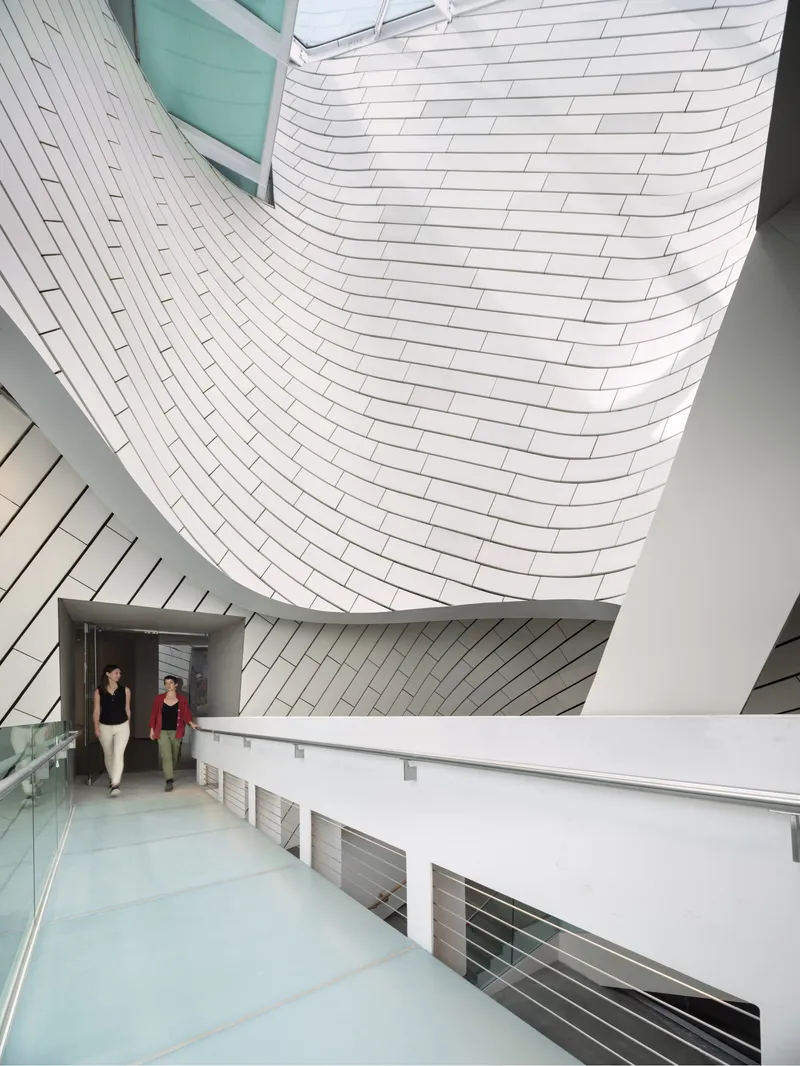
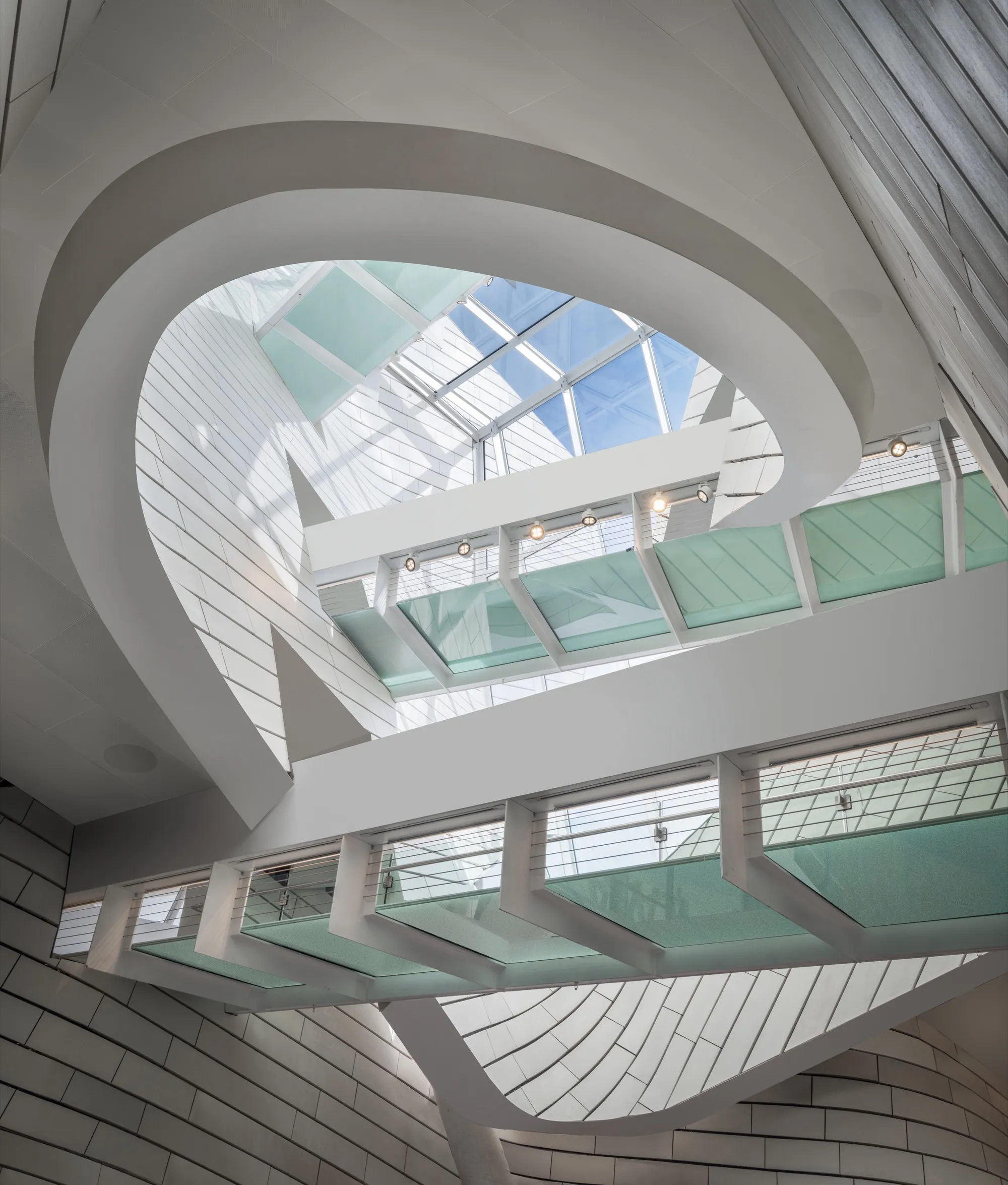
The 50-foot-tall atrium is the hinge of the building. Topped by a clear skylight, it connects the street-level entry to the rooftop terrace through a spiraling sequence of ramps, balconies, and glass bridges. The white terracotta tiles continue inside, wrapping the curved walls so that the boundary between exterior and interior blurs. Two visitors ascending the ramp look tiny against the scale of the void, which is exactly the point: this is a space designed to make you aware of the building as a public event, not just a container for objects.
Structurally, the atrium is held together by exposed concrete shear walls and massive steel trusses that crisscross from ground to upper levels. A full-story steel truss cantilevers off the concrete elevator core, and a 36-inch-deep cantilevered truss spans roughly 68 feet to support the Education Pavilion overhead. The engineering is not hidden; it is part of the spatial experience.
Galleries That Stay Out of the Way
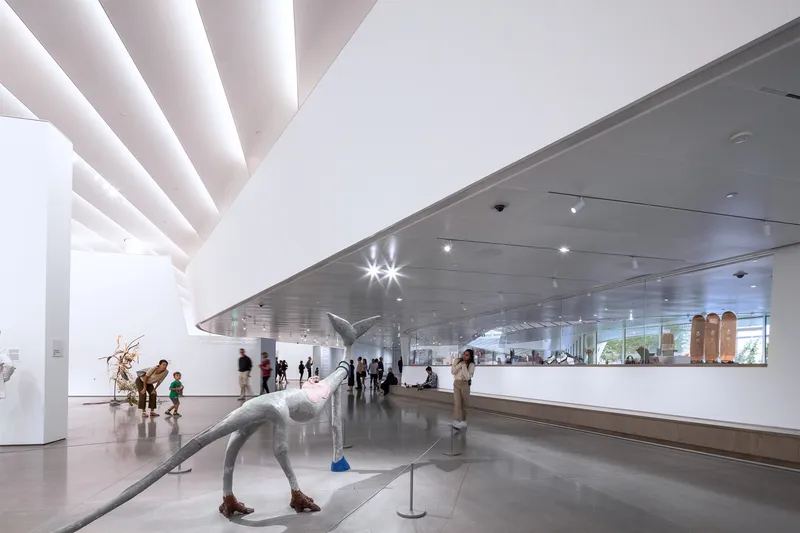
The exhibition program is split between two main pavilions: the Muzzy Family Special Exhibitions Pavilion and the Anton and Jennifer Segerstrom Permanent Collection Pavilion, each containing four flexible galleries. On the main floor, open-span rooms stretch 60 feet long, providing the proportions and neutrality that curators need. Skylights and large windows introduce controlled natural light, a welcome departure from the hermetically sealed black boxes that define too many contemporary museums.
The gradient Morphosis sets up here is worth emphasizing. Walk through the sculptural entry, past the dramatic atrium, and you arrive in rooms that are deliberately calm: polished concrete floors, white walls, hovering metallic ceiling planes. The architecture recedes so the art can speak. Storefront galleries at street level also open directly to passersby, dissolving the boundary between the museum and the city even further.
The Roof as Public Ground
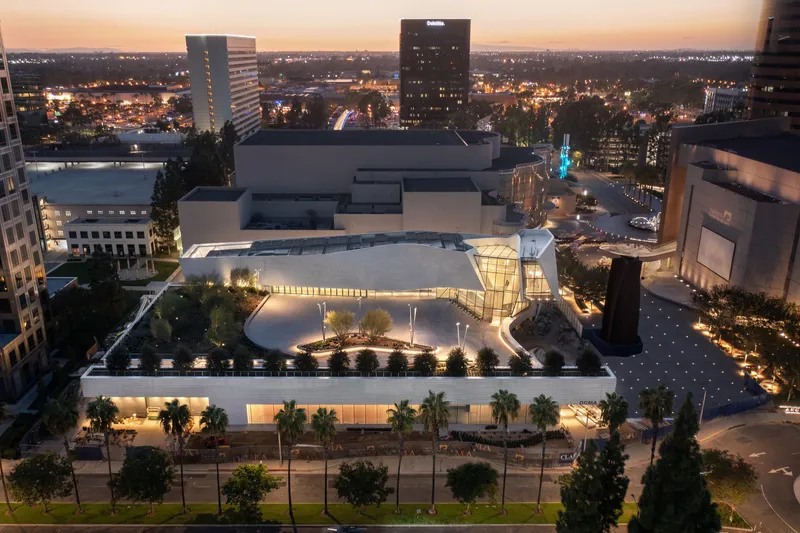
The 10,000-square-foot upper plaza is the most generous gesture in the project. Lined with mature live oak trees, planted beds, and space for large-scale sculpture installations, it functions as a park in the sky. Before the museum was built, the site was a grassy field where people walked dogs and had picnics. By elevating a landscaped terrace to the roof, Morphosis returns that public ground while building an institution beneath it. The vegetated surfaces are paired with permeable concrete for stormwater collection and reuse, addressing Orange County's dry climate without sacrificing the lushness of the planting.
The 900-square-foot Education Pavilion perches at the top of the atrium, overlooking the terrace. It is a small but programmatically significant space: a room for educational programming and performance that connects the museum's teaching mission to its most visible public space. A grand outdoor stair curves toward the museum entry below, creating a dialogue with an existing Richard Serra sculpture and linking the building back to the Segerstrom Center's central plaza. The stair is the moment where landscape, structure, and urbanism converge.
Structural Acrobatics Behind the Cantilevers
Morphosis projects often feature cantilevers, but the ones here push hard. Non-orthogonal elements extend more than 30 feet off the primary structure. A cantilevered planter is supported by two 5-foot-deep built-up plate girders spanning roughly 40 feet, cambered upward 3.5 inches to meet deflection criteria. At the terrace level, a 700-pound-per-foot plate girder spans roughly 68 feet, carrying a self-weight of approximately 24 tons. These are not decorative gestures; they are the means by which the building achieves its conceptual ambition of floating a landscape above gallery space.
An Infill Museum on an Automobile-Scale Campus
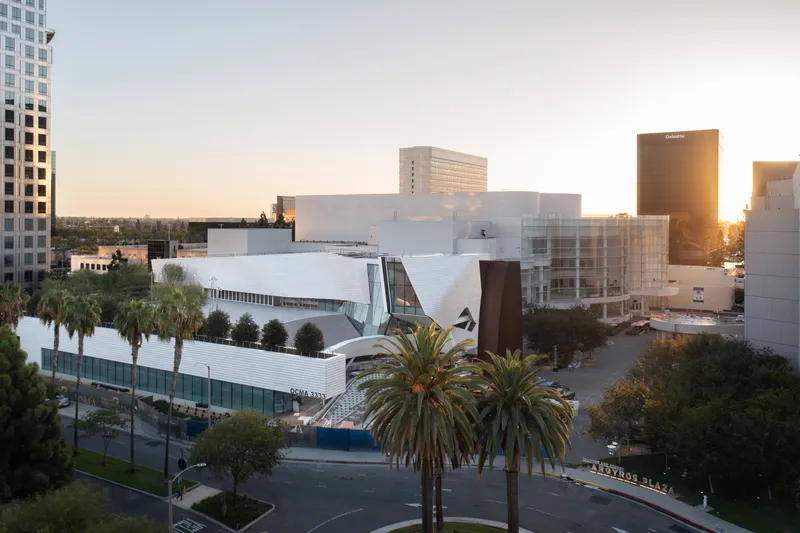
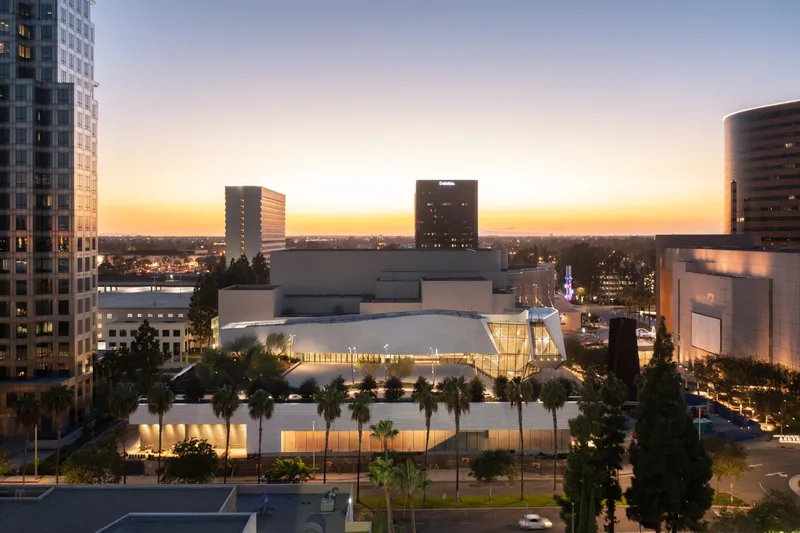
Costa Mesa was designed at the scale of the automobile. The museum sits across from South Coast Plaza, the largest mall in California, which was itself a lima bean field until 1967. The Segerstrom Center campus where OCMA now stands is surrounded by high-rise towers and wide roads. In this context, the building's decision to create pedestrian-scale public space, both at ground level and on its roof, is quietly radical. It is an argument that even in car-dependent Southern California, institutions can generate walkable civic life.
The siting is an infill move, threading a new volume into the gaps of an existing cultural campus. The building's ribbed white volumes curve past neighboring towers without competing with them, establishing a distinct identity through material and geometry rather than sheer size. At dusk, when the terracotta catches the last light and the rooftop courtyard glows from within, the museum reads as both a landmark and a neighbor.
Plans and Drawings
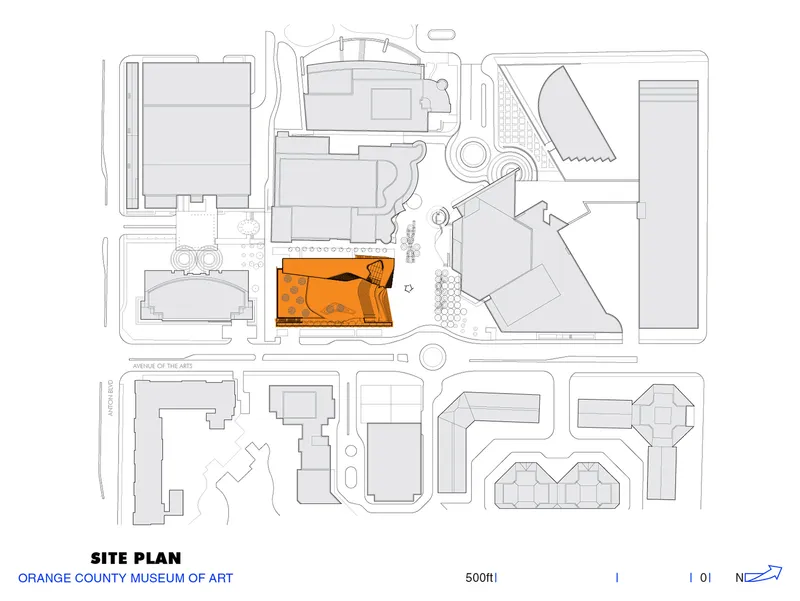
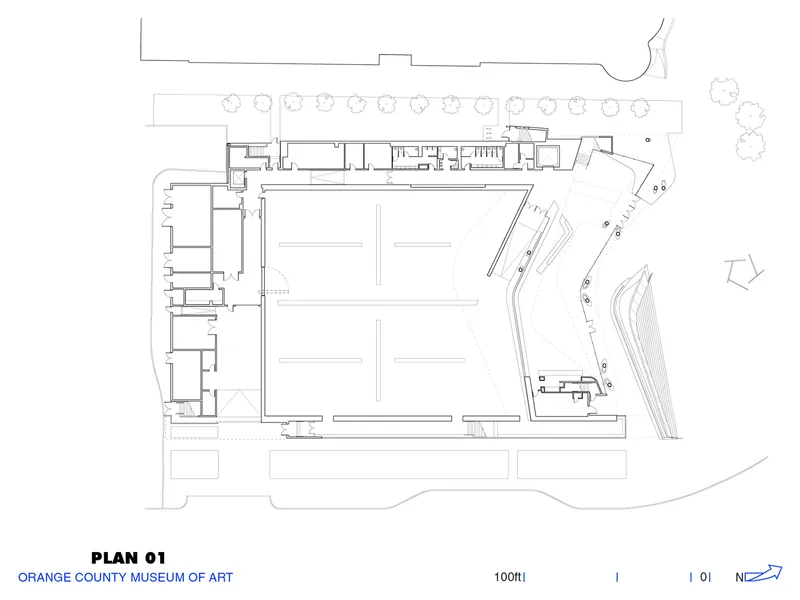
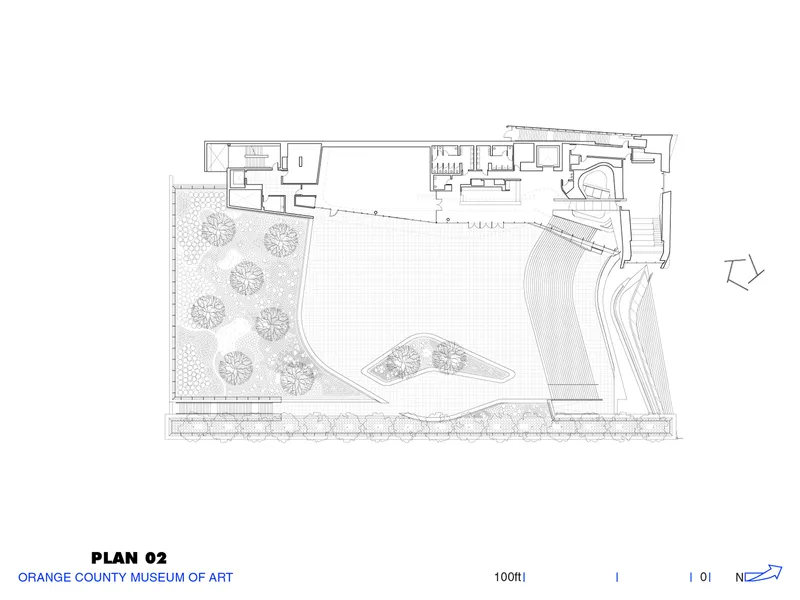
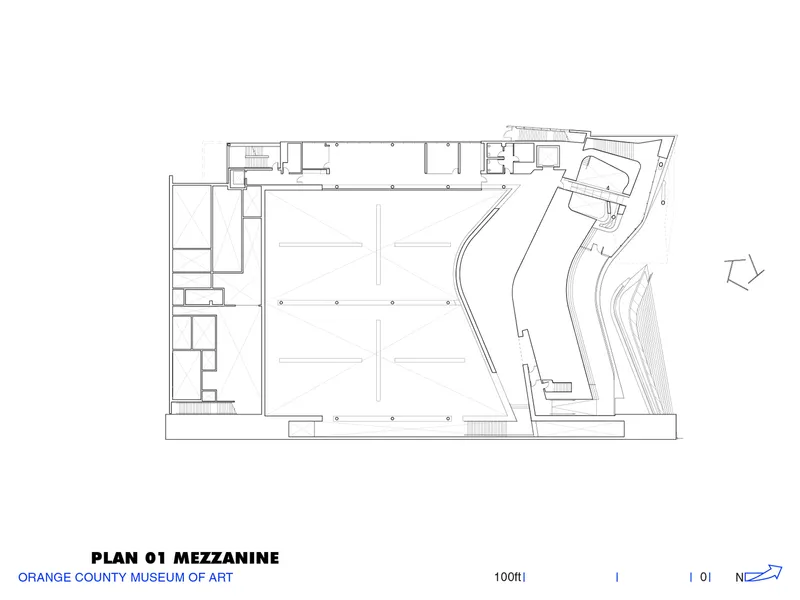
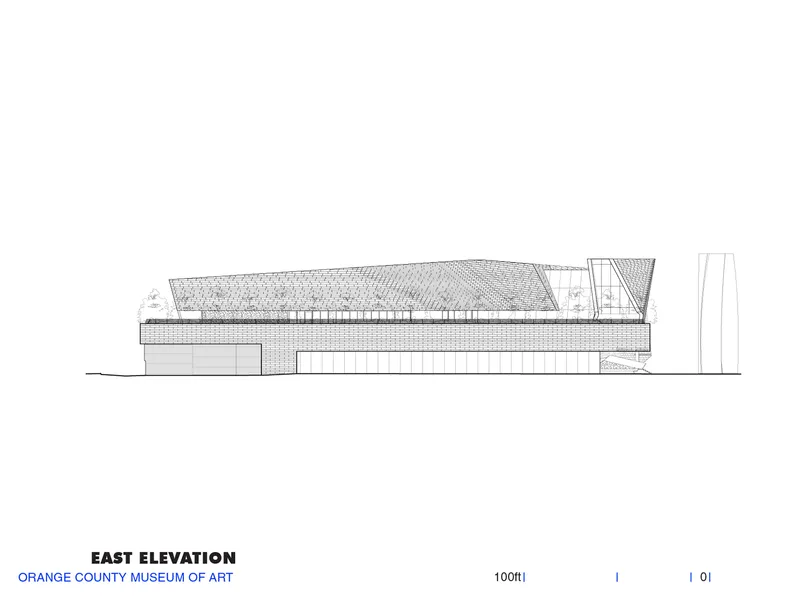
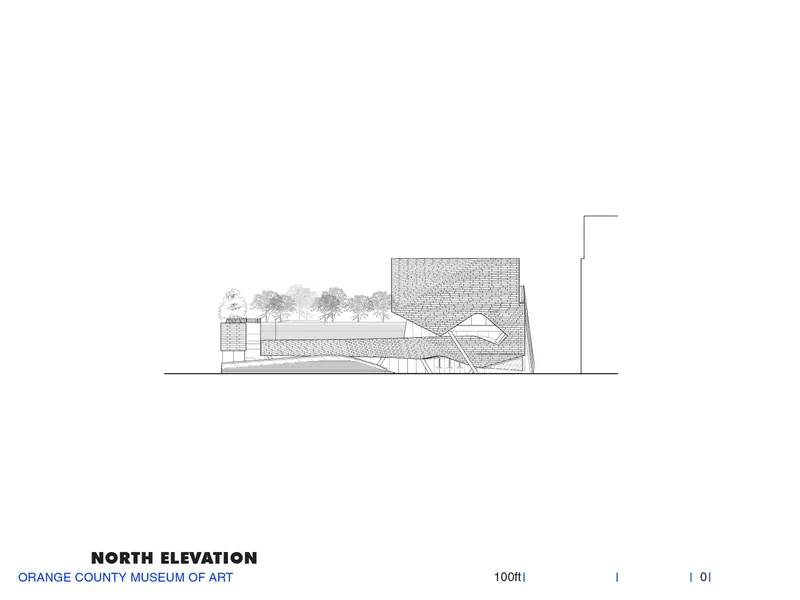
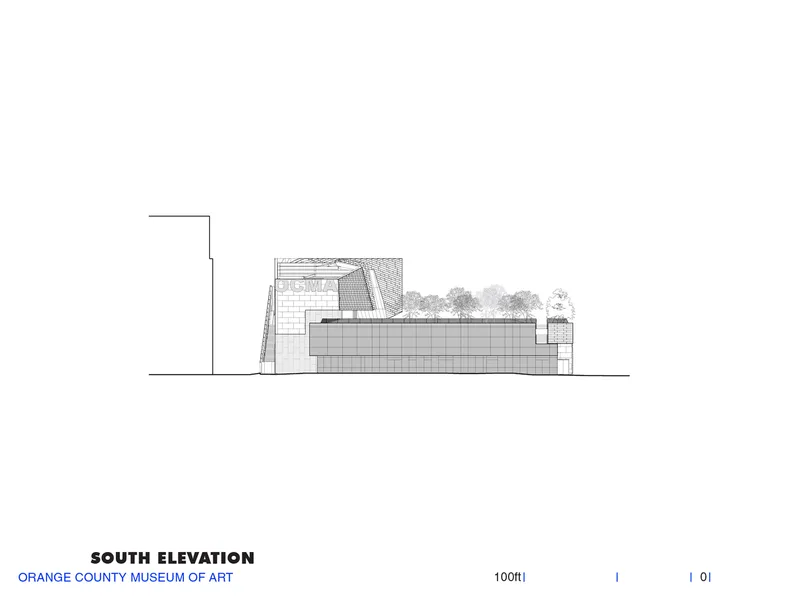
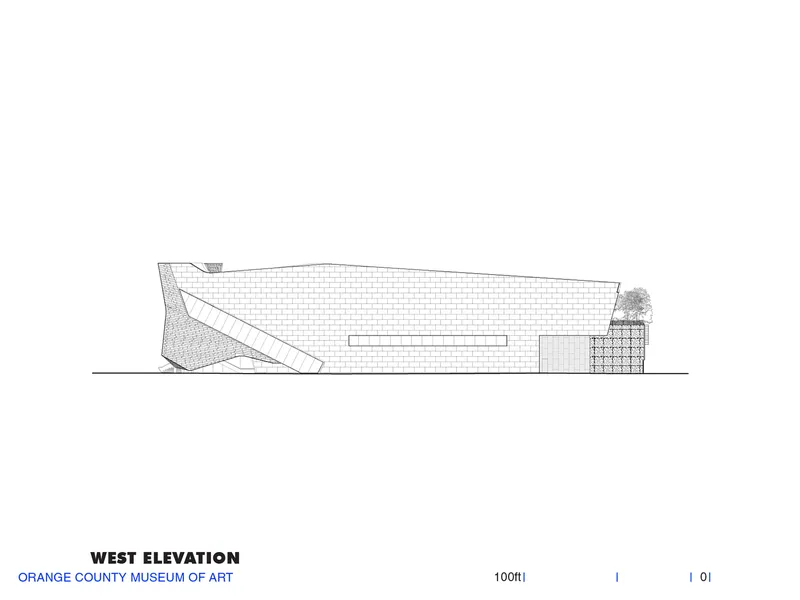
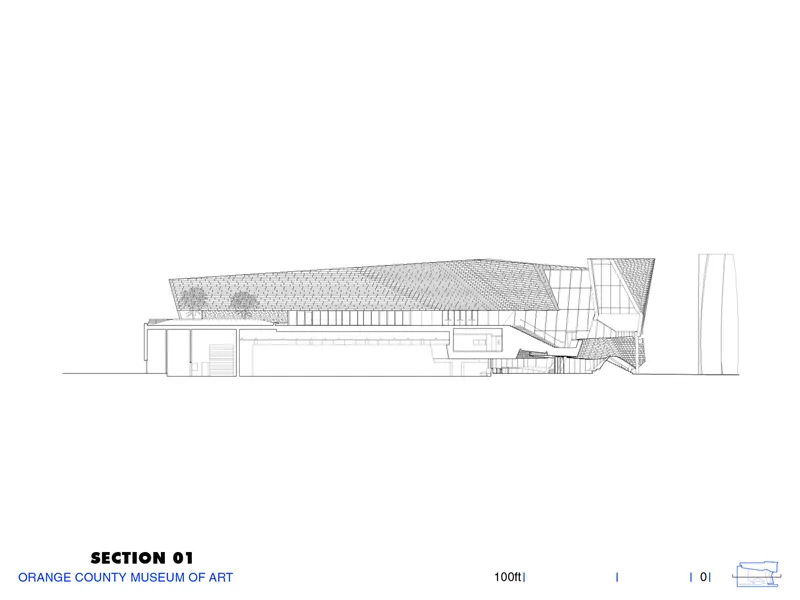
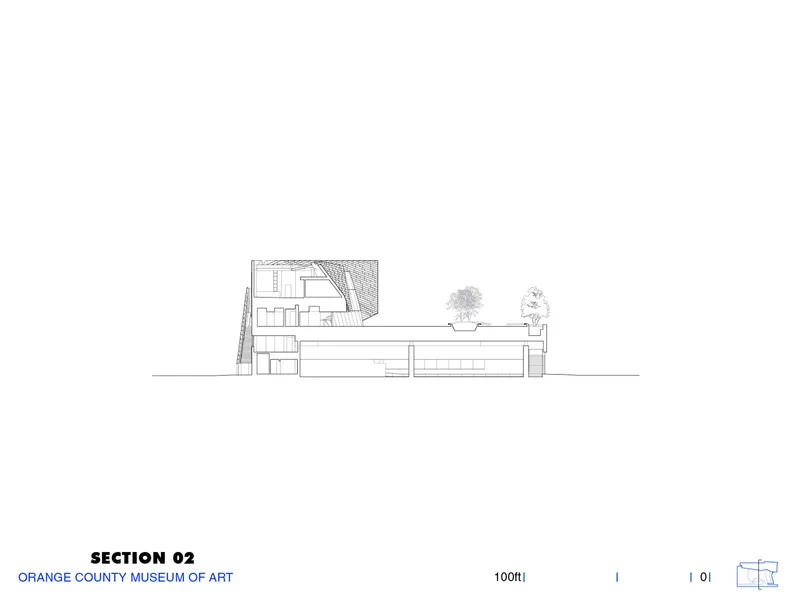
The drawings reveal the organizational clarity beneath the formal complexity. The site plan shows the building's angled footprint negotiating adjacent campus structures. Ground-floor plans display the long, open-span galleries alongside the angular entry wing. The mezzanine plan shows a large rectangular gallery with curved glazing at one edge, and the rooftop plan maps the planted beds and terrace that define the upper plaza. Elevations from all four sides confirm how the terracotta cladding and sloping roof planes read differently depending on your approach, while the sections cut through the building's most dramatic moments: the atrium void, the cantilevered Education Pavilion, and the layered relationship between gallery, terrace, and sky.
Why This Project Matters
The Orange County Museum of Art matters because it proposes a different contract between an art institution and its city. Instead of treating public space as a leftover around the building's edges, Morphosis makes it the building's primary architectural event. The rooftop terrace is not a bonus amenity; it is the conceptual driver that shapes everything below it, from the structural system to the gallery proportions. In a region where public space is often privatized or paved over, that commitment carries weight.
It also demonstrates that material craft and digital precision are not opposites. The 6,534 terracotta tiles were modeled parametrically and shaped by hand, scanned by laser and glazed in a kiln. That hybrid process produces a facade that is rigorous in its geometry but warm in its presence. For a museum that aspires to be a community destination rather than a monument, warmth is exactly right.
Orange County Museum of Art by Morphosis Architects, Costa Mesa, United States. 53,000 square feet. Completed 2022. Landscape architecture by OJB. Photography by Mike Kelley and Jasmine Park.
About the Studio
Share Your Own Work on uni.xyz
If projects like this are the kind of work you want to make, uni.xyz is a place to publish your own, find collaborators, and enter design competitions.



Popular Articles
Popular articles from the community


Play: Fragments of Their World
Familiar architecture becomes modular playground design, creating safe spaces where displaced children can learn, connect, imagine and play.

The Ocean Hive: Sustainable Architecture for a Self-Sufficient Civilization at Sea
The Ocean Hive imagines sustainable architecture at sea, where modular habitats, algae, wave power and ocean waste sustain a growing colony.

Hill & Cross Opera: Sculptural Opera House Architecture Shaped by Tallinn’s Landscape and Identity
Hill & Cross Opera reimagines opera house architecture in Tallinn through its sculptural hill, civic plaza, glass wave and a luminous cross.

Co-Life: Senior Housing Design That Reconnects Older Adults With the City
Co-Life reimagines senior housing design through healing gardens, shared streets, workshops, and a sustainable community across generations.


Similar Reads
You might also enjoy these articles

Bao Huynh Watercolor Atelier: A Serene Art Retreat in Hội An
Bao Huynh Watercolor Atelier in Hội An blends multifunctional art spaces, sustainable design, local materials, and family-friendly living in a serene environment.

Atelier Macri Concept Store Interior Design by CASE-REAL
Atelier Macri store features a "ko" counter, walnut wood details, cork displays, blending retail, gallery, and seamless customer experiences.

Manuel Vargas Izquierdo Stadium and High-Performance Sports Center: Architectural Excellence in Jalpa de Méndez
The Manuel Vargas Izquierdo Stadium blends sustainable design, inclusive sports facilities, and cultural-inspired architecture, revitalizing Jalpa de Méndez’s public spaces.
KAKR Buluh Awar Hall: Revitalizing Community and Ecology Through Bamboo Architecture
Community built bamboo hall revitalizes Buluh Awar village, empowering youth, restoring ecology, celebrating vernacular craftsmanship through sustainable architecture and culture.




Comments (0)
Please login or sign up to add comments
No comments yet. Be the first to comment!