

MSAP Architecture & Design School by The Purple Ink Studio: A Context-Driven Campus in Manipal
A topography-responsive campus in Manipal featuring stepped forms, interactive courtyards, fluid architecture, and sustainable design fostering creativity and collaboration.


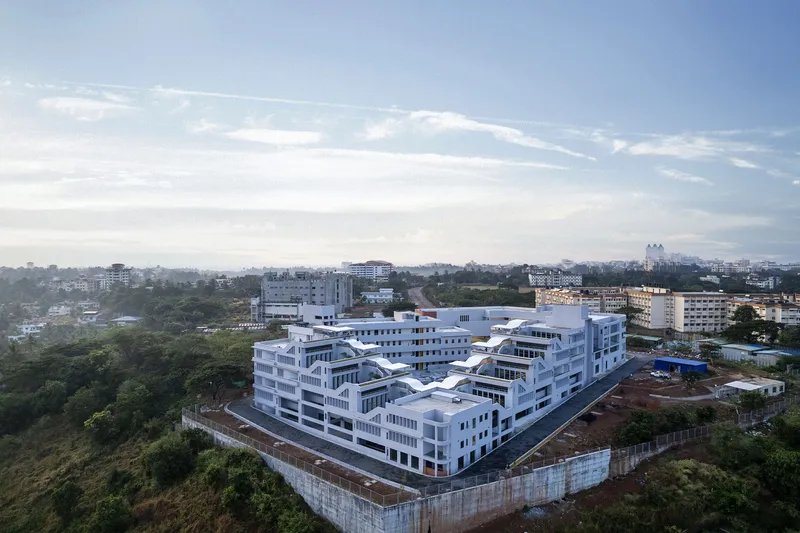
The MSAP Architecture & Design School, designed by The Purple Ink Studio, redefines educational architecture in Manipal, India. Spread across a 3.9-acre contoured site, this innovative campus is conceived as a fluid and interconnected learning environment for over 1200 students studying architecture, design, and fashion.
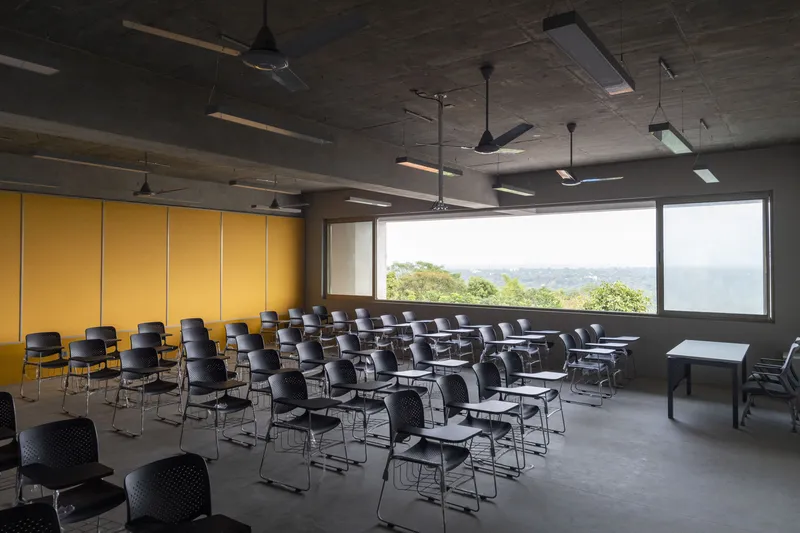

Responding to the dynamic academic culture of the Manipal Academy of Higher Education, the project reflects a forward-thinking design philosophy that balances innovation with contextual sensitivity. The steep 18-meter natural slope across the site becomes a defining design element, guiding the spatial organization and architectural language of the campus.

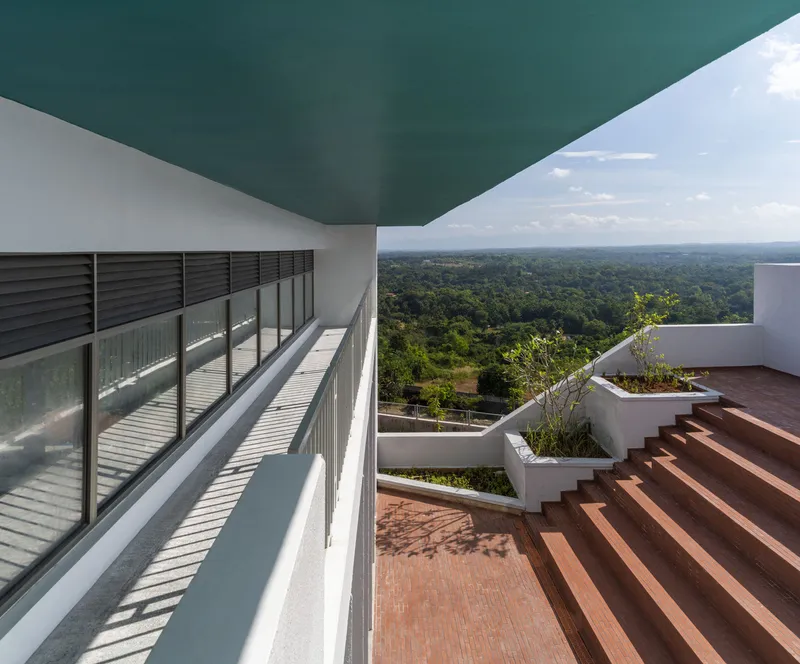
Stepped Massing and Grid-Based Planning
The campus is structured using a 10x10 meter grid, allowing flexibility while maintaining order. The building blocks are strategically stepped along the natural contours, ensuring uninterrupted views of the valley while minimizing disruption to the terrain. This approach not only enhances visual connectivity but also integrates the built form seamlessly with the landscape.
The planning is divided into four distinct academic blocks arranged around a central open space. This layout promotes cross-disciplinary interaction while maintaining functional clarity across departments.
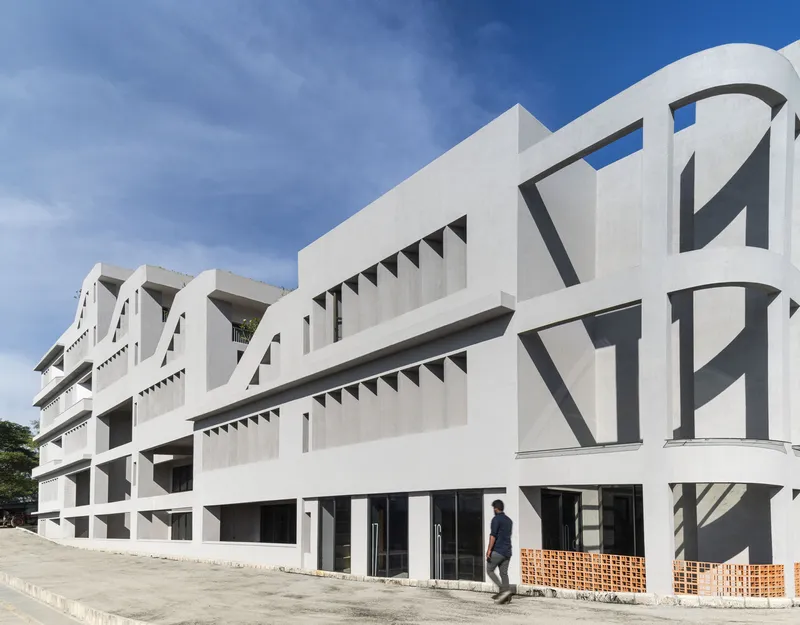
Central Courtyard as a Social and Academic Core
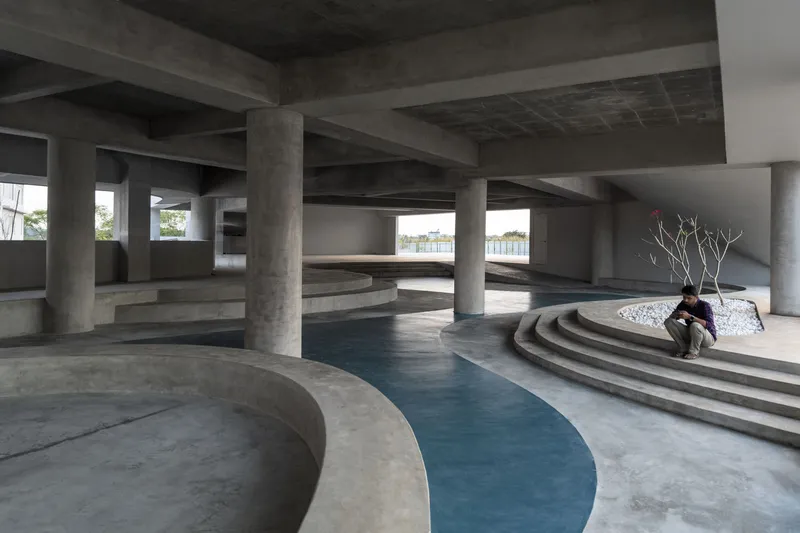
At the heart of the campus lies a vibrant central courtyard designed as a stepped forum. This space acts as an informal gathering hub, encouraging interaction between students and faculty. The open-ended nature of this forum supports discussions, exhibitions, and collaborative learning experiences.
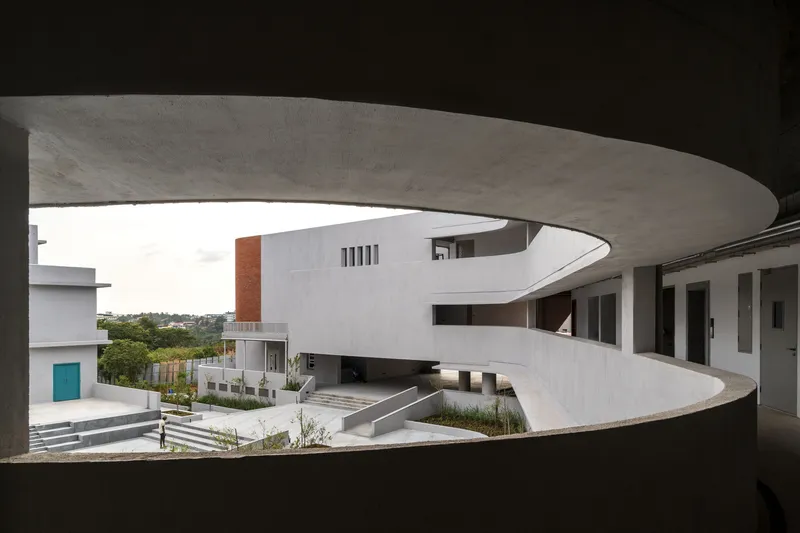
Circulation is organized around this courtyard, with meandering staircases and terraces connecting various levels. These pathways offer panoramic views of the surrounding valley, enhancing the spatial experience and fostering a strong connection with nature.
Interactive Terraces and Open Learning Spaces
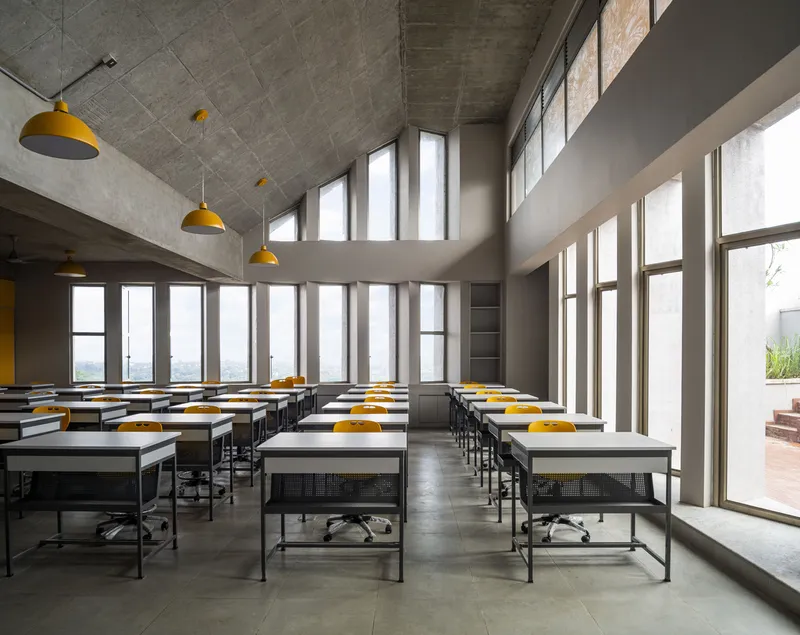
The design studios are located at the uppermost levels, extending into open terraces that function as interactive learning zones. These terraces are intentionally left open to the sky, creating flexible environments for creativity and collaboration.
Visual connectivity is a key feature of the design, with corridors and staircases offering glimpses into different parts of the campus. This transparency encourages engagement and a sense of community among students.


Fluid Entrance Design and Cultural Inspiration
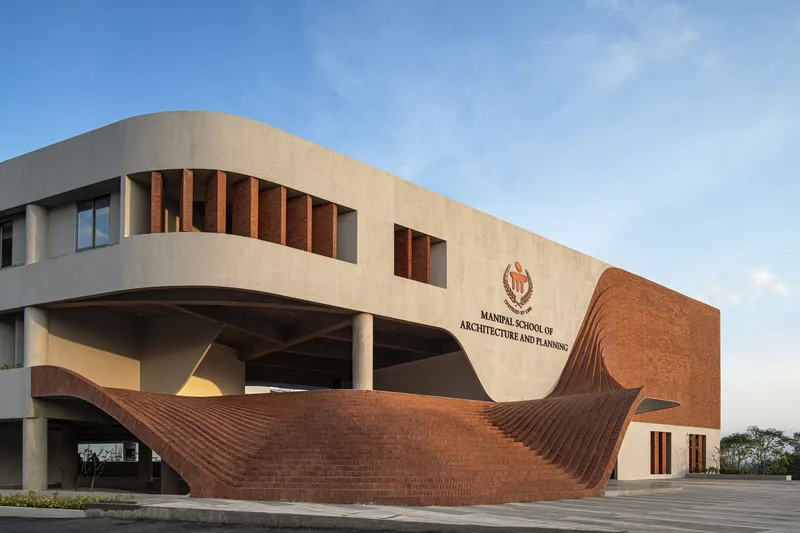
The entrance to the campus is conceived as a sculptural and fluid spatial sequence. Inspired by traditional temple architecture in the region, the design incorporates undulating forms that guide visitors toward key functional areas such as the auditorium and administrative spaces.
Constructed using a combination of RCC and ferrocement, the entrance structure achieves complex geometries while maintaining structural efficiency. The façade features rhythmic brick waves, giving the campus a distinctive identity and reinforcing its architectural narrative.

Material Strategy and Sustainable Approach
The material palette emphasizes durability, low maintenance, and contextual relevance. Locally appropriate materials are used thoughtfully to ensure longevity while reflecting regional construction practices.
The integration of natural elements with built spaces creates a harmonious environment where architecture and landscape coexist. The campus design encourages passive environmental strategies, enhancing comfort while reducing energy dependency.


A Holistic Learning Environment
MSAP Architecture & Design School stands as a benchmark for contemporary campus design in India. By combining topography-responsive planning, interactive spatial design, and cultural references, The Purple Ink Studio has created a learning environment that fosters creativity, collaboration, and community engagement.
This project exemplifies how educational architecture can move beyond functional requirements to create meaningful and immersive experiences for students.

All photographs are works of
Suryan // Dang


Popular Articles
Popular articles from the community


David Ortega Stacks a Two-Story Mexico City Penthouse Around a Steel Stair and a Pergola-Shaded Roof Terrace
In Colonia Roma, a 300 m² penthouse uses oak joinery, a planted steel stair and a slatted roof pergola to make a new-build apartment feel like a house.


Singing Woman: An Opera House That Performs Before the Curtain Rises
Ovidiu Cristian Pavel's conceptual opera house translates Estonia's choral identity into a sculpted waterfront landmark facing the Baltic Sea.

Aquadapt: An Underwater Habitat That Rewrites Its Rooms by the Hour
Curved modules ring the seabed while one shell shifts from breakfast room to cinema, farm and football pitch as residents' needs change.

FCC Arquitectura Expands a Portuguese Granite House with a Board-Marked Concrete Wing
In Portugal, JV House pairs a cleaned-up whitewashed and granite dwelling with a timber-shuttered concrete extension, courtyards and a garden pool.

Similar Reads
You might also enjoy these articles

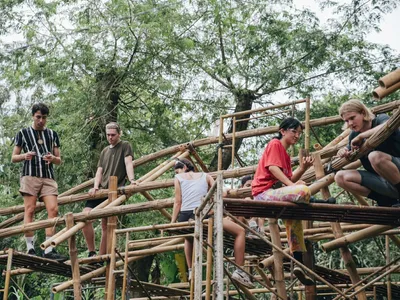
Bamboo Housing Challenge 2026: Design Affordable, Sustainable Homes Using Bamboo
An international design competition by Bamboo U and IBUKU inviting architects and designers to reimagine affordable housing using bamboo — with the winning design built full-scale in Bali.

Computational Design & Education: Beegraphy Design Awards Introduces 7th Category (Featuring Jiyun's Innovative Approach)
Dive into Beegraphy’s 7th Design Awards category, where computational design meets education to create immersive, interactive learning tools, inspired by Jiyun’s work.

From Parametric Lighting to Urban Furniture: Join the 2nd Workshop in Beegraphy’s Computational Design Series
Dive into Cutting-Edge Design Techniques and Practical Applications with Industry Experts

Last Call: Unleash Your Architectural Genius in SHAK's Kindergarten Design Competition
Urgent call for architects to join SHAK's kindergarten design competition before the looming deadline

Explore Blocs Competitions
Discover active competitions in this discipline

Challenge to design public laboratory

Challenge to reimagine the Iron Throne

Photograph architecture without architects

Illustrate the lost glory of Angkor Wat - Render Challenge
Comments (0)
Please login or sign up to add comments
No comments yet. Be the first to comment!