
Multi-Generational Housing Architecture: The Resilient House by etal. Reinvents Cooperative Living in Munich
The Resilient House reimagines multi-generational housing architecture through sustainable timber design, participatory planning, and adaptable living in Munich.


In the evolving discourse of socially responsive design, multi-generational housing architecture has emerged as a powerful response to both economic and cultural shifts. The Resilient House by etal., located in Munich, Germany, is a pioneering example of this typology—blending affordability, adaptability, and community-driven design into a singular architectural narrative.
Cooperative Living as a Spatial Philosophy
This project was born from a Baugruppe initiative—where a collective of future residents commissions and co-develops their housing—and was realized in partnership with the Mietshäuser Syndikat, a network that fosters self-managed, permanently affordable housing across Germany. Selected through a concept-based competition by the City of Munich, the project gained an 80-year lease on municipal land and represents the first new-build project by the Mietshäuser Syndikat in Munich, supported through the "München Modell-Genossenschaften" housing scheme.
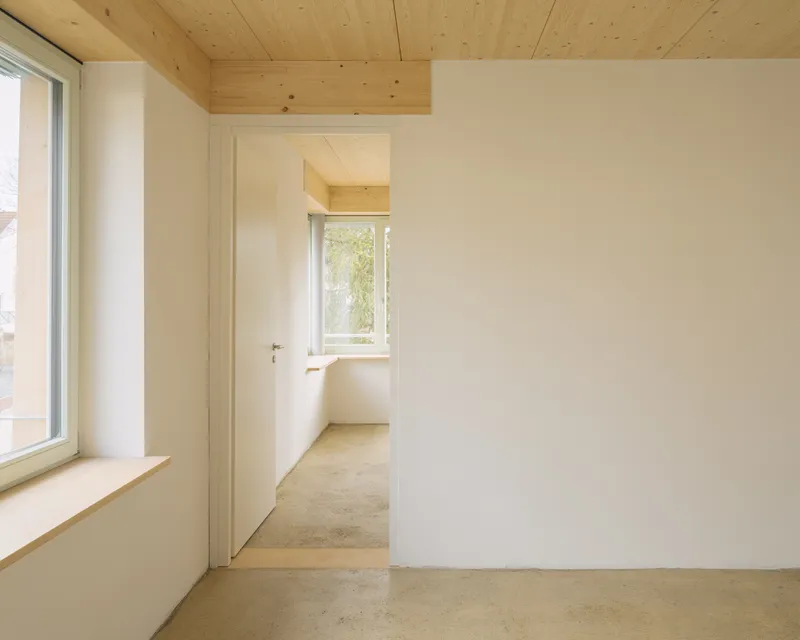
All phases of the project, from programmatic definition to design execution, were shaped through consensus-based decision-making, orchestrated with architectural guidance from etal. This participatory framework not only informed the spatial structure but also ensured long-term engagement, adaptability, and community ownership.

A Layered Urban Insertion for Communal Living
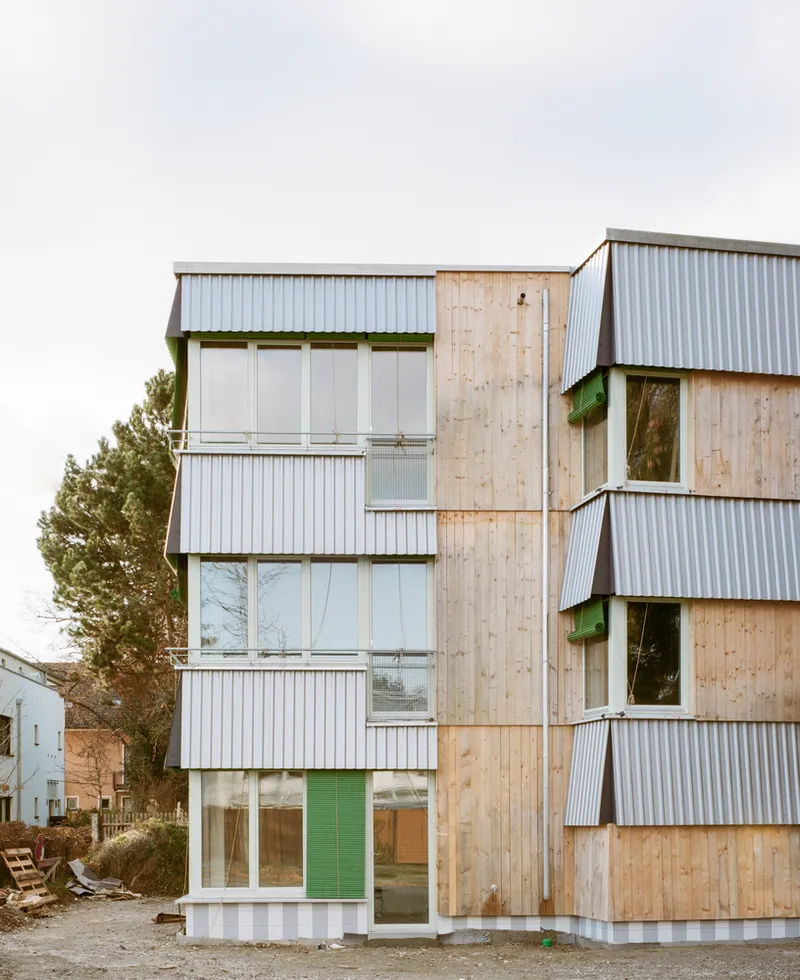
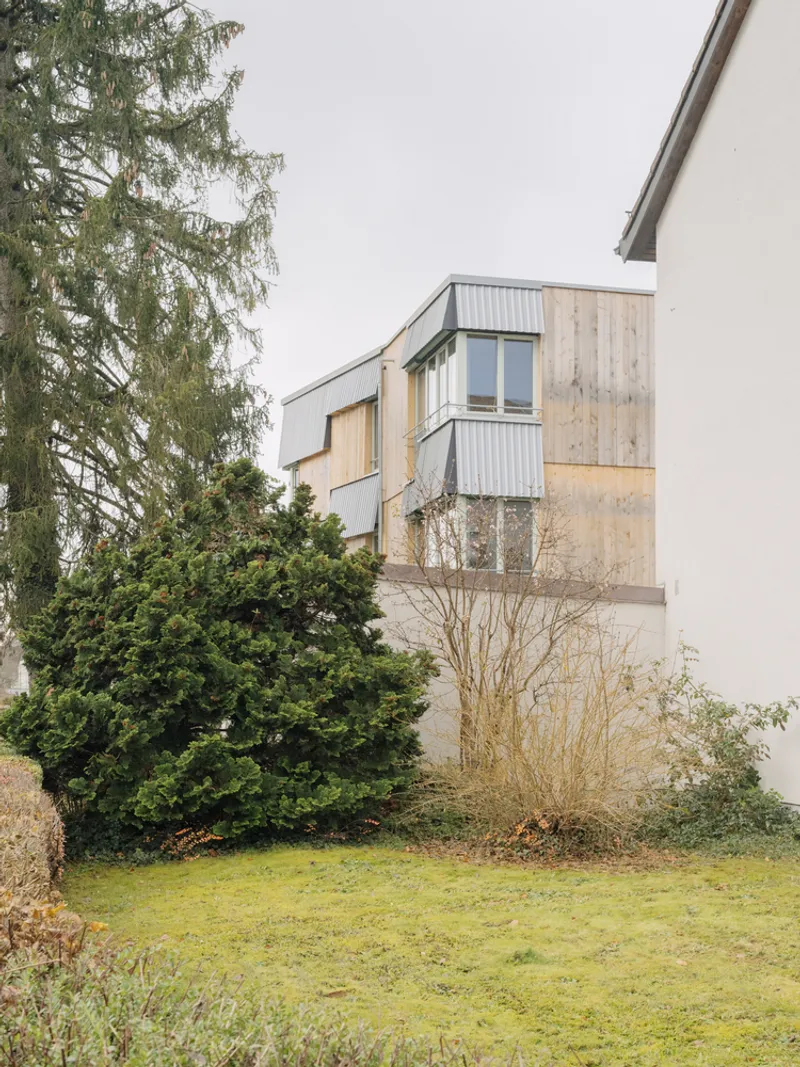
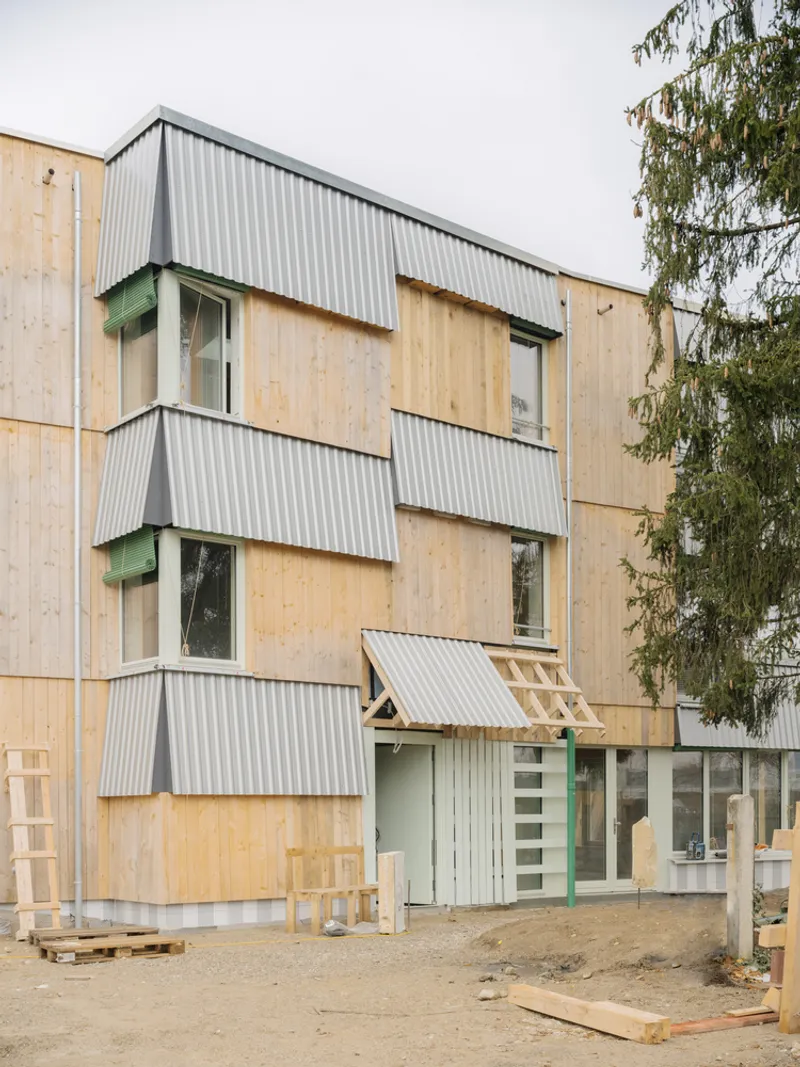
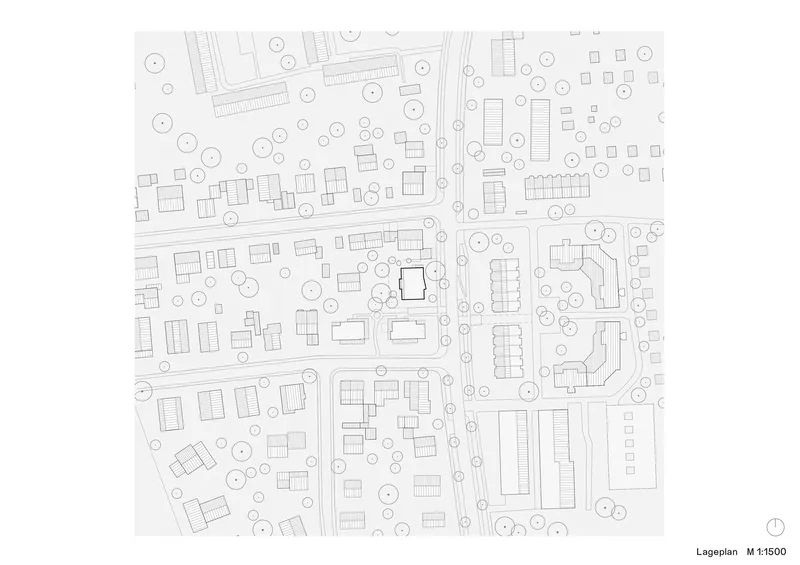
Situated in a predominantly low-density residential neighborhood, the three-story structure responds to its urban context with subtle volumetric articulations. Toward the street, a clear and rhythmic façade of stacked floors creates a civic presence. In contrast, the garden side is softened by a mansard roof, visually reducing the building's mass and creating a more intimate domestic scale.
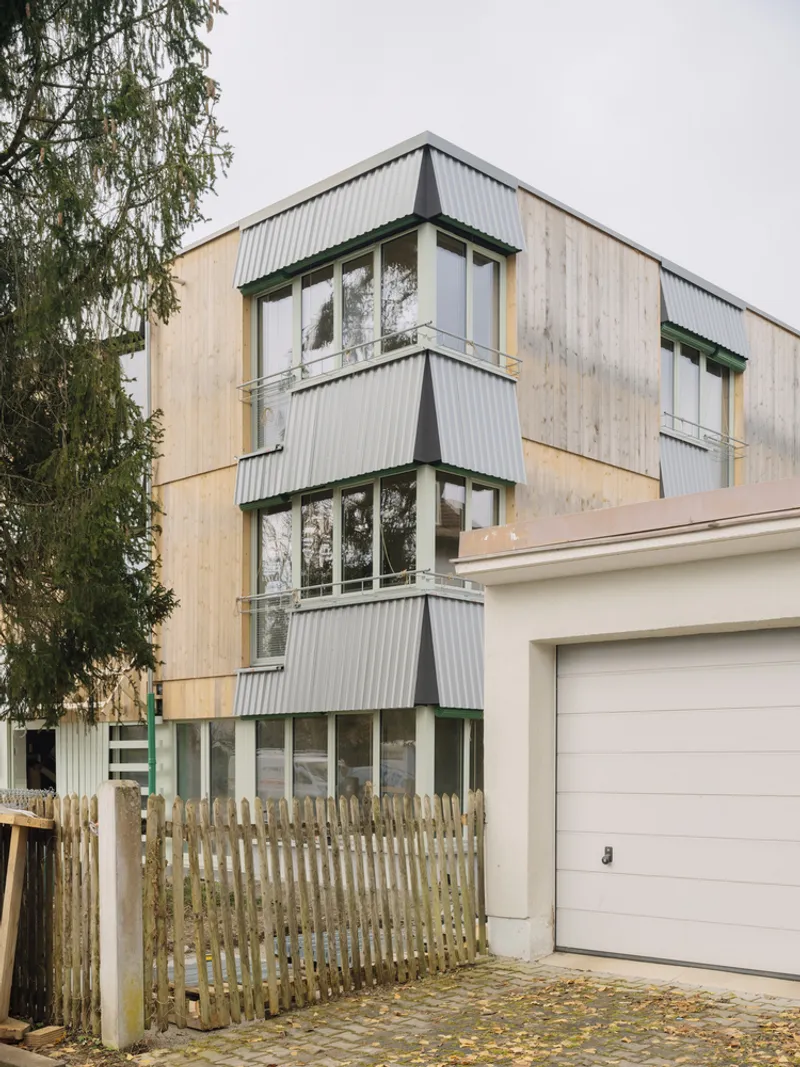
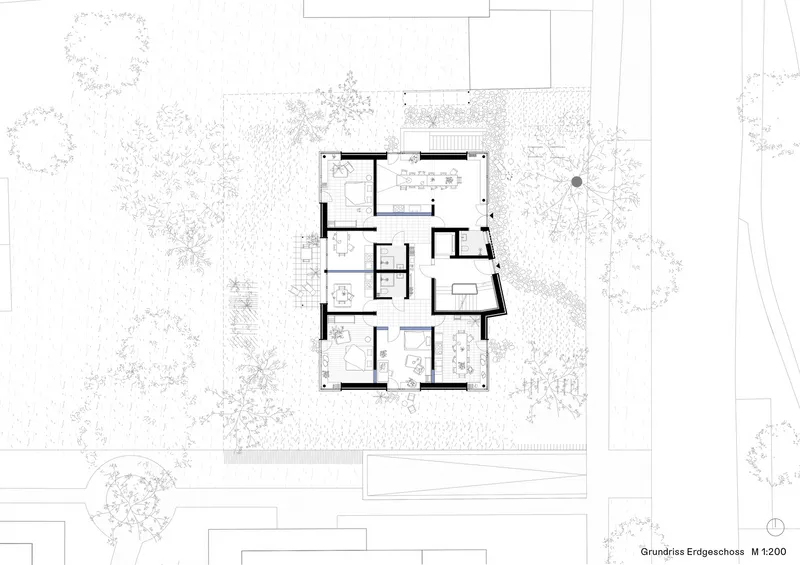
Each floor houses a cluster apartment designed for communal living, with shared kitchens and dining areas while maintaining private sleeping quarters and bathrooms. All units are barrier-free, prioritizing accessibility for all ages and mobility levels. On the ground level, a multifunctional room serves both residents and the wider community, encouraging intergenerational interactions and neighborhood integration.
Material Logic and Sustainable Strategies
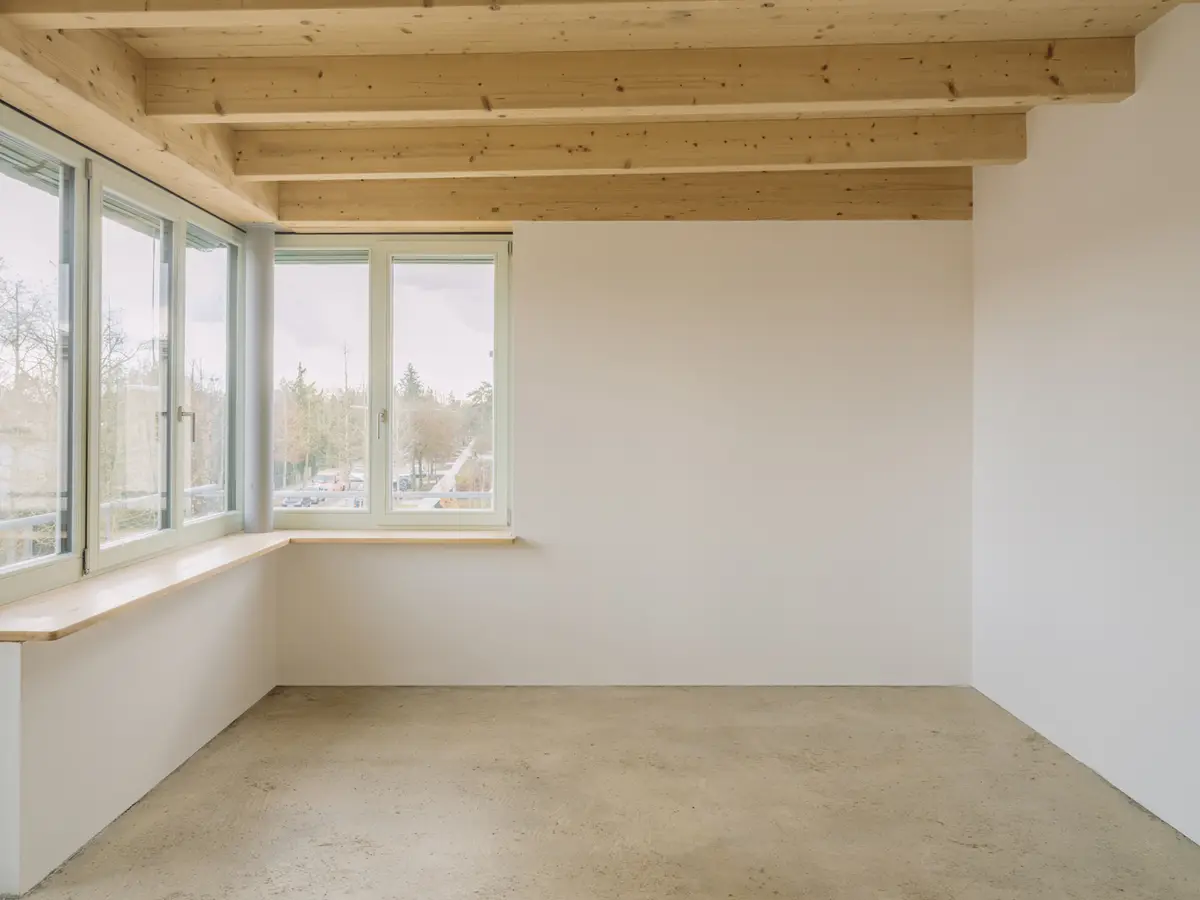
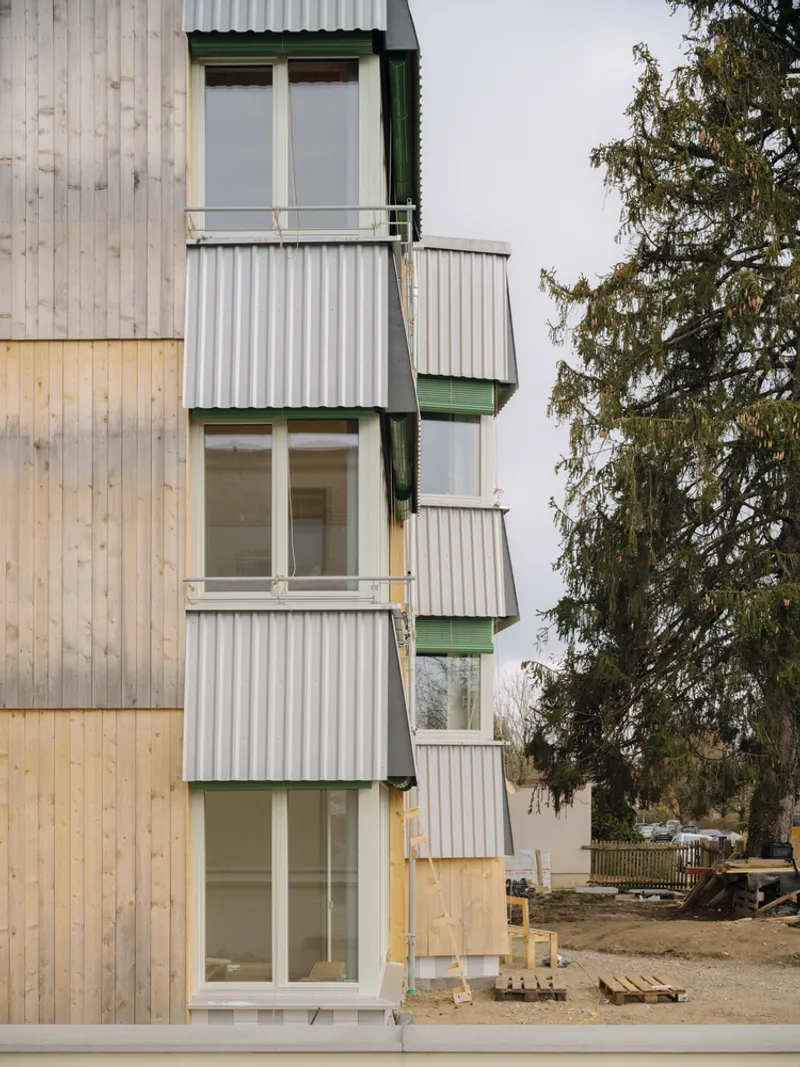
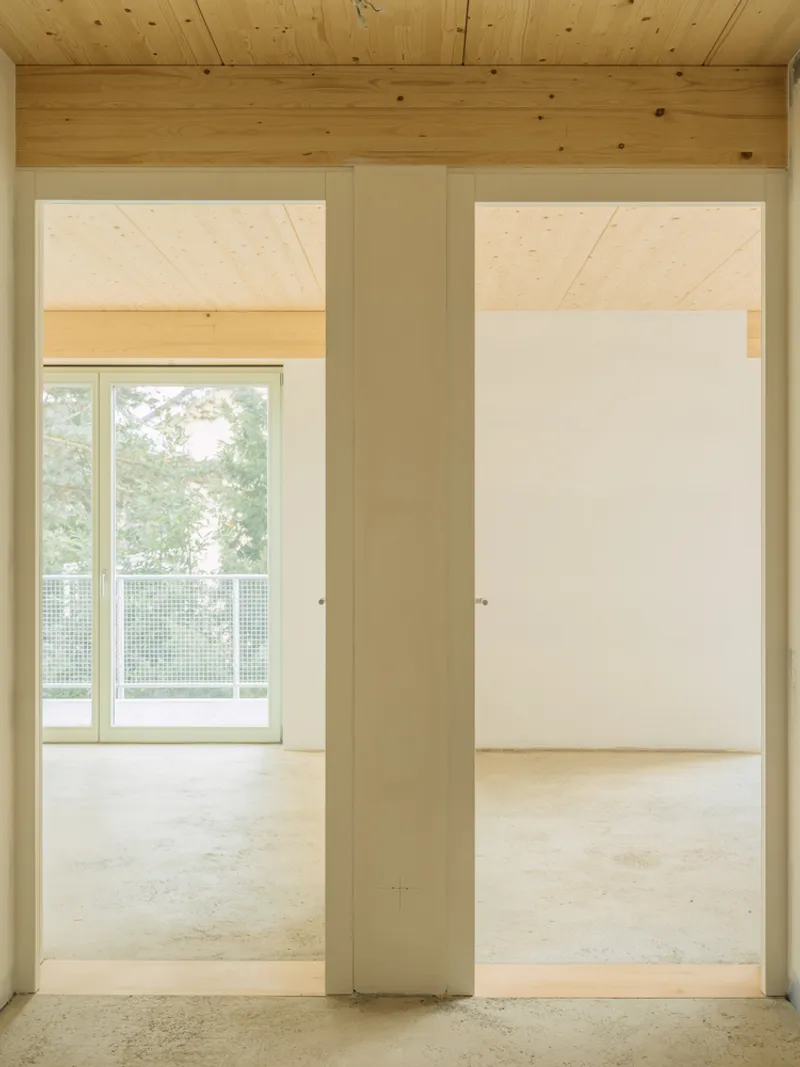
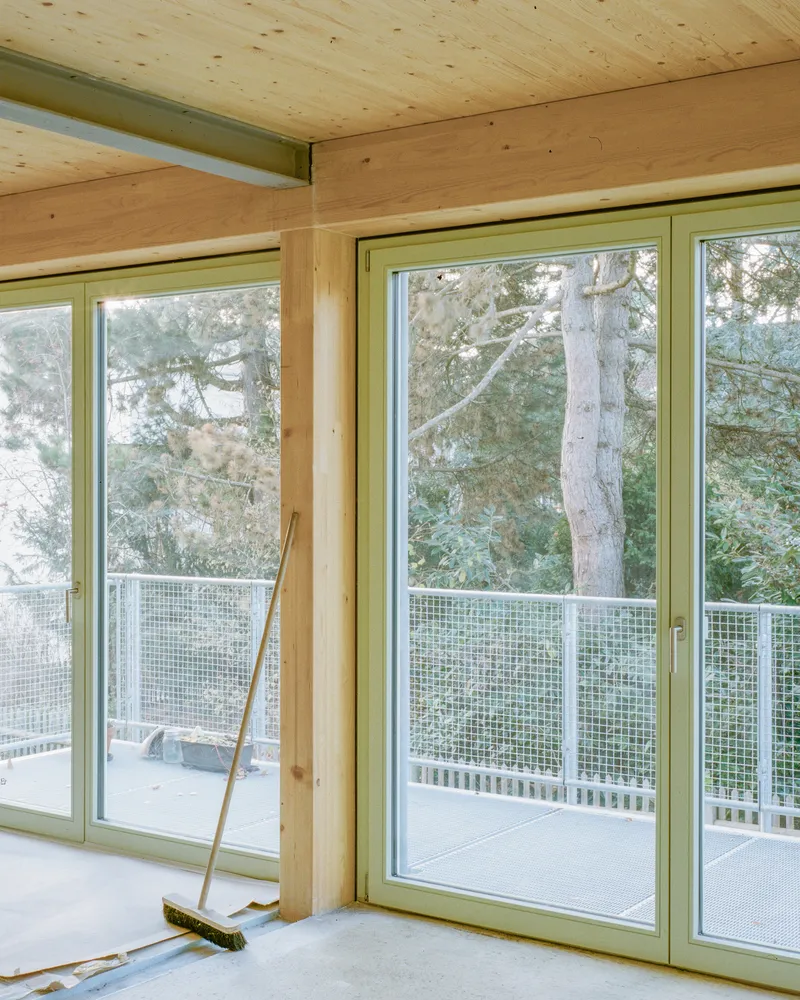
The building is a timber construction from top to bottom, chosen for its renewable properties, tactile warmth, and ecological performance. Above-ground walls use timber frame systems, while glulam elements are used for elevator shafts and floor slabs. The roof structure remains exposed as a visible rafter system, adding character to the upper floor interiors.
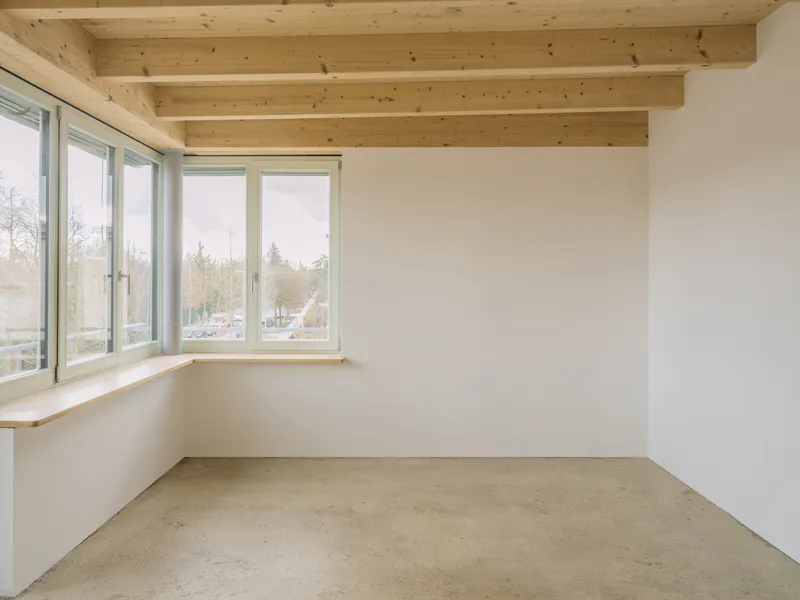
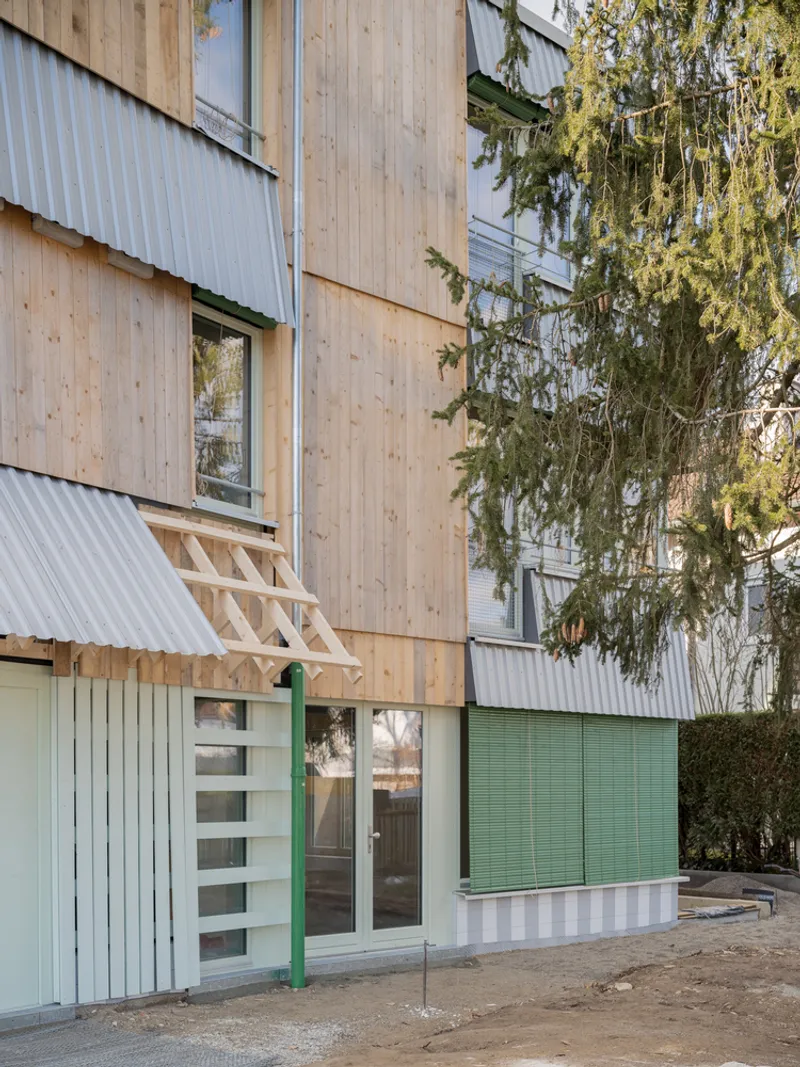
A layered but cost-conscious approach defines the material palette. Local spruce cladding, steel trapezoidal panels, and visible cement screed floors provide durability without excess. Wall insulation uses cellulose and wood wool, while the omission of secondary electrical shells reduces complexity and cost.

The green roof with photovoltaic panels enhances environmental performance, while wooden sunshades on the façade function as both climatic control and resident-modifiable features—adding a layer of agency to the building's expression.
Adaptability and Future-Proof Design
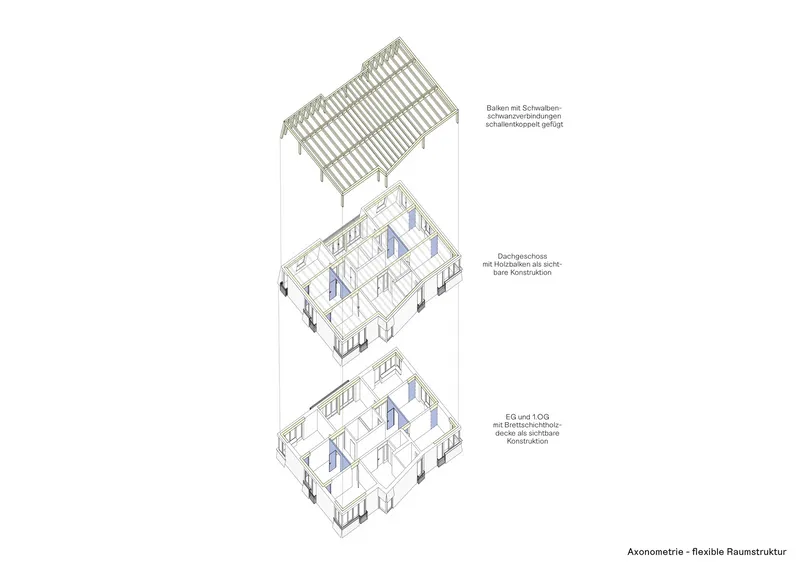
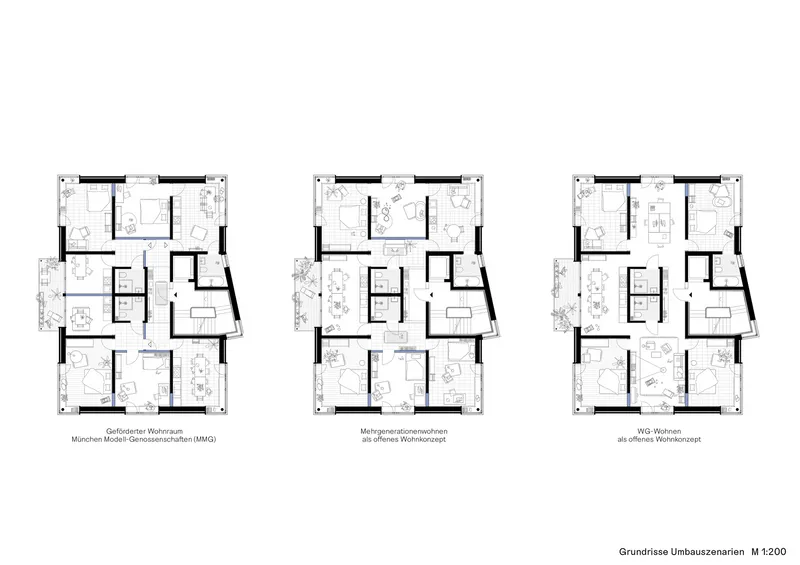
At the heart of this project lies long-term adaptability. Rooms on each floor are uniformly sized (approximately 18 m²), allowing flexible occupation patterns for individuals, couples, or families. The layout supports future conversions: kitchen connections can be added without structural modification, and interior walls can be removed or extended thanks to integrated "breakpoints" such as lintels and thresholds.
This embedded flexibility is not abstract—it is visible and tangible, empowering residents to make architectural choices and spatial alterations over time. The building becomes an instrument of evolving domestic life, shaped by the rhythms of its inhabitants.
Empowerment Through Participation
Construction was carried out with a high degree of resident involvement, enabling future tenants to understand their building intimately. From spatial configuration to material decisions, the collective process fostered knowledge ownership, strengthening community bonds and instilling resilience not just in structure, but in social dynamics.
The Resilient House redefines what multi-generational housing architecture can be: sustainable, participatory, adaptable, and grounded in collective agency. As cities face aging populations, housing shortages, and social fragmentation, this project offers a compelling blueprint for the future of inclusive urban living.


All Photographs are works of Federico Farinatti


Popular Articles
Popular articles from the community


Singing Woman: An Opera House That Performs Before the Curtain Rises
Ovidiu Cristian Pavel's conceptual opera house translates Estonia's choral identity into a sculpted waterfront landmark facing the Baltic Sea.

Manzana Morphosis: Stretching Barcelona's Grid into a Living Landscape for 2050
A radical reworking of the Eixample manzana turns density into a tool for generous public space, vertical ecology, and environmental performance.


David Ortega Stacks a Two-Story Mexico City Penthouse Around a Steel Stair and a Pergola-Shaded Roof Terrace
In Colonia Roma, a 300 m² penthouse uses oak joinery, a planted steel stair and a slatted roof pergola to make a new-build apartment feel like a house.

The Amber Palace Opera: A Geological Fiction Surfaces on Tallinn's Baltic Waterfront
Pierre Brillard reimagines a Baltic legend as a public landscape, opera house, and waterfront promenade rooted in Tallinn's coastal identity.

Similar Reads
You might also enjoy these articles

Bamboo Housing Challenge 2026: Design Affordable, Sustainable Homes Using Bamboo
An international design competition by Bamboo U and IBUKU inviting architects and designers to reimagine affordable housing using bamboo — with the winning design built full-scale in Bali.
Computational Design & Education: Beegraphy Design Awards Introduces 7th Category (Featuring Jiyun's Innovative Approach)
Dive into Beegraphy’s 7th Design Awards category, where computational design meets education to create immersive, interactive learning tools, inspired by Jiyun’s work.
From Parametric Lighting to Urban Furniture: Join the 2nd Workshop in Beegraphy’s Computational Design Series
Dive into Cutting-Edge Design Techniques and Practical Applications with Industry Experts

Last Call: Unleash Your Architectural Genius in SHAK's Kindergarten Design Competition
Urgent call for architects to join SHAK's kindergarten design competition before the looming deadline

Explore Co-Housing Competitions
Discover active competitions in this discipline

Challenge to reimagine the Iron Throne

Photograph architecture without architects

Illustrate the lost glory of Angkor Wat - Render Challenge

Design challenge to reuse E-waste
Comments (0)
Please login or sign up to add comments
No comments yet. Be the first to comment!