
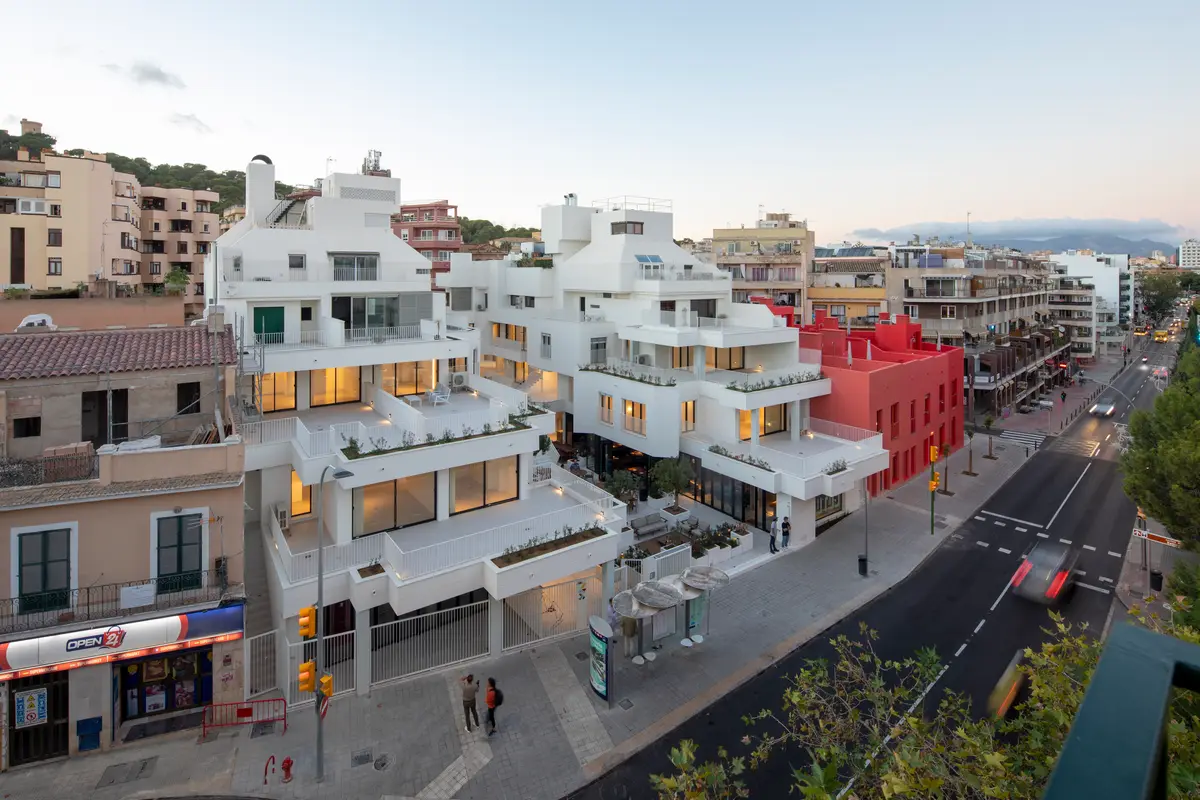
MVRDV and GRAS Reynés Arquitectos Revive a Faded Palma Nightlife District with Seven Chromatic Buildings
Project Gomila brings 60 dwellings in seven wildly different buildings to a once-bohemian Mallorcan neighborhood near the harbor.


Plaza Gomila was once the place where Jimi Hendrix, Ray Charles, and Tom Jones played bohemian nightclubs steps from Palma's harbor. By the mid-1990s the neighborhood of El Terreno had slid into neglect, its cultural magnetism gone. Project Gomila, a 15,000-square-meter intervention by MVRDV and GRAS Reynés Arquitectos, does not attempt to freeze the quarter in amber. Instead it proposes the opposite: seven buildings, each with its own color, material palette, and roof profile, stitched into the existing urban fabric to create a kind of architectural bazaar that invites variety back into the streets.
Commissioned by the Fluxà family, owners of the Camper shoe brand, the project is both a real-estate venture and a piece of neighborhood activism. Four existing structures were renovated, three were built from scratch, and together they deliver 60 dwelling units alongside offices, restaurants, a gym, and a historic bar. What makes the scheme worth studying is not any single building but the deliberate refusal of formal unity. Each structure is legible on its own, yet the ensemble reads as a coherent argument: that diversity of form, material, and program is the only reliable recipe for street life.
A Neighborhood, Not a Complex
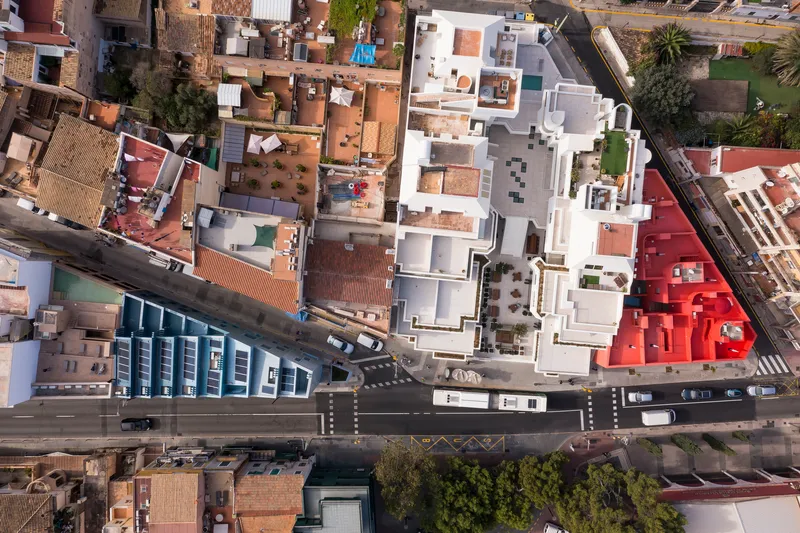
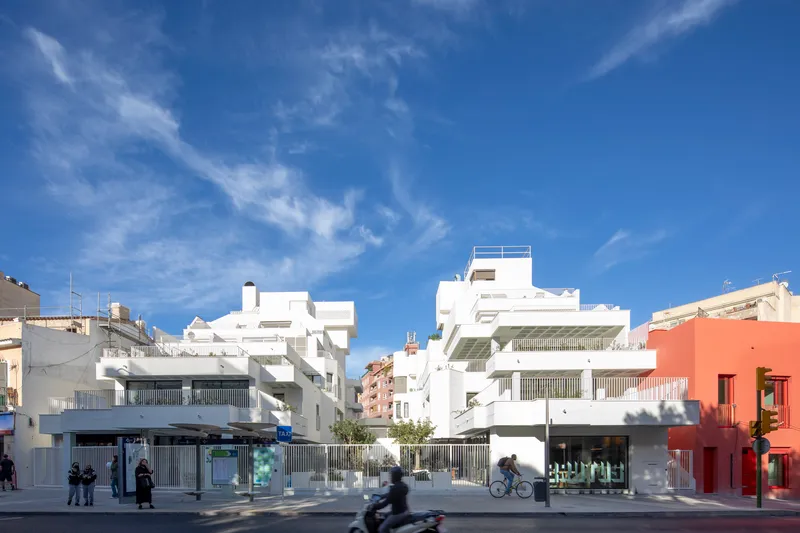
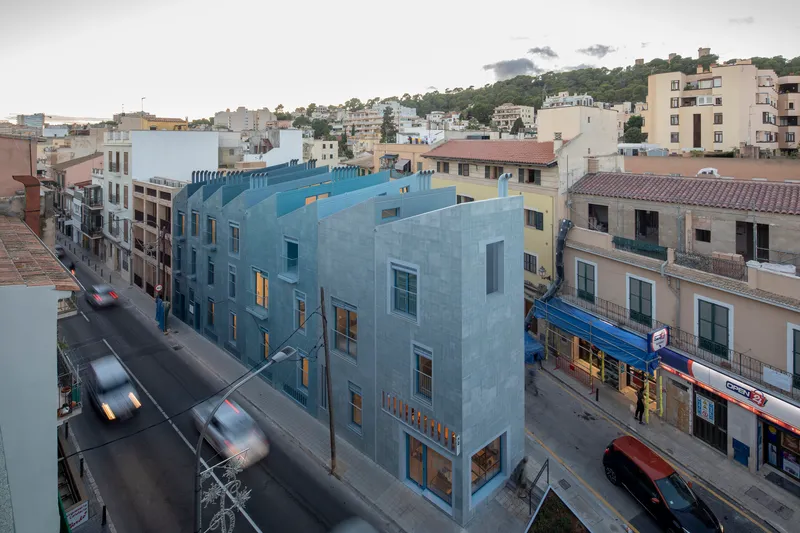
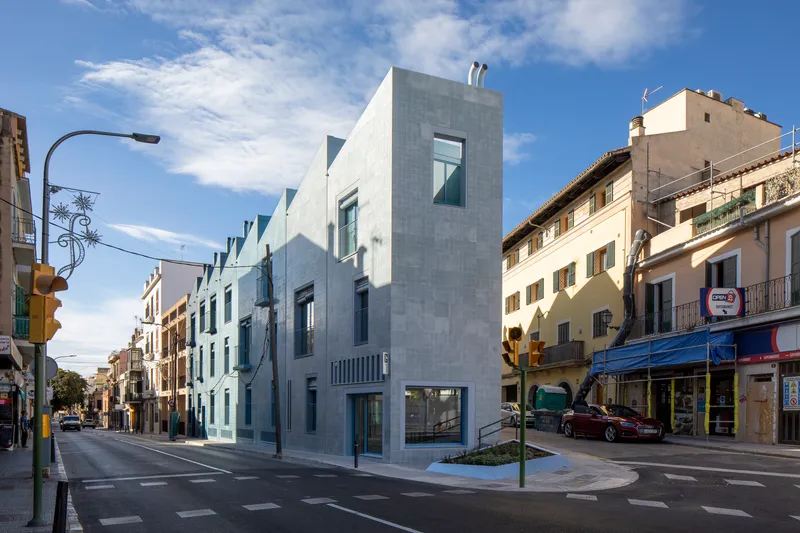
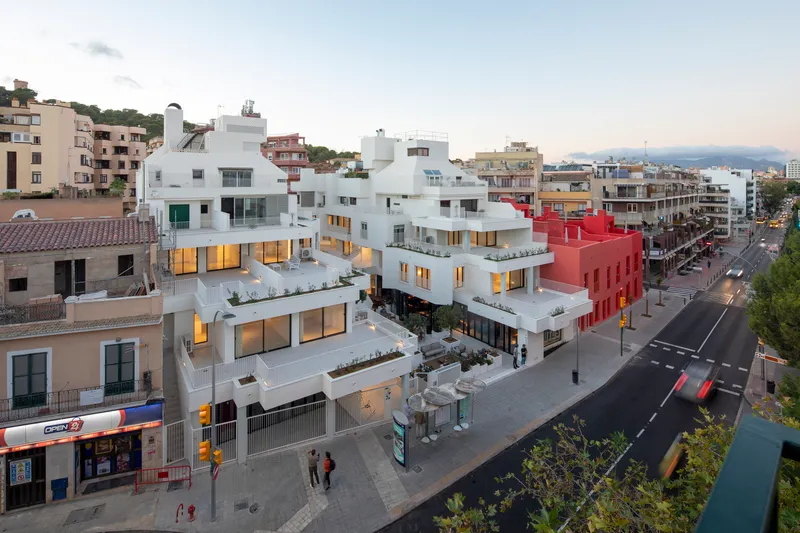
From the air the project looks less like a masterplan and more like a geological survey: white stucco volumes, blue ceramic towers, red gradient facades, and a green-clad block jostle against the older rooftops of El Terreno. That clash is intentional. MVRDV and GRAS Reynés designed each building as a distinct character so the quarter would feel as though it had evolved organically rather than arrived all at once. The strategy draws directly on the Camper brand ethos of heritage and invention, but it also reflects a pragmatic understanding of Mediterranean urbanism, where diversity at the block level has always produced resilience.
Ground floors are programmed for public use: courtyards, restaurants, retail, and the restored Bar Bellver anchor the street edge and pull pedestrians through. The buildings wrap around neighboring plots and the plaza itself, so the project never walls off the district. It infiltrates it.
White Stucco and Stepped Terraces at Gomila Center
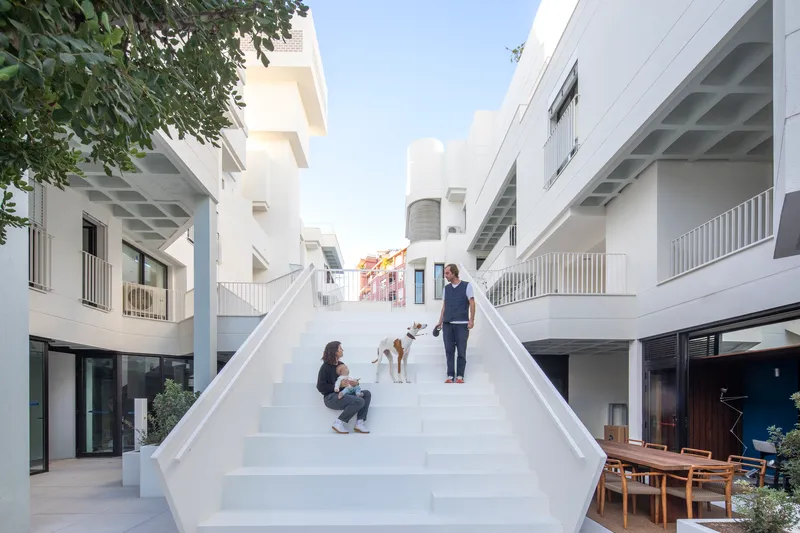
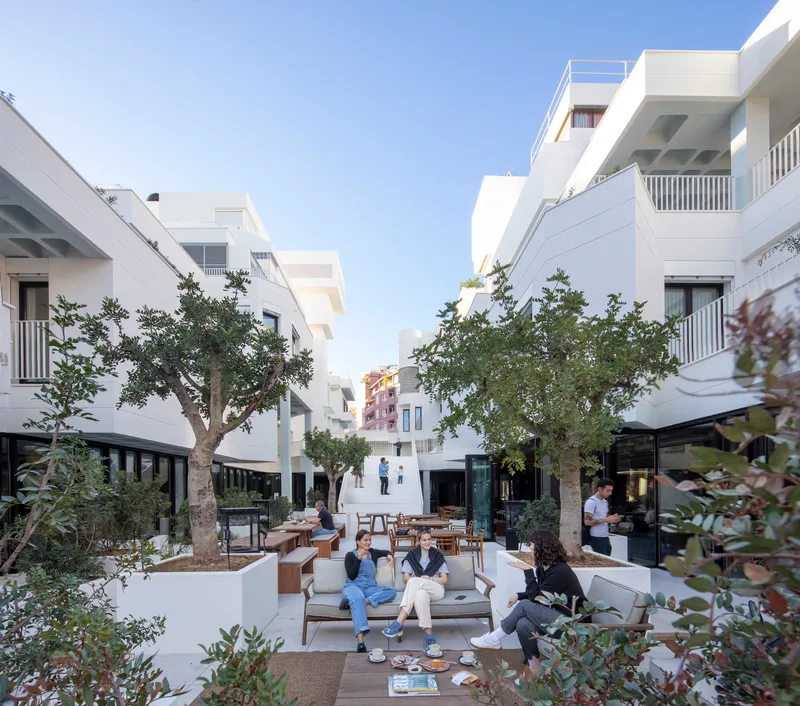
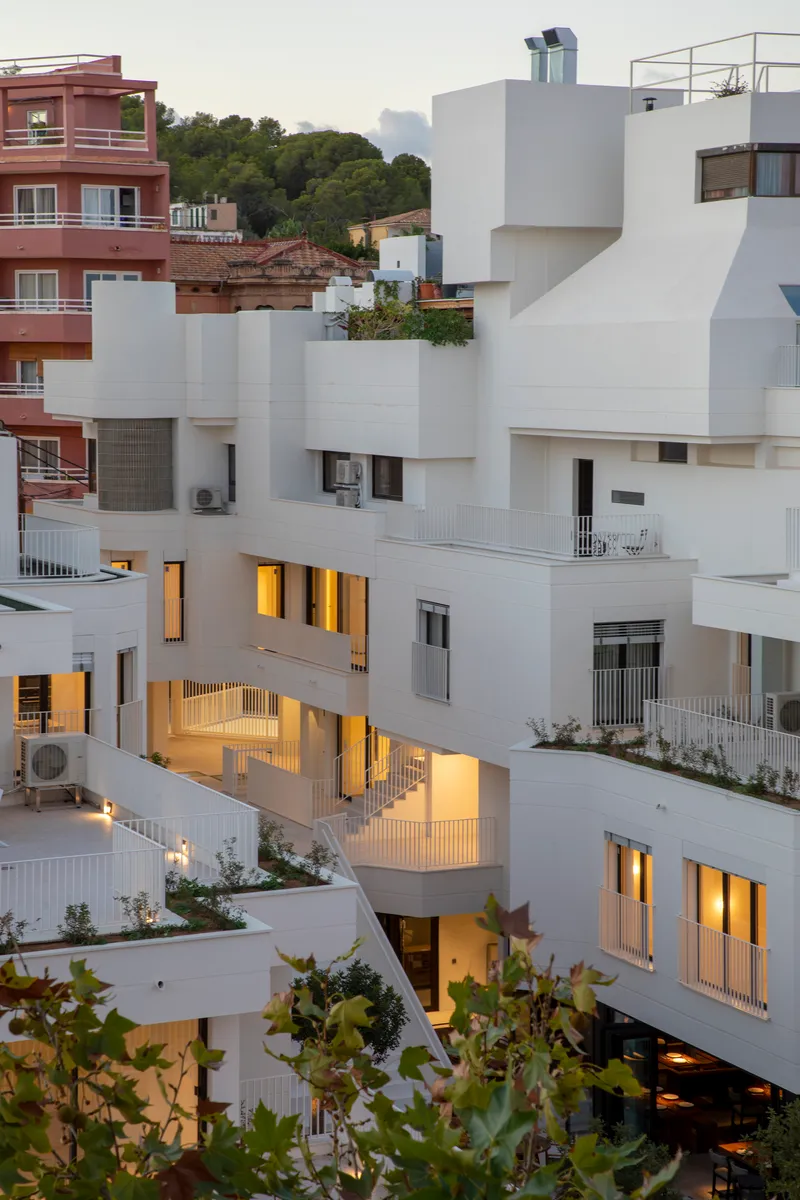
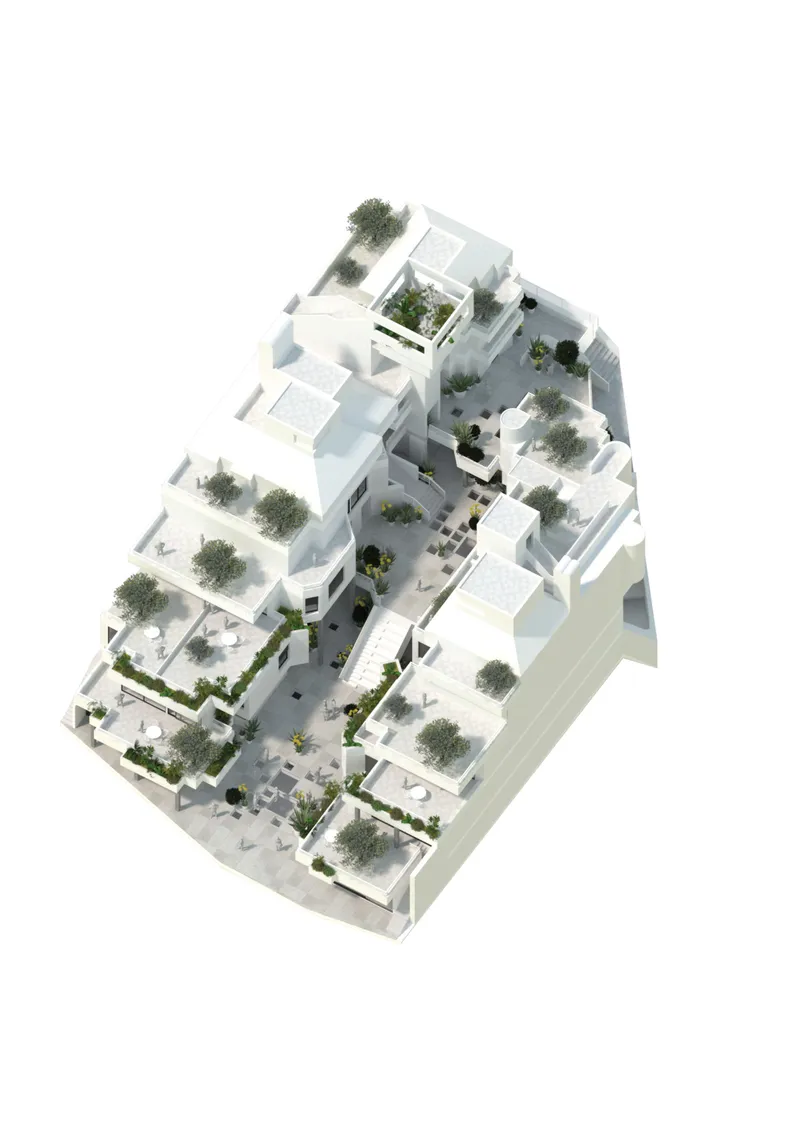
The Gomila Center is a renovation of a 1979 building originally designed by architect Pere Nicolau. Its two wings now contain offices, residential units, and a restaurant organized around a central courtyard planted with trees. A wide exterior staircase connects levels and doubles as an informal gathering space, giving the building a section that breathes. Large terraces collect rainwater and frame views across the harbor, while the courtyard channels cross-ventilation through the ground floor.
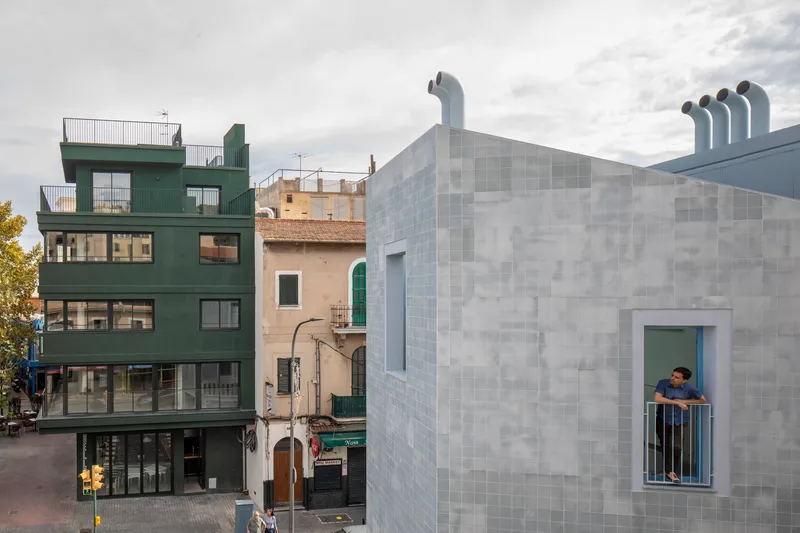
The white stucco finish is the quietest move in the ensemble, anchoring the palette against the louder neighbors. Vertical louvers along the street-facing facades provide solar control without sealing off the interior from the city. It is the most conventionally Mediterranean building in the group, and it works as a stable baseline against which everything else can be read.
Blue Ceramic and Sawtooth Roofs at Las Fabri-Casas
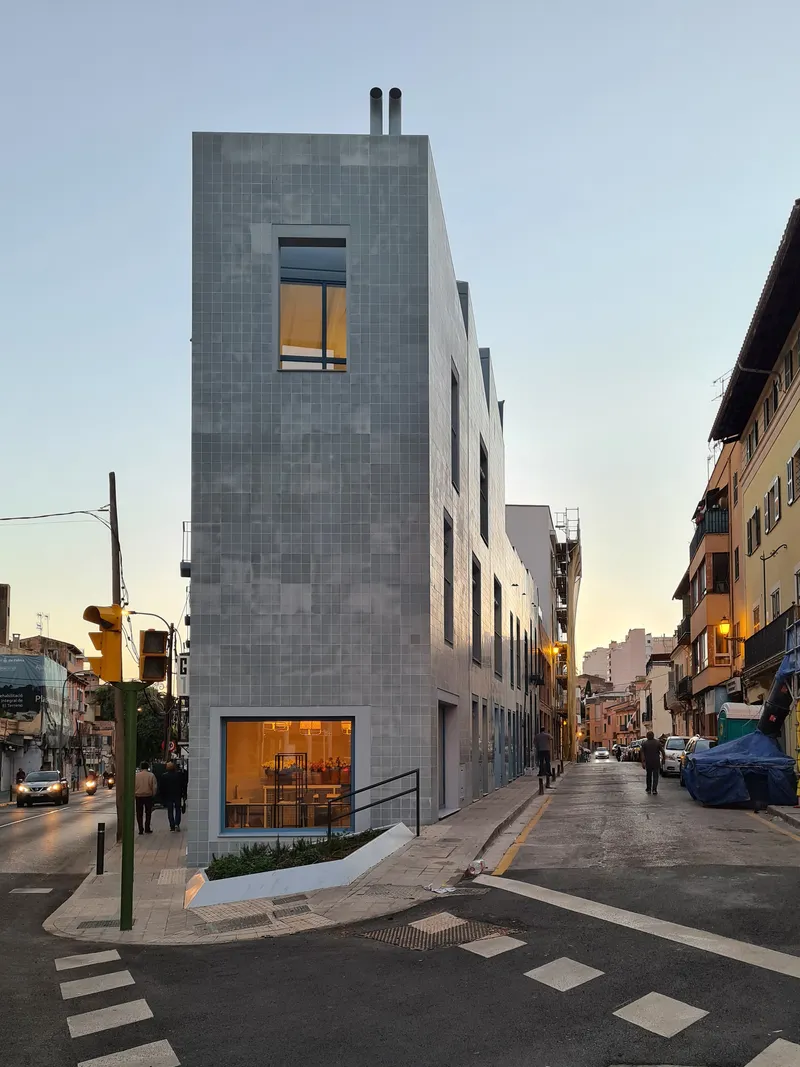
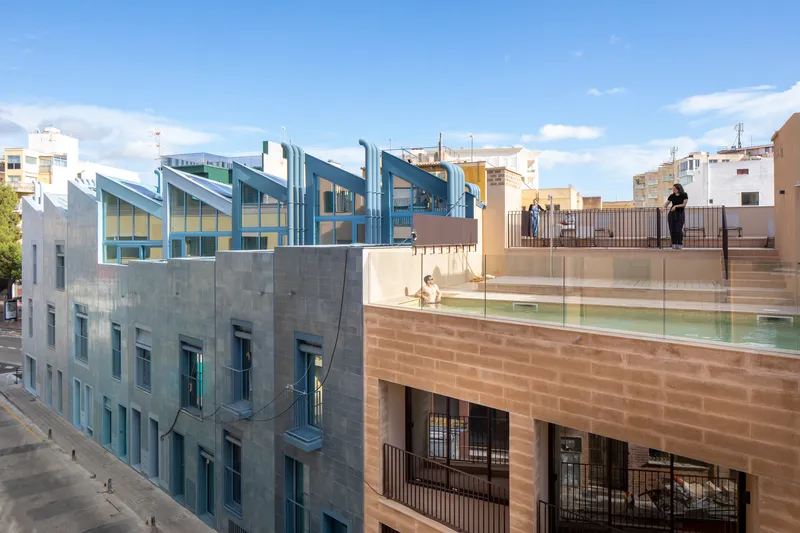
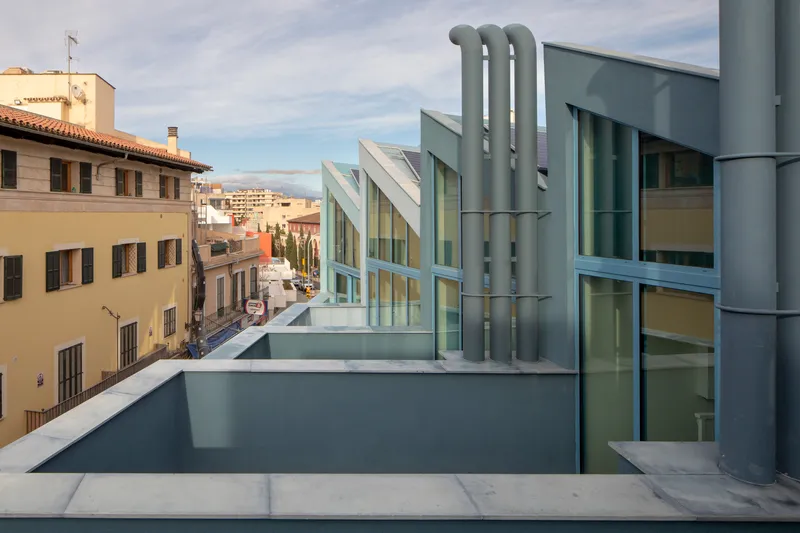
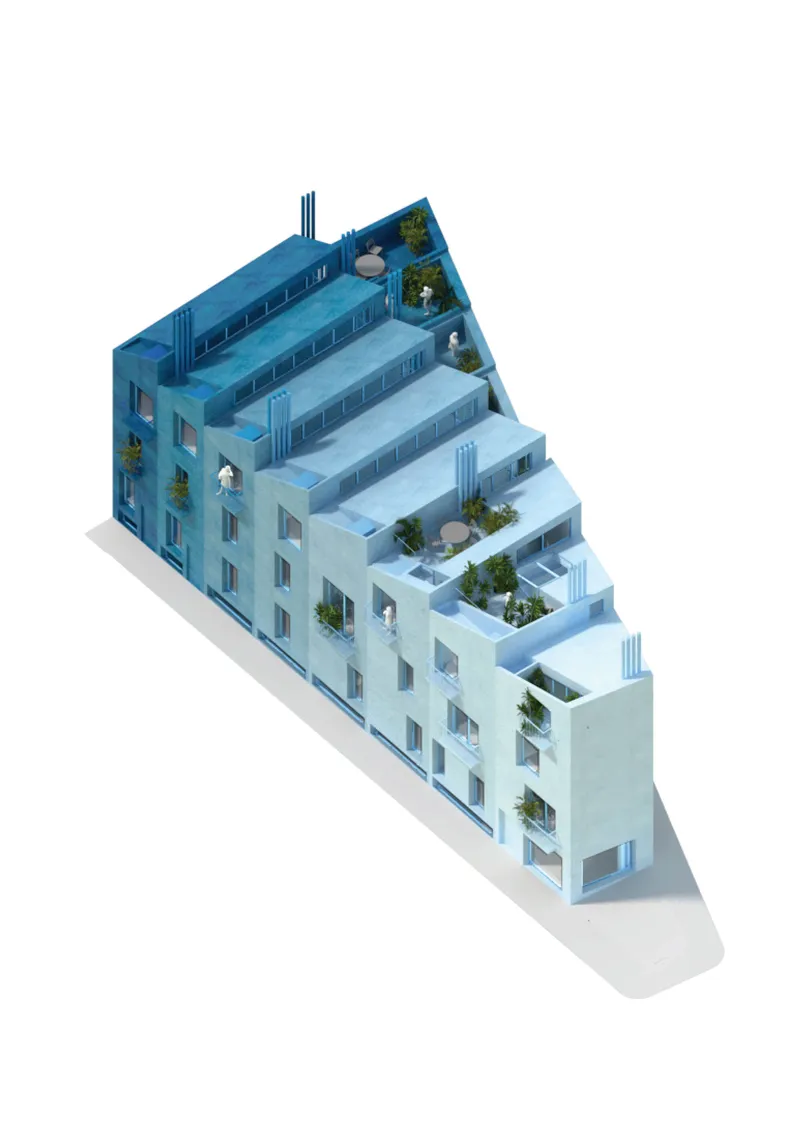
Las Fabri-Casas is the project's most visually striking volume: a narrow tower clad in blue ceramic tiles whose color graduates from light to dark as it rises. The sawtooth roof, a playful nod to the angular treads of Camper shoes, creates clerestory windows that flood the upper units with northern light. The main structure uses compressed earth blocks, a low-carbon construction choice that also provides excellent thermal mass in the Mallorcan climate.
A rooftop swimming pool sits among the glazed sawtooth peaks, giving residents the surreal experience of bathing inside what appears to be a small factory. The industrial reference is not accidental. The Fluxà family made shoes, and the building's section pays quiet tribute to the workshop typology while delivering genuinely comfortable housing.
Red Gradients and Rooftop Platforms at Las Casitas
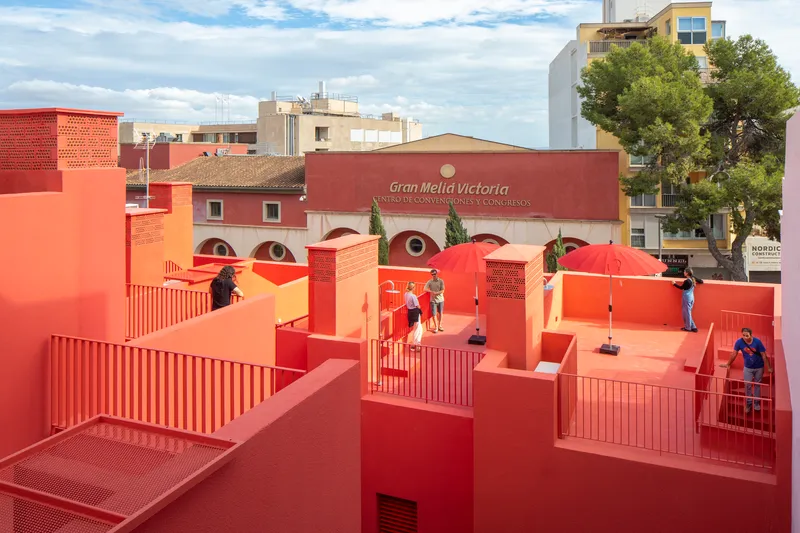
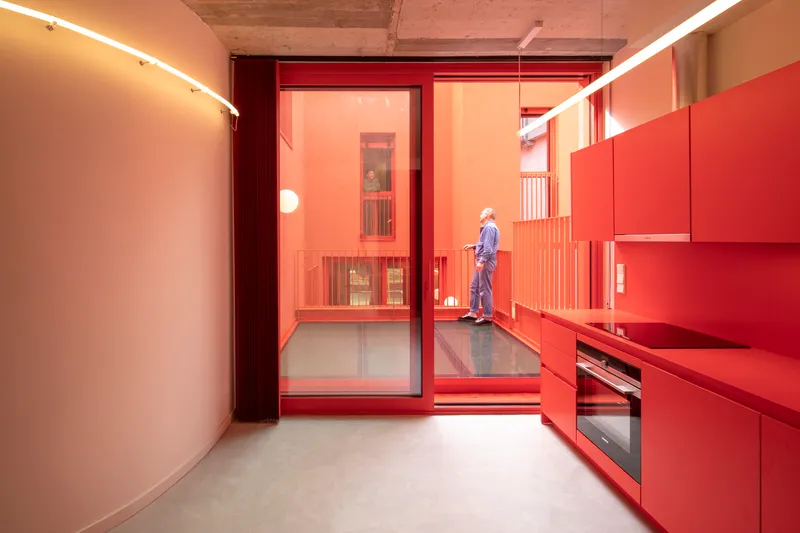
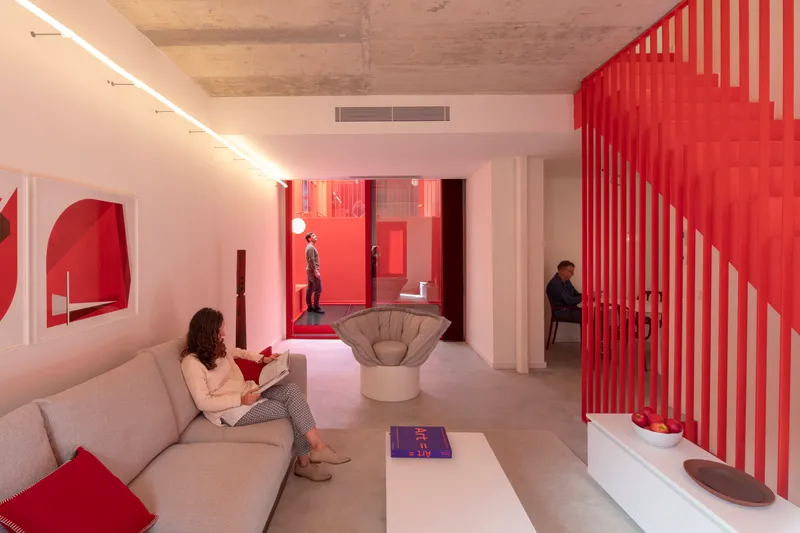
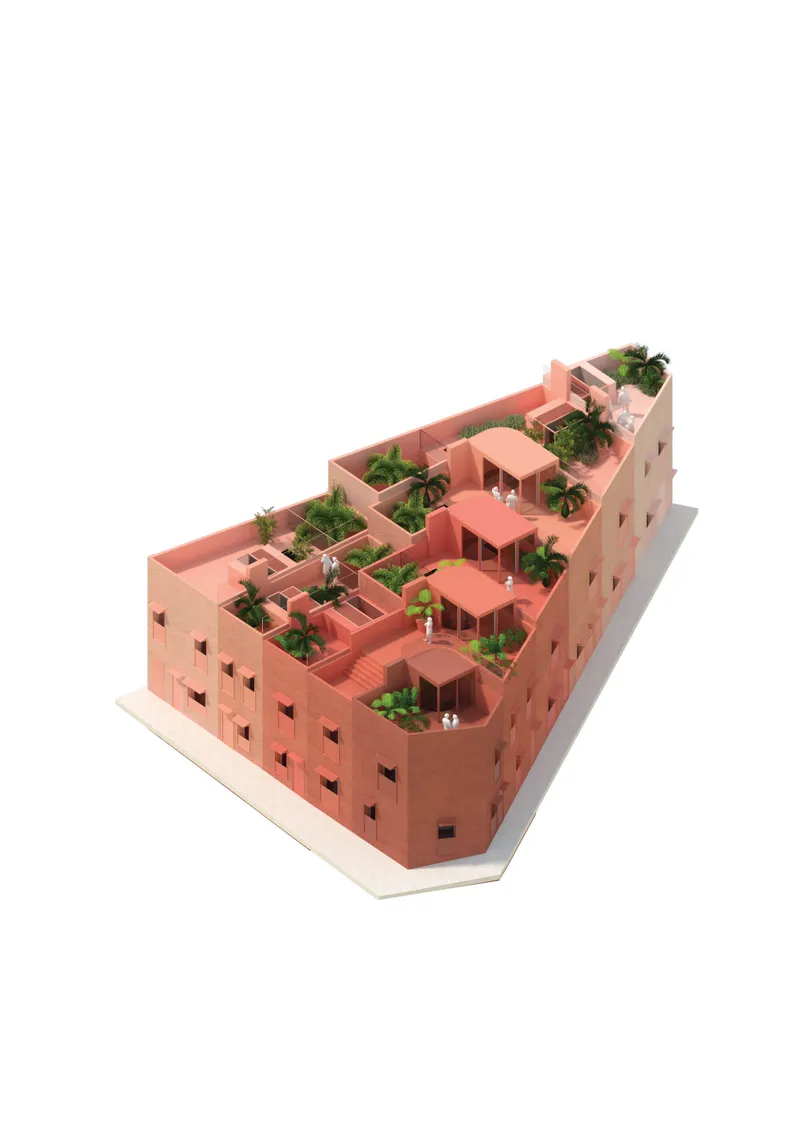
Las Casitas announces itself in red. The facade color darkens toward the center of the building while its texture shifts from a wrinkled effect at street level to a smooth finish on the upper stories. The ombré treatment echoes the design of Berlin's Casa Camper hotel, tying the project into a broader family of Camper-affiliated architecture. Attached units develop around rear patios, and stepped rooftops become shared gathering spaces with corrugated metal screens framing views.
Inside, the interiors are surprisingly warm. Red cabinetry in the kitchens, painted timber ceiling beams, and slatted staircase screens create a domestic atmosphere that absorbs the building's bold exterior language without letting it overwhelm daily life. A glazed courtyard connects units visually, so neighbors see each other without being forced into contact. It is a careful calibration of exposure and privacy.
Interiors Built for Mediterranean Living
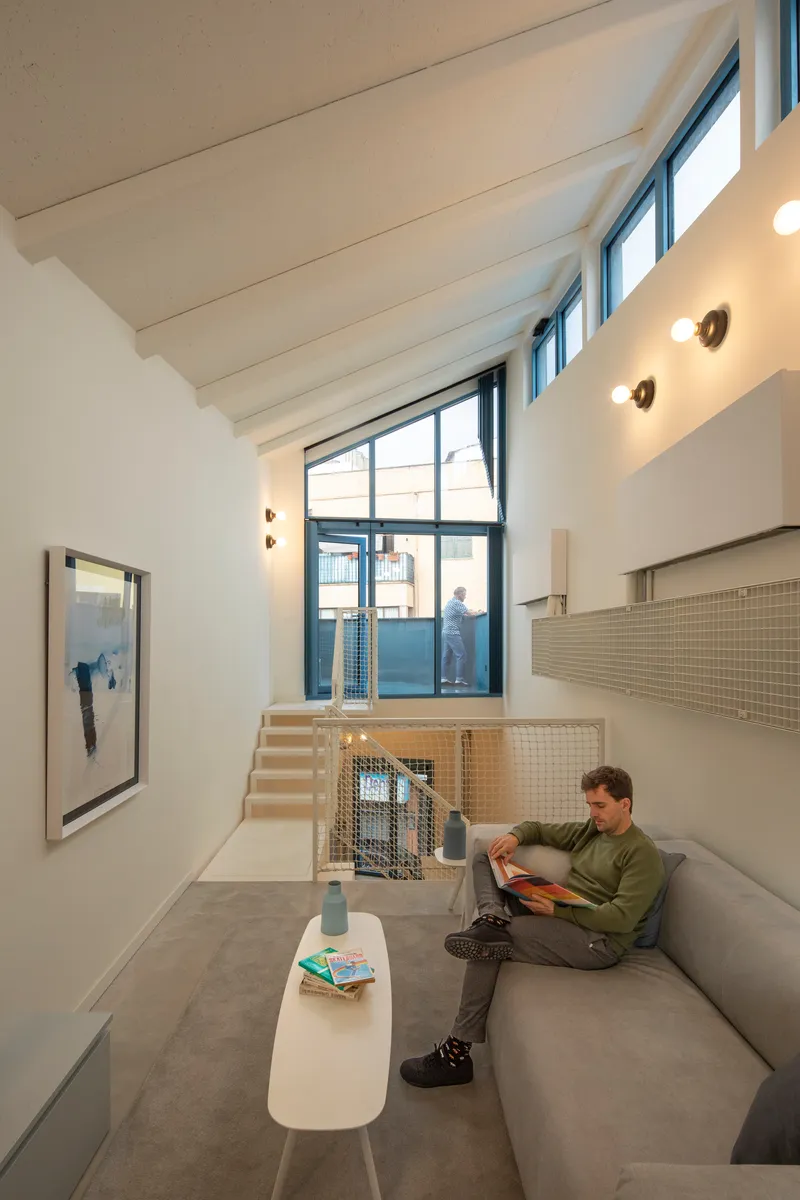
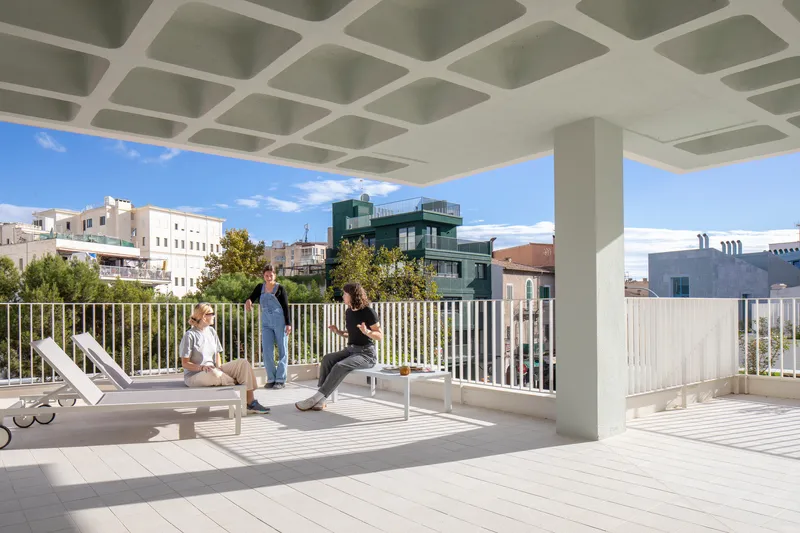
Across the seven buildings, dwelling units vary widely in size and type, but a few moves recur. Loggias, deep terraces, and operable shutters mediate between inside and out, keeping interiors cool without mechanical dependence. Double-height living rooms with mezzanines appear in several units, giving small footprints a sense of volume. Coffered concrete ceilings on rooftop terraces provide shade while admitting indirect light.
The project targets Passive Haus standards, an ambitious goal in a Mediterranean climate where summer cooling loads can be punishing. Heat recovery systems, rooftop solar panels, and careful orientation work together with the passive strategies embedded in the architecture itself. The result is a set of buildings that perform well precisely because they look the way they do: deep overhangs, thick walls, and generous openings are not decorative choices but thermodynamic ones.
Green Facade and the Memory of Trees
La Plaza, the green-clad building, takes its color and facade texture from the preexisting trees on the public square. It houses the historic Bar Bellver, offices, and a communal terrace that overlooks the plaza. The decision to let a landscape condition dictate a building's identity is a small gesture with large implications: it tells the neighborhood that the new architecture is paying attention to what was already there.
At dusk, when warm interior light spills from the terraced white volumes and the blue ceramic tower glows against the sky, the ensemble achieves the atmosphere the designers were clearly chasing. The plaza fills with the kind of incidental social life that no amount of programming can manufacture. It has to be earned through spatial generosity and a willingness to let buildings be different from one another.
Plans and Drawings
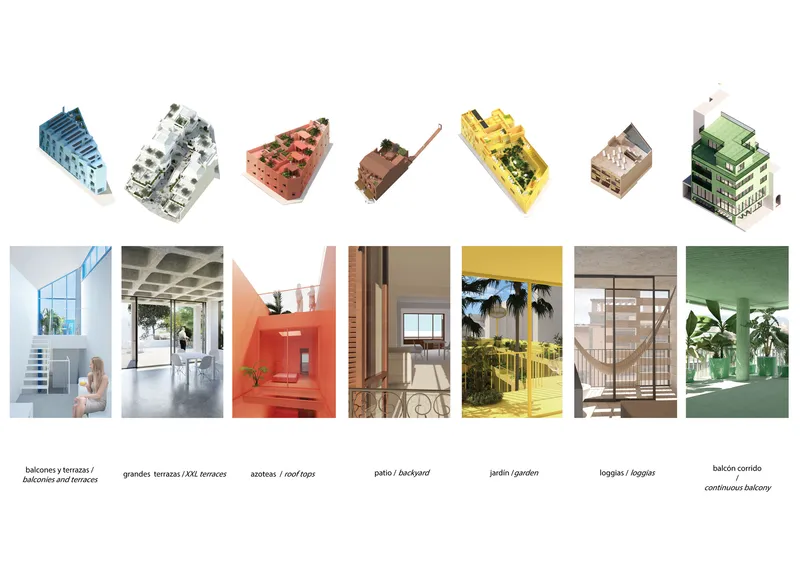
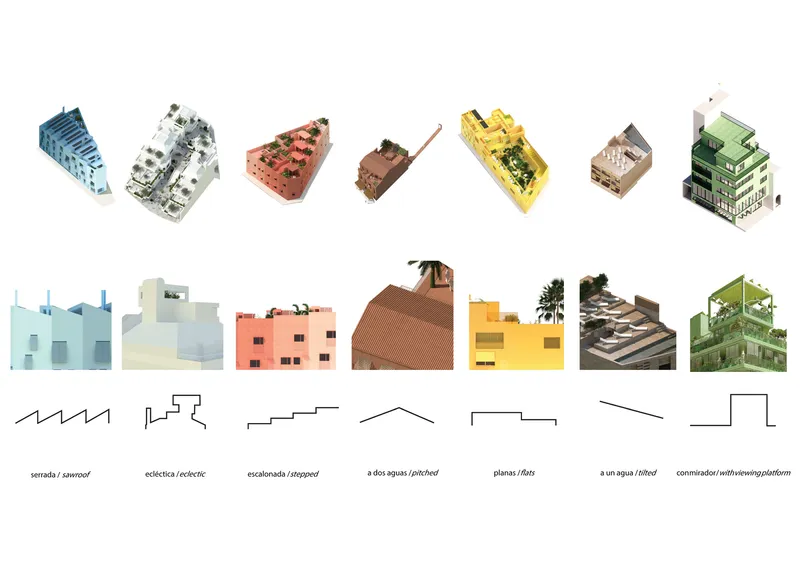
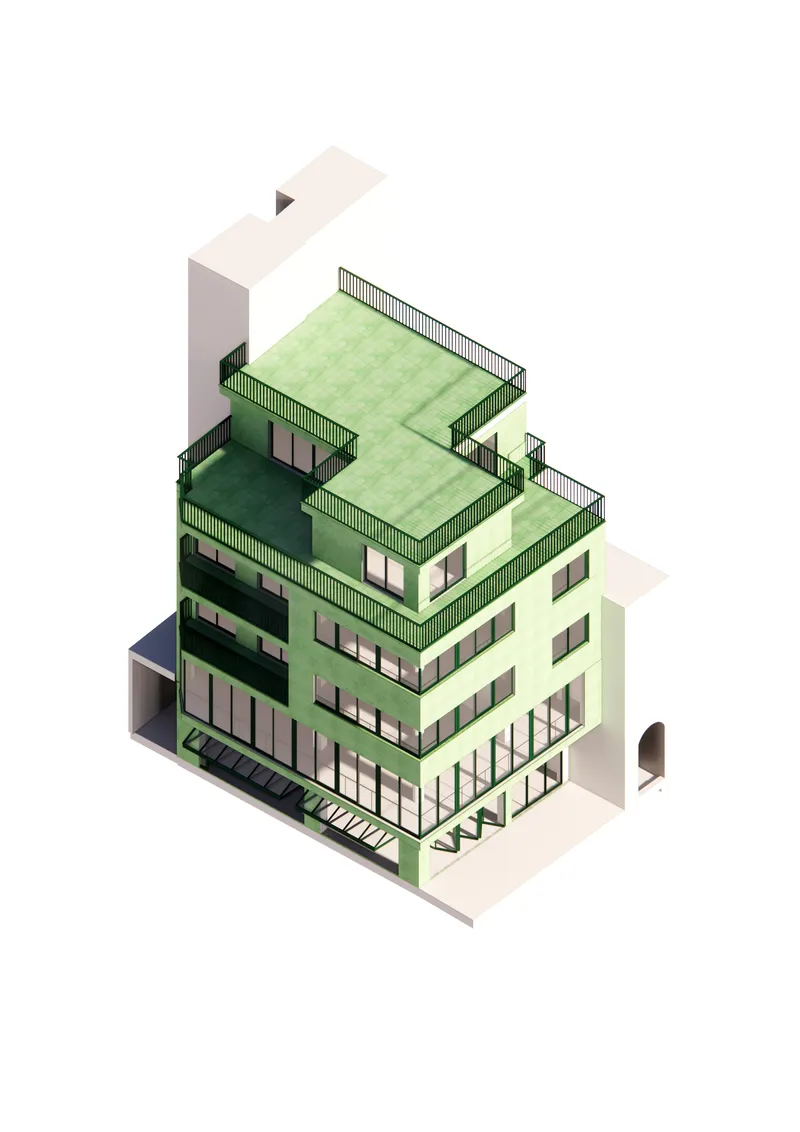
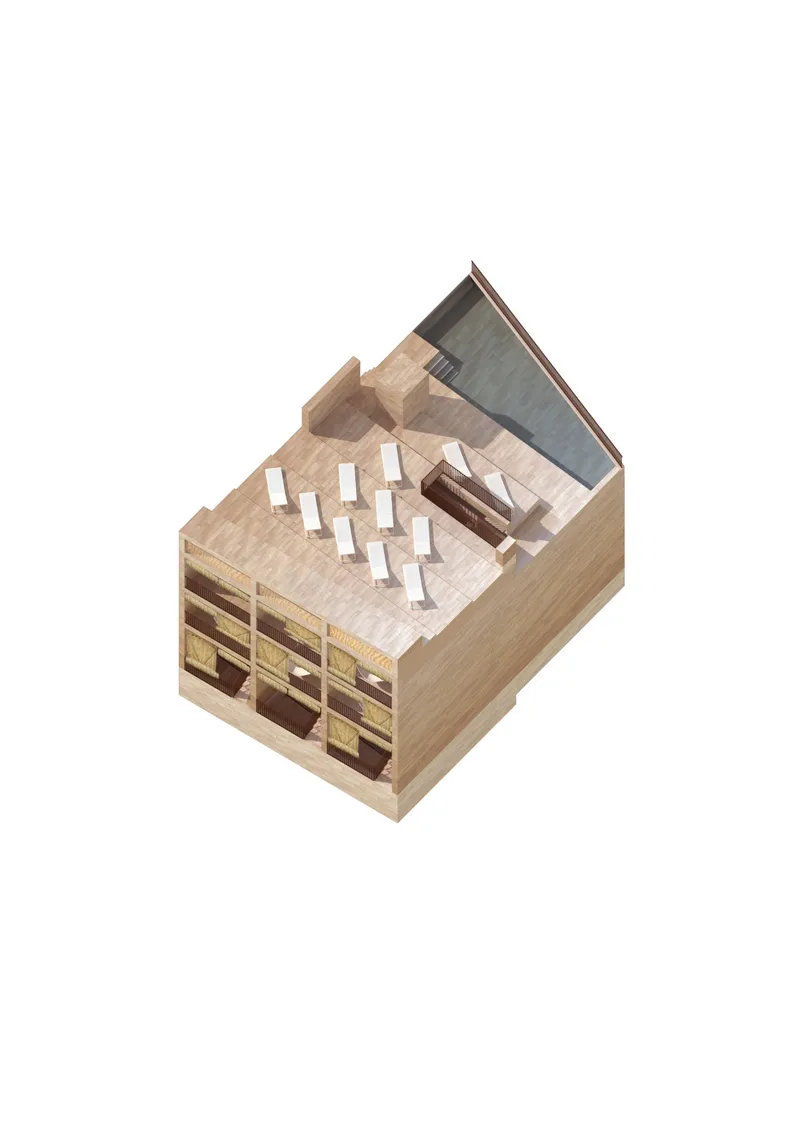
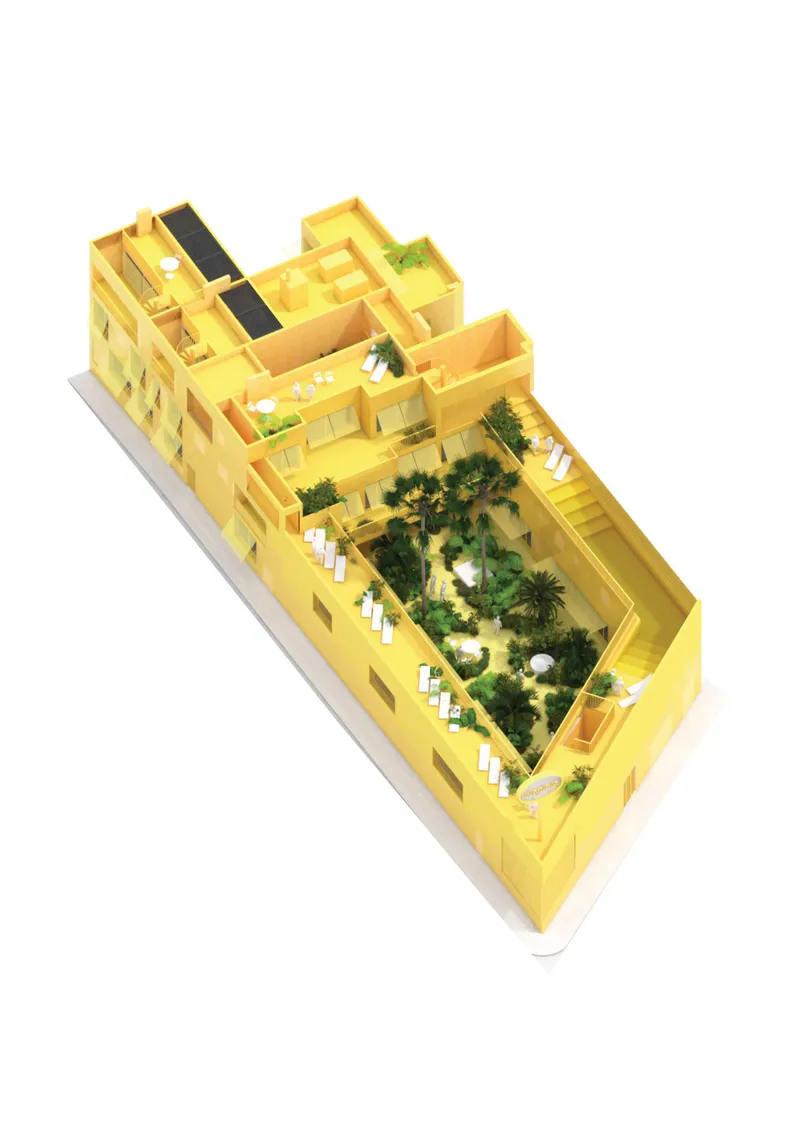
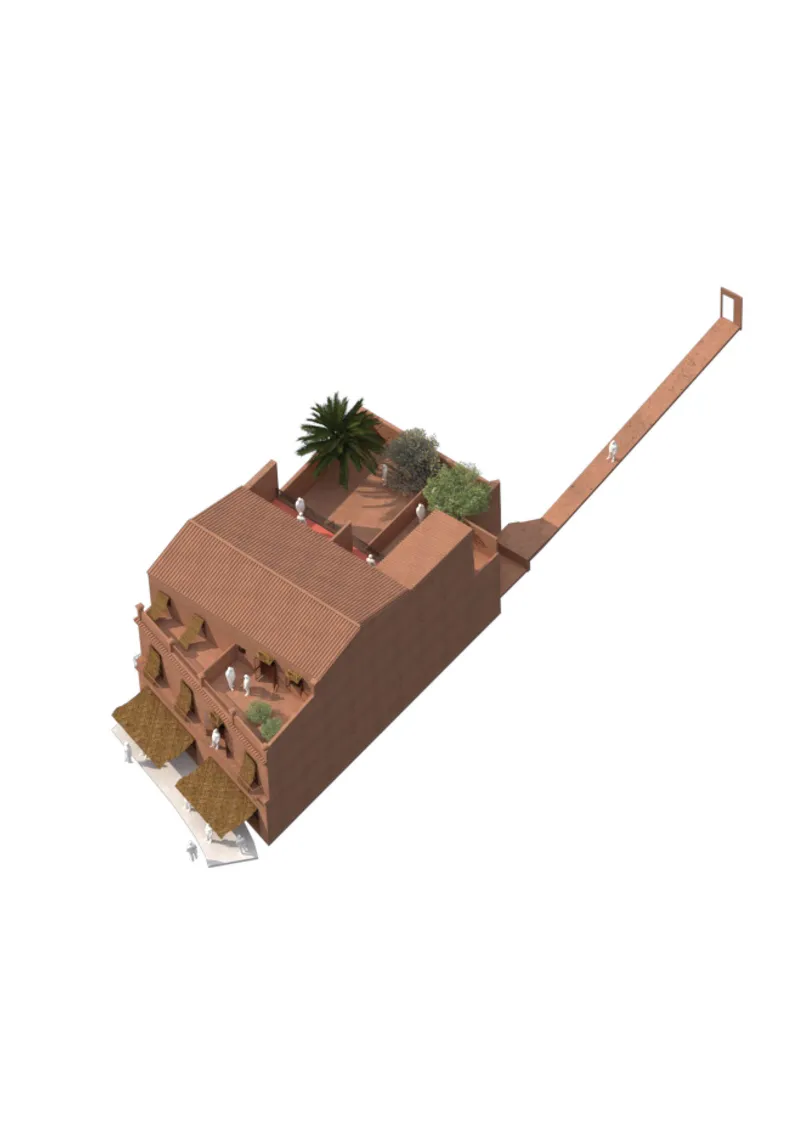
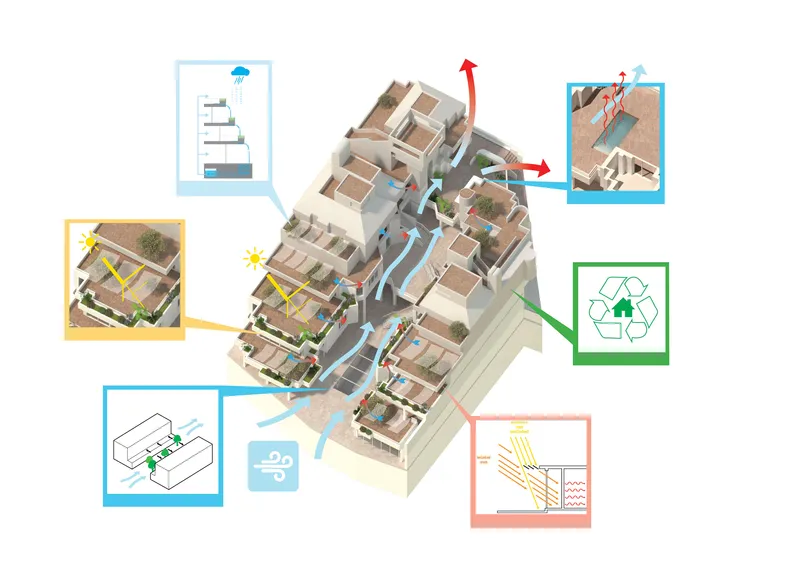
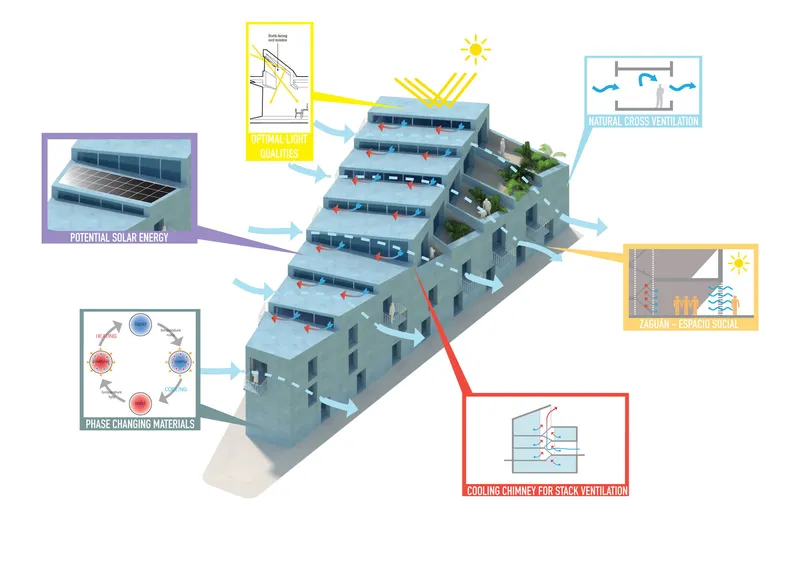
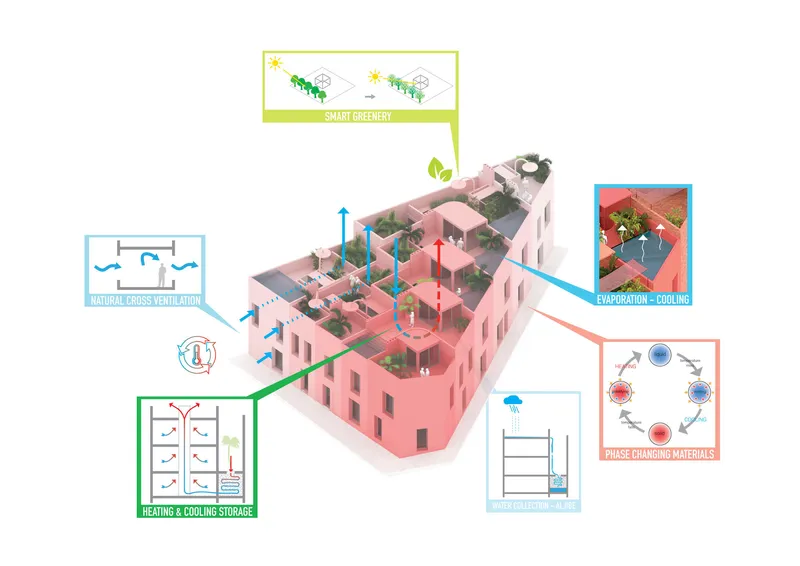
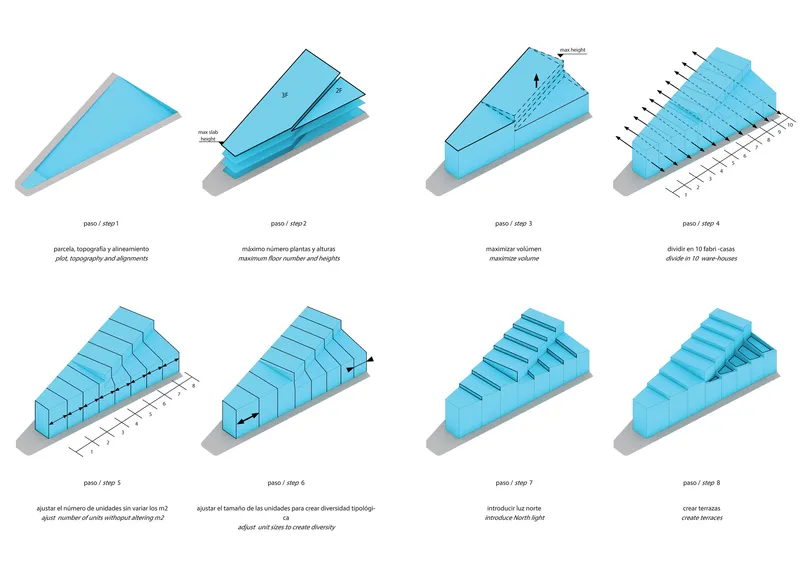
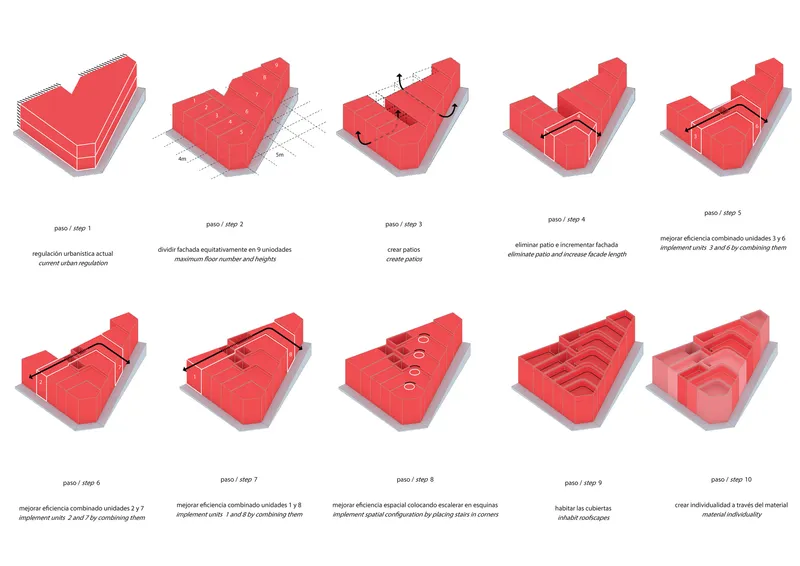
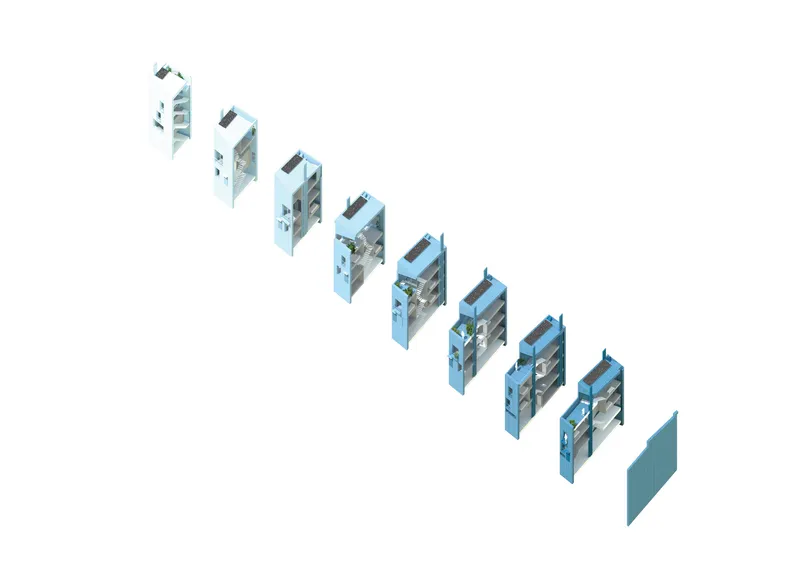
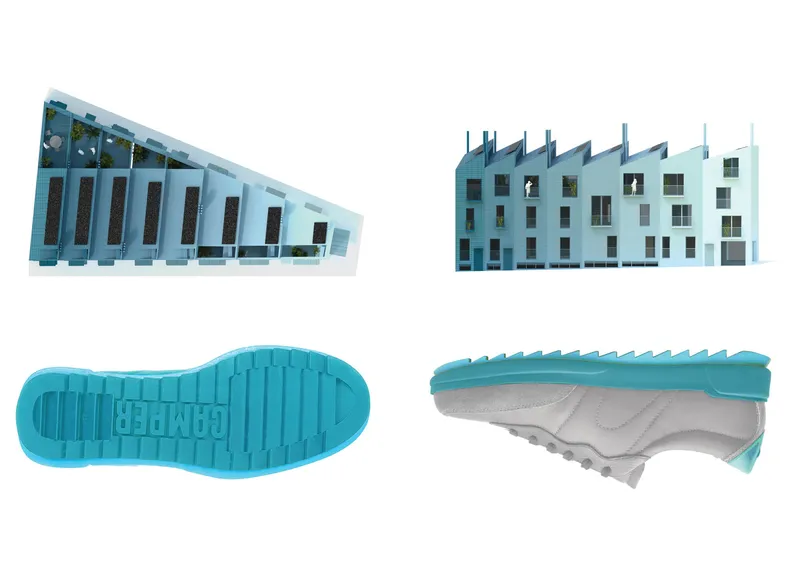
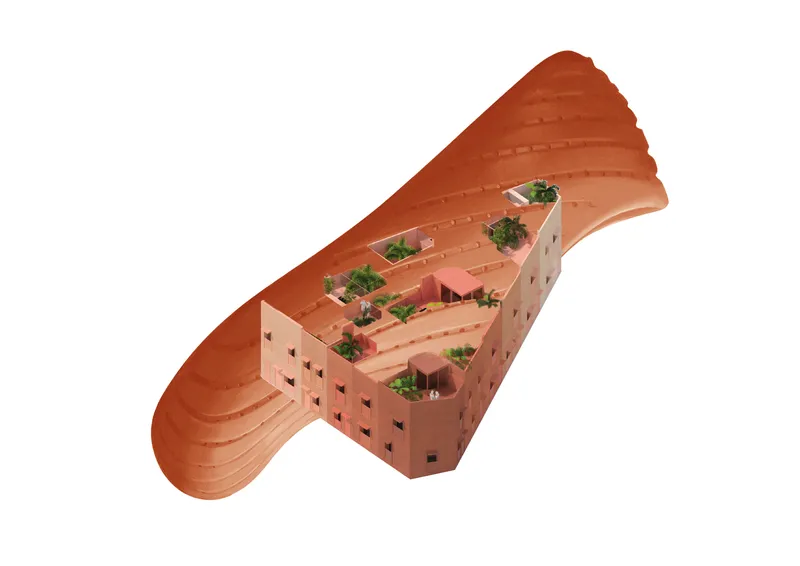
The drawings reveal how deeply the diversity strategy runs. Each building has its own structural logic, its own roof profile, and its own approach to the threshold between public and private. The axonometric diagrams show how sustainability systems are tailored to individual volumes: solar panels cluster on sawtooth roofs where they catch the most light, thermal chimneys appear in the taller blocks, and cross-ventilation routes differ building by building. The construction sequence diagrams for Las Casitas and Terra illustrate how compressed earth blocks and conventional framing are hybridized to balance carbon performance with buildability.
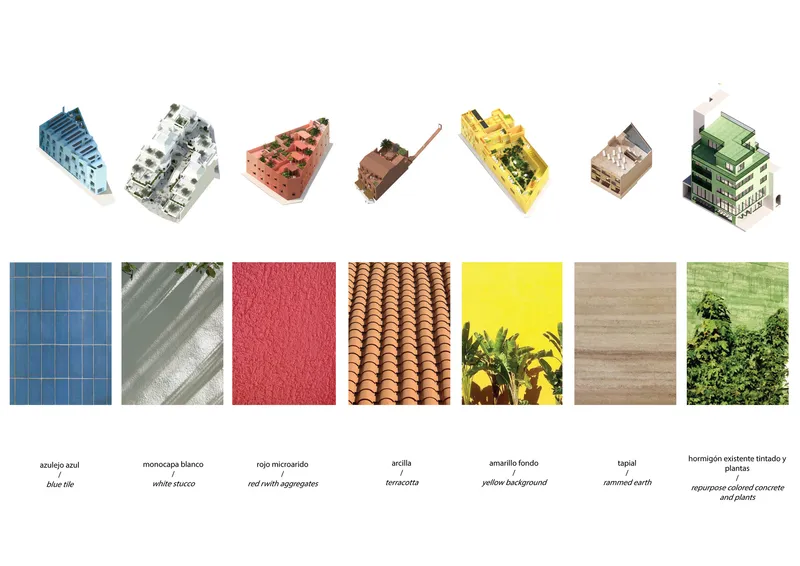
The material swatch diagram is particularly telling. By laying out tile, stucco, ceramic, compressed earth, and painted finishes side by side, MVRDV and GRAS Reynés make their thesis explicit: each building earns its identity through material specificity, not formal gymnastics. The section drawings of the sawtooth facade, complete with shoe-sole detailing references, confirm that the Camper connection is embedded in the construction, not merely applied to the surface.
Why This Project Matters
Project Gomila is a counterargument to the monoculture development that has consumed so many historic European neighborhoods. Where most large-scale residential projects impose a single material language and a repetitive unit plan, this one treats heterogeneity as a structural principle. Seven buildings with seven identities share pools, courtyards, and rooftop terraces, creating a micro-neighborhood that is legible at every scale. The fact that the commission came from a shoe company rather than a municipal authority gave the architects unusual freedom, but the lessons transfer: diversity is not a branding exercise, it is a spatial strategy.
The collaboration between MVRDV's conceptual ambition and GRAS Reynés Arquitectos' local expertise is visible in the details. Compressed earth blocks, passive ventilation, and Mediterranean section types are not imported ideas; they are regional knowledge deployed with contemporary precision. El Terreno may never recapture the specific bohemia of Hendrix-era nightclubs, but Project Gomila gives the neighborhood something more durable: a physical framework that makes room for whatever comes next.
Project Gomila, designed by MVRDV and GRAS Reynés Arquitectos. Located in Palma, Spain. 15,000 m². Completed in 2022. Photography by Daria Scagliola and Jannes Linders.
About the Studio
Share Your Own Work on uni.xyz
If projects like this are the kind of work you want to make, uni.xyz is a place to publish your own, find collaborators, and enter design competitions.


Popular Articles
Popular articles from the community


Faces of the Soviet Avant-Garde: Turning Moscow's Street Names into an Open-Air Museum
A network of sculptural installations across a Moscow residential district transforms forgotten architect names into spatial encounters with cultural memor

The Amber Palace Opera: A Geological Fiction Surfaces on Tallinn's Baltic Waterfront
Pierre Brillard reimagines a Baltic legend as a public landscape, opera house, and waterfront promenade rooted in Tallinn's coastal identity.

Cloaked Colonization: A Mobile Underwater Habitat That Moves Like a Fish
Micah Abaya's shortlisted EHC Pacific entry reimagines ocean settlement as a dispersed network of self-sustaining architectural organisms.

Manzana Morphosis: Stretching Barcelona's Grid into a Living Landscape for 2050
A radical reworking of the Eixample manzana turns density into a tool for generous public space, vertical ecology, and environmental performance.

Similar Reads
You might also enjoy these articles

Pixel Gardens: One Repeated Module Stacked Into a Terraced Social Housing Tower for Famagusta
Salem Bader's shortlisted housing tower builds a vertical neighbourhood from one repeated module, offsetting units to carve terraces, light and air.

Bao Huynh Watercolor Atelier: A Serene Art Retreat in Hội An
Bao Huynh Watercolor Atelier in Hội An blends multifunctional art spaces, sustainable design, local materials, and family-friendly living in a serene environment.

Atelier Macri Concept Store Interior Design by CASE-REAL
Atelier Macri store features a "ko" counter, walnut wood details, cork displays, blending retail, gallery, and seamless customer experiences.

Manuel Vargas Izquierdo Stadium and High-Performance Sports Center: Architectural Excellence in Jalpa de Méndez
The Manuel Vargas Izquierdo Stadium blends sustainable design, inclusive sports facilities, and cultural-inspired architecture, revitalizing Jalpa de Méndez’s public spaces.

Explore Ai Generated Competitions
Discover active competitions in this discipline

Challenge to reimagine the Iron Throne

Photograph architecture without architects

Illustrate the lost glory of Angkor Wat - Render Challenge

Design challenge to reuse E-waste
Comments (0)
Please login or sign up to add comments
No comments yet. Be the first to comment!