
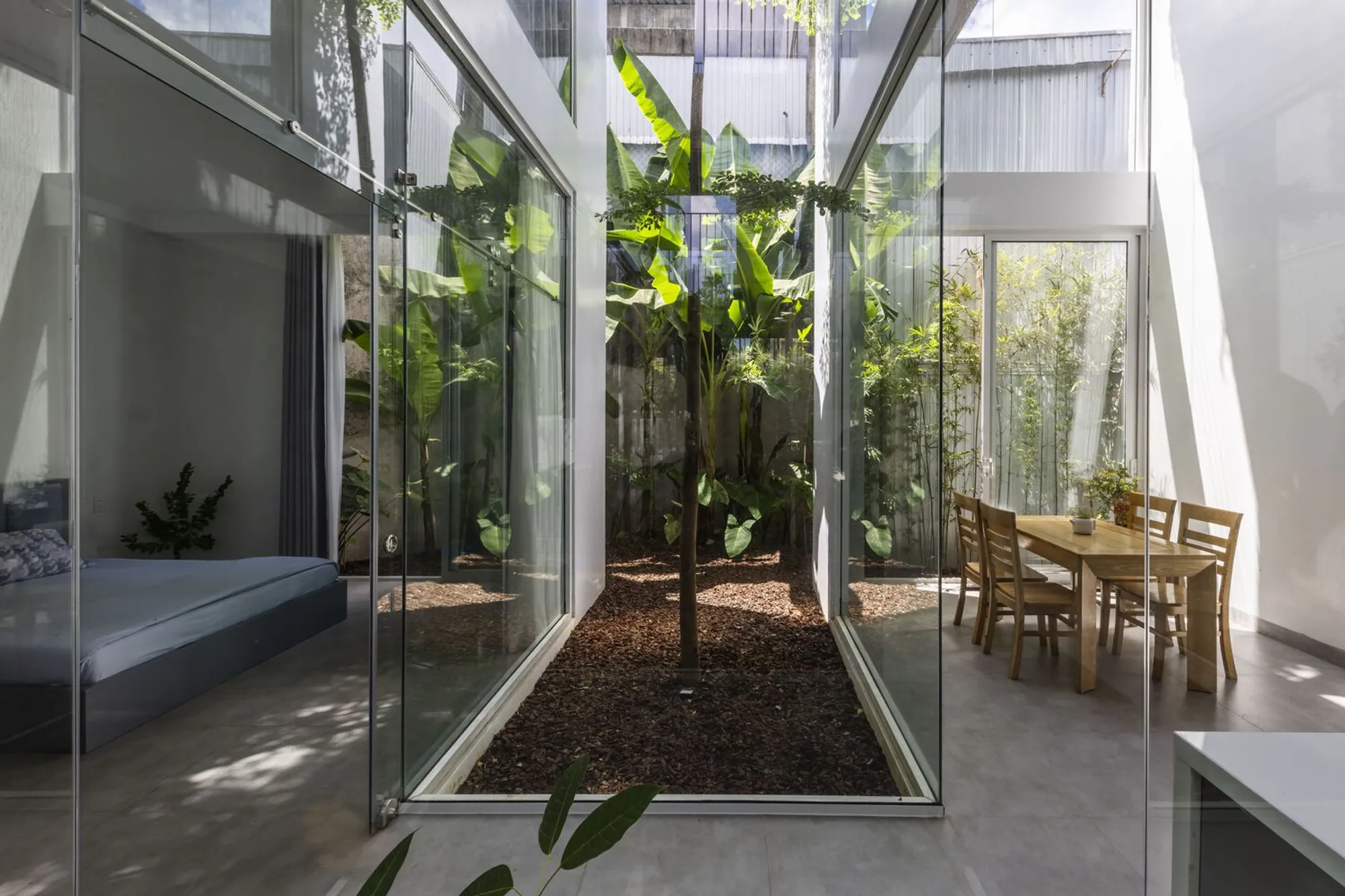
Nala House by Nguyen Khai Architects & Associates: A Harmony of Art, Nature, and Architecture
Nala House blends nature, art, and architecture, featuring open spaces, natural light, biophilic design, and a seamless indoor-outdoor connection.


Located in the tranquil and historic city of Huế, Vietnam, Nala House by Nguyen Khai Architects & Associates is a unique fusion of residential living, an artist’s studio, and a public gallery. Nestled near the historic citadel, the project embodies a seamless integration of nature and architecture, creating an inspiring space for both private living and artistic expression.
A Design Rooted in Tradition and Innovation
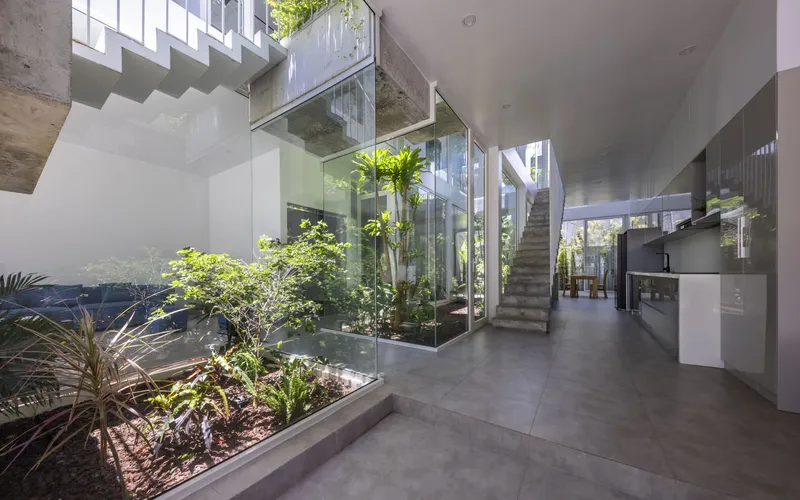
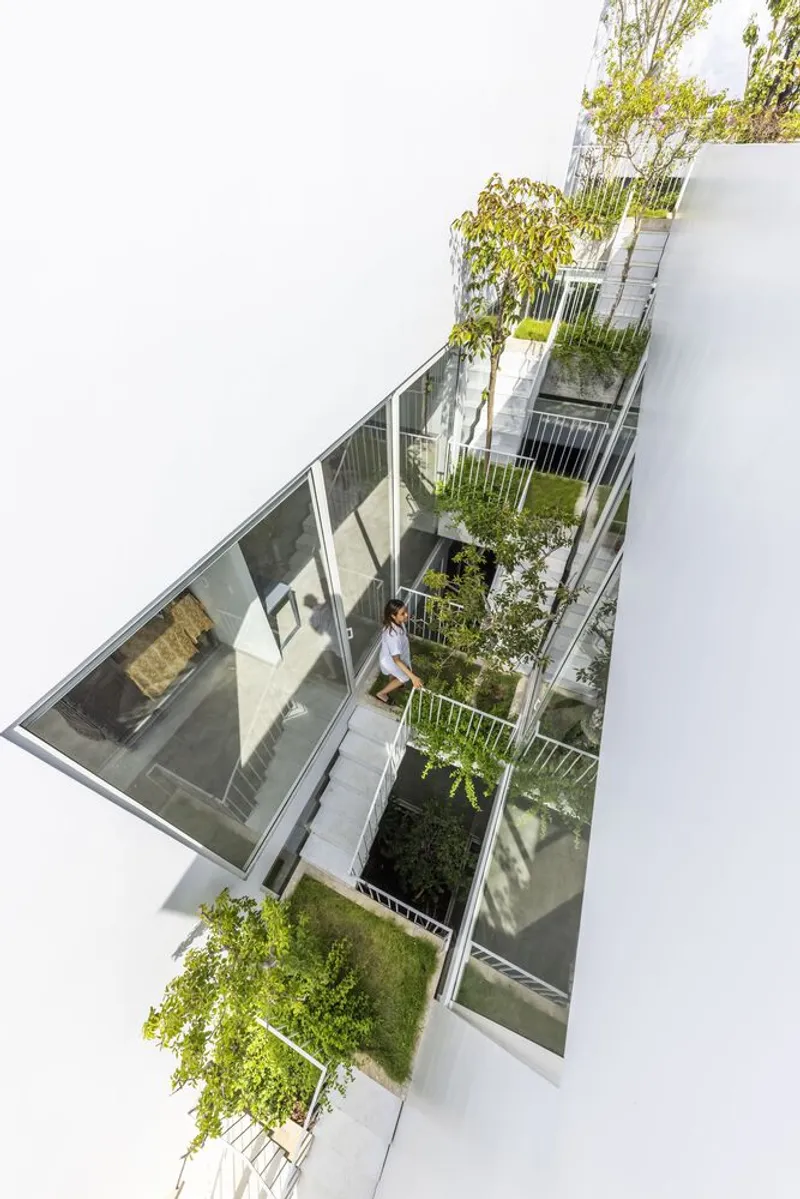
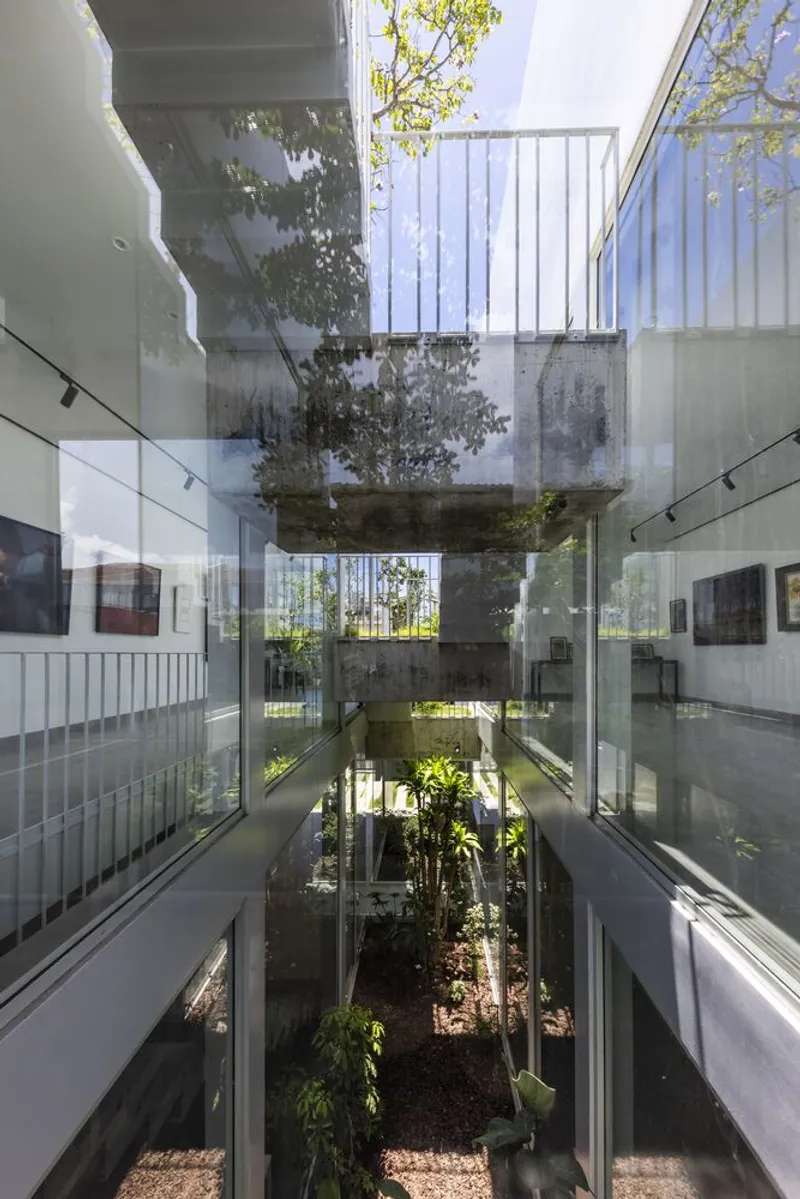
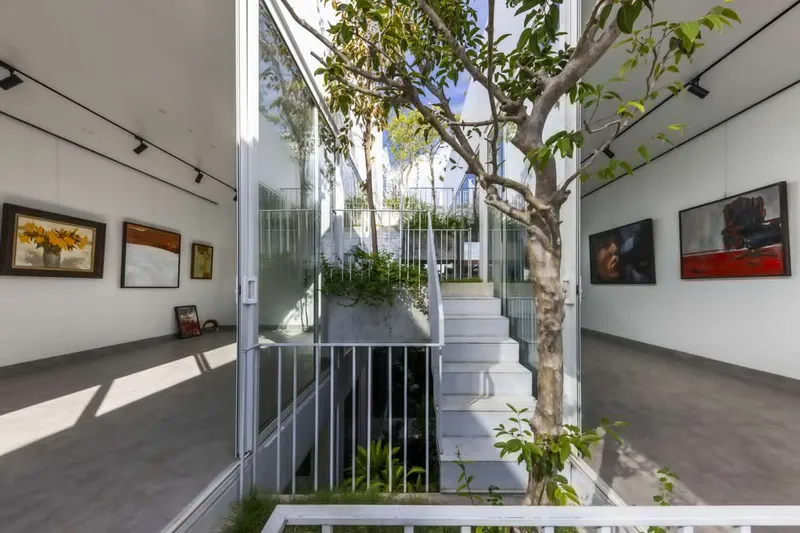
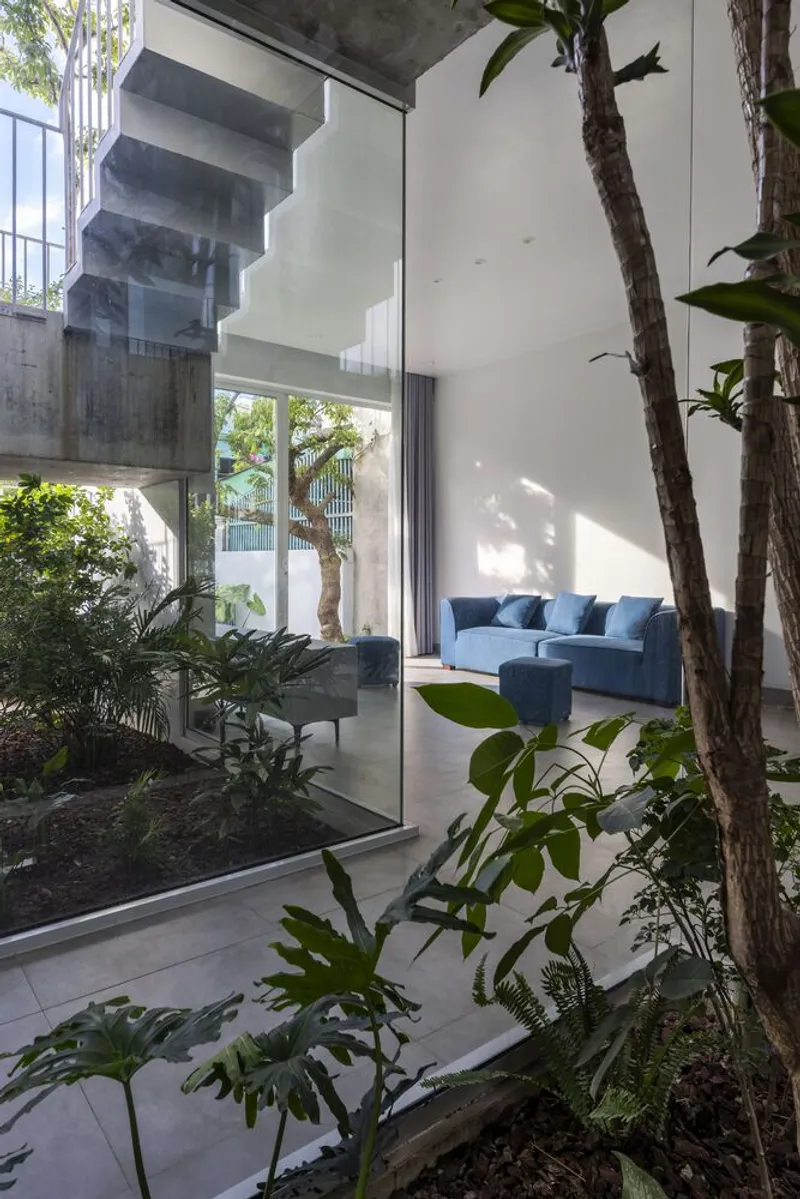
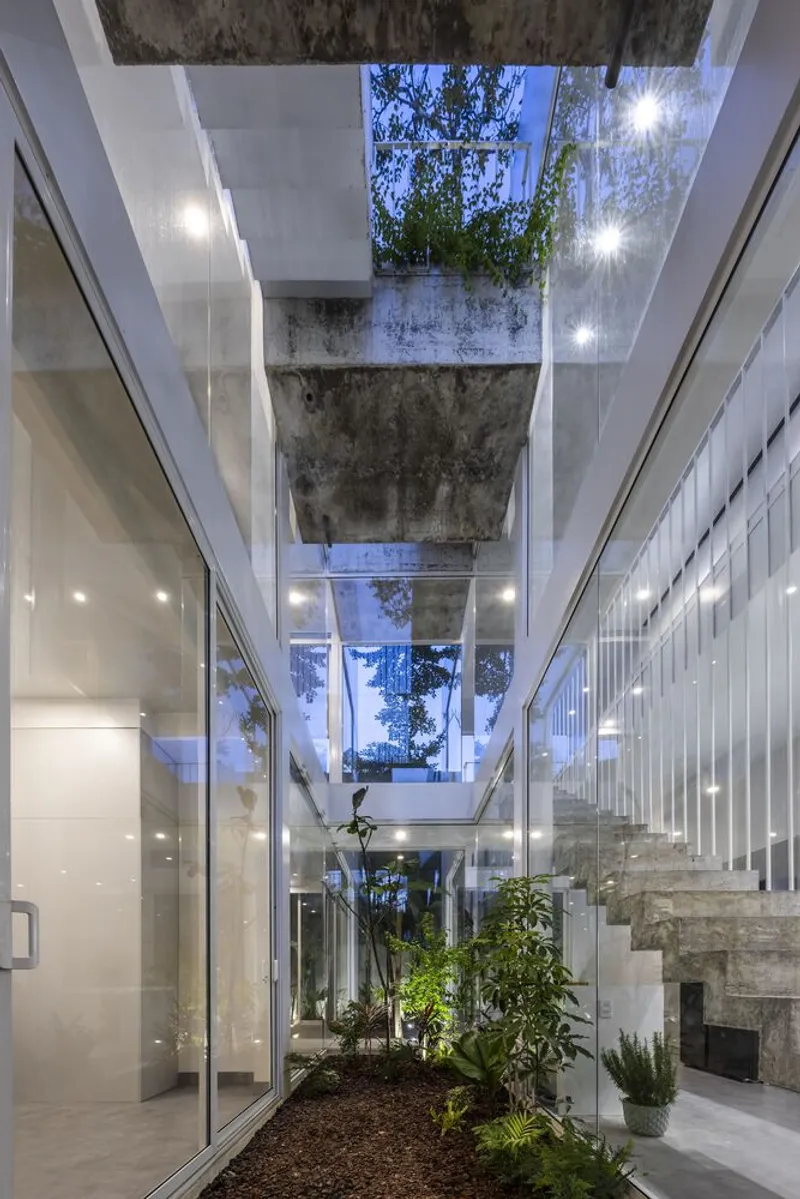
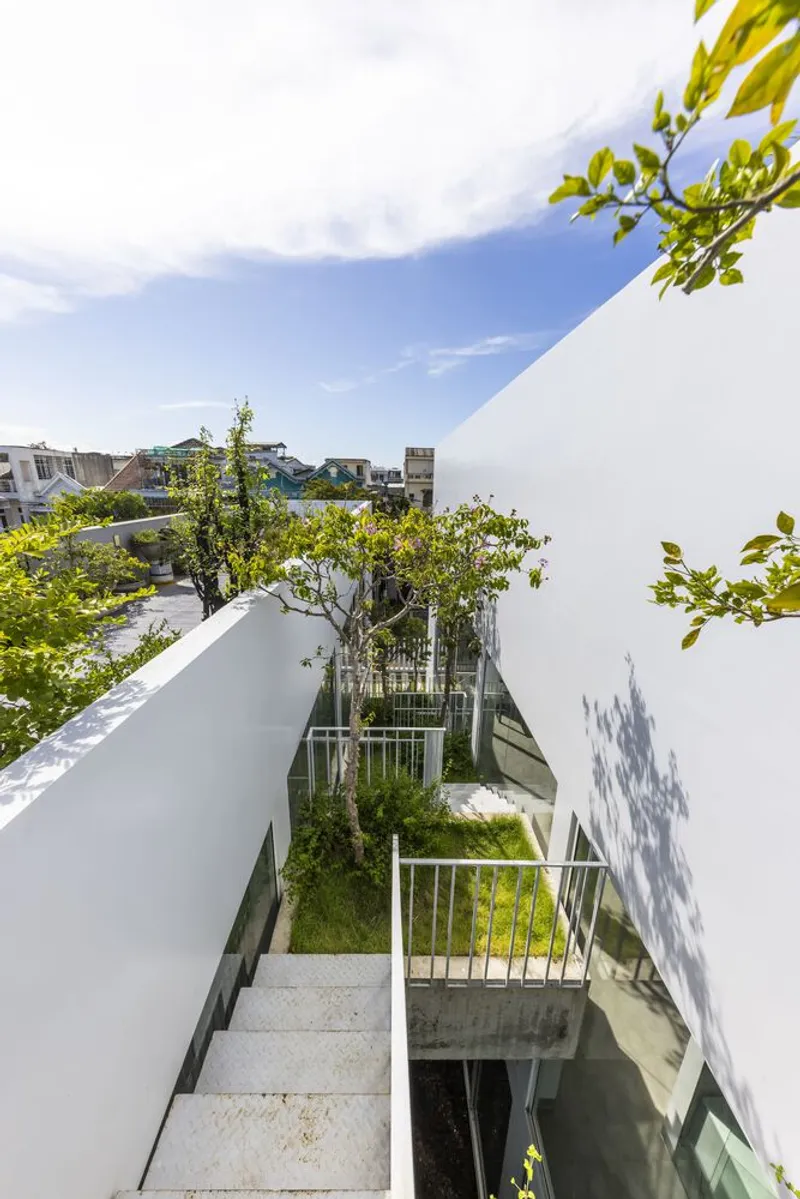
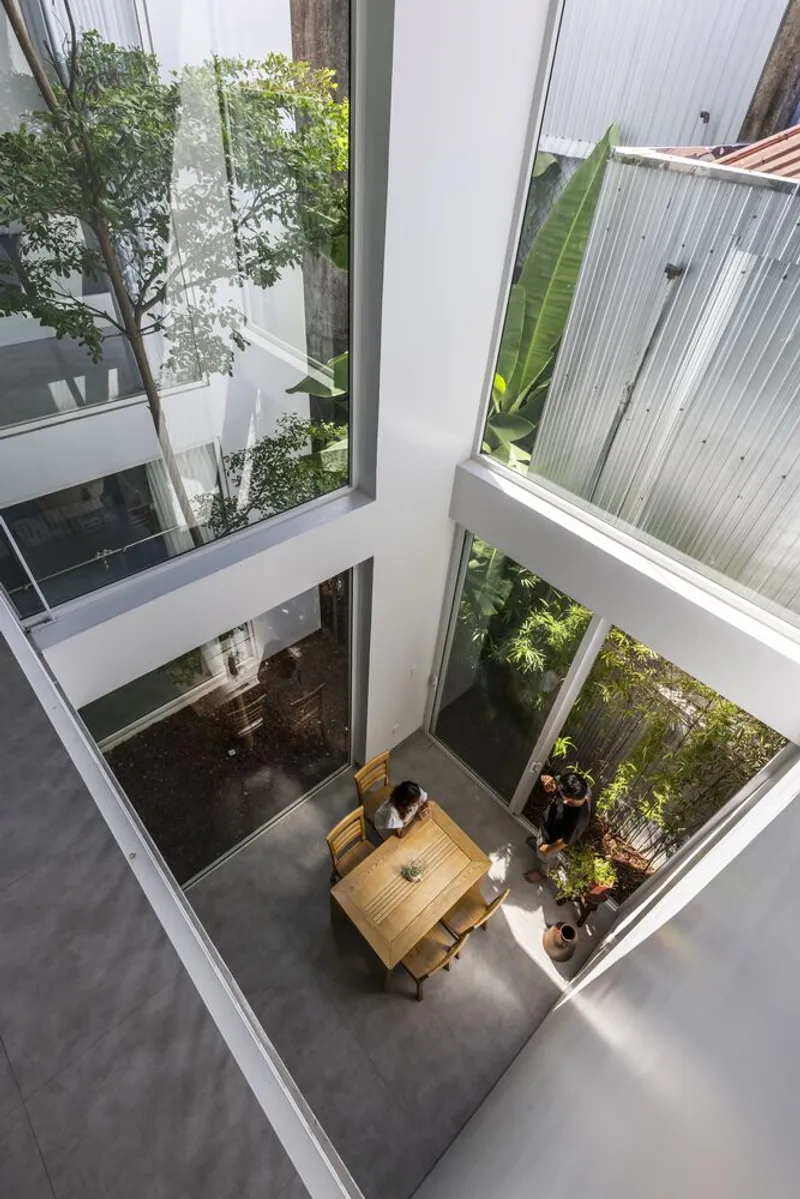
Drawing inspiration from the traditional Vietnamese shophouse, the design introduces a striking architectural intervention—a central void that divides and connects spaces. This bold cut through the structure allows for a lush interior garden, an open stairway, and five suspended planters, forming the core of the residence. Every space within the house—from the living room and kitchen to the bedrooms and studio—faces this central green oasis, ensuring a continuous connection with nature.
Bridging Spaces: A Balance of Light, Air, and Functionality
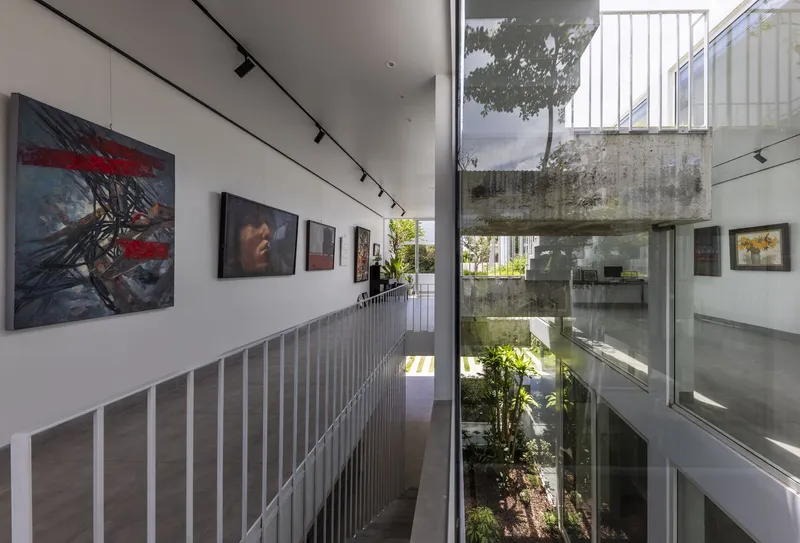
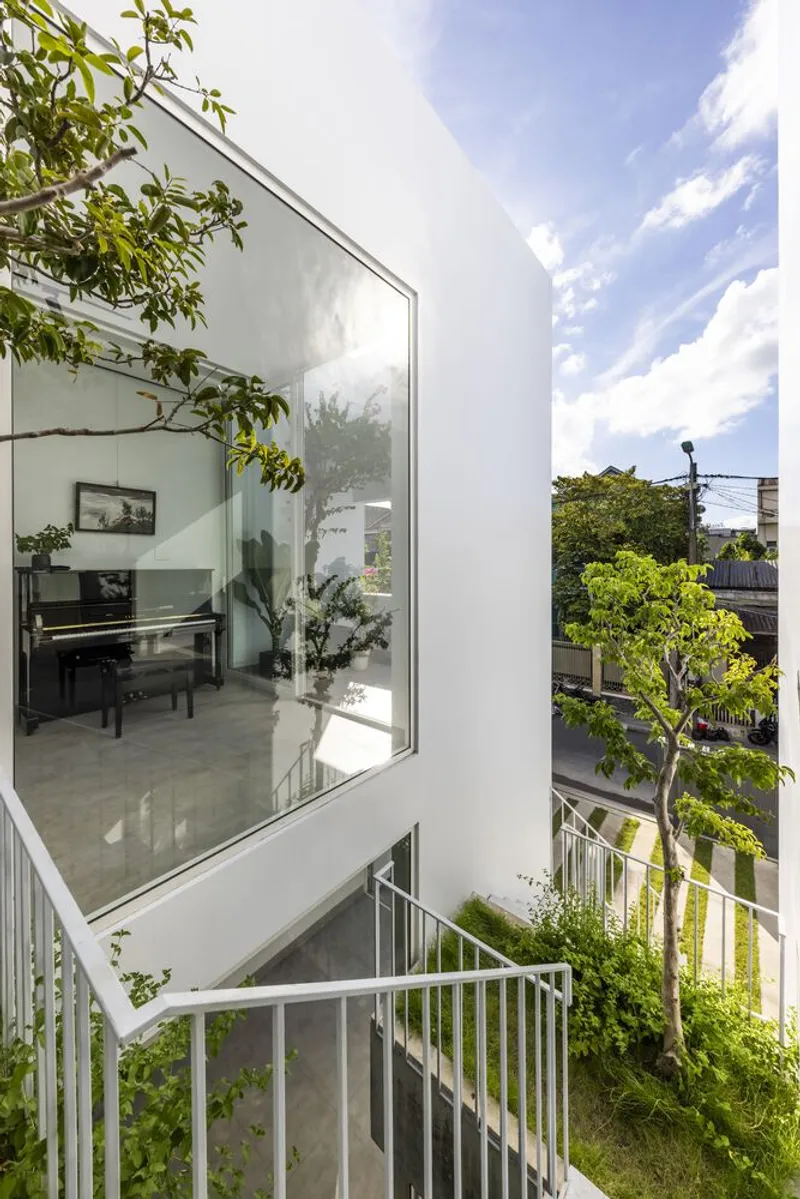
The two-story structure is interconnected by elevated bridges that traverse the central garden, fostering movement between private and public spaces while maximizing natural ventilation and daylight. The use of raw concrete and glass enhances the minimalistic aesthetic, allowing the interplay of art and nature to take center stage. The transparent façade and open spaces create a dialogue between the built environment and its lush surroundings.
A Home for Art and Community
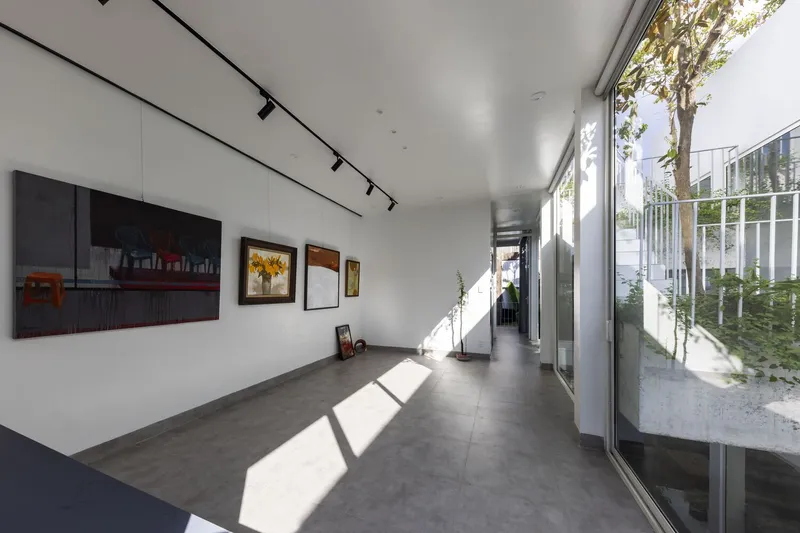
Designed for a painter, Nala House harmonizes domestic and creative functions. The art studio and gallery are carefully positioned to ensure seamless transitions between private and public areas, with separate circulation paths for residents and visitors. A dedicated entrance for guests leads them to the exhibition space via the central stairway, allowing an immersive experience of both art and greenery.
Nature as a Living Element
Incorporating elements of biophilic design, Nala House blurs the boundaries between indoor and outdoor environments. The central void introduces ample daylight and cross-ventilation, significantly reducing energy consumption while enhancing comfort. The house’s name, Nala, meaning “a ravine” or “a flowing stream”, reflects its role as a sanctuary where architecture, nature, and human well-being converge.
A Sustainable Urban Retreat
By integrating passive cooling strategies, natural lighting, and an open-plan layout, Nala House redefines contemporary urban living. The design prioritizes sustainability while celebrating the Vietnamese cultural context, demonstrating how modern architecture can coexist with tradition in a meaningful and environmentally conscious way.
All Photographs are works of Hiroyuki Oki




Popular Articles
Popular articles from the community


The Earth Pod: 3D Printed Homes for Resilient Refugee Communities
The Earth Pod reimagines refugee housing through 3D printed homes made from clay, combining resilience, self-sufficiency, and rapid shelter.

The Ocean Hive: Sustainable Architecture for a Self-Sufficient Civilization at Sea
The Ocean Hive imagines sustainable architecture at sea, where modular habitats, algae, wave power and ocean waste sustain a growing colony.

Riyadh For All: Intergenerational Urban Design for Active Aging in Rabat
Riyadh For All reimagines urban design in Rabat with intergenerational co-living, adaptive courtyards, and Moroccan cultural exchange today.

Hill & Cross Opera: Sculptural Opera House Architecture Shaped by Tallinn’s Landscape and Identity
Hill & Cross Opera reimagines opera house architecture in Tallinn through its sculptural hill, civic plaza, glass wave and a luminous cross.


Similar Reads
You might also enjoy these articles


Hodi-Mandai Geram
Project Function: Preservation and revitalization of the Intangible heritage and socio-spatial identity of the Hodi by Housing, Cultural Memory Center, Sacred Grove, landscape, local tourism economy


Olio Towers: A Mid-Rise for Performers That Fuses Housing, Rehearsal, and Stage
Located blocks from Houston's Theater District, this modular tower stacks living units around a central performance atrium.

Oasis: Modular Green Housing Carved into Dhaka's Urban Fabric
A shortlisted Plugin Housing entry reclaims unauthorized settlements in Dhaka with stepped concrete volumes, green roofs, and ventilation-driven design.

Black Hole: A Floating Megastructure for the Post-Physical Era
Emiliano Mazzarotto envisions a spherical, self-scaling arena where e-sports, digital hotels, and holographic stadiums replace traditional public space.


Explore Architecture Competitions
Discover active competitions in this discipline



Challenge to reimagine the Iron Throne


Photograph architecture without architects


Illustrate the lost glory of Angkor Wat - Render Challenge


Design challenge to reuse E-waste
Comments (0)
Please login or sign up to add comments
No comments yet. Be the first to comment!