

Nature-Integrated Coffee Shop Architecture: A Case Study of Dot Line Plan Coffee Shop by ODDs&ENDs Architects
Exploring the Dot Line Plan Coffee Shop by ODDs&ENDs architects, a masterpiece of nature-integrated architecture in Chuncheon, South Korea.


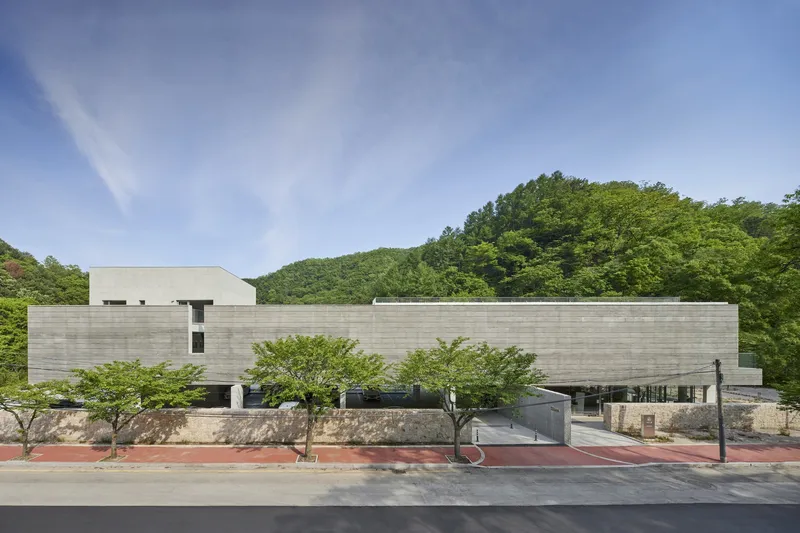
Nestled in the serene landscape of Chuncheon, South Korea, the Dot Line Plan Coffee Shop emerges as a beacon of nature-integrated architecture. Designed by the visionary team at ODDs&ENDs architects, this project transcends traditional architectural boundaries, merging the built environment with the natural world in an effortless symbiosis. This article delves into the core of nature-integrated coffee shop architecture, through the lens of this exceptional project.

Introduction to Nature-Integrated Architecture
Nature-integrated architecture is a design philosophy that seeks to blend buildings with their natural surroundings, creating spaces that are not only environmentally friendly but also provide occupants with a unique spatial experience that draws heavily from the natural world.


The Vision Behind Dot Line Plan Coffee Shop
Located strategically on the route from Gangchon Station to Gugok Falls and Munbae Village, the Dot Line Plan Coffee Shop by ODDs&ENDs architects is a masterpiece of architectural innovation. Surrounded by the lush landscapes of Chuncheon, the site serves as a tranquil retreat away from the bustling Gangchon Amusement Park.


Design Philosophy
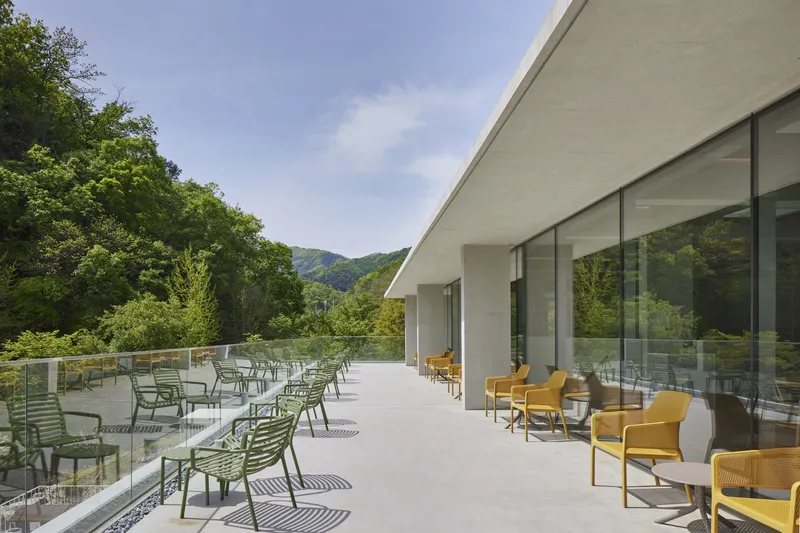
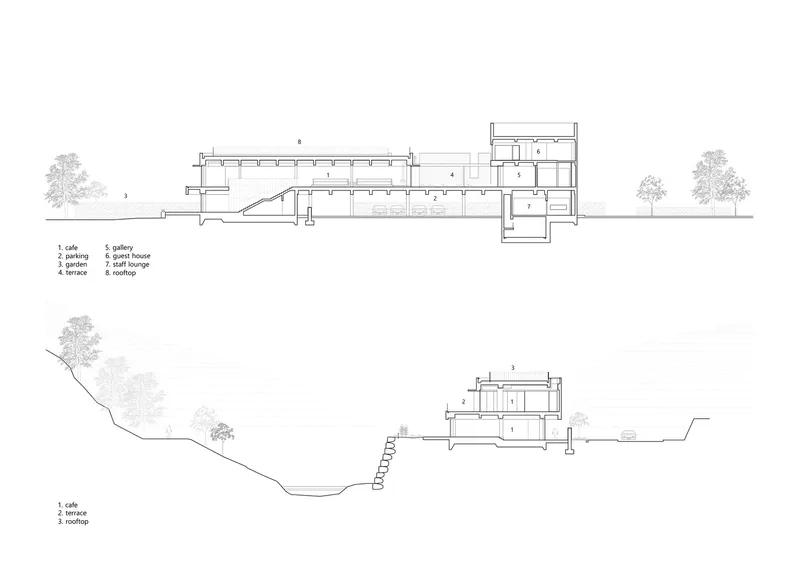
The architects embarked on a mission to obscure the chaotic view of the roadside and instead, frame the majestic beauty of the opposing valley. By elevating the building's foundation, they crafted a vantage point that aligns with the treetops, offering visitors a hovering experience amongst the valleys. This strategic elevation not only enhances the view but also incorporates essential spaces atop, leaving room for parking and entrance facilities below.

Architectural Features and Materiality
Emphasis on Minimalism
With a focus on minimal forms, the Dot Line Plan Coffee Shop accentuates the beauty of its natural surroundings. The choice of materials was deliberately limited, allowing nature to become the backdrop of the architectural narrative. From stone walls that greet visitors upon entrance to concrete walls adorned with diverse textures, every element is designed to harmonize with nature.

Interaction with Nature
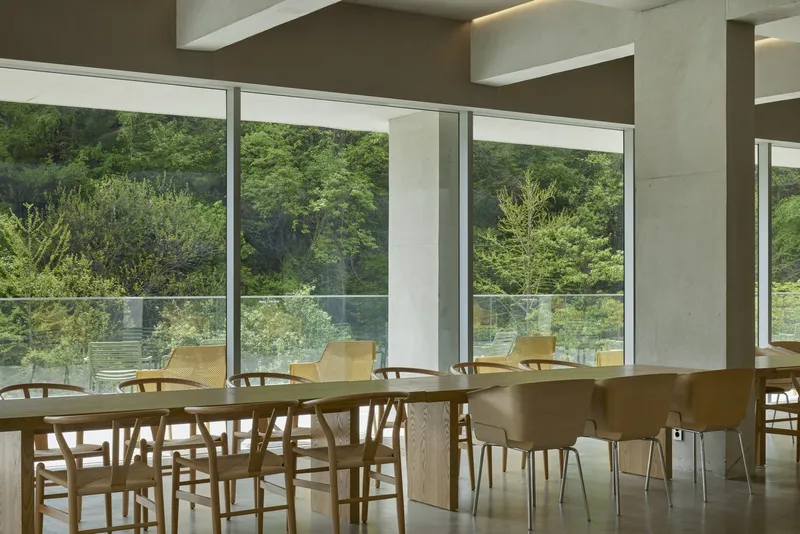
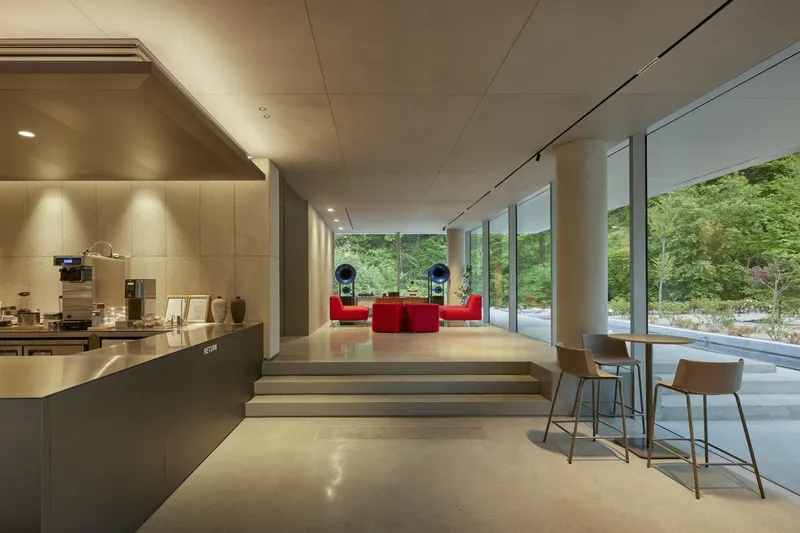
The coffee shop’s layout and structural elements, such as skylights, curtain walls, columns, and beams, are meticulously arranged to create a rhythm that changes with the passage of time. The incorporation of wood and stone on concrete bases allows the structure to blend seamlessly into the natural landscape, eliminating any sense of disparity between the built and natural environments.

The Spatial Experience
Ascending to the second floor, visitors find themselves enveloped by the valley, with mountains encircling on all sides. The design’s clever use of big curtain walls invites the gaze outward, ensuring that the changing seasons and the beauty of nature are always in view. This thoughtful integration of architectural elements and natural vistas fosters a deep connection between the occupants and the environment.
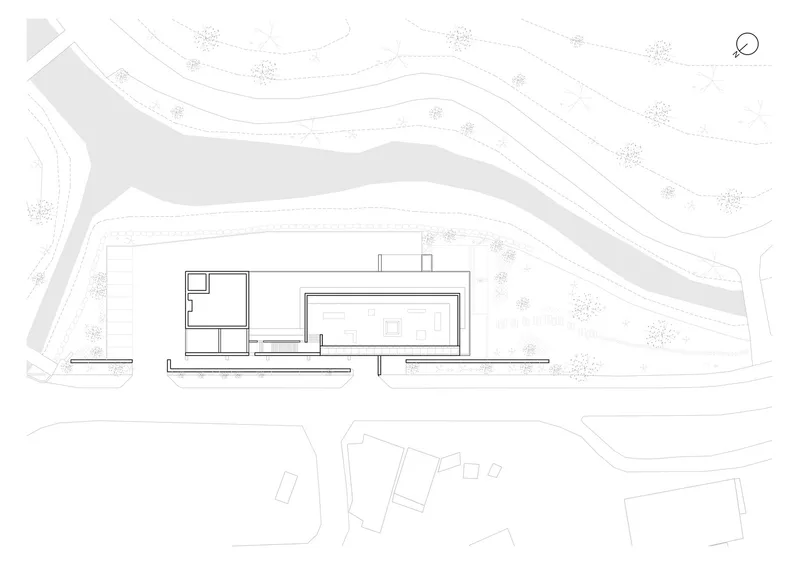
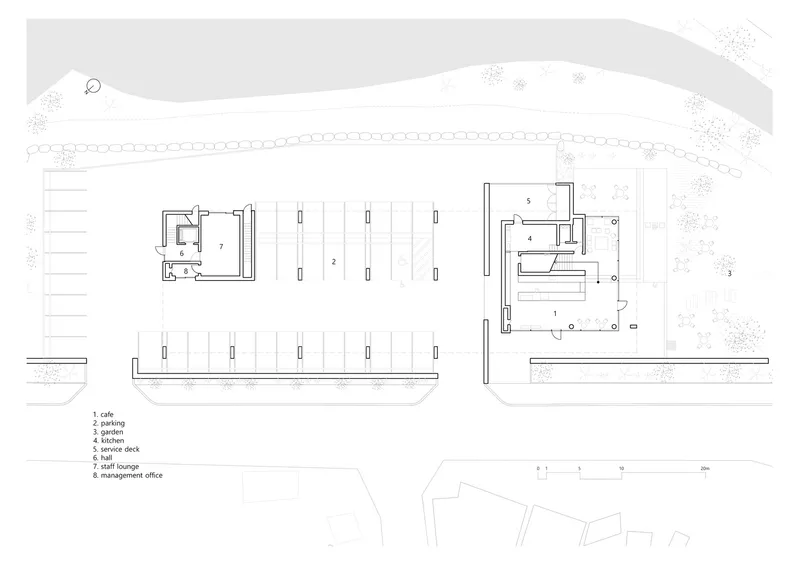
The Dot Line Plan Coffee Shop by ODDs&ENDs architects stands as a testament to the potential of nature-integrated coffee shop architecture. Through its thoughtful design and material choices, the project not only respects the natural landscape but also enhances the human experience within it. It serves as an inspiring case study for architects and designers aiming to bridge the gap between nature and architecture, creating spaces that celebrate the beauty of our world.

All photographs are work of Roh Kyung,Youngsung Kim



Popular Articles
Popular articles from the community


Co-Life: Senior Housing Design That Reconnects Older Adults With the City
Co-Life reimagines senior housing design through healing gardens, shared streets, workshops, and a sustainable community across generations.

Conexión: Biophilic Design Reimagines High-Rise Living in Hong Kong
Conexión reimagines high-rise living in Hong Kong through biophilic design, green facades, shared spaces, daylight, water and nature within.

The Musturak Paradise: Senior Living Architecture for a Connected Future in Temara, Morocco
The Musturak Paradise reimagines senior living architecture in Temara via private homes, social spaces, culture, community, and shared care.

The Earth Pod: 3D Printed Homes for Resilient Refugee Communities
The Earth Pod reimagines refugee housing through 3D printed homes made from clay, combining resilience, self-sufficiency, and rapid shelter.


Similar Reads
You might also enjoy these articles


Hodi-Mandai Geram
Project Function: Preservation and revitalization of the Intangible heritage and socio-spatial identity of the Hodi by Housing, Cultural Memory Center, Sacred Grove, landscape, local tourism economy


Olio Towers: A Mid-Rise for Performers That Fuses Housing, Rehearsal, and Stage
Located blocks from Houston's Theater District, this modular tower stacks living units around a central performance atrium.

Oasis: Modular Green Housing Carved into Dhaka's Urban Fabric
A shortlisted Plugin Housing entry reclaims unauthorized settlements in Dhaka with stepped concrete volumes, green roofs, and ventilation-driven design.

Black Hole: A Floating Megastructure for the Post-Physical Era
Emiliano Mazzarotto envisions a spherical, self-scaling arena where e-sports, digital hotels, and holographic stadiums replace traditional public space.


Explore Architecture Competitions
Discover active competitions in this discipline



Challenge to reimagine the Iron Throne


Photograph architecture without architects


Illustrate the lost glory of Angkor Wat - Render Challenge


Design challenge to reuse E-waste
Comments (0)
Please login or sign up to add comments
No comments yet. Be the first to comment!